
Mara Galeazzi answers the Gramilano Questionnaire… Dancers’ Edition
Q&A
 When did you start dancing?
When I was 6.
Why did you start dancing?
At first was for fun.
Which dancer inspired you most as a child?
Alessandra Ferri, Carla Fracci and Pina Baush.
Which dancer do you most admire?
I admire all dancers for their hard work and passion.
What’s your favourite role?
Kenneth MacMillan’s Anastasia.
What role have you never played but would like to?
Natalia in Frederick Ashton‘s Month in the Country.
What’s your favourite ballet to watch?
I could watch Romeo and Juliet forever.
Who is your favourite choreographer?
I have several favourites: Kenneth MacMillan of course, but I love Glen Tetley, Frederick Ashton , John Cranko, Wayne McGregor, and all the choreographers that I’ve worked with in the past.
Who is your favourite writer?
I don’t have a favourite, but I like writers who have psychological insights.
Who is your favourite director?
[direttore d’orchestra – conductor] I don’t have a favourite, as long as the director understands the dancer.
Who is your favourite actor?
I have always loved Audrey Hepburn for her beauty and elegance.
Who is your favourite singer?
Maria Callas.
What is your favourite book?
Susanna Tamaro’s Vai dove ti porta il cuore.
What is your favourite film?
Cinema Paradiso.
Which is your favourite city?
Rome.
What do you like most about yourself?
I can’t think…
What do you dislike about yourself?
My insecurity.
What was your proudest moment?
I’m never proud, but I can say that I’m proud of what I’ve achieved in my life.
When and where were you happiest?
When I got pregnant again after having lost my first baby.
What or who is the greatest love of your life?
My husband and my family.
What is your greatest fear?
Losing the people that I love the most.
If you could change one thing about yourself, what would it be?
I would love to be more intelligent, and be very rich so that I could give money to children in need.
What do you consider your greatest achievement?
With my profession, that I’ve touched people’s hearts; with my life, that I found the greatest love, my husband.
What is your most treasured possession?
Love.
What is your greatest extravagance?
None.

What do you consider the most overrated virtue?
Simplicity.
On what occasion do you lie?
I don’t like lies.
If you hadn’t been a dancer what would you have liked to do?
A nurse or a paediatrician.
What is your most marked characteristic?
Determination.
What quality do you most value in a friend?
Loyalty.
What quality do you most value in a colleague?
Team work and understanding.
Which historical figure do you most admire?
To be honest… I don’t know.
Which living person do you most admire?
Nelson Mandela.
What do you most dislike?
Unfairness.
What gift would you most like to have?
I would like to be a perfect mother.
What’s your idea of perfect happiness?
Good health and love in the world.
How would you like to die?
………………
What is your motto?
“It is nice to be important, but more important to be nice.”


Mara Galeazzi – a biography
Mara Galeazzi was born in Brescia and studied at La Scala, Milan. She joined The Royal Ballet in 1992 and was promoted to First Artist in 1995, Soloist at the end of the 1997/98 Season and Principal in September 2003.Roles in the classical repertory include the leading role in Fokine’s Firebird, Marie, Sugarplum Fairy and Rose Fairy in Nutcracker, Giselle (also under Carla Fracci’s direction) and Myrtha in Giselle, Medora in Le Corsaire, Gamzatti in Natalia Makarova‘s La Bayadère, the leading role in Paquita divertissement, Aurora’s wedding pas de deux and Bluebird pas de deux in The Sleeping Beauty, the Act I Pas de Trois in Swan Lake, the Talisman pas de deux with Irek Mukhamedov and Rudolf Nureyev’s Raymonda Act III.
In the Frederick Ashton repertory she dances Lise in La fille mal gardée, Mrs Tittlemouse in Tales of Beatrix Potter, the solo La Chatte metamorphosée en femme (originally created for Merle Park), the Thaïs pas de deux (first danced on the 1995 Dance Bites tour), Voices of Spring, Diana in Sylvia, Julia in Wedding Bouquet (role created for Margot Fonteyn), Fairy Autumn in Cinderella, Moth in The Dream, the Jackson Variation in Birthday Offering, in Rhapsody, Symphonic Variations, the Pas de Trois in Les Rendezvous and Scènes de Ballet.In the Kenneth MacMillan repertory she dances Juliet in Romeo and Juliet, Manon and Lescaut’s mistress in Manon, Mary Vetsera in Mayerling, Mathilde Kschessinska and the title role in Anastasia, Winter Dreams‘ Farewell pas de deux with Irek Mukhamedov, the Chosen one in The Rite of the Spring, the Second Movement of Concerto, the Youngest Sister in Las Hermanas, the First Sister in My Brother, My Sisters, Gloria, Triad, Countess Marie Larisch in his Mayerling, Principal White Girl in Song of the Earth, The Woman in The Judas Tree, Images of Love and Danses concertantes.
She also dances Tatiana in Cranko’s Onegin, the Young Wife in Glen Tetley’s La Ronde, Voluntaries and Colombina in his Pierrot Lunaire, one of the three girls in Ashley Page’s Fearful Symmetries, David Bintley’s Consort Lessons, ‘Still Life’ at the Penguin Café, Hommage to the Queen (Queen of Earth), Christopher Wheeldon‘s pas de deux Pavane pour une infante défunte, Wayne McGregor’s Chroma, Twyla Tharp‘s Push Comes to Shove (dancing in the company premiére), Matthew Hart’s Dances with Death, George Balanchine’s Symphony in C, Agon, Ballet Imperial, Calliope in Apollo and Emeralds in Jewels, the Yellow Girl in Michael Corder’s Masquerade and Flora in William Tuckett’s The Turn of the Screw, the role of Aurora in De Valois’ Coppélia, Girl in Blue in Nijinska’s Les Biches, the pas de deux from Ashley Page’s Sleeping with Audrey, Celestial in Anthony Tudor’s Shadowplay and The Leaves are Fading, the Street Dancer and the Dryad Queen in Nureyev’s production of Don Quixote, Stephen Baynes’s Beyond Bach, William Forsythe’s In the middle, somewhat elevated, Mats Ek’s Carmen and Fokine’s Spectre de la Rose.
She has created roles in McGregor’s Intra, Tharp’s first work for the company Mr Worldly Wise (later dancing the pas de quatre), Wheeldon’s Souvenir (1996 Dance Bites Tour), Tuckett’s Puirt-A-Beul (1998 Dance Bites Tour), Page’s Two Part Invention (Part II), When We Stop Talking (1998 Dance Bites Tour) and Cheating, Lying, Stealing (Second Principal Couple), and Cathy Marston‘s Tidelines (Principal Couple), Ashley Page’s This House Will Burn (2001), La Grêle in David Bintley’s Les Saisons (2003), Vanessa Fenton’s On Public Display (2004) and Eden.
Television performances include a live BBC broadcast from The Royal Opera House when she danced Aurora in Ninette de Valois‘ Coppélia (February 2002), Ashton’s Thais pas de deux (November 2004), Voices of spring (April 2005) and Sylvia (December 2005). Her performance of Symphony in C was broadcasted live in many big squares all over the UK in June 2005. The director Philip Cox produced the documentary Facing Mara.
In May 2006 she is appointed ‘Best Italian Dancer Abroad’ (Danza & Danza Award). In November 2003 she received the nomination as Best Female Dancer at Critics’ Circle National Dance Award.
She appeared as guest artist with the Stuttgart Ballet, Carla Fracci’s Teatro dell’Opera in Rome and the Scottish Ballet. She also danced with Irek Mukhamedov, Carlos Acosta, Tetsuya Kumakawa and their companies.
In February 2005, after a Charity Gala in her home town of Brescia, Mara became an honorary member of Soroptimist International, a worldwide organization for women in management and the professions aimed at equality, development and peace. On the 7th March 2009 Mara was awarded the medal “Cavaliere Del Lavoro” (Knighthood) by the President of Italy.

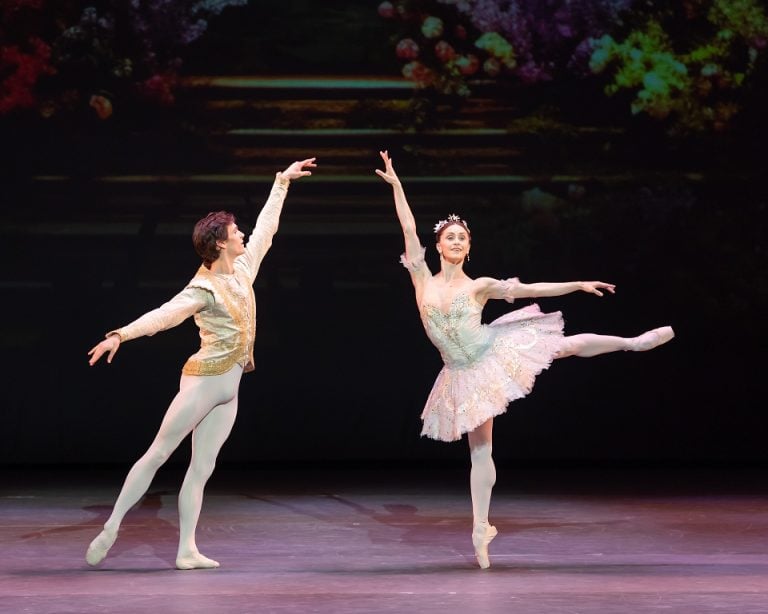
Top photo: Mara Galeazzi with Edward Watson

Graham Spicer, aka ‘Gramilano’, is a writer, director and photographer based in Milan. He was a regular columnist for Opera Now magazine and wrote for the BBC until transferring to Italy. His articles have appeared in various publications from Woman’s Weekly to Gay Times, and he wrote the Danza in Italia column for Dancing Times magazine. Graham was the historical advisor on Codice Carla, the 2023 documentary on Italian ballerina Carla Fracci.
Graham also works as a dance photographer, and his photos have appeared in many books, theatre programmes, and magazines, including Dancing Times, Dance Spirit and Ballet2000, as well as all the major Italian newspapers.
He is a member of the Dance Section of The Critics’ Circle.




http://t.co/0UUvJi5g
I love that motto Good for you Mara.
Also congratulations to Gramilano. The questionnaires are very entertaining. What ever made you think of asking your interview subjects how they would like to die?
“The Proust Questionnaire is a questionnaire about one’s personality. Its name and modern popularity as a form of interview is owed to the responses given by the French writer Marcel Proust.
At the end of the nineteenth century, when Proust was still in his teens, he answered a questionnaire in an English-language confession album belonging to his friend Antoinette, daughter of future French President Félix Faure, entitled “An Album to Record Thoughts, Feelings, etc.” At that time, it was popular among English families to answer such a list of questions that revealed the tastes and aspirations of the taker.
Proust answered always with enthusiasm. The original manuscript of his answers of 1890, at the time of his volunteer internship or some little time afterwards, titled “by Marcel Proust himself,” was found in 1924. It was auctioned on May 27, 2003 for the sum of €102,000.” says Wikipedia. It’s one of the original questions, and provides some of the best replies!
I must read more about Proust.
The question How would you like to die? reminded me of the line: “I want to die peacefully in my sleep like my grandfather, not screaming in terror like his passengers.”
Going to Mara’s farewell in Verona on 23 July with the Royal Ballet crowd. Can’t wait. Thanks Mara.