[Interview] Italian conductor Sesto Quatrini – “voices hold an ancestral power over me”

The Italian conductor Sesto Quatrini is currently in Germany at the Deutsche Oper Berlin preparing for performances of Rigoletto which begin this week. Until October he was at The Royal Opera House conducting L’elisir d’amore, a production transmitted live in cinemas worldwide. The Times’s 5-star review said, “The whole thing is tied up with a bow by the conductor Sesto Quatrini. Another house debutant, he shapes propulsive ensembles, keeps in tight alignment with the singers and still draws plenty of warmth from the orchestra.” Earlier this month he conducted Aida for the first time at the Lithuanian National Opera and Ballet Theatre, a company he headed from 2016 to June 2023. He’s a busy man. I caught up with him between productions.
Sesto is a good Roman name. You were born in Rome, but were you the sixth child?
Sesto is rather an uncommon name nowadays. My grandfather was called Sesto because he was the sixth of eight children and, as he died a few years before I was born, my father suggested the name to my mother. My mother agreed – although she would have preferred to call me Lorenzo – and so, although I’m the elder of two children, I’m Sesto Quatrini like my paternal grandfather.
It’s an ancient, Italian, Roman name and it sticks in most people’s minds, especially abroad. All in all, I’ve always been proud of it. My grandfather and my whole family history live on through me, so it’s with great joy that I carry his name around the world.
You learned the trumpet in Rome, but your studies took you away from your hometown.
I decided to study composition straight after graduating in trumpet studies, to satisfy my thirst for musical knowledge and to find an answer to the many questions that can’t be answered just by studying an instrument.
In view of the chemistry that had existed from a cultural and personal perspective between me and my teacher of harmony and history of music, I chose him as my teacher of composition. Maestro Sergio Prodigo taught at L’Aquila and so I studied there. The same happened with conducting: the teacher at L’Aquila was Maestro Marcello Bufalini, not only an excellent conductor but also one of the most exceptional teachers of our times in this field, and so I carried on studying there. Before the devastating earthquake of 2009, it was a city with an intense cultural and musical scene.
At the same time, for three years at weekends, I attended the course in conducting held by Maestro Renato Rivolta at the Scuola Civica in Milan, with the support of important Milanese orchestras of the calibre of I Pomeriggi Musicali and LaVerdi.
You were Fabio Luisi‘s assistant for a short while at the Met and Martina Franca – can you say a few words about that time?
A few words are not enough to convey everything I learnt from Fabio Luisi. Nevertheless, there are several words that bring back to mind what I learnt, and which have remained with me until now. Some of these are discipline, generosity, perseverance, study, and far-sightedness.
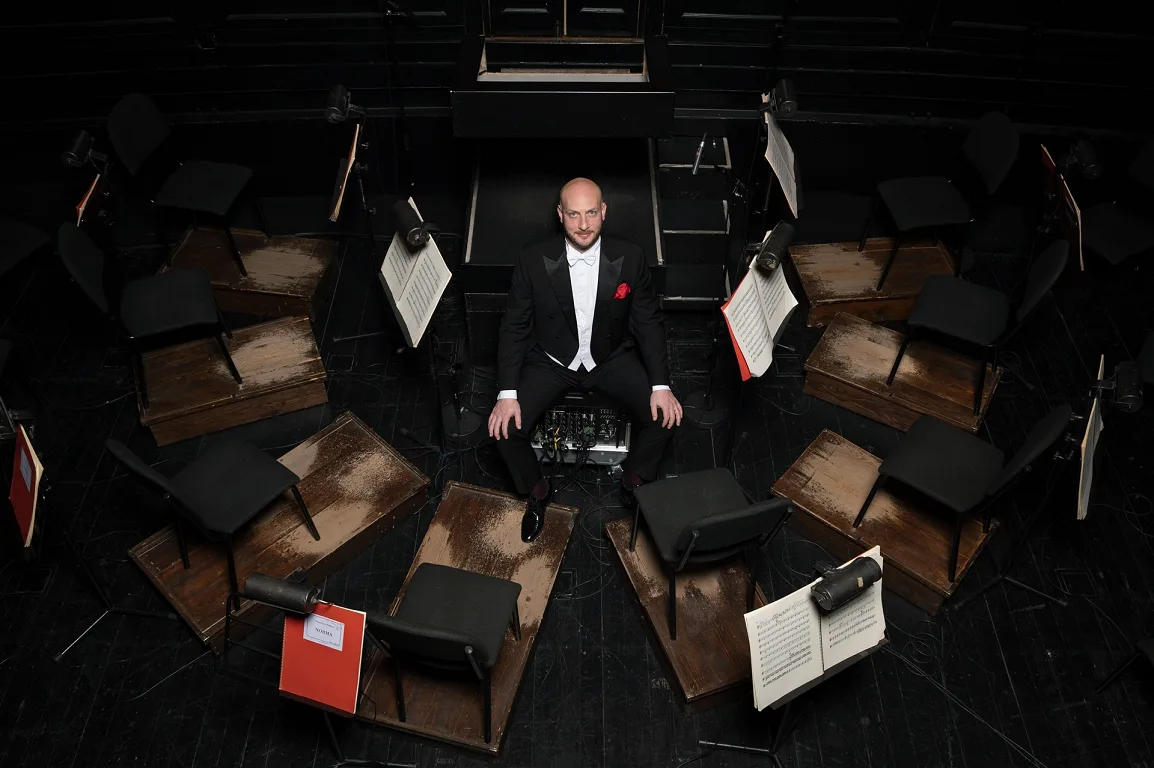
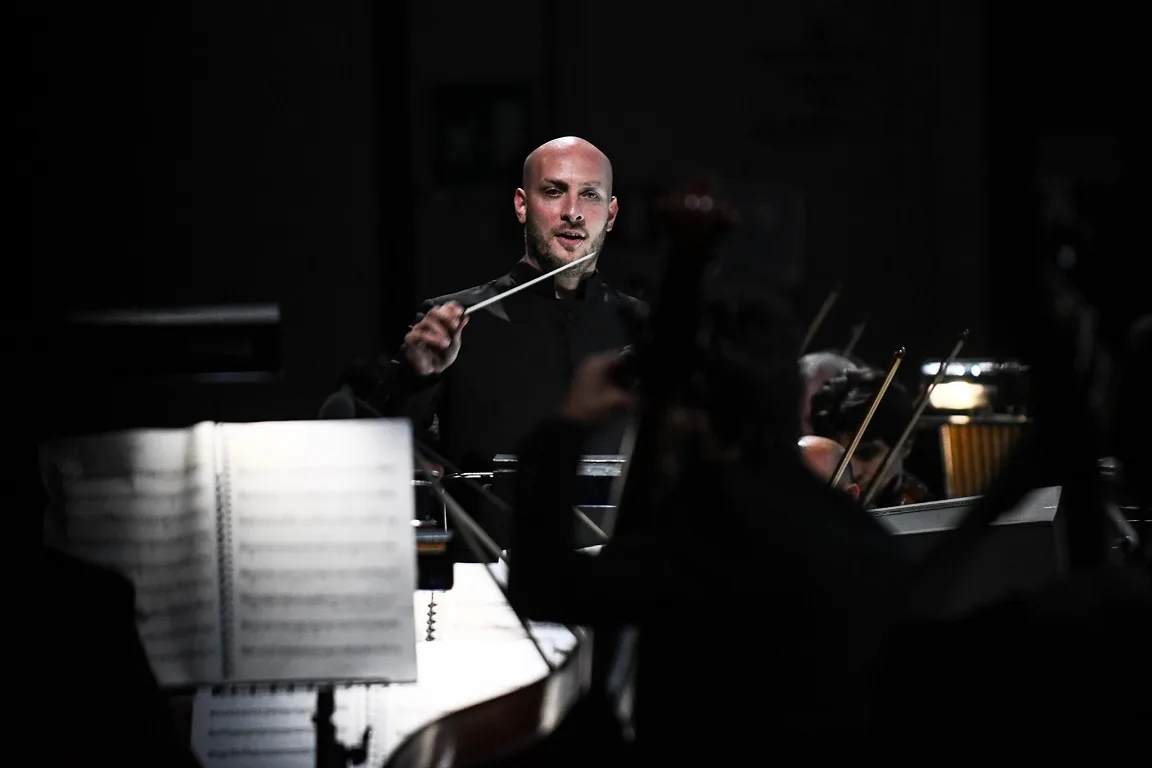

Some conductors make waves in their mid-twenties, yet your opera debut didn’t arrive until you were in your thirties. In fact, you are still in your thirties [next year Sesto Quatrini turns 40] so in the past few years you have certainly caught up!
I think that every conductor’s story is different.
Mine involved making my debut much later than other colleagues. I began conducting after studying the trumpet and composition, and I took my first steps in much more modest surroundings than those in which I have the honour of taking the podium today.
I went through what is known in Italy as a gavetta [apprenticeship], which our Latin forbears called “cursus honorum”. One day, while I was complaining that I felt misunderstood by the great theatres, Fabio Luisi told me, “Don’t worry, Sesto, all fruit ripens in its own time!”. He was right. I wasn’t ready for what I’m doing today. I’ve matured more slowly and I’m still developing. Other colleagues, on the other hand, are ready from a very young age.
Yet you need to have so many strings to your bow, so to speak, aside from being a musician…
There’s no doubt that conducting means taking on great responsibility. It isn’t just the physical act of conducting, neither can it be considered pure entertainment. It’s not enough to start and finish a piece of whatever length on any podium. They call us ‘Maestro’ because of the expectation not only of being able to put ideas manifestly into practice, but also of continually inspiring the multitude of musicians with whom you’re making music, and your ideas have to be supported by in-depth knowledge, ranging from the technical to the theatrical, from voice to instruments, from repertoire to aesthetics, and so on, in a long list of skills that might be built up over an entire lifetime.
I certainly don’t exclude the possibility that extremely young colleagues have already accumulated these but, speaking for myself, I’d say that I’m still continuing the quest for many of them, and have only learnt others through the experience of conducting over time …
Since your operatic debut in 2017 you have approached a wide repertory, the major part Italian. Do you think Italian conductors have an edge with this repertoire?
There’s no doubt that being born and growing up immersed in the same culture that inspired the great Italian opera composers is an additional advantage.
I’m not thinking so much of the theoretical knowledge, which can be cultivated perfectly well through careful study, as of the intangible treasure trove of sounds, perfumes, flavours, and traditions that fill Italian opera.
Having said that, the converse is also true. It can be interesting to discover original viewpoints – and listening perspectives! – from those who come from other cultures, worlds, and traditions. I’ve often experienced this directly, both in the audience and as a conductor taking on operas such as, for example, Der Rosenkavalier, Die Zauberflöte, Carmen, L’Enfant et Les Sortilèges, Les Contes d’Hoffmann, Candide, Goyescas, La Juïve.
What are your favourite operas and composers?
It isn’t easy to answer that question because of the vast repertoire that I love and have learnt to love during my musical career.
I mainly listen to chamber music. I adore the piano trio repertoire (piano, violin, cello), string quartets, vocal music like madrigals, motets, masses, etc. Music without Monteverdi, Palestrina, Gesualdo or Arvo Pärt would be a tragedy.
In the symphonic repertoire, Brahms, Schumann, Mahler, and Shostakovich are definitely composers who strike a chord deep within my soul. I have an immense love for Mozart, Verdi, Puccini, and Wagner. I don’t love going to the theatre to listen to Rossini, Bellini, or Donizetti, yet conducting their works in one of the things that I enjoy most in the world.
So what are your dream projects?
I’d like to have the opportunity to conduct Falstaff, Boccanegra, the Trittico, and I know that I will, sooner or later. My ‘forbidden dreams’, on the other hand, are to conduct the Ring cycle, Les Troyens, the complete operas of Benjamin Britten and all of Franz Schmidt’s music.
What has been your greatest challenge as a conductor?
The most complex, fascinating experience in my career was studying, preparing, and conducting Der Rosenkavalier.
Have you ever turned down a project?
I’ve never refused an offer because of doubts about the repertoire. If I’ve turned something down, it’s only because it didn’t fit in with my other engagements.

You have just finished a run of Aida in Lithuania.
Yes, this Aida was a title debut for me. Interpreting Aida in a new production and being able to “have my say” is a great privilege, a once-in-a-lifetime experience and, although I’ve listened to recorded and live versions many times, and have always thought I knew it inside out, today I can see how much I had missed when listening that I can at last fully enjoy from the podium.
And you were returning to the Lithuanian National Opera and Ballet Theatre, the company you directed.
Being back conducting at the theatre which was ‘my home’ for five years and receiving such a warm welcome was deeply moving. In January, I’ll be in Vilnius again for Les Contes d’Hoffmann and I hope to be able to return there again in the future.
While you were in Vilnius, what were your aims for the company?
Our great objective, which I believe we achieved, was to open up the theatre to an intensive dialogue on the international scene, while trying to promote Lithuanian artists, and discover new talent. Over the five years, I tried to guide the chorus and orchestra towards a sound that reflects myself as a musician: a more fluid, softer, warmer sound, with a much broader range of expression.
While you were with the company, the pandemic hit and several productions were cancelled.
The pandemic was very hard for me, not only because it was impossible to make music together, which is what shapes and gives meaning to the life of a conductor but, above all, for the loss of my dear manager and friend, Luca Targetti, one of the first victims of coronavirus. Nonetheless, as always in difficult times, there were hidden opportunities which I think I managed to take advantage of, despite everything. First of all, I had the chance to spend more time with my wife than my work usually allows; and then, to cultivate some of my other passions at home: reading, cooking, and gardening.
Are you wanting to run a company again, or glad to be guesting for a while?
Oh yes, I’d very much like to take on a new challenge as music director.
But for now you are ‘on the road’ – travelling, hotels, different theatres…
Travelling and getting to know new worlds and cultures are amongst the most enthralling, and enjoyable aspects of my profession. While being away from loved ones has always left a lingering bitter-sweet taste, for the past few months, now that my daughter Nina is also waiting for me at home, it has at times become unbearable.
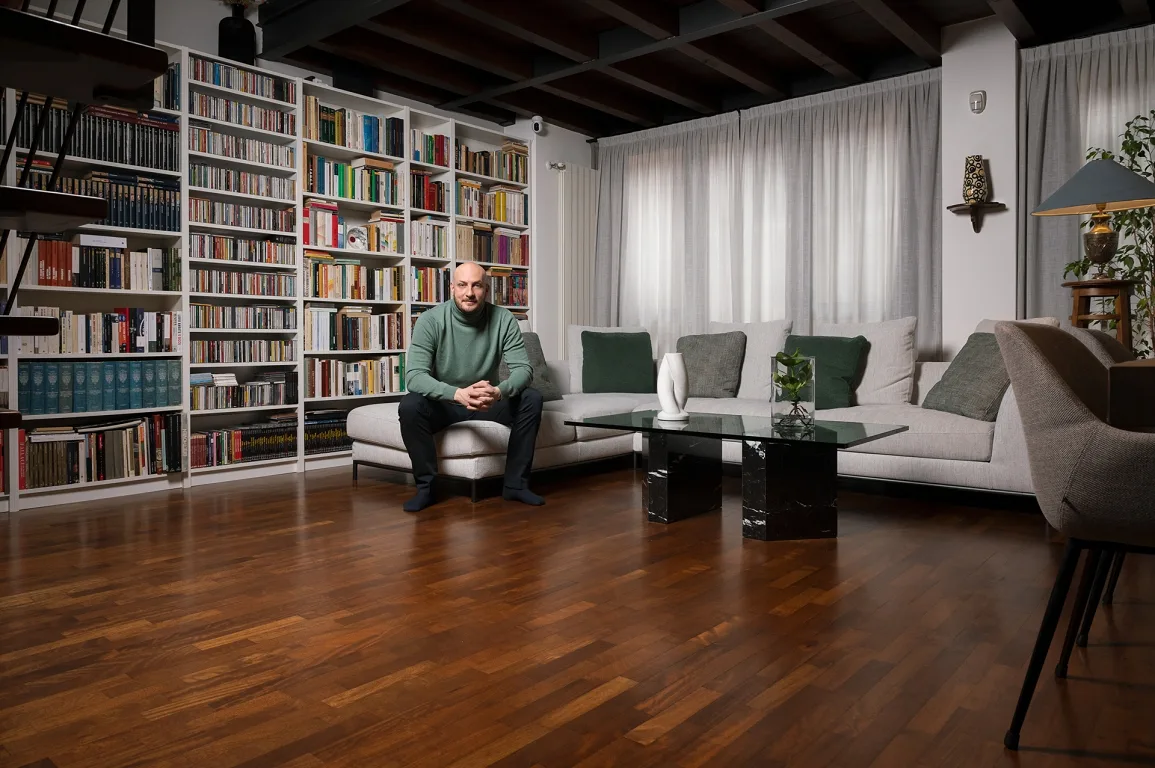
What are the challenges of arriving at new companies with unfamiliar faces and different working methods?
Each theatre and each orchestra has its own history, its own sound, and its own policy, which makes each experience unique, just like the musical performance that is created.
When you arrive at a new company, it’s important to observe and listen, so as to understand the pre-existing equilibrium, and only then to start to leave one’s own mark. Obviously, for a guest conductor, it’s essential to be extremely aware of one’s role and, at the same time, to be exceptionally flexible to adapt to the various demands, methods, and traditions.
You obviously enjoy working with singers. When did your love for opera begin?
I love opera. I think it’s the most complex, complete art form of all. My love of opera came much later than my love of music itself. For example, when I was studying, I never thought I’d conduct and love the Italian Belcanto repertoire so much.
Once I’d set out on my journey in this fascinating world, I must admit that I couldn’t live without it, and working with opera has become a physical and a spiritual necessity.
There are various factors: opera is theatre in music, and this makes it a unique experience. Opera represents us ourselves because it reflects our lives in every way so that, paradoxically, there’s nothing more real or true to life than an opera performance; the voice is an infinitely fascinating instrument, the primigenial instrument, the arche of music. Working on the voice, and with voices, holds an ancestral power over me.
As a trumpet player, does that give you an insight into vocal phrasing and allowing for breathing when conducting?
Playing a wind instrument can certainly help with learning to manage a singer’s or a choir’s breathing, but ‘breathing’ – not only physically but also musically – in the search for the right ‘melos’ together with the singers is perhaps the most difficult and, at the same time, most magical thing that a conductor does.
You’re not just breathing with someone, which already makes conducting a totally symbiotic act, but you’re doing so with the singer’s body, with their limits and physical demands, melding them together with your own and those of the score, and those of the theatrical work that you are performing. And you’re doing it with hundreds of other people, in front of thousands more, in a communion which, if successful, takes you to a higher, almost metaphysical level of your own existence. Practically, the most divine of human liturgies.
Tyrants on the podium don’t exist anymore – how is your working relationship with your colleagues and what’s your ideal working environment?
One feature which is definitely part of my character is the great enthusiasm I put into doing my job. When I arrive at the theatre, I like to be surrounded by people who are at least as enthusiastic as I am.
I like lingering over detail, having the opportunity to have long rehearsals, allowing us to exchange all those elements that contribute to the production. I like working with orchestras and choruses who are open to new challenges and who try to accept my suggestions.
In the specific case of opera, I think that the conductor’s presence at stage rehearsals – not as obvious as it might seem! – is very important and stimulates creation of a cooperative environment. I’m usually at everyone’s complete disposal in this sense.
I’m an optimist by nature and this leads me to think that every problem has a solution.


Graham Spicer, aka ‘Gramilano’, is a writer, director and photographer based in Milan. He was a regular columnist for Opera Now magazine and wrote for the BBC until transferring to Italy. His articles have appeared in various publications from Woman’s Weekly to Gay Times, and he wrote the Danza in Italia column for Dancing Times magazine. Graham was the historical advisor on Codice Carla, the 2023 documentary on Italian ballerina Carla Fracci.
Graham also works as a dance photographer, and his photos have appeared in many books, theatre programmes, and magazines, including Dancing Times, Dance Spirit and Ballet2000, as well as all the major Italian newspapers.
He is a member of the Dance Section of The Critics’ Circle.