
[Review] New Movement Collective’s Les Noces – The Departure… the real deal

Matthew Paluch sees New Movement Collective’s Les Noces – The Departure: “NMC are the real deal. The members bringing such experience and expertise to the stage that one can only respect whatever they do.”
| Title | Les Noces – The Departure |
| Company | New Movement Collective |
| Venue | Woolwich Works |
| Date | 14 January 2024 |
| Reviewer | Matthew Paluch |
2023 saw the centenary of Bronislava Nijinska’s seminal 1923 work Les Noces, to the Russian-language ballet-cantata by Igor Stravinsky, and numerous makers and companies have been acknowledging the protofeminist work in different ways.
English National Ballet commissioned a new version by Andrea Miller in September 2023, which was inspired by Vaslav Nijinsky’s (Nijinska’s brother) 1913 The Rite of Spring, that ended up being a contemporary, abstract version of it, rather than much to do with the Les Noces premise, and Cathy Marston‘s Ballett Zürich will perform Nijinska’s original, staged by the Royal Ballet‘s Christopher Saunders, opening on January 20th.
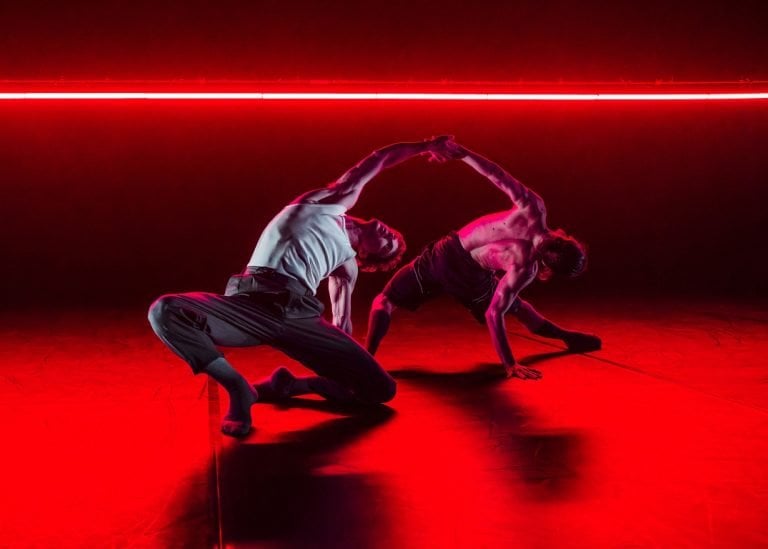
New Movement Collective brought its take: Les Noces – The Departure to Woolwich Works for three performances only this last weekend.
NMC, founded in 2010, is a “collective of dance-artists redefining the boundaries of choreography and performance through ambitious, cross-disciplinary practice” and absolutely stick to their word involving singers from the Opera Holland Park Chorus, musicians from the Royal Academy of Music and the Royal College of Music, as well as choreography by the collective members themselves.
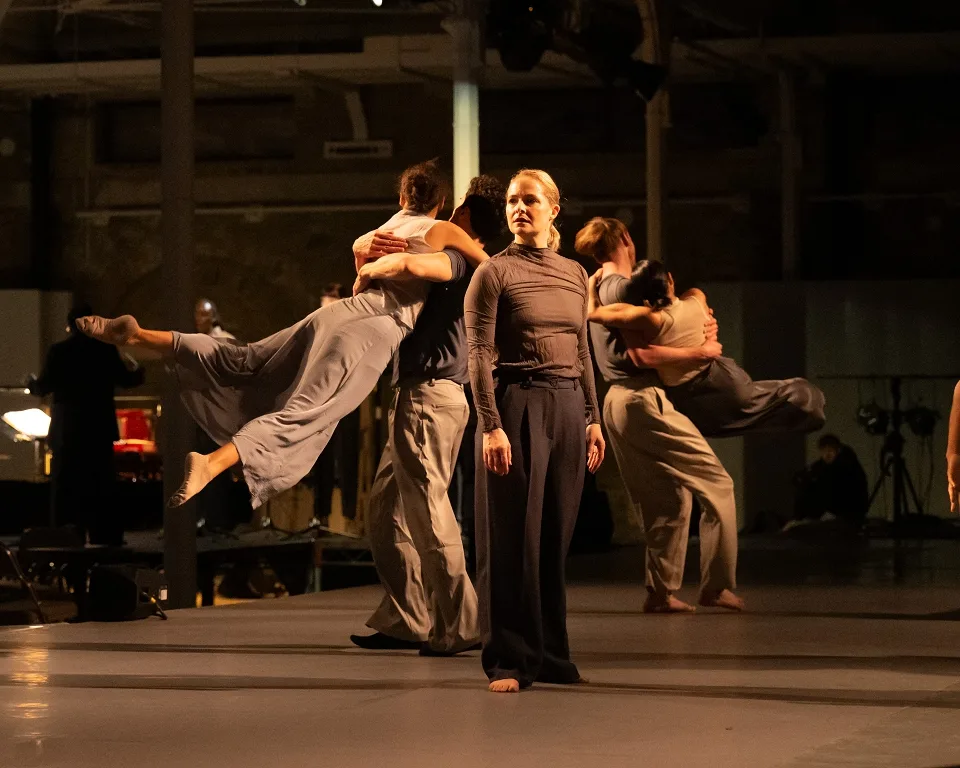
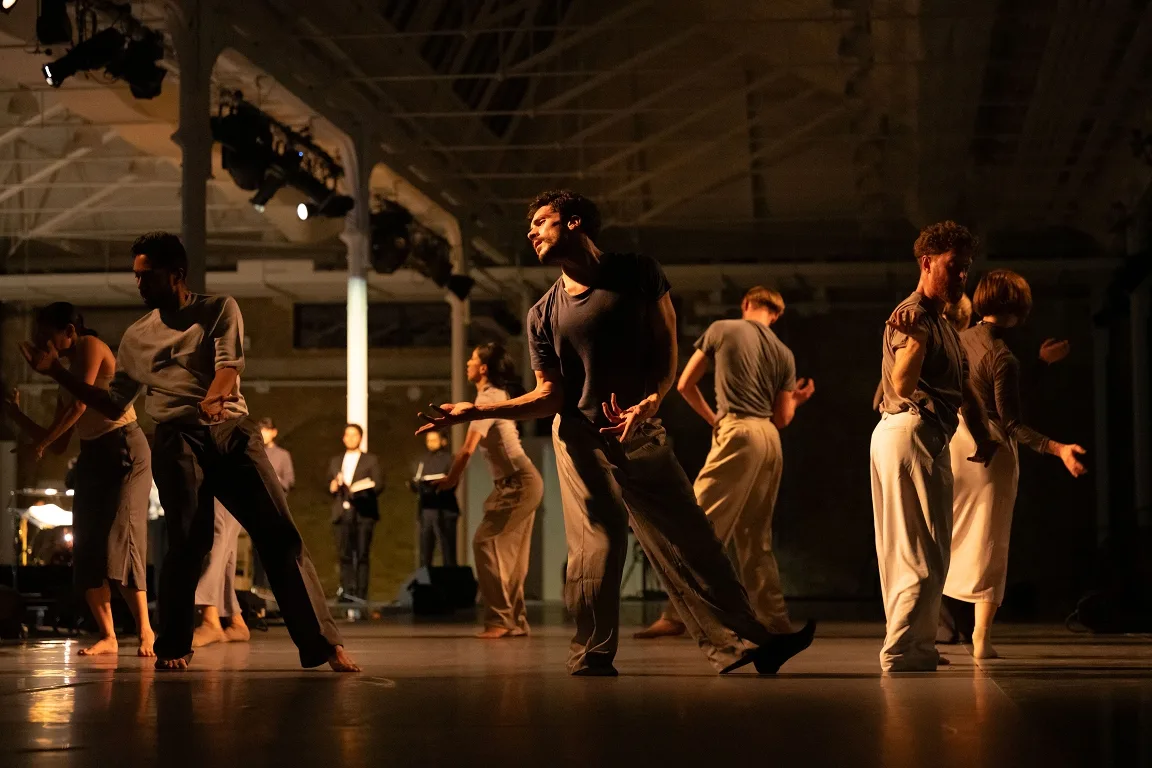
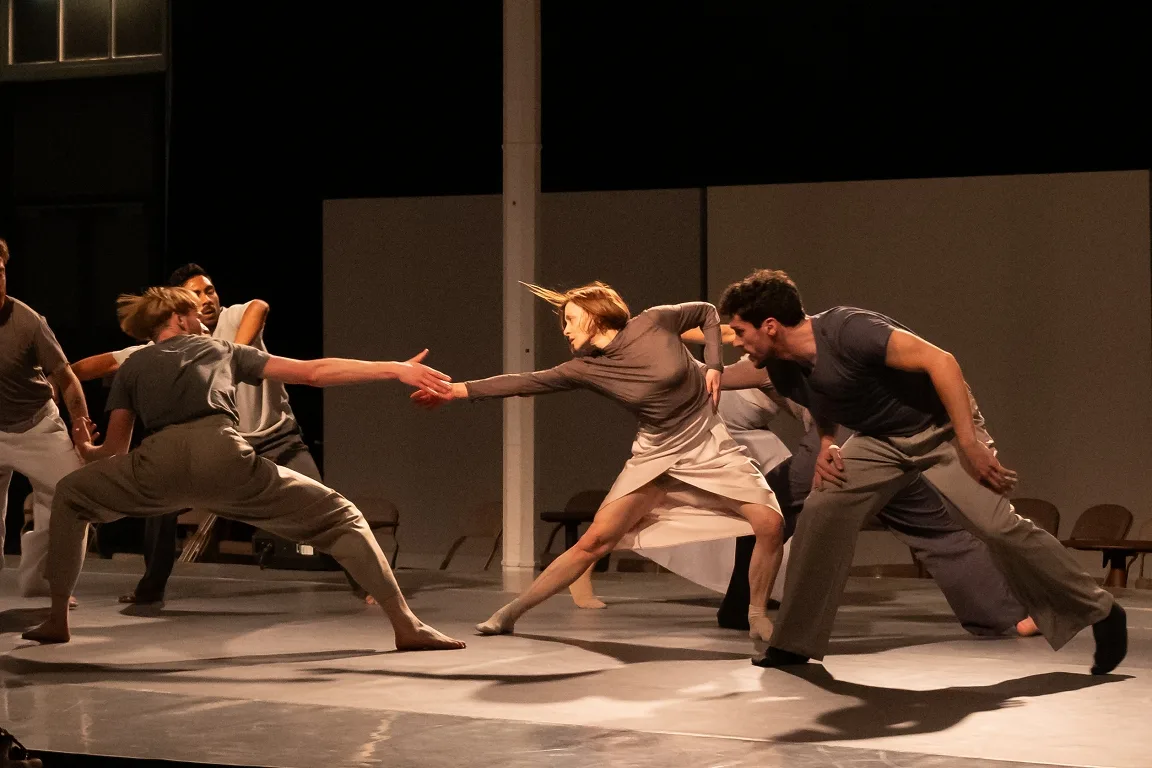
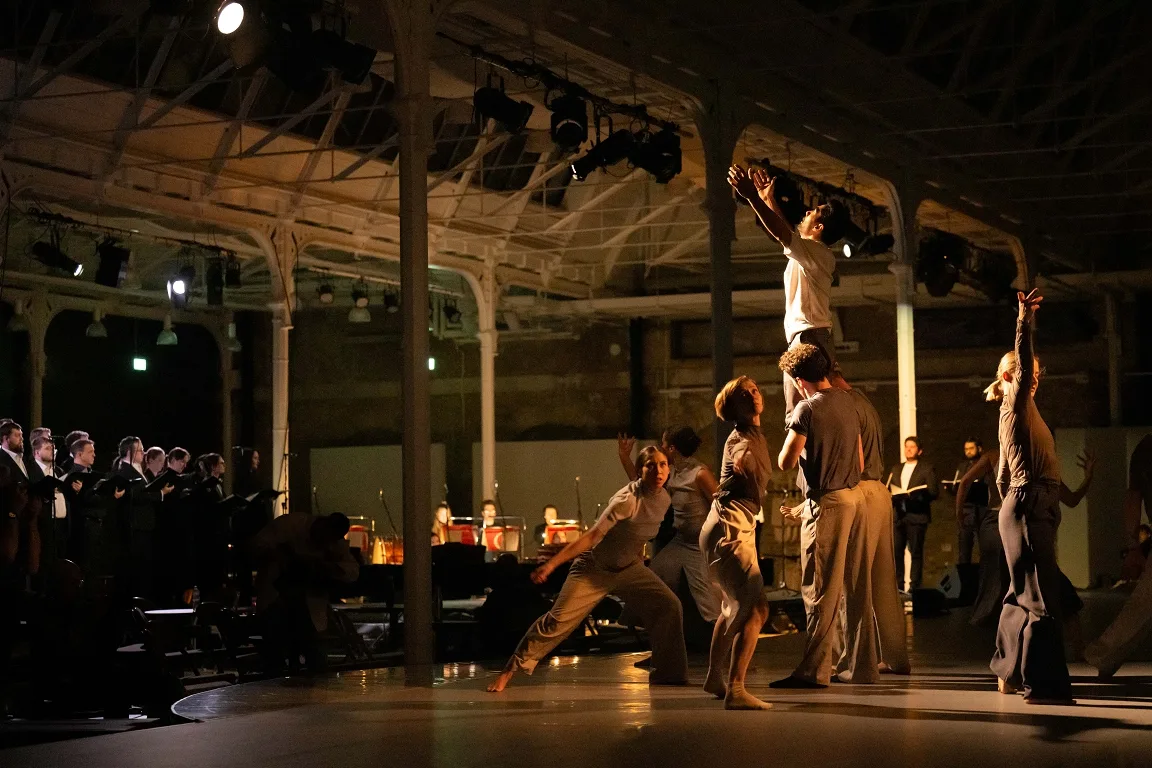

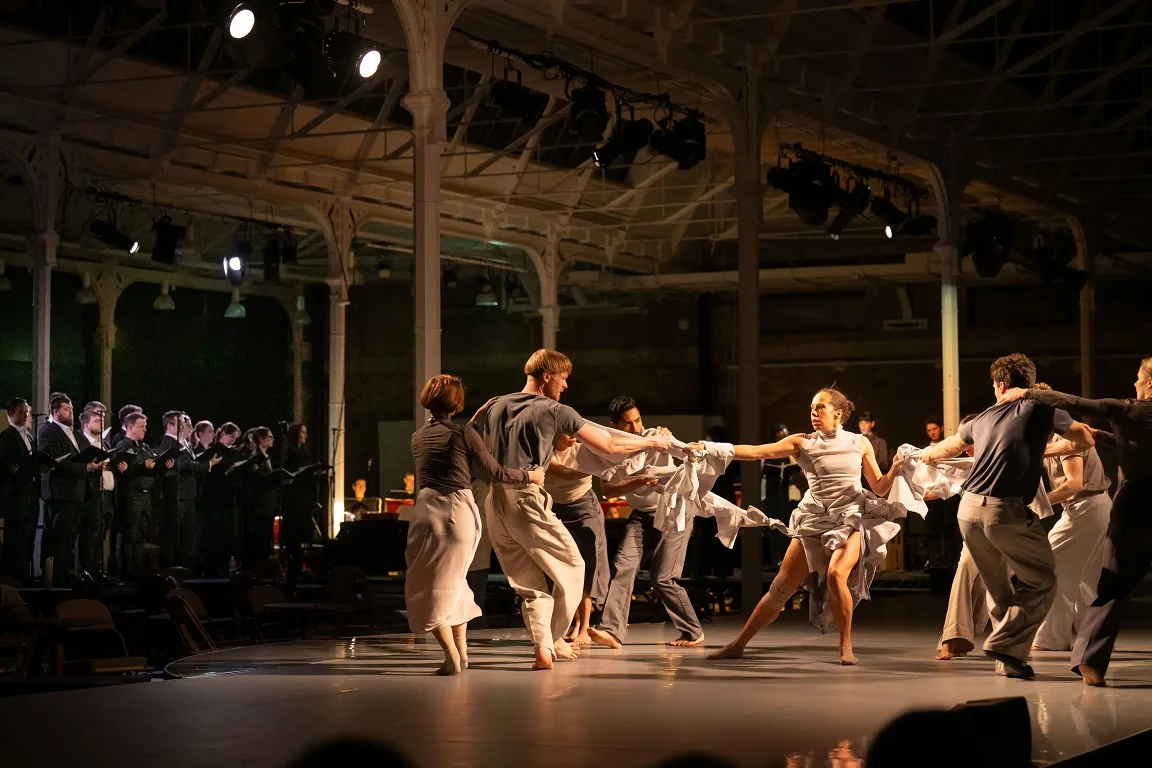
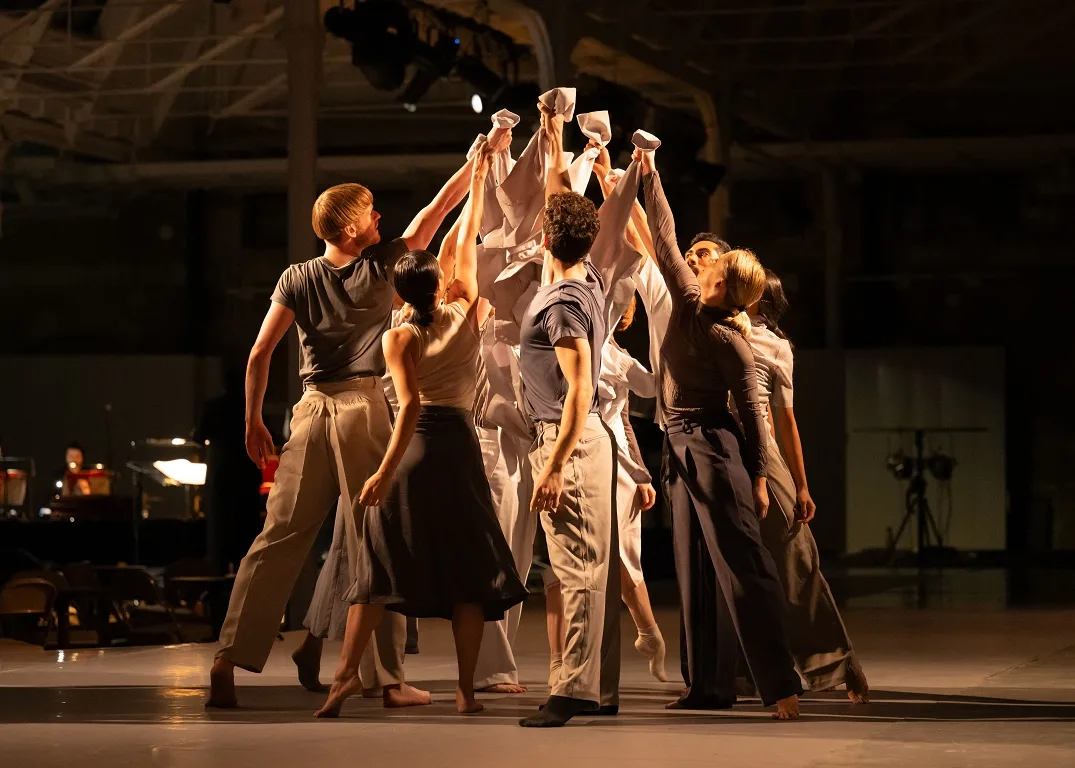
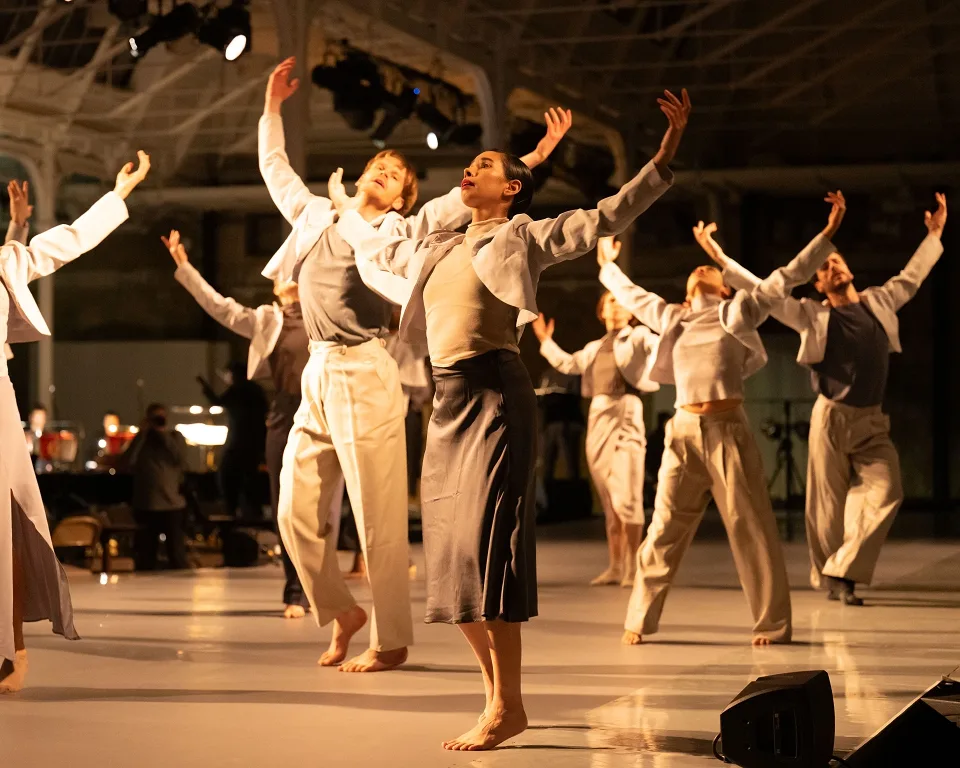
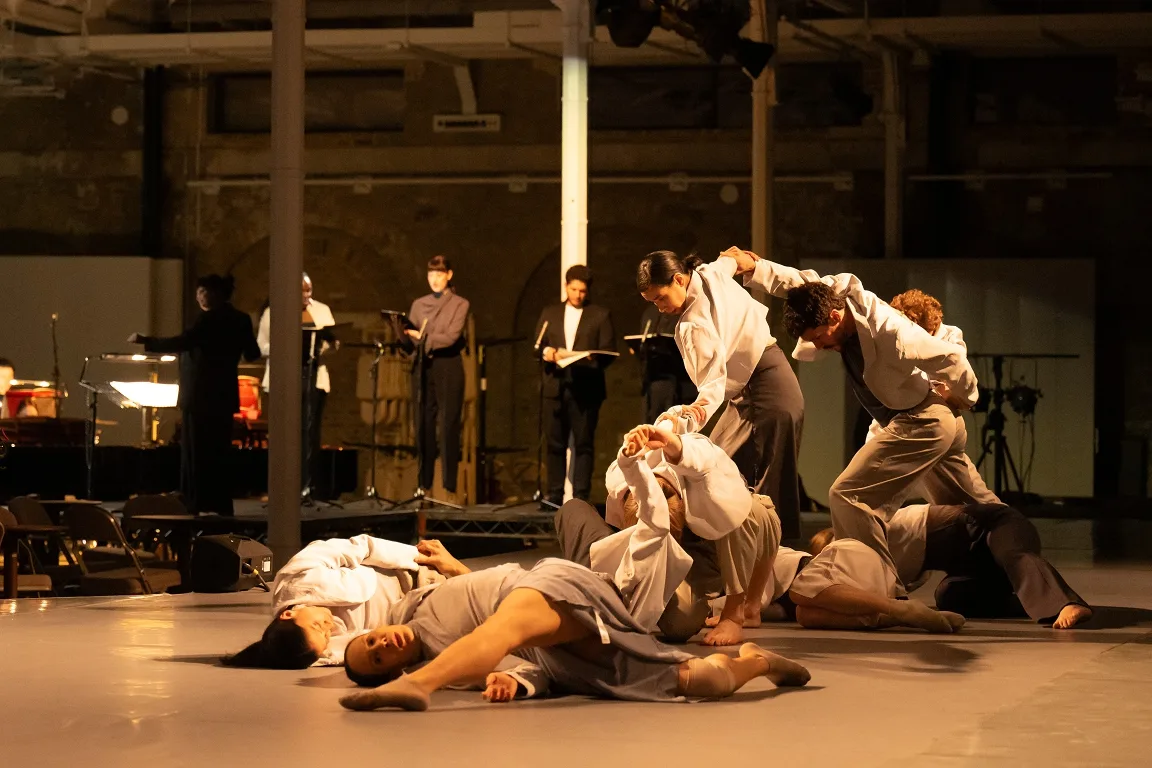

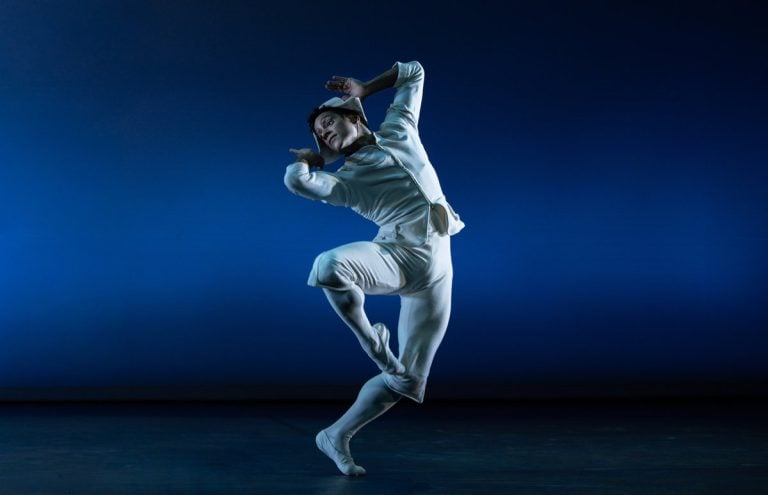
The performance, produced by NMC founding member Malgorzata Dzierzon (current Ballet Director at Wrocław Opera) was a four for the price of one affair. The programme opened with two musical offerings, then came Les Noces, and closing was a youth company piece performed by English National Ballet Youth Company on the Sunday I attended. This was choreographed by NMC member Estela Merlos in collaboration with the dancers, and featured the live, verging on unbelievable wizardry of beatboxer MC Zani.
Appels by Andrea Balency-Bearn was inspired by Stravinsky’s original Les Noces score, specifically the bells throughout, most recognisable in the composition’s closing. Appels didn’t have the same impact as Stravinsky, as it felt too obscure to properly connect with.
Cage Letters by Yshani Perinpanayagam (also conducting) took private letters from composer John Cage to dancer and choreographer Merce Cunningham and turned them into a mini operetta of sorts. I was left thinking why, and I still am. Though baritone Ross Ramgobin’s voice certainly filled the vast space of The Fireworks Factory at Woolwich Works.
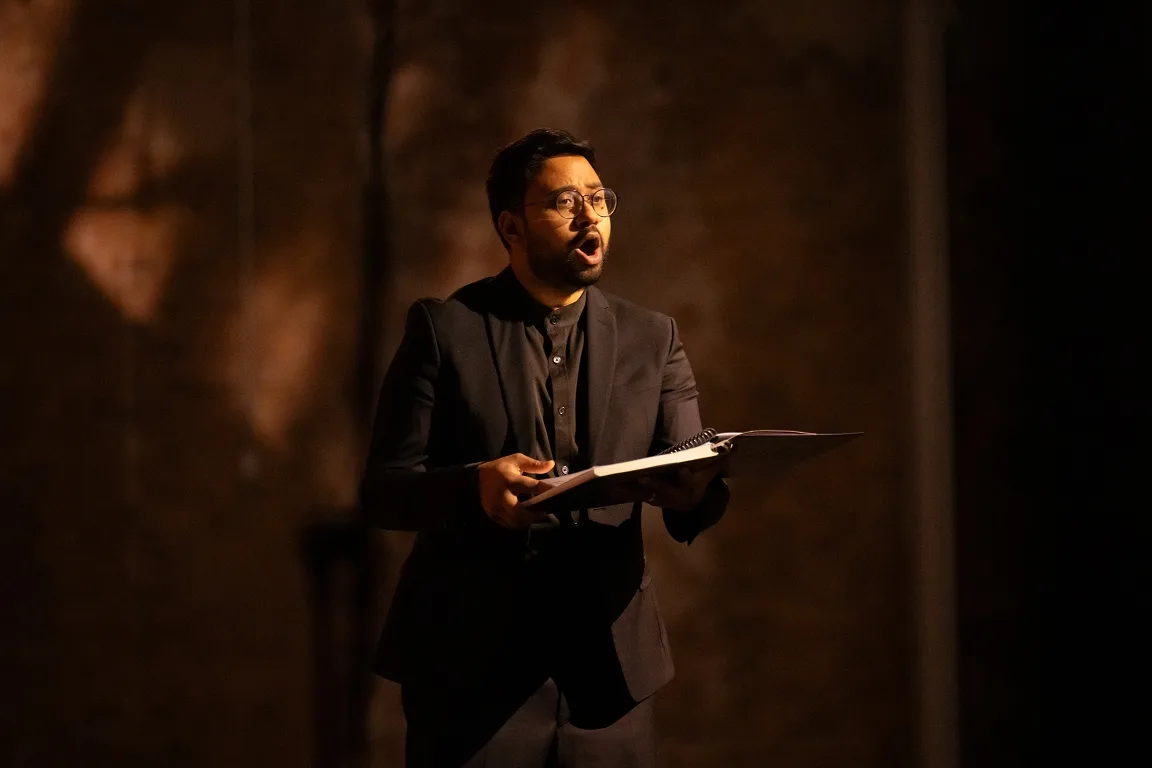
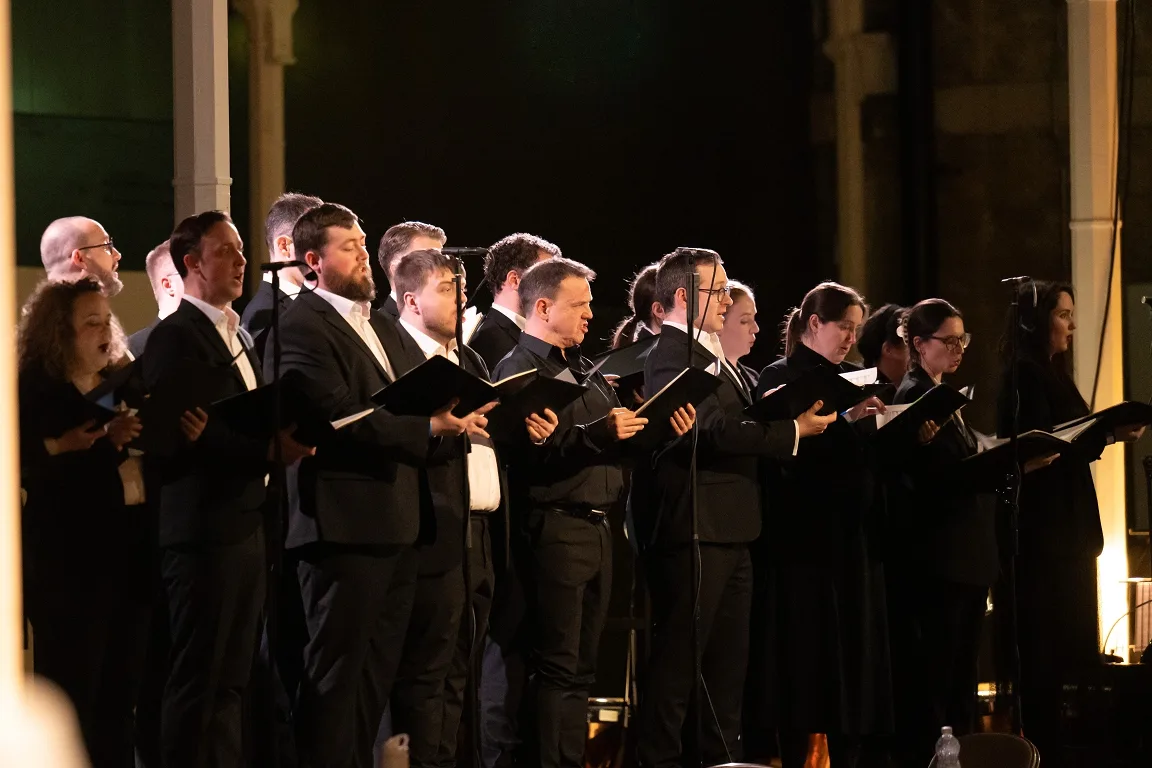
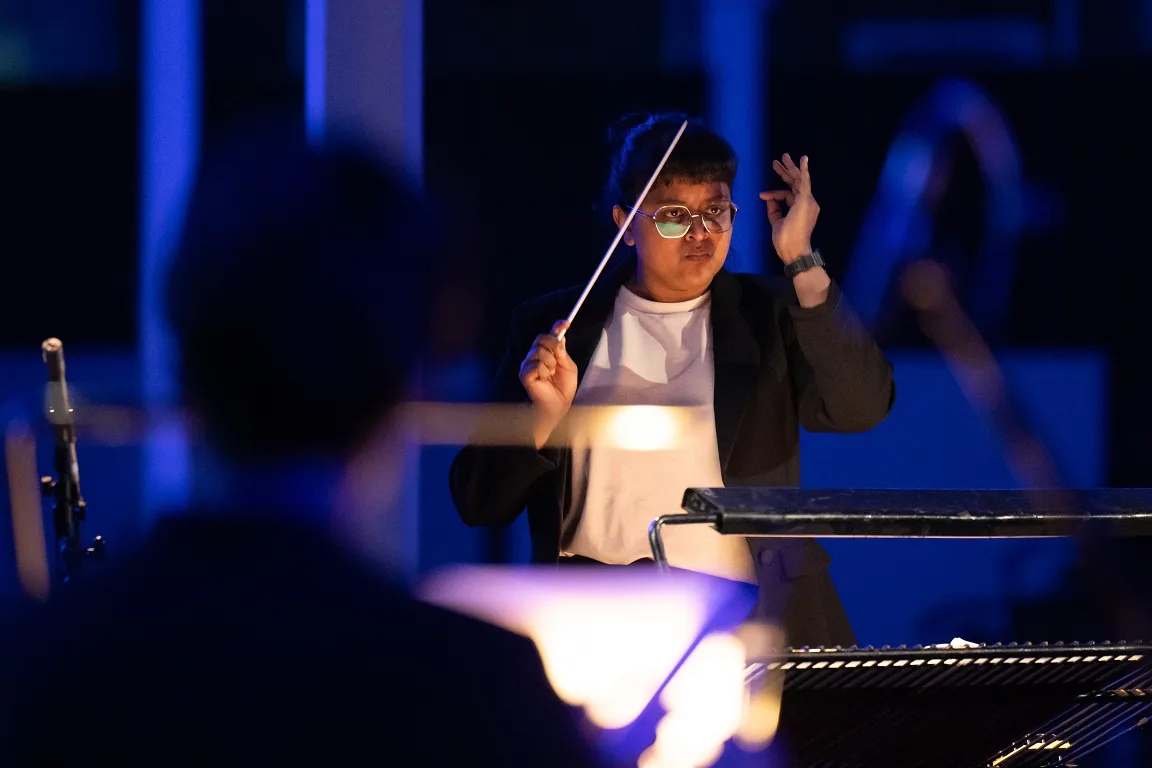
The space featured a raised stage, catwalk-esque in shape with a swollen, circular centre. It was surrounded almost totally by different seating options – some tiered rows, elsewhere scattered cocktail tables with loose seats and atmospheric (fake) tealights.
The NMC dancers entered the space early on and sat in the audience for the first two musical interludes, but it was when the opening bars of Stravinsky’s Les Noces rang out that the show truly began for me.
Stating the obvious klaxon – what a score. I don’t hear Les Noces as often as other Stravinsky, so I’m always surprised how familiar it is, and what it does to me emotionally. It was also played extremely well, and the soprano April Koyejo-Audiger was in very good voice supported by a dramatic resonance.
NMC are the real deal. The members bringing such experience and expertise to the stage that one can only respect whatever they do – whether it’s your bag or not.
Nijinska’s work is hard to unsee, being so powerful in its literal communication of both movement and narrative, but the NMC interpretation covers a lot of similar ground, with an added side order of group aggression turning into devouring cannibalism.
There is an apparent sense of community in attire and spatial proximity; expectation and the associated repression equally present for both the male and female members of the cast, and ceremonial nature evoked specifically through the use of costume.
The cast remove and replace items of clothing throughout, and numerous moments see their jackets being used as props to reaffirm the possible psychological happenings taking place within the microworld.
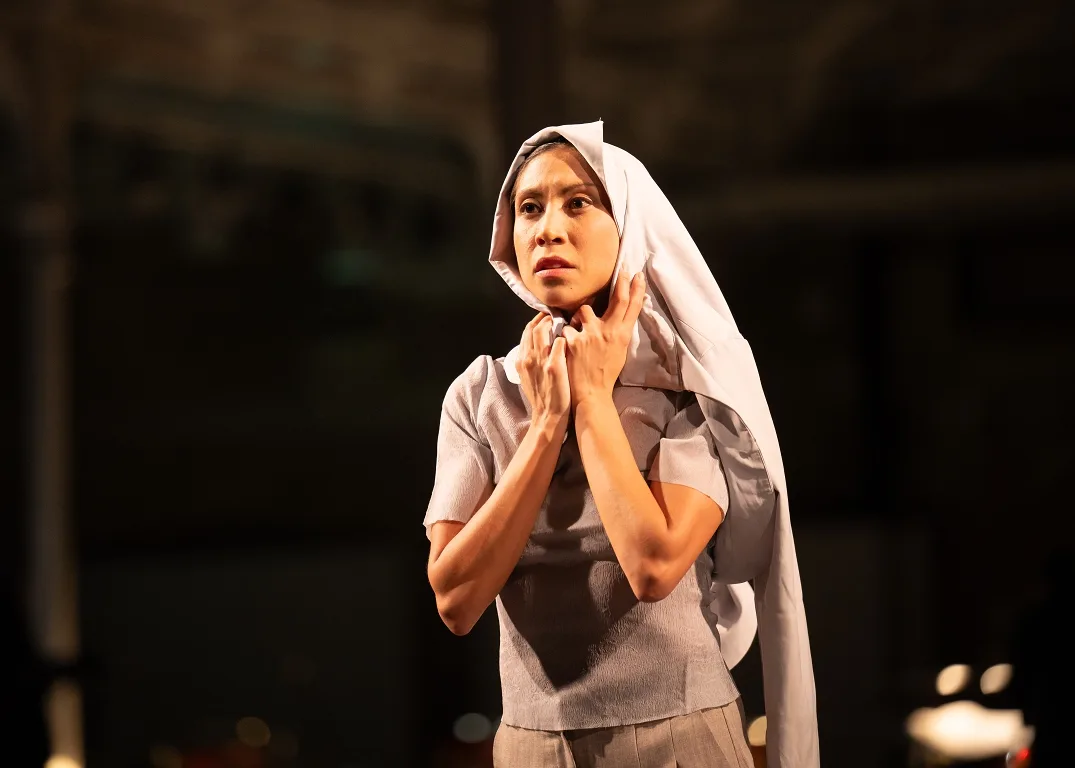
A dancer is wrapped in the tied-together jackets and finds herself being restrained and manhandled by her peers in an uncomfortable manner. A male dancer seems to climb the line of jackets on the floor coursing with despair, and most strikingly a female dancer veils herself and slowly walks across the space with a train following behind her – eyes focused, intention clear, but with a constant eerie sense of dread.
Should we read this representation as a bride? The power of the veiled woman image never seeming to lose its gravitas. One can contemplate virginity, betrothal, religion, repression and of course agency if the context is understood.
The movement offered is musical and precise for the duration. NMC use the rhythmical framework, melodic line and narrative structure (at times) of Stravinsky’s score to underpin their movement language, and the strongest moments see articulate gesture and emotion-led partner work. Of course, they work well as a group, but I feel I saw too much of canon-informed mass rippling here, and elsewhere for that matter. Creators shouldn’t be afraid of recognisable dance lexicon in my humble opinion.
Les Noces is only 25 minutes long, but what NMC offered in both language and intention we often don’t see across full evening works in other venues. They don’t need my advice, but I look forward to longer work, content that feels even more dance phrase-focused, and creations on a more regular basis.

Matthew Paluch was awarded a place at The Royal Ballet School in 1990 where he graduated in 1997. His first four years as a professional dancer were spent working with London City Ballet, Scottish Ballet, K-Ballet and English National Ballet, becoming a full-time member of ENB until leaving in 2006.
Matthew graduated from the Royal Academy of Dance, Professional Dancers’ Teaching Diploma in 2007, and was formerly on faculty at The Royal Ballet School. He completed his Masters in Ballet Studies at Roehampton University in 2011, has been a freelance writer since 2010 and currently works in the Law Sector.
He is a member of the Dance Section of The Critics’ Circle.



We don’t hear Les Noces as much as we do the other Stravinsky ballets because (a) it’s not for orchestra (as the others are), so symphony orchestras don’t program it, and (b) it’s too strenuous a sing for amateur choirs, with complex rhythms and lots of high notes.
That’s an interesting consideration. Thank you.