[Review] São Paulo Dance Company Triple Bill – “The dancers shine through”
Jonathan Gray sees the São Paulo Dance Company in London with dancers “beautifully trained, nimble, fluent, musical, rhythmically alert, dexterous, confident and highly watchable”.
| Title | Triple Bill |
| Company | São Paulo Dance Company |
| Venue | Sadler’s Wells, London |
| Date | 9 February 2024 |
| Reviewer | Jonathan Gray |
Why do we go to see a dance performance? Some go to watch a particular dancer or company, others go to see people move to music, express an emotion, an idea, a theme, or interpret a political ideology, whilst others simply go to be entertained. Some attend a performance to observe all of the above. There’s a lot to be said for being entertained, and if there was just one thing I took away from the appearance of the São Paulo Dance Company of Brazil at Sadler’s Wells on 9 February 2024, it was the sheer pleasure observing a group of tremendously talented artists performing live on stage.
The company was making its UK debut at the beginning of a tour organised by Dance Consortium, but the innate dance talent that emanates from Brazil is already well-known here as an array of artists from the country, for lack of opportunities at home, perform regularly with British troupes. The Royal Ballet, for example, has several Brazilians within its rank, including principal Mayara Magri. On the evidence of this performance, São Paulo Dance Company’s artists equal their talented colleagues. They are beautifully trained, nimble, fluent, musical, rhythmically alert, dexterous, confident and highly watchable. They look tremendous, but best of all is the fact that the company reflects the Latin American society from which it originates: whilst all of them are obviously dancers, their different shapes, sizes, personalities and skin tones combine in an ensemble that is refreshingly different from others and exciting to watch. It’s a pity we could not see more of them.
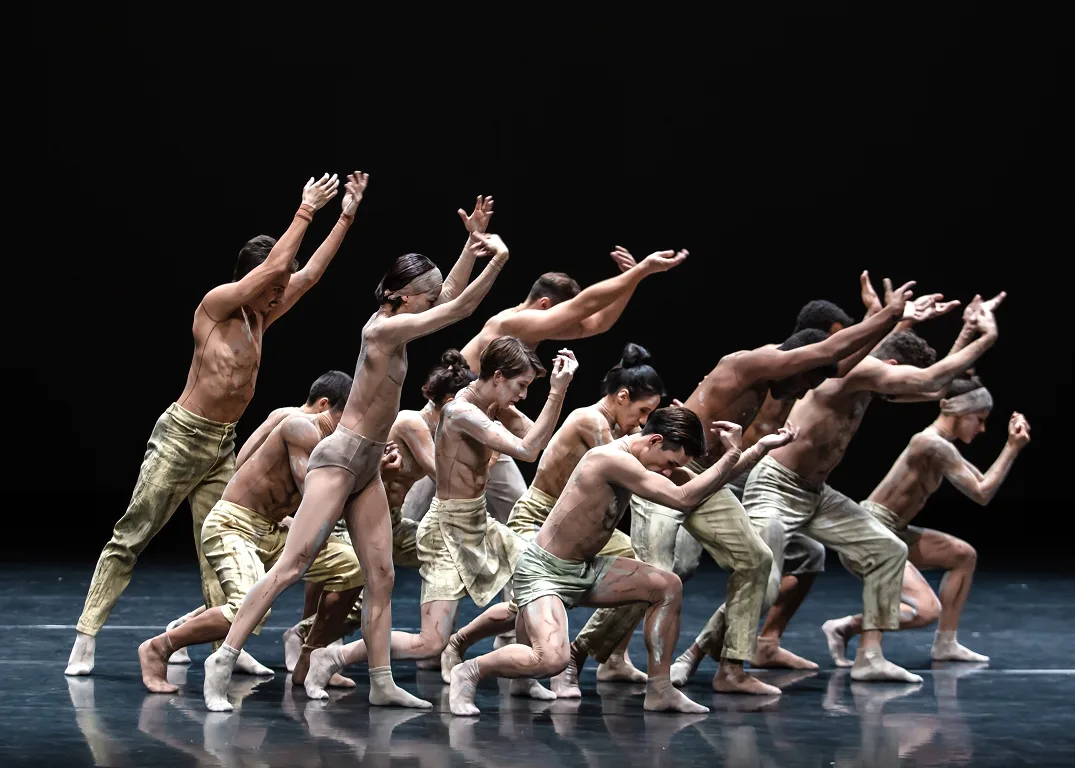
The three short works on the programme were, on the whole, darkly lit, making it difficult for the uninitiated to tell who was who, and, apart from the final piece – Cassi Abranches’ Agora – the dancers had little opportunity to shine individually. Anthem, by the Spanish choreographer Goyo Montero, used the shimmering fingers of the dancers, and mass group movements to suggest a society – perhaps Brazil itself – in turmoil. Whilst individuals occasionally break out from the mass to dance singly, or in pairs, more often they come together in groups as they mime to what sounds like patriotic marching songs, judder like mechanical toys, or divide to fight in rival factions. Montero depicts a nation riven apart, divided in pain and hopelessness, but the dance vocabulary he employs in the work lacks variety and is seldom surprising.


Still, Anthem made a stronger impact than Spanish-born Nacho Duato‘s Gnawa, which drew its inspiration from the people and music of the Gnawa of North Africa. The piece was stronger for its striking stage imagery than it was for inventive choreography. Duato’s dancers move in tight rows, arms sometimes interlocked, the men often separate from the women, as if they were all enacting a ceremony. Their lines and circles, sweeping and bending to drum rhythms, were later interrupted by the sounds of running water and birdcalls as two dancers wearing skin-coloured body tights (possibly Ammanda Rosa and Alex Akapohi – the cast list did not make it clear) perform a duet that appears to suggest they could be symbols of the natural world existing alongside human society. In the final section, the dancers emerge holding candle-lit lanterns which they place along the front of the stage, before performing dances that offer individuals, such as Clara Judithe and Daniel Reca, brief moments alone. A monotonous, unsatisfactory work, Gnawa is slight, although it is better than some of the awful ballets that Duato has created on St Petersburg’s Mikhailovsky Ballet where he, even now after Russia’s invasion of Ukraine, remains artistic director.
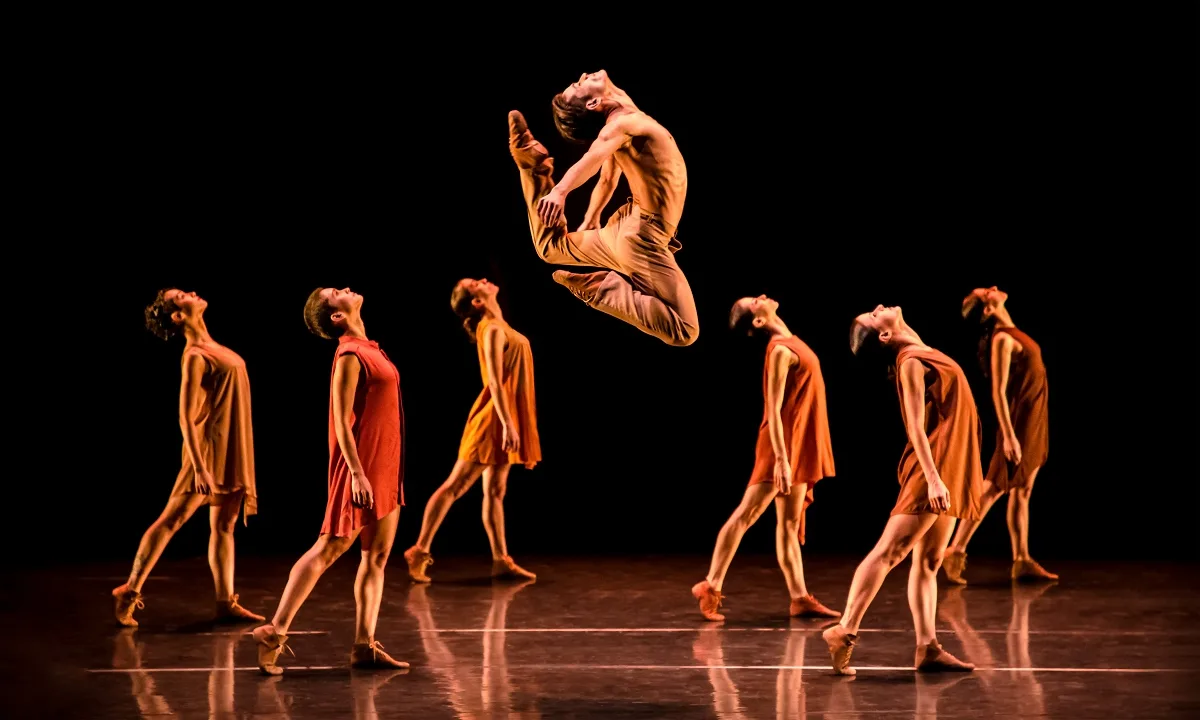
I was expecting a big “grande finale” work to close the programme, but even though Brazilian-born Abranches’ Agora really did set the dancers moving, it wasn’t all virtuoso flash, bang, wallop. Instead, the choreographer relished the company’s ability to move with wonderful rhythmic vitality to the music of Sebastian Piracés’ percussive score. From the tick-tock-tick of the opening moments, with the dancers jiggling and running on the spot, the choreography builds into jumps, turns and fleet-footed movement, and shuddering hips and shoulders, all exploring the different beats and rhythms of the music. Women jump with dare-devil accuracy, feet first, into the arms of their male partners, who catch them just in time, whilst others dance quietly and thoughtfully by themselves. The whole company were wonderful, and I was especially impressed by Nielson Souza, whose concentrated dancing drew the eye because of its calm and sheer quality.
São Paulo Dance Company, which tours the UK until 23 March, makes a big impression whatever it dances. Next time it comes to these shores – and I hope São Paulo Dance Company comes again soon – I would like to see it performing a repertoire of better, Brazilian-made choreography. In the meantime, anyone wishing to experience some great dancing should book their tickets now.
To see tour dates, and to book tickets for São Paulo Dance Company, go to danceconsortium.com