
[Review] Hofesh Shechter’s From England with Love – highlighting the pros and cons of Shechter’s canon

Matt Paluch sees Hofesh Shechter’s From England with Love – “lip-synching, shaking, werking, sashaying, shooting, facial contorting, flailing… you catch the drift.”
| Title | From England with Love |
| Company | Shechter II |
| Venue | Queen Elizabeth Hall, Southbank Centre |
| Date | 18 April 2024 |
| Reviewer | Matthew Paluch |
How long do you need to live somewhere in order to truly understand it? 20 years? It seems so to Hofesh Shechter, who moved to the UK in 2002, and created From England with Love some 19 years later.
The work was originally created for Nederlands Dans Theater 1 in 2021, and now has its UK premiere performed by Shechter II, the 2nd troupe that houses dancers aged 18-25 for two-year cycles.
The piece looks at England’s “complex identity… conflicted by its dark history and powerful attachment to old traditions” in the hope of exploring, and ultimately understanding the present day “English identity”.
I’m no sociologist, but this premise initially makes me shudder. Is Shechter going to accomplish what so many haven’t managed? Can he bring harmony and mutual understanding to the people of this fair Isle? And all through contemporary dance? It’s the thought that counts…

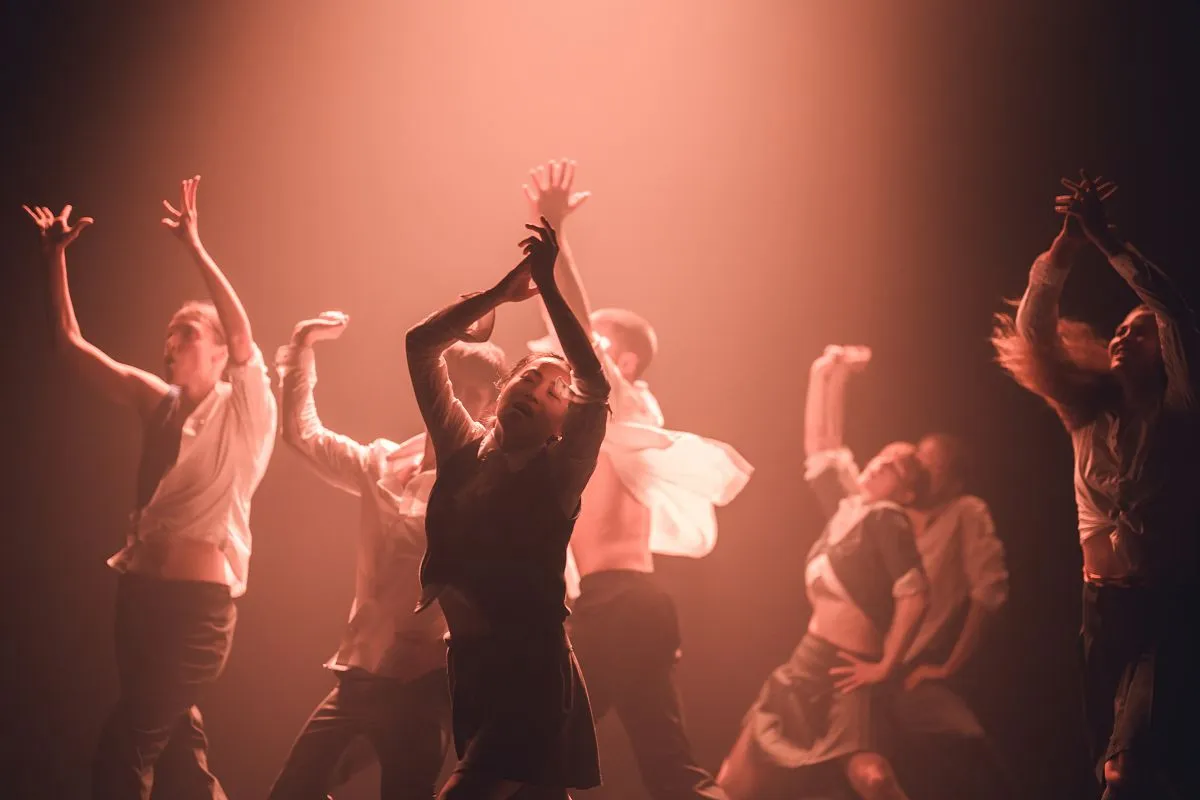
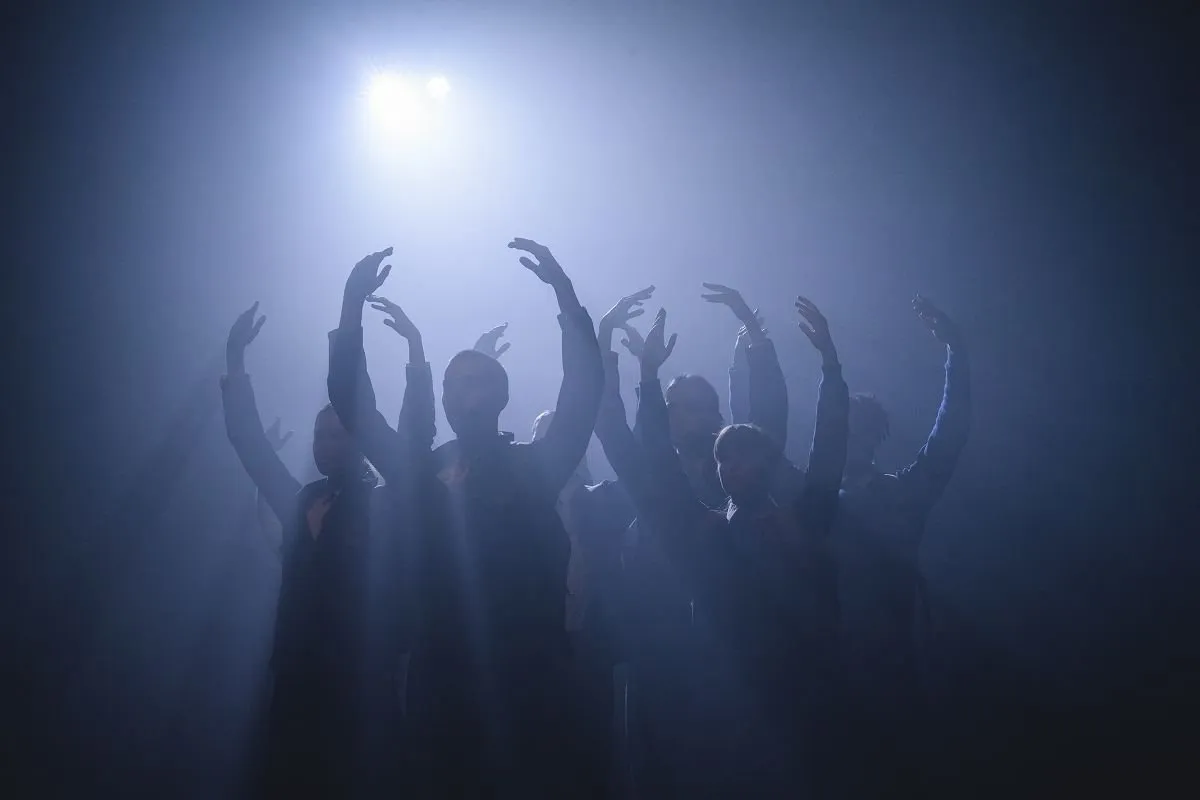
On entering the auditorium, one thinks “fire?”, but no, its dry ice infused, hazy ambiance of course. Though this production choice echoes what Shechter is unquestionably capable of – creating atmosphere and bringing energy to a space.
If I was to fast forward to the end of this piece, I’d propose that From England with Love hasn’t taken me any closer to understanding the original intention of the piece, but it definitely highlights the pros and cons of Shechter’s canon.
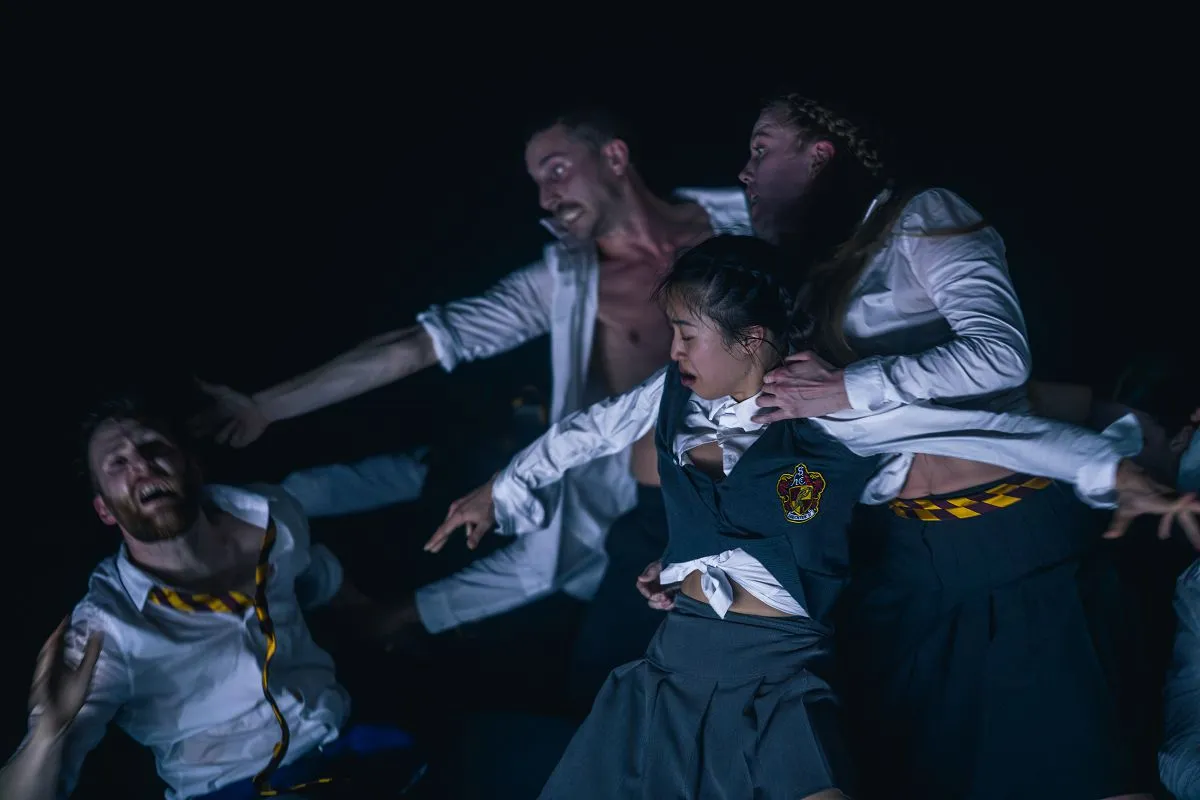
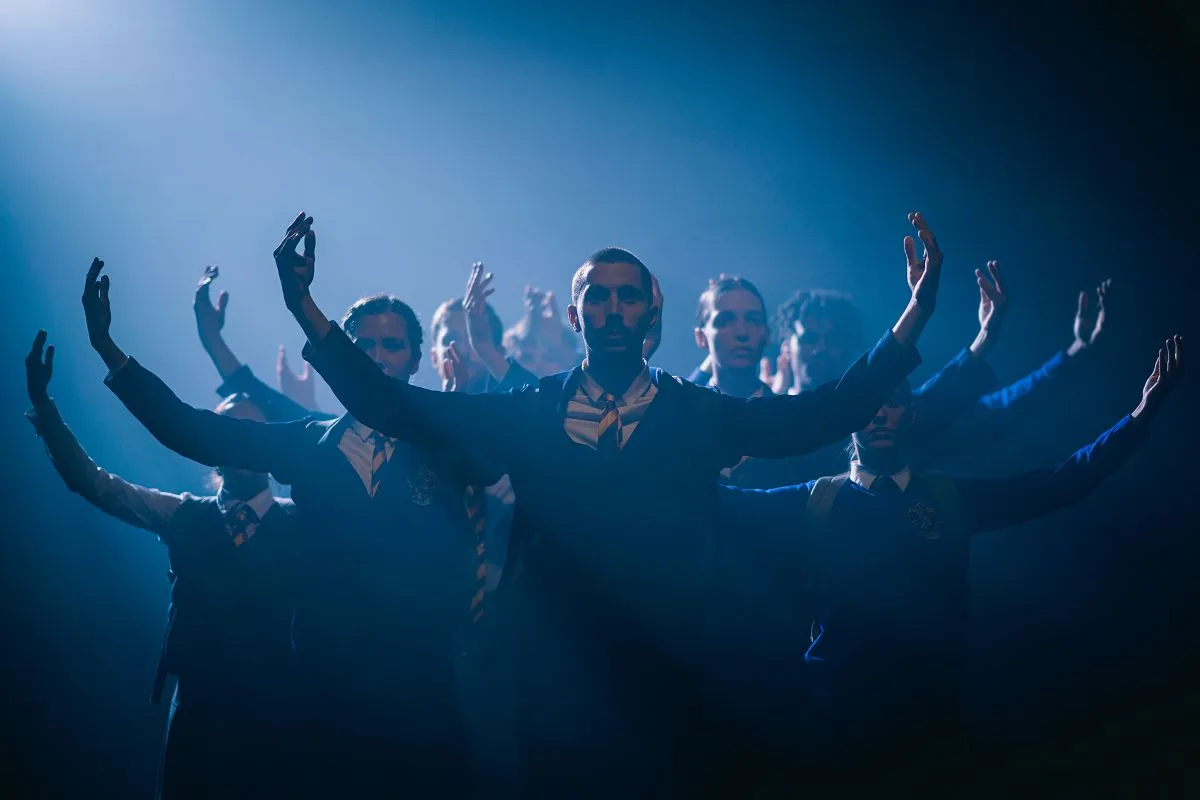
I find the delivery of the overarching philosophical thinking behind the work too simplistic for serious engagement. Shechter only seems to offer an obvious binary, starting with public school togetherness that regresses into state education yob culture, in both attire and movement language.
The togetherness communicates religious connotations, emphasised by the inclusion of anthemic and choral music, with the movement veering towards an urban folk style language – think juicy knees, willowy arms and Playford dances.
The yob element sees everything become more grounded, aggressively dynamic and, dare I say, predictable. Zeitgeist contemporary dance tropes are in full flow – convulsing, cannibalism and all-around violence, committed to fellow cast members or just thin air.
The first 20-ish minutes feel well structured, seeing Shechter use the space, patterning, and pace originally. But after this, things start to feel a bit samey, though the dancers’ execution and commitment can’t be questioned at all.
There’s also a lot of do-ing going on throughout… lip-synching, shaking, werking, sashaying, shooting, facial contorting, flailing… you catch the drift. And ultimately all of this disparate activity ends up culminating in an “everything but the kitchen sink” predicament with no bona fide conclusion to show for it.
The lighting design by Tom Visser is top-notch, catching everything that’s required, as well as hiding aspects to deepen the dark, brooding side of things, both narratively and spatially.
And, considering it’s a Shechter work, we get off quite lightly in relation to the score. The volume isn’t the usual ear-bleeding-inducing level, and the incorporation of established work by Elgar, Tallis, Purcell and Monk bring more range than what’s usually on the menu.
After a number of moving group tableaux, Shechter allows for a solo moment where the cast sit and make a corridor of sorts for the lone dancer to basically freak out within. The interlude can be read in two ways concerning its (possible) topical content – profound or lazy. I’m tempted to veer towards the latter, though I’m unsure whether that’s my baggage or Shechter’s unfortunate, obvious decision making.
Shechter has skill, incredible taste in dancers and a completely recognisable language, which are all good things, I just wish the work were built in a slightly different way, as in less mania to make the point, and perhaps more nuanced subtlety, which doesn’t need to equate to weakness. Shechter is in a privileged position, so here’s hoping he uses it to keep exploring his body of work and doesn’t slip into the often-seen habit of template.




Matthew Paluch was awarded a place at The Royal Ballet School in 1990 where he graduated in 1997. His first four years as a professional dancer were spent working with London City Ballet, Scottish Ballet, K-Ballet and English National Ballet, becoming a full-time member of ENB until leaving in 2006.
Matthew graduated from the Royal Academy of Dance, Professional Dancers’ Teaching Diploma in 2007, and was formerly on faculty at The Royal Ballet School. He completed his Masters in Ballet Studies at Roehampton University in 2011, has been a freelance writer since 2010 and currently works in the Law Sector.
He is a member of the Dance Section of The Critics’ Circle.




I tried sending you a comment within your website but unfortunately it didn’t work. I wonder what went wrong?