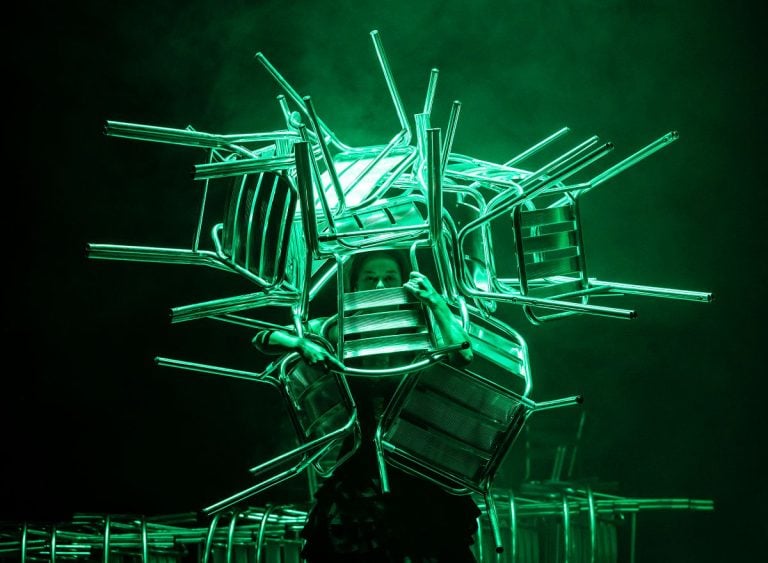
Review: Turn It Out with Tiler Peck and Friends – an assembly of fabulous artists

Jonathan Gray sees Tiler Peck’s Turn It Out – to see such a diverse array of dancing talent in one evening was wonderful.
| Title | The Barre Project, Blake Works II | Thousandth Orange | Swift Arrow | Time Spell |
| Company | Tiler Peck and Friends |
| Venue | Sadler’s Wells, London |
| Date | 12 March 2026 |
| Reviewer | Jonathan Gray |
The four stars allocated to this review speak of the fabulous artists that Tiler Peck, choreographer and principal dancer with New York City Ballet (NYCB), has assembled for her Turn It Out programme at London’s Sadler’s Wells, which played to a packed house of all ages – so there, Timothée Chalamet! – on 12 March. To see such outstanding, finely-honed, rigorous and exciting dancers was a joy, and if some of the choreography was nothing special, the programme nevertheless meant one could simply sit back and marvel at just what the human body in motion can achieve. There were no obvious stories, no themes, no deep meanings, just straightforward, enthralling dancing.


Turn It Out began with the strongest ballet of the evening, William Forsythe‘s The Barre Project, Blake Works II. Danced to music by James Blake and originally created for Peck remotely during the COVID lockdown in 2021, it was brought to the stage in New York a year later. It is an astonishing work of virtuosity that moves from an intricate form of practise at the ballet barre and then travels centre stage for a series of quicksilver solos and ensemble dances for a cast of four. Forsythe’s choreography is firmly grounded in the danse d’école and yet it is exhilarating in the way it breaks all the rules and becomes a truly contemporary form of expression. The extraordinarily dexterous dancers – Peck, NYCB’s Lex Ishimoto and Roman Mejia, and freelance artist Brooklyn Mack – have total command of the mercurial choreography and they perform it audaciously. It was a thrilling start to the programme.


Peck’s own Thousandth Orange, danced by India Bradley, Chun-Wai Chan, Christopher Grant, Quinn Starner, Ryan Tomash and Kloe Walker to live music by Caroline Shaw, is a quieter, more muted work. Attractively costumed by Harriet Jung and Reid Bartelme, the excellent cast could simply be a group of friends, with Peck paying particular attention in her choreography to line, form and grace. It all looks very attractive and tasteful, with dancing that includes embraces, lifts, promenades, jumps and turns, but it rarely springs surprises. It was, however, a most welcome introduction to a group of fine NYCB dancers.


Swift Arrow, choreographed by Alonzo King to music by Jason Moran played live by Joel Wernhardt, was a duet for Peck and Mejia. Punchy and direct, and then becoming more intimate, the pas de deux was small beer in comparison to the earlier Forsythe work but was superbly danced by the couple.


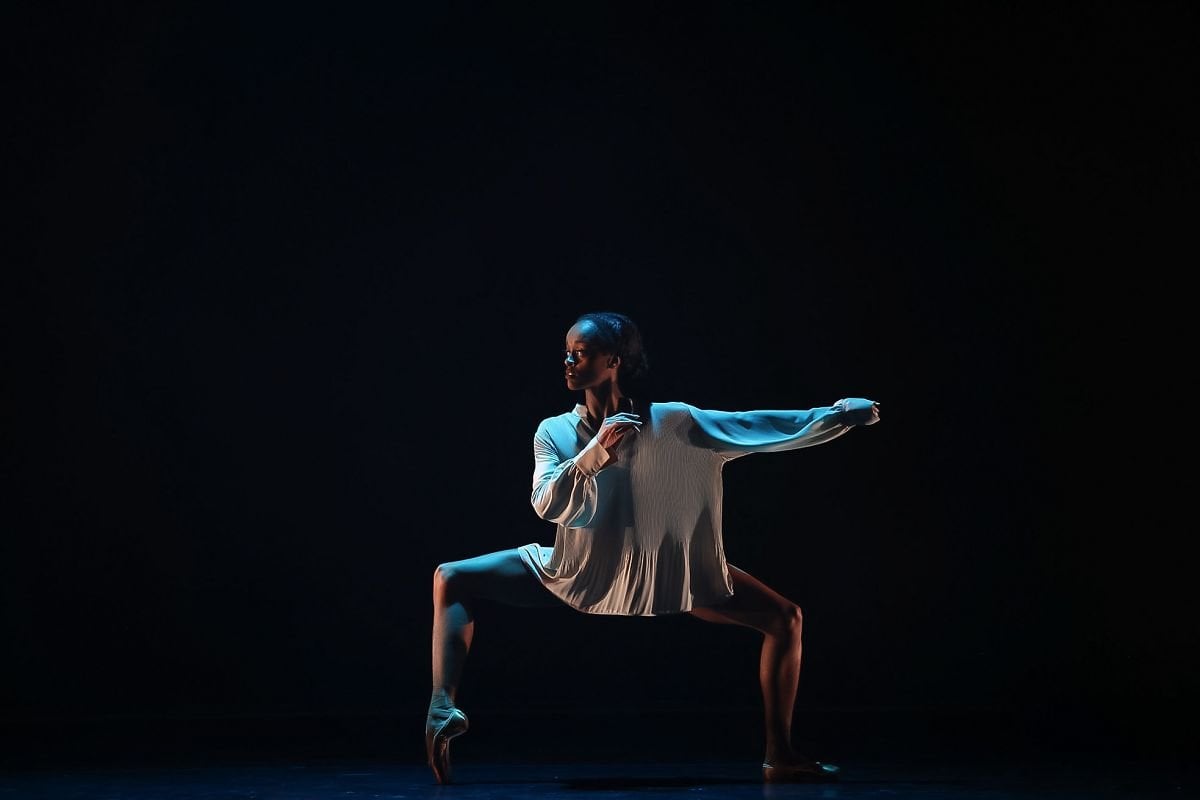
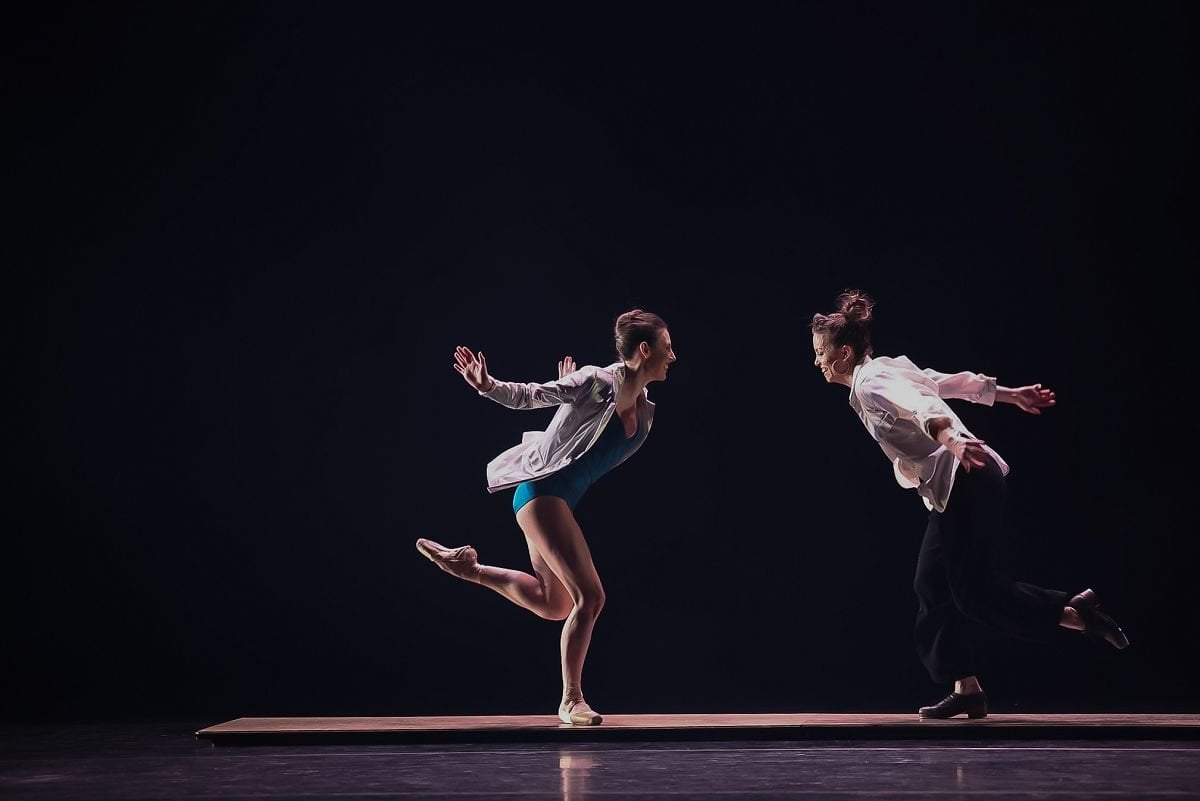
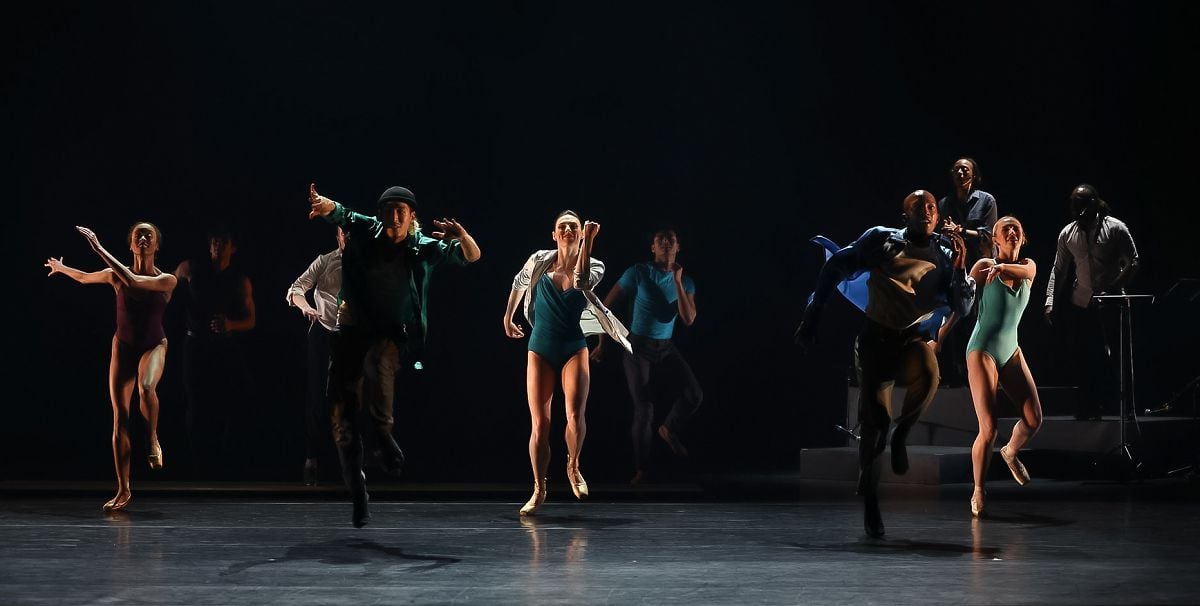
To close the evening was an audience favourite, Time Spell, which has the long subtitle subdivisions of time and space, and intersections of isolation and community, longing and joy. With three choreographers – Michelle Dorrance, Jillian Meyers and Peck – and additional collaborations and improvisations by the dancers, it was, to tell the truth, a bit of a mess, and its momentum occasionally sagged, but it did allow the entire cast to strut their stuff. Joining the NYCB dancers were Dorrance and Meyers, Broadway dancer Byron Tittle, and dancers and singers Brinae Ali and Aaron Marcellus Sanders, who all contributed to the work’s very “New York” atmosphere. I was particularly struck by the magnetic stage presence of Meyers, a mature artist who makes even the smallest gesture seem compelling.
To see such a diverse array of dancing talent in one evening was wonderful, so one must simply express grateful thanks to Tiler Peck for bringing her friends to London. Long may it continue.


Jonathan Gray was editor of Dancing Times from 2008 to 2022.
He studied at The Royal Ballet School, Leicester Polytechnic, and Wimbledon School of Art where he graduated with a BA Hons in Theatre Design. He was on the Curatorial Staff of the Theatre Museum, London, from 1989 to 2005, assisting on a number of dance-related exhibitions, and helping with the recreation of original designs for a number of The Royal Ballet’s productions including Danses concertantes, Daphnis and Chloë, and The Sleeping Beauty.
Jonathan Gray has also contributed to the Financial Times and The Guardian, written programme articles for The Royal Ballet and Birmingham Royal Ballet, and is co-author of the book Unleashing Britain: Theatre gets real 1955-64, published in 2005. He is a member of the Dance Section of The Critics’ Circle.