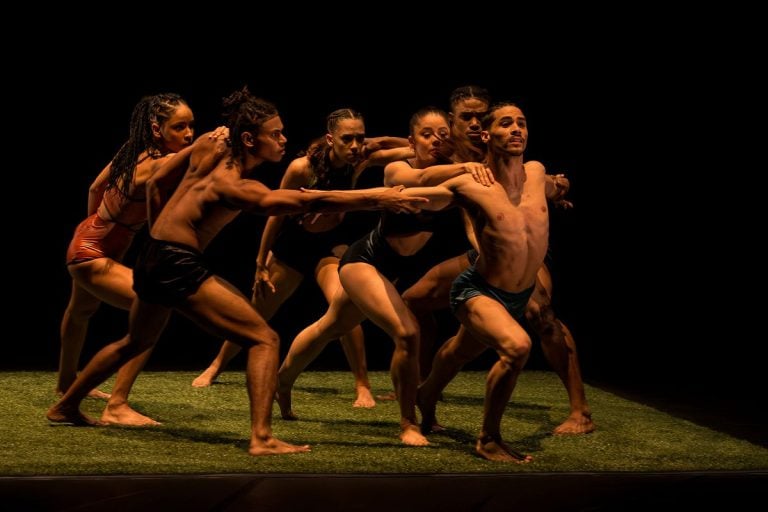
Review: Company of Elders – over-60s present a double bill with charisma, poignancy and comedy

Graham Watts sees the Company of Elders at Sadler’s Wells’ Elixir Festival, which champions performance by dancers of a certain age.
| Title | They Look Like People | Survival Kit |
| Company | Company of Elders |
| Venue | Lilian Baylis Studio Theatre, Sadler’s Wells, London |
| Date | 4 April 2026 |
| Reviewer | Graham Watts |
The entry age to the Company of Elders is 60. When my parents were “elders”, if they wanted to dance it could only happen socially or in private. The idea of doing things one did as fit, young humans when those descriptions may no longer apply has taken flight in recent times. A friend of mine is a veteran swimmer and competes at world championships. He told me that they have centenarian competitors! So, why not dance in a company, for a paying audience, in one’s dotage? My parents would certainly have approved.
And these particular elders take it very seriously. The eighteen company members each have five-year contracts and, while they may be looking after the grandchildren, walking dogs or still working at the day job, they rehearse seriously on a regular basis. Sadly, they don’t get to perform much and given that this double bill was an important ingredient in the Sadler’s Wells Elixir Festival, which champions the notion of performance by dancers of a certain age, and the seats in the Lilian Baylis Studio Theatre were full for this show, it does seem measly for their enthusiasm to be matched by the brevity of having only two shows on the same day!
Does the professionalism of their performance match the ambition of the company? In many respects, the answer is resoundingly affirmative. The two pieces on this programme were very different, but collectively they required many skill sets, including mime, synchronised movement, spoken text, comedy and a decent smattering of dance!
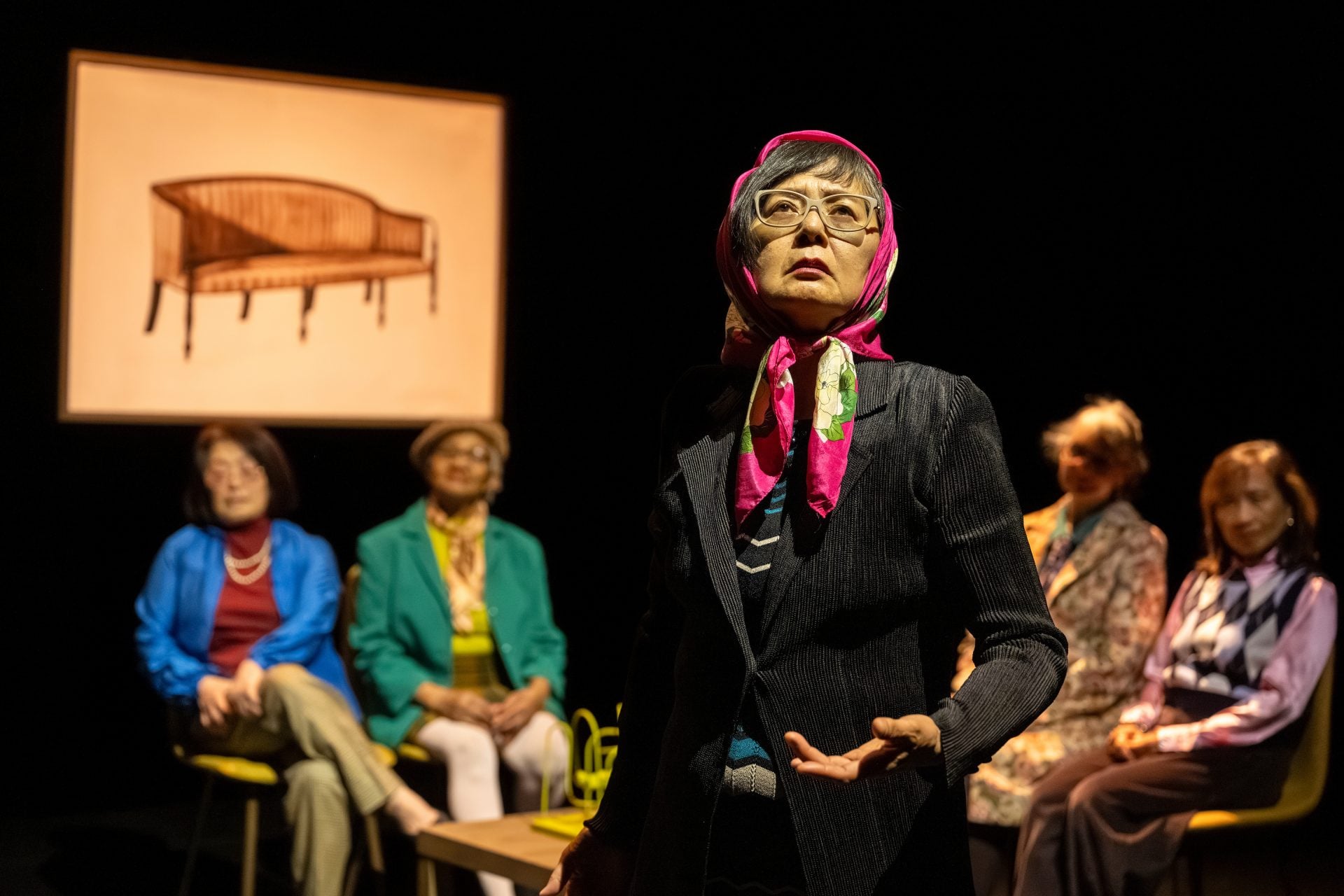
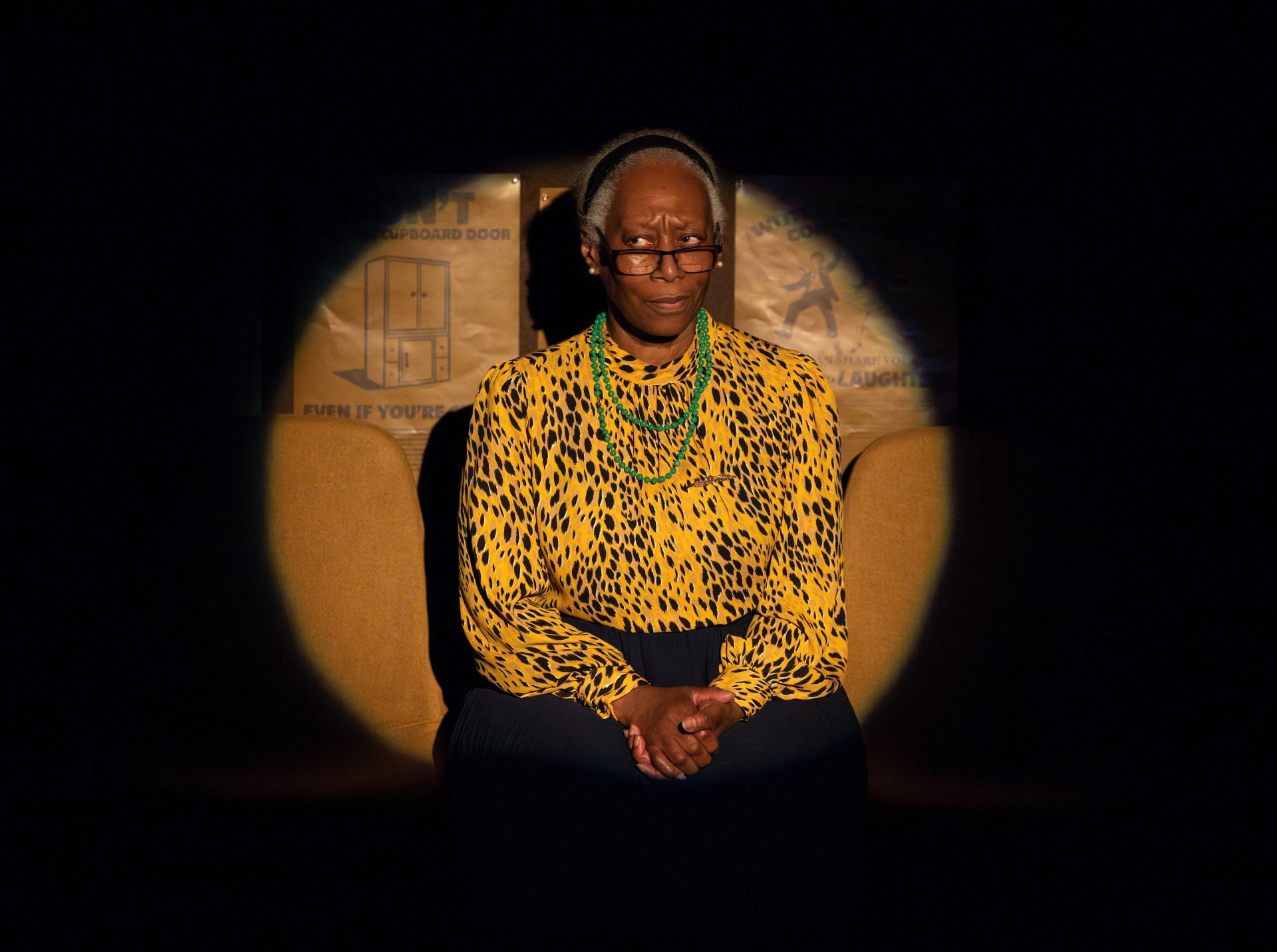
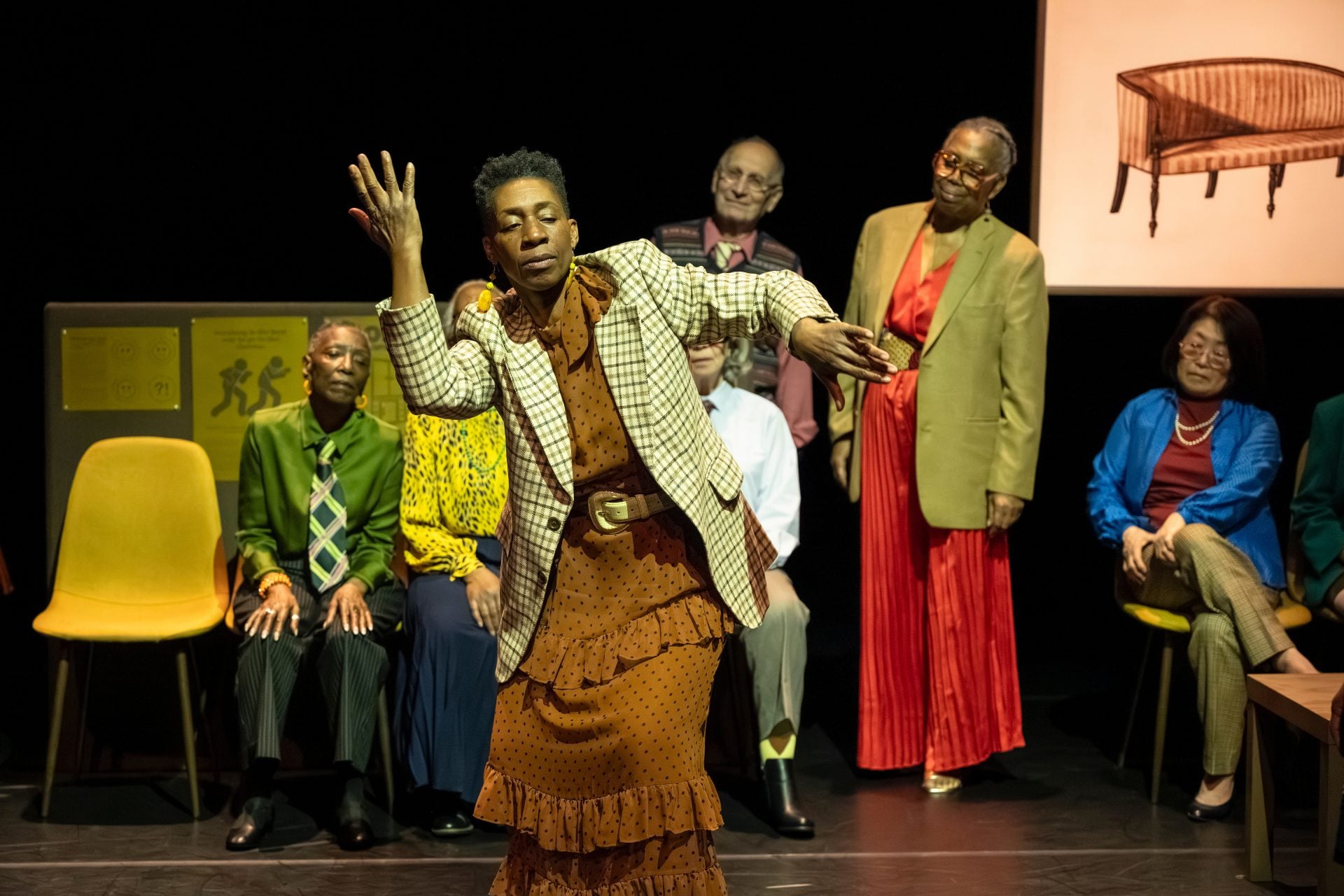
John-William Watson’s They Look Like People opened the double bill in a whimsical exercise about loss and human identity set inside a doctor’s crowded waiting room. The benefit of this setting was that each of the eighteen performers got to have a brief smidgeon of the limelight as their story was explained in voiceover text about life and a strange allegory about the thoughts of plants in the waiting room that was embedded within Adam Vincent Clarke’s composition. Despite the poignancy of some of the individual stories, it all ended happily.
It was more physical theatre than dance, although the need to synchronise the movement of a comparatively large ensemble in a relatively small space was an important element, especially since the group moved efficiently, without so much as a bump, often as if a single organism, using the space effectively, while navigating around chairs and other paraphernalia in Joshua Cartmell’s set design, which in my experience was far too elegant for the ascetic norm of today’s doctors’ surgeries, in which most plants would likely be plastic or dead!
To be frank, I think this work suffered from the large cast, although I appreciate that Watson – a former Sadler’s Wells Young Associate – had to play with the cards dealt to them. But it was hard to pick up and identify with so many individuals, some of whom played their part with charisma, poignancy and comedy (take a bow, Judy Lipsey), and others less so. With Kontakthof – Echoes of 78 playing on the main stage, it was easy to appreciate the Tanztheater style in Watson’s work.

Charlotte Öfverholm is fresh from a guest principal stint as Queen Elizabeth I in Scottish Ballet’s Mary, Queen of Scots and, as a choreographer, she specialises in championing older artists on stage and film, and that experience shone through in Survival Kit, a work that turned corners so frequently that there was never a dull moment.
The performers got the opportunity to really dance in an episodic work, including some snazzy jazz hands stuff in A Chorus Line pastiche. Again, all eighteen dancers (all but two of whom were women) got moments to shine in a work that – as the title implies – was about surviving against all the odds.
I understand from post-show discussions that many of their spoken stories were true, such as surviving a car crash, a tsunami wave and a heart attack; others were less about life-threatening episodes and more about achievements, running a marathon, even fixing a broken-down car, etc. Since every performer was speaking of a real-life incident that had occurred to them, each episode was related meaningfully. I wish that I could have identified the individuals, but with no programme to refer to, they were almost all anonymous.
The Elixir Festival is a great idea, but why only programme it every other year? Is it not as important as the other festivals staged by Sadler’s Wells? And why only two shows? If you are going to champion elder dancers, then at least do it with a full throttle. I found myself both praising Sadler’s Wells for the initiative but also wondering whether the theatre took these performances anywhere near as seriously as the dancers certainly did!

Graham Watts is a freelance writer and dance critic. He writes for The Spectator, Tanz, Shinshokan Dance Magazine (Japan), Ballet Magazine (Romania), BachTrack and the Hong Kong International Arts Festival and has previously written for the Sunday Express, Dancing Times, Dance Europe, DanceTabs, London Dance, the Edinburgh International Festival and Pointe magazine (USA). He has also written the biography of Daria Klimentová (The Agony and the Ecstasy) and contributed chapters about the work of Akram Khan to the Oxford Handbook of Contemporary Ballet and on Shobana Jeyasingh for the third edition of Routledge’s Fifty Contemporary Choreographers.
He is Chairman of the Dance Section of The Critics’ Circle and of the UK National Dance Awards and regularly lectures on dance writing and criticism at The Royal Academy of Dance, The Place and (until the war) for Balletristic in Kyiv. He was a nominee for the Dance Writing Award in the 2018 One Dance UK Awards and was appointed OBE in 2008.