She died just a few weeks shy of her 96th birthday in July 2015.
She was the head of Sartoria Teatrale Brancato (Brancato Costumiers) in Milan, which she founded in 1961 after five years working at the Piccolo Teatro with director Giorgio Strehler. She founded her own company after the great Italian designer Luciano Damiani asked her to design all the costumes for an opera he was staging. Being that she could hardly do such a thing at home, and didn’t want to turn down such an opportunity, she opened her first workshop.
The public garden, which now bears her name, has areas for children and dogs, benches under trees, and playing areas… a typical multifunctional community park. It is just 100 metres from the present home of the company she founded, which still makes costumes for the Piccolo Teatro, Teatro La Scala, the opera houses and theatres in Italy, as well as opera houses across the world.
The association with the ballerina Carla Fracci endured for many years, and Brancato preserves the majority of her costumes worn over the years. One of the earliest costumes for Fracci in La Syphide was displayed at the entrance to the workshops, where refreshments were served after the ceremony. The other costume on display was that of Arlecchino (Harlequin), one of several made over the years for Strehler’s various productions of Goldoni’s play, starring the great Italian actor Ferruccio Soleri, who was present at the ceremony and is now 96.
Ferruccio Soleri and Franca Squarciapino at the ceremony for the naming of the Eufemia Brancato Gardens - Milan 7 July 2026, photo by Graham Spicer
Milan features gardens and piazzas named after actors and singers who appeared before the public, but now it honours a key backstage figure. A frequent collaborator of hers over the years was the 85-year-old Oscar-winning designer Franca Squarciapino, who was also present at today’s ceremony.
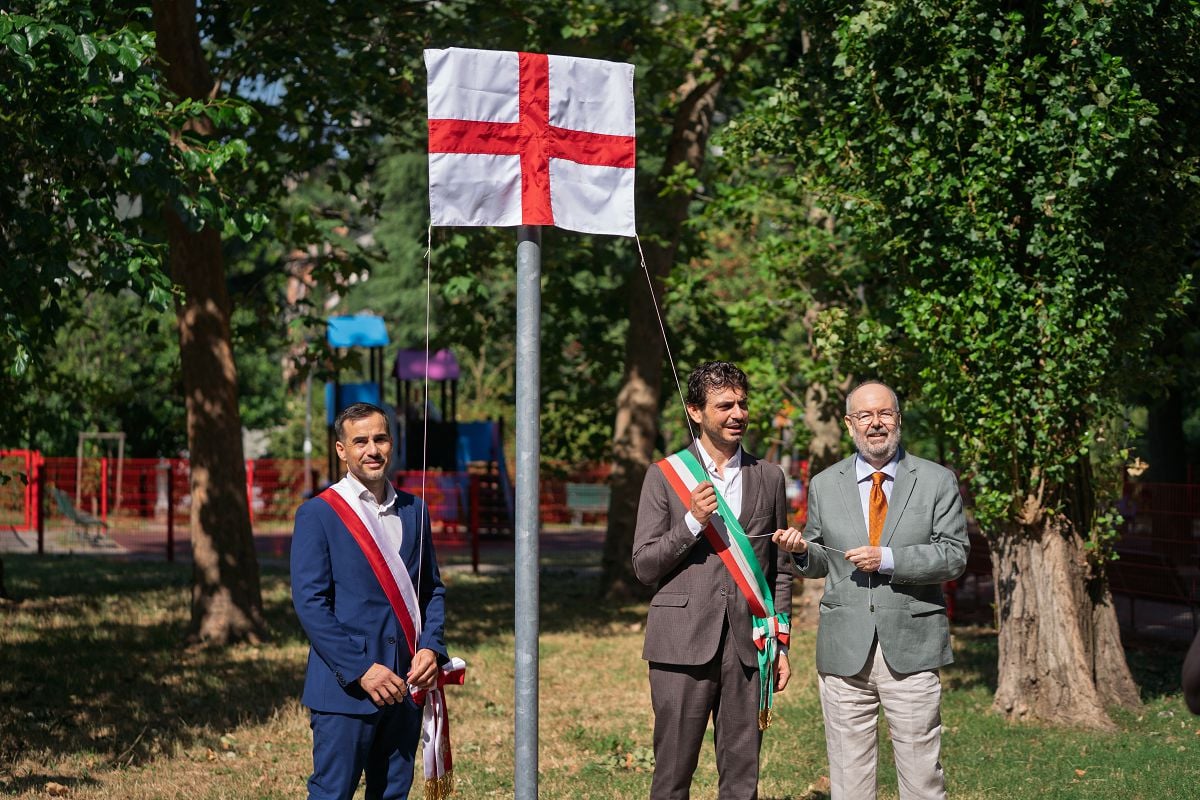
Tommaso Sacchi, Milan’s Head of Culture, and Santo Minniti, President of the Municipality that houses the gardens, both spoke, underscoring that few such areas in Milan were dedicated to women and how that was changing. Roberta Mangano, the present head of the costume department at the Piccolo Teatro, also said a few words, and the ceremony concluded with heartfelt recollections, as well as reflections on the present state of theatres, by Eufemia Brancato’s son, Mario Brancati, who has headed the company since she died.
Tommaso Sacchi said:
It is our hope that these gardens will become a place of gathering, beauty and remembrance, where the name of Eufemia Borraccia Brancato can serve as a daily reminder of the value of a job well done, of the creativity that springs from dedication, and of all those women who, through their talent and passion, have helped to build the Milan we know today.
Ceremony for the naming of the Eufemia Brancato Gardens - Milan 7 July 2026, photo by Graham SpicerCeremony for the naming of the Eufemia Brancato Gardens - Milan 7 July 2026, photo by Graham Spicer
Graham Spicer, aka 'Gramilano', is a writer, director and photographer based in Milan. He was a regular columnist for Opera Now magazine and wrote for the BBC until transferring to Italy. His articles have appeared in various publications from Woman's Weekly to Gay Times, and he wrote the Danza in Italia column for Dancing Times magazine. Graham was the historical advisor on Codice Carla, the 2023 documentary on Italian ballerina Carla Fracci.
Graham also works as a dance photographer, and his photos have appeared in many books, theatre programmes, and magazines, including Dancing Times, Dance Spirit and Ballet2000, as well as all the major Italian newspapers.
He is a member of the Dance Section of The Critics’ Circle.