Review: English National Ballet School and John Cranko School at the Next Generation Festival

Graham Watts sees two top ballet schools at the Royal Ballet & Opera’s Next Generation Festival, dancing as if they were already fully fledged professionals.
| Title | Next Generation Festival |
| Company | English National Ballet School | John Cranko School |
| Venue | Linbury Theatre, Royal Opera House |
| Date | 30 June 2026 |
| Reviewer | Graham Watts |
The opening act of this Next Generation programme, shared between English National Ballet School and Stuttgart’s John Cranko School, was all about quartets and choreographically belonged to the late Anton Dolin, who created both Variations for Four, danced by four young men from the Cranko School, followed by his reinterpretation of the legendary Pas de Quatre, performed by four young women from the ENB School.
If it were a competition along the lines of the current football World Cup, this would have been a high-scoring game between England and Germany that would have gone to a penalty shoot-out since both sets of four were on excellent form. The strong men from Stuttgart (Cameron Cinnamond-Bland, Kenshin Kimura, Keisuke Miyazaki and Simon Tischler) were unified in their togetherness in Variations for Four and showed impeccable technique in their challenging back-to-back variations with strong Bluebird style entrechats six, powerful grand jetés en manège and superbly centred double tours among a significant technical catalogue. They began the piece wrapped in velvet cloaks, like four Romeos or perhaps even like four danseur versions of Anton Dolin himself!

Not to be outdone, the four ENB dancers essayed the Romantic elegance of the Pas de Quatre with grace and style. Each statuesque group pose and arabesque were beautifully positioned, and their pointe work was impressive. If I had a criticism, it was just that collectively their landings were heavier and noisier than I would have liked. Each of the variations was danced with great expression and panache. Dolin’s female Pas de Quatre (he choreographed a male quartet, too) was a gift to his dance partner, Alicia Markova, in tribute to the famous Jules Perrot divertissement of 1845, which premiered in London and was created on the four great ballerinas of that era: Lucille Grahn, Carlotta Grisi, Fanny Cerrito and Marie Taglioni, every one of whom is part of ballet folklore. Given this pedigree, the young dancers of ENB school (Annabel Foster, Hana Toyama, Mei Abe and Lyla Ireland) performed with confidence and grace. Across both Dolin pieces, these eight graduates from both schools danced as if they were already fully fledged professionals.
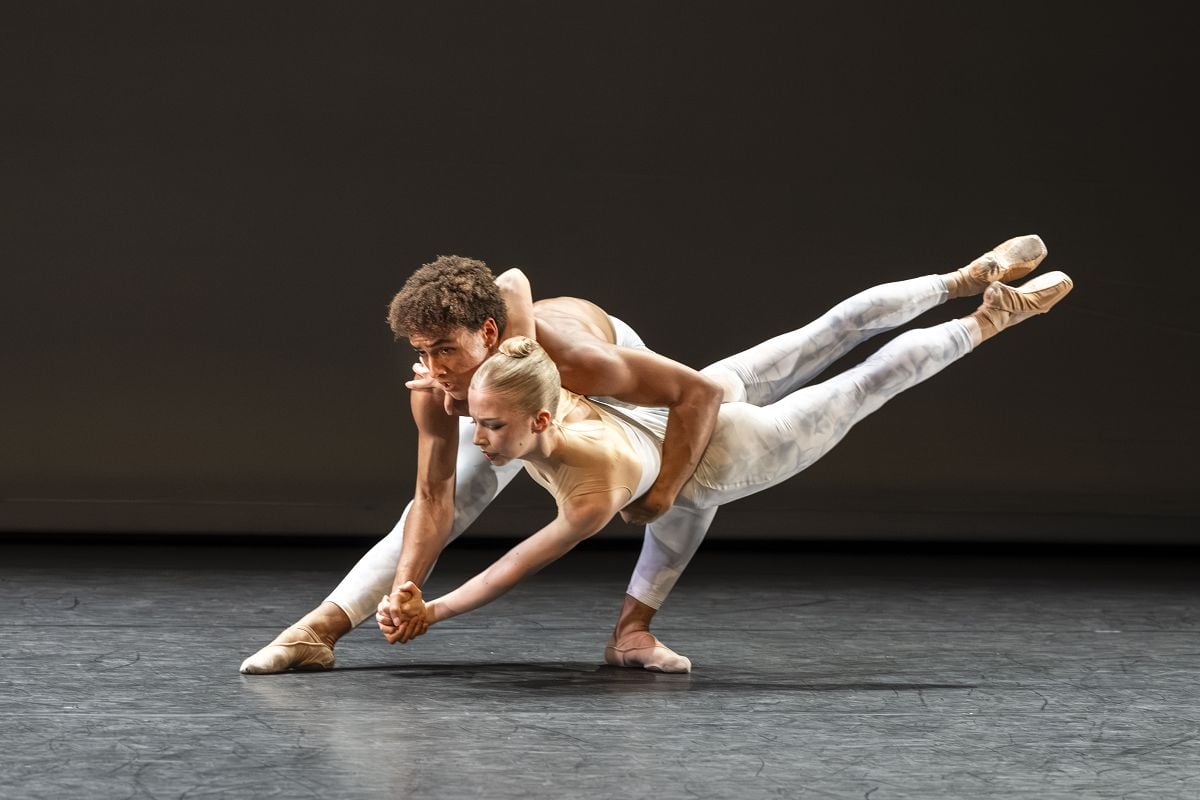


Five brief divertissements followed the interval, giving a glimpse of the varied skills of the two groups. First up were three couples from the ENB School, performing Demis Volpi’s Winter, choreographed to the eponymous section of Vivaldi’s Four Seasons. The partnering was not always fluid but, in my experience, partnering skills are amongst the last to be fully honed by young male professionals. However, the six dancers performed strongly even if the skin-tight costumes were perhaps more revealing than would be appropriate for a student show. Ireland made a quick return and is clearly a dancer of great promise, and she was joined by Elisabeth Schemel, Rian O’Braonain, Chun Yin Chan, Sophie Carter and Rio Barker.
Another ENB School divertissement separated two solos by women from the John Cranko School. Fleeting by Bridget Breiner was set to a haunting song by Anton Rubinstein to text by the nineteenth-century Azerbaijani poet Mirza Shafi, sung in a recording by the late Russian bass Boris Shtokolov. It was a haunting and nostalgic aural backdrop to a gently performed female trio (the returning Schemel with Katie Betz and Viviana Guemez), dressed in translucent black costumes, square-cut at the collarbone, but with shorts for modesty. I am not familiar with Breiner’s choreography – this intimate piece was made on the small ballet company in Gelsenkirchen – but I would certainly like to see more.
The two female solos were an interesting contrast. First up was the charismatic Macie Miersch, in elbow-length pink gloves, black shorts and a sparkly top, dancing to music by Handel in Jordan Pellitari’s When Light and Dark Meet. She commanded the stage in a brief but memorable performance. Then, following Fleeting, another excellent young dancer, Wiktoria Kielbasinka, wearing what seemed like a black slip or negligee, danced a poignant solo, entitled At Last, about lost love to the soulful voice of Etta James in a piece made by Xenia West. Throughout the show, the issues of “getting in” at the last minute were clear with lighting cues that were not always on the dancers.
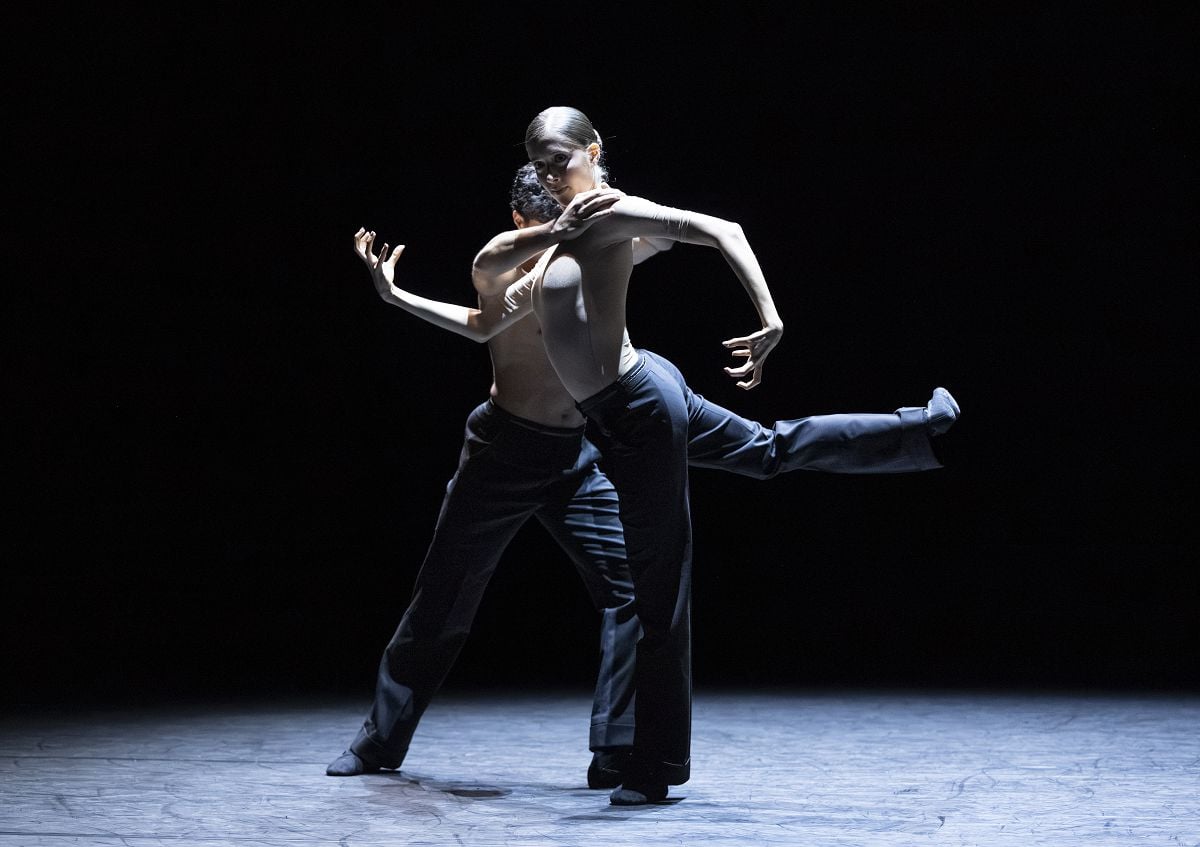
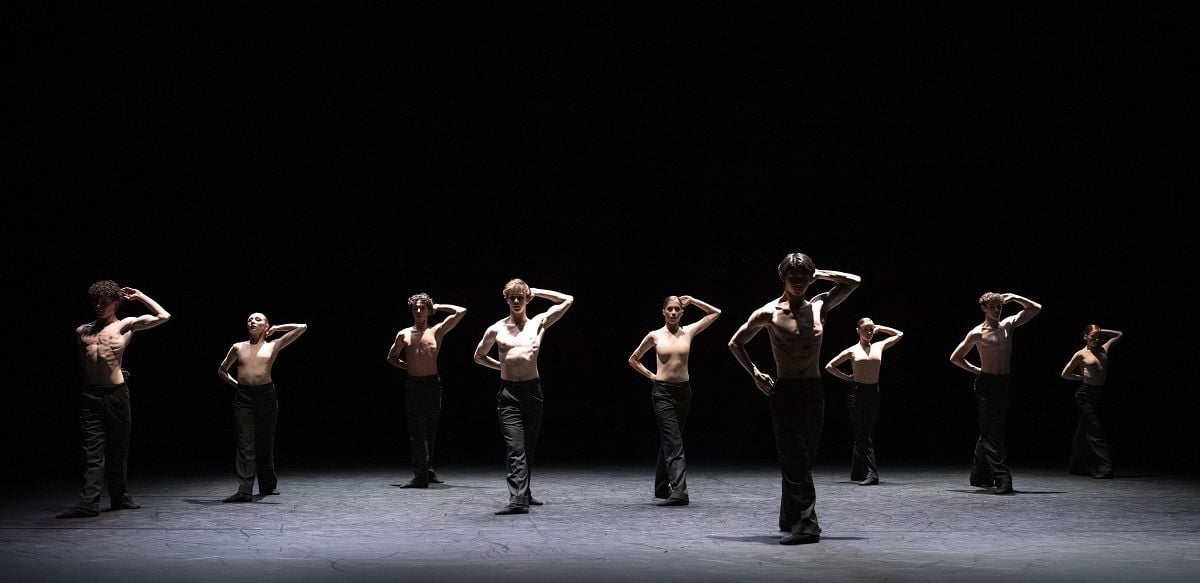
We don’t see much work, if any, by Marco Goeke in the UK, and so it was refreshing to catch eleven dancers from the Cranko School performing his All Long Dem Day, danced to the voice of Nina Simone singing Sinnerman, which is catnip to choreographers from Alvin Ailey (Revelations) to Daniel Proietto (in his unique sparkling costume for Sinnerman). Goeke’s group approach to the choreography brought a new fast-paced and highly expressive dimension to the music and, in this finale, the young dancers of the Cranko School were sensational, evidencing the claim that it is amongst the world’s best ballet schools, although to be fair the ENB School was in the same league.