Last-minute curtain rises on a labour dispute instead of San Francisco Opera’s season
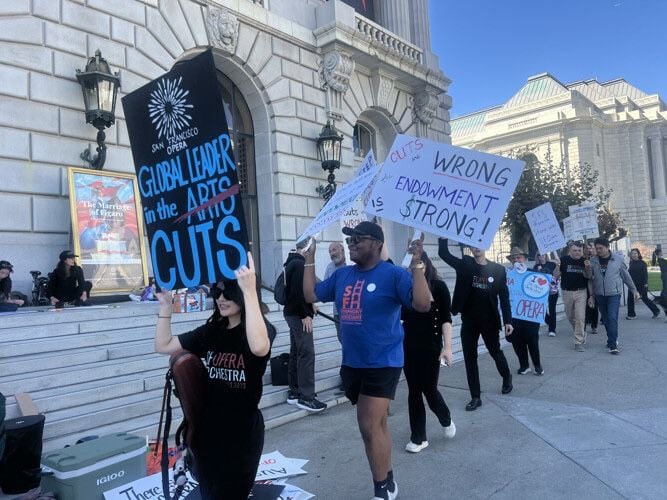
San Francisco Opera union musicians’ first-ever strike pits proposed wage freeze for orchestra against executive pay increases.
They were intense, dramatic cliffhanger moments fit for an opera. San Francisco Opera was 30 minutes away from its season opener, Giuseppe Verdi’s Simon Boccanegra. The orchestra was in the pit warming up. Singers were backstage in their costumes as the crew put final touches on the sets, and the audience was filling the seats, poshly dressed and appropriately bejewelled to signal the opening of the celebrated San Francisco Opera’s 104th season.
The musical warm-up tapered off to silence, replaced with the sound of musicians packing up their instruments and exiting the pit after word came that the musicians’ union had rejected the opera’s proposed five-year wage freeze.
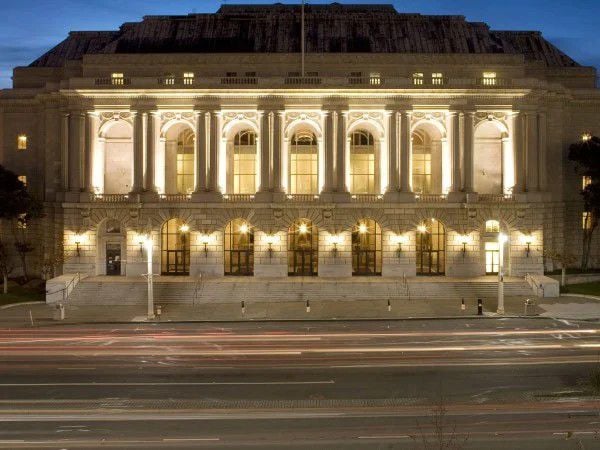
By the time SF Opera General Director Matthew Shilvock emerged before the curtain to announce that the show would not go on, the orchestra’s departure already had made that clear. As the audience left, they passed by departed musicians, many having joined the picket line outside the venerable Beaux-Arts War Memorial Opera House.
As of this writing, the strike continues, with negotiations on a new contract at an impasse but ongoing. Ever since brinksmanship forced the last-minute cancellation of the opening, the only official news has been the opera announcing a series of additional cancellations.
- The popular free public performance, Opera in the Park in Golden Gate Park, scheduled for the day after the opening, was cancelled.
- All main stage performances were cancelled until 20 September, including two more performances of Simon Boccanegra and the opening of Thea Musgrave‘s Mary, Queen of Scots.
Next week, Simon Boccanegra is scheduled for its final three performances. Mary, Queen of Scots has two performances set for next week, with its final three shows in the week after that. Should the strike continue, two of the season’s six operas will have only some, and possibly none, of their scheduled performances. That is one-third of the six-opera subscription season.
The prior contract between SF Opera and the musicians’ union expired on 31 July 2026. Over the weeks since, a strike grew from possibility to probability as the opera and musicians disagreed over various opera proposals, including a five-year wage freeze for musicians while opera executives’ pay has increased.
The strike is a first. In 1990, management locked out the musicians, but this is the first time the opera’s musicians have gone on strike, underscoring the seriousness and depth of feeling prompting the strike.
Both sides agree San Francisco Opera has fiscal issues that need addressing. The opera’s roughly $87.5 million annual budget has been helped by increased subscriptions and several highly publicised donations, but financial difficulties faced across the arts world, increased expenses, many inflation-driven, have led to an accumulated $15 million deficit and repeated need to draw down on the SF Opera’s endowment. The opera contends their proposals are good faith efforts to respond to financial shortfalls that are anticipated to continue long term. The musicians agree fiscal issues need addressing, but point to discrepancies in the plans to do so. As the cost of living for the musicians has gone up and continues to rise, the opera proposes what amounts to a five year wage freeze compared with ongoing executive pay increases, including the opera’s public filings showing the General Director’s salary has almost doubled, from $424,000 to $729,00, from 2022 to 2025.
How San Francisco Opera management and its musicians did not find a path through the challenges that prompted a first-ever musicians’ strike, and how they may yet find resolution, will likely hold lessons for similar situations faced by other performing arts organisations in the U.S.
The opera, the musicians, the singers, the dancers, backstage and front-of-house crew, local restaurants and cafes, and even the valets parking cars join with opera fans rooting for a fair resolution that will allow the opera house to reopen and present the operas.

Ann Haskins has written about dance and theatre for L.A. Weekly since shortly after it began publishing in 1978. She has also written about local and national dance for Pointe Magazine, Dance Spirit Magazine, Dance Teacher Magazine, Los Angeles Magazine, L.A. View, Coast Magazine, the Daily News, and the Herald Examiner.
Among her broadcast projects, Ann hosted Inside Theater on KCRW-FM and contributed dance and theater features to both KLON-FM and KUSC-FM. She has twice received Horton Awards from the Los Angeles Dance Resource Center for her coverage of dance in Los Angeles and received the Los Angeles Dance Festival award for Raising the Visibility of Dance.