Soprano Angel Blue pulls out of production at “racist” Verona Arena

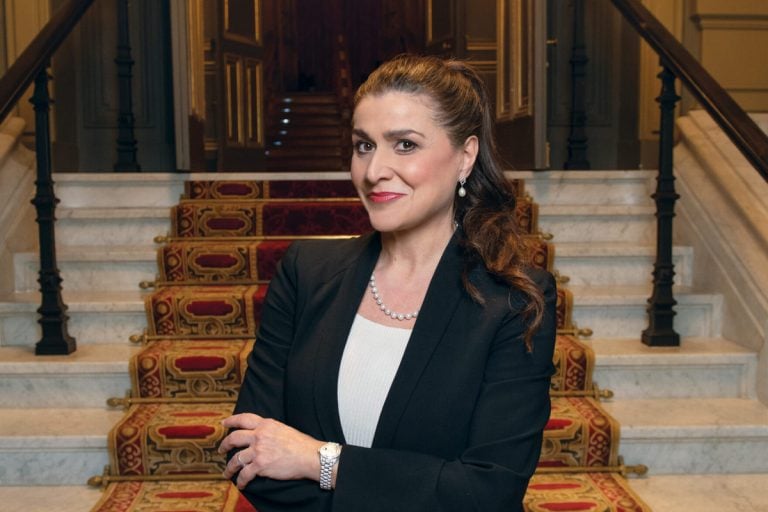
“The use of blackface is offensive, humiliating, and outright racist,” said Californian soprano Angel Blue, as she announced that she was pulling out of La Traviata at the Verona Arena.
She does not want to take part in the Verona Opera Festival because she is against blackface, which is being used in Franco Zeffirelli‘s production of Aida, first staged 20 years ago. Anna Netrebko and Liudmyla Monastyrska, both white and both wearing dark makeup, are singing in the opera. Netrebko has said in the past: “I will never be a white Aida.” She posted a photo in costume and makeup on social media, causing much uproar internationally.
On social media, Blue wrote:
The use of blackface under any circumstances, artistic or otherwise, is a deeply misguided practice based on archaic theatrical traditions which have no place in modern society. It is offensive, humiliating, and outright racist.

The Arena responded by appealing “to the culture that builds bridges” and above all to the age of the staging and stating that the production is well known and that Angel Blue could have known this when she made her commitment to sing in the Arena. “We have no motive or desire to offend or disturb anyone’s sensibilities. Contradictions only fuel a culture of conflict that we totally reject,” said the management, adding, “We and the Arena audience are confidently waiting for you. It will be an opportunity for constructive dialogue beginning with your thoughts on the matter.”
Tenor Yusif Eyvazov, Netrebko’s husband, said, “It’s a world with double rules. You, Angel, cancel the performance for that reason, while nobody speaks out when a mezzo soprano puts on a beard and sings Don José.”
Grace Bumbry, now 85, said, “My dear Angel, during my 50-year career I have used a white face, if necessary, or my own, black. I have always preferred to go on stage without make-up so as not to change my skin colour, but it is possible that my preference went against the credibility of the character. As an artist you can choose your roles, but don’t limit yourself to Aida, Selika and Bess.”
Blackface in opera is an issue that also concerns the roles of Ulrica, Amonasro and Otello.
In America, many theatres, including the Metropolitan Opera, have recently abolished the use of blackface for Aida and Otello, which originated in the 19th century in America as a form of cabaret with white people wearing black makeup. But in Europe and in Russia (Netrebko’s country of origin) there are still many singers who are ‘painted’ or have their eye shape changed for eastern heroines.
Angel Blue added:
I was so looking forward to making my house debut at Arena di Verona singing one of my favorite operas, but I cannot in good conscience associate myself with an institution which continues this practice.