Review: Una Noche con Sergio Bernal enhances the unique beauty of the Spanish choreographer-dancer
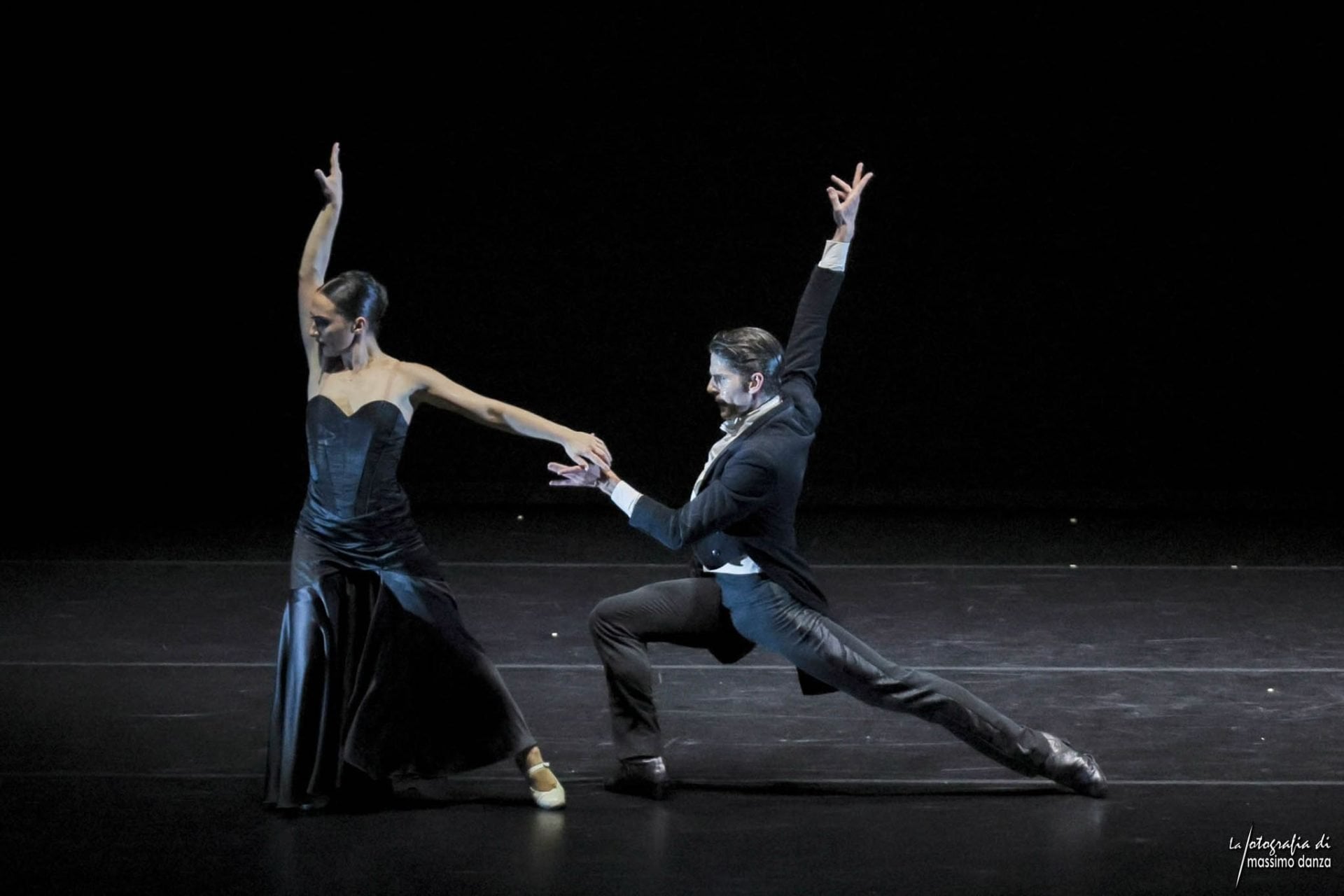
Marta Mele sees Una Noche con Sergio Bernal in Rome – a night of passion and excitement in the Italian capital.
| Title | Una Noche con Sergio Bernal |
| Company | Sergio Bernal Dance Company |
| Venue | La Nuvola, Rome |
| Date | 27 March 2025 |
| Reviewer | Marta Mele |
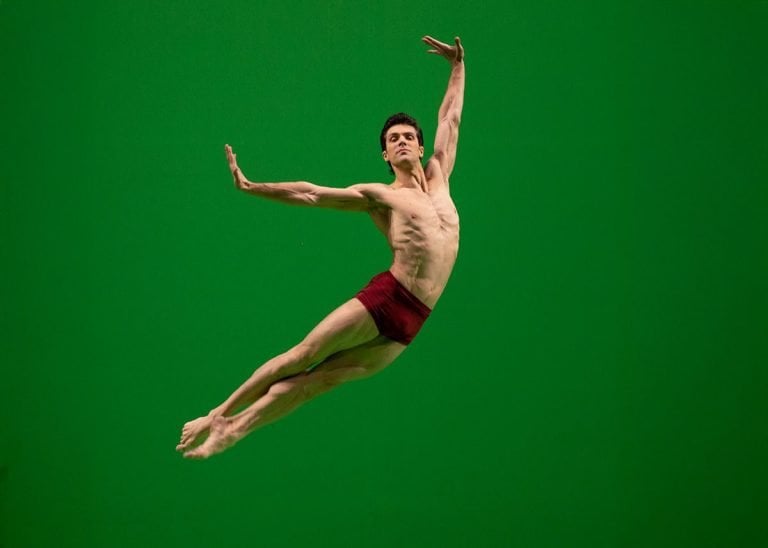
Sergio Bernal appears magnetic, elegant and sensual at the same time – a Spanish dancer who has been able to transform the natural approach to flamenco thanks to his parallel study of classical dance.
At the age of ten he entered the Real Conservatorio de Danza and then began his professional career with the Ballet Nacional de España where, in 2016, he was appointed to the rank of principal dancer. Three years later, together with Ricardo Cue, he founded his own company, the Sergio Bernal Dance Company, specialising in productions that have delighted the international public. In fact, Una Noche con Sergio Bernal was presented for the first time in Sochi, on the Black Sea, starring Bernal together with Joaquín de Luz and Miriam Mendoza.
His collaboration with Daniele Cipriani is long-standing, and thanks to Bernal the Italian dance manager is producing galas with an Iberian flavour. With his strength and beauty, Bernal has long been a favourite in Italy, and in March, thanks to the support of the Spanish Embassy in Italy, he won over the spectators of the Belpaese thanks to a long tour produced by Cipriani that began in Trieste on 28 February and concluded in Brescia on 29 March. In Rome, we were able to admire his art on 27 March in the fascinating architectural context of La Nuvola by Massimiliano Fuksas in the district known as EUR (Esposizione Universale Roma – the Rome Universal Exposition – an area chosen for the 1942 World’s Fair).

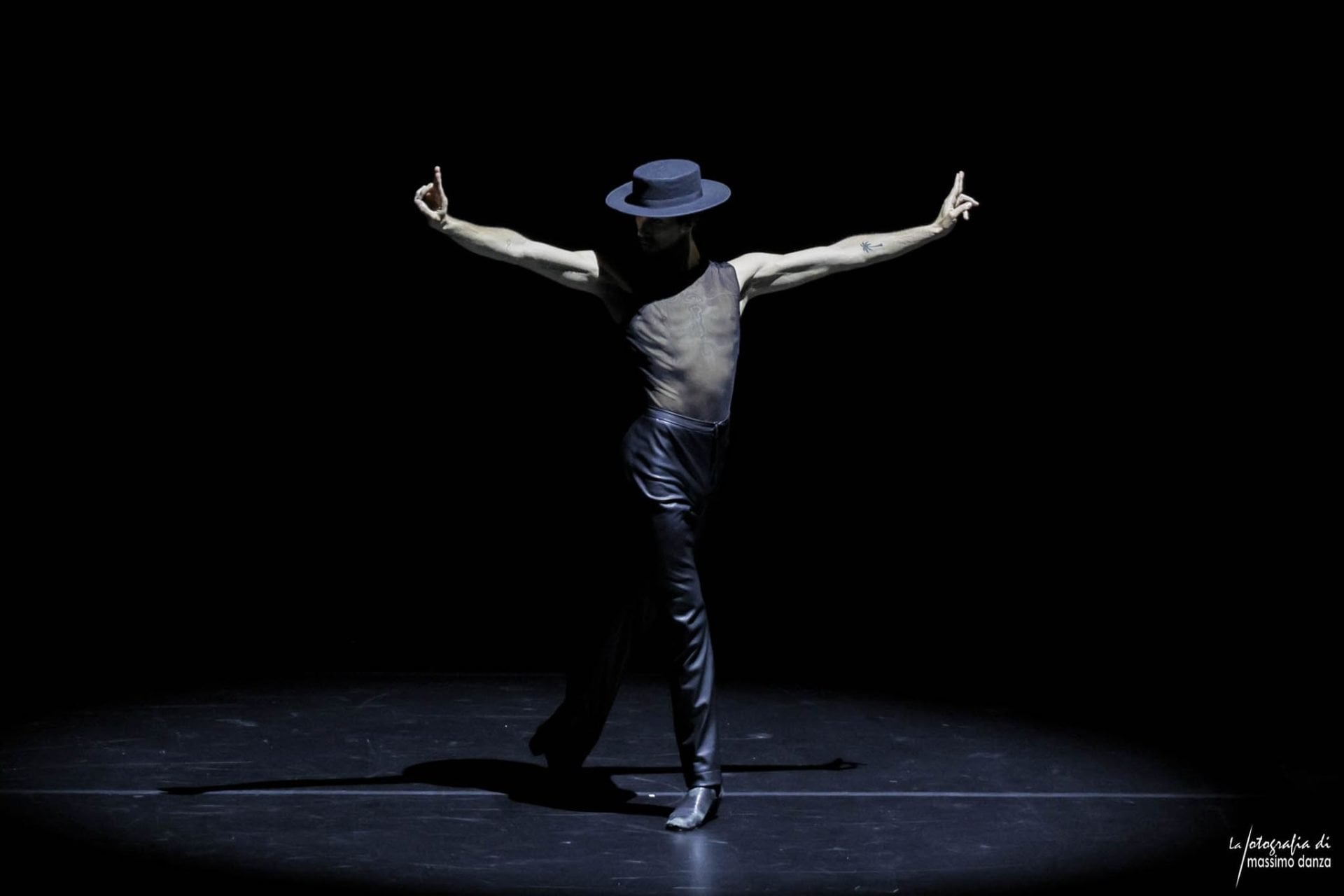
Bernal enters with an intense physicality that vaguely recalls an Antonio Gades or a Joaquín Cortés – the suspense takes one’s breath away. In the darkness he holds his cape and twirls it expertly like a true toreador. Then a warm light illuminates him, and his costume takes on colour with red defining the scene. Bursting passion is shaped by his exceptional refinement, an upward thrust that makes the figure of the dancer imposing, a gaze that is at the same time penetrating and impenetrable, with a charm that would be difficult to match. The piece is the Farruca del Molinero, choreographed by the almost legendary Antonio Ruiz Soler, better known as Antonio el Bailarín, for a production El Sombrero de Tres Picos (The Three-Cornered Hat) with music by Manuel de Falla. The clicking of the feet, the spinning in the air, and the clapping of the hands acquire a special charm when interpreted by Bernal. The baile of Galician origin in the show becomes a short tableau destined to be alternated with the other works, linked together by the evocative presence of Bernal at the sides of the stage. He is not always alone.
In a piece entitled Orgía (with Cristina Cazorla) he faces his colleague, Carlos Romero, a dancer who is entrancing and flirtatious. Despite the title, eroticism is presented here in rather gentle tones, with an almost classical duet animated by ethereal flights. The ‘rivalry’ between the two dancers is little more than hinted at.
The Cazorla reappears later in Griega, choreographed by Bernal himself. Here she responds to Paz de Manuel’s singing with a dance that combines a perfect sense of rhythm with excellent fluidity, twirling in space thanks to the sinuous lines of her arms, suddenly broken by the musical accents, to then end in an affectionate female embrace.
The spotlight is once again on Bernal as he performs his solo dance, Obertura, in which his ability to draw with his body, cutting the air like a sharp blade, adds to the audience’s appreciation. Thanks to him, even the throwing of a hat becomes magical, or even a simple change of pose. When he tries his hand at the male pas de deux with Carlos Romero in Racheo, the dance becomes a game, a mirroring, a light challenge.
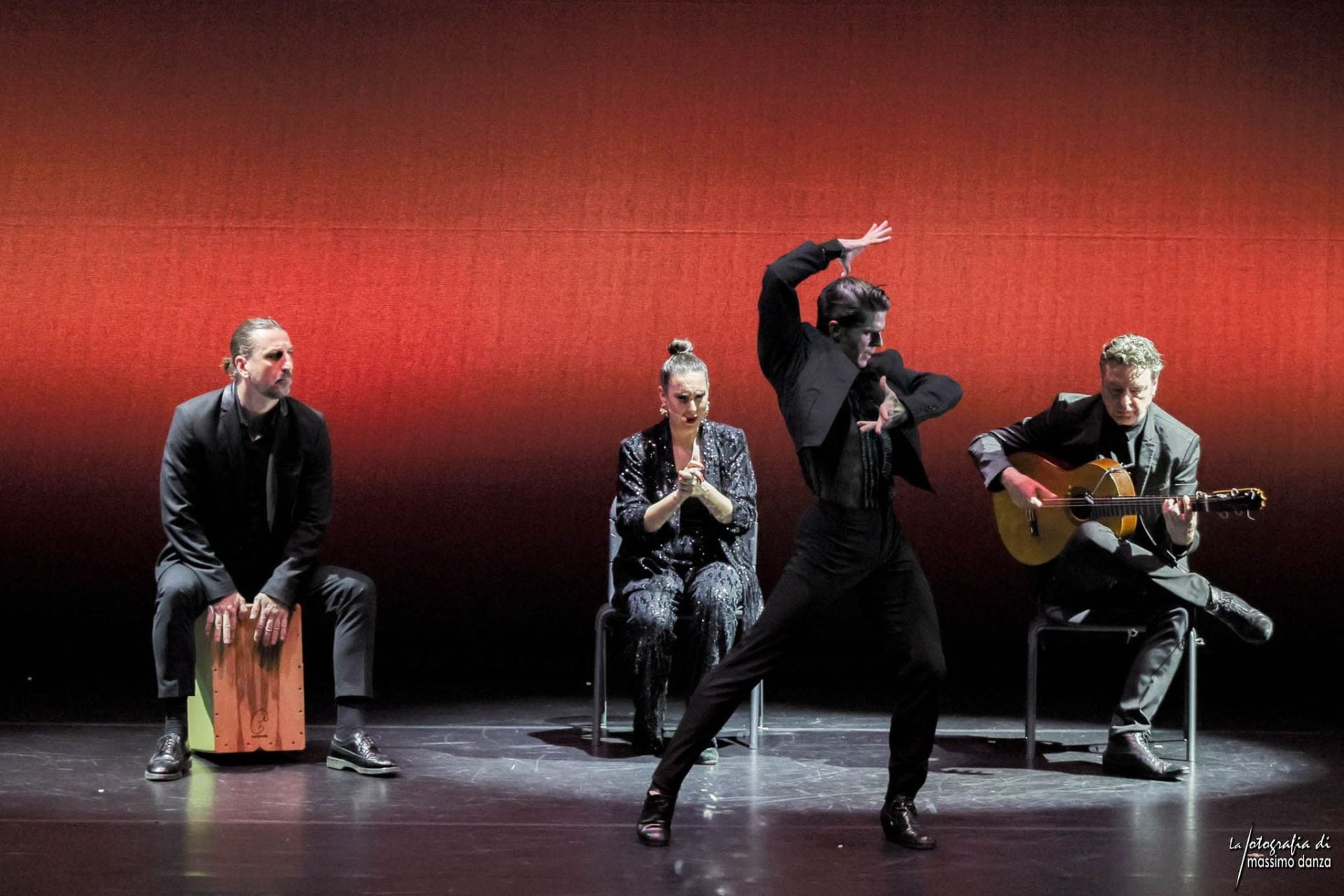
This reworked transmission of Spanish culture is always privileged here, so a purely musical moment could not be missing. In Siempre Lorca, the strong and almost religious feeling of Paz de Manuel’s singing is accompanied by Daniel Jurado’s guitar and Javier Valdunciel’s percussion.

Even more passionate is the dance of El Último Encuentro in a duet of Bernal with Cristina Cazorla to the music of Alberto Iglesias. Then, in Zapateado Sarasate, we have a brilliant solo of Carlos Romero, a carefree dancer and bearer of playful masculinity. Very different and contrasting is Bernal’s virility in Soleá X Bulerías. But when it is expressed in its variants, a note of feminine fragility prevails, and this is shown by the re-interpretation of Anna Pavlova’s famous solo reworked by Ricardo Cue to Saint-Saëns’ music under the title of El Cisne. A movement of the shoulders is enough here to highlight inner pain, but the search for redemption through the dancer’s long lines and the tension of the body upwards prevails.
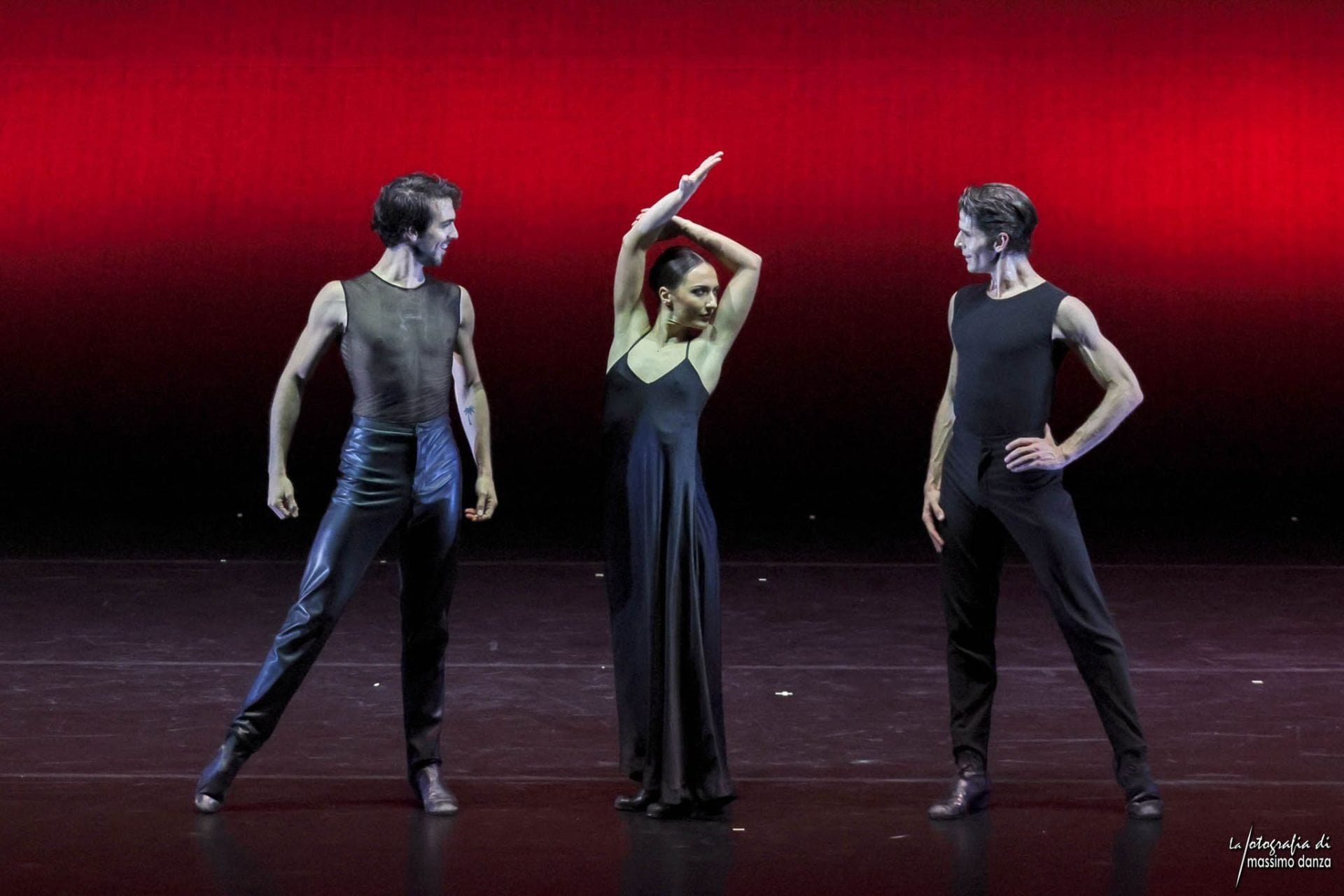
The Bolero at the end of the evening has also been reworked, this time by Bernal himself. He dances it in a trio with the other two dancers. Together, they are capable of instilling a particular feeling of languor in the audience, especially when the guitar prevails.
A night of passion and excitement for the public of the Italian capital.

Graduating with honours in “Literary and Linguistic Studies” at La Sapienza University of Rome with a thesis on ballets inspired by Alexander Pushkin’s works, Marta Mele subsequently specialised in “History and Theory of Choreographic Art” at the Vaganova Academy in St Petersburg.
She translated from Russian the autobiography of the dancer Natalia Makarova for Gremese publishing house, and edited the Italian edition of the book Swans of the Kremlin by the scholar Christina Ezrahi.
After participating in two conferences dedicated to the bicentenary of the birth of Marius Petipa, she won the La Sapienza University’s PhD competition in Music and Performing Arts, and in 2022 received her doctorate with ‘eccellente’, her thesis entitled Ballet in Leningrad between avant-garde and ideology.
Marta participates in national and international conferences in performing arts research and writes for scientific reviews such as Danza e Ricerca, Biblioteca Teatrale and SigMa. As a dance journalist, she began by collaborating with the Russian dance magazine PROTanec, and she also writes for GBOpera.