Review: Kafka with the National Ballet of Brno – a tour de force for Arthur Abram in the title role
Graham Watts admires the National Ballet of Brno’s Kafka – it’s a physical challenge to match the role of Rudolf in MacMillan’s Mayerling.
| Title | Kafka |
| Company | National Ballet of Brno |
| Venue | Janacek Theatre, Brno |
| Date | 28 March 2026 |
| Reviewer | Graham Watts |
Franz Kafka was just 40 when he died, and much of his work was unpublished in his lifetime. His executor and friend, Max Brod, disobeyed Kafka’s instructions to destroy unpublished manuscripts after his death – without which defiance, the world would not just have never known this literary giant, but the word Kafkaesque would not exist.
Markéta Pimek Habalová has included some Kafkaesque content in her episodic bio-ballet, which presents a narrative that illustrates the human as well as the writer’s imagination, presenting a softer, sentimental person rather than the dark and sombre aspects of the literary legend that has become Kafka’s legacy.
The work is unusual as the product of three choreographers. Habalová is the main source as well as the ballet’s director but she has been assisted by Barbora Rašková, who choreographed the deliberately grotesque cameo of The Metamorphosis to end the first act; and Glenn Lambrecht created the final section of The Trial, which was so cinematic in scale that it reminded me of a dream ballet sequence from one of the great 50s Hollywood musicals (the kind of work that Agnes de Mille might have created). All three choreographers have a close association with the Brno Ballet, and that familiarity with the ensemble has led to a work that is seamless despite these three separate inputs.
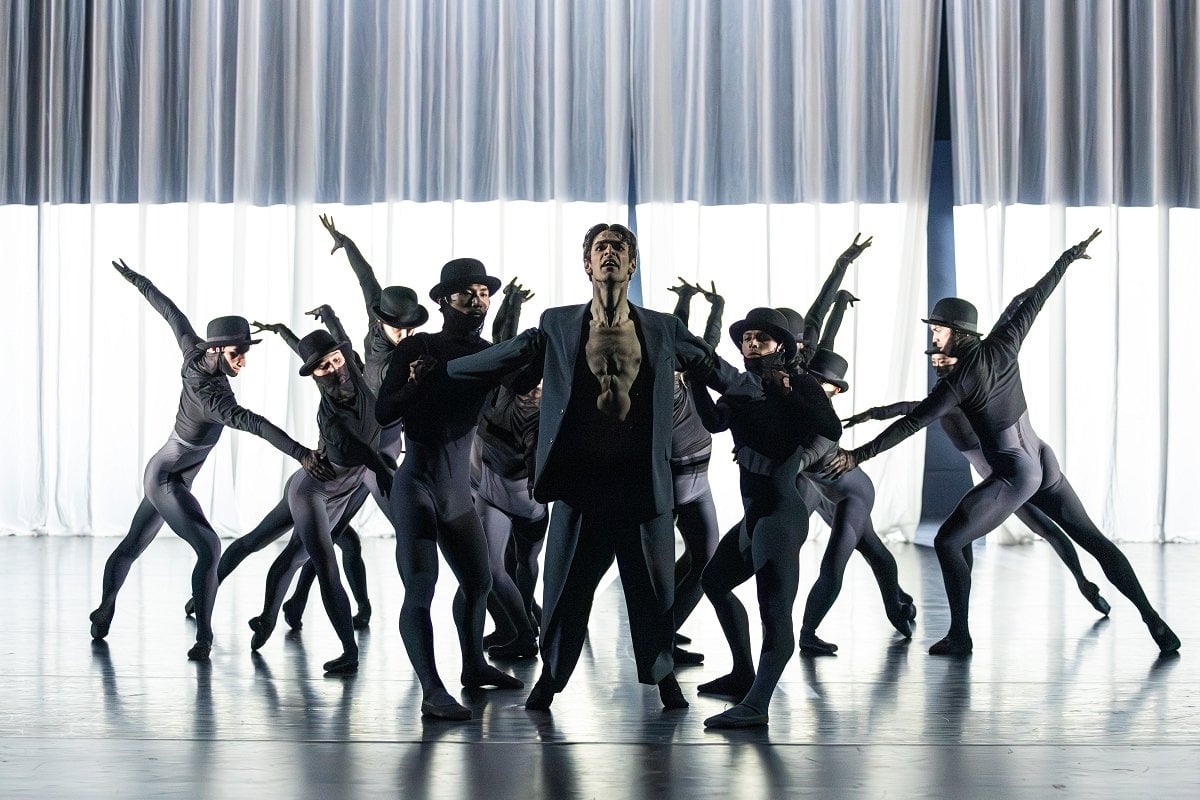
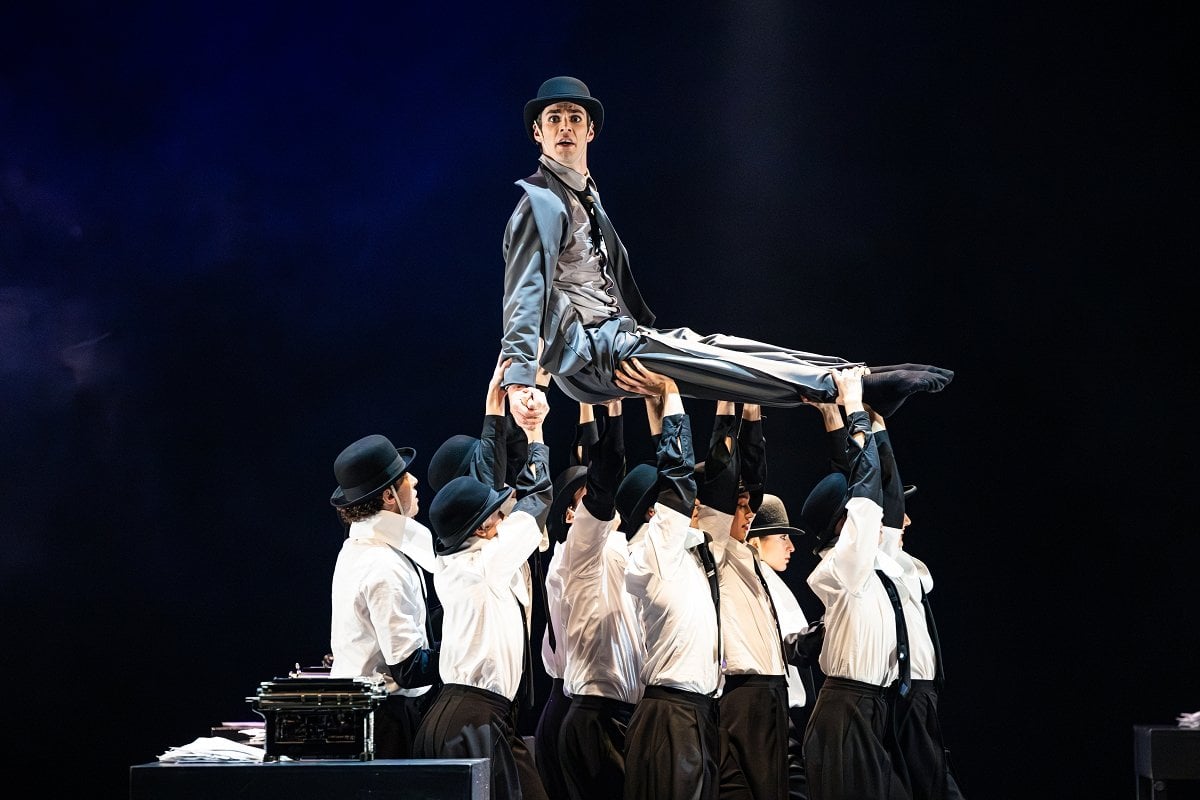

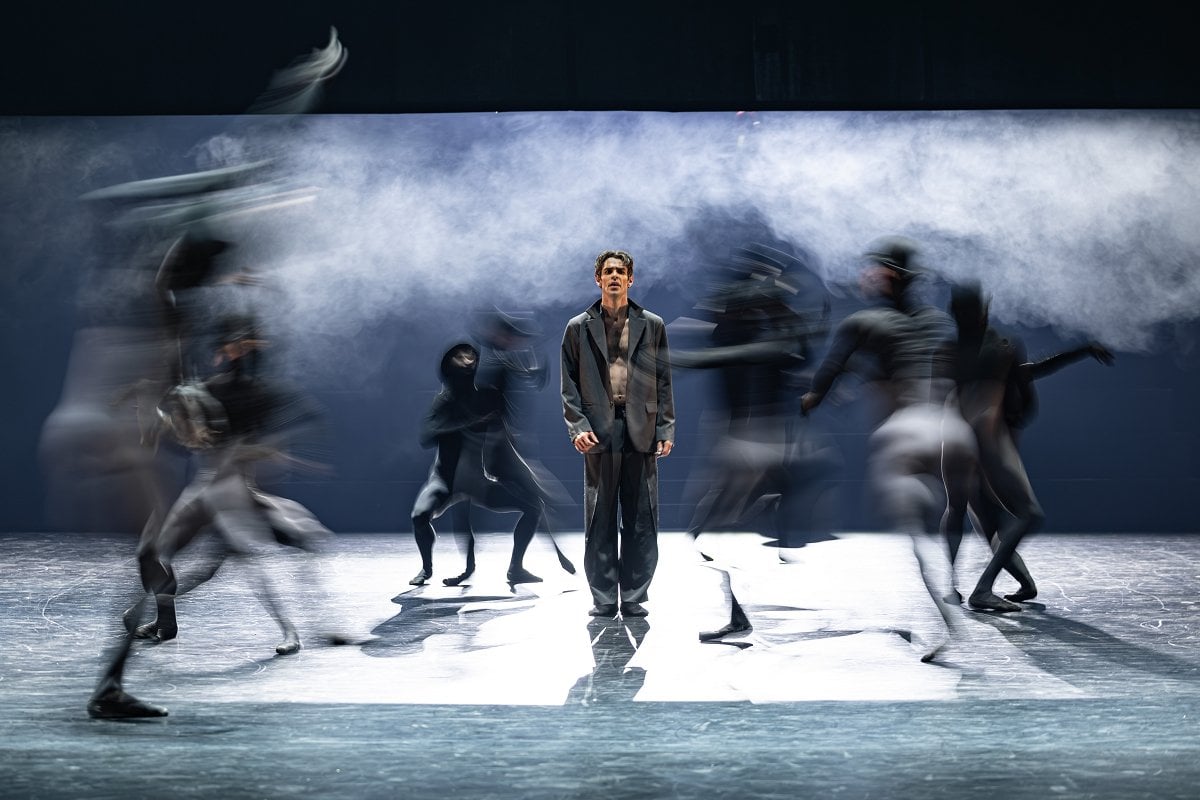
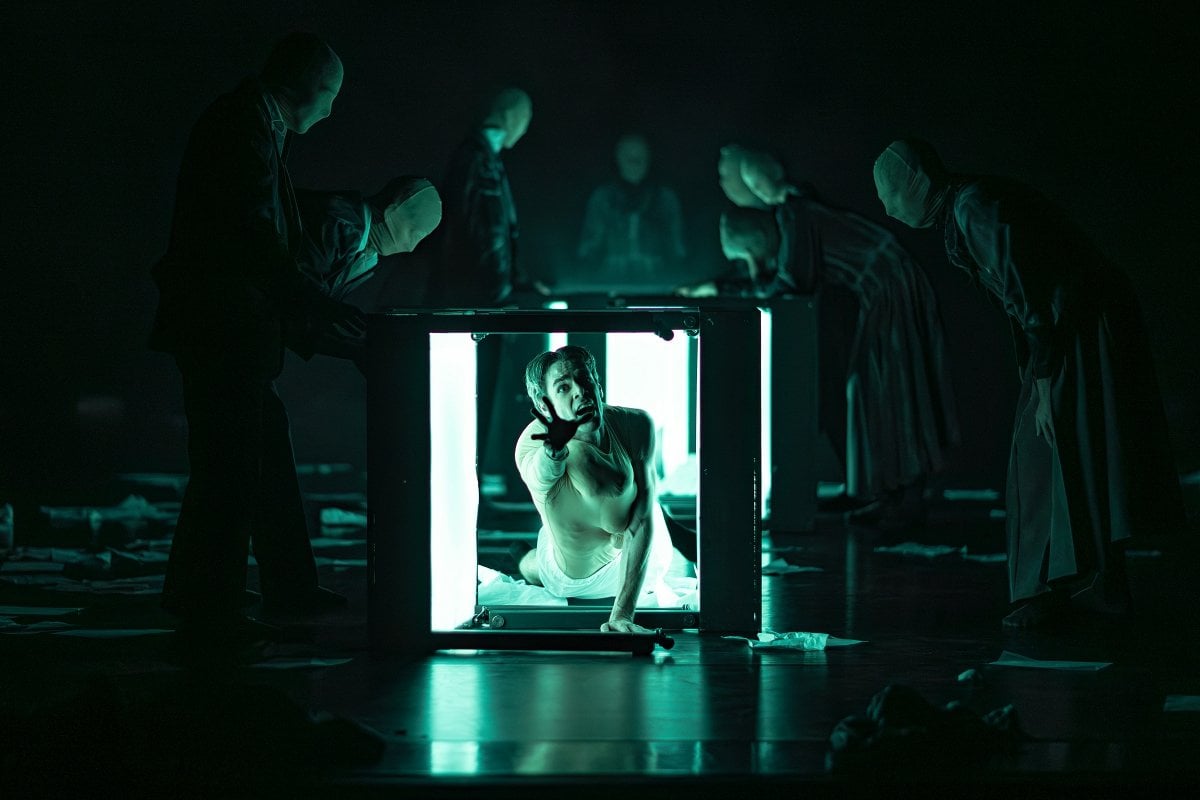
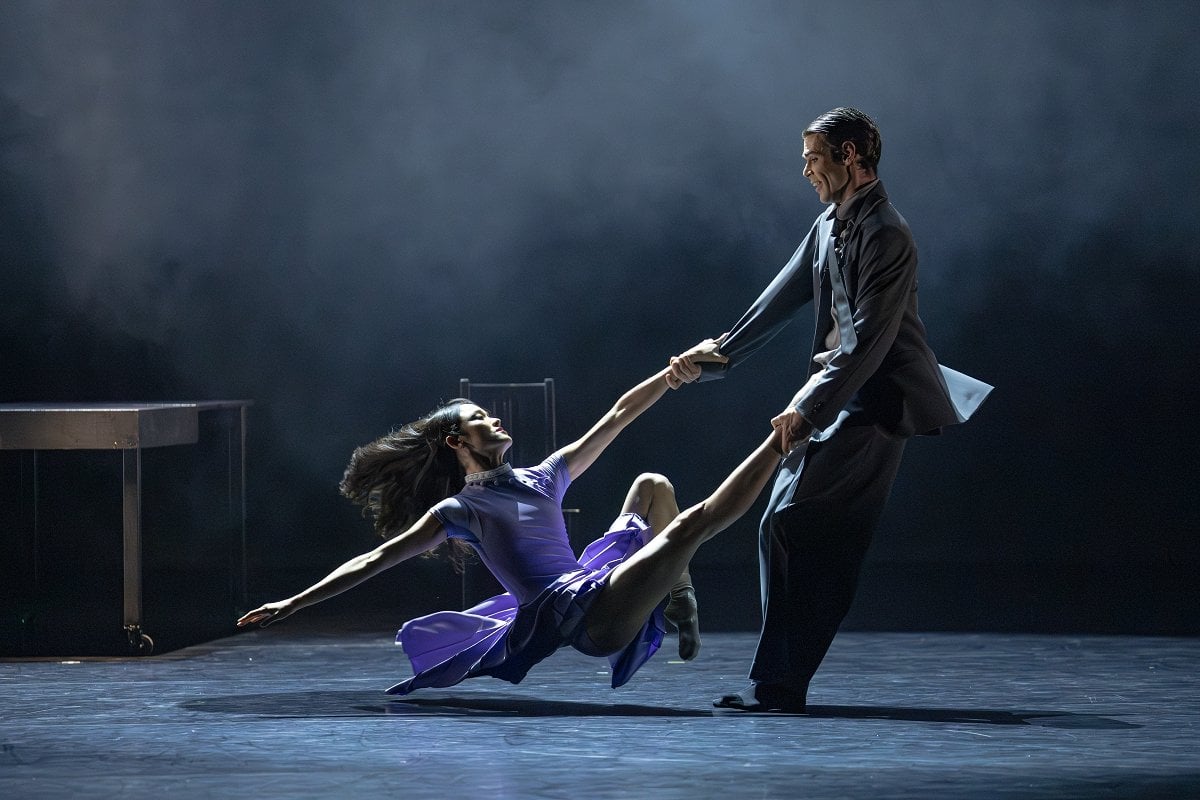
The ballet was a tour de force for Arthur Abram in the title role. He began the ballet in front of the curtain, under a spotlight, seated on the edge of the stage, legs dangling into the (unused) orchestra pit, and ended it in the same place. In between, he was rarely offstage, dancing half a dozen duets with different partners, including a young girl (more of whom later), and performing as Gregor Samsa in The Metamorphosis, wearing a body suit containing bulbous, tumorous growths, and as Josef K in The Trial, the autobiographical intentions of both works being clear. Over two hours plus, it’s a physical challenge to match the role of Rudolf in Kenneth MacMillan‘s Mayerling, and Abram tackled the multiple choreographic challenges with elan.
Kafka as a man, rather than a writer, is represented in his familial and romantic relationships but also in a key episode that came shortly before his death, when he encountered a young girl (Hedvika Janícková) crying in the park because she had lost her treasured doll. Kafka wrote letters and postcards to her purporting to be from the doll on its travels, and eventually brought the girl an identical doll to infer that it had returned. That sentimentality is contrary to the dark, troubled image of the tragic author we have come to know.
Kafka’s difficult relationship with his authoritarian father, Hermann, a physically imposing portrayal by Ilia Mironov in a sombre dark suit, is clearly evident, as is the close bond between Franz and his youngest sister, Otilie (played with a contrasting lightness by Adéla Kulíšek). Kafka’s downtrodden mother, Julie, was portrayed with an appropriate demureness by Taela Paltridge. Joāo Gomes was the enthusiastic friend, Max, without whom we would never have known the author. In The Metamorphosis section, the importance of Hermann, Julie and Otilie as influences in the story is shown by three sets of dancers from the junior company (NDB2) representing both Kafka’s and Samsa’s families by wearing huge grotesque masks.

Although he never married, Kafka had four significant romantic attachments. The first of these was with Brod’s relative, Felice Bauerová, with whom Kafka was twice engaged and shared an enormous correspondence. He placed his writing above the prospect of marriage and had a well-documented issue in separating lust and sex from romantic love. Abram and Se Hyun An brought this tortured and tender relationship to the stage with considerable chemistry. One wondered how different Kafka’s life may have been if he had followed one of those engagements through into marriage.
Kafka became engaged for a third time in a brief affair with Julie Wohrzyek, but that and a subsequent relationship with the journalist, Milena Lesenská, are understandably omitted from the ballet’s narrative, with the focus instead transferred to his final relationship with Dora Diamantová, with whom he lived happily in Berlin for several months prior to his death. As Dora, Gloria Benaglia was excellent in this final love-at-first-sight relationship in the twilight of Kafka’s life.
The recorded music was a hotchpotch of styles, ranging from Caroline Shaw and Max Richter to Phillip Glass and Alfred Schnittke, and incorporating classical, contemporary and jazz. David Janošek’s set design was simple but remarkably effective, with a green neon rectangle symbolising a portal between reality and Kafka’s imagination. The lighting, by Jakub Julínek, was outstanding, with large vintage-looking downlights descending from the flies to provide individual spots for the excellent corps. Pavel Knolle’s costume designs were appropriate for the early twentieth century.
Having recently reviewed Mário Radačovský’s Coco Chanel, this additional experience of Kafka confirms the impression that the National Ballet of Brno has great strength in presenting modern narrative ballet with a human touch.