Review: Covent Garden Choreographics with New English Ballet Theatre
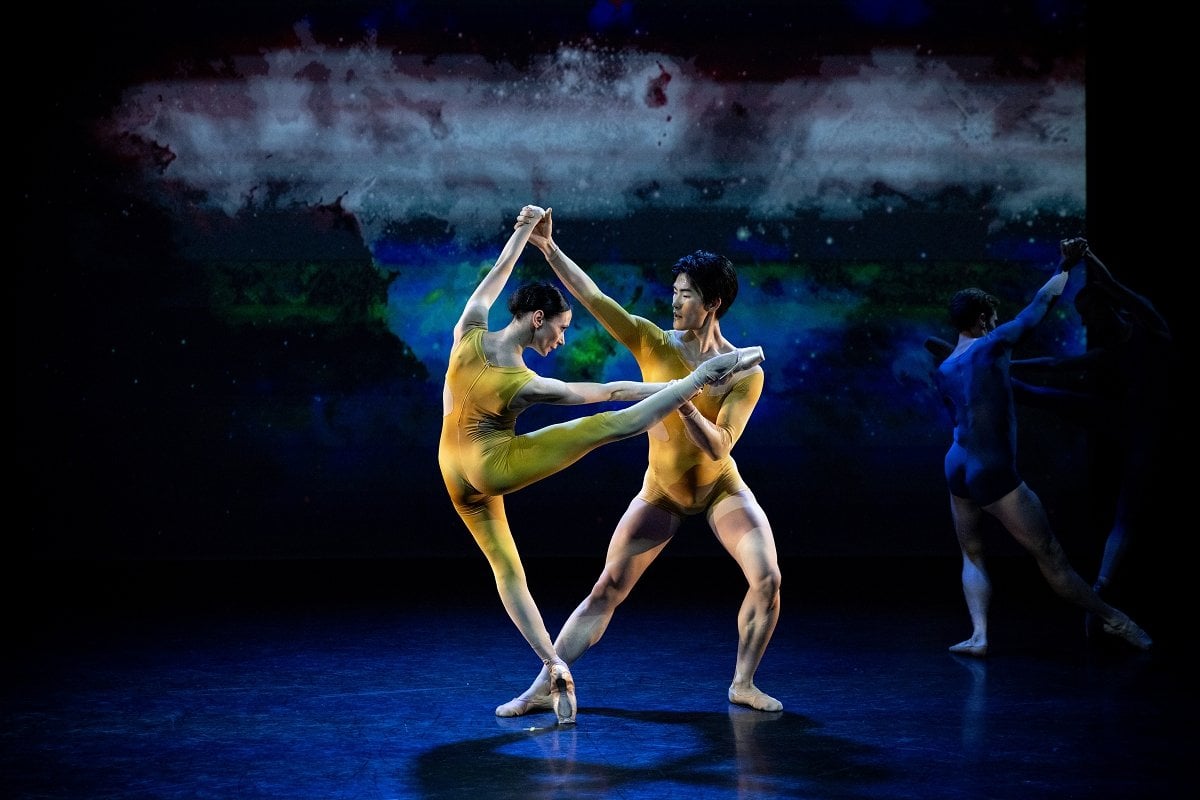
Lily Hyde sees New English Ballet Theatre at Royal Ballet & Opera in Covent Garden Choreographics – a company whose ambitions far outpace its resources.
| Title | Covent Garden Choreographics |
| Company | New English Ballet Theatre |
| Venue | Clore Studio, Royal Ballet & Opera |
| Date | 21 March 2026 |
| Reviewer | Lily Hyde |
New English Ballet Theatre, now in its fifteenth year, has long established itself as a company whose ambitions far outpace its resources. Starting as an early-career platform for young dancers and choreographers, it has evolved into an international touring ballet company that attracts the talents of dancers from companies such as Ballet Black, Wiener Staatsballett, and the Royal Ballet.
After a tour of their new production of The Nutcracker, the company is back in London, in the Clore Studio at the Royal Opera House, to present Covent Garden Choreographics, a new programme that explores the interplay between bodies in motion.
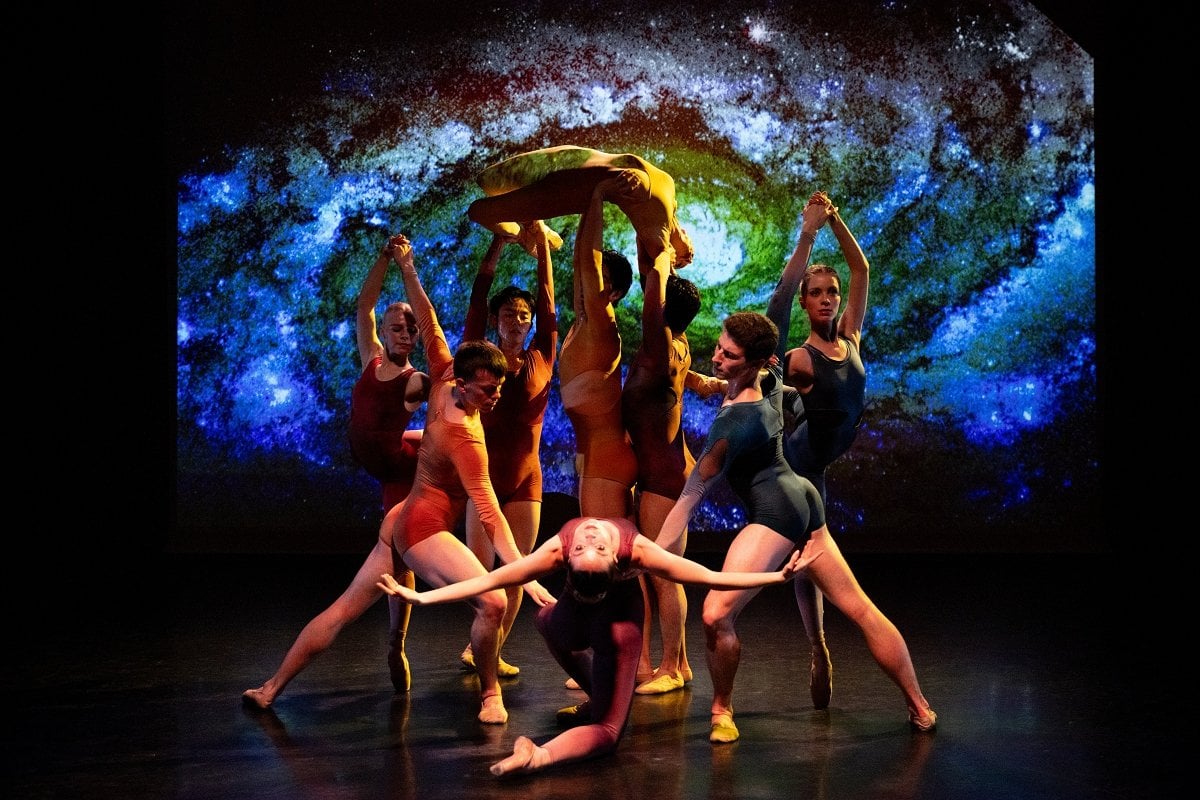
The show opened with a reworked version of Valentino Zucchetti‘s Orbital Motion. Originally presented in the Linbury Theatre in 2013 as one movement, the piece has now been expanded into three. Zucchetti is a choreographer with an incredible scale of ambition, in both the metaphorical and literal sense. Orbital Motion is a very grand production, and unfortunately, the first movement, featuring all ten company dancers, was too big for a space like the Clore Studio. The stage felt crowded, the choreography was overwhelming, and as impressive as the jumps were, it did get a little sto0mpy at times. Contextually, the piece makes a lot more sense when you know that it was originally designed to be seen in the round, but I’m not sure, even with adjustments, that it entirely translates.
The second and third movements, darker and a little more ominous, fared much better. The third movement, with its dizzying corps work and strong formations, felt more distilled and considered, but it was the second movement that shone. Zucchetti’s real strength lies in his pas de deux (his previous work in NEBT’s The Nutcracker was excellent), and his ability to create beautiful partnering lines is always breathtaking. Set to the music of Philip Glass’s Violin Concerto No. 1, Wiener Staatsballett Guest Principal Liudmila Konovalova displayed an incredible control as her partner, Hiroki Takano, buoyantly orbited around her. Though they both wore yellow, as if to represent the sun, it is clear that Konovalova is the centre of this piece.
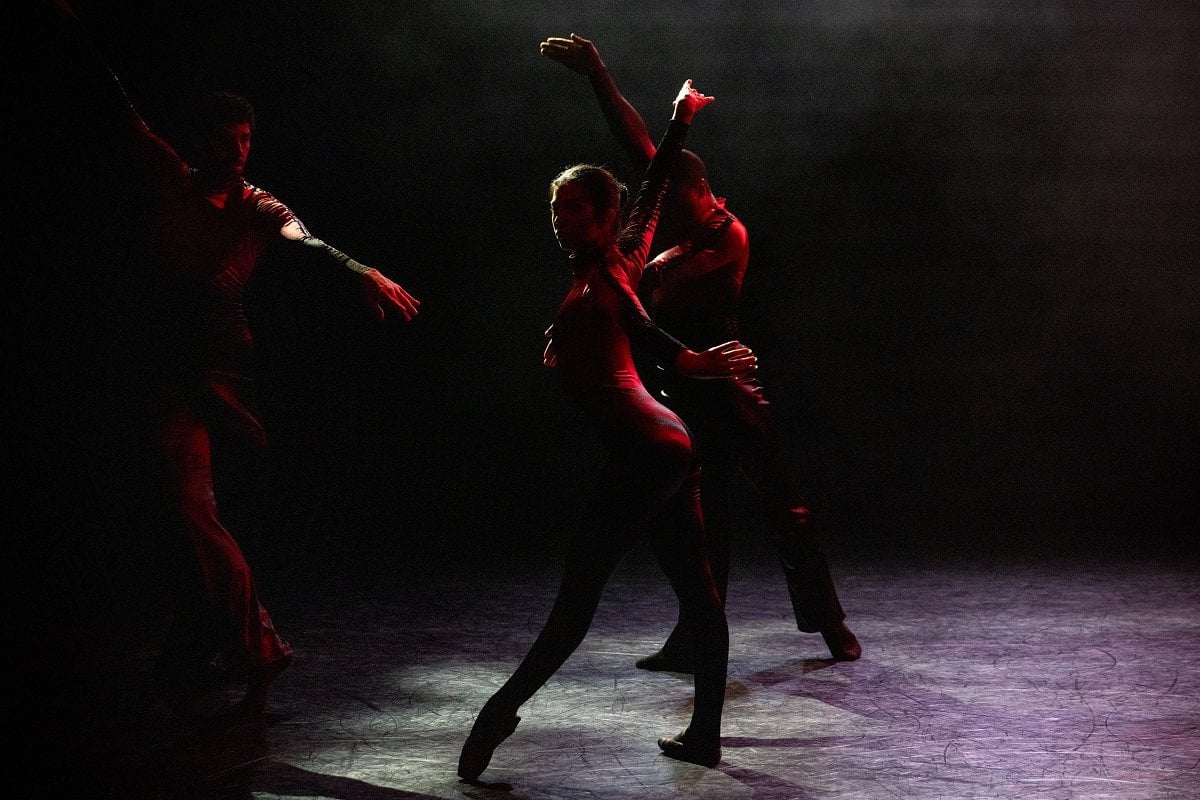
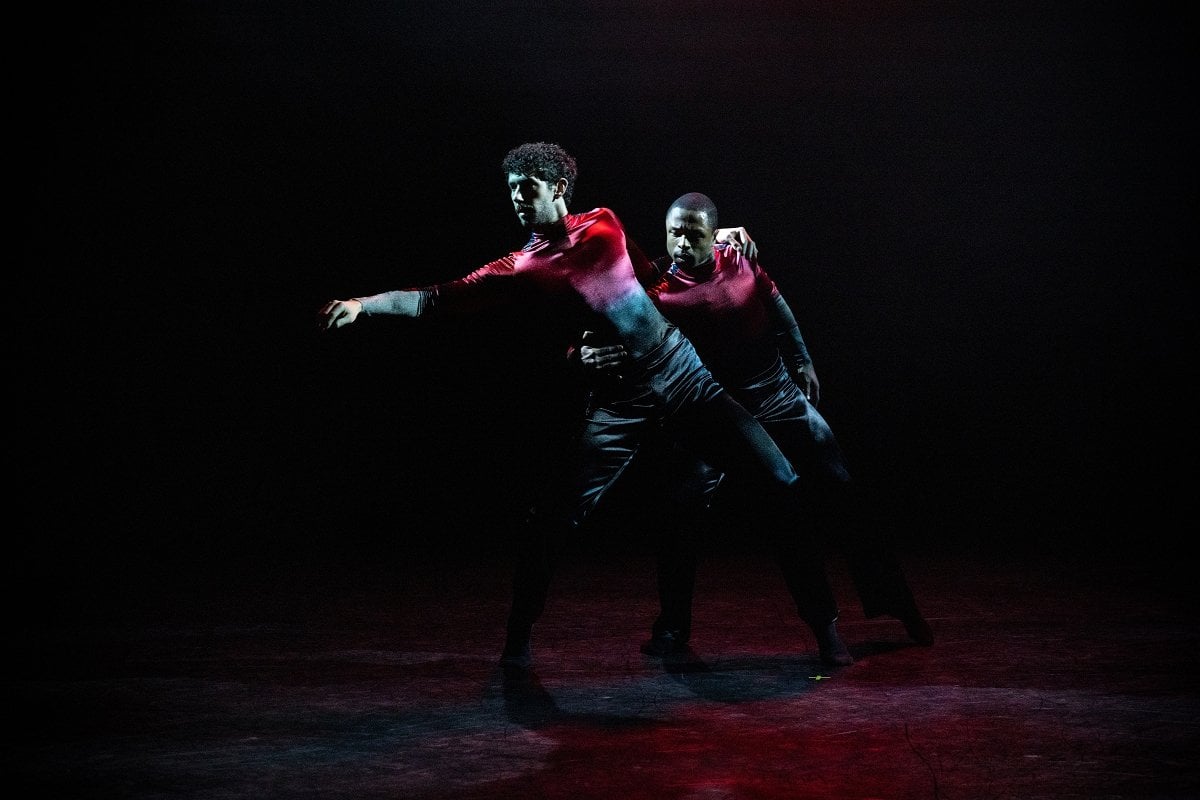
Jordan James Bridge’s new piece, Celestial Bodies, was inky, sinuous, and breathtakingly fresh. Set to Abul Mogard’s Half Light of Dawn, the quartet of dancers, intended to be distant stars coming into brief alignment, moved with an uncanny fluidity which gave the piece a distinctly sinister feel; against the reverb of Mogard’s music, the call of the void pulsated and echoed. Should Rambert continue to favour productions based on existing IP, and make a slightly ill-advised decision to stage Dune as a ballet, Jordan James Bridge should be the first person they call.
One issue I did have an issue with was the production design’s reliance on red. Considering how accomplished the piece was, I thought the red laser-tag-esque lighting and matching costumes with rippled fabric that ruined the dancer’s immaculate lines not only cheapened it but also made visibility a real issue. There were brief moments of very cold, white lighting and considering that Bridge mentioned how inspired he was by sci-fi and the films of Denis Villeneuve, I wish that Bridge had taken more of a cue from Villeneuve, who uses very cold colours like whites, blues, and greys to create oppressive atmospheres.
Of the five pieces, it was the strongest choreographically, and the dancers were excellent – in particular, Rebecca Arias and Leila Wright, who brought a real menace to their thumping bourrées – but a change in lighting and costume design has the potential to not only enhance the piece’s sinister quality, but elevate it overall.
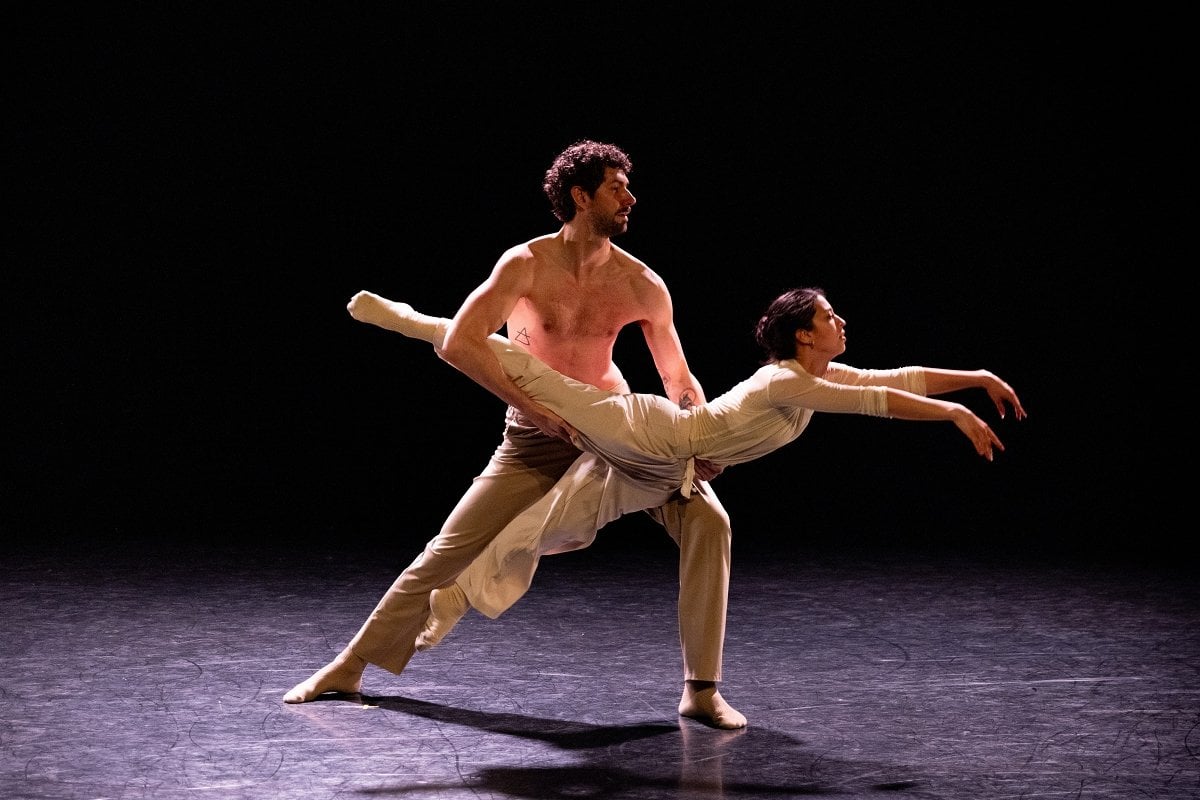
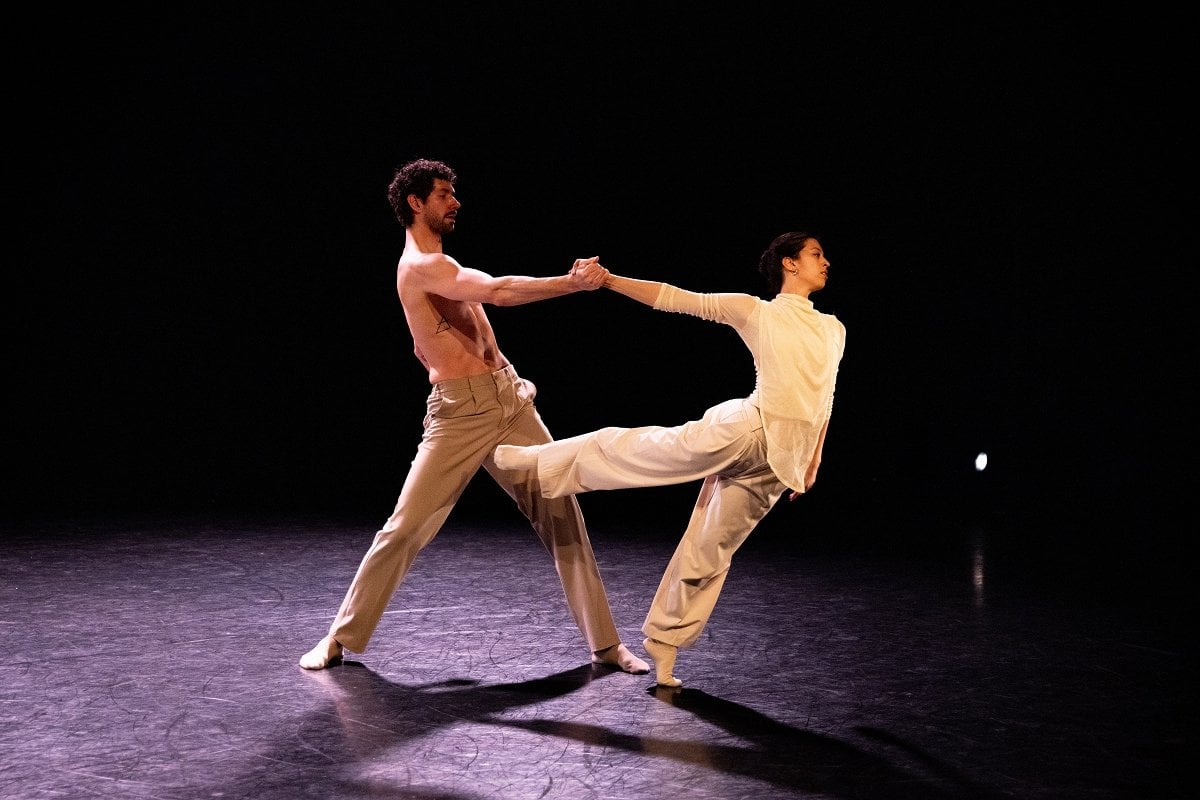
By contrast, the sterile production design of Bridge’s second piece, What is Left, worked entirely in its favour. Like Kenneth MacMillan, Bridge is very adept at creating uncomfortable atmospheres, and despite the piece’s relative shortness, it felt incredibly tense. The dancers push and pull at each other, an undercurrent of violence in their movements, as legs are all but wrenched into grand developpé’s. Regardless of whether audible pants of exertion from the dancers were intentional, it helped to create a strangely intimate atmosphere that made one feel as if they were watching something they shouldn’t.
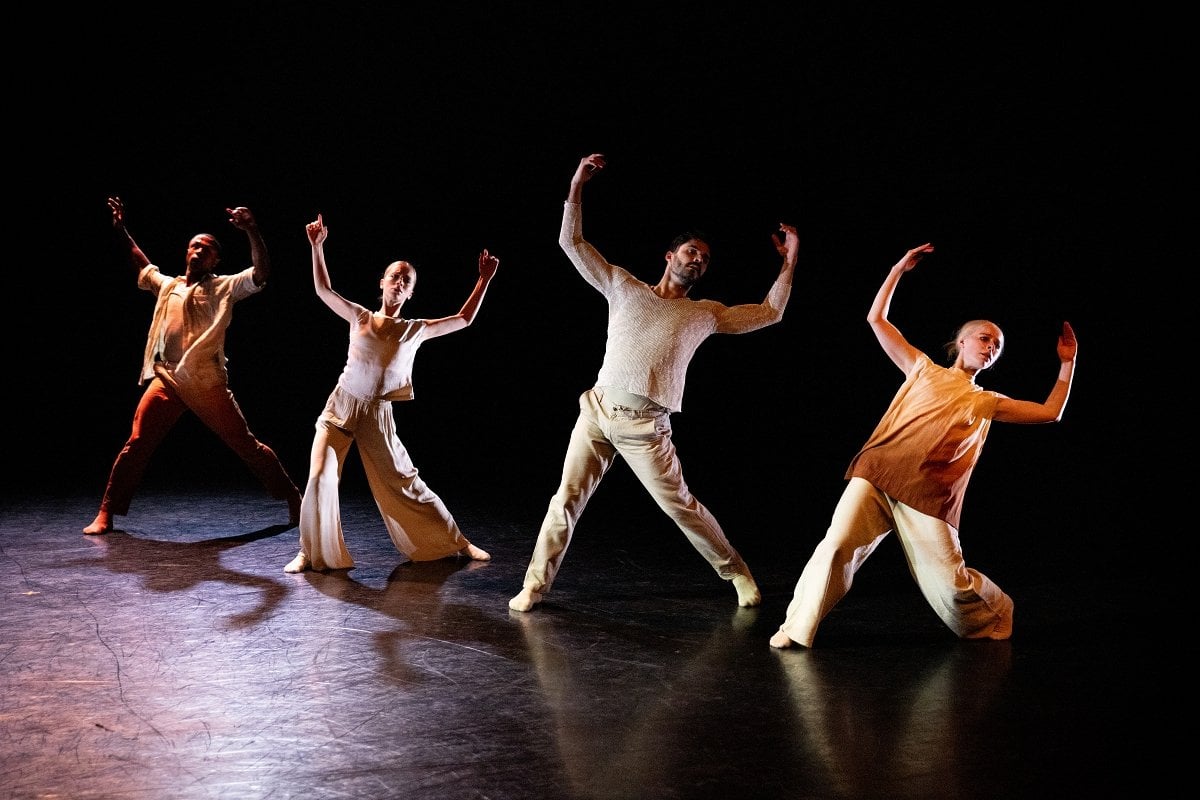
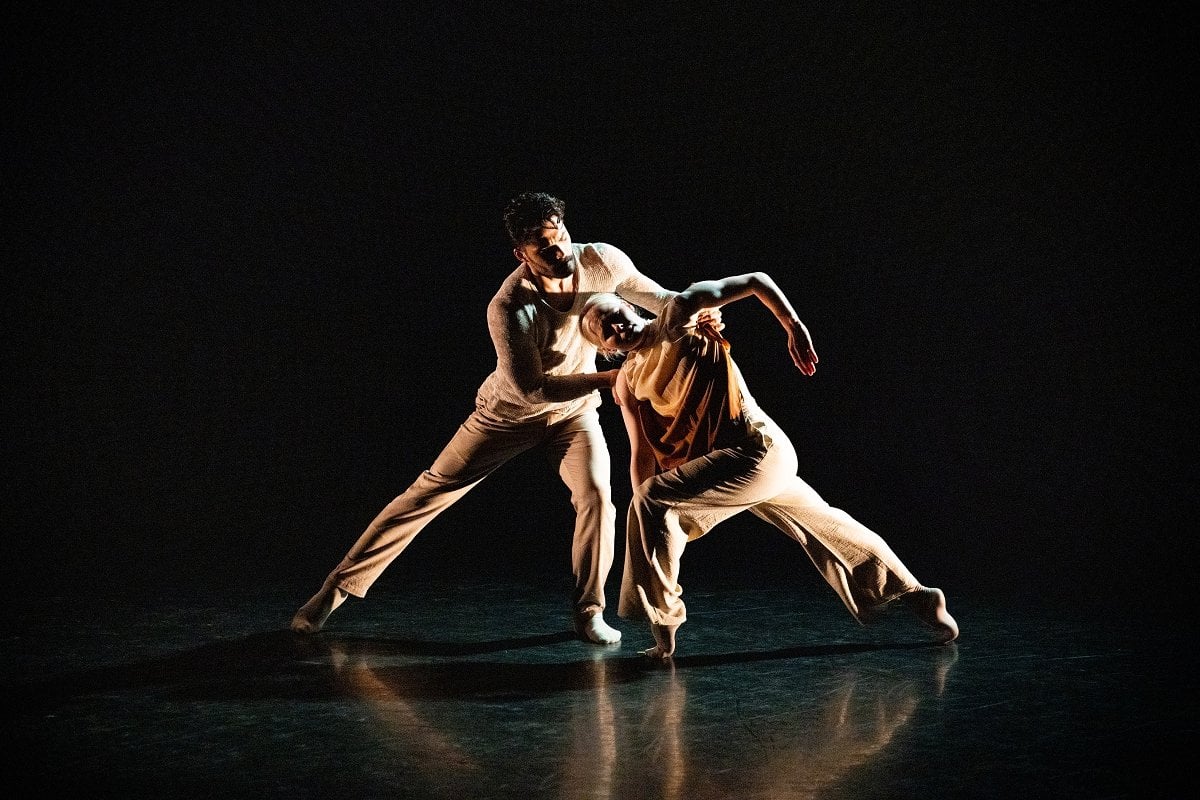
Ashley Dean’s Embers is another reworking. Originally staged at The Royal Ballet’s Draft Works in 2022 as a pas de deux, it has now returned as a pas de quatre. Considering that the theme of the piece is burnout and that a Max Richter score of the same name is used, I expected a heavier, more somnolent piece than the one presented. Dean’s choreography, hectic and not entirely fluid, felt at odds with what it was trying to depict, and seemed to rely on the music and the dancers’ despondent expressions to convey meaning.
That’s not to dismiss the piece entirely – it’s at its best at its most balletic with Emily Pohl’s sprawling grand jetés and Jose Alve’s gentle partnering. The second movement has lovely moments of stillness, excellent formation work, and dancers Maidie Widmer and Marcos Silva brought a dynamic sharpness to their dancing that was exciting to watch.
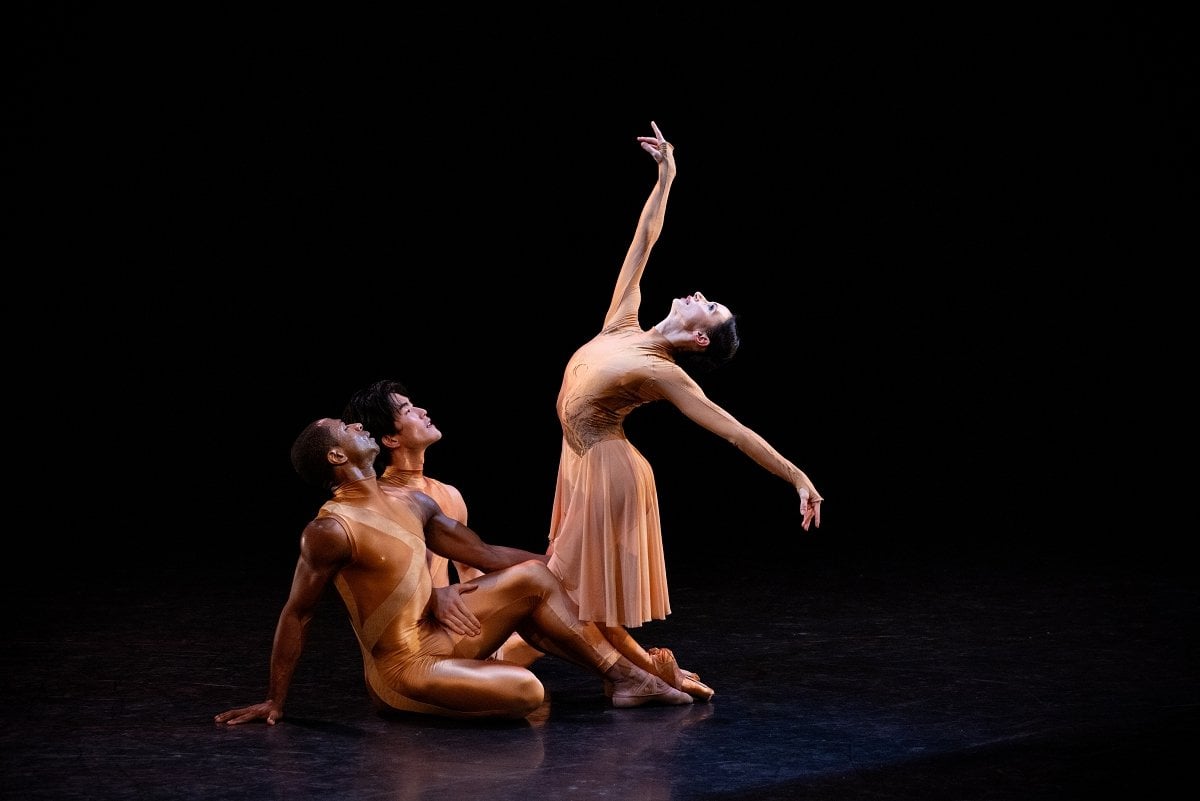
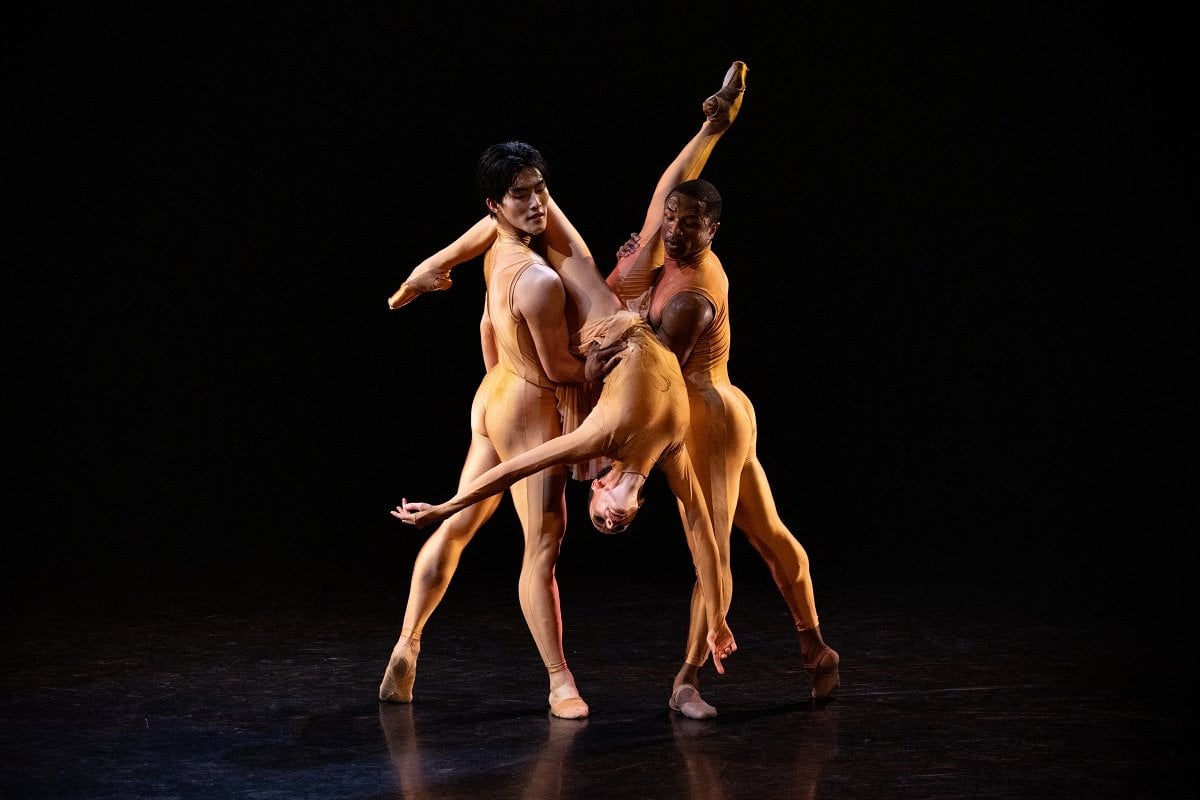
The show closed with Valentino Zucchetti’s Into the Light. Set to Richard Strauss’s Four Last Songs and originally created for Melissa Hamilton‘s First Gala, it’s a piece of love and such reverence that a comparison to Kenneth MacMillan’s Requiem seems unavoidable. Liudmila Konovalova adeptly leads the performance with a commanding strength and picture-perfect arabesques. Adeptly aided by Jose Alves and Hiroki Takano, the piece, both stirring and dramatic, is a suitable climax to a pleasing showcase of ballet.
The piece ends with the three dancers stepping into the light, with a beautiful unknown ahead of them. I am sure New English Ballet Theatre’s future is similarly bright.

Lily Hyde is a cultural and dance writer based in London. Her writing has appeared in The Fence and The Creative Independent, and she runs the cultural newsletter, Falling Upwards. She is currently writing her first novel.