[Review] Matthew Bourne’s Edward Scissorhands – seasonal magic without getting tangled in the tinsel

Lydia Wharf sees Edward Scissorhands in London: “a visual treat – sophisticated and enjoyable with a wry sense of humour.”
| Title | Edward Scissorhands |
| Company | New Adventures |
| Venue | Sadler’s Wells, London |
| Date | 13 December 2023 |
| Reviewer | Lydia Wharf |
Condolences to anyone else who finds ‘festive’ cultural fayre about as appetising as a slice of overstuffed turkey or the tenth minced pie – it’s a tricky time of year for those of us who aren’t excited by pantomime or various versions of The Nutcracker. To my fellow grinches, I’m happy to report that Matthew Bourne‘s re-telling of Edward Scissorhands at Sadler’s Wells this winter may provide an enjoyable alternative – grand enough in scale to satisfy the seasonal spectacle seeker, with a deliciously dark side to balance out any sickly sentimentality.
Premiered in 2005 and last revived in 2014, Bourne’s stage adaptation of the Tim Burton allegory doesn’t stray too far from the 1990 film we all know and love, even threading Danny Elfman’s recognisable original musical refrains through the score. The story takes us on a journey from gothic horror sci-fi to white picket fence suburbia and back again via protagonist Edward, a partially finished boy with scissors for hands, who has been patched together by a Frankenstein-esque father. Ed becomes the archetypal outsider when, following his father’s death, he staggers innocently into nearby ‘Hope Springs’ and his exotic appearance piques the curiosity of residents, who take him in. An innocent, whose flashing blades attract all manner of attention, Ed yearns for love and acceptance, but eventually finds himself reviled and rejected by this community and forever retreats. It’s a tale that Bourne feels has more resonance now than ever and perhaps – chiming with current dialogue around identity politics and our ability to accept ‘others’ – he’s right.
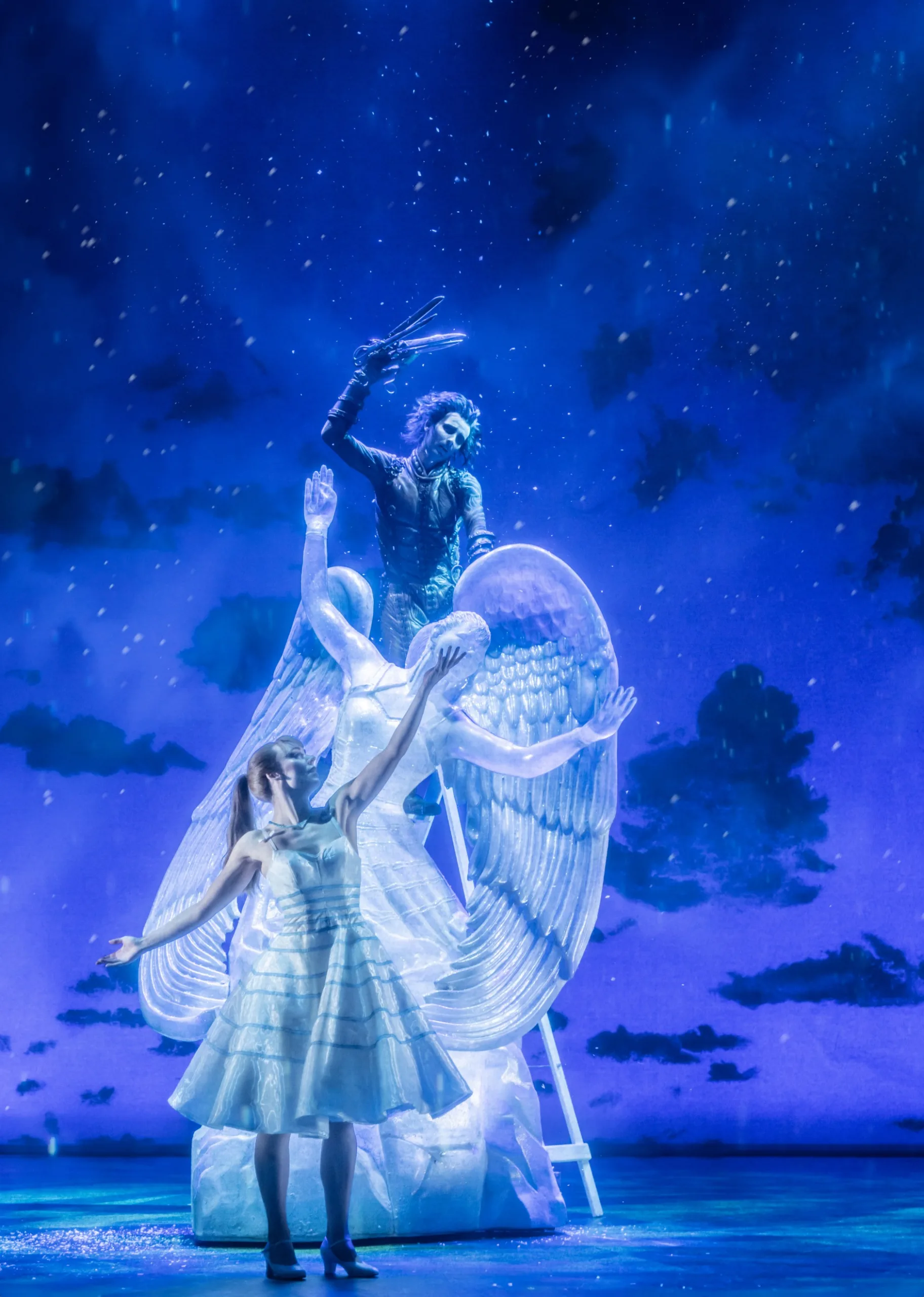
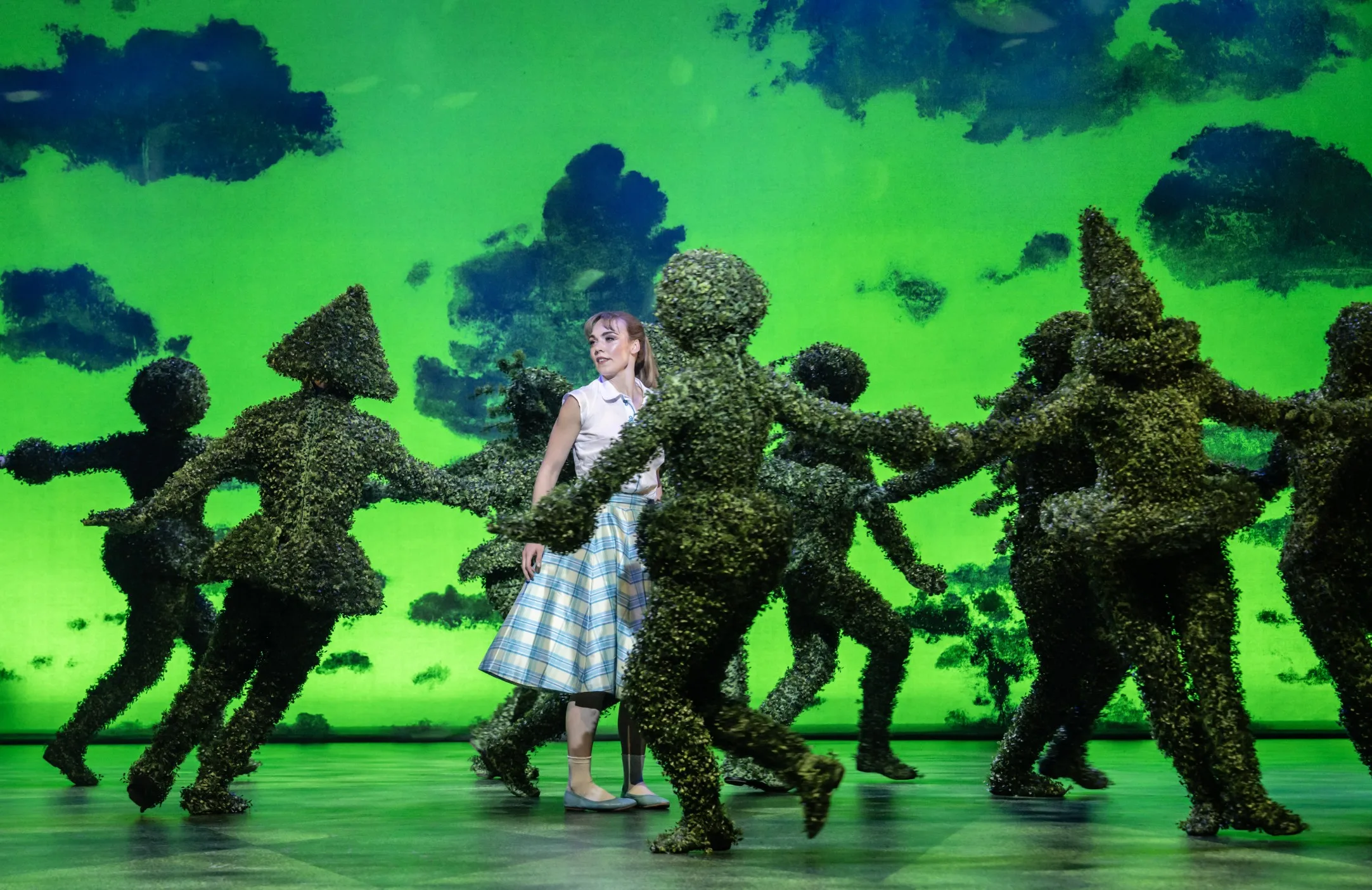
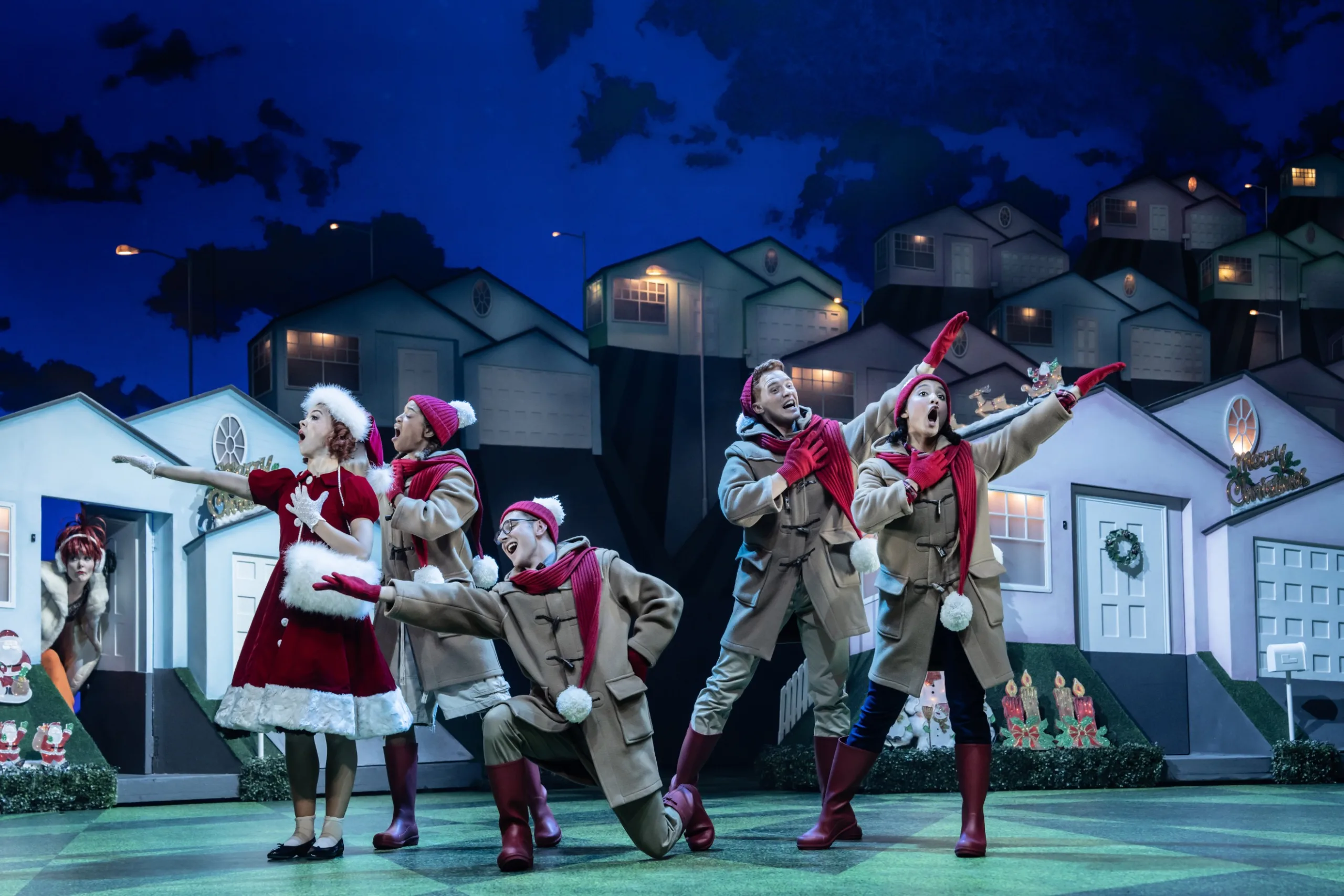
Bourne’s long-time collaborator, the Olivier Award-winning designer Lez Brotherston, outstrips expectations here, creating sets and costumes that are smart and stylish, laying foundations for some clever coups de theatre involving topiary, ice sculpting and coiffuring. He builds a visually stunning world within which a whole community of characters can come to life. Projection adds a lovely layer of magic, and the overall result is nothing short of a visual treat – sophisticated and enjoyable with a wry sense of humour.


The approach is carried through into characterisation, with Bourne presenting his Hope Springs community as family ‘units’, each with a distinct look and feel of their own. The families inhabit the stage in different, highly stylised ways and together they effectively form a colourful, diverse community. It’s the very antithesis of a faceless, perfectly synced corp de ballet and it makes for an infectiously lively stage. A shame, then, that whilst Bourne successfully eschews old-fashioned notions of uniformity with this cast of characters, his creations are made up of recognisable archetypes – from the doomy ‘religious family’ who greet Edward with fervent suspicion, waving their crucifixes to all and sundry, to the ‘Mayoral Candidate’ clan, who very publicly pledge allegiance to the stars and stripes. In an attempt to bring the production up to date there’s also a same-sex family in this neighbourhood and, whilst it’s encouraging to see an ‘alternative’ family unit in the mix, the two dads are as camp as Christmas. These characters add comedic value, but do they really have to be represented as such a two-dimensional cliche?
With all the theatrical elements in force, particularly in ‘full cast’ scenes where over 20 characters populate a very busy stage, the Scissorhands experience is fulsome and satisfying, but teeters on the brink of overload at times – there’s so much to savour that it’s easy to lose a sense of perspective. Why don’t I react gleefully when a garden full of sweetly sculpted topiary suddenly comes alive and dances with the central characters? Why don’t I gaze in wonder at the presence of an ice sculpture on the stage, at least six feet high? The answer is that so much of this production draws attention, it’s difficult to find a focus within the glut. And so there’s a sense of relief in scenes where the burgeoning relationship between Edward and his host family’s teenage daughter Kim is drawn. It emerges in moments of stillness and quiet, which gives the audience some space to savour the rare tenderness between this sensitive young couple, and to connect emotionally to the unfurling narrative of the show.


Both lead performers Liam Mower and Katrina Lyndon are excellent, physically inhabiting complex, nuanced characters with assurance. Mower somehow manages to make a pas de deux with scissors for hands look easy and, when Lyndon encourages him to wrap his arms around her, there’s a touching realisation that she accepts him as he is – blades and all. Despite the sense of dark foreboding that haunts their romance, inevitability swirling around them like an insidious fog, the unfettered love between Edward and Kim shines through with delicious clarity. More widely, the company deliver a performance infused with gutsy vigour; their ability to commit fully to every moment of the work frames the central figures admirably, making this a tangibly uplifting experience whilst acknowledging its tragic outcome.
It’s by no coincidence that I come to comment on choreography last, in fact it feels quite appropriate to do so. Whilst Bourne’s movement material is pleasant enough to watch for those who like their contemporary dance to look comfortably balletic, it is by no means the focus of this production – rather a device used to define a character, make a joke, or tell a story. There’s nothing truly contemporary about the way bodies are moving on the stage, which feels like a missed opportunity given the extraordinary skill of the cast and the significant degree of arts funding this production has levered. A shift away from this very upright, codified style of movement towards something exploratory or experimental might not only have enhanced the audience experience but pushed forward the development of the art form too. As it is, Bourne’s choreography is aesthetically pleasing but, like a game of chess, it cleverly directs the pieces around the board without ever allowing them the freedom to go beyond the scope of standard movements.
And lastly: Christmas.
Despite the presence of a tree, Santa hats and snow, festivity is a mercifully light touch in this production, where capturing some seasonal magic is possible without getting tangled in the tinsel. Owing a great debt to the central story, with the depth and resonance to carry everything else with it, Bourne has created yet another classic. It’s just impossible not to enjoy.
Lydia wharf is an independent producer working in contemporary dance theatre, tending to specialise in practices of care, access and inclusion.
She works directly with a range of artists and companies, most recently BirdGang Ltd, Dance Umbrella, Julie Cunningham & Company and Stuart Waters. Lydia has a long, twisty relationship with dance, as performer, writer, advocate and producer.