
[Interview] Choreographer Gemma Bond on returning to The Royal Ballet and her new work, Boundless

Gemma Bond’s new work, Boundless – created on Royal Ballet dancers for New Works on the main stage of The Royal Opera House – opened on 15 February 2024. It is part of the company’s Festival of New Choreography and has received enthusiastic reviews. Former Dancing Times’ editor, Jonathan Gray, for Gramilano.com called Boundless “an abstract work, punchy, sharp, and staccato”.
Bond trained at The Royal Ballet School and when she was 13 competed in the school’s Sir Kenneth Macmillan Choreographic Competition. She joined the company in 2000 but, surprisingly, left to join the American Ballet Theatre in 2008.
I very much loved, and appreciated my time with the Royal Ballet, but always had a longing to travel and live in another country. After much thought I decided to audition for ABT and was very lucky to get a position as a corps de ballet dancer in 2008.
How has being in an American company and dancing its repertoire changed you?
Moving to ABT mid-career was a hard move. Having to start again from the bottom and work my way through all the small corps de ballet roles was difficult. But it was also very telling. It took no time at all before I was cast in the exact same roles that I had performed in London with the Royal Ballet – it actually helped me realise my place on the stage, my capacity, and my weaknesses.
The repertoire for ABT was very similar to what I had experienced in London, but the approach was very different. Being in New York with ABT I was able to see a lot more dance outside of the company, as there was more free time. I really fell in love with the energy of modern dance, and New York City Ballet. I also got to witness Alexei Ratmansky‘s work first hand, which was priceless.
You use very expansive port de bras and large harmonious gestures. How would you describe your choreographic palette?
Classical ballet is always at the core of my work – the structure of classical one act, with altered port de bras for the arms, creating a more relaxed human quality.
Who are the choreographers you admire?
Bronislava Nijinska is my all-time favourite choreographer, but I’m very much inspired by Tudor, Ashton, and MacMillan. These are masters of choreography that I grew up with, learning their styles and techniques since I was 11 years old. Their transition and composition is something that seems so natural to me because of my Royal Ballet training, but that’s something I have to fight when making a new dance. How do I create something that looks different?
Just over a decade ago the New York Times quoted David Hallberg as saying: “Gemma brings a simplicity, a heritage that she has from a different culture and of ballet. She’s not veering off, she’s adding on, which I think is great.” Was Hallberg right?
I think he was spot on!
And has your approach changed in the last ten years?
My approach hasn’t really changed. If anything, I would say I’ve been able to develop a way of creating a system that works for me, but other than that I’m still very much the same dance maker as ten years ago. When I first started, I wanted to make pleasing pretty dances, and now I try to find the beauty in positions that might be considered ugly to a ballet dancer but say more to the audience.
So what was your intention in creating Boundless?
I’ve created an abstract classic ballet for the festival of new works, using the stage as the dancers’ playground. I have a five-year-old daughter and watching her create with no intention or inhibition was a huge inspiration. What would happen if I set out to create this work with an open mind? I’ve tried to let go of what is considered ‘correct’ in classical ballet and create what I feel matched the music.
With pointe shoes?
Yes, this new work is with pointe shoes – that’s what I know and where I’m comfortable creating. It’s incredible what dancers can do when you take away the pointe shoe, dancers in a flat shoe, barefoot or sock can move with complete freedom. One of my goals is to provide movement that gives dancers that same freedom on pointe. I also think it’s really important to respect the past and everything it’s given me, so pointe shoes are a must.
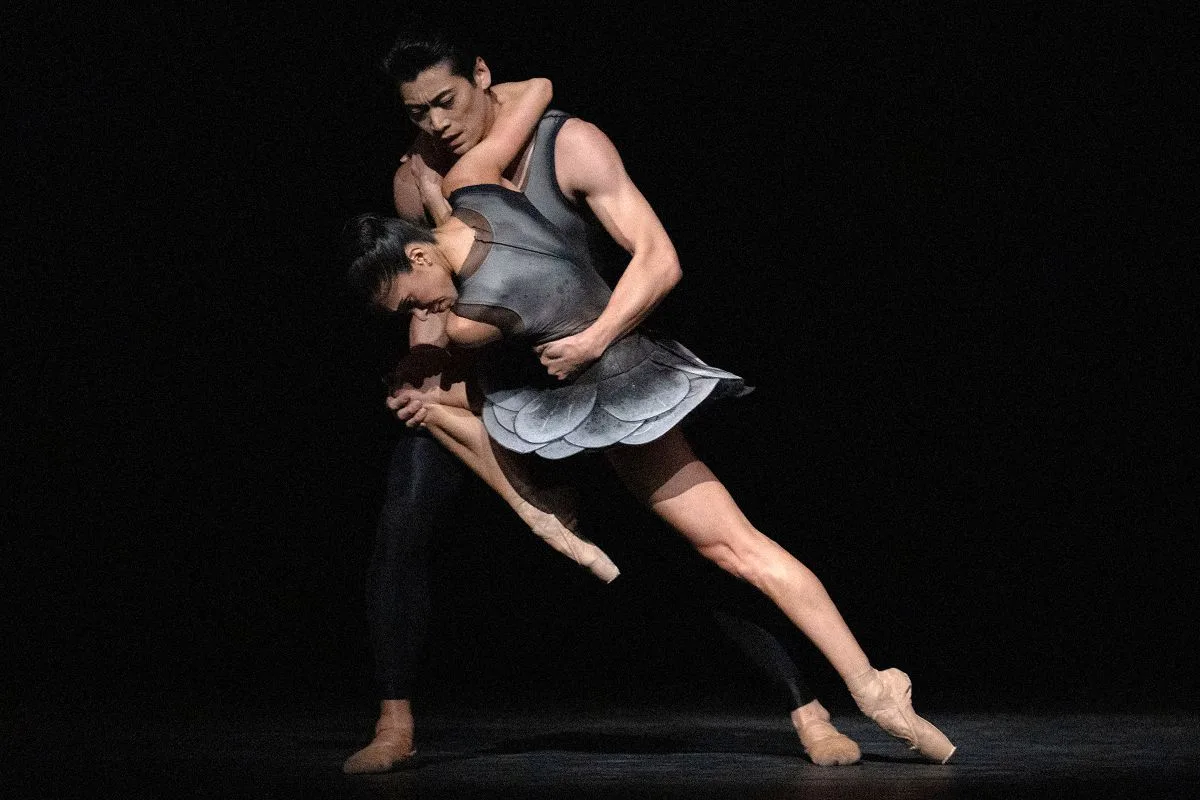

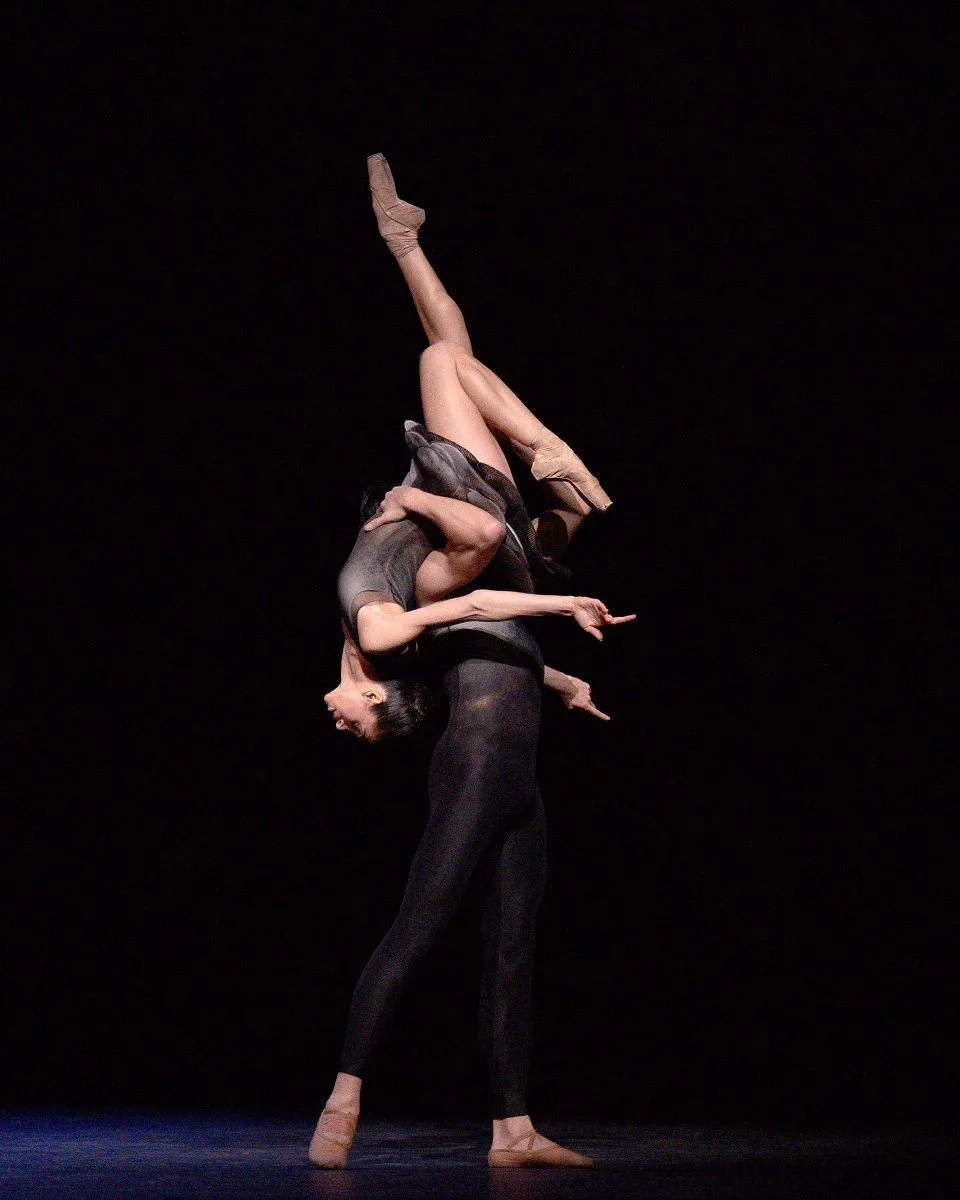
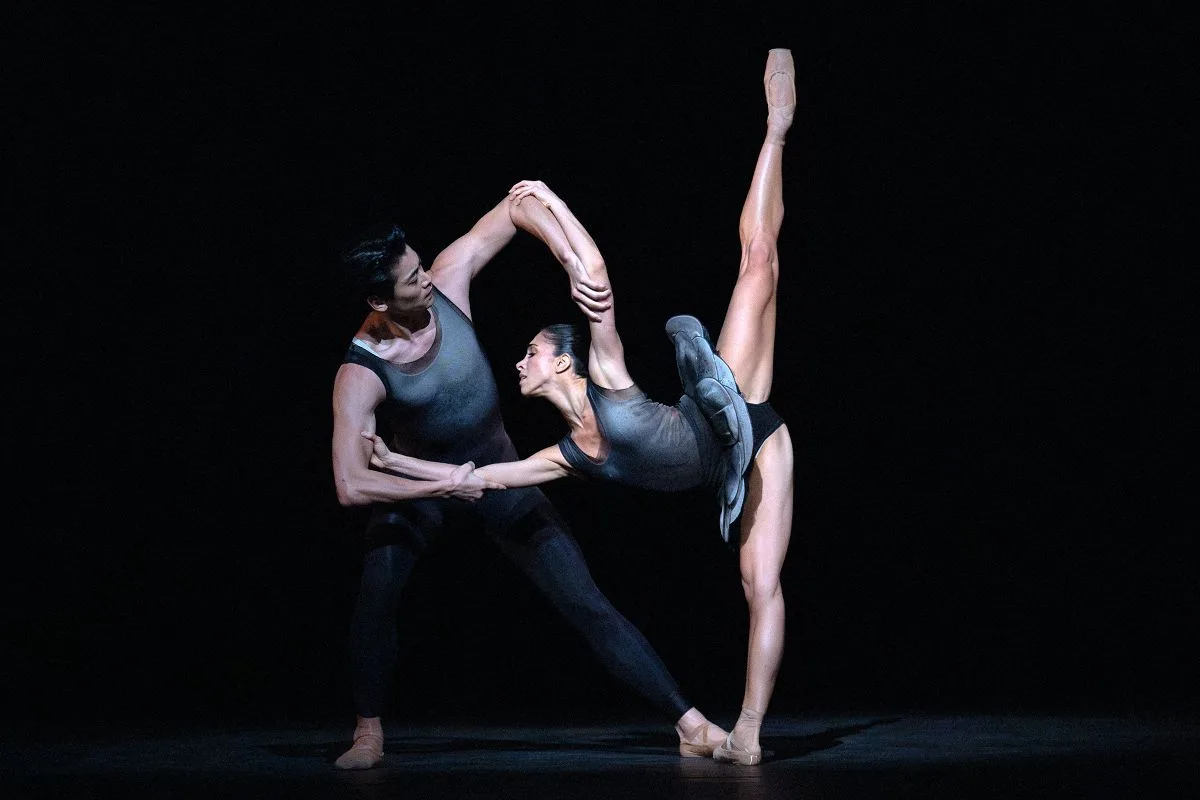
You have Yasmine Naghdi and Ryoichi Hirano leading your dancers? Did you choose who to work with?
There are four new works on this program. Kevin O’Hare, Director of The Royal Ballet, has done a wonderful job dividing up the company so that each dance maker has dancers that suit their work. I gave him an outline of what I was looking for, he gave me many dancers to workshop with on my first days of creation, and from there I gathered up my group, I couldn’t be happier with who I got to work with, so many different personalities.
To have Ryoichi and Yasmine has been such a bonus. Yasmine is incredibly bright, she understands what I’m asking of her instantly, and adds her own style and perspective on top making it very much hers. Ryoichi is very interesting to work with – he has an ability to be very tender, and powerful at the same time. I knew him from when I danced with the company 2000-2008 but he’s not the same dancer from when I left – he now has a world of experience… he’s a principal dancer.
Ryoichi is the only dancer that I already knew from my time as a dancer here, but I’ve had Samantha Raine by my side during this creation as rehearsal director. We danced many ballets side by side and it’s been very comforting to have her in the studio.
On your creative team was Charlotte MacMillan to design the costumes for Boundless.
I’ve been following Charlotte’s designs for a long time and have always wanted to work with her. We had many discussions about the boundaries of ballet, and the classical tutu and decided to go in that direction. Tutus create a natural boundary, the space barrier a tutu makes between the male and female makes it much harder to create intimacy, and we wanted to fight that idea in this ballet. She’s done an amazing job of creating something modern with a traditional twist, it really compliments the work.
What are your feelings on returning to the Royal Opera House?
It’s so exciting to be back – feels like I never left. But now I’m here in a very different role, that’s the strangest part. If you had told me 20 years ago I would get to make a dance with the Royal Ballet and show it on the main stage I would never have believed it.
The Festival of New Choreography 12 – 21 February
www.roh.org.uk

Graham Spicer, aka ‘Gramilano’, is a writer, director and photographer based in Milan. He was a regular columnist for Opera Now magazine and wrote for the BBC until transferring to Italy. His articles have appeared in various publications from Woman’s Weekly to Gay Times, and he wrote the Danza in Italia column for Dancing Times magazine. Graham was the historical advisor on Codice Carla, the 2023 documentary on Italian ballerina Carla Fracci.
Graham also works as a dance photographer, and his photos have appeared in many books, theatre programmes, and magazines, including Dancing Times, Dance Spirit and Ballet2000, as well as all the major Italian newspapers.
He is a member of the Dance Section of The Critics’ Circle.




A great piece. Loved it. Bravo Gemma.