Nina Ananiashvili – A Personal Portrait of Her Life and Work

Margaret Willis looks back at her 40-year-old friendship with Nina Ananiashvili on the eve of the great ballerina’s return to London with her company, the State Ballet of Georgia.
Imagine you have just danced the leading roles of Odette/Odile in a three-hour demanding performance of Swan Lake at the Bolshoi Theatre, and received umpteen curtain calls, only to find yourself, an hour later, in the shabby tiny kitchen of the one-room apartment you share with your grandmother, unexpectedly cooking a meal for four! While you prepare the chicken on a dodgy cast iron stove – and I peel potatoes and carrots – your future husband entertains the guest he has invited back to meet you – Anna Kisselgoff, famed dance critic of the New York Times. Around midnight, we all sit down with high accolades, not only for your performance, but also your cooking!
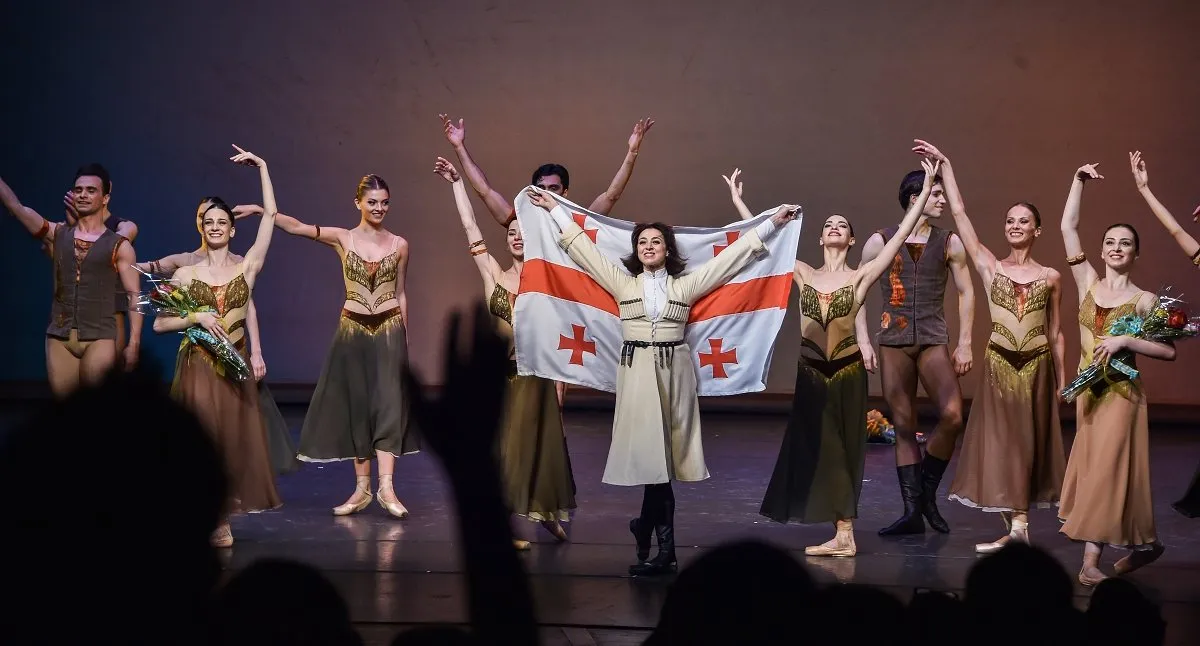
This is just one of the many treasured memories that I hold of my 40-year-old friendship with Nina Ananiashvili, one of the world’s greatest and best-loved ballerinas, who, in 2004 at the request of the then President of Georgia, Mikheil Saakashvili, accepted the role of artistic director of the State Ballet of Georgia. This month she brings her company to the London Coliseum.
Devoting her life to ballet and to her family, she has lit up the world’s stages with her brilliant dancing and has acquired countless admirers of every nationality who love her for her warm and charming personality. And she’s a great giggler!
Nina Ananiashvili started her young artistic life as junior ice-skating champion of Georgia. She was nine years old and her performance of The Dying Swan on ice so impressed one coach there that she suggested Nina should take ballet lessons. That was the start of a career that has lasted for over half a century now.

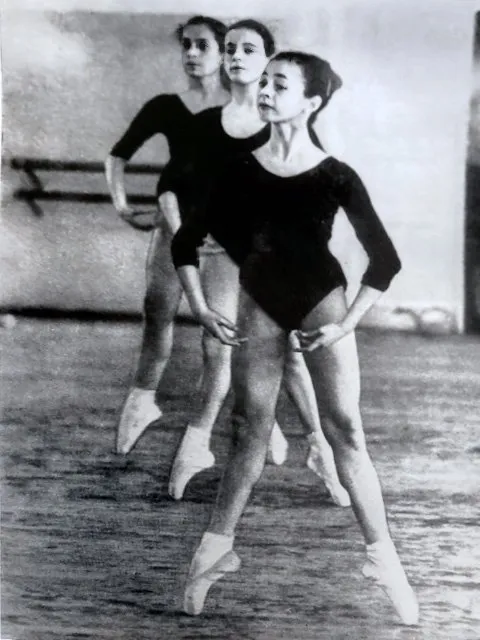


Nina attended the State Choreographic School of Georgia from 1973 to 1977 and was spotted by ballet teachers from Moscow who suggested she should transfer to the Moscow Choreographic School (MCS). At that time, Georgia was a satellite of the Soviet Union. Being only 13, and unable to speak Russian, it was decided that her beloved grandmother should accompany her. So off they set to share this tiny one-room apartment – two couches that turned into beds at night – just a short walk from the Bolshoi.
I first saw Nina dance when she was just sixteen – first in class at the MCS with her teacher Nina Zolotova, then performing the role of Swanilda at the MCS dress rehearsal of Coppélia, and then again at the opening performance a few weeks later, at the Bolshoi Theatre. I was instantly impressed by the fastidious technique, natural grace and elegance of this chubby-cheeked, somewhat serious young girl, so was not surprised when, at the 1981 Moscow International Ballet Competition, she won the Junior gold medal. My review of her performance read: “The sweet young Georgian danced throughout the competition with complete control, assurance and beautiful deliberation, in harmonious rapport with partner Andris Liepa.” The duo were to repeat their first successes together at the next Moscow competition four years later, where Nina now received the Grand Prix. In fact, Nina is the only ballerina to achieve all four gold medals from the top international ballet competitions – Varna, Moscow (junior and senior) and Jackson, Mississippi.

As a result of her initial success in 1981 and upon graduating, she was immediately offered a place in the corps de ballet at the Bolshoi Ballet, though quickly she was promoted to soloist status and, aged 22, became a principal. Everyone, including me, now wanted to see this young Georgian ballerina, especially when dancing with the charismatic young Liepa. Together, with their unifying dancing and intensive acting, they created what, to audiences, looked like a truly believable young romantic couple – he with his good looks and blond hair, she with her Georgian beauty and serenity. Their performances together were always sold out immediately.
Their popularity saw them tour to Boston, Massachusetts, with Maya Plisetskaya for a music festival, and I spent many a jolly evening in Nina’s hotel room with Andris teasing her like a brother. A friend of my husband invited any of the company, but especially Nina, to come after the show for supper on his boat. To my great surprise, I found most of the company dressed up in their finest with high heels and flowing dresses, waiting at the stage door, and I quickly sent them off in taxis to the harbour. When Nina, also looking very glamorous, finally was ready, we set off.
You can imagine my horror and embarrassment when I discovered that, instead of a luxury yacht, my bachelor friend was living on a rusty old lightship with metal circular stairs – completely unsatisfactory for high heels – and no furniture! But the dancers seemed non-plussed and stayed on and on, enjoying the atmosphere and the numerous orders of McDonald’s, which was all that could be ordered at that time of night. Nina stayed politely for a while but needed to sit after her dancing, so we soon went home laughing.
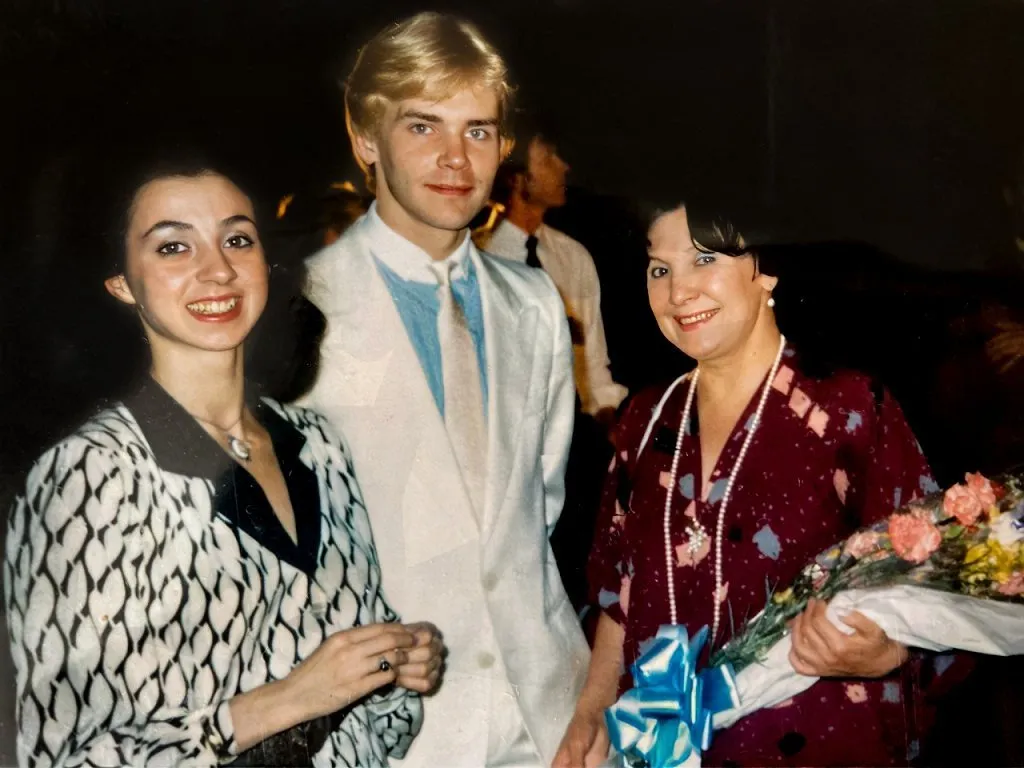


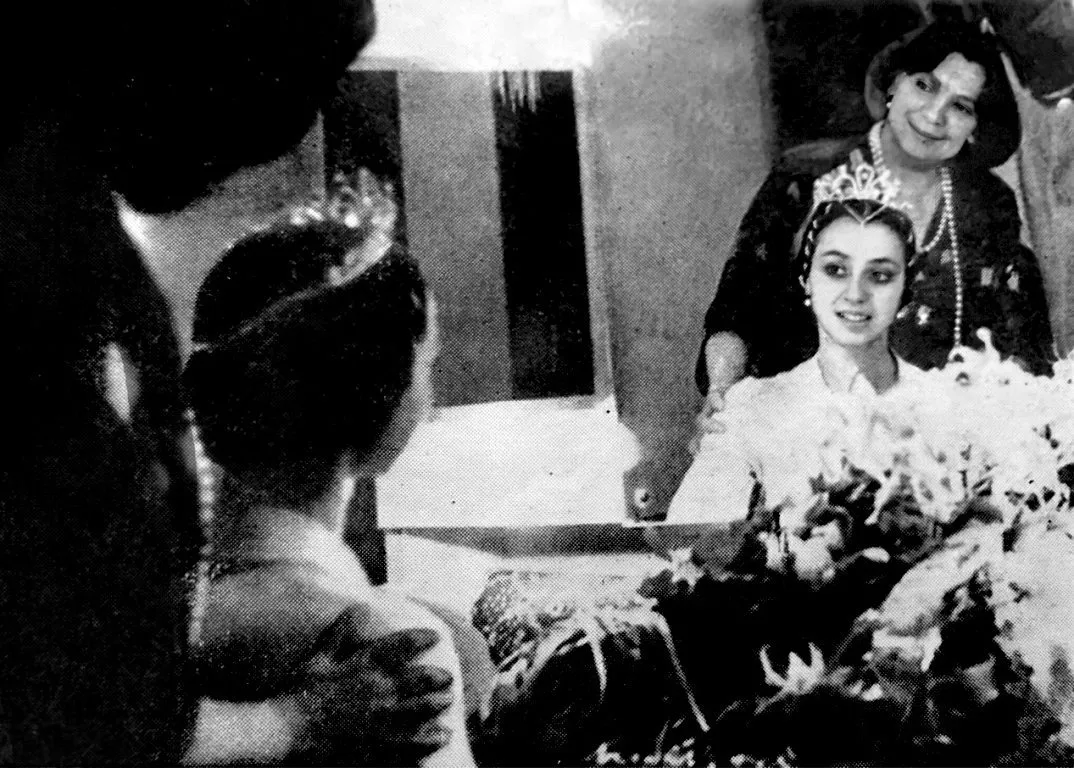
One of my greatest joys in Moscow during the communist era was beating the system, especially getting backstage at the Bolshoi Theatre. As a foreigner in the Soviet Union in the ’70s and ’80s, everything ‘unofficial’ was met with a determined ‘Nyet’ to any request. However, Nina would take my arm and waltz past the guard at the stage door with a lovely smile, pushing me on ahead, my heart beating fast. But we always made it, and would take the lift up to the top floor studio where the exuberant Raisa Struchkova, one of the Bolshoi’s great ballerinas of the ‘50s, was always so welcoming. Those hours spent regularly in the studio with the two of them were magical, as Raisa re-lived her dramatic, passionate and technically fearless dancing in her demonstrations to Nina. It was wonderful to see this special relationship which lasted for 23 years.
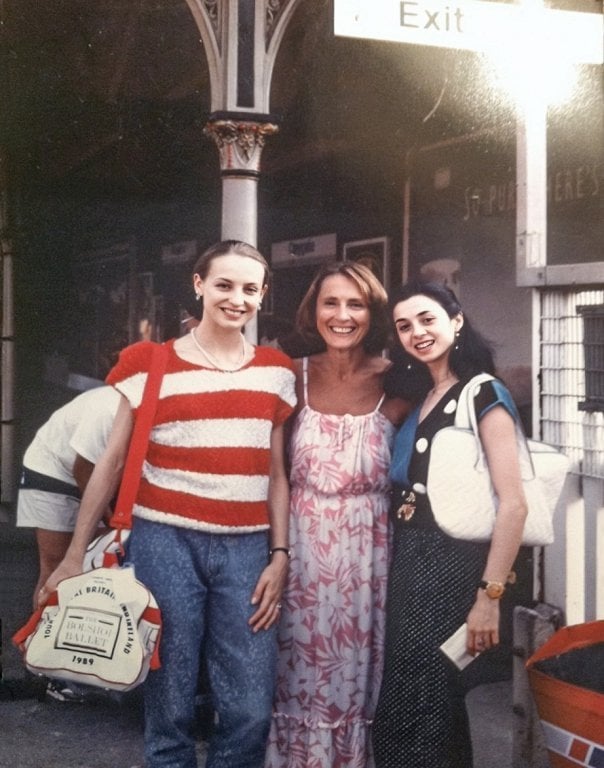
In 1985 I was assigned by the BBC to be the researcher for the Omnibus film that was to be made for the Bolshoi’s first visit to the UK in seven years. I introduced Nina and Andris to the director, and he immediately took a shine to them both and made them the youthful focus of the film. As a result, when the company arrived at the Royal Opera House, in the summer of ’86, the public was eager – and well rewarded – to see their performances. I became assistant manager and translator for the company’s six-week tour as I knew many of the dancers who were mostly new faces to the public. It was a wonderful experience. Any free time was spent shopping or sightseeing with the dancers, often with Nina, and we even visited, laden with gifts, fans of Raisa’s from earlier Bolshoi tours.
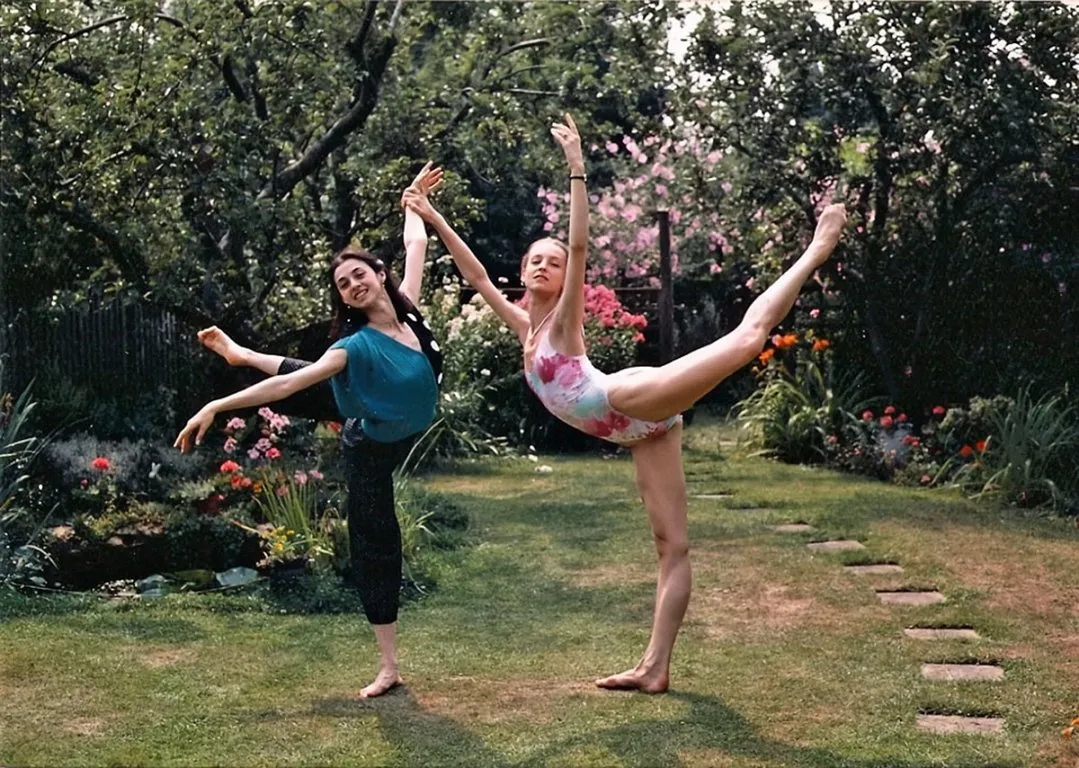
One Sunday, Nina and Ilze Liepa bravely came on their own by train to spend the day at my home in Surrey. It was stiflingly hot that summer and I had mentioned that my garden had a pond. Ilze assumed that she would be able to swim and came with her bathing suit, only to find a tiny bath-sized pond filled with frogs and goldfish! But the two girls, after lunch and a nap, demonstrated great balletic poses under the apple tree – how I longed for my neighbours to be peeking out of their windows!
In the late 1980s, I unwittingly became part – a very very small part – of Nina’s future – and it was all in a ‘thumbs up’ sign! One day she told me that a Georgian diplomat, Gregory Vashadze, had been sending her baskets full of red roses after her performances and one night she invited me to go home with her after a performance to meet him and her cousin who had been in the audience. I was only too happy to accept. We all had a jolly evening and I was won over with Gregory – or Gia as I knew him – as he spoke excellent English and had a great sense of humour and fun.
The hour got later and though I lived not far from Nina, Gia insisted on getting a taxi for me. As I said goodbye to everyone, Nina stood behind him and raised her eyebrows at me indicating, “Well, what do you think of him?” It was then that I gave the thumbs-up sign, and we both giggled. In 1988 they were married and Gia worked tirelessly on Nina’s career which was opening fast in the glasnost era. With invitations coming from all the big companies around the world, his astounding knowledge of ballet, and of contacts and contracts, left Nina to concentrate only on her dancing while he took care of the official side of things.
They were blessed with a daughter, Elene, two years after Nina took over the SBG, and the baby was literally brought up in the theatre in her early days as Nina was staging Swan Lake at the time.
In December 1988, Armenia was hit by a devastating earthquake and the Royal Opera House put on a fundraising gala, inviting Nina and Irek Mukhamedov to perform the grand pas de deux from Don Quixote. Everyone was excited at the thought of seeing these two superstars. However, Nina arrived alone as Irek had not been allowed to come at the last moment, and she was now without a partner. I met her in London two days before the gala and she reported that she was being given another partner whom she had yet to meet. It turned out that The Royal Ballet’s Errol Pickford had been selected, becoming the first Western dancer to partner her. Happily, the two clicked and gave a very good performance, seen live on TV, and Nina reported, in her dressing room after the show, that she had been very happy dancing with him.
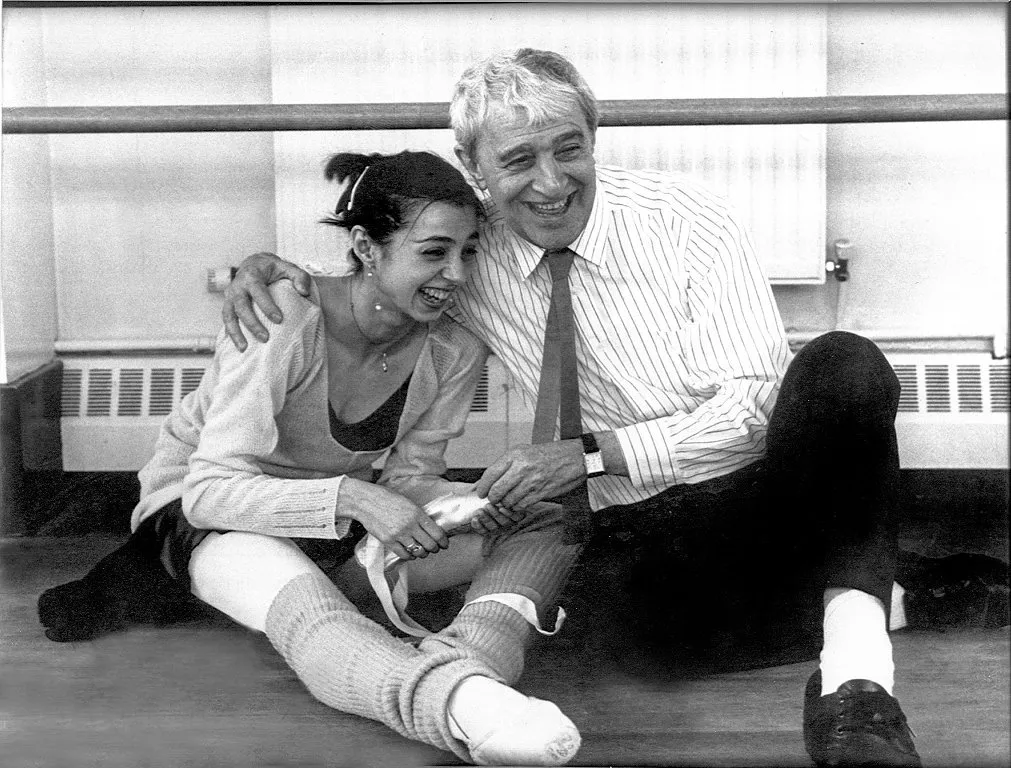
Nina was invited to perform with The Royal Ballet on several occasions, and on one of her visits – this time to perform The Prince of the Pagodas – I was asked to take her to Barons Court, the old premises of the Royal Ballet School. Here we met with Sir Kenneth McMillan who had come to supervise her rehearsal as Princess Rose – and it turned out to be a fabulous afternoon.
The two got on famously and kept me busy translating. There were lots of giggles and laughter in the pre-rehearsal chat and it seemed that Nina understood intuitively the often-complicated technical challenges of the role. Sir Kenneth was delighted with her, and it seemed a shame to end this wonderful afternoon, but duty called each of them in different directions.
I visited Georgia several times and met up with her lovely family each time. I remember attending the gala re-opening of the Tbilisi Opera and Ballet State Theatre after the civil war, where Nina was to dance Giselle with fellow Georgian, David Makhateli, then principal of The Royal Ballet, (I had acted as his guardian/foster mum when he attended the Royal Ballet School.) Signs of the war were everywhere, especially in the theatre with pock-marked walls from bullets, dirty broken windows, no electricity, no toilets or showers due to water shortages, and studios that were dark, dirty and dusty. Rehearsing was very challenging. Yet, a few days later, with determination and dedication from all Georgians determined to re-open the theatre on time, the two dancers produced a beautiful, elegant performance to a full house delighted to welcome their dancers back home again.
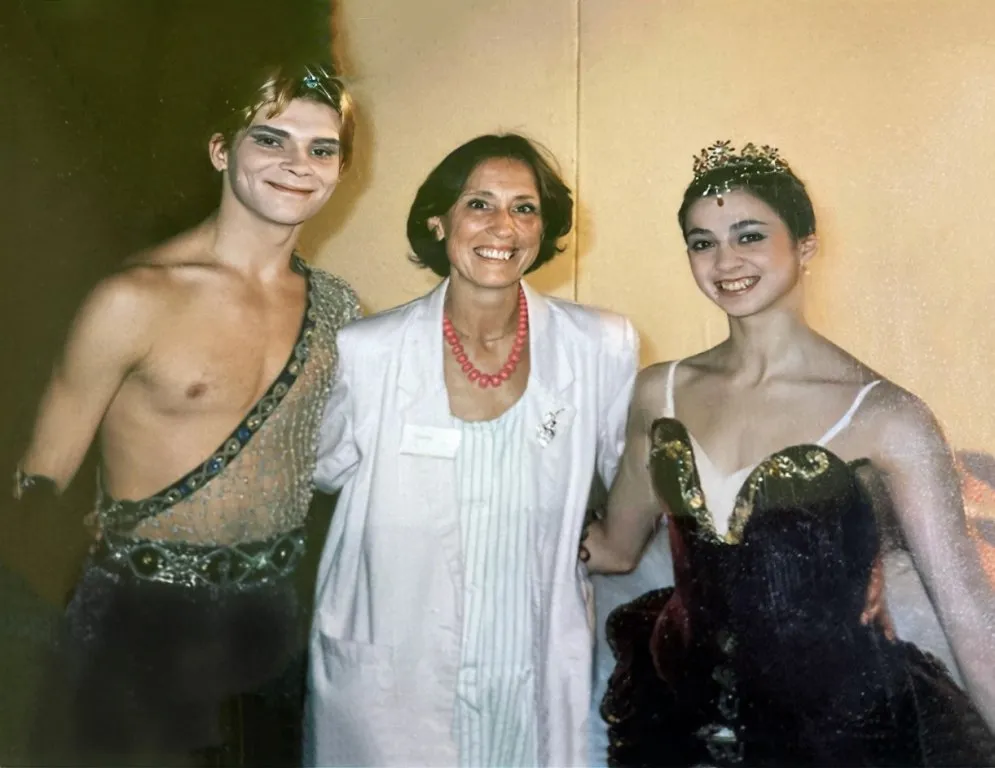

In 1998, I was invited by Houston Ballet to write a Stagebill article about Nina, give a talk about her to the company’s patrons, and review the premiere of director Ben Stevenson’s The Snow Maiden. Once again, Nina slotted easily into company life, charming and making friends with everybody, totally dedicated to learning the new role, the rehearsals of which I attended. Her partner was Carlos Acosta, at that time a principal at Houston Ballet, and the duo made a fine pair, he with his powerful authoritative dancing and she with her delicate artistry, as well as convincing mischievous characterisation. The production was a huge success, and the Texans loved her.
In 2008, Nina took her company to the Edinburgh Festival, and I went up to see her and review the performances. However, as the tour was coming to an end, news came that Russia had invaded Georgia and the war had closed all air and sea ports. Nina was on her own and deeply troubled as to how she would get the company home. We tried to get in touch with Georgia but phone lines were down making the dancers very afraid for their families. However, being Nina, she managed to get the company back home safely despite the odds and she also made headlines in the local papers with her outspoken comments on the situation.


I met up with Nina in Covent Garden last summer when she came to London on a day trip after receiving an award in Italy. Our plans to eat in the Royal Opera House Cafe were interrupted when a staff member recognised Nina and took us, at her request, all over the darkened auditorium, even to the highest, giddiest parts of the amphitheatre, as she wanted to recall her days with the company. She touched the plush seats, sat in a box, and studied the stage from different angles with happy memories of dancing with the company.
The reason why Nina Ananiashvili has been a treasured icon of classical ballet for over forty years lies in the fact that her nature is, and always has been, to share the beautiful art of classical ballet with the world. Not only was she blessed with the perfect ballerina physique and beautiful expressive features, but she possesses a joie de vivre that embraces everyone, making them feel at ease in her presence.
She is serious about her profession in every way – its past, present and future – and works diligently with her company of twenty years, demanding the highest standards and commitment from each of them. The superb coaching and lessons she learned from her own dedicated teachers have been the guiding lights for Nina in her years of handing down the torch of pure classical ballet to the next generation of dancers, and she exudes joy, warmth and a great love for family, friends and fans. She is an utter joy to know.
Today she is excited about returning again to the capital: “I am so proud of my company and can’t wait to show off my dancers to you all,” she told me recently. “I am so happy to come back to London, a city I love, and where I have so many friends and such happy memories.”
…
I can only add: “Thank you dear Nina for all these lovely memories, and more, you have given me.”

Swan Lake
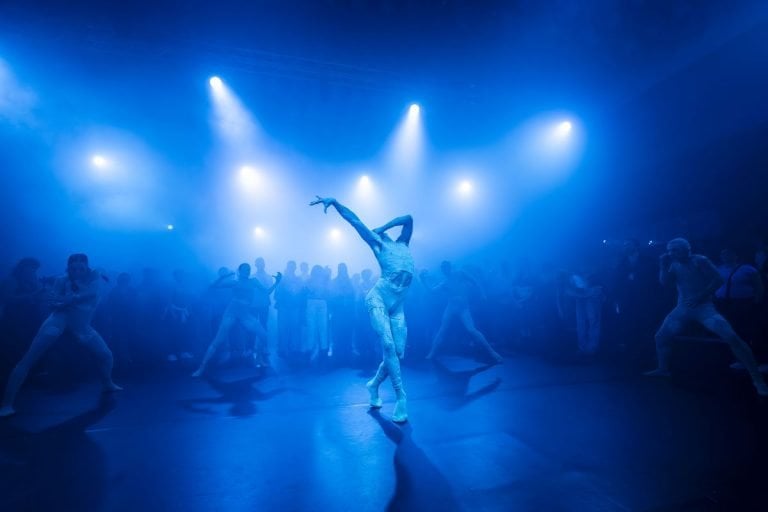
The State Ballet of Georgia comes to London with a full-length classic production of Swan Lake from 28 August – 8 September 2024
https://londoncoliseum.org/whats-on/swan-lake-state-ballet-of-georgia/