Review: Oedipus at the Old Vic – striking trees, but not quite a forest

Lucía Piquero sees Oedipus at the Old Vic with Rami Malek, Indira Varma and Hofesh Shechter’s choreography, but finds a disjointed feeling to the whole production.
| Title | Oedipus |
| Company | The Old Vic |
| Venue | The Old Vic, London |
| Date | 4 February 2025 |
| Reviewer | Lucía Piquero |
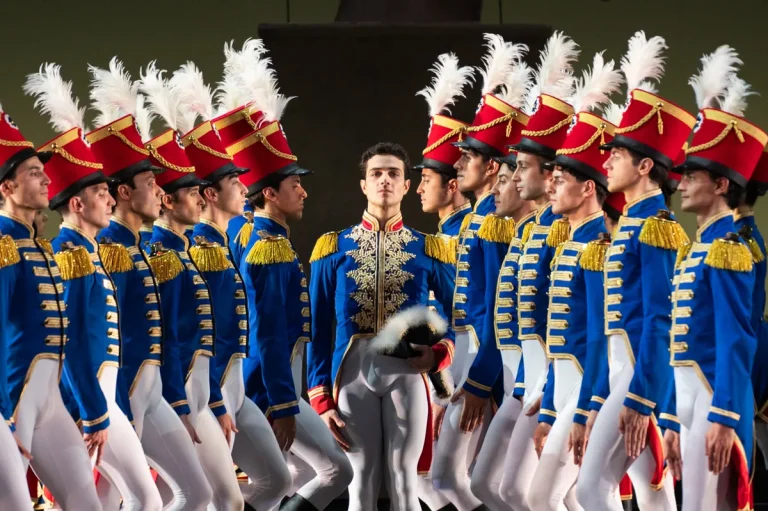
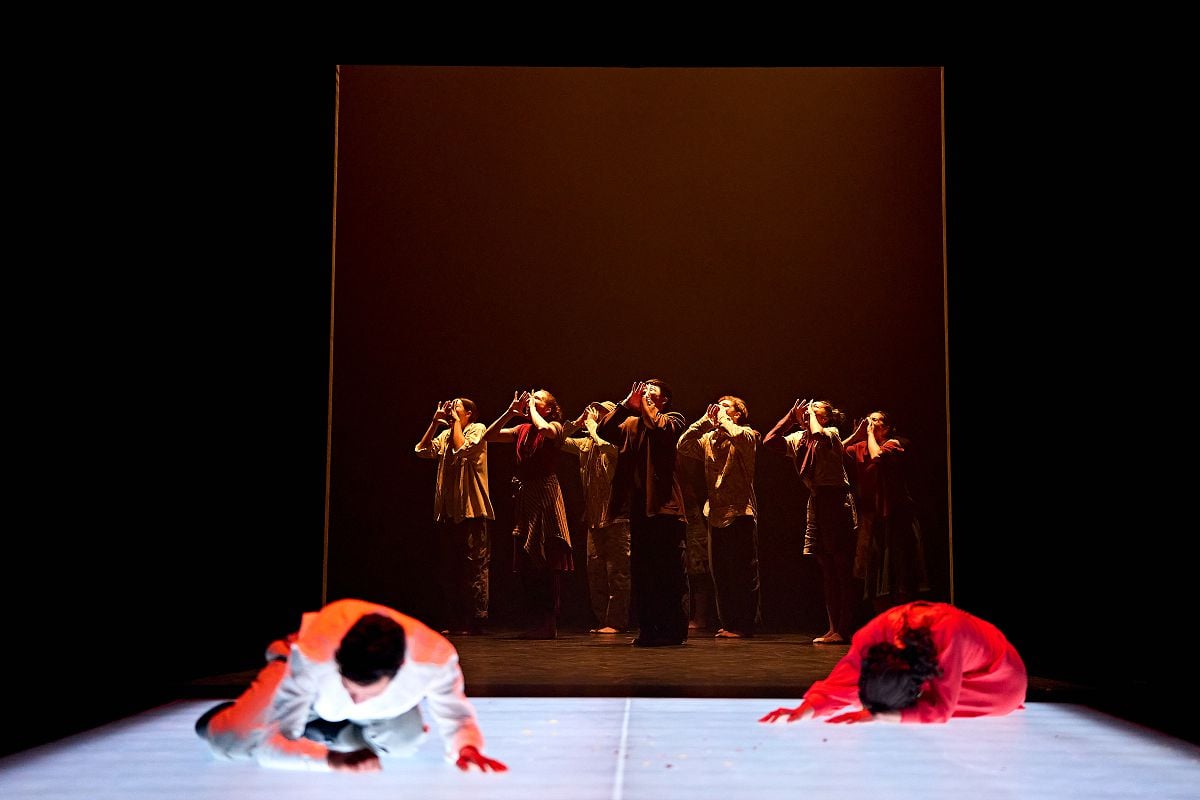
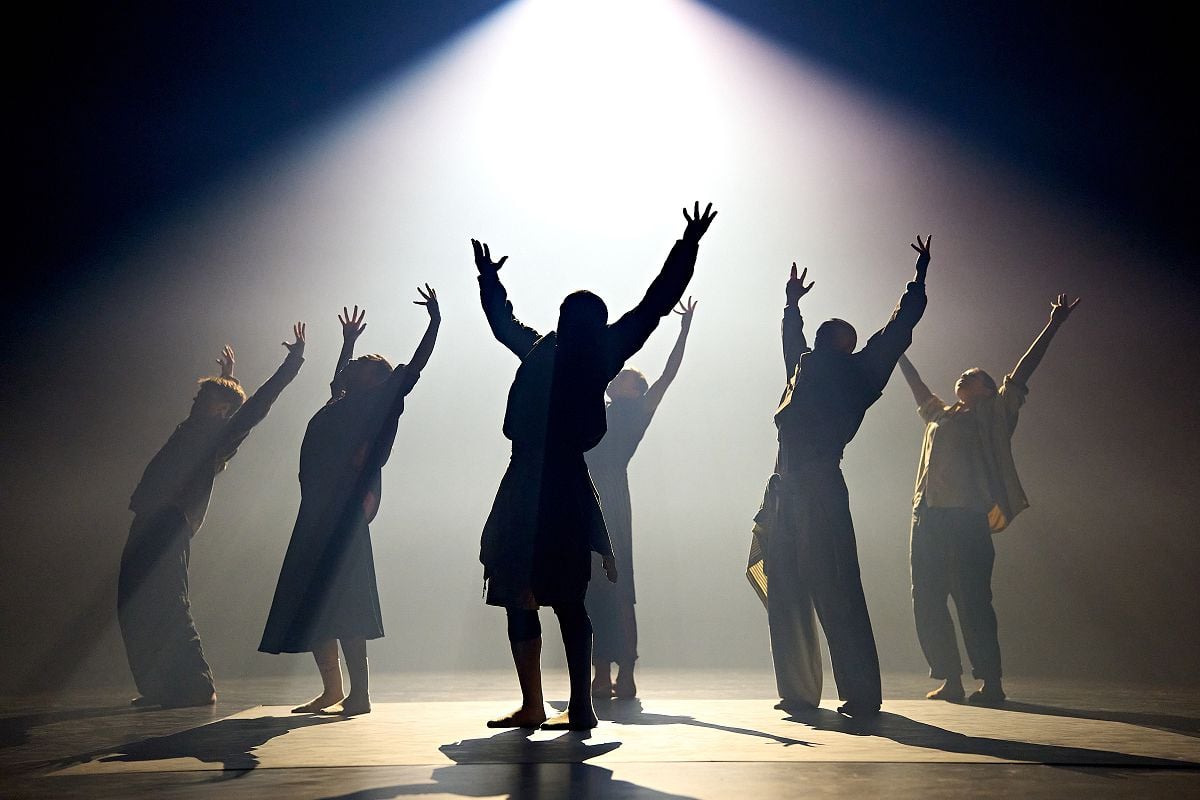
To anyone who has ever seen a work by Hofesh Shechter, the opening scene of Oedipus at the Old Vic will look very familiar. Powerful, striking, groovy, cool. Not original, though. His, very distinct, style, is so recognisable that it almost feels a bit overused. In this particular occasion, it adds power to a production that needs it, but it also divides the work. Although the dancers appear to be the Greek chorus, perhaps the town at points, dance and theatre fail to integrate in a way that drives either the story or the emotion of this production.
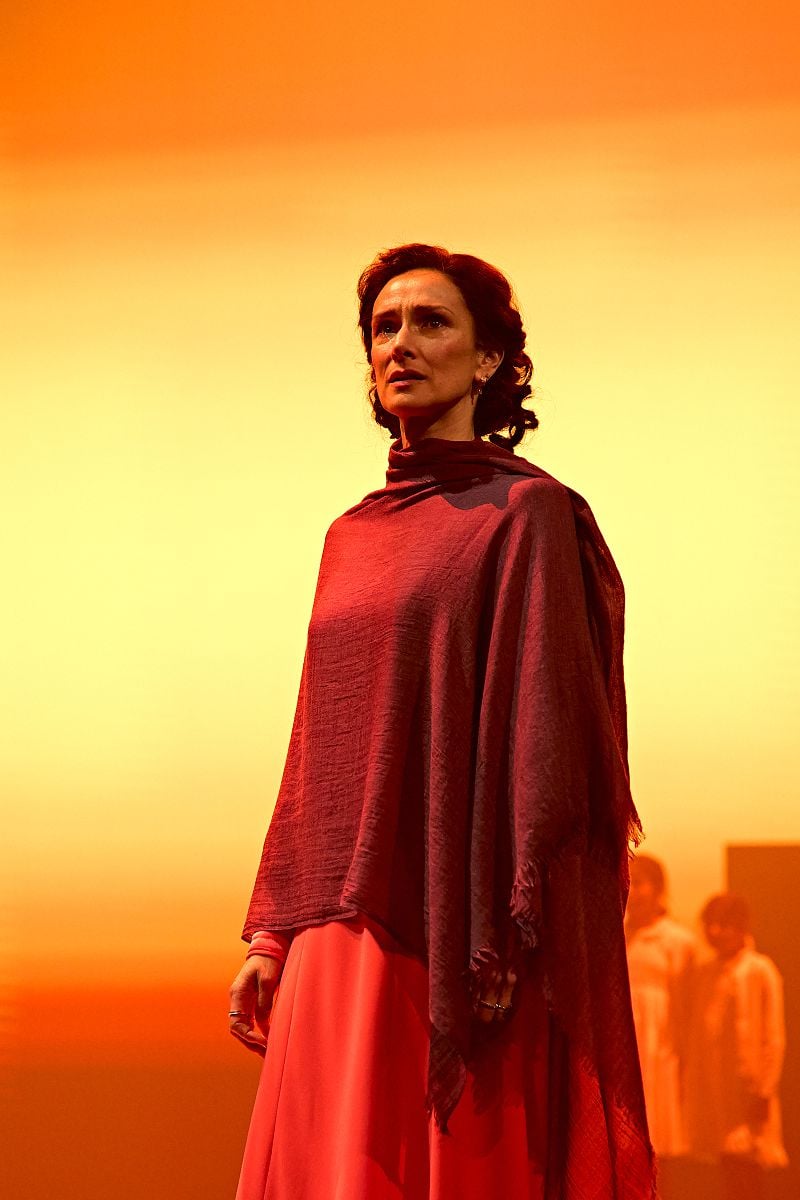
The production is sensorially striking. Tom Visser’s lighting is as usual an unsettling mix between mysterious, calming and foreboding. The music reverberates in our chest and drives the energy up. There are moments in which some of the elements feel almost caricaturesque, like some of the characters, or the obvious sounds brought in the background (a crying baby when Jocasta talks about her firstborn, the voices of the people during Oedipus’s speech…). The costumes are generally sleek, with exceptions, and allow us to concentrate on the performances, which are also elegant and strong. Indira Varma, especially, seems to hold the stage and our feelings in her hands, often upstaging anyone around. Rami Malek’s Oedipus seems to take a bit longer to warm up, but his reaction to learning that his (adoptive) father had died is so nuanced and so real – that “I still had things to say to him” – it feels like our hearts are breaking with him. From that moment onwards we can anticipate what is coming (I don’t believe anyone would be surprised by the plot of this particular story), but the production holds us expertly in a strong sense of tension.



This is perhaps why the dance interludes – because this is what they appear like – feel so disconnected. Some of the transitions are quite impressive: in a seemingly immediate blackout, we are given a full change of scene. Others quite forced: like Malek moving a bit with the dancers, or being pushed around by them before disappearing. It almost seems like there was no ‘co-‘ in the direction.
There is no question that the dancers are absolutely stunning, they exude power, they are fully given to the movement and the moment, they eat the stage and us, and we are beating with them. This is perhaps best exemplified by the little encore they do after the curtain call, which had the audience literally screaming. But this moment also exemplifies how much they seem to be an element which exists outside of the story. In several moments towards the end of the play, the dancers were smiling as they moved. Maybe they were the town celebrating that the rain had returned, but the emotional journey of the audience was broken by this, it did not lead us on from Oedipus and Jocasta’s tragedy. And it didn’t help me particularly that some of their clothes were very evidently branded – again, it seemed like they stood apart from the actual play).
In this Oedipus, the performance is good, the dance is good, but they never fully come together, giving a disjointed feeling to the whole production. We have beautiful, powerful trees, but in this case, they do not make a forest.



Lucía Piquero Álvarez was born in Asturias, Spain, where she trained in Classical Ballet and read for a BSc in Psychology. She moved to London where she trained in contemporary dance (LCDS), also getting an MA in Choreography (Middlesex University). Lucía has been an independent dancer and choreographer since 2007, her choreographies have been presented internationally and she has been commissioned by choreographic centres, national companies and festivals.
She was lecturer and head of the Dance Studies Department at the University of Malta, and Senior Lecturer at Dance City (Newcastle), and is currently lecturing at Trinity Laban and English National Ballet School. She completed her PhD at the University of Roehampton. Her main research interest is on embodied emotion and cognition in dance, she has presented in conferences and directed workshops and practice research projects internationally, and published articles and chapters in diverse platforms as well as her own monograph.