Interview: Hannah O’Neill, Paris Opera Ballet Étoile, to debut with The Royal Ballet

| Paris Opéra Ballet Étoile Hannah O’Neill will make her debut with The Royal Ballet in London as Giselle. Lily Hyde talked with her a few days before her first performance. |
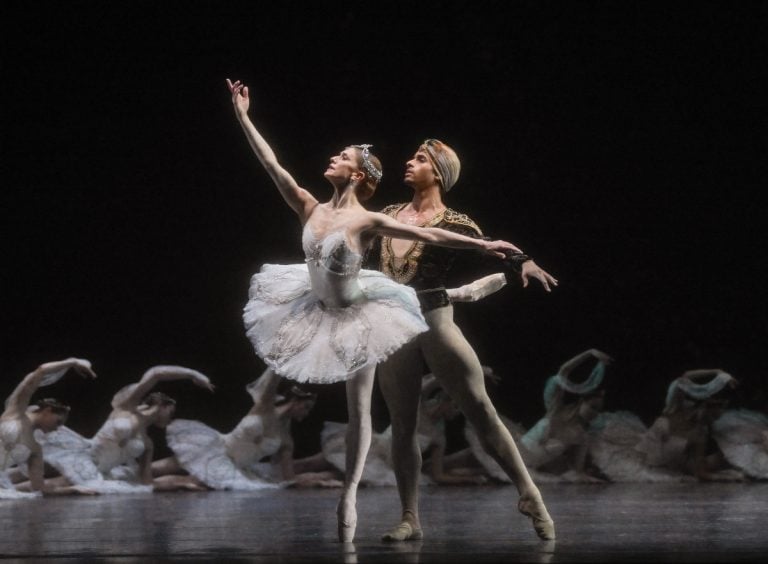
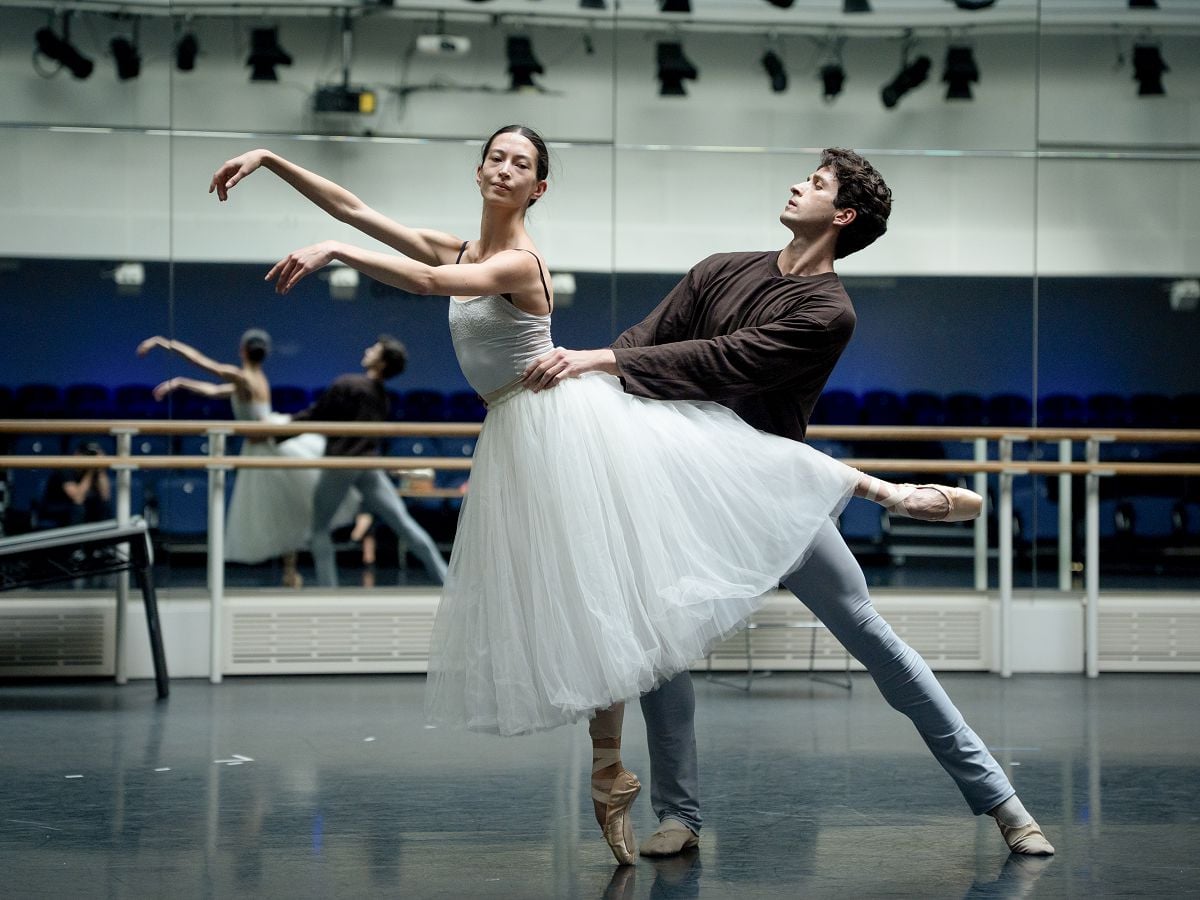
In a dazzling run of Giselle performances filled with debuts and new partnerships, The Royal Ballet has one final treat for audiences before it closes next week – Hannah O’Neill, Étoile with the Paris Opera Ballet, will be appearing in the titular role. The first Paris Opera Ballet dancer to take to the Covent Garden stage since Sylvie Guillem more than twenty years earlier, O’Neill will be joined by Royal Ballet Principal Reece Clarke, reviving a partnership that began late last year.
A dancer of remarkable poise and elegance, O’Neill joined the Paris Opéra Ballet in 2011 and was awarded a permanent contract in 2013. She rose through the company’s ranks, and in 2023, was promoted to the coveted rank of Danseuse Étoile – one of the few non-French dancers to do so.
We met the day before her stage call. O’Neill, fresh from rehearsals, is calm and composed, curious and open, and presents an unshakeable confidence within herself that is little short of inspiring. We discuss Giselle, its challenges, and her debut on the Royal Ballet and Opera stage (off the record, we may have also spoken about the Chanel show she attended on Monday). We start with O’Neill’s first memory of Giselle.
[Hannah O’Neill] One of my mother’s best friends was a ballet dancer. I vividly remember going to see her perform Giselle with the Star Dancers Ballet when I was four or five in Japan. It was so beautiful, and felt so special because I knew the Principal Dancer.
[Lily Hyde] You said in an interview that you knew from a very young age that you were going to be a ballerina. What were the roles you were drawn to?
I wouldn’t say it was Giselle… but it’s definitely a role that, as I got older, was put on a pedestal – even more so at the Paris Opera Ballet, where it’s the classical ballet. There, it’s a very big deal when we first do Giselle. There are roles that are so much more difficult, but it’s just so iconic. It’s a ballet we take to heart.
Your Giselle journey starts not with Giselle, but Myrtha, a role you first danced in 2016.
Yes, I danced the role a lot earlier than I was supposed to because somebody got injured. Myrtha is a role I’ve danced a lot, lot, lot. I’d never done the corps de ballet in Giselle, so my first time dancing in it was as Myrtha. She’s an incredible role to play, and it’s one of the best on-stage memories that I have.
I have a vision of her: there’s an orderly side, she is a queen and with the power to kill, but at the same time, she has just as much sorrow and grief – if she’s the Queen of the Wilis, perhaps she grieved the most of all of them. I really like that moment when she first comes onto stage, and there’s that Giselle-like feel of grief as she walks around the forest alone.
Physically and technically, it’s a very demanding role, but I felt like I grew a lot with that role. It wasn’t very easy for me at the very beginning, because I think I have a light-ish quality as a dancer, and so I was always told I had to be a bit more grounded. Now I’m dancing Giselle, I can really explore that lightness, and I don’t have to fight it, but I definitely know my Giselle has been made easier from having danced Myrtha.
And how was it having the Palais Garnier stage all to yourself?
I guess I was quite nervous, but just that violin note at the very beginning when she comes on is enough to get past it. When I do get nervous, and I’m not feeling so confident, I always try to really get into the music.
After twelve years at Paris Opera Ballet, you made your debut as Giselle in your first season as an Étoile. How did that feel?
It was amazing. It was one of those real dream-come-true moments. I had been waiting to do it for so long, but at the same time, when I started rehearsing, it wasn’t like I panicked, but I had put it on such a high pedestal that I thought, ‘Oh my gosh, I’m never going to be able to do this.’
I’ve realised that with time and performing it a lot, it’s very different every time, and there’s always something you can bring out of Giselle. Dancing it here in London, I’m sure it’s going to be very different from when I did it back in Paris a few months ago. It’s a very creative role, and whilst there are the key moments you have to do, there is also a lot of freedom.
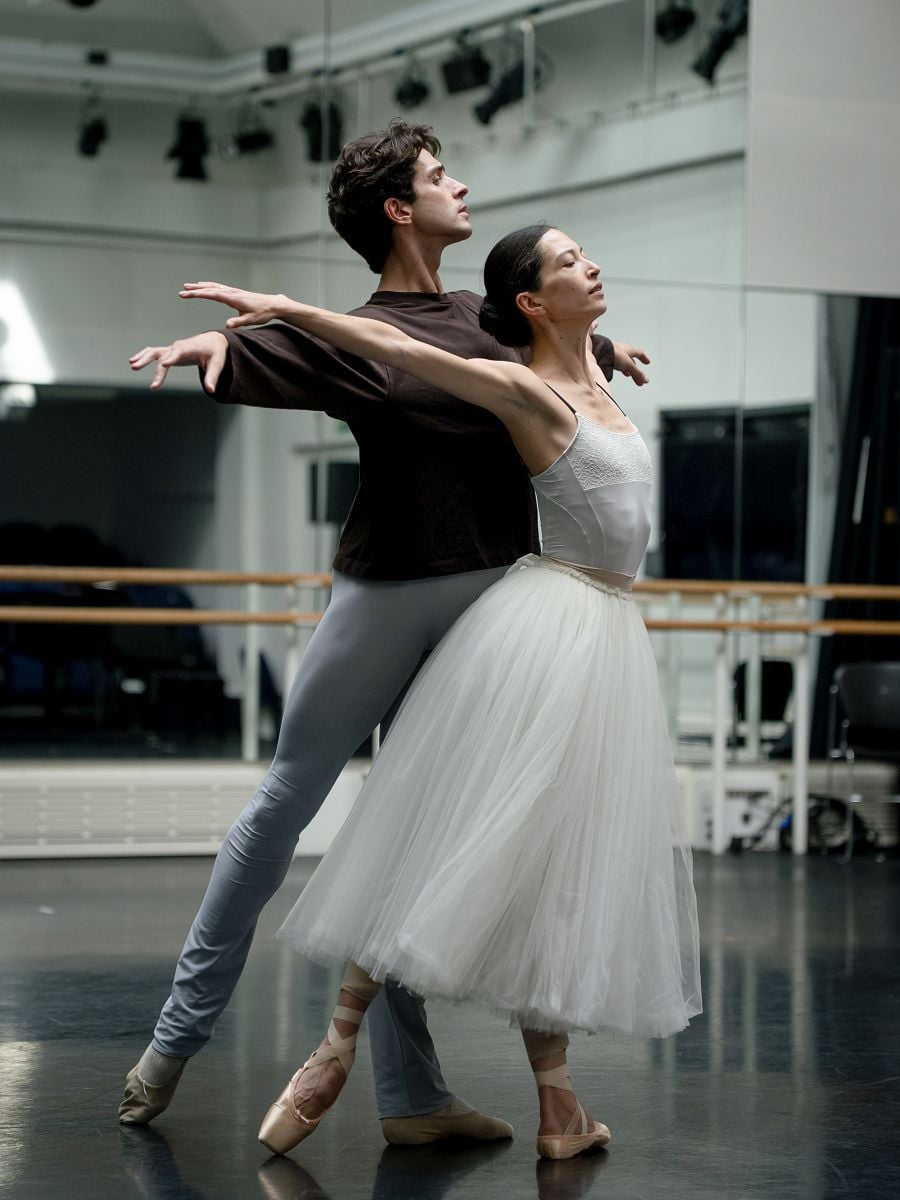
Going into the role, were there any choices you knew you wanted to make?
I think the hardest part was watching so many ballerinas that I admire do it over the years. Watching them did slightly make me think that I wasn’t a Giselle, but like with other ballets, I just had to find my own Giselle. I took a lot of inspiration from older ballerinas, but it was more their perfume of Giselle, and I had to construct my own.
Coming back to Giselle’s lightness, how did you bring that quality to her, having spent so long dancing as Myrtha?
The thing with Giselle that is so magical is that every time I’ve danced it, I’ve never felt like I was dancing a ballet. I was being this ethereal thing – I never really had my mind on doing an amazing piqué arabesque or balance, it was just a general feeling of a lot of love and devotion.
There are such clear balletic styles in Europe. How comfortable are you guesting in another country with a different style of dance?
I feel very confident in my work, which is in the French style, but one that’s also a little bit unique to me. Guesting is always so refreshing. Going somewhere else is very exciting, and it’s always nice to get out of the usual routine.
I don’t feel completely lost, because as a dancer, I know what I can give. I was talking about this with my coach, who told me, ‘As an Étoile, it’s our duty to have the courage to propose what we have, and not try to please everybody.’
What challenges has Peter Wright’s adaptation of Giselle brought you?
It’s a very beautiful production, not too different from Paris Opéra Ballet’s, but there are slight differences. It’s not that things are more difficult, but that they’re almost the same, but not quite. I haven’t felt the whole ballet yet, because I haven’t rehearsed with the corps, but I’m looking forward to that.
And how has coaching with Darcey Bussell been?
It’s been great! It’s another little girl’s dream. Darcey Bussell was one of my favourite ballerinas when I was a child, and we had one small encounter when she came to visit the Australian Ballet School, which was a very big deal.
Being back here as an adult and being in the studio with her is an absolute joy. She’s very encouraging and clear – it’s a lovely energy to be around. I feel like I’m in very good hands.
What’s it like being coached by someone for a short while?
Darcey isn’t there to change me completely. As ballerinas, we have that respect for each other. It’s all very positive. I trust her outlook on things, and I think she can feel what I’m trying to do. So without really changing it, we’re making it better, more beautiful and lively.
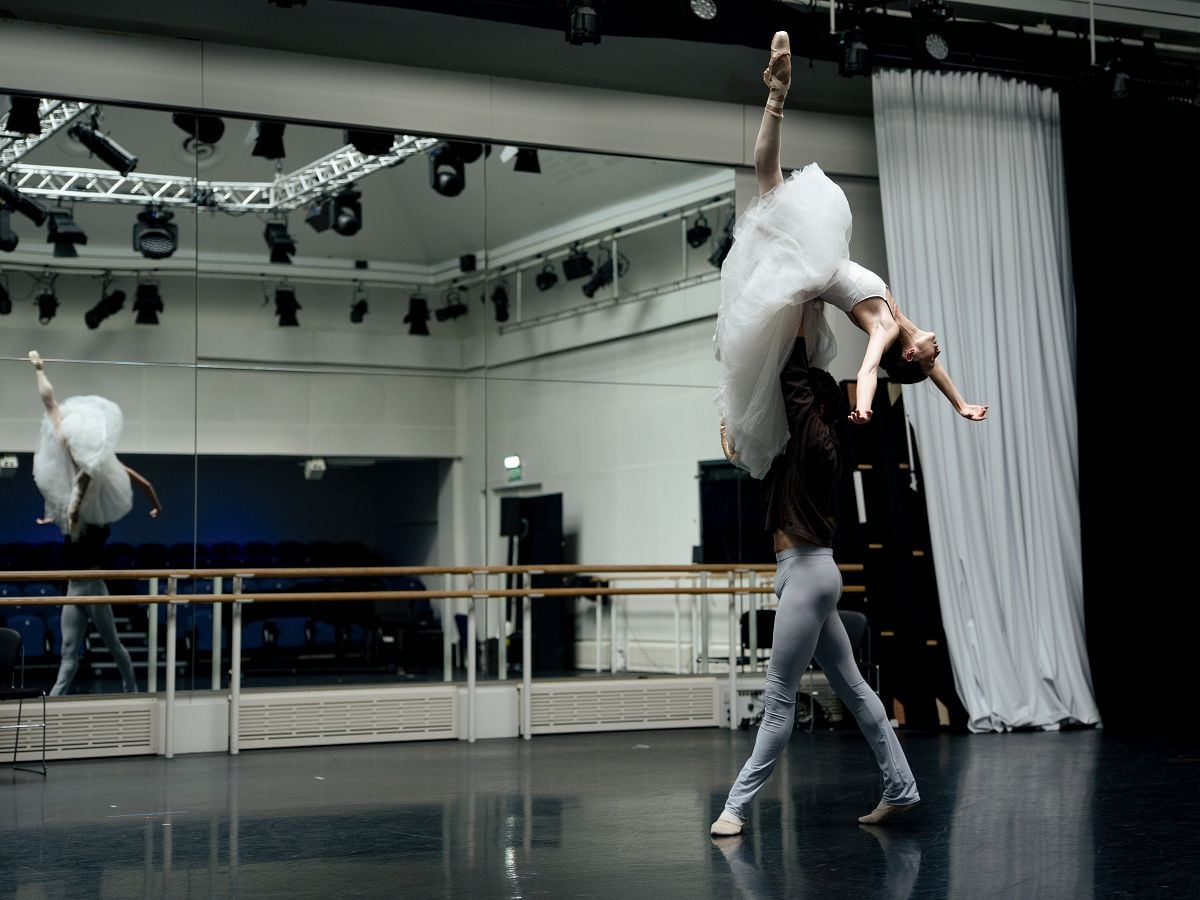
Do you think you’ve adapted your interpretation of Giselle for this production in any way?
I think the bones of my Giselle haven’t changed as such. There are small changes in the choreography, but I think it’s just adding. I would say in the first act, I’m quite much the same, even at the end when she does die.
In Peter Wright’s version, she stabs herself, which is the same as the French version. Not everybody does it, but I, with my coach, decided that I do stab myself, because in the actual account of Giselle, in the text, it says that she does. That’s an aspect that I really like, and I thought it was really interesting that Sir Peter Wright kept it in.
I think my second-act Giselle quality is more about how I’m used to doing it. I like being a ghost and untouchable.
You’ll be reviving your partnership with Reece Clarke, who you danced with in October. How has that been?
It’s been really lovely, and so easy to come back to. We didn’t even really talk through anything; we just went straight into it, which is nice because it gives us the freedom to see what happens spontaneously.
What are you most looking forward to on Monday?
I’m just really excited to be a part of and share the stage with The Royal Ballet. I’m very curious to learn, see, and feel what it’s like to dance in another theatre, but I also just love dancing Giselle. I’m excited to be her again, in a new place on a new stage, in front of a new audience that doesn’t know me at all. I’m just excited for the whole experience.
After this, you’ll be making your debut as Juliette in Nureyev’s production of Romeo and Juliette in Paris. How’s that going?
Juliette is… going (laughs). It’s a very hard ballet, and in some ways a very contemporary ballet. Though Juliette doesn’t have many variations, the pas de deux are very hard. But I absolutely love it, it’s one of my favourite Nureyev ballets, and I’m very excited to be making my debut. I left Paris, and I said, ‘Romeo can wait!’
Hannah O’Neil and Reece Clarke perform Giselle at the Royal Opera House on 16 and 20 March 2026
Rbo.org.uk

Lily Hyde is a cultural and dance writer based in London. Her writing has appeared in The Fence and The Creative Independent, and she runs the cultural newsletter, Falling Upwards. She is currently writing her first novel.