Review: Hofesh Shechter’s Theatre of Dreams – “it’s nothing short of epic”
Lydia Wharf sees Hofesh Shechter’s Theatre of Dreams: “I feel moved and changed for experiencing it, in the same deeply held way as I might carry something of my dreams with me beyond waking.”
| Title | Theatre of Dreams |
| Company | Hofesh Shechter Company |
| Venue | Sadler’s Wells, London |
| Date | 10 October 2024 |
| Reviewer | Lydia Wharf |
Welcome to the world of Hofesh Shechter, Associate Artist at Sadler’s Wells and one of the most successful and prolific choreographers in the UK today. Theatre of Dreams, his latest major production, is a co-commission; the list of backers investing alongside Sadlers is long, spanning much of Europe and even Shanghai. Perhaps this gives some sense of the degree of interest in the production, the company and the artist himself. I wonder how it must feel to be creating new work with this incredible degree of support – unlimited creative freedom with endless resources at your disposal? Or an overbearing weight of pressure and expectation? The theatre is certainly packed and there’s a real buzz of anticipation – I’m fascinated to see how this evening will unfold.
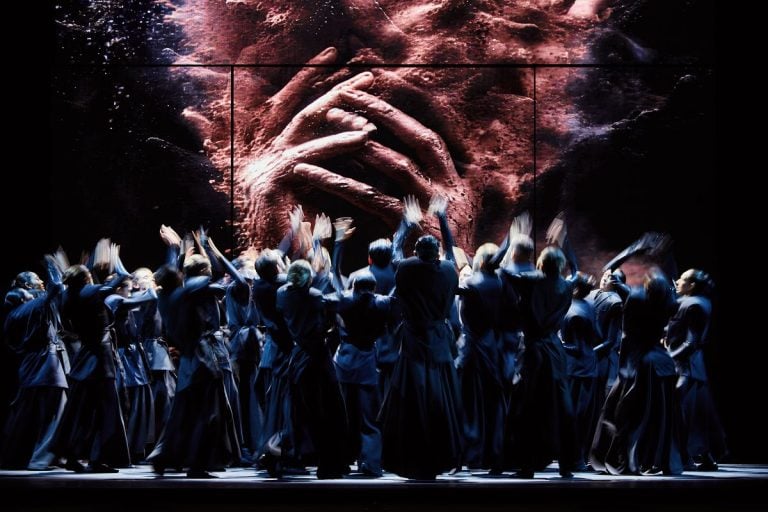
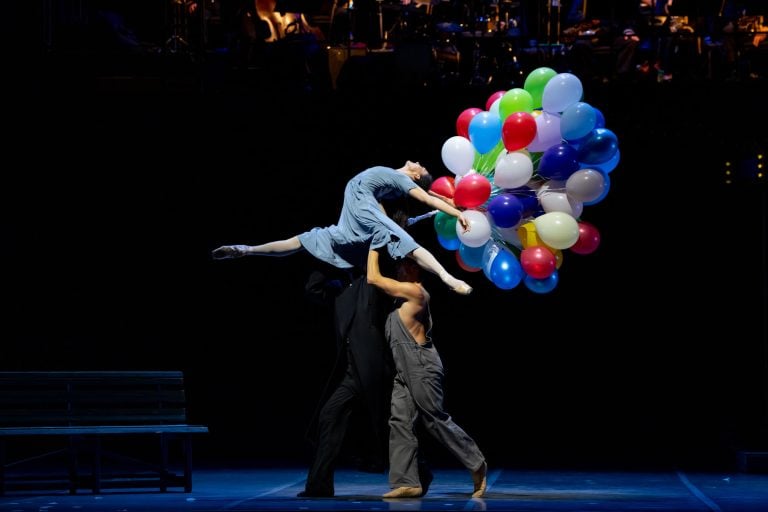
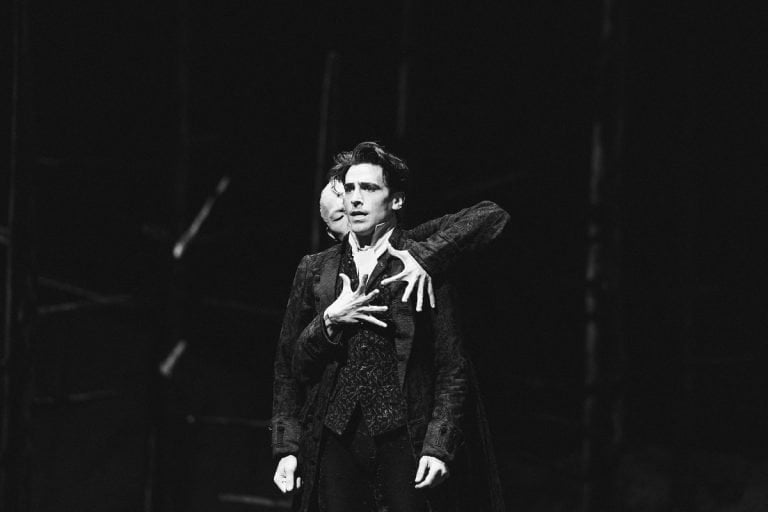
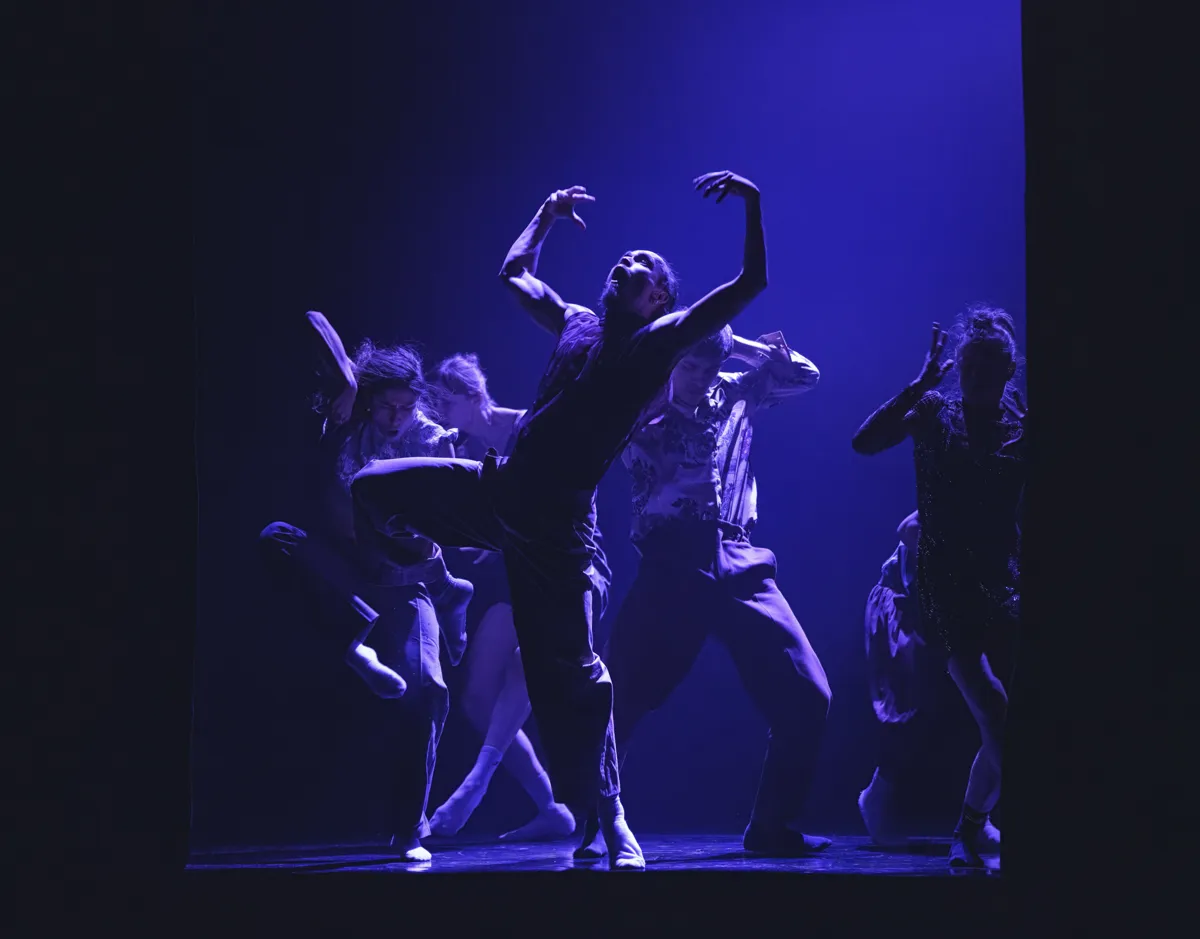
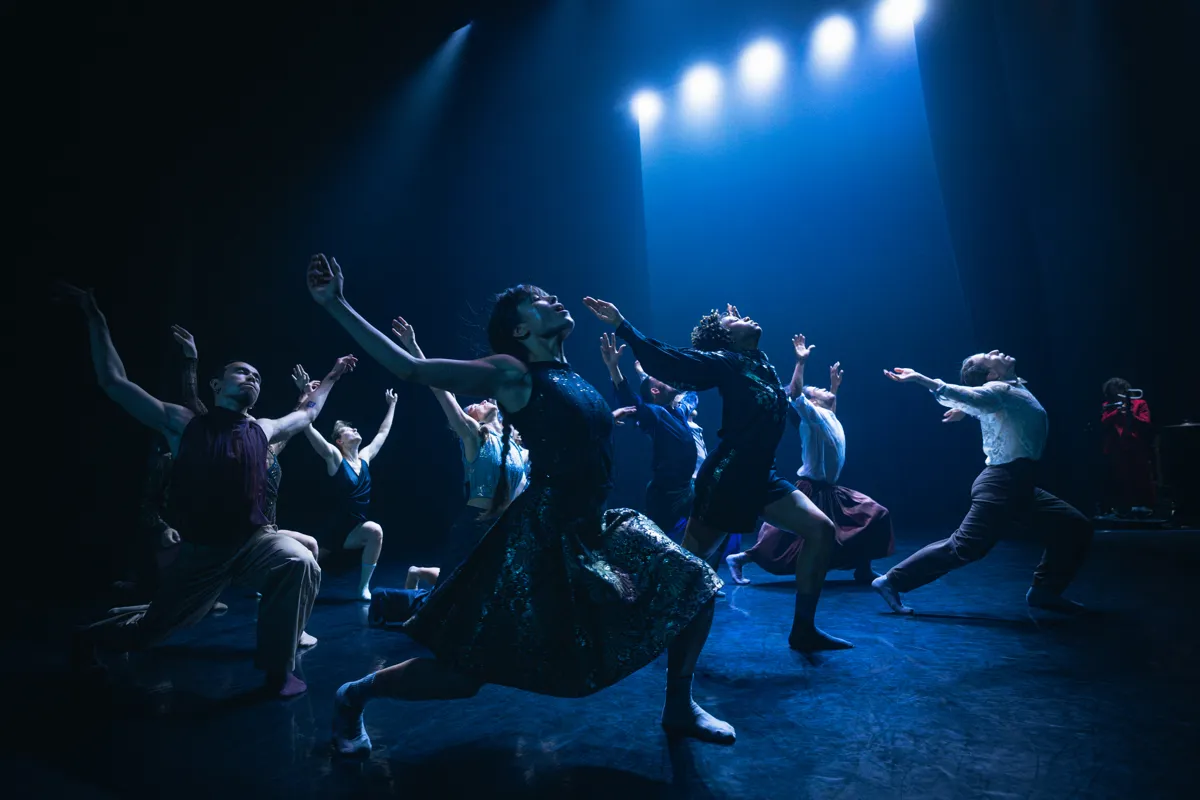
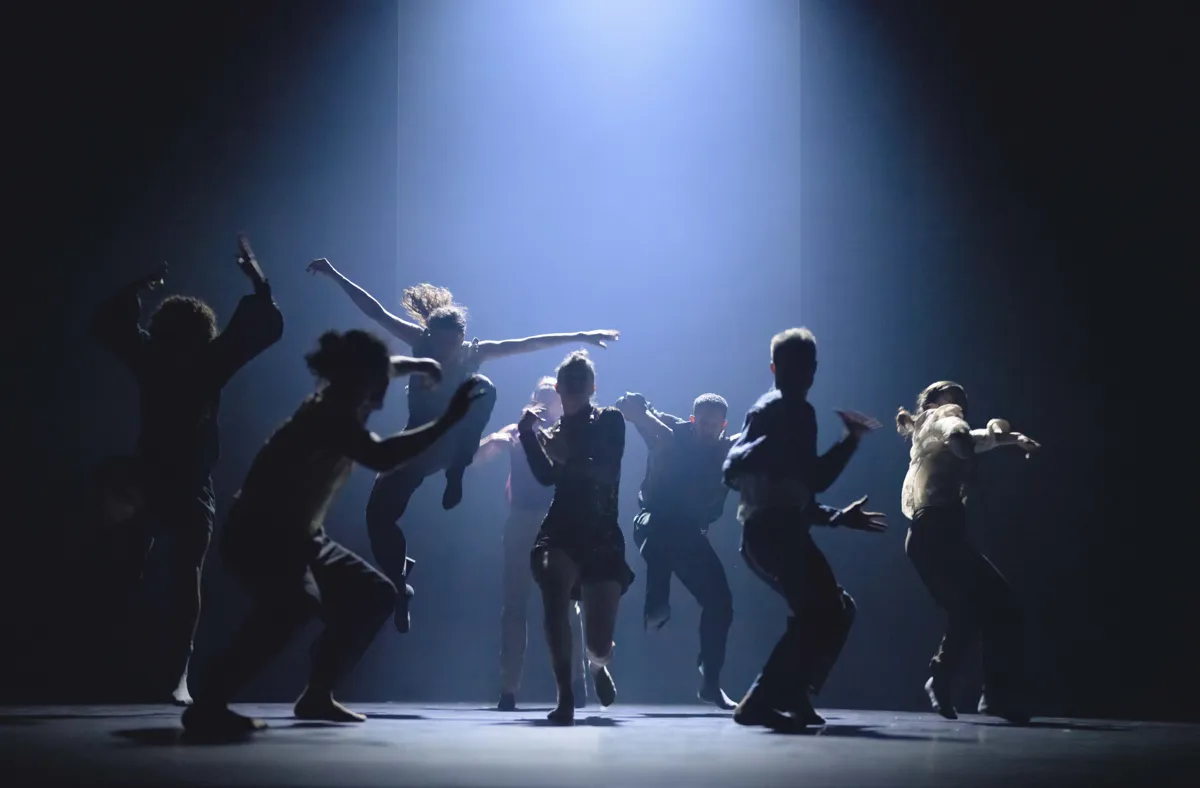
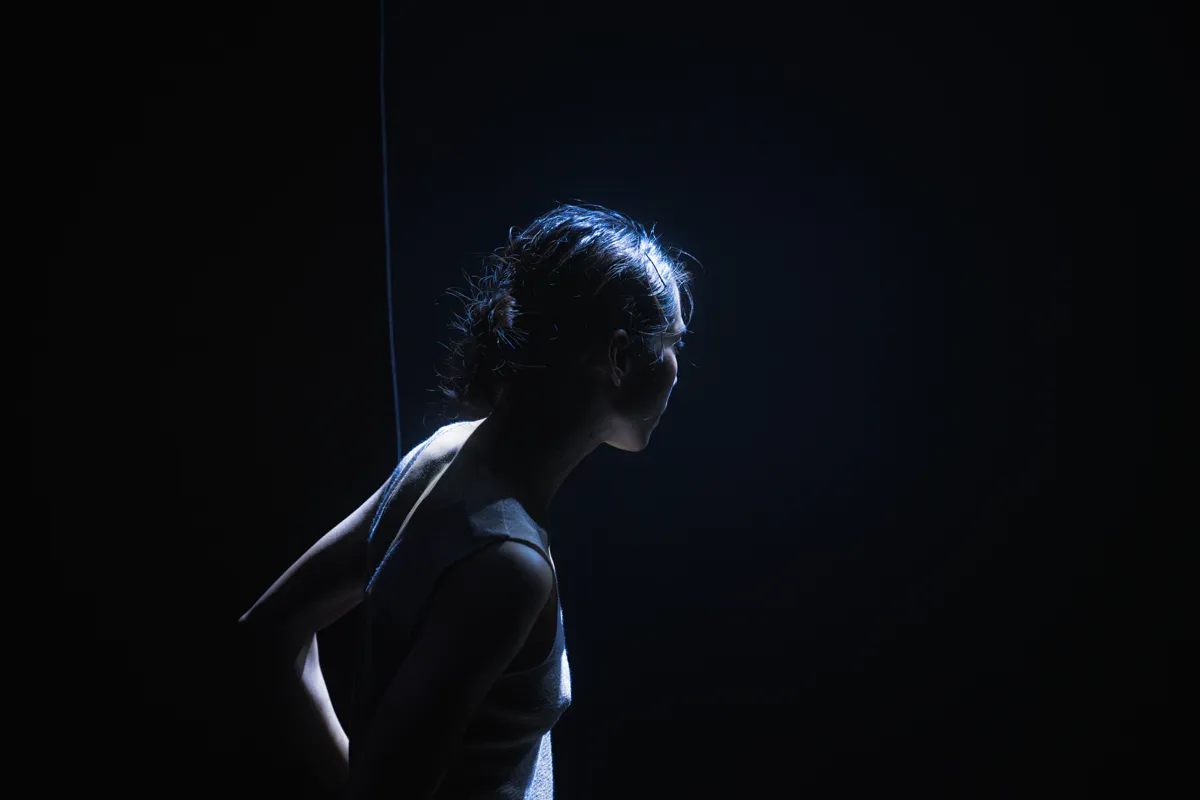
A low-key, slightly lost-looking guy quietly wanders alone onstage in front of the draped red velvet of the front curtain. When a small, low gap darkly presents itself in that curtain, I find myself willing him to accept the invitation and tumble down the rabbit hole. But when he does, what lies beyond that opening is as mystifying and discombobulating as any human dream, where reality slips through the fingers like sand. We enter a world of darkness where various tableaux begin to emerge and disappear – sometimes as short glimpses, sometimes longer sections of movement, sometimes sparing solos, occasionally the complete company of 13 dancers moving together, caught in full chaotic pelt. Each fragment appears, punctuated by light, as suddenly as it disappears into sudden blackout. The ingenious use of curtains and tabs separates out spaces on stage and the images appear from all directions, creating layers of dimension and form. Throwing these stark shards of imagery out of the darkness lodges them sharply into the consciousness. There’s a nightmarish quality in the contrast between muffled dreamlike confusion and the cold clarity of the often-spotlit movement.

Just as we might try to find coherence in our own dreams, I find myself wrestling to anchor what I see onstage to a ‘meaning’. There’s a lot to understand over next 90 minutes, and none of it feels anything less than vital – the dancers’ urgent, expressive movements, the relentless reveal and conceal of the curtains, the growing tension around ‘the unknown’ (what is it that we’re not seeing?). Even the set and lighting designs, so closely aligned it feels as if they’re conspiring to hold my attention, drive the urge to understand. But apportioning meaning feels like waking up and writing down my dreams in an attempt to capture their essence and analyse them. Some parts might be easier to decipher than others – there’s a scene where the dawning awareness of being naked, a ubiquitous nightmare, plays out. But no matter how vivid and perplexing, dreams are slippery, often providing bold symbolism but not always codes with which to unlock meaning. Perhaps a more generative approach to navigating this Theatre of Dreams is to sit back and just fully experience the rich sensorial feast. As the journey continues, I let go of the notion of ‘understanding’ and enjoy the ride. I’m delighted to say that it’s nothing short of epic.
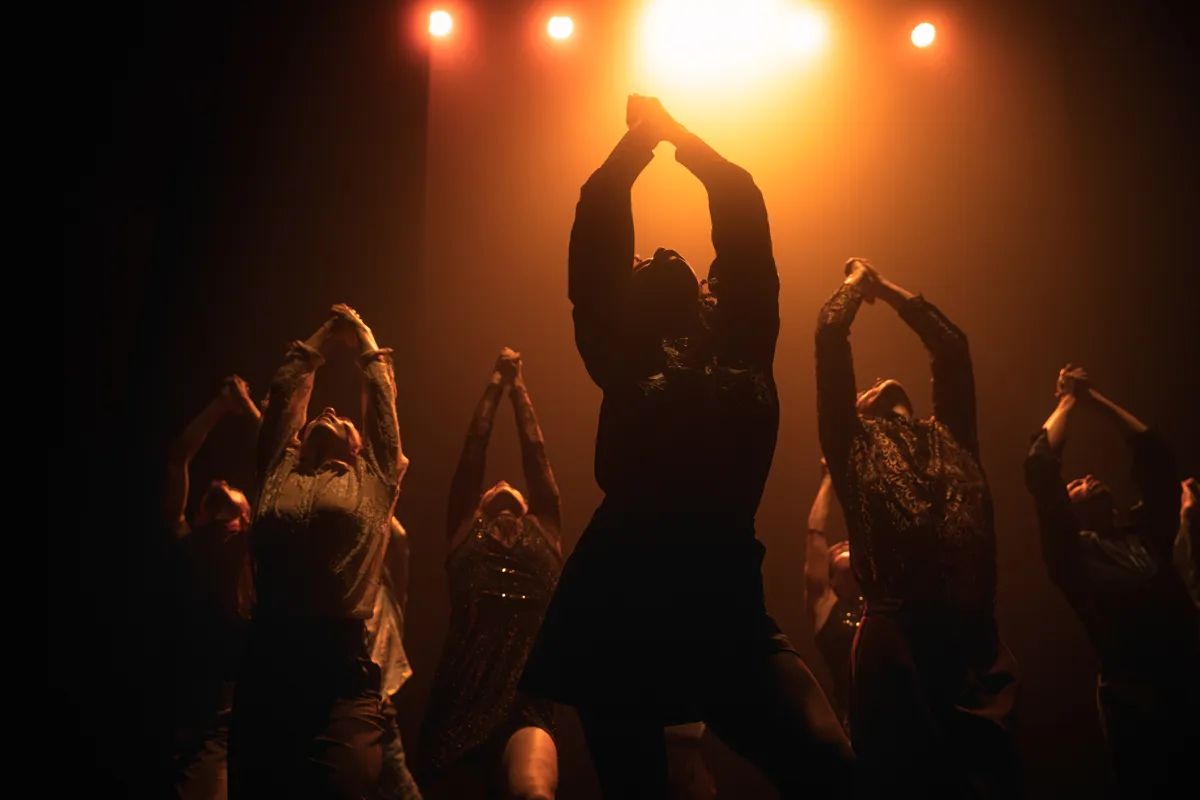
As much as nightmarish aspects hover in the thick mist of haze onstage, this is a space for joy and pleasure. Moreso than anything else, it’s Shechter’s choreography, full of signature squats, curves and hunches, that bring greatest satisfaction and creates magic. Every one of the 13 exceptional performers on stage brings their whole body with all its incredible capacity, sculpted and highlighted by Tom Visser’s lighting, vessels of human expression. They are the beating heart of the show and Shechter wisely never lets his audience lose sight of it. The movement vocabulary really does feel like a language – individually or en masse, the dancers ‘speak’ volumes, they seem to express something that resonates on an inherently human level. For me, this is the key to Shechter’s great success – he allows the dancing to talk.



Let’s not forget the significance of music here. Shechter created the score for his Theatre of Dreams, alongside collaborator Yaron Engler, and the sound world is a central part of making us ‘feel’ the experience – as a dull roar, a thudding beat, even a visual presence. We meet a trio of musicians onstage, bathed in blood-red light, who initially add a layer of confusing incoherence by singing non-words to a non-beat – they’re loud but their message is inaudible. They come into focus more sharply later by playing an infectious bossa nova beat, the effect of which gradually seeps across the stage like a virus, infecting movement with a new, languorous quality, allowing it to spill over the lip of the stage into the stalls to create a moment of gleeful participation for audience members, many of whom leap up to join in. Although it’s not in any way explicit, I get a strong sense that religion lives somewhere in this work, perhaps it’s woven into the score, beneath the surface but ever-present. Like music, it affects behaviour, it’s a form of expression, a source of both pleasure and pain, it helps us to understand the world. Does this make Shechter a God-like figure? Perhaps.
Theatre of Dreams is a riot, a funeral procession, a party. It’s everything and nothing, all at once. It’s also a great success – it receives a rapturous response at Sadler’s Wells and I’m sure it will travel well. I feel moved and changed for experiencing it, in the same deeply held way as I might carry something of my dreams with me beyond waking.



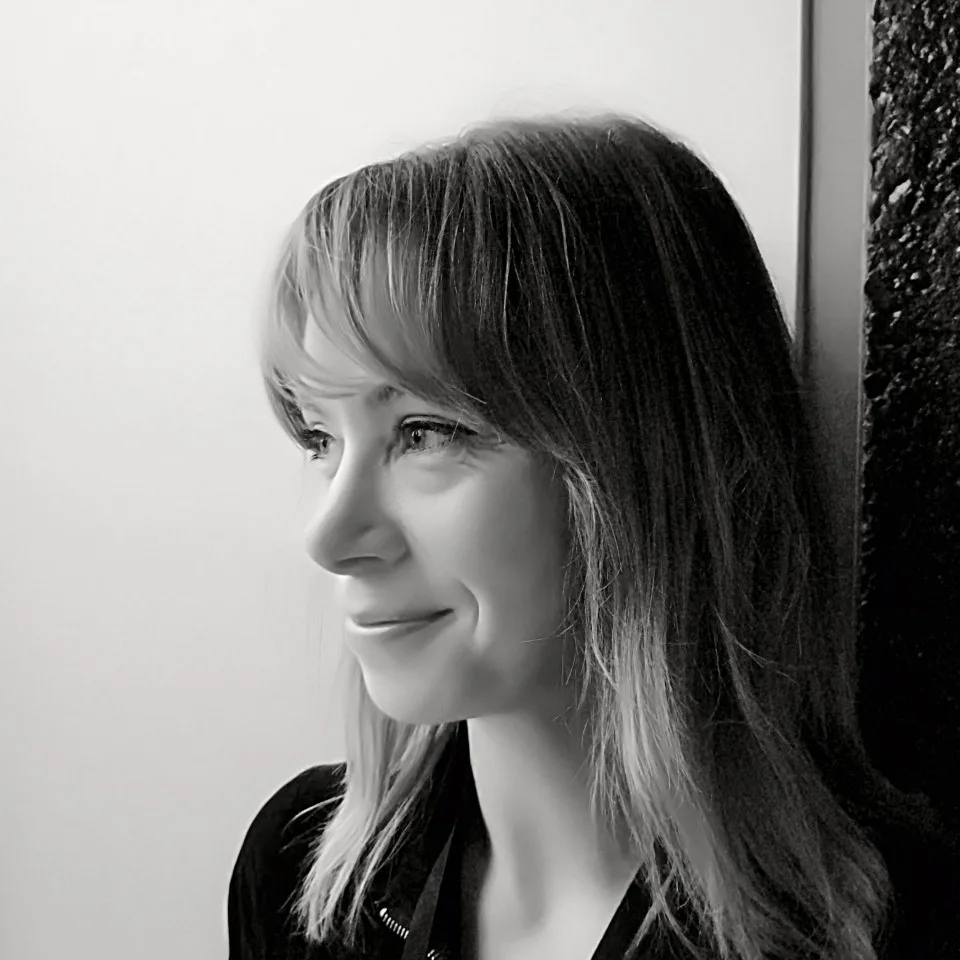
Lydia wharf is an independent producer working in contemporary dance theatre, tending to specialise in practices of care, access and inclusion.
She works directly with a range of artists and companies, most recently BirdGang Ltd, Dance Umbrella, Julie Cunningham & Company and Stuart Waters. Lydia has a long, twisty relationship with dance, as performer, writer, advocate and producer.