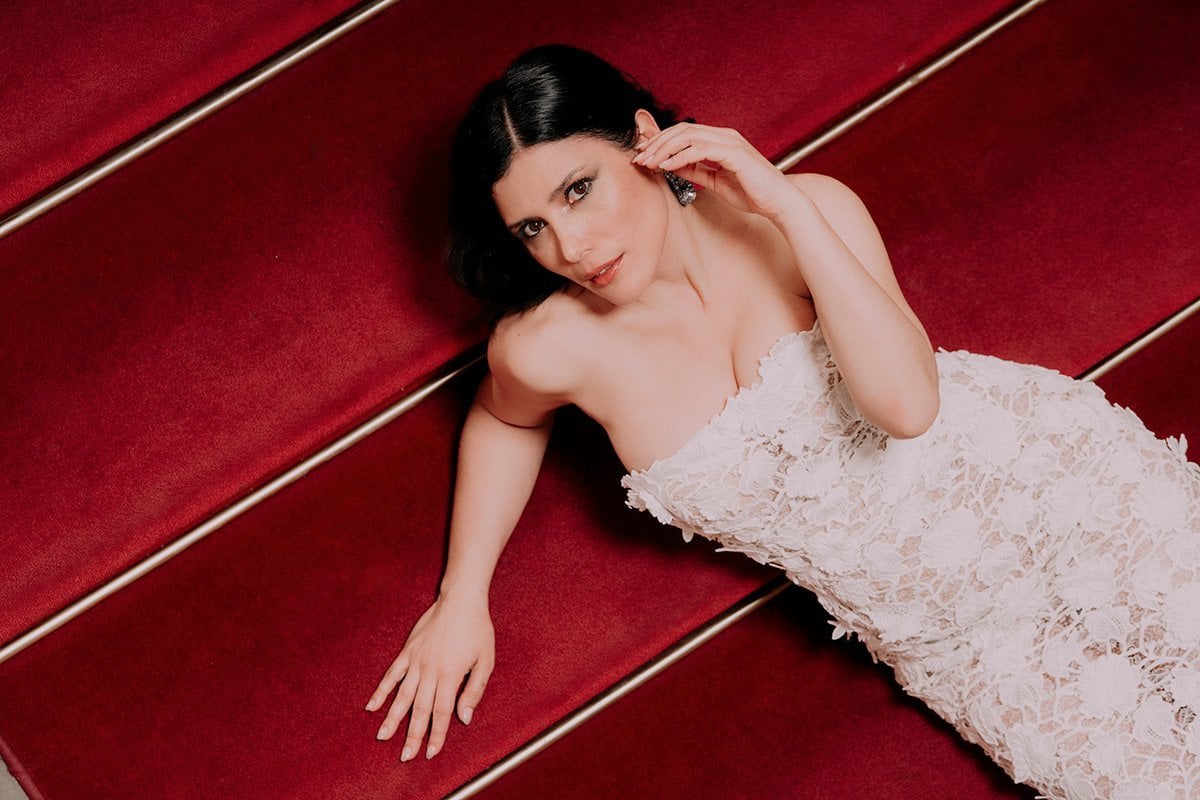
I talked with Annalisa Stroppa, one of the world’s most sought-after mezzosopranos, as she was finishing a run as Carmen at Genoa’s Teatro Carlo Felice. She’s an attractive woman with a sunny personality… oh yes, and she has a beautiful, rich, agile and elegant voice. Stroppa’s career took off in 2011 at the Salzburger Festspiele after she was cast by Riccardo Muti.
Annalisa, your first leading role at an international level was as Cherubino in Saverio Mercadante’s I Due Figaro, conducted by…
…Maestro Muti! It was a springboard for me. I’d studied so hard for the audition that, when Maestro Muti chose me, I experienced a whirlwind of emotions – from joy to incredulity, combined with a feeling of responsibility and wanting to do well.
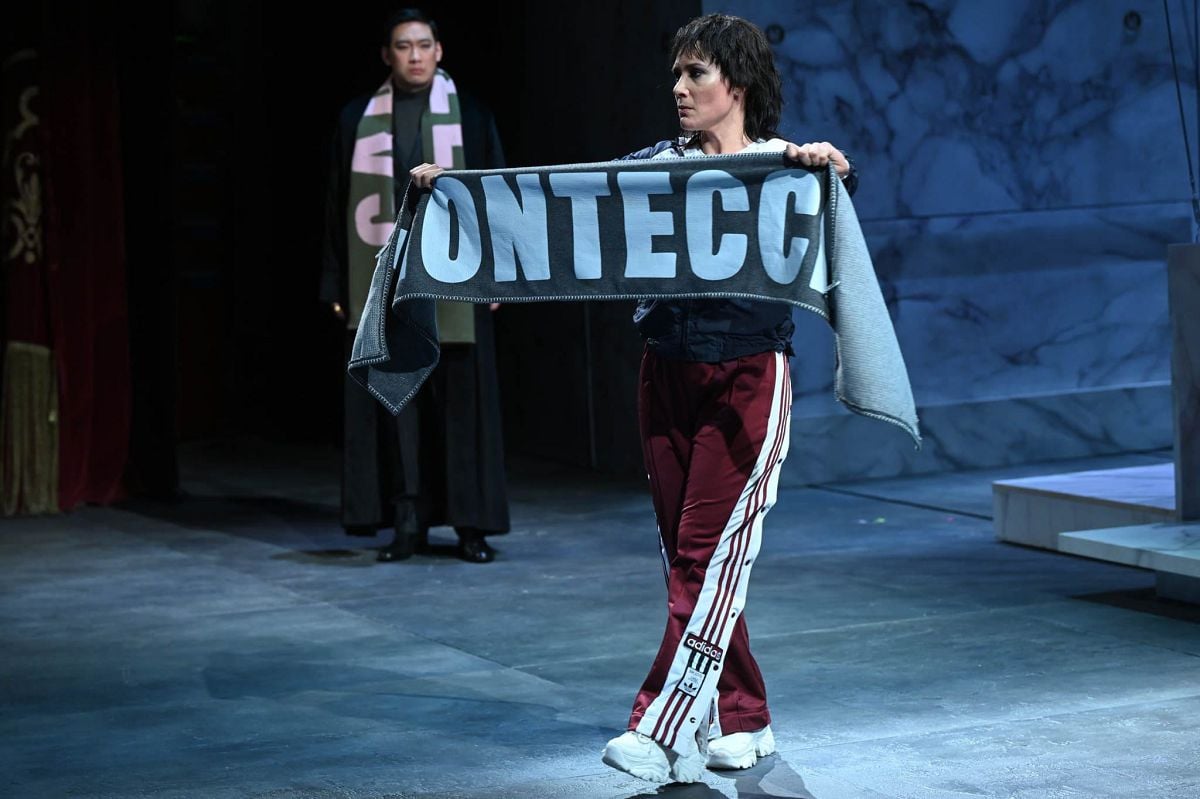
The Salzburg production was the first in modern times of the 1826 opera and its young cast caused quite a stir – for the New York Times Stroppa was “engaging” as Cherubino, for the Sole 24 Ore she was “excellent, loving and controlled”, and Austria’s OÖNachrichten called her performance “passionate”. More well-known roles from the mezzo-soprano repertoire then took her to the world’s leading opera houses – Rosina, Cenerentola, Adalgisa, Léonore in La Favorite, Giovanna Seymour in Anna Bolena, Romeo in I Capuleti e i Montecchi, Charlotte in Werther, Carmen…
Audiences and critics alike praised her performances. Germany’s Albendzeitung, writing about her “extraordinarily strong Adalgisa”, said that her “silvery mezzo-soprano is bursting with understated drama”. Italy’s Corriere della Sera said, “Her Fenena, already praised at La Scala, stands out for the elegance and purity of her singing and phrasing, the beauty of a dark and substantial voice, with velvety shading, rich in the low register as well as having ringing high notes…”
A French critic for Opera Online wrote, “… On the vocal front, this Carmen was a genuine revelation. The Italian mezzo Annalisa Stroppa was of surprising vocal beauty, with very good French diction. With her advantageous physique, Stroppa displayed a magnificent equality of timbre throughout her range – her lows were sonorous and her highs dazzling, and her ease on stage and her profound insights on the character completed a portrait of Carmen that was among the most accomplished we have ever seen…”.
Yet just a few years earlier, the young Stroppa was not certain that she would become a professional singer.
It was my dream to become a singer, but I didn’t know whether it would be possible to support myself by singing. That’s why I completed humanistic studies alongside music, to keep my options open. Simultaneously, I attended first a high school for social science and pedagogy and, later on, the faculty of Education [at the University of Bergamo], while attending the Conservatoire in my hometown, Brescia, where I first studied piano and then singing from when I was 20. After graduating and completing my teacher training, I began teaching part-time. I loved everything I did… teaching children, my university studies and, above all, singing.
Those studies would eventually come in useful as they enriched my interpretative skills, giving me a more in-depth understanding of the characters I was called on to interpret, digging into the psychological facets of their nature.
After gaining my singing diploma and my degree, I still had to make an important decision… I turned down a teaching post at a school in my native city and signed up for the ‘Belli’ competition in Spoleto. I won and considered that success to be a sign of destiny – alea iacta est!
Stroppa, like many singers, grew up surrounded by music.
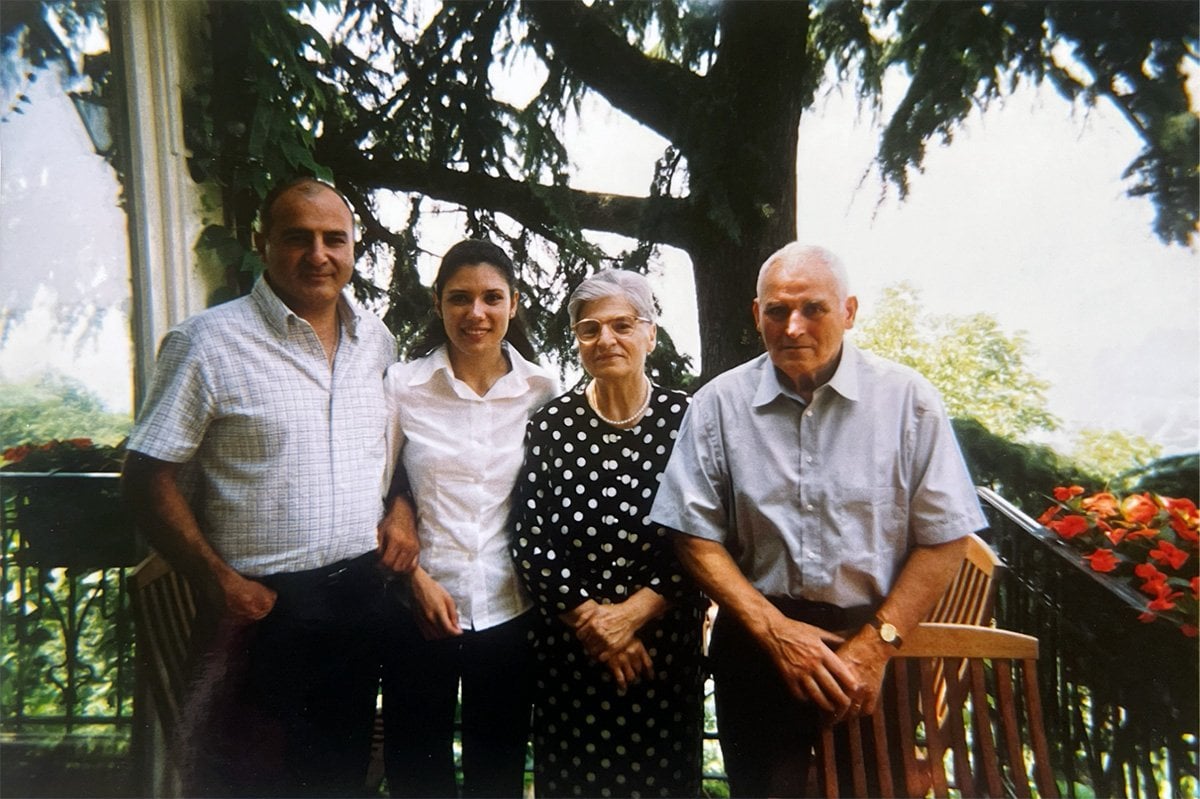
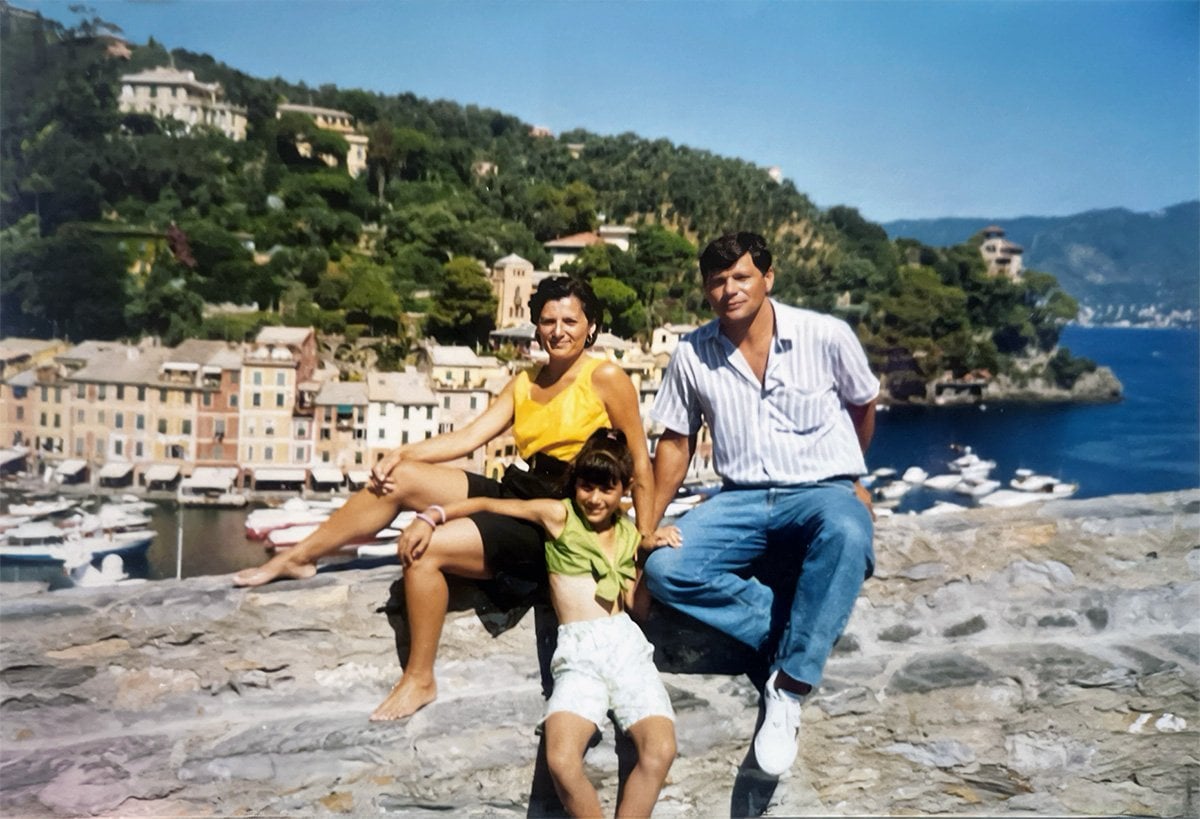
Ever since I was a child, I’ve been passionate about singing and, although there weren’t any other musicians or singers in my family, music has always been a part of my daily life because my parents used to listen to it a lot.
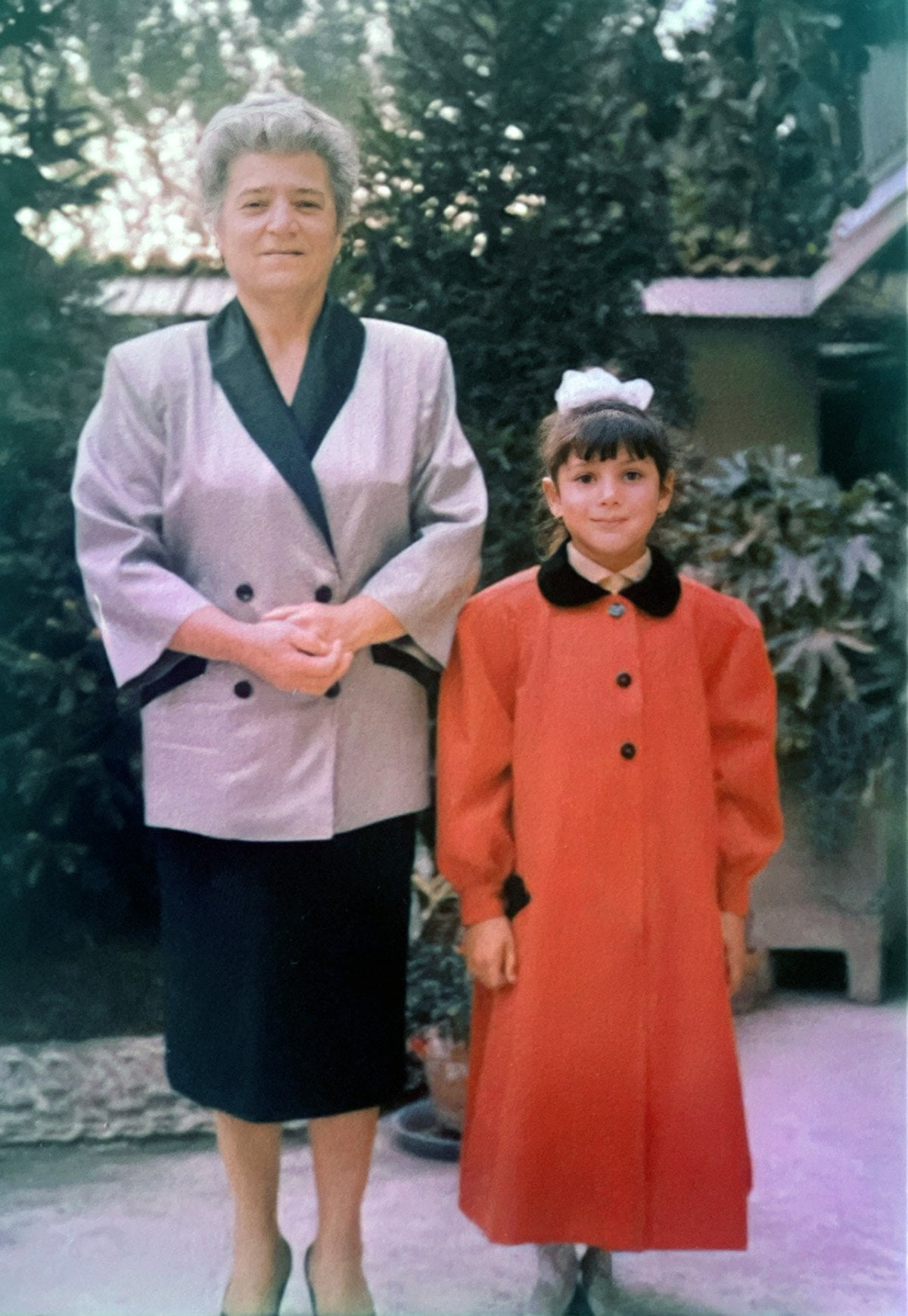
But it was thanks to my grandmothers that I became interested in opera singing. My maternal grandparents in particular, with whom I used to spend most of my afternoons after school, used to listen to the ‘three tenors’, Pavarotti, Domingo and Carreras, and also the great Mario del Monaco. Well, yes, all of them tenors! Thanks to them, I began to discover the great opera arias, and I used to imitate them.
To help her learn these arias, her grandmother made her a book.
I was nine years old and today I still feel moved when I re-read the lines of the arias in my maternal grandmother Rosina’s handwriting. They were the arias for tenors that my grandmother used to write down so that I could learn them. I owe her a lot… very much indeed.
I would sing, particularly ‘Nessun dorma’, ‘O sole mio, ‘Parlami d’amore Mariù’, ‘Un amore così grande’ and ‘Vento vento’, during family get-togethers. It was then that I discovered I had a powerful, distinctive voice, like my paternal grandmother, Antonia, who used to bring life to Sunday Mass. That’s how my passion and desire to sing came about.
Mass was, and is, an important part of your life?
Yes, I grew up in a family who instilled in me the importance of Faith and our relationship with God. I am a practising Catholic but, besides the religious celebration, the message passed on to me consists of the ability to trust in the Lord. This faith is an anchor, an essential part of my life, the essence of my existence, bringing meaning and comfort to everything.
We’ve just witnessed an important change at the Vatican.
I loved Pope Francis, and I think his mission was revolutionary, giving voice to the meekest and those most in need and, right up until the end… he never rested, spreading messages of justice, peace, hope and mercy. He handed the reins to Pope Leone and I was moved by his election because the way he presents himself communicated a positive feeling through his behaviour – gentle and kind yet, at the same time, full of strength and determination. I hope that he will be the Pope of Peace
How does your faith influence your work?
I was still very young when I decided to embark on an artistic career because I felt I’d been given a special talent and that I had to allow it to flourish! That’s how I started my studies, and now here I am, after many years of career, still on this journey which has taken me to the greatest stages in the world. I’m extremely grateful for this life, which has allowed me to turn my passion into work. This is the mission I feel the Lord has entrusted me with, by giving me this voice and my artistic vein.
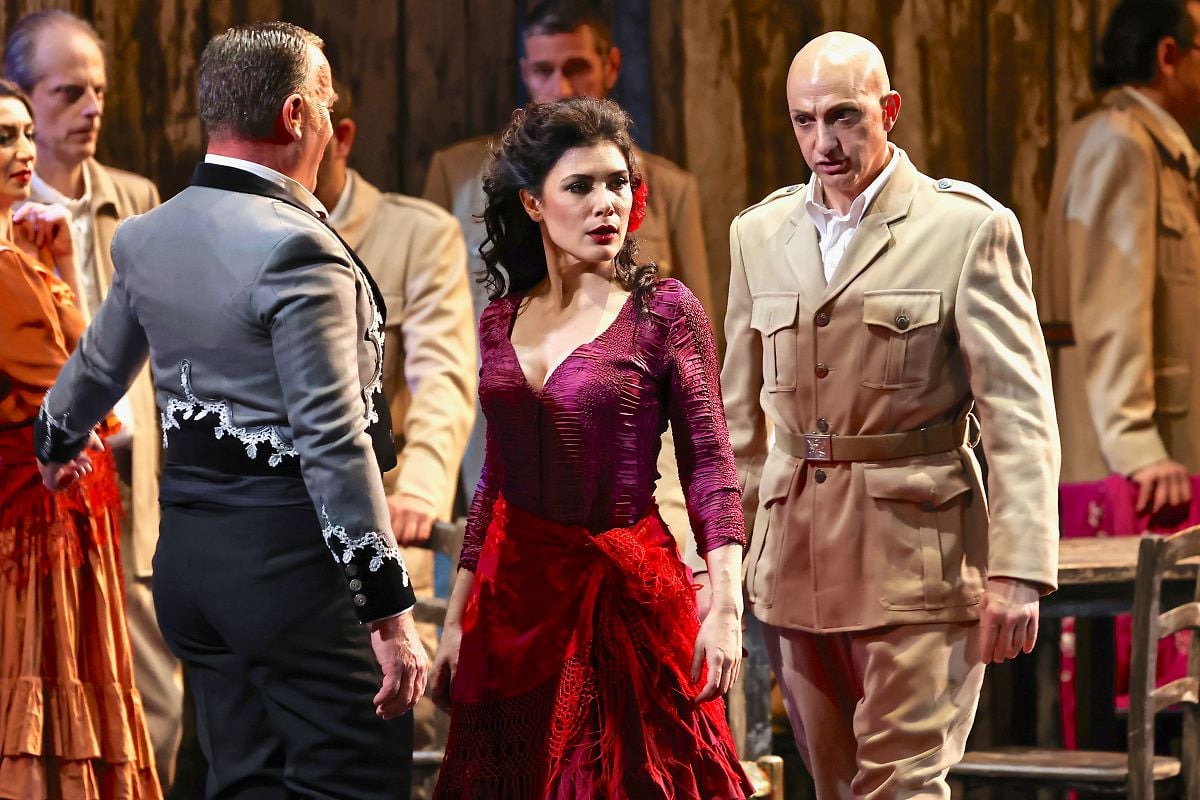
Annalisa Stroppa as Carmen, Teatro Carlo Felice in Genova, photo Marcello Orselli, 2025
Riccardo Muti helped launch your international career, and you have worked with him since.
You never stop learning, working with Maestro Muti. He devoted himself to Mercadante’s I Due Figaro with great attentiveness, passion and love for us as young artists. I learnt so much from him. And I due Figaro took me from the Salzburg Festival to Ravenna, Madrid and Buenos Aires. I still feel joy and nostalgia thinking about it.
It has just been announced that Myung-Whun Chung will be the next Music Director at La Scala, a conductor with whom you have already worked.
I worked with Maestro Chung in 2024 in the Verdi Requiem at La Fenice [in Venice], and I have to say that I was extremely struck by his sensitivity and his interpretation of the music, so profound and adhering closely to the words.
Who are some other conductors who have left an impression on you?
Over the years, I’ve been lucky enough to work with highly experienced conductors, each of whom has shown me their approach to the score and their way of working, helping and advising me, and contributing to my artistic and personal development and maturity. I’m thinking of Mehta, Santi, Campanella, Muti, Oren, Chailly, Armiliato, Palumbo, Renzetti, Thielemann, Steinberg, Currentzis, Frizza, Palumbo, Pidò, Steinberg, Humburg and Rizzi… to name but a few.
The greatest are usually those who listen the most and interpret the singer’s needs in terms of breathing and phrasing, avoiding solutions that don’t benefit the voice or promote expressivity. Their approach is not static but tends to adapt itself to the potential of the individual singer so as to highlight their qualities, integrating these into their own idea of the music.
Of course, you’ve also encountered many stage directors, and they can come up with more surprising artistic choices than those offered by a conductor.
I’m open to their ideas and try to implement them on stage. I think that a good stage director should, first and foremost, respect the music and the libretto, but also be open to combining their ideas with those of the conductor and the singers, in harmony with the composer’s idea of the music and the character and innermost being of each artist.
I think that modern, innovative, unusual productions should, in any case, be at the service of the music and should enhance each performer’s individual physical and non-physical characteristics.
Nowadays, the idea of static stage direction has disappeared. An opera has to be alive and dynamic. It must capture the audience’s attention – I think this is key to the success of a production.
What preparation do you do before rehearsing a new role?
From a vocal perspective, the first step is, without doubt, to read the score and all the composer’s indications carefully. With time, the role ‘becomes part of your voice’ and you internalise it gradually until it feels comfortable.
Learning a role involves in-depth study of the libretto and the score, so that I can find my own personal way of understanding and interpreting the character.
I believe it’s very useful to read the literary source on which each libretto is based. When a historical drama is being staged, I use different sources for my research, so as to get a precise idea of my character’s role within the story. This is a wonderful aspect of my work – the opportunity to leave a different, personal mark on each role I tackle.
Have you found that you have envisioned a character in a certain way, and the director has a very different idea?
I’ve never found myself in this situation so far. In fact, I’ve always worked with stage directors who have given me the space to express myself. I could never bring a character alive in a way that felt alien to me just to comply with meaningless demands that didn’t correspond to my innermost self.
For the same reason, I could never perform in any way that was disconnected from the music or contradictory to the words I was singing. To convey truth and emotions, I have to feel and experience them personally and authentically. Only in this way does it make sense to be on stage. I never say no from the outset, and I don’t set out with preconceptions, because I know that behind the idea for every staging, there lies a creative mind and extensive work.
As a result, I usually let myself be moulded in the hands of the stage director, as long as the ideas take shape in full respect of the music and drama. Particularly when it comes to a new production, the creation of the character is a shared process, based on the director’s inspiration and my ability to grasp and transmit it. The creative phase is one of the parts I like the most.
In July comes my debut as Sara in Roberto Devereux at Teatro San Carlo in Naples, but from now until December, I have a fabulous schedule… after a symphonic concert La Canzone dei Ricordi by Martucci in Palermo, a gala performance in Tblisi, and a Verdi Requiem in Liverpool, comes Charlotte in Werther at the Teatro Colon in Buenos Aires, and Preziosilla in La forza del destino at the Opernhaus, Zurich.
And what roles are you hoping to sing in the future?
In the next few years, I would like to debut in Marguerite in La Damnation de Faust, Mignon, Sappho, and Eboli in Don Carlo.
As the opening night approaches, what do you do, or not do?
I try to be in top physical and mental shape for the premiere, so as to give of my best. When I’m working in a production, it’s like being in a bubble, in which the theatre becomes my home and I’m totally absorbed in rehearsals and studying… I try to spend as much time as possible studying and resting before an opening!
And then the curtain goes up…
It’s always a new emotion, renewed by change but always full of joy, adrenaline, responsibility, emotion… and gratitude.
Is it all voice, voice, voice for Annalisa Stroppa?
Well, my passion and my work are one and the same thing, which is something priceless!
My time off to devote to other activities is a bit limited but when I have some, I enjoy spending it with my loved ones. And I love spending my free time walking in the countryside. It’s so restorative and instils in me good humour and a sense of peace.
I travel a lot, and during productions when I’m away from home for a long time, I take advantage of my free time to visit the cities I’m in, to capture the cultural differences and taste the local cuisine…
The travelling life… how does that affect your personal life?
I love my work, despite the difficulties. It’s extremely demanding but I get energy from my passion, my enthusiasm, and the affection of my dear ones and the people who love, support and believe in me.
Singing often takes us away from our loved ones, so it’s important to find a balance. Not having the opportunity to nurture family and romantic relationships and friendships is, without a doubt, the highest price to pay, but I’m certain of one thing: those who love you always support and understand you, and you can feel their presence even from far away, eliminating all the distance. In this, I’m very fortunate and, so far, I’ve overcome these difficulties thanks to the wonderful people who are close to me.
What is happiness for Annalisa Stroppa?
Happiness lies in knowing how to appreciate the small things!
If taken care of and experienced with love, it’s the small things that lead in time to greater things!
Annalisa Stroppa as Carmen at Theatro Municipal de São Paulo, photo Rafael Salvador
Graham Spicer, aka ‘Gramilano’, is a writer, director and photographer based in Milan. He was a regular columnist for Opera Now magazine and wrote for the BBC until transferring to Italy. His articles have appeared in various publications from Woman’s Weekly to Gay Times, and he wrote the Danza in Italia column for Dancing Times magazine. Graham was the historical advisor on Codice Carla, the 2023 documentary on Italian ballerina Carla Fracci.
Graham also works as a dance photographer, and his photos have appeared in many books, theatre programmes, and magazines, including Dancing Times, Dance Spirit and Ballet2000, as well as all the major Italian newspapers.
He is a member of the Dance Section of The Critics’ Circle.
Le Grand Rex in Paris will screen Handel’s Ariodante on Monday 30 June, with Les Arts Florissants and William Christie, filmed for cinema with 7.1 sound.
Scott C Morgan sees David McVicar’s 2008 production of Salome, which feels more relevant today after the #MeToo movement and the Epstein files scandals.
Graham Spicer talks with Royal Ballet dancers Ella Newton Severgnini and Francisco Serrano who dance the leading roles in Wheeldon’s Like Water for Chocolate.