Review: in a whirlwind of whimsy, Alice’s Adventures in Wonderland returns to The Royal Ballet

Georgina Butler sees The Royal Ballet in Alice’s Adventures in Wonderland brought to brilliantly bonkers life with beautiful dancing and bold designs.
| Title | Alice’s Adventures in Wonderland |
| Company | The Royal Ballet |
| Venue | The Royal Opera House, London |
| Date | 13 June 2025 |
| Reviewer | Georgina Butler |
The Royal Ballet brings the curiouser and curiouser Alice’s Adventures in Wonderland to brilliantly bonkers life with beautiful dancing and bold designs.
Christopher Wheeldon created Alice’s Adventures in Wonderland for the Royal Ballet in 2011. As the company’s first full-length ballet to a commissioned score in two decades, it was a brave move taken in response to a dire concern that ballet was in danger of entering its demise era. Did ballet still resonate with contemporary audiences? Could ballet evolve to remain relevant as a popular entertainment? Wheeldon recognised these worries and devised this crowd-pleasing ballet. Today, it is a modern classic – companies and audiences around the world love it.
This is the production’s second run in the Royal Ballet’s 2024/2025 season. Possibly indicative of the current economy, but also another opportunity for it to be enjoyed.
Drink me. Eat me. Watch me. At heart, Wheeldon’s journey through Wonderland is deliciously fanciful entertainment that playfully appeals to dance enthusiasts and newcomers alike. Just like Lewis Carroll‘s wordy, waywardly sequenced book, the ballet is structured as a series of vibrant encounters, which present all the eccentric characters in their eye-popping glory. Tumbling down the rabbit hole feels like a timeless, trippy treat thanks to kaleidoscopic projections. Then the jubilant integration of different dance styles with puppetry, larger-than-life sets and marvellous costumes (by designer Bob Crowley – scene to scene and head to toe, no detail is overlooked) delivers the surreal spectacle of Wonderland.
Wheeldon’s approach is wonderfully theatrical, possessing all the wit and wild imagination needed to captivate a family audience. The choreography is showy and amusing, yet still technically demanding, with idiosyncratic musical themes (Joby Talbot’s score enhances every twist and turn) and signature movements driving the narrative and characterisation. The episodic nature of the tale, though, makes it difficult for any tangible character development to occur. Alice included: the essence of her personality and emotions endures, but sometimes she becomes so lost in this strange land that she seems disengaged.


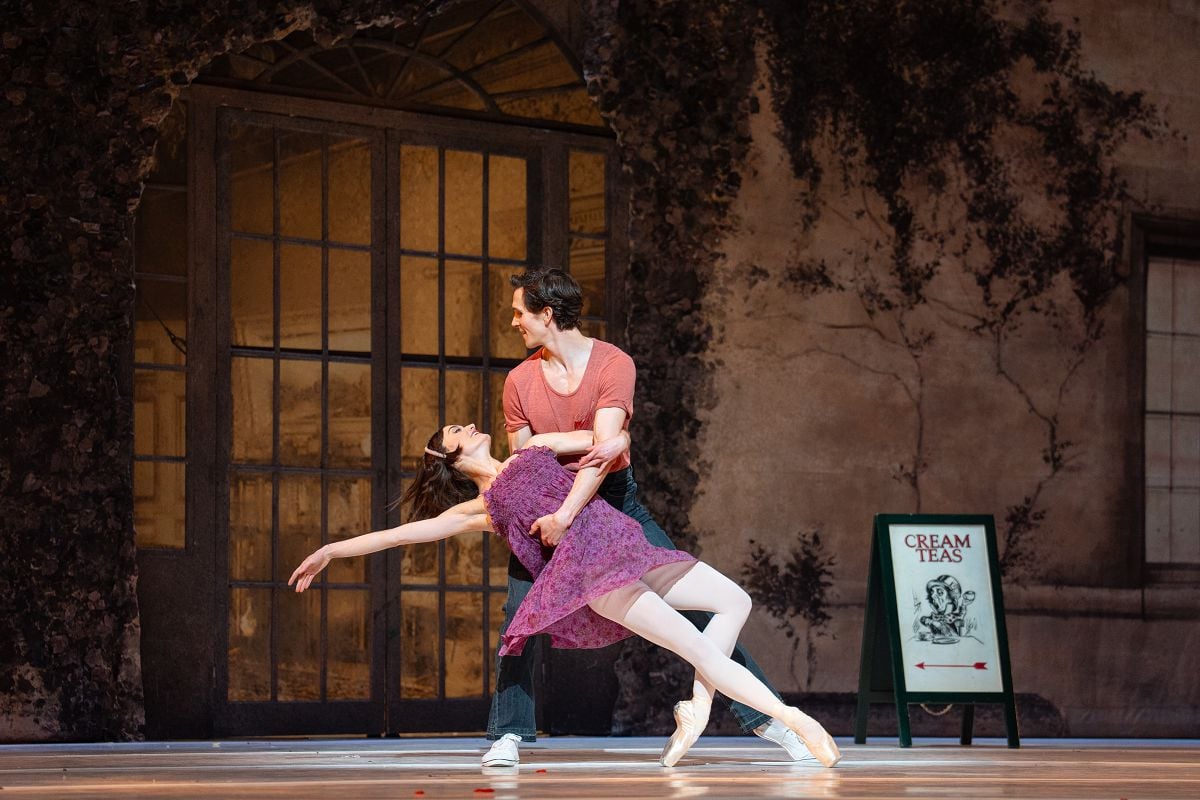
The scenario, set in Oxford in 1862, introduces Alice as one of three sisters being entertained by Lewis Carroll, a family friend, during a garden party hosted by the girls’ parents. When Jack, the gardener’s boy, arrives with a basket of white roses, Alice’s fussy mother notices an out-of-place red rose and removes it. Jack gives Alice the discarded red rose. In return, Alice gives Jack a jam tart that she plucks from a passing tray.
Disaster! Alice’s mother accuses Jack of theft and dismisses him. Alice is heartbroken and Lewis offers to take her photograph to cheer her up. He disappears beneath the camera cloth, then emerges as a white rabbit who hops into the camera bag and vanishes. Alice follows…
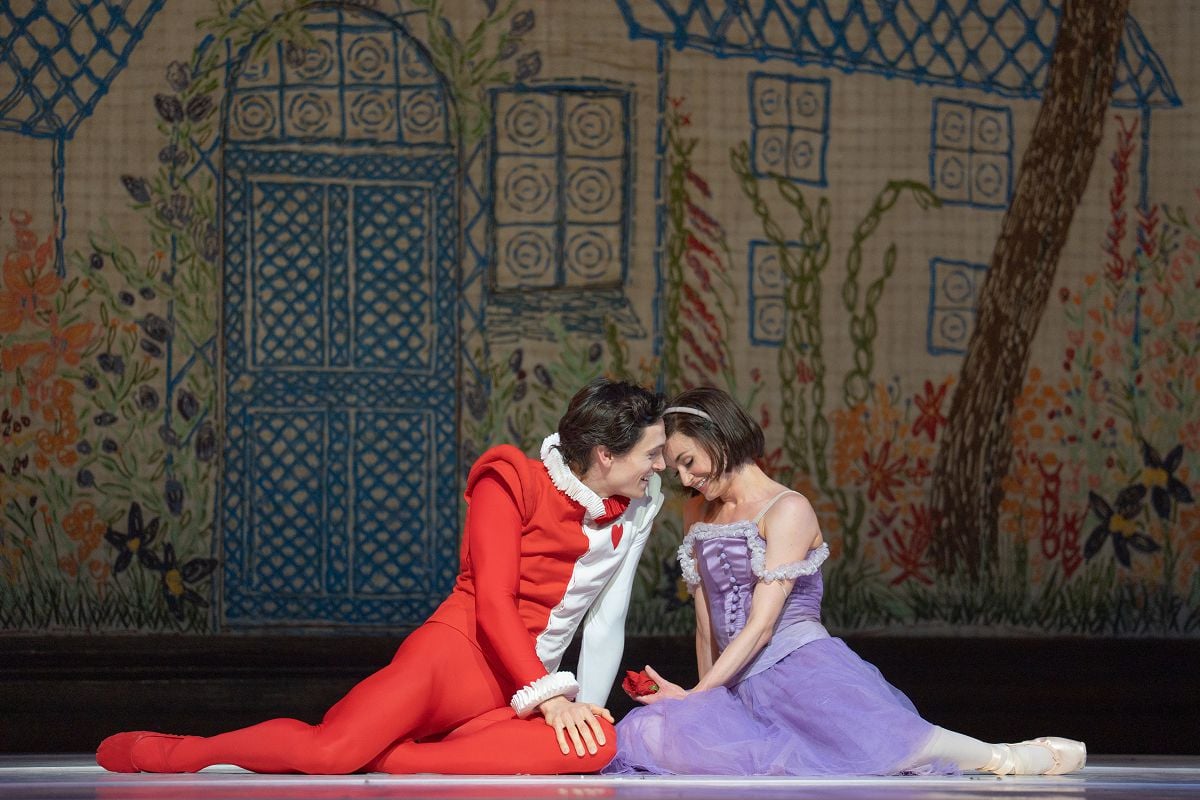
Alice falls into a realm in which Jack, now the Knave of Hearts, is on the run after allegedly stealing a plate of jam tarts. Essentially, Alice is chasing after her first love. Along the way, she shrinks and grows; swims in a lake of her own tears; joins a toe-tapping tea party that boasts what must be the bounciest sponge cake ever baked; plays croquet with flamingos and hedgehogs. Ultimately, she finds a royal flush of confidence to save her beau. Alice is in every scene and Anna Rose O’Sullivan navigates nonsense with grace and get-up-and-go. She convincingly portrays a teenage girl whose mind is full of thoughts and eyes are wide with wonder. And she has a charming Jack/Knave in William Bracewell.

The White Rabbit (Luca Acri) is frantic and fidgety, constantly twitching into tense postures. Seemingly friends with everyone except the Queen of Hearts – he is scared stiff of her – his feet fly through agitated allegro arrangements. Acri’s heels barely settle on the stage during this bunny’s most anxious moments, which heightens the unsettled tone. The third-act trio of gardeners (Martin Diaz, Joshua Junker and Harrison Lee) are frightened of the maniacal monarch too, yet their nimble nervousness is expressed through tight fifth positions and suspended synchronicity – a sight to savour.
Mayara Magri (replacing scheduled Natalia Osipova) is commanding as Mother/Queen of Hearts. The Queen is costumed so preposterously that she is wheeled out. Encased in a scarlet structure that is part corset dress, part perfume bottle and part military tank, Magri’s expressive face and arms strike fear into hearts with tart-tongued interactions and “off with their heads” gestures. Later, when the giant gown opens like a locket and she shimmies out in tutu, tights and pointe shoes, she hilariously lets loose, terrifying trembling cavaliers during her parody of the Rose Adagio (from The Sleeping Beauty – the references to ballets and Broadway are scrumptious).
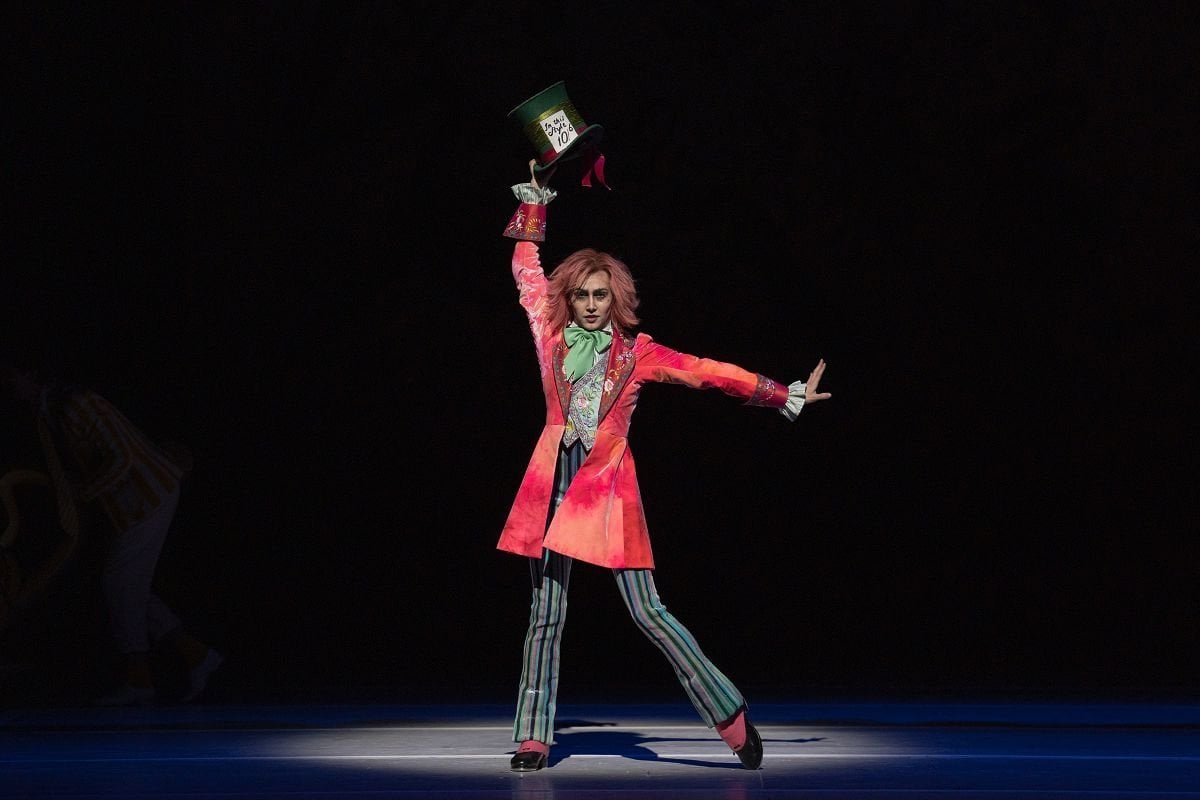
The zany Mad Hatter is a mad tapper, rhythmically executing embellished ballet steps in tap shoes. Those crisp sounds ensure this colourful character stands out as different, although the effect is more mesmerisingly hypnotic than crazily chaotic. Amelia Townsend, making her debut in the role this run, is a tap-happy delight.
Alice’s Adventures in Wonderland is a whirlwind of whimsy. A reminder that a little bit of madness can do us all the world of good. It will be tea-time for a long time – a firm family favourite in which every dancer in the company can revel in the wonder of entertaining.



Georgina Butler is an editor, a dance writer and a ballet teacher.
Georgina is a first class honours graduate and registered teacher of the Royal Academy of Dance (BA (Hons), RAD RTS). Following further training at the Royal Ballet School, she also holds the ‘Inspire’ professional development certificate for classical ballet teachers.
Outside of dance, Georgina is a graduate of the London School of Economics and Political Science (BSc (Hons) LSE), a qualified journalist (National Council for the Training of Journalists) and a certified editor (Publishing Training Centre).
Georgina is a fellow of Advance HE (FHEA). This is a professional status awarded in recognition of her expertise in teaching and learning and her commitment to enhancing the student experience.