
Review: Christopher Wheeldon’s Like Water for Chocolate returns with The Royal Ballet
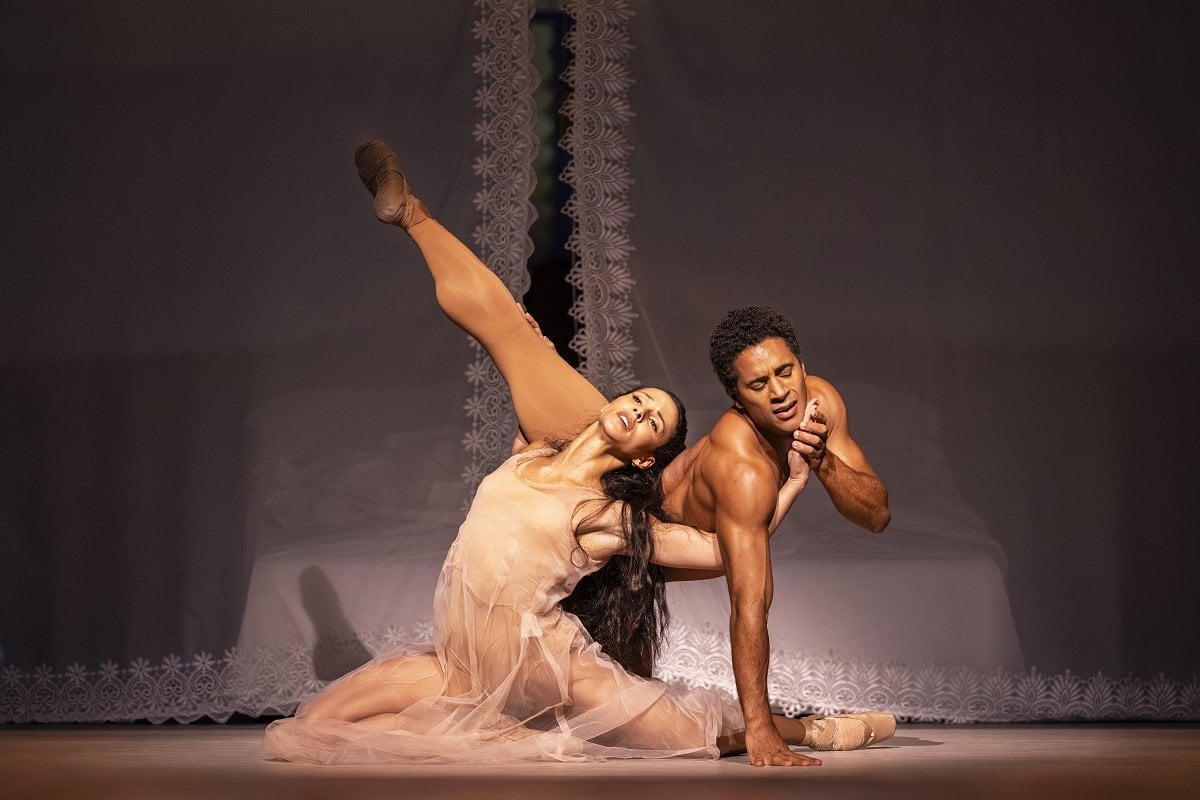
Graham Watts sees Like Water for Chocolate with Christopher Wheeldon bringing an extraordinary book to life in dance.
| Title | Like Water for Chocolate |
| Company | The Royal Ballet |
| Venue | The Royal Opera House, London |
| Date | 1 October 2025 |
| Reviewer | Graham Watts |
Como agua para chocolate, Laura Esquivel’s novel about a family of women in rural Mexico, set during the civil war of the early 20th century, is memorable not just for the bittersweet romance at its heart but for associating food to the storylines in this countryside tale of tradition, symbolism and supernatural spirits. Each chapter represents a month and is prefaced by an often-exotic recipe that is typical of Mexican food at that time of year.
It’s difficult to imagine a riskier undertaking than to attempt to interpret the magical realism of a Mexican novel into ballet theatre for a British audience. Christopher Wheeldon‘s previous full-length works for The Royal Ballet – Alice’s Adventures in Wonderland (2011) and The Winter’s Tale (2014) – were both based on major works of English Literature, and despite being one of the most popular Mexican books of the last century and having been made into a successful film, Esquivel’s novel is little known in the UK.


It was the film that first caught Wheeldon’s attention, and it led him to meet the novelist in Mexico City (appropriately, a very fine lunch was had) ostensibly to pitch for permission to turn her words into movement, a job done so successfully that Esquivel became directly involved in taking her story from page to stage. A further Mexican association came with the conductor, Alondra de la Parra, coming on board as a consultant to the ballet’s composer, Joby Talbot.
All this indigenous attention to ensure the accuracy of the Mexican narrative also led to a complexity that isn’t altogether satisfactory in an art form that depends upon simplicity. And this problem is certainly evident in the first act where so many characters are introduced in a merry-go-round of scene-setting and cooking. Without a knowledge of the novel or reading the detailed programme synopsis beforehand, it is challenging to know who the characters are and what is their purpose.


These confusions aside, Wheeldon has once again brought his magical touch to create enjoyable ballet theatre, which is regularly punctuated by standout moments of dance, both in several touching and powerful pas deux and in rousing celebratory ensemble dances. Both duets and group dances provide emphatic highlights in all three acts.
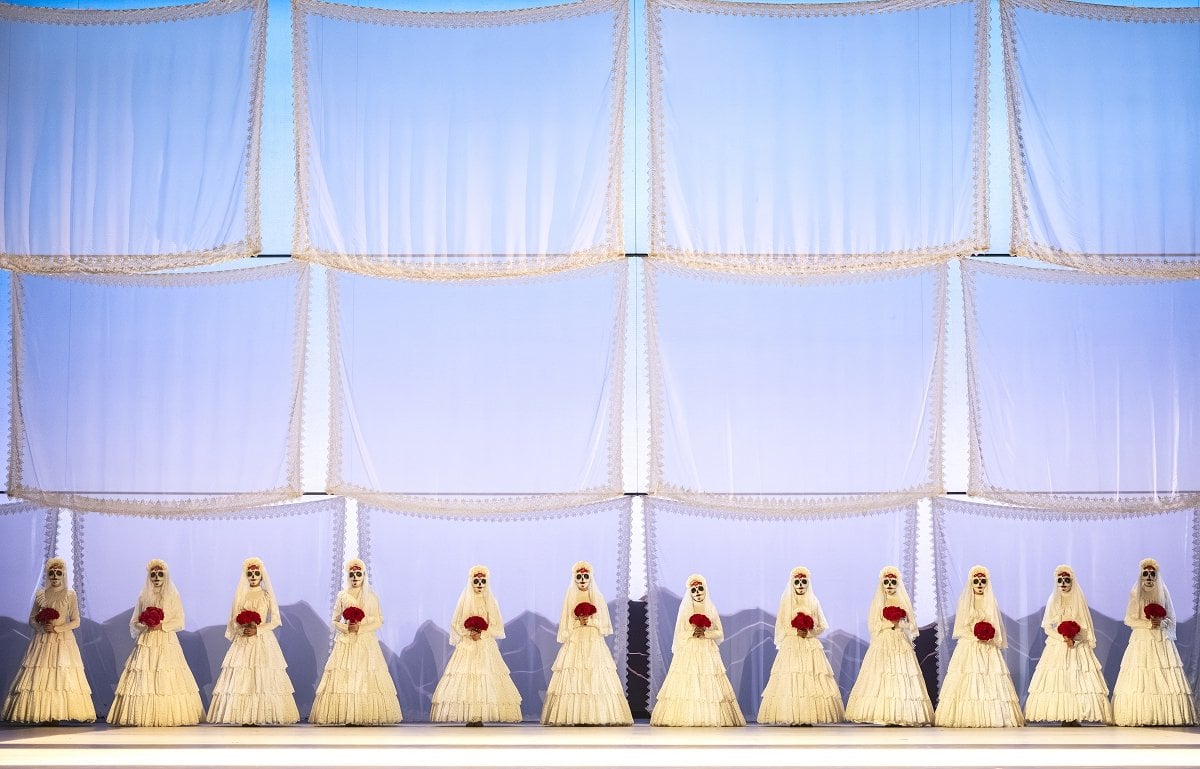
Talbot’s music paints the essence of Mexico (enhanced by indigenous instruments, such as the marimba) without falling anywhere close to Mariachi pastiche (the orchestra was superb under the welcome return of conductor, Jonathan Lo); and Bob Crowley‘s set and costume designs similarly give an important flavour of a Mexican ranch and a Texan homestead, complete with his trademark, lifelike trees and even chaps for the cowboys!


This was the first revival of a ballet that premiered on this stage in 2022, and the cast was a refreshing mix of those on whom the ballet was first made and debutants. The leading roles of Tita and Pedro remained with Francesca Hayward and Marcelino Sambé, and they reprised the love story at the heart of Wheeldon’s ballet in an arresting sentimental journey. Childish flirtations turned into young adult love, but their desire to marry was thwarted by Tita’s mother’s insistence of enforcing the Mexican tradition of the youngest daughter staying unmarried to look after her mother.
As the domineering matriarchal Mama Elena, Fumi Kaneko seemed at first to be cast against type but she delivered a stunning performance of powerful expressiveness, including becoming the most fearsome ghost, a shock of burnished hair standing like a shaving brush on her head, but softening as her own secret love was revealed from beyond the grave in a poignant pas de deux with the ghost of her former lover, Jose (a punchy cameo by Francisco Serrano).
Having been refused the hand of Tita, Pedro agrees to marry her older sister, Rosaura (sympathetically portrayed by Isabella Gasparini) just to remain close to his true love. Nonetheless, Pedro and his family are banished from the ranch by the overbearing Elena, and many years pass before they are reunited, reminiscent of the similarly long, unconsummated love between Florentino and Fermino in Gabriel García Marquez’ Love in the Time of Cholera. The finale of Hayward and Sambé spiralling up to the heavens, surrounded by projections of flames, is powerful.
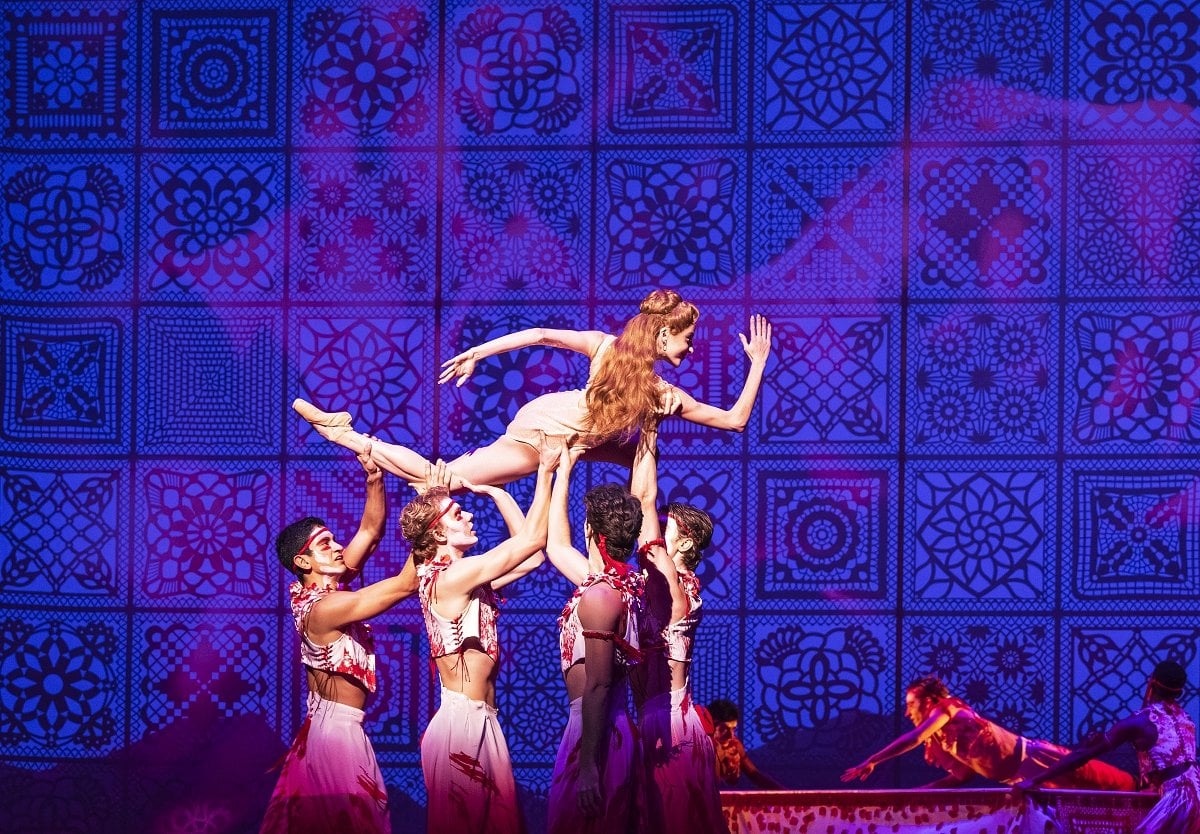


Viola Pantuso gave a suitably ebullient performance as Gertrudis, the warrior sister. Stimulated by the aphrodisiac Quail in Rose Petals, the scene in which she strips and elopes with the revolutionary commander, Juan (Luca Acri) is great fun with the latter simultaneously riding both his (mechanical) horse and Gertrudis. Matthew Ball gave an upright and dignified portrayal of Dr John Brown who tries, unsuccessfully, to provide a married life for Tita.
Esquivel’s novel is unique in the inseparable and enigmatic union of food and sex, and Wheeldon and his artistic associates have done a great job in capturing the steamy sensuality of the story, bringing this extraordinary book to life in dance. The English title of Esquivel’s novel is a tad misleading because, in Spanish, it is meant to represent the passion of the story in the boiling of water for Hot Chocolate; and this ballet certainly restores the heat.

Graham Watts is a freelance writer and dance critic. He writes for The Spectator, Tanz, Shinshokan Dance Magazine (Japan), Ballet Magazine (Romania), BachTrack and the Hong Kong International Arts Festival and has previously written for the Sunday Express, Dancing Times, Dance Europe, DanceTabs, London Dance, the Edinburgh International Festival and Pointe magazine (USA). He has also written the biography of Daria Klimentová (The Agony and the Ecstasy) and contributed chapters about the work of Akram Khan to the Oxford Handbook of Contemporary Ballet and on Shobana Jeyasingh for the third edition of Routledge’s Fifty Contemporary Choreographers.
He is Chairman of the Dance Section of The Critics’ Circle and of the UK National Dance Awards and regularly lectures on dance writing and criticism at The Royal Academy of Dance, The Place and (until the war) for Balletristic in Kyiv. He was a nominee for the Dance Writing Award in the 2018 One Dance UK Awards and was appointed OBE in 2008.


<a href=”https://topplayerpokermoney.isweb.co.kr/”>탑플레이어포커 머니상</a>이란 탑플레이어포커 게임 내에서 사용되는 코인(골드, 칩 등 게임머니)을 현금과 교환해주는 비공식 거래 서비스를 말합니다.