Review: Marco Spada returns to Rome for the first time since Rudolf Nureyev’s appearances in 1981
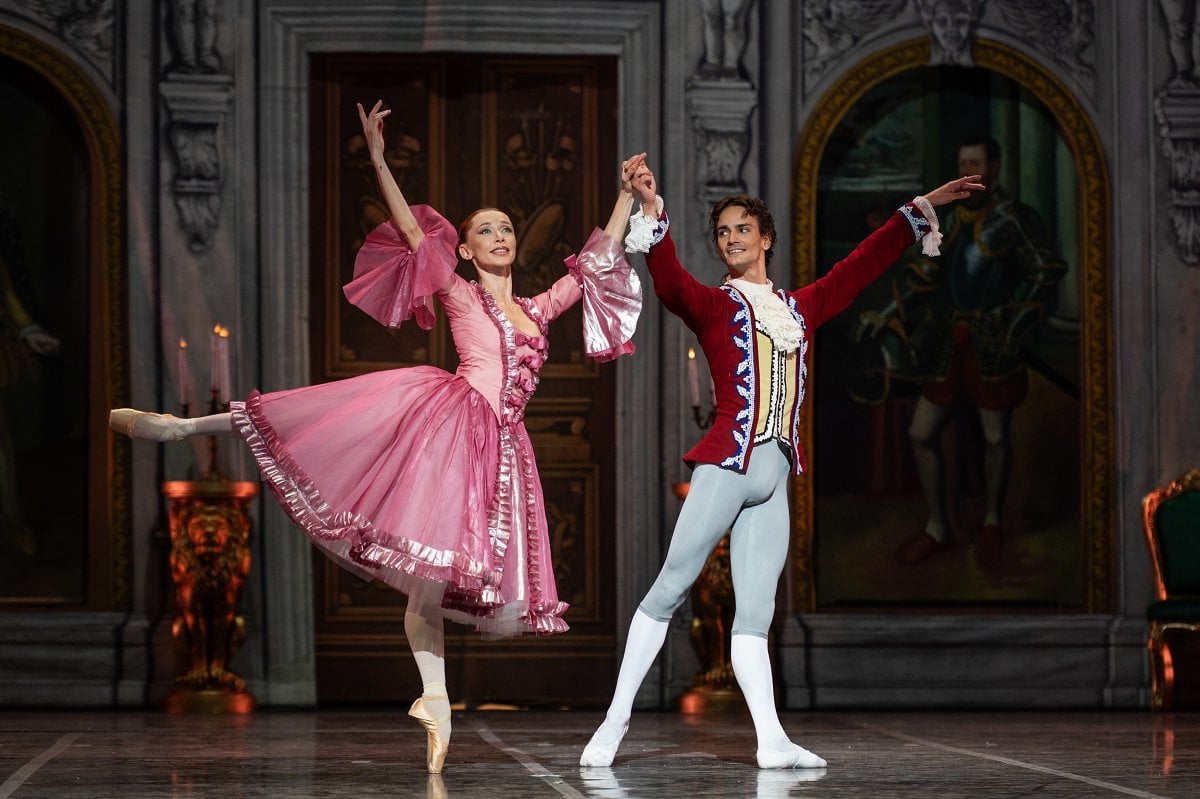
Marta Mele sees Marco Spada with Rome Opera Ballet, a ballet first restaged in Rome in 1981 by choreographer Pierre Lacotte for Rudolf Nureyev.
| Title | Marco Spada |
| Company | Rome Opera Ballet |
| Venue | Teatro dell’Opera di Roma |
| Date | 27 October 2025 |
| Reviewer | Marta Mele |
The Opera House in Rome is offering an unmissable restaging of the Marco Spada ballet, first revisited in this very theatre in March 1981 by choreographer Pierre Lacotte for Rudolf Nureyev.
Although known as a scrupulous philological reconstructionist, Pierre Lacotte had to reinvent Joseph Mazilier’s choreography, originally created in 1857 for the Paris Opera and now lost. Yet it was an exemplary work of 19th-century Romanticism, which exalted the figures of bandits and rebels as symbols of freedom and opposition to established power.
The same fate befell many early 19th-century ballets, especially those with historical settings, which constituted the parallel strand of the ballet blanc with supernatural settings. Little is known today about ballets such as Nathalie ou la laitière suisse or La Révolte au sérail, both choreographed by Filippo Taglioni for his daughter Marie, and currently destined for scholarly research.
After all, even the fantasy genre had a troubled history, and if a masterpiece like La Sylphide has come down to us, we owe it primarily to August Bournonville’s Danish reinterpretation, as well as to the philological reconstruction work of Pierre Lacotte himself. Not to mention Giselle, which originated in France and came down to us through Marius Petipa‘s late-nineteenth-century reworking from Russia. Indeed, by introducing white acts into his ballets à grand spectacle, Marius Petipa championed the Romantic legacy.
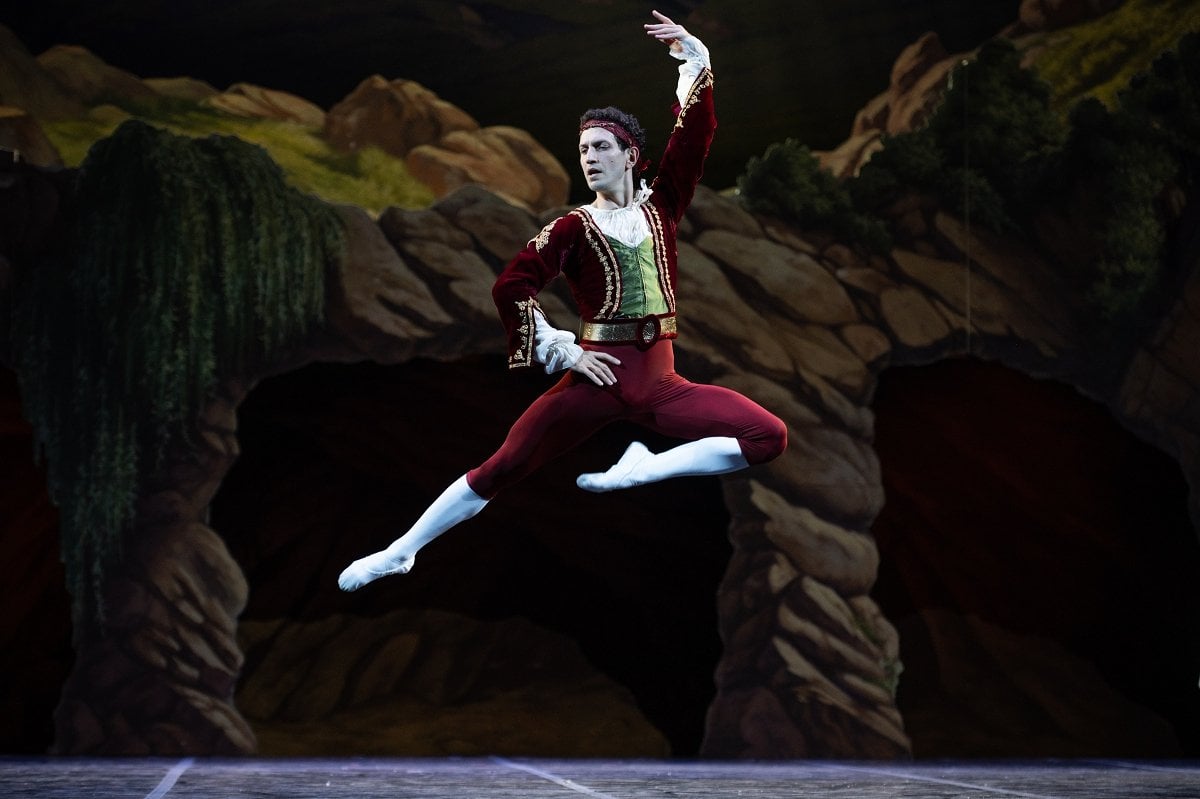

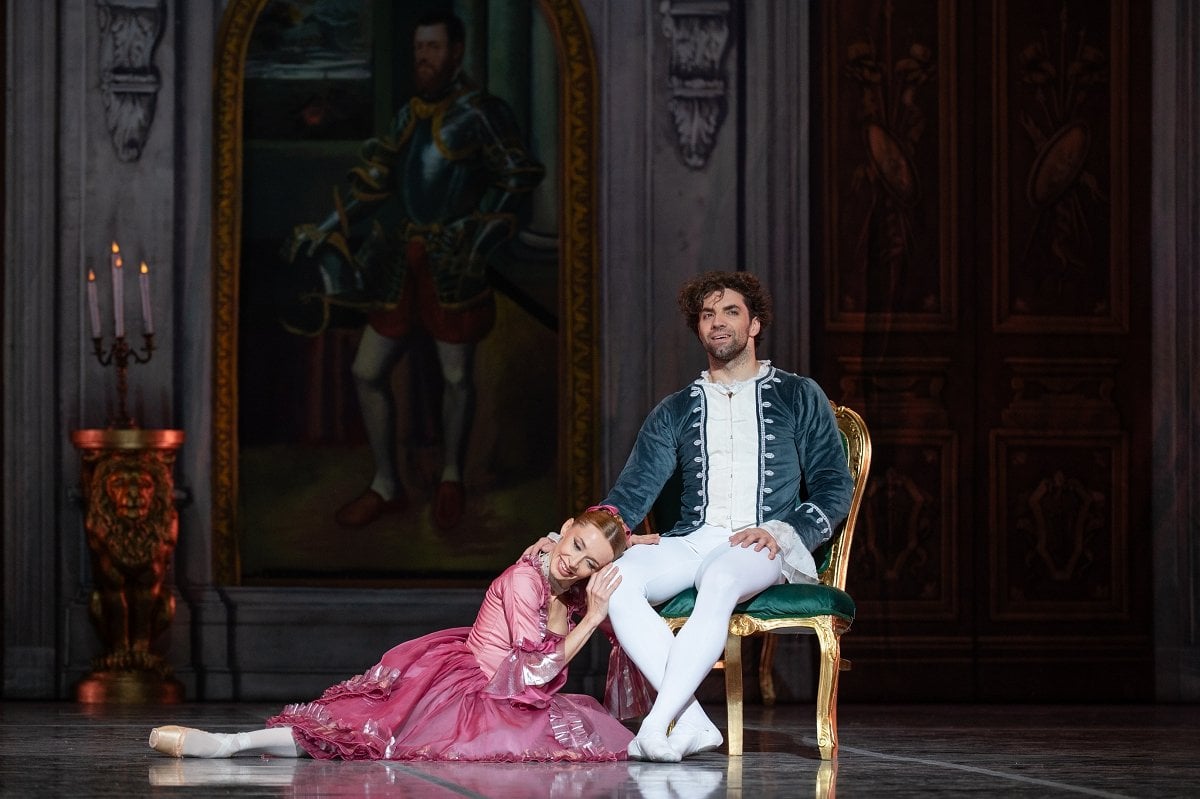

Meanwhile, the ballet we see today at the Rome Opera has much more in common with the realistic acts of the Romantic fantasy ballet. But unlike the intimate and familiar atmosphere of many of them, the Marco Spada revival in Rome, by Anne Salmon and Gil Isoart, stands out immediately for its profound scenic grandeur, made possible by the restoration of the sets and costumes from the 1981 version, carried out by the Rome Opera’s scenery workshops at the Circus Maximus.
The audience is transported to a small village near Rome for the ballet’s three acts and five scenes, with the town square dominated by the façade of the church. Later the action moves to the sumptuous residences of the aristocracy, and finally to the greenery of the forest, in search of ultimate authenticity.
Enchanted by this magnificence, a second constitutive element of the ballet can be admired: the lively corps de ballet, embodying the dynamism of the different social strata. In the first act, a certain peasant-like quality prevails, along with the trope of a couple’s wedding celebration, further characterised by the contrast with the nobility, as well as the presence of the gendarmerie and representatives of the clergy, whom a disguised Marco Spada mocks, leaving posters around the town declaring that he is responsible for various crimes committed around the town.


Various choreographic and dramatic levels coexist, contrasting the elevation of the danse d’école en pointe with a more solid terre-à-terre dance, and blending pure dance with the more flamboyant mime elements.
The atmosphere shifts from joyous yet serious to the comical and grotesque nature of the pantomimic dialogues between Friar Borromeo and Marco Spada. Against this backdrop, the figures of the main characters emerge. The presence of the governor of Rome is less impactful, while his daughter, the Marchesa Sampietri, takes centre stage. She was played during the third performance by the enchanting Marianna Suriano, who, with the affected and frivolous elegance of her little allegro, imbued with pas balancés, coupés, and petits sauts de basque, is called upon to settle the rivalry between the rigid and austere dancing of Count Pepinelli, softened here by the expressive Claudio Cocino, and the haughty Prince Federici, played by the talented Simone Agrò (who, with great excitement, was named principal dancer on the opening night).
Despite the perfection of his entrechats, Federici is less inclined to reveal the true nature of his feelings, remaining a highly mysterious figure. Marco Spada’s showy vitality stands out above all others, and with his whirling leaps and pirouettes, he choreographically demonstrates his uniqueness within the Romantic paradigm, more often associated with the triumph of the female figure. The choice of Igor Cvirko as guest artist in the lead role is well suited to restore the power and incisive energy once embodied by Nureyev, although in other performances the figure of the more slender Alessio Rezza, with his extremely clean steps, managed to imbue the protagonist with an element of inner purity that added depth to the underlying tragedy of the entire ballet.
In the second scene of the first act, set in Marco Spada’s palace, there is still a sumptuous external appearance, and the figure of Angela, the presumed daughter of our “hero,” now takes centre stage. She is brought to life with expert refinement, enhanced by a diaphanous costume, by guest artist Iana Salenko, who is notable in her medium and big jumps with rounded arms. Her character is revealed in her duets with the enamoured Prince Federici, with her father Marco Spada, and with the Marchesa Sampietri – she is a naive character, full of beauty and optimism, who must confront the adversities of life.
The presence of trapdoors in the stage allows for astonishing scenic effects: the appearance of the brigands is camouflaged by the figures of ancient statues.


The second act, set in the governor’s palace, is cooler in colour, mirroring the atmosphere of the closed form of the pas de deux, and of a scene dominated by historical ballroom dances. In response to the story’s numerous, ambiguous intrigues, Prince Federici, with a dramatic twist, announces his desire to marry the Marchioness. The first scene of the third act is delightful – here the preparations for the Marchioness’s wedding are symbolised by a large white veil, but they are disrupted by the brigands who carry her off along with Count Pepinelli, who has come to implore the woman’s love. The third act is brilliant and illuminating. Angela accepts her father’s nature, abandoning her noble robes. In the whirlwind dynamism of the dances, Marco Spada is mortally wounded by the cavalry. Just enough time to reveal that Angela is not really his daughter and is therefore free to marry Federici. A final recognition that demonstrates the stereotypical power of the nineteenth-century dramaturgical clichés present in Eugène Scribe’s libretto, but without being truly satisfying, and that are accompanied by Daniel Auber’s rather monotonous music, albeit enlivened in its various nuances by David Garforth’s meticulous baton.
And yet, the revival appears to be an essential undertaking both for its historical significance and for the establishment of a dancing identity for the Rome Opera Ballet, firmly rooted in the past before the necessary openness to the future.