[Interview] “It is possible!” – The Royal Ballet’s Emerging Choreographer Joseph Toonga on piqués and popping
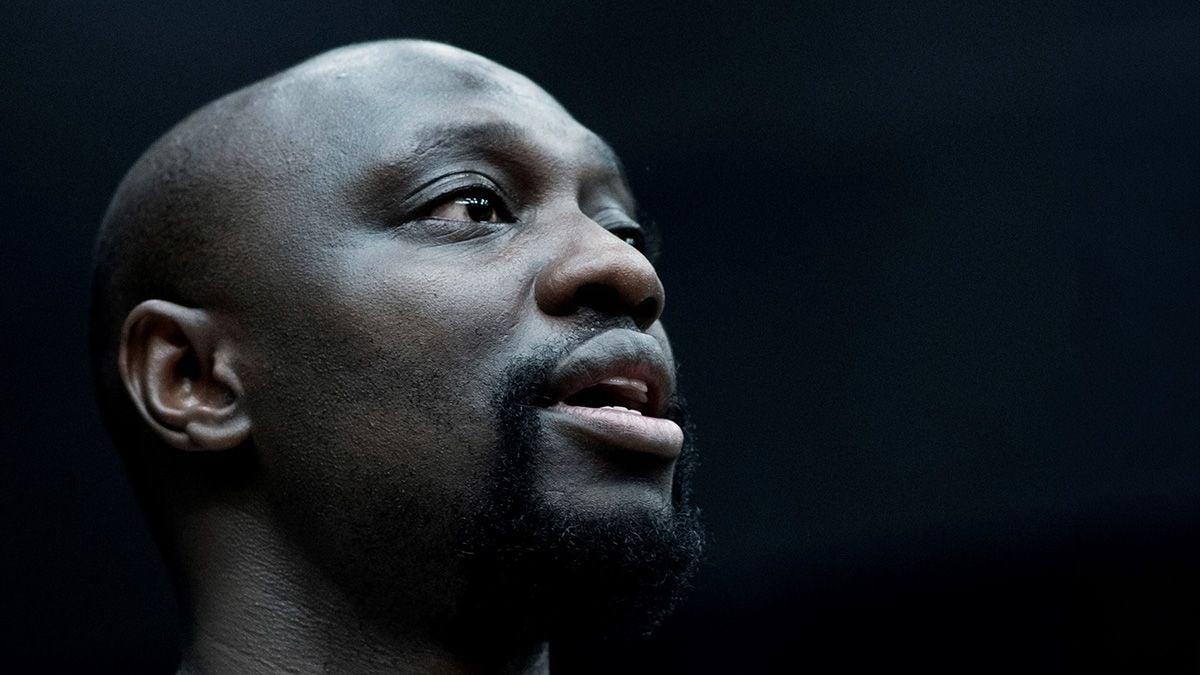
In 2021, Joseph Toonga was appointed The Royal Ballet‘s first Emerging Choreographer, with the company’s Resident Choreographer, Wayne McGregor, to act as his mentor. ‘Emerging’ can be put in quotes, as he founded his dance company Just Us Dance Theatre back in 2007, is the co-founder of Artists4Artists, and an Associate Artist with the UK’s DanceEast.
Joseph was born in Cameroon but grew up in London, and his dance experience comes from the varied world of street dance.
I wanted to talk with him about creating hip hop infused works with classically trained dancers, but first, an introduction.
So, Joseph, without using gestures, what is hip hop?
Hip hop is a culture, that started in the early ‘70s. It’s a street style and my interpretation is built upon that, responding to issues of the world, and with different viewpoints. That’s the culture I grew up in, in terms of being able to speak about what’s happening today. So original hip hop moves are breakdancing, there’s popping, there’s house, and I like to explore krumping which is one of the newest forms that’s like 23, 24 years old. That’s what I’m bringing into the Royal Ballet.
Obviously, it’s impossible to explain hip hop with words – like explaining classical dance positions to a breakdancer – and Joseph, though sitting, is very animated for most of the time we’re speaking, his head often leading the rest of his body. So, my recommendation to those curious to learn more is to search out ‘krumping’ and ‘popping’ on YouTube!
I was imagining the teenage Joseph joining in with others dancing in parks in East London, but no, he first saw hip hop on television, and started dancing himself because a teacher was trying to find a disciplined path for him to follow.
I wasn’t the best behaved. When I came [to the UK], I was brought up in an environment that wasn’t always, you know, positive. There was violence around me. There’s some stuff that I saw as a young person that I would never wish for my daughters to see.
In school I played football… my family was into sports. I had a tough upbringing and my PE teacher, because of my behaviour, was like, “You know what? You’re gonna go dance.”
Punishment!
Yeah, basically a punishment.
Heather Coke – who Joseph still refers to as ‘Miss’ Heather Coke, even though she’s now on the board of his Just Us Dance Theatre – was a performer before becoming a Performing Arts, Dance and PE teacher.
She saw that I had a bit of interest because a couple of friends were doing it and she thought it would be an outlet for me. I went to a class and saw people who looked like me, a person of colour, so I was like, “Oh, so people like me can dance like that.” Slowly it went from there.
I’m an only child, and the teacher wasn’t much older than me, so he felt like a big brother. I was being taught by someone who saw this young boy and was, “OK, I’m gonna help guide you without telling you, but I’m going to be there for you.”
Breaking was the first thing I learned. After the class, I was like, “Oh, I can do a few moves and I’m getting a bit of attention from other people… I’m gonna pursue this.” Some of my mentors at the time really helped me get through a lot of situations, become a lot more positive, and get myself out of certain environments.


So why did the UK’s most prestigious ballet company want a hip hop performer and choreographer to work with its dancers?
I think it gives the dancers a sense of different ways to use the space around them. Space doesn’t have a narrative, but I’m projecting a connection with it. And it’s not only about the movement, but relationships, and not just romantic but normal everyday relationships – if someone touches you, how do you react? I’m really driven by action-based movement. I’m gonna push you and then how are you gonna react to that? And then how would you do it within your classical technique? How can you manipulate that push after you responded to it naturally, and how do you get that into your movement?
I like being in the moment and being really physical. Not always so delicate, but always meaningful. People are expecting you to do hip hop, but it needs to be lyrical too.
It’s also about how I try to manipulate ballet movement without taking away from the technique because I really like the way they do certain movements… I like the feel of it. Companies also want dancers to understand different dynamics in the body through how we work, so they feel also more ready for other contemporary work.
Have you had dancers who have refused to do this?
It hasn’t been said, but I’ve seen it. For what purpose am I in the building?
I think there’s a value I can bring. I don’t come from a ballet background, but I’ve been fascinated by ballet since, like the age of 17 or 18. I watch Wayne [McGregor]’s work and then after that do research, and I come across other classical works. For me, it was like, how can I manipulate that? It’s not that I wanna take away from it, it’s about what can I add to it, in a different way, with different movements.
What was your first experience with ballet dancers?
It was with Hamburg Ballet, the junior company. It made me fall in love even more by having dancers in front of me and seeing how they use their technique and make it effortless. But then I’m interested in not just how you make it look effortless but also, how you make it look hard.
You’ve also worked with various ballet schools. Why do they want someone working with their students who creates something so different from what they are teaching?
I think one of the first things is about culture. If you wanna change something, you have to introduce new cultures – let’s see someone else’s culture and experience.
I know that I have a different working practice too. With one ballet school, the students at one point were really nervous about how the piece was going because they were used to building a start, a middle and a finish. But we were working on lots of different stuff so they couldn’t see that until the day we started putting it together. They had to learn to trust another practice that wasn’t familiar.
You’ve said that working with students is great because they have fewer habits… they are freer. Is it more challenging working with professional dancers?
Oh yes, more difficult. It is not that they are difficult, but they have been doing something for so long. I’m not telling them that it’s wrong but trying to introduce something that a body doesn’t know how to do. I’ve been told that it’s not graceful, but actually it is graceful, and it’s trying to change those viewpoints that’s challenging.
So, you’ve got a ballet dancer in front of you and they’ve never done anything like this before. Do you have a magic key that opens a door, or is it a slow progression of discovery?
It’s a slow progression… slowly finding things. And I’m also on that journey where I’m trying to find the right language to associate certain qualities with them so it clicks a bit faster.
I can say there are three or four dancers that I can really push if I walk into the studio and they understand the dynamics of what I’m trying to do, and they can give that back to me. It’s taken three years to have three or four.
When I interviewed the countertenor Jakub Józef Orliński, who is also a b-boy, he said he’d stopped doing head spins because he was concerned about his throat and his singing. Are there movements that are dangerous to ask a ballet dancer to do?
It’s not that it’s too dangerous, but they tire very quickly so it’s about their stamina. Doing some of these movements gets them tired and has a big impact on what they’re going to be able to do the next day.
My language has developed using classical bodies like being on pointe… why can’t you go further and use pointes with krumping? It’s challenging, and you need to build the environment so everyone feels like what they’re doing has a bigger purpose.


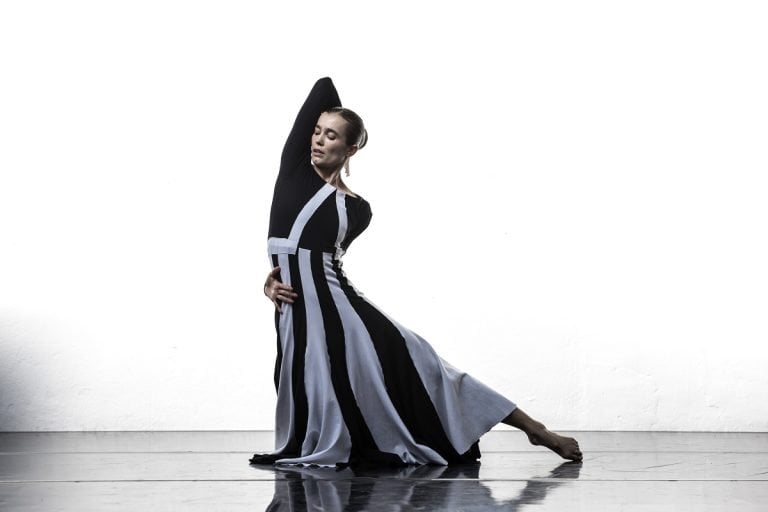
Joseph created a pas de deux called “New Work” for the Royal Ballet’s International Draft Works at the Royal Opera House’s Linbury Theatre earlier this month. Olivia Findlay and Nadia Mullova-Barley were the two dancers.
I wanted two female dancers because it’ll be part of a bigger work in October where I want to have more females. I went to Kevin [O’Hare, director of The Royal Ballet] and asked for two dancers that I hadn’t worked with, so I’ve had the opportunity to work with them and for them to get to understand me.
I also started to create the team that I want for the new work, so I had a rehearsal assistant called Winnie Dias, who used to dance for Hamburg Ballet. She was able to come in and be part of the process which really helped maximise the rehearsal time we had.
Female partnering needs to be the norm, yet you don’t really see a lot of it, and in Draft Works there was only this moment. It was great with two females on pointe because it affects dynamically what they do. There are so many qualities changing movement on pointe that on flat doesn’t register the same. An arabesque into a piqué but combined with dime stopping makes the body look very different. With hip hop there is so much that hasn’t been explored.
You’ve just used ballet terms. How do you best communicate with the dancers?
I demonstrate, and I get them familiar with certain hip hop terms that I want within the work. So if I say, do a dime stop, they know it’s like a full stop, with no other movement in between… pops, hits, all that. And also, I speak French, so I know the meaning of the ballet words.
You chose the hypnotic world of Phillip Glass’ music for this piece. Do you see movement in a different way because you’re not matching it like a Tom and Jerry cartoon.
Yes, that’s absolutely correct. That’s one of the reasons why I used it because it allows me to go into it and to create illusions of what you hear. I don’t like counting steps, and I challenge the dancers on how they hear the music. I think that the Philip Glass music allowed that possibility to happen where other music almost dictates what you do.
Does your work help to bring in a new audience?
Oh yeah, I know for a fact. I’ve got an e-mail…! [he laughs] Listen to me, I’m really happy. During Black History Month in October, Kevin gave me a budget to bring in six new makers and we did a festival called Rhythm in Resilience. The Insight events had a 43% new audience.
The Royal Ballet’s ‘Insights’ are events that include open rehearsals, conversations, pre-performance talks, beginners’ guides, behind-the-scenes demonstrations and participatory workshops.
I had messages on Instagram because people saw a face that looked like them. From other countries I’ve had messages to say that it was really nice to see me on World Ballet Day or Insights. I think you introduce new audiences with ballet not in its classical form, and then once they love that maybe they’re gonna come and watch Alice in Wonderland.
I’m interested in a wider audience coming. That means that my work doesn’t have to impress the critics, but the everyday people who want to come into dance. And how do I do that? I opened up my rehearsals to the public who are interested are coming to see a process and talk to the choreographer.
And also the donors come. Some because they’ve seen my work before. Some because they’re actually fascinated by my work, and it is allowing them to connect to their grandkids and bring them in too. They see the benefit in that.


There’s “a big thing” coming up for Joseph on The Royal Opera House’s main stage in October (the Royal Ballet 2024-2025 Season will be announced at the end of this month).
It’s a big milestone for me, and I don’t think the Opera House completely understands that, in terms of me being an immigrant to the country. I think that I am gonna be the first Black British person to make a new work on the company – Carlos [Acosta], of course, is Cuban, and Kyle Abraham is American. I’m going to be sharing that space with [to be announced!], [tba] and [tba], and that blows my head. I’ve seen their work and I’m a fan.
How do we utilise that to bring people into the Opera House… make that space accessible… to use my journey? Yes, I want the work to be great, but when I look out into the audience, I want to see London… the UK.
Kevin [O’Hare] and Wayne [McGregor] have been a great help, and also Julia Gillespie, one of the producers, in trying to understand I come from such a different culture. And it can feel so lonely. Most people don’t even know that I’m in the building. Someone thought I was a cleaner.
One of the cooks in the canteen saw a video with me and was so happy, “So that’s what you do!” Happy that someone making stuff on the mainstage, looked like him. That literally made my whole month. Someone like that is spreading that to their kids when they go home: “You know what, if you want to pursue dance, you can, because I’ve seen that boy Joseph who’s making work for the Royal Ballet, so it is possible.”
Regardless of your journey, creed, or economic situation, you can be in that space at the Royal. That’s what I hope the show in October represents… it is possible!


Graham Spicer, aka ‘Gramilano’, is a writer, director and photographer based in Milan. He was a regular columnist for Opera Now magazine and wrote for the BBC until transferring to Italy. His articles have appeared in various publications from Woman’s Weekly to Gay Times, and he wrote the Danza in Italia column for Dancing Times magazine. Graham was the historical advisor on Codice Carla, the 2023 documentary on Italian ballerina Carla Fracci.
Graham also works as a dance photographer, and his photos have appeared in many books, theatre programmes, and magazines, including Dancing Times, Dance Spirit and Ballet2000, as well as all the major Italian newspapers.
He is a member of the Dance Section of The Critics’ Circle.