Review: Nureyev’s Swan Lake at La Scala with Alice Mariani and Navrin Turnbull

Graham Spicer sees Swan Lake at La Scala – one of Rudolf Nureyev’s most successful choreographies.
| Title | Swan Lake |
| Company | La Scala Ballet |
| Venue | Teatro alla Scala, Milan |
| Date | 10 July 2025 |
| Reviewer | Graham Spicer |
Rudolf Nureyev’s version of Swan Lake is one of his most successful choreographies with less eccentricity than is sometimes seen in his steps, and with clear storytelling. It is called a ‘Freudian’ version, and maybe when he created it in 1984 for Paris Opera Ballet it was seen as something new, but this could maybe be dropped from the programme notes as so many concept versions are now out there. As with all of Nureyev’s ballets, he elevates the importance of the male dancer, and above all the main role, which he would dance. For The Royal Ballet in 1962, he created a new solo for himself as the prince, and in his complete ballet for Vienna Opera Ballet two years later he took this even further with challenges for the male corps de ballet.
In the Paris version, the ballet starts with a dream (and maybe the entire ballet is a dream), with Prince Siegfried on his throne, sleeping, while Rothbart flaps up into the sky holding Odette by his talons. The image is then repeated at the end of the ballet after Rothbart defeats Siegfried by the side of the lake, thus ending his possibility of happiness. Rothbart is the evil version of Seigfreid’s tutor Wolfgang, just as Odile is the opposite of Odette.
The designs at La Scala are the same as those in Paris with Ezio Frigerio‘s stark, minimalist scenery, and Franca Squarciapino’s gorgeously detailed costumes, but so rigorously chic that they seem to have been dipped in bleach – the overall design from the Italian pair is a pastel delirium. They were, of course, only following Nureyev’s instructions with a high-walled, plain set to symbolise Seigfreid’s sense of being imprisoned, and costumes that are almost ghostly.

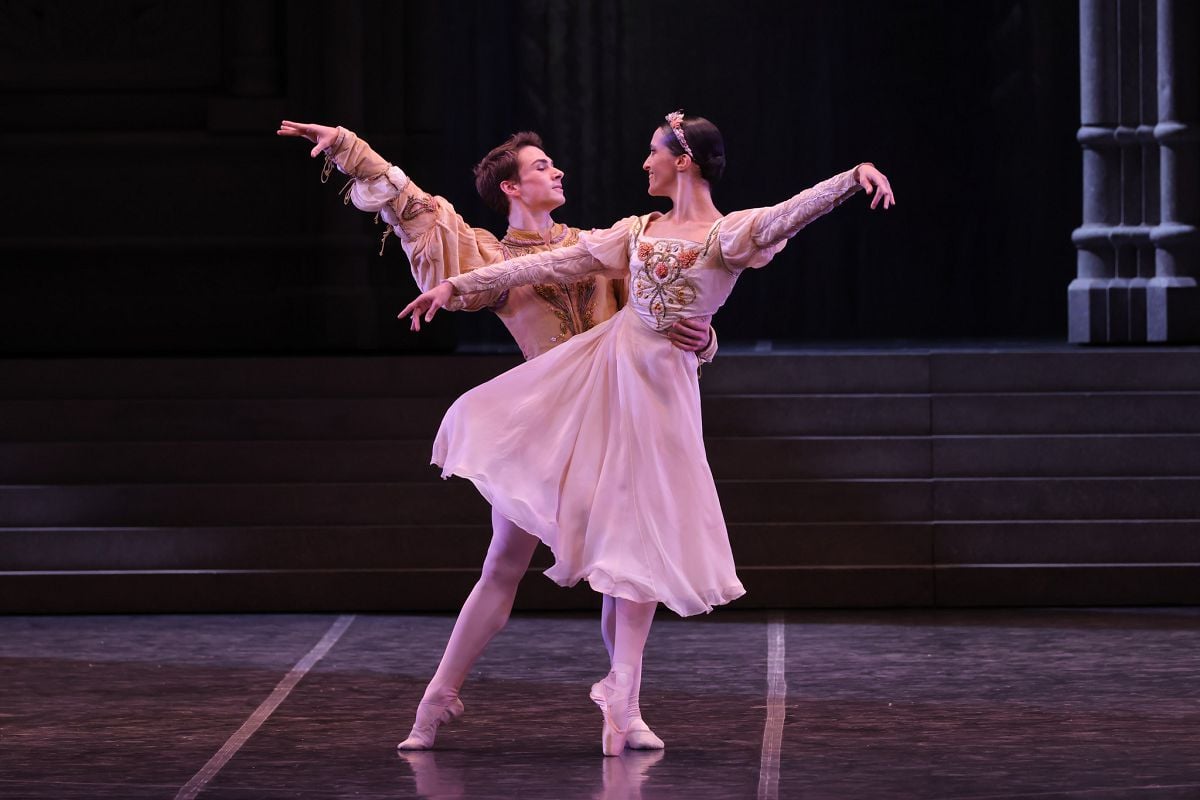


Then there’s the gay angle to the storytelling, with an all-male polonaise before Siegfried sets off to the lake to hunt, underlining who he chooses to surround himself by. Notwithstanding the beautiful women invited to the palace, he becomes infatuated by a swan, an impossible love. The polonaise, however, also serves to give time for the women to change into their swan costumes as the first and second acts are joined (as are the third and fourth).
Although Nureyev could be over-fussy in his steps and gave his male dancers sequences that even the greatest dancers (including himself) could not pull off with elegance, his choreography for the corps de ballet is inventive and thrilling. The La Scala dancers kept the intricate patterning precise and neat, while executing the difficulty of the dancing like soloists.
The pas de trois of the first act saw Linda Giubelli and Alessandra Vassallo in fine form, though Edward Cooper, who showed some impressive virtuosity, oddly had a flexed trailing foot in his barrel turns, which made them look ugly. A special mention for the four cygnets who were perfectly in sync with the angling of their heads, and a precisely spaced final pose – soloist Linda Giubelli danced again here, this time with Camilla Cerulli and Agnese Di Clemente (also soloists, though all three dance leading roles with the company) together with corps member Giordana Granata.

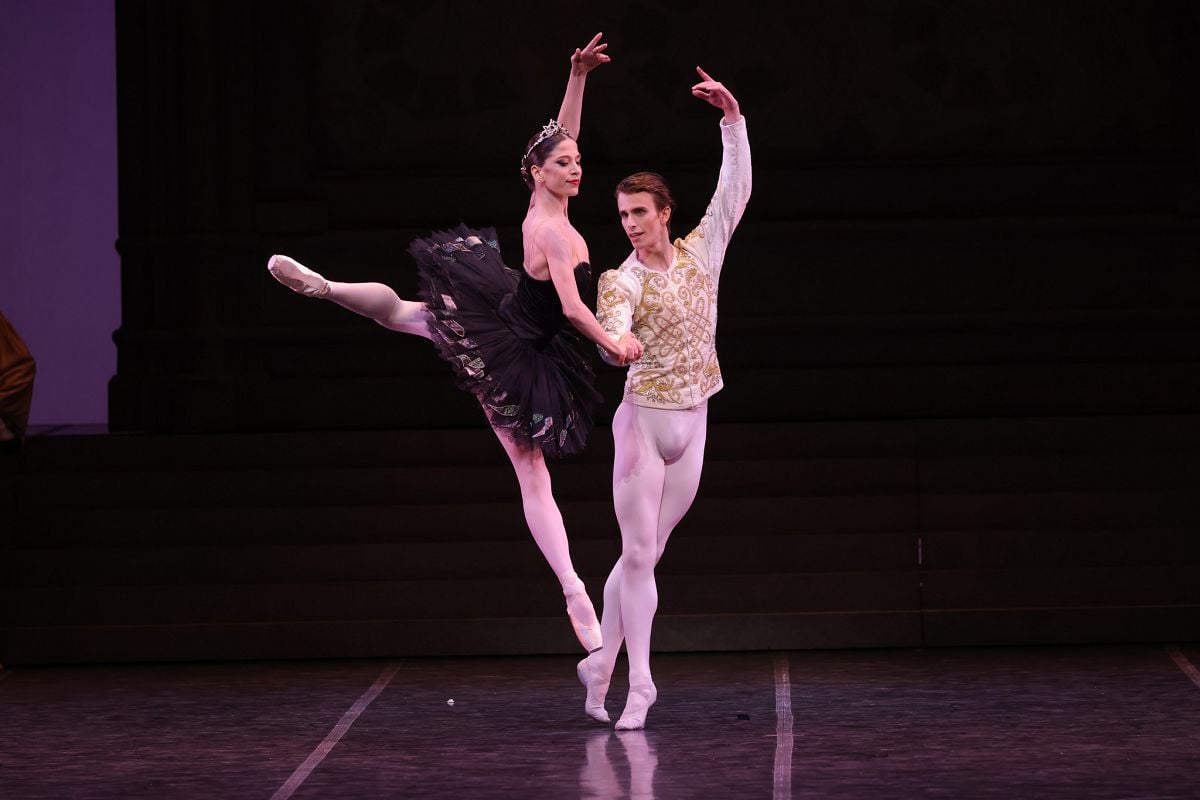
Christian Fagetti was Rothbart, a role he excels at, making the most of the third act pas de trois as he whispers instructions into Odile’s ear. A fine actor, he knows how far to push without going over the top, with devious looks and some extravagant swishing of his cloak.
Navrin Turnbull is something of a mystery. He’s a soloist but has been trusted with many principal roles and recently was magnificent as Peer Gynt in Edward Clug’s ballet. However, in the classical repertoire, he tends to become invisible, and nowhere is it more obvious than when he shares the stage with Alice Mariani who has a vibrant personality. Yet in his solo towards the end of the first act (to music taken from the pas de trois) he shines with the brilliance of his legwork – ronds de jambes en l’air that speak – and he is very clean and controlled in his dancing. Maybe he needs to be less controlled with his facial expressions.
Mariani is generally marvellous in all that she does, and her Odette is soft yet vivid. However, it is as Odile that she can show what she does best with her technical assurance and flashing eyes. She is greatly admired in Milan, and Londoners will be able to appreciate her next season when she becomes Principal Guest Artist with English National Ballet.


Graham Spicer, aka ‘Gramilano’, is a writer, director and photographer based in Milan. He was a regular columnist for Opera Now magazine and wrote for the BBC until transferring to Italy. His articles have appeared in various publications from Woman’s Weekly to Gay Times, and he wrote the Danza in Italia column for Dancing Times magazine. Graham was the historical advisor on Codice Carla, the 2023 documentary on Italian ballerina Carla Fracci.
Graham also works as a dance photographer, and his photos have appeared in many books, theatre programmes, and magazines, including Dancing Times, Dance Spirit and Ballet2000, as well as all the major Italian newspapers.
He is a member of the Dance Section of The Critics’ Circle.