
Fiorenza Cossotto answers the Gramilano Questionnaire… Singers’ Edition
Q&A


When did you start singing?
When I was a girl.
Why did you start singing?
For my own personal enjoyment.
Which singer inspired you most when you were young?
No one.
Which singer do you most admire?
The good ones.
What’s your favourite role?
More than one… all the masterpieces.
What role have you never played but would have liked to?
Madama Butterfly.
What’s your favourite opera to watch?
All of them.
Who is your favourite composer?
Verdi – Bellini – Puccini – Mozart.
Who is your favourite writer?
More than one.
What is your favourite book?
My scores are my favourite books.
Which is your favourite city?
Where I was born. [Crescentino (Vercelli), population 8,000, where Sig.ra Cossotto still lives]
What do you like most about yourself?
My seriousness.
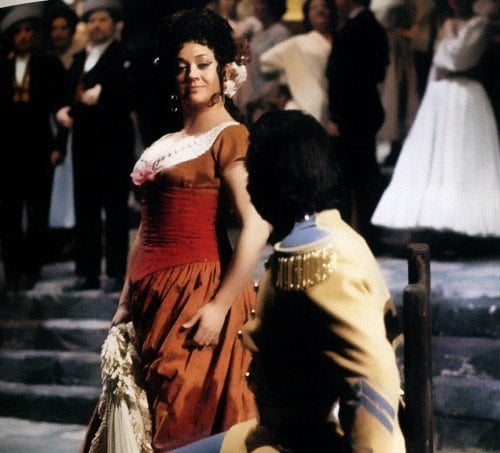
What do you dislike about yourself?
[No answer]
What was your proudest moment?
When my parents came to hear me sing for the first time at La Scala.
When and where were you happiest?
On many occasions, with my family and artistically.
What or who is the greatest love of your life?
My son and my grandson.
What is your greatest fear?
Human wickedness.
If you could change one thing about yourself, what would it be?
It’s not up to me to judge.
What do you consider your greatest achievement?
Giving birth to my son.
What is your most treasured possession?
Peace.
What is your greatest extravagance?
I’m not the extravagant type.
What do you consider the most overrated virtue?
That’s not for me to judge either.
On what occasion do you lie?
To rescue a delicate human situation.
If you hadn’t been a singer what would you have liked to be?
A painter.

What is your most marked characteristic?
My seriousness.
What quality do you most value in a friend?
Sincerity.
What quality do you most value in a colleague?
Respect of their roles.
Which historical figure do you most admire?
St Francis of Assisi.
Which living person do you most admire?
The Pope.
What do you most dislike?
Insincerity and hypocrisy.
What talent would you most like to have?
To be able to paint.
What’s your idea of perfect happiness?
For human beings, unfortunately, it does not exist.
How would you like to die?
In my sleep.
What’s your motto?
Live and let live.
Jump to BIOGRAPHY – DISCOGRAPHY – VIDEOS
D&R

Quando hai iniziato a cantare?
Da ragazzina.
Perché hai iniziato a cantare?
Per piacere personale.
Quale cantante ti ha più ispirato da piccolo?
Nessuno.
Quale cantante ammiri di più?
Tutti quelli bravi!
Qual è il tuo ruolo preferito?
Sono più di uno… tutti i capolavori.
Quale ruolo non hai mai interpretato ma vorresti o avresti voluto cantare?
La Butterfly.
Quale opera non ti stanchi mai di vedere?
Tutte.
Chi è il tuo compositore preferito?
Verdi – Bellini – Puccini – Mozart.
Scrittore preferito?
Più di uno.
Libro?
I miei spartiti.
Città?
Il mio paese natale. [Crescentino, Vercelli]
Cosa ti piace di più di te stesso?
La Serietà.
Cosa non ti piace di te stesso?
[Nessun risposta]

Qual è stato il momento di cui sei più orgoglioso?
Quando i miei genitori mi hanno sentito cantare la prima volta alla Scala.
Dove e quando ti sei sentito più felice?
In tante situazioni! Famiglieri e artistiche.
Cosa o chi è il più grande amore della tua vita?
Mio figlio e mio nipote.
Qual è la cosa di cui hai più paura?
La cattiveria umana.
Se potessi, cosa cambiaresti di te?
Non spetta a me giudicare.
Cosa consideri il tuo più grande successo?
La nascita di mio figlio.
Qual è la cosa a cui tieni di più?
La serietà.
Qual è la tua abitudine più stravagante?
Non sono un tipo stravagante.
Quale virtù ti sembra più sopravvalutata?
È un giudizio che non spetta a me.
In quale situazione dici una bugia?
Per salvare una situazione umana delicata.
Se non fossi stato una cantante cosa ti sarebbe piaciuto fare?
Dipingere.
Cos’è la tua più evidente caratteristica?
La serietà.

La qualità che apprezzi di più in un amico?
La sincerità.
La qualità che apprezzi di più in un collega?
Il rispetto dei propri ruoli.
Il personaggio storico che ammiri di più?
San Francesco d’Assisi.
La persona vivente che ammiri di più?
Il Papa.
Cosa non sopporti?
La falsità e l’ipocrisia umana.
Quale talento ti piacerebbe avere?
La capacita di dipingere.
Qual è la tua idea di perfetta felicità?
Nell’essere umano, purtroppo, non esiste.
Come vorresti morire?
Dormendo.
Qual è il tuo motto?
Vivi e lascia vivere.


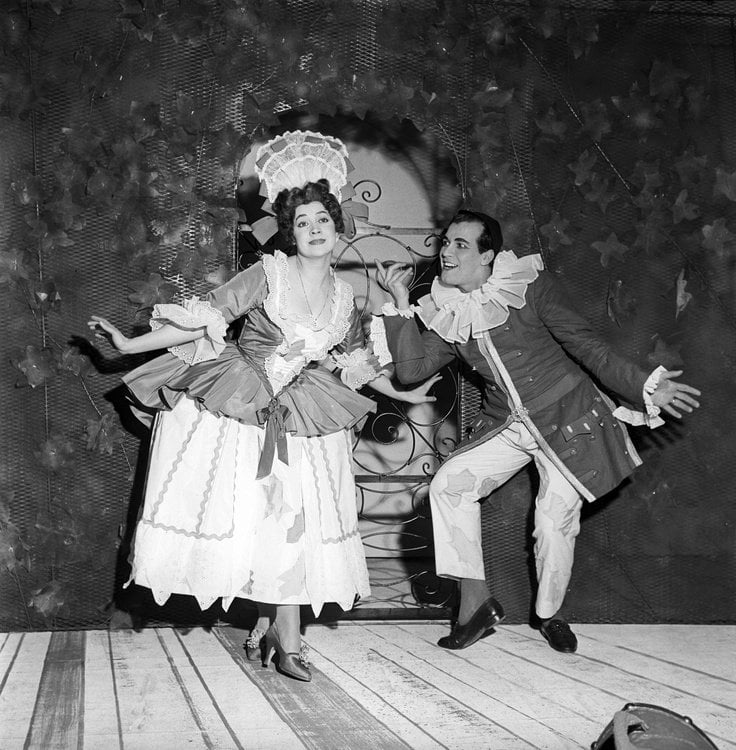
Fiorenza Cossotto – a biography
Fiorenza Cossotto was born in Crescentino in Piedmont, Italy, on 22 April 1935. She is one of the greatest mezzo-sopranos of the 20th century.
Cossotto attended the Turin Academy of Music with Mercedes Llopart, and made her opera début as Sister Matilde in the world première of Poulenc’s Dialogues des carmélites in 1957 at La Scala in Milan. She made her international début was at the 1958 Wexford Festival as Giovanna Seymour in Donizetti’s Anna Bolena, followed by her Covent Garden début in 1959 as Neris in Cherubini’s Médée, with Maria Callas in the title role.
A 1962 performance of the lead in La favorita at La Scala, replacing an indisposed Giulietta Simionato, led to wider fame. She was Azucena in Il trovatore to open La Scala’s 1962-3 season with Franco Corelli, Ettore Bastianini and Antonietta Stella, with Gianandrea Gavazzeni conducting and Luchino Visconti directing. In the same season in Milan she sang in Verdi’s Requiem with Carlo Bergonzi, Leontyne Price and Nicolai Ghiaurov conducted by Herbert von Karajan which was then taken to the Bolshoi in Moscow.
In 1964 she made her American début as Leonora in La favorita at the Lyric Opera of Chicago and she sang at the Metropolitan Opera for the first time in 1968 in Aida. Between this and her last Met performance during the 1988–89 season, she gave 148 performances at the theatre.
Cossotto sang some of the heaviest roles ever written for a mezzo-soprano, in all the major houses in the world, singing Favorita, Amneris, Azucena, Eboli, Preziosilla, Maddalena, Ulrica, and Laura. She also played Carmen, Mozart’s Cherubino, Urbain in Meyerbeer’s Les Huguenots, Bellini’s Romeo and Marfa in Mussorgsky’s Khovanshchina.
Of all the great singers with whom she shared the stage or recording studio, it is her relationship with Maria Callas that stirs the most interest, having sung Teresa to Callas’ Amina in La sonnambula at La Scala, in Gluck’s Ifigenia in Tauride, and many other occasions, including Callas’ last Norma in Paris.
In 2005 she celebrated her 70th birthday with a performance of Suor Angelica at the Théâtre Royal in Liège, Belgium, and in 2012, at 77, she gave a concert at the Turin Conservatoire where she was presented with an Award for her career from the Piedmont region and the city of Turin.
Discography
| Year | Opera – Role | Cast | Conductor | Label |
|---|---|---|---|---|
| 1956 | Andrea Chénier – La mulatta Bersi | Mario del Monaco, Renata Tebaldi, Ettore Bastianini | Gianandrea Gavazzeni | Decca |
| 1957 | Manon Lescaut – Un musico | Maria Callas, Giuseppe Di Stefano, Franco Calabrese | Tullio Serafin | EMI |
| La sonnambula – Teresa | Maria Callas, Nicola Monti, Nicola Zaccaria | Antonino Votto | EMI | |
| 1958 | Madama Butterfly – Suzuki | Renata Tebaldi, Carlo Bergonzi, Enzo Sordello | Tullio Serafin | Decca |
| 1959 | La Gioconda – Laura Adorno | Maria Callas, Pier Miranda Ferraro, Piero Cappuccilli | Antonino Votto | EMI |
| 1960 | Le nozze di Figaro – Cherubino | Giuseppe Taddei, Anna Moffo, Elisabeth Schwarzkopf | Carlo Maria Giulini | EMI |
| Rigoletto – Maddalena | Ettore Bastianini, Renata Scotto, Alfredo Kraus | Gianandrea Gavazzeni | Ricordi | |
| 1961 | Don Carlo – Principessa d’Eboli | Flaviano Labò, Antonietta Stella, Boris Christoff | Gabriele Santini | Deutsche Grammophon |
| Lucio Silla – Cecilio | Fernando Ferrari, Dora Gatta, Rena Gary Falachi | Carlo Felice Cillario | ||
| 1962 | Il trovatore – Azucena | Carlo Bergonzi, Antonietta Stella, Ettore Bastianini | Tullio Serafin | Deutsche Grammophon |
| 1964 | Rigoletto – Maddalena | Dietrich Fischer-Dieskau, Renata Scotto, Alfredo Kraus | Rafael Kubelík | Deutsche Grammophon |
| 1965 | Cavalleria rusticana – Santuzza | Carlo Bergonzi, Giangiacomo Guelfi, Adriana Martino | Herbert von Karajan | Deutsche Grammophon |
| 1967 | Medea – Neris | Gwyneth Jones, Bruno Prevedi, Justino Diaz | Lamberto Gardelli | Decca |
| Norma – Adalgisa | Elena Souliotis, Mario del Monaco, Carlo Cava | Silvio Varviso | Decca | |
| 1968 | Il barbiere di Siviglia – Rosina | Sesto Bruscantini, Luigi Alva, Fernando Corena, Ivo Vinco | Nino Sanzogno | |
| 1969 | Il trovatore – Azucena | Plácido Domingo, Leontyne Price, Sherrill Milnes | Zubin Mehta | RCA |
| 1972 | Norma – Adalgisa | Montserrat Caballé, Plácido Domingo, Ruggero Raimondi | Carlo Felice Cillario | RCA |
| 1973 | Un giorno di regno – Marchesa del Poggio | Ingvar Wixell, Jessye Norman, José Carreras | Lamberto Gardelli | Philips |
| Suor Angelica – Zia Principessa | Katia Ricciarelli | Bruno Bartoletti | RCA | |
| 1974 | Aida – Amneris | Montserrat Caballé, Plácido Domingo, Piero Cappuccilli | Riccardo Muti | EMI |
| La favorita – Leonora di Guzman | Gabriel Bacquier, Luciano Pavarotti, Nicolaj Ghiaurov | Richard Bonynge | Decca | |
| 1975 | Un ballo in maschera – Ulrica | Plácido Domingo, Martina Arroyo, Piero Cappuccilli | Riccardo Muti | EMI |
| 1976 | La forza del destino – Preziosilla | Plácido Domingo, Leontyne Price, Sherrill Milnes | James Levine | RCA |
| Macbeth – Lady Macbeth | Sherrill Milnes, Ruggero Raimondi, José Carreras | Riccardo Muti | EMI |
Videos




Graham Spicer, aka ‘Gramilano’, is a writer, director and photographer based in Milan. He was a regular columnist for Opera Now magazine and wrote for the BBC until transferring to Italy. His articles have appeared in various publications from Woman’s Weekly to Gay Times, and he wrote the Danza in Italia column for Dancing Times magazine. Graham was the historical advisor on Codice Carla, the 2023 documentary on Italian ballerina Carla Fracci.
Graham also works as a dance photographer, and his photos have appeared in many books, theatre programmes, and magazines, including Dancing Times, Dance Spirit and Ballet2000, as well as all the major Italian newspapers.
He is a member of the Dance Section of The Critics’ Circle.


Grandissima!!!!!!!!!!!!!!!! Without you my CD collection would be much less formidable.
Cossotto is a good singer, but not great. In addition, she is extremely evings of Callas, telling all sorts of lies about Maria