Interview: Tenor Dave Monaco, at 30, reflects on his journey to becoming one of the world’s most exciting opera singers.

| Tenor Dave Monaco chats with Graham Spicer about his journey to becoming one of today’s most sought-after Rossini and Mozart singers. |
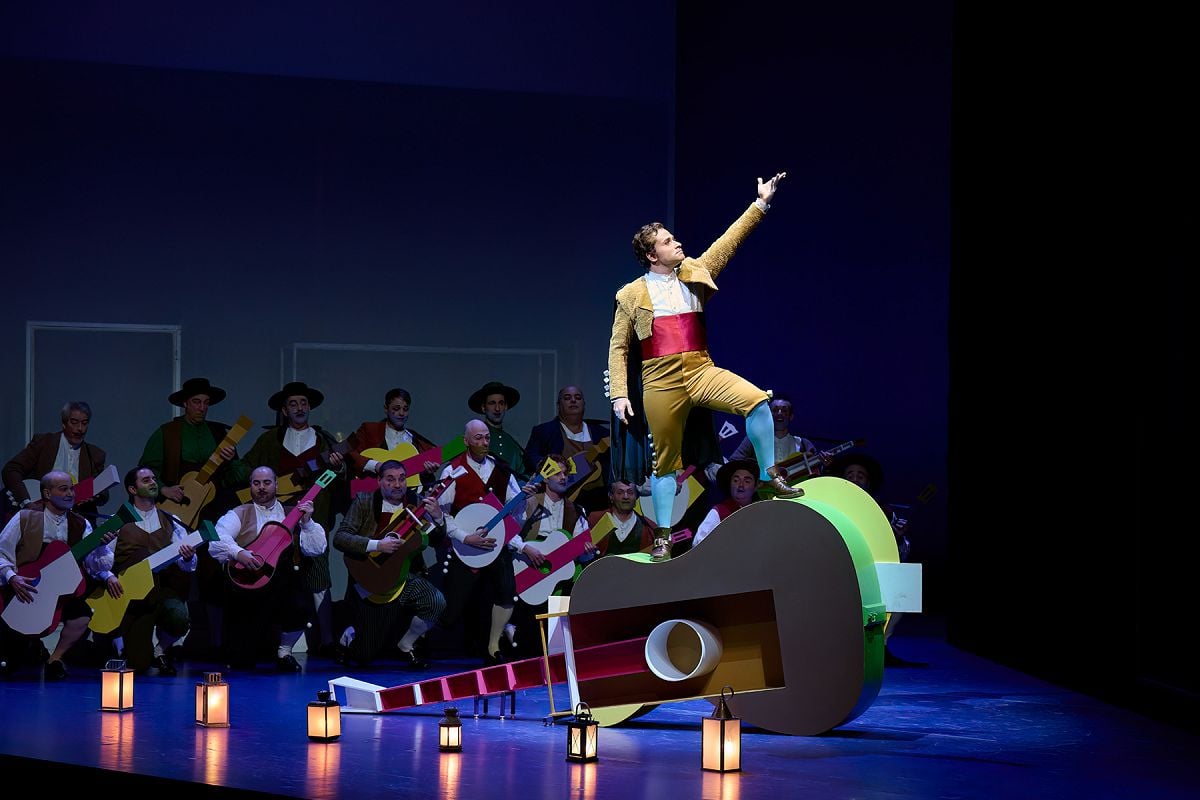
Dave Monaco just turned 30, and his career is flourishing. He will perform operas at Venice, the Rossini Opera Festival in Pesaro, and the Donizetti Festival in Bergamo – leading national events – later this year, and so far in 2026 he has portrayed Count Almaviva in Il barbiere di Siviglia with the Canadian Opera Company in Toronto (“His compact tenore di grazia and generous top register made him an ideal Count Almaviva.” – Opera Canada), and Don Ottavio in Don Giovanni in Tokyo. His schedule also includes performances of the Mozart Requiem in Bern and Paris, as well as Rossini’s Petite Messe Solennelle in Verona. Clearly, a busy year.
But next year… drum-roll… in just the first seven months of 2027, he will be singing in L’Italiana in Algeri at Opéra de Monte-Carlo, Il Barbiere di Siviglia at the Opéra national du Capitole in Toulouse, Don Pasquale at Zurich’s Opernhaus, La Cenerentola at the Bayerische Staatsoper in Munich, and in July Il Barbiere di Siviglia at Teatro Real, Madrid. Phew.
In 2025, he won third prize in Plácido Domingo’s Operalia competition, which shot his career into orbit. Yet his beginnings as an opera singer were unconventional. He was on Italy’s main television channel in 2017, competing to be selected for the young singers section of Italy’s Sanremo Song Festival.
On the various occasions that I have interviewed the countertenor Jakub Józef Orliński, I couldn’t not mention his breakdancing – in fact, one interview got him onto the cover of Dancing Times magazine! So, even though Monaco’s biography makes no mention of the Sanremo Festival, I just had to ask.
Dave, less than ten years ago, you were singing a pop song at Sanremo!
It was a really intense adventure, at times positive and at times difficult. Entering that environment made me realise immediately how distant it was from my own perception of singing. I felt as if I was the only one bringing a specific type of vocal approach, more closely bound up with technique and tradition, in an environment where that style wasn’t in fact appreciated.
For that specific reason, it was a watershed moment – it showed me very clearly which direction to go in. I realised that the right place for me was theatre and opera music, in which there’s real space for working on your voice and on interpretation. I also remember that the jury, consisting of Irene Grandi [pop singer], Francesco Facchinetti [DJ], Gabriele Salvatores [film director], Ambra Angiolini [actress and TV presenter] and Piero Pelù [rock singer], gave me zero points.
You sing the song wonderfully, but perhaps they reacted negatively to the tenor sound that you introduced towards the end.
Well, with hindsight, I can truly say that I thank them for it. Because that result allowed me to understand how crucial it is to be in the right environment, with people who can recognise and bring out the best in a certain type of talent. It’s a bit like trying to sell a valuable watch at a street market: the problem is not the item, but the place where it’s on sale.


For most of that song, ‘L’eternità è di chi sa volare’ (Eternity belongs to those who can fly), your voice has nothing of tenor-singing-pop about it.
In fact, until then I’d always put pop music first, and had never approached the study of opera singing in a serious, structured way. The move towards opera came via a precise choice – first mental, then practical. I decided to devote all my attention to my studies, embarking on a journey focusing on technique, putting it into practice, and exploring the repertoire.
My first experiences on stage, thanks in particular to the Accademia del Maggio Musicale Fiorentino, played a crucial role, giving me the opportunity to engage with the realities of this profession. All these factors, combined, naturally lead you to specialise, but only if you have the ability and self-discipline to tackle things sincerely and thoroughly.
Over the past few weeks, Vittorio Grigolo has been on the Saturday night TV show Canzonissima, singing pop – interspersed with ‘Nessun dorma’ and ‘O sole mio’ – while at Rome Opera singing in Roméo et Juliette.
I’ve never completely abandoned the idea of pop. I believe that, if managed intelligently, well-constructed opera singing technique doesn’t limit a singer in any way but indeed puts even more tools at their fingertips. I don’t rule out the possibility of demonstrating this in future, perhaps with a personal project.
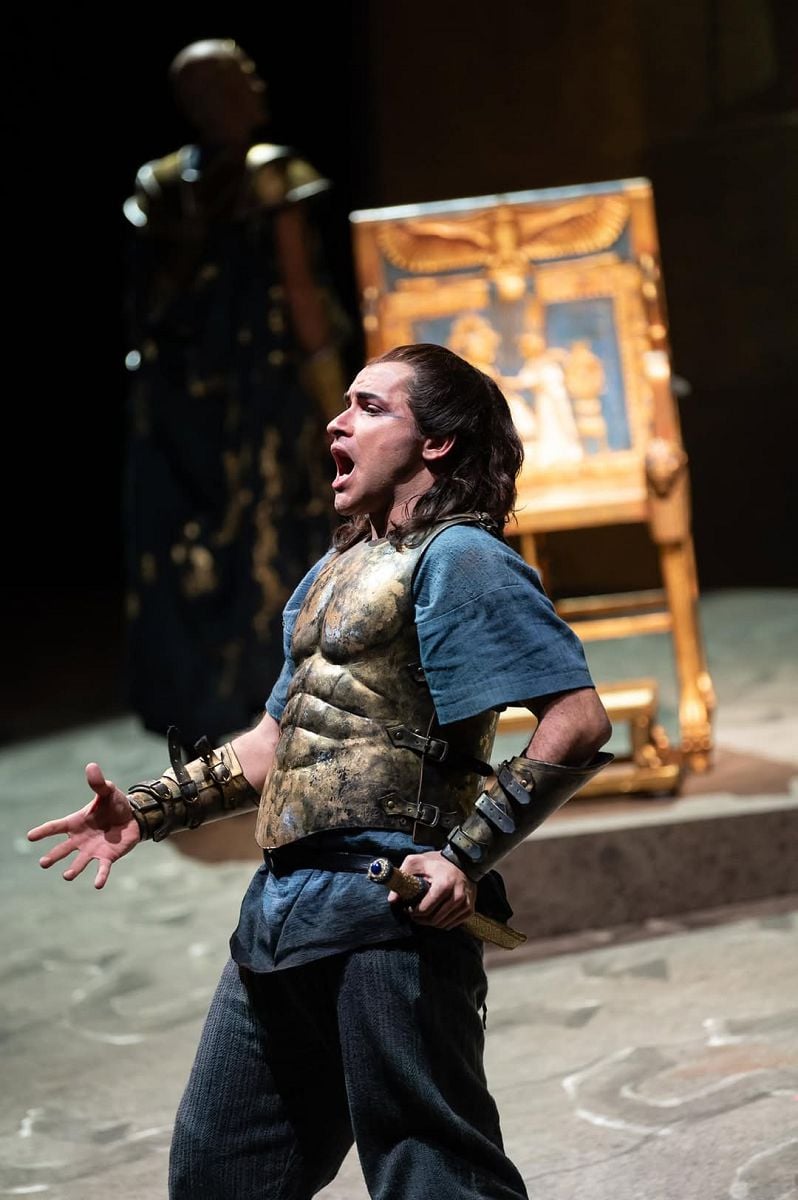

Many of your early successes have been in the Rossini repertoire. It sounds as though you have an easy coloratura and top notes… how easy is it?
What might seem simple from the outside is never actually so. It’s always the result of years of study, discipline, and constant work. It’s obvious that talent and natural tendencies play a significant role – they ease the way, making some things more immediate – but they aren’t enough on their own. It’s the effort put in day by day that makes the difference.
When a coloratura or a top note sound natural, it’s because they’ve been studied, practised and internalised again and again. At that point, they become a part of your expression and, as a result, seem easy.
Let’s go back to the beginning – is Dave Monaco the name you were given at birth? Are you really a ‘Davide’ and a fan of Mario Del Monaco?
In fact, it all came about by chance or perhaps, looking back, a rather curious coincidence.
My father’s name is Mario Monaco, and he was born on 27 July, the same day as Mario Del Monaco. That’s already a small, remarkable indication.
The name ‘Dave’, on the other hand, came from his passion for jazz and, in particular, for Dave Grusin. He thought that I could become a musician, but certainly didn’t imagine opera. I come from a family of amateur musicians. Music was always present, and we always used to play music, but never from the opera world.
So, you have this unusual combination – a name with an international sound to it, maybe American, combined with a surname that inevitably brings to mind the tradition of tenor voices. With time, I’ve come to see it as good luck. It’s like having a stage name… without it being a stage name. It’s my real name, but with a power and distinctiveness that, in a certain sense, take on their own life. And yes, it’s probably also brought me luck.
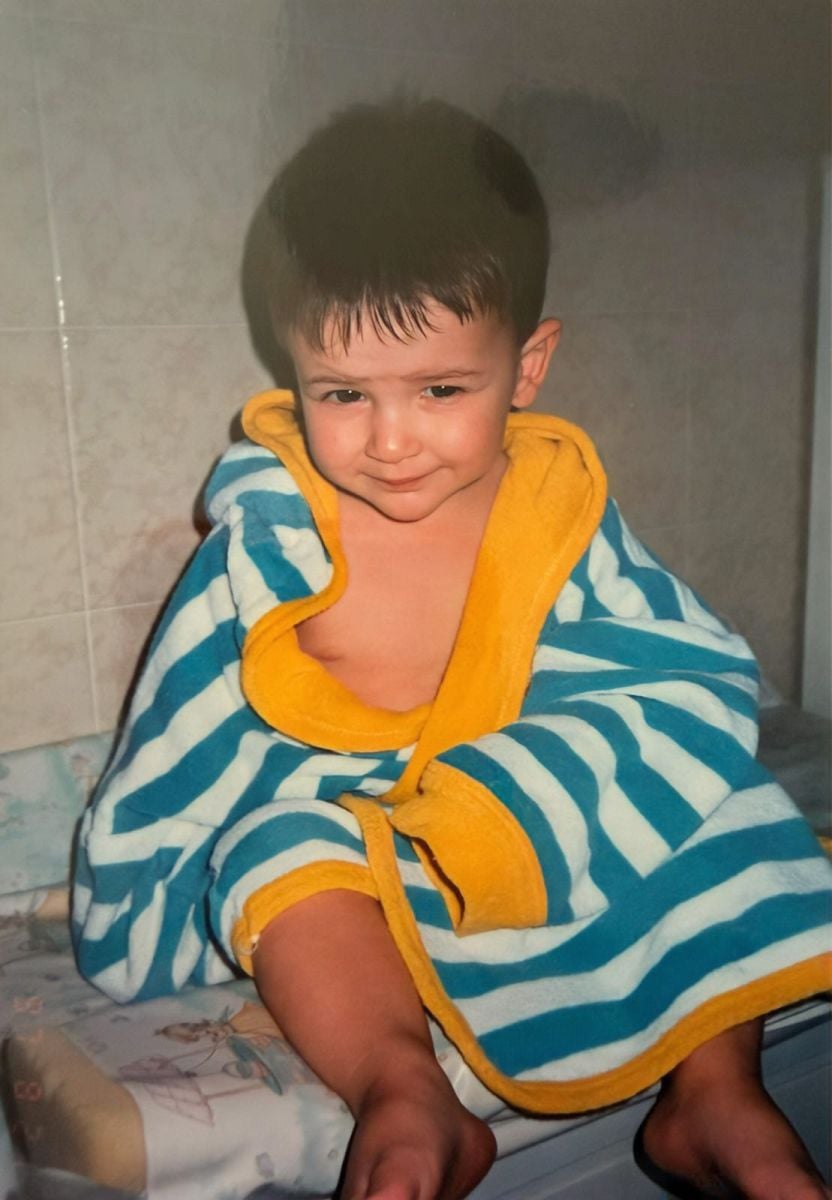
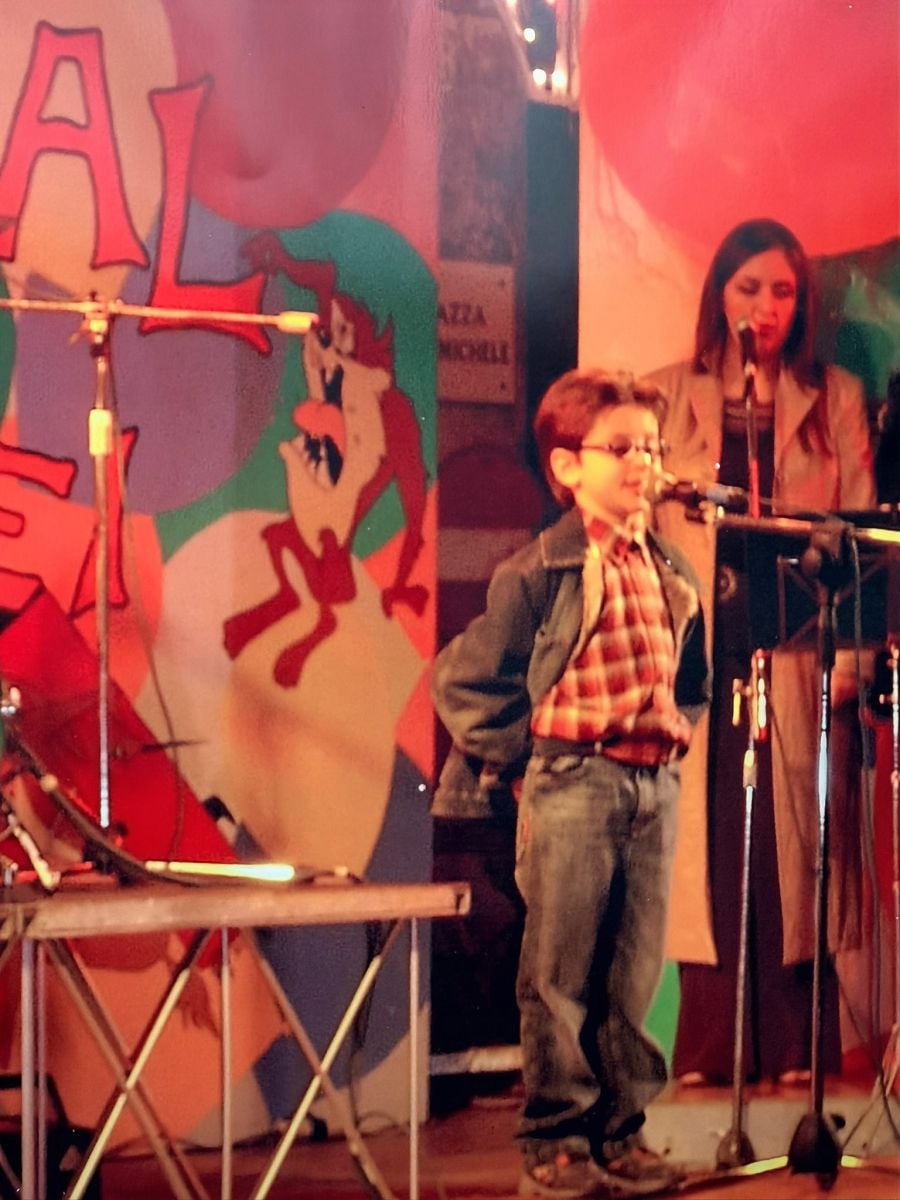
Your family originates from Syracuse in Sicily, but you were born in Brescia in the north, over 1,000 km away as the crow flies.
I actually consider both Brescia and Siracusa, in particular Palazzolo Acreide [in the province of Syracuse], to be my native cities. Brescia is the place where I was born and where part of my family lives. It’s a city that’s always supported me and treated me fondly, at important times too, during my career, like the experience at the Sanremo Festival. It’s a connection that means a lot to me, and I hope to be able to sing one day at the Teatro Grande in Brescia, which I think is one of the most beautiful theatres of all – a miniature Piermarini*.
Then, on the other hand, there’s Sicily and especially Palazzolo Acreide, where my deepest roots are planted. I grew up and developed there, as an individual more than as an artist, and I have a permanent connection with this town. Rather than a passage from one place to another, I see it as twice belonging to two different places that are both essential to my identity.
[* La Scala is nicknamed ‘il Piermarini’ because it was designed and built by the prominent Italian neoclassical architect Giuseppe Piermarini.]
What did Syracuse give you?
My experience in Sicily was crucial, firstly from a personal perspective, as it was there that I developed as an individual. But in particular, Siracusa gave me something even more important – my first real contact with theatre. Not with opera, but with prose theatre and, above all, with the tradition of the classical tragedy, which is deeply entrenched in the territory. So, even before I discovered opera, I encountered the essence of theatre. And it was an experience that marked me deeply.
When I discovered opera, when I was about sixteen, I already had a grounding, a sensitivity to the stage, which helped me to understand it more in depth. In this sense, Siracusa was a defining phase in my life: it gave me the tools to really enter the theatre world, even before I knew it would become my profession.
But at a certain point, you went to Bologna.
My move to Bologna also came about, in a certain sense, by chance and perhaps this shows my slightly fatalistic side.
After my classical studies at secondary school, I intended to enrol at the University of Catania, but didn’t manage it because I was too late. At that time, I was completely immersed in music – singing in the chorus of the Teatro Antico, Taormina, and working on Bizet’s Carmen, and I lost track of the deadlines.
The only place where it was still possible to enrol was Bologna, and so I moved there without realising how significant the choice would turn out to be. With time, I realised that Bologna is a strategic city for this profession, but above all, it’s a city with an exceptional musical tradition, linked to figures such as Carlo Broschi, Giovanni Battista Martini and Gioachino Rossini.
But, from a more practical standpoint, Bologna is the city where I really began to get involved in the opera world.


Tell me about Ristorante Donatello.
It was Ristorante Donatello that played a determining role. It’s a legendary place in Bologna’s music scene, where singers, musicians and artists go in the evening after the theatre. I went there thanks to my uncle, who had been going there for years.
It was there that I truly started to take in the environment, not only that of the stage, but also ‘backstage’, the relationships, the people. And it was in those surroundings that I met Ferruccio and Katia Fanciullacci, the owners, who played a decisive role in my career. And it’s no coincidence that I celebrated my thirtieth birthday there. It’s an important place in both my artistic and personal life.
I believe that Ferruccio and Katia were especially important to you.
Ferruccio and Katia have been central to my personal and artistic development. Ever since they first heard me sing, they’ve accepted me like a son and followed me step by step in all my experiences.
Ferruccio has played a particularly decisive role. He introduced me to Nino Torpedine, who was the first person to believe concretely in me and support me, to the extent that he persuaded his brother Michele – Andrea Bocelli‘s longstanding manager and now Il Volo’s – to invest in me. That was the start of the journey that carried me to that experience at the Sanremo Festival.
But, as well as the professional side, what really counts is our personal relationship. Ferruccio had a profound belief in me. When I was still a student, and so without my own means, he even provided me with tangible support for my singing studies. I owe him a lot. He passed away on 7 December 2020, and his memory is still very much alive in me. If he were here today, along with Katia, he would be one of my main supporters, and this, when all is said and done, is the greatest indication of everything they have given me.
You have won several vocal competitions. What is the value of these events?
Competitions are of great value to a singer because they’re one of the first practical ways of truly understanding what point you’ve reached. They put you to the test immediately and allow you to engage with important aspects of the world of opera and theatre.
At the same time, they’re a double-edged sword. It’s crucial to go there with sufficient awareness of your level, because if you aren’t ready, you risk the opposite effect, as being in the public eye too soon can be counterproductive. The artistic directors in the jury make an instant judgment, and you can carry that with you for years. In my case, however, the experience was extremely positive.
I began with the Campogagliani International Singing Competition, where I received an award, then the 2021 Portofino International Singing Competition, where I was awarded second prize.
And you participated in the Operalia competition, for singers who already perform professionally, last year.
I consider Operalia to be the final one on this journey, and the most important one at an international level, where I was awarded third prize and the special prize from the Bulgarian Ministry of Culture [Operalia was held in Bulgaria in 2025].
As well as the results themselves, what [these competitions] have really given me is the opportunity to make a name for myself and to enter into direct contact with some of the most important theatres, where they immediately offered me real work opportunities.
What did you gain by participating in the Operalia competition?
Firstly, great international visibility, allowing me to make myself known at important theatres, both in Europe and beyond. For a young singer, this is an enormous advantage. But it was that spirit of the competition that struck me most. In my opinion, it’s one of the most important ones in the world, not just in terms of artistic level, but also for the way in which it’s organised.
Together with the main sponsor, Rolex, the Domingo family offer all participants selected – from the first rounds through to the final – the opportunity to be hosted and given individual support. This creates true equality between artists, and even those without financial means have a real chance to participate and put themselves out there. It’s an extremely valuable gesture that shows profound respect for young artists and makes a tangible contribution to the development of their careers. In this sense, Plácido Domingo doesn’t just offer a competition, but a true opportunity.


You also participated in the Rossini Opera Festival‘s Accademia Rossiniana.
Without doubt, the Accademia Rossiniana was a keystone opportunity for me.
When I began engaging with the Rossini repertoire, I actually started out with some scepticism, partly because it had often been said that my voice was ‘too operatic’ to handle it. Initially, this led me to discard that whole world. My experience at the Accademia completely overturned that perspective. It gave me the tools to truly understand that form of musical expression and to approach it with open eyes, opening up an artistic pathway that had previously been unimaginable for me.
For this reason, I owe a lot to maestro Ernesto Palacio [the Peruvian tenor, now director of the Academy] and to the whole Rossini Opera Festival, who continue to follow me and offer me significant opportunities.
And you’ll be back at the Rossini Opera Festival in August with L’occasione fa il ladro.
Yes, and this year I’ll also have my first solo recital at the festival, a milestone that is of great value to me. The Rossini Opera Festival is a true family, but also an undisputed international reference point for the promotion and in-depth exploration of the Rossini repertoire. I’m extremely proud to be part of it.
I’d like to ask about your teachers.
During my career I have had the good fortune to work with different teachers, each of whom has given me something fundamental. I started with Giovanna Collica, a mezzosoprano from Siracusa, and then continued in Bologna with baritone Fulvio Massa, while I was at university. It’s Gianni Tangucci, however, whom I met during my time at the Accademia del Maggio Musicale Fiorentino, who has been and still is an irreplaceable mentor. Working with him has gone beyond musical considerations: he has taught me the value of theatre and, above all, the (often unwritten) rules of this profession. I still turn to him as my guide today, especially when it comes to decision-making.
From a technical and vocal perspective, a central figure has been Salvatore Fisichella, whom I consider to be one of the great Belcanto interpreters. Work with him is extremely practical – repertoire, technique, constant study. Whenever possible, I go back to work with him to check that my voice is ‘roadworthy’ as I like to say.
Another important figure was Leone Magiera, with whom I had the good fortune to study when I was at the Accademia. His great feature is the ability to simplify even complex concepts, allowing you to achieve objectives rapidly, and this is a rare talent.

And how much have you taken for colleagues, conductors and directors who maybe have more experience?
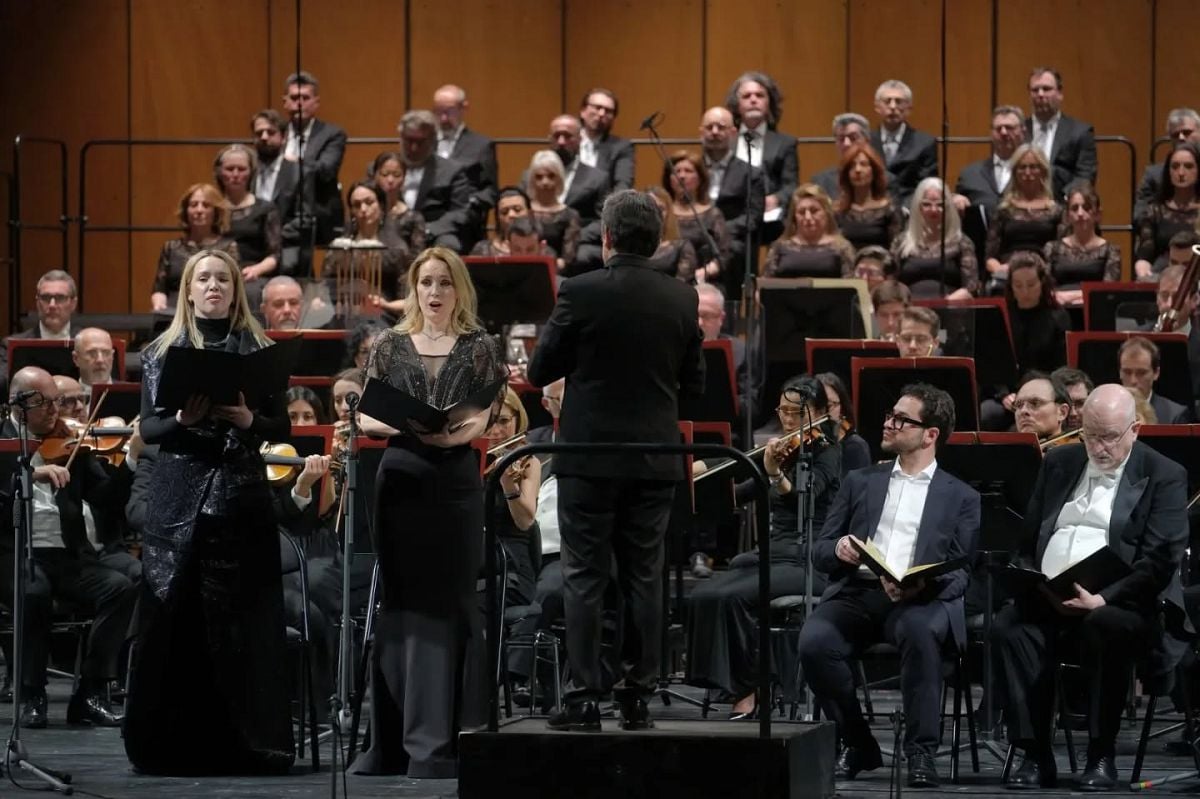
Each encounter has been an opportunity for growth. The great value of working with top-level artists is exactly that – they offer you new perspectives on the score, details you might never have noticed on your own.
All the colleagues I’ve worked with on the Rossini repertoire have given me something. It’s an environment in which there is constant dialogue, and each artist brings their precious experience. If I have to name some individuals who have been particularly important to me, Antonino Siragusa and Paolo Bordogna come to mind.
From a technical perspective, Antonino Siragusa has been a central role model. In sharing different Rossini roles, I’ve had the chance to receive precious advice that has remained with me. His career is a practical example of vocal longevity – preserving the same qualities over time is a sign of solid technique and great awareness of his instrument. From a theatrical perspective, by contrast, I’ve learnt a lot from working with Paolo Bordogna. He’s one of the greatest interpreters of the opera buffa repertoire and being on stage with him – acting as his sidekick – is challenging and inspiring. It’s an experience that forces you to develop rapidly in terms of both musicianship and stagecraft. But artists like Michele Pertusi and Nicola Alaimo are also important role models for me, for their solid, rounded approach to theatre.
Especially at the beginning of a career, there are always new roles to learn – how do you go about it?
As far as I’m concerned, studying a new role always starts with listening to it. I engage with performances by artists and conductors, both great names from the past and present, whom I see as points of reference for an initial stylistic and musical direction.
When there are no recordings available, which is rare but possible, the work becomes even more direct. I start from the score, reading and studying both music and words in depth. Once I’ve set this foundation, I move on to the vocal phase. I start singing the part, and, to begin with, it’s always challenging because you have to ‘put the music into your voice’, finding the right phrasing and making what exists in theory on paper sound natural. This process calls for several days of intensive work – about a week, I’d say – during which, through singing, I begin to memorise the role.
It’s a gradual process… from listening, to understanding, to vocal assimilation.

What are the latest roles you have debuted in?
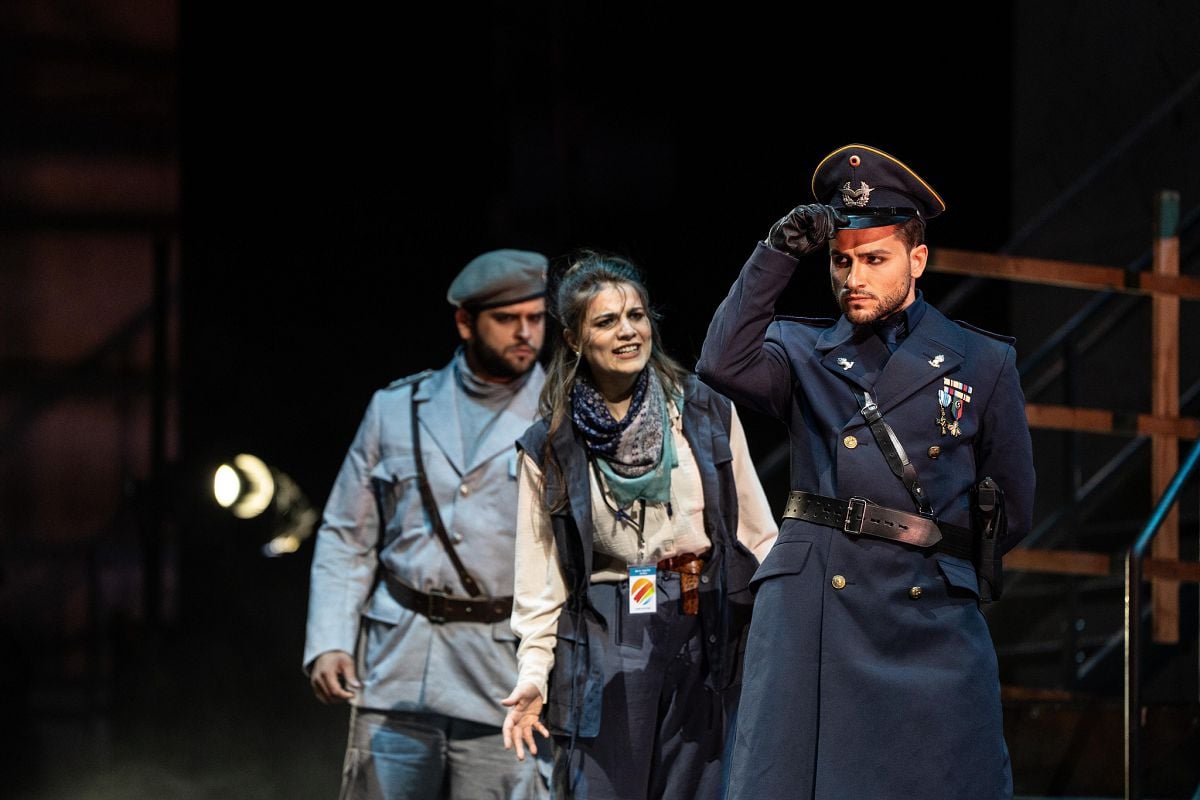
Firstly, Lindoro in L’Italiana in Algeri and Argirio in Tancredi, both by Rossini. These are recent roles that are a good indication of the direction I’m taking with the Rossini repertoire.
And what’s coming up?
I’m working on several new roles, including Count Alberto in L’Occasione fa il ladro by Rossini, Alamar in Alahor in Granata by Donizetti, and Oreste in Rossini’s Ermione, all of which I find particularly inspiring. In June, I’m also making my debut as Guido in Enrico di Borgogna by Donizetti at the Teatro Malibran, in a production by Teatro La Fenice. It’s a more measured role than the others, but still an interesting step in my career.
What is a role that you wouldn’t sing just now, but maybe in 10 years?
For example, Arnold in Guillaume Tell and Arturo in I Puritani come to mind – both require considerable technical and vocal maturity, which are built up over time. Similarly, I don’t yet consider myself to be ready to take on Verdi.
I’m convinced that artistic growth has to follow specific stages. Before tackling a particular role, it’s essential to have consolidated others, so each debut comes in preparation for the next. For this reason, I prefer not to be in a hurry. I know that those roles will arrive, but only at the right time from a vocal and artistic point of view.
You were in the cast of an opera based around the figure of the Italian singer, dancer and presenter (in Italian, usually referred to as a ‘showgirl’) Raffaella Carrà, Raffa in the sky, in 2023. What is your feeling about contemporary music?
My relationship with contemporary music is particularly bound up with the way in which it’s created. I’m especially interested in the idea of ‘tailored’ composition, constructed in a dialogue with the performer – a bit like in the past, when composers wrote music with a specific voice in mind. In this sense, I find contemporary music to be of great value today, when it’s the result of this type of partnership.
At the same time, I think it’s essential not to lose sight of vocal hygiene. I sometimes get the impression that there’s less attention to this in contemporary composition than in the past, and, since I place great importance on technique and on quality of emission, this is a central factor. Having a healthy voice comes before everything else, including any theatrical requirements.
Having said that, I’ve already had the extremely meaningful experience of Raffa in the sky, in which the role was created partly with my vocal characteristics in mind. The composer, Lamberto Curtoni, was extremely attentive and willing to meet my needs, and the experience has remained in my heart. So, with all this in mind, I certainly wouldn’t exclude a return to contemporary music.
What does it mean to be one of the youngest and most appreciated Belcanto and Rossini singers?
It’s an immense honour as well as a great responsibility. I think that those who have the privilege of appearing on stage must, first of all, show great respect… for the audience, for the composer and for all the artists who have gone before. We must continually learn from them. To that effect, it’s essential to study and show commitment – it’s the foundation on which everything is built.
Do you feel the pressure of fulfilling people’s expectations?
I’m convinced that it has to be managed before going on stage. We manage it when we study, in rehearsals, when we prepare. If you are truly ready when you arrive, most of the work has been done. On stage, by contrast, you have to let it go. There, you have to ‘play’ in the most elevated sense of the word and discover a certain type of freedom. That’s why I believe that one of the greatest challenges for an artist is to preserve an almost childlike spirit, an inner carefreeness that allows you to tread the stage naturally, without losing the pleasure of doing so.
Is there a danger with all those high notes? How do you maintain a healthy instrument?
As Pavarotti used to say, you never know with certainty whether or not a high note will come out. The risk, therefore, is always present and can only be managed with technique and study.
Yet again, what looks like theatrical, musical or vocal spontaneity is actually the result of years of hard work. It’s the technical solidity that allows you to deal with even the trickiest moments with greater assurance. On stage, anything can happen, and that, like it or not, is part of its nature. In terms of the instrument’s health, I’m a great believer in balance. It needs rest and care, but also constant training. It’s essential to choose the right repertoire and to find the right compromise – not sing too much, but not too little either.
It’s this well-informed management of work, the repertoire and one’s own body that allows you to keep your voice healthy over time.
You are increasingly experiencing the nomadic life of an opera singer. But where’s home?
When I left Sicily about ten years ago to move to Bologna, I have to say I immediately felt at home. I never felt out of place, but for the first few years, my idea of ‘home’ was tied up with Sicily. Over time, as I became more mature and built a life for myself in Bologna, that perception changed. Bologna has become my home base, my reference point, the place I return to between one engagement and another.
Today, though, with a life consisting of travel and productions, my idea of home has broadened. I realise that I feel at home in Europe. It’s a feeling of familiarity, security, that I carry with me wherever I go within this area. When I’m outside Europe, I feel great, but there’s a sensation of distance, as if I’m temporarily elsewhere. I’ve developed this awareness over time, and I find it enriching. At the end of the day, feeling at home with broader horizons opens our mind – and it’s something I hope everyone can experience.
Why do you sing?
When people ask, “Why do you sing?”, I always answer, “Because I wouldn’t know how to do anything else.” I think of it as a great privilege to feel myself one hundred per cent in the right place. I know that I wouldn’t be as good at any other activity, and so, in a certain sense, I truly wouldn’t know how to do anything else.
And what do you feel when you are singing?
When it comes to being on stage, it’s a really remarkable sensation. Just before going on stage, I often feel incredibly tired, sleepy almost. At that moment, like everyone else, I ask myself, “Why do I do it?” But then something happens. As soon as I get on stage, everything changes. The joy of being on stage materialises. It’s a kind of energy that’s hard to describe. I’m someone who loves being at the centre of attention, and it’s there that I find a space in which this is transformed into something positive, something to share.
For me, the theatre is this too – trying to make the audience forget their problems, a difficult day, any burden, even just for a couple of hours. And this feeling brings me deep satisfaction. But the most wonderful moment, when I really remember why I do this job, is at the end. The applause.
When you feel the audience’s involvement, their appreciation – not just of you, but of the work of the whole company, because theatre is teamwork – that’s what brings true joy.
First comes tension… responsibility… concentration.
Then energy throughout.
But true happiness comes at the end.

Graham Spicer, aka ‘Gramilano’, is a writer, director and photographer based in Milan. He was a regular columnist for Opera Now magazine and wrote for the BBC until transferring to Italy. His articles have appeared in various publications from Woman’s Weekly to Gay Times, and he wrote the Danza in Italia column for Dancing Times magazine. Graham was the historical advisor on Codice Carla, the 2023 documentary on Italian ballerina Carla Fracci.
Graham also works as a dance photographer, and his photos have appeared in many books, theatre programmes, and magazines, including Dancing Times, Dance Spirit and Ballet2000, as well as all the major Italian newspapers.
He is a member of the Dance Section of The Critics’ Circle.