
[Interview] Tenor Luciano Ganci – singing with “a heart and soul full of love and joy”

Tenor Luciano Ganci has been making waves for quite a few years now, and at 42 he finds himself with a large repertoire including twenty Verdi roles. He’s currently rehearsing Madama Butterfly at The Norwegian Opera in Oslo. The production opens next week and will keep him in Norway until mid-March. I talked to him about his career so far.
Luciano, your biography starts with “Tenor Luciano Ganci took his first steps in music as a boy soprano in the Sistine Chapel Choir”. Many singers start in their local church, but singing in the Vatican is very special. Can you say how it came about, and how it has influenced you musically since?
Starting off in the Sistine Chapel Choir was a crucial factor for me because in that environment, and at that time, the teachers were of the highest musical, as well as spiritual, calibre. What we did at the school, in addition to vocal and piano studies, was to perform music during Pontifical masses and in the numerous concerts given by the Sistine Chapel Choir. I’d say that it was a vital training ground because over a few years it formed potential music professionals, not just music students. That experience had a crucial impact, because since then I have never had the courage to stop making music even though, paradoxically, singing was the last element to be incorporated, before becoming the keystone of my entire life to this day.
I know that you studied with Otello Felici [1924-2022] known as ‘the last of the cantori romani’.
Otello Felici’s story is intimately linked to the Roman choirs of the last century, and he experienced their golden age in a Rome that offered up art during liturgical celebrations in churches, and not only pontifical ones. He had the privilege of living a very long life, during which he sang as a child with Pietro Mascagni and Umberto Giordano, and met Beniamino Gigli and Lauri Volpi, later working with eminent conductors and leading musical ensembles.
He was the last Roman cantor to experience the profound change which took place in liturgical music in churches, and to have served six popes with his voice, from Pope Pius XI to Pope John Paul II.
Maestro Otello was one of those acclaimed and eagerly awaited cantors at churches both in and outside Rome – artists with wonderful voices capable of turning prayer and ritual into something mystical and deeply felt. He lived at a time when liturgical music and Gregorian chant were an essential part of religious ceremonies; they were prayer, they served the community in prayer, and they were true forms of supreme art at the service of the spirit.
What was your relationship with Felici as a teacher and a role model?
My relationship with Maestro Otello cannot be described simply. It wasn’t a student-teacher relationship as Otello was a reference point for me, and much more than my teacher – he was the grandfather I never had. I owe to him all my love of singing, the simplicity of singing, and the fire of passion in the art of singing. He was a beacon for me throughout all the years I was blessed to have him physically by my side.
Now he is always beside me, and there is never a performance where I don’t say, “Let’s go Maestro,” before stepping on stage. Our ‘meetings’ sometimes took place three times a week for two hours each, but he didn’t call them ‘lessons’ but ‘rehearsals’. I went to him to rehearse.
His way of teaching was not dogmatic as together we tried to find the best way to perform a piece or a role, aiming for the simplicity of singing without artifice… with naturalness. We didn’t sing about ‘nature’ but we sang with ‘naturalness’, and it’s a lesson I always bear in mind and try to repeat every day when I practice. The importance of the message to be conveyed when singing lies not so much in the word as in the phrase. He was a very strict man but extremely gentle, very decisive but also incredibly understanding. And he was also very good company. He was one of those people that I consider myself lucky to have met, and his surname “Felici” was appropriate, in every sense.

Which singers did you admire growing up? …Who do you admire now?
I admire anyone who does things that move me, whether they are singers or musicians. Tastes have changed over time and, as I’ve developed, my listening has become more critical as I tried to understand how a certain sound was produced or a particular phrase approached. I’ve never been a zealous opera listener and don’t consider myself a melomaniac at all – the last thing I do when I study is listen to others’ performances, to avoid being inevitably influenced by them.
I admire all my distinguished colleagues for one reason or another. I admire and respect many colleagues, including many who still perform today, but if I have to mention names, I must include Giuseppe Di Stefano and José Carreras for their way of ‘attacking’ the text, but also Filippeschi, Pertile, Pavarotti, and many others, each for their own individuality that fascinates me. Fortunately, there is no perfect singer. I find that the imperfection and personalisation when interpreting the same part make the opera itself lively and intriguing.
I heard you sing in Verdi’s Requiem in the Duomo last year. In a difficult acoustic the warmth and richness of your voice was evident, yet with a thrilling, vibrant top. Also, your phrasing was beautiful. How much is nature and how much is nurture?
In my singing, nothing is natural in the sense of innate. My singing is entirely natural in the sense of naturalness. Every single note is studied, every tiny passage executed hundreds of times and continually adjusted – I don’t leave any of the notes I sing to chance. This almost obsessive way of studying, once secured, can leave room for what is then true art, namely, understanding what one is singing, a thorough reading of the score, the search for the colours required by the author, and an intimate sense of the score.
In the case of the Requiem, we are talking about a sacred text that is grounded in Gregorian chant, and Maestro Verdi made it exceedingly theatrical. In the Requiem, one prays by singing, so we are talking about mystical phrasing, a vibrant prayer that cannot and must not be an end to itself. Even in opera, I reason in the same way – once the musical and vocal parts have been established, everything must be at the service of the text and phrase, because we are instruments for the transmission of emotions, and I try to do so in the best possible way.
How difficult was it singing in the vast space of the Duomo?
The Duomo di Milano is not the best place to sing. It is a place of reflection and prayer, and its dimensions make it unsuitable for any type of musical performance. Just consider that the reverberation in the Duomo is estimated to be around 8 seconds for a sound of medium intensity, so a tenor’s high note would take at least 10 seconds to dissipate. For me, singing there was not difficult, though the audience, on the other hand, had greater difficulty understanding the performance.
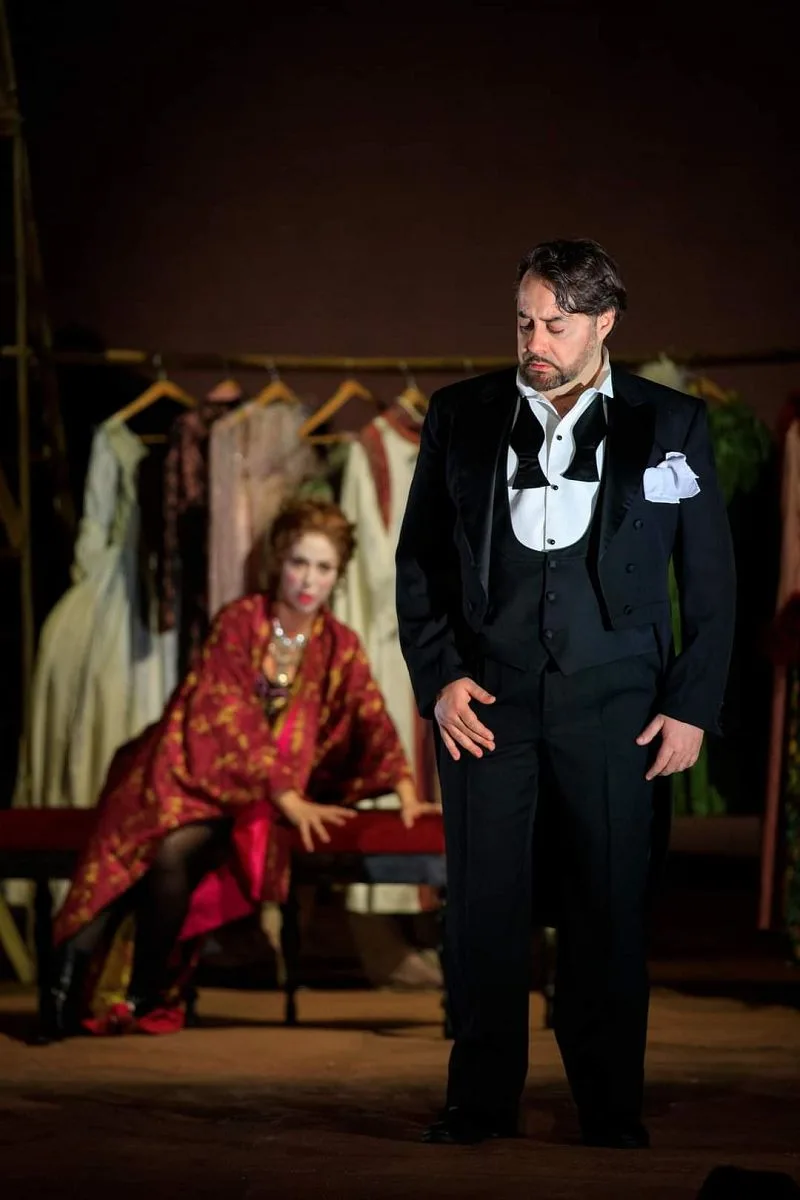
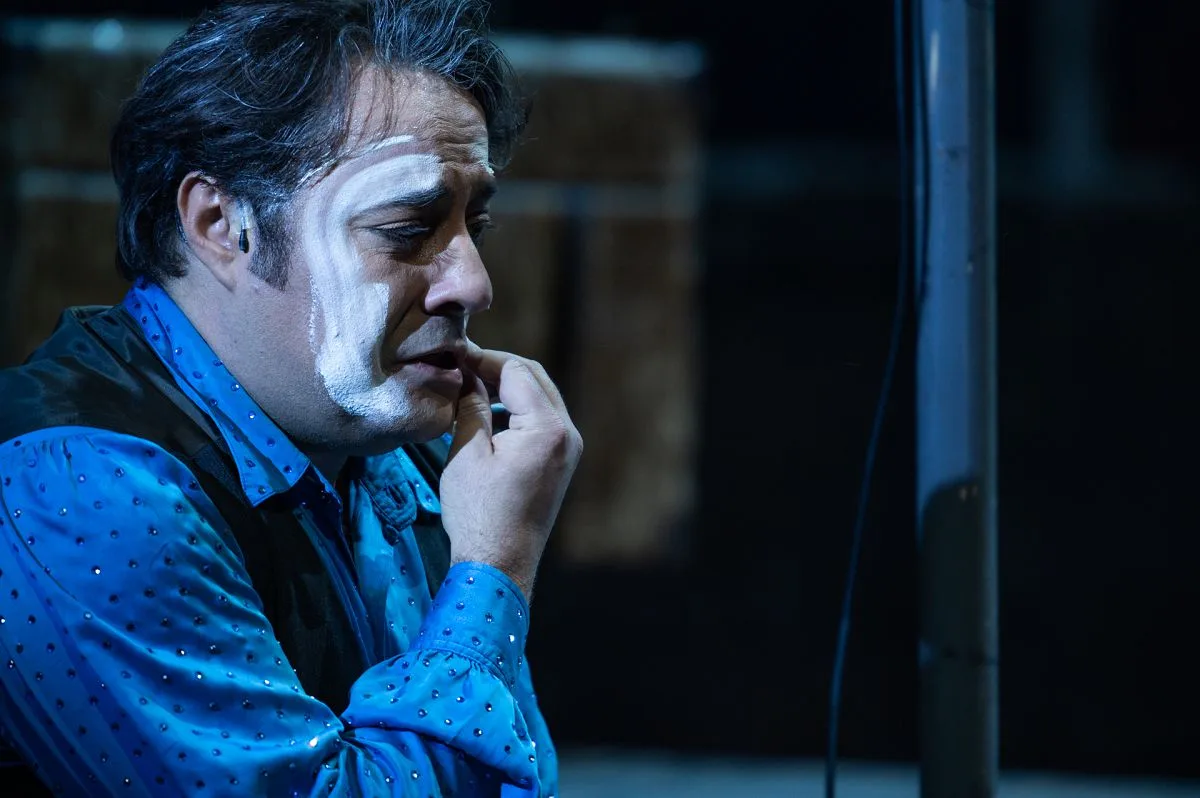
Metropolitan Opera Guild wrote that “Luciano Ganci is arguably Italy’s finest Verdi tenor” – what is a Verdi tenor? You certainly have a calendar crammed with Verdi roles, but there’s Puccini, Leoncavallo, and Cilea etc in there too. How does your singing change when singing Verdi or Puccini for example?
The art of singing, I believe, is the only art that is impossible to codify unambiguously, because it involves the use of an instrument that no one sees but everyone perceives. I think it’s risky to classify perceptions, because there’s always a subjective basis that can change over time in the same person.
Personally, I wouldn’t know how to define a Verdi tenor, but I could define a tenor voice based on objective features that would fit within a certain category. My voice remains exactly the same whether I sing Verdi, Puccini, Mascagni, Cilea, or Donizetti. It’s not the voice that changes, but the emphasis and importance that must be placed on a way of singing that reflects the composer’s times and, as far as possible, their taste and intentions without altering one’s own instrument.
Of your many Verdi roles, which makes you happiest to go back to?
I can’t really express a preference for specific Verdi works. It’s easier for me to say which ones I wouldn’t do anymore and which I’ve stopped performing, such as La Traviata and Rigoletto. I decided to abandon these two roles due to my natural evolution in both technical skills and vocal abilities and over time, I found myself gravitating towards roles that allowed me to fully express and showcase what I consider to be my vocal qualities. The other roles are all more or less welcome on my schedule at the moment. It’s wonderful and interesting to pick up a role again after a long time, as recently happened with Un Ballo in Maschera, which I sang again after almost seven years, because you approach it with different awareness, with different experience and, as a result, it becomes a second debut.
You have debuts in I due Foscari and Don Carlo coming up – How much preparation do you put into roles? What is your approach? Who do you work with?
At this stage of my journey, I am fortunate to know well in advance which debuts await me in the future, and these two operas represent a great challenge because they will be two consecutive debuts and so I’ll have to study them in parallel.
Generally, when I am offered a role, the first thing I do is take the score and assess the role. I take the libretto and read it, then I work my way into it, letting it gradually into my mind and throat, in order to arrive at theatre rehearsals as well-prepared as possible to tackle it. It’s more mental than vocal work. You even sing silently because you work on sensations, and it’s a continuous, routine way of working. It’s not easy when you’re constantly on the go with other works, but I’ve always loved studying, so it isn’t usually a burden.
I am always inquisitive and at the service of the score, and I try as much as possible to understand and uncover everything that can help me interpret the role better. I mark the points that I consider technically difficult so that when I start singing, I begin with those. The life of an opera soloist is a solitary one and for quite some time now, I have been forced to teach myself and polish my own performance. When I have the opportunity to stay at home for a few days, I study with my wife Giorgia who more knows my instrument better than anyone else and acts as a mirror, especially when I study the most complex passages.
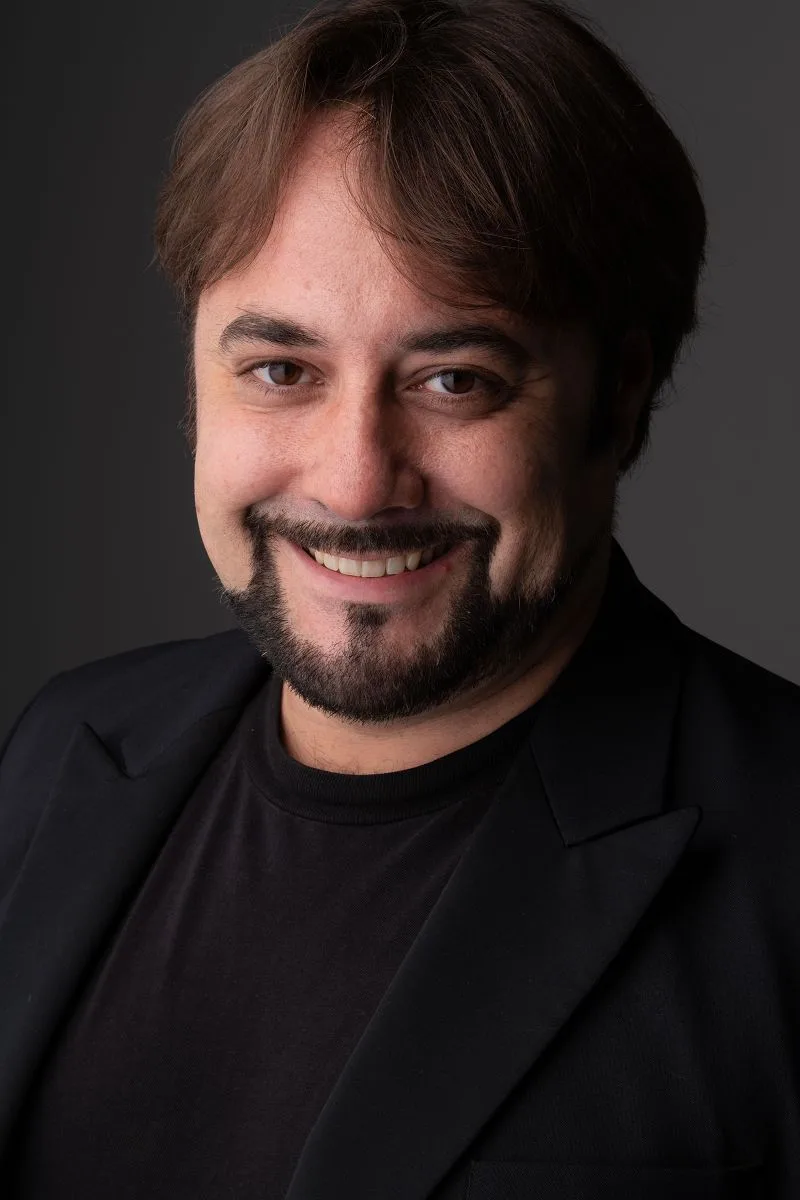
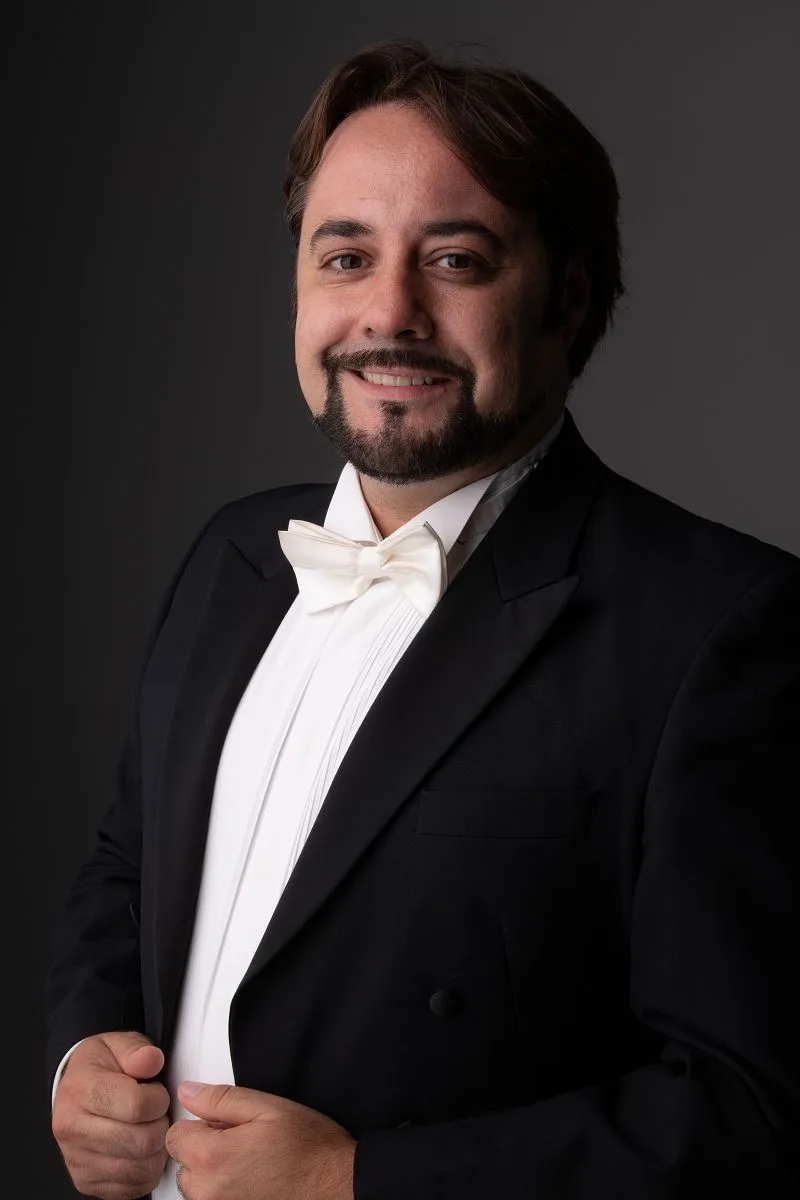
Corelli had to sometimes be pushed out onto the stage? How do you deal with nerves and what are the nerves like for a role debut?
I tend to conceal my emotions and nervousness by joking a lot and trying to create a relaxed environment around me to create a positive atmosphere. A debut always takes place after a period of rehearsals of variable length, so one arrives more than ‘well-prepared’ even though every performance is a first. I acclimatise my nerves by making the most of every available rehearsal day. I don’t hold back and try to automate as far as possible, so that I have a margin of tranquillity in case something unexpected happens, and in live performances, the unexpected always happens. The more I rehearse, the more I can relax during the performance.
Bachtrack wrote that you gave a “nuanced and layered” reading of Stiffelio, adding that you were “especially effective as the psychologically fraught vicar”. The notes are obviously important, but how much do you like to dig into the character and motivations of a character?
The beauty of this profession is that you can become anyone. The game I love to play is to personalise the interpretation as much as possible by asking myself what I would do if I were in that situation. The notes are a vehicle, they are a guideline, but they alone are not the character. A character is also made up of words, phrases, concepts, direct and indirect moods – perhaps written on the staff of an orchestra section with which to unconsciously duet – and familiarising as much as possible with every facet is enthralling work. I must admit, however, that this is something you don’t start to understand immediately, but over time and after many performances.
Another fundamental aspect of studying a character is that often the colour and intensity of a phrase are not indicated on my ‘line’ but are drawn from the reaction or from a phrase sung by another character before or after my contribution. Studying this takes a very long time and often becomes clear with hindsight or after working with conductors, rehearsal masters, or directors with great experience or exceptional sensitivity.
You’ve just debuted as Des Grieux in Manon Lescaut as the Teatro Comunale in Bologna chose that opera to mark the hundredth anniversary of Puccini’s death. How was that experience?
It was a very successful debut in one of those roles that many say is nerve-wracking. I’m glad that I only heard this after having studied the role, because I didn’t have that feeling while studying it!
It’s undeniably a long and very challenging role to tackle, but by studying it slowly and approaching it with respect for my instrument, I believe I managed it very well. Like every role, it will certainly mature, but let’s say it’s got off to a good start, and I’m very happy about it! My Maestro Otello always used to say “don’t go for it head-on”, and he was right. I believe that singing is not so much swordplay as fencing.
Your Puccini moment is continuing with Madama Butterfly in Oslo, but after that you have almost all Verdi in your calendar (and even some other Verdi projects still hush-hush). You can never get bored with Verdi. Can you say something about performing his music, what it gives to you, and what you feel you can give to his music?
As an interpreter, I feel I can bring my voice, my experience, and my personal interpretation to the music of Giuseppe Verdi. I strive to convey the depth of emotions and feelings present in the music, bringing characters and their stories to life on stage. I endeavour to bring authenticity and intensity to his music, always seeking to convey to the audience the beauty and power of his works with a personal touch derived from my life experience and vocal instrument. In his music, I give my all, in a condition of profound and humble service.
You have the Verdi Requiem conducted by Pappano at Salzburg coming up and you will be working with Muti in Japan. How much does working with an experienced and sensitive conductor alter your performance?
Working with conductors of this calibre is an enriching experience that is worth an entire career because they are able to give you advice and ways of experiencing music that are absolutely unique, and so I can only be grateful for what life offers me and feel absolutely honoured. There will certainly be positive effects on the performance because conductors of such charisma are capable of creating real magic around them and of giving rise to heavenly performances.
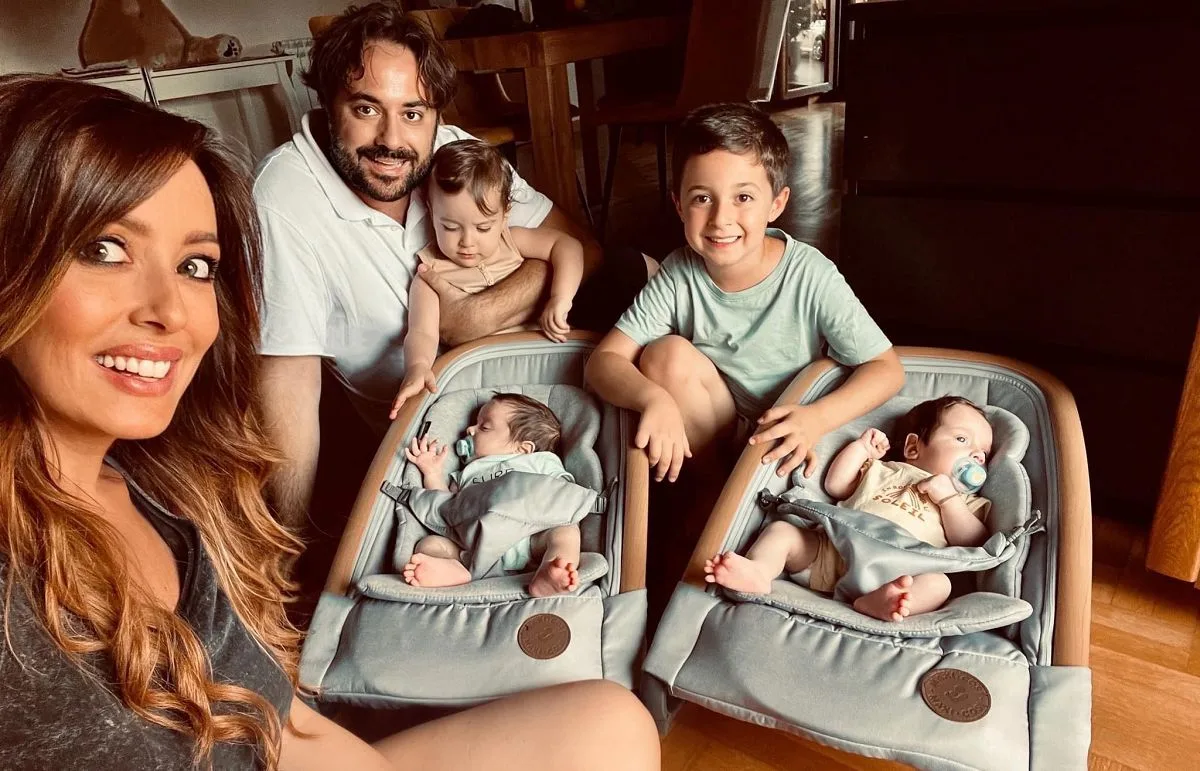
You are a father of four… how does that work with a singer’s touring schedule?
Unfortunately, it doesn’t work at all well because they can’t accompany me. I consider myself to be extremely fortunate because my wife is extraordinary and an excellent mother, but I pay a heavy price for this distance and suffer greatly for the absence of my large, young family. Everything I do, I do for them, and every day that passes means one less day before I return home, although at the moment I’m often far away from them.
With time, it will be logistically more feasible to take them with me, but for now, it’s not possible, and the sacrifice and suffering are truly great. I try to turn this darkness within me into emotions for the audience and for my art, expressing these sacrifices in all my performances, which sometimes turn my travels to faraway places into a burden. Things don’t work out because I’m the father of four children, but because I am the husband of an exceptional wife.
What do you do to wind down?
I never really relax, at least not at the moment, because when I’m not rehearsing, I’m studying, and when I’m not studying, I’m busy with my family to deal with daily matters like school or household management. I can’t carve out much time for myself, and if I could, I would spend it with my wife, though I love reading a lot – I’m a very inquisitive person and I like to keep up to date with practically everything. I’m full of questions and constantly seeking answers.
…and what are you looking forward to in the future?
I’m not used to looking too far ahead. I focus on the commitments I have in the short term, above all counting the days until I’m reunited with my family because if there is a tenor named Luciano Ganci, he owes it all to his family, and I cannot help but count the minutes that separate me from the embrace of my loved ones. For everything else we’ll see. With a heart and soul full of love and joy, it’s possible to manage everything with the utmost enthusiasm!

Graham Spicer, aka ‘Gramilano’, is a writer, director and photographer based in Milan. He was a regular columnist for Opera Now magazine and wrote for the BBC until transferring to Italy. His articles have appeared in various publications from Woman’s Weekly to Gay Times, and he wrote the Danza in Italia column for Dancing Times magazine. Graham was the historical advisor on Codice Carla, the 2023 documentary on Italian ballerina Carla Fracci.
Graham also works as a dance photographer, and his photos have appeared in many books, theatre programmes, and magazines, including Dancing Times, Dance Spirit and Ballet2000, as well as all the major Italian newspapers.
He is a member of the Dance Section of The Critics’ Circle.


What a truly lovely and wise man. I have only heard him on YouTube. Come to NYC!