[Review] London’s Flamenco Festival 2024 – Week 2
Graham Watts sees two performances at London’s Flamenco Festival 2024 with David Coria & David Lagos Company, and Ballet Nacional de España
| Title | ¡Fandango! – Invocación |
| Company | David Coria & David Lagos Company Ballet Nacional de España |
| Venue | Sadler’s Wells, London |
| Date | 10, 12 June 2024 |
| Reviewer | Graham Watts |
London’s Flamenco Festival continued into its second and final week with just two shows on the main stage of Sadler’s Wells. After the hectic helter-skelter of week one, the slower pace in the changeover of productions was welcome for this viewer at least, although there was no let-up in the frenetic activity onstage.
¡Fandango! has the feel of Pina Bausch meets flamenco in a weird and wonderful cocktail of tradition and modernity through visual spectacle (the lighting direction by Gloria Montesinos AAI is excellent) in which dance, song and music provide a potpourri of absorbing sensations.
Several productions in this festival have been lifted from their premieres at the 2020 Bienal de Sevilla, including ¡Fandango!, which won the Giraldillo for Best Show, a singular honour that perhaps did not get the prominence it deserved due to the imminence of the pandemic.
The musical imperative is led by the strong and sensitive voice of David Lagos who won the best singer award at the same Bienal. Lagos has been singing professionally for over 30 years, including numerous alliances with Israel Galván. Like the latter in dance, Lagos has carved a reputation as an innovator in opening up new ways for flamenco cante (song) and his voice and strong rhythmic clapping are dominant features in the show. The deep music of ¡Fandango! is frequently softened by the velveteen tenor and soprano saxophones of Luis Gonzalez.
David Coria is the archetypal flamenco bailaor with curly dark hair and a heavy five o’clock shadow (from three days ago) and performing for a large part of the show in a sleeveless white vest; he sweated machismo and in one erotic dance this boiled over into the theatrical abuse of one of the three excellent bailaoras (Flor Oz, Paula Comitre and Marta Gálvez), followed by a sequence of tableaux interrupted by darkness as the performers positioned themselves for the next “picture”. The quintet of dancers was completed by Ivan Oranella, and they were an excellent ensemble. As I understand it the traditional fandango was generally a partnered dance and although there was no partnering in any conventional sense, their oscillating, rhythmic interactions often gave the appearance of invisible connections between them.
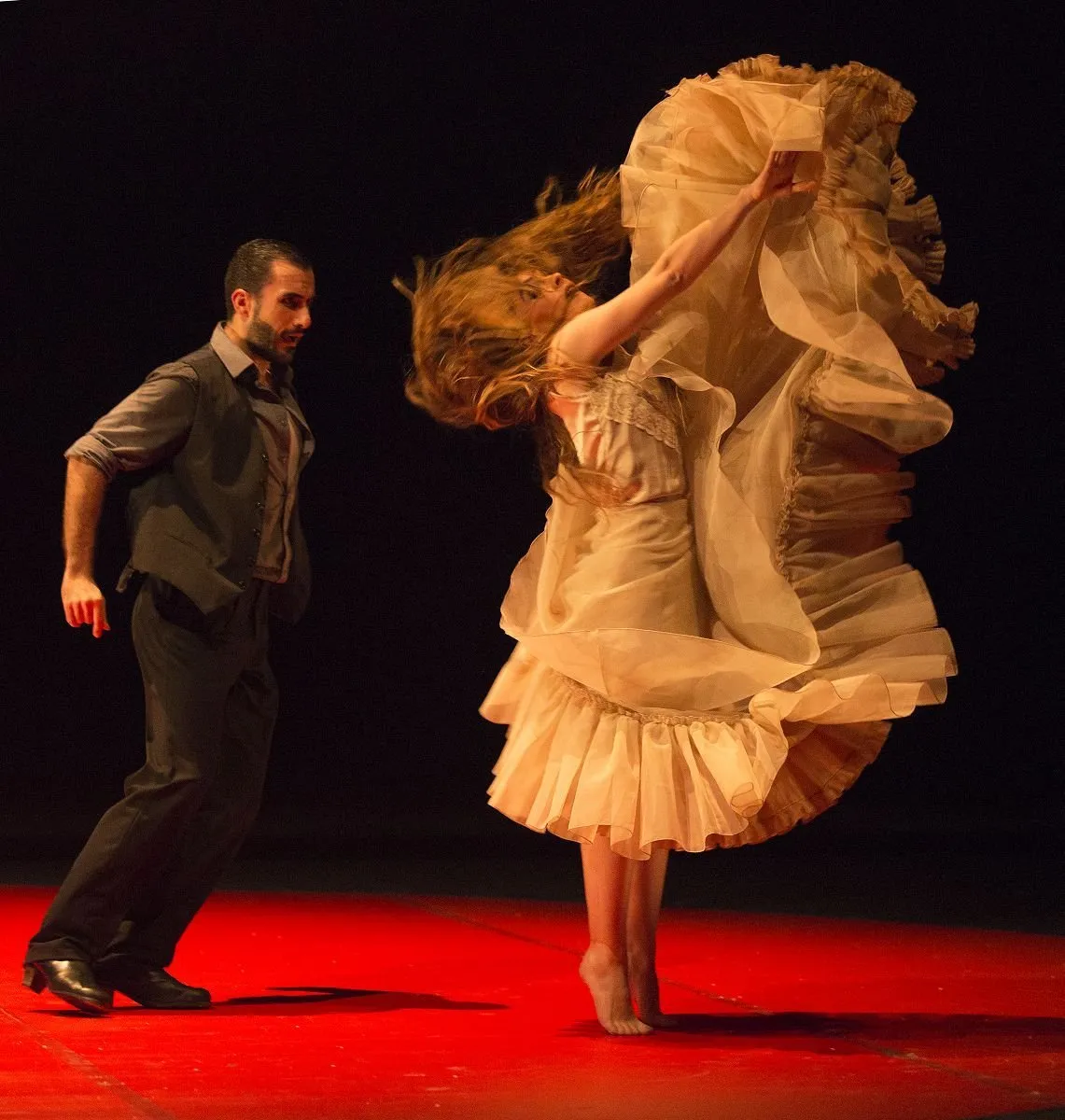
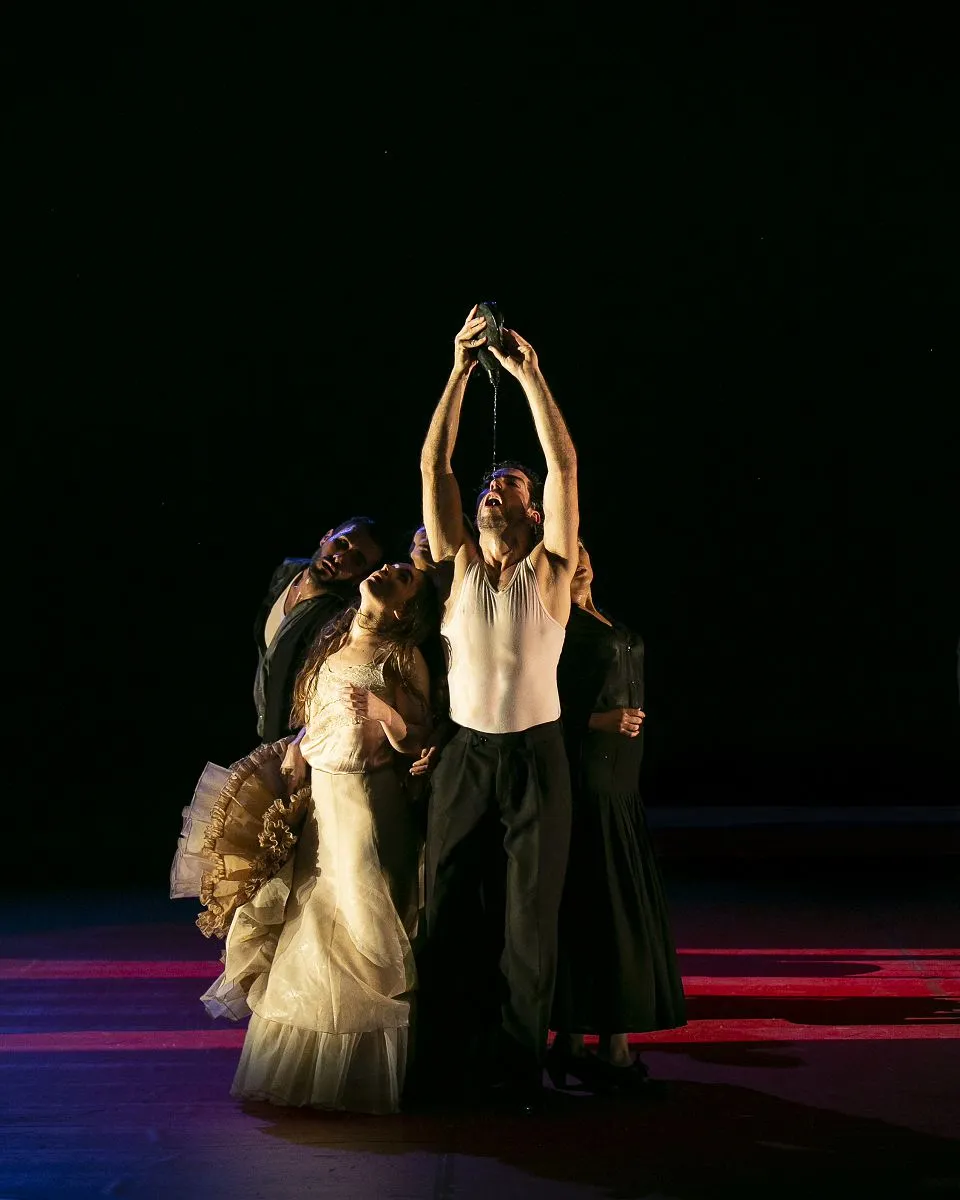
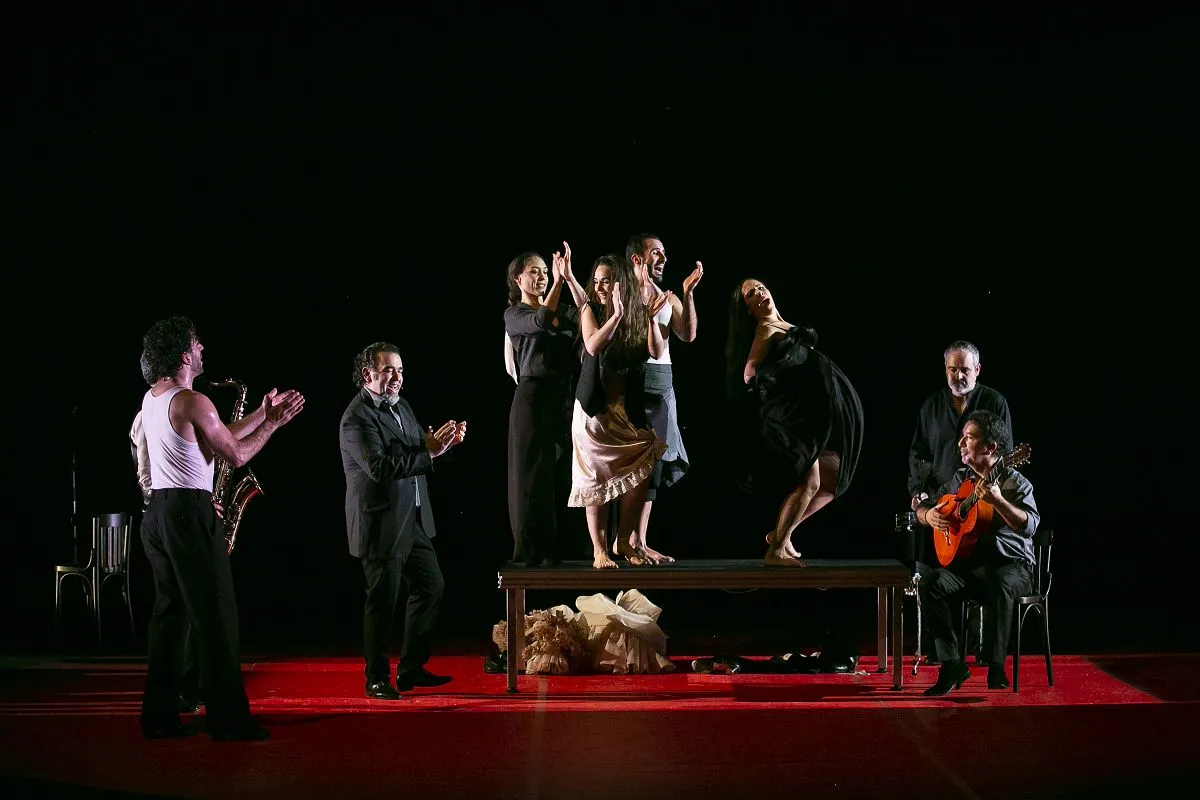
As the title implies, the various episodes of ¡Fandango! are driven by the tradition and customs of Spanish culture. The associations of fandango and flamenco are too complex for this brief review, save to say that they co-exist with conjoined origins and a similar structure and composition, although fandango is not exclusive to flamenco. Based on this history, Coria and Lagos have built an extravagant fantasy world that is replete with symbolic references to Spain and its people and culture. It is an arresting fiesta of movement and imagery with the rat-a-tat clicking of castanets suggesting the sound of crickets on a sultry evening by an open fire in Andalucía.
The festival ended with a brief season of pulsating performances by Ballet Nacional de España in Invocacíon, merging a mix of choreography by the current and previous company director with the conclusion of a tribute to Mario Maya, one of the great names in modern flamenco. The show opened with a double-header from today’s leading man, Rubén Olmo, beginning with Invocacíon Bolera and leading seamlessly into Jauleña, both made in 2020; and then onto Antonio Najarro’s Externa Iberia (2019). The show closed with the tribute to Maya – the founder of what is now Ballet Flamenco de Andalucia – in De lo Flamenco.
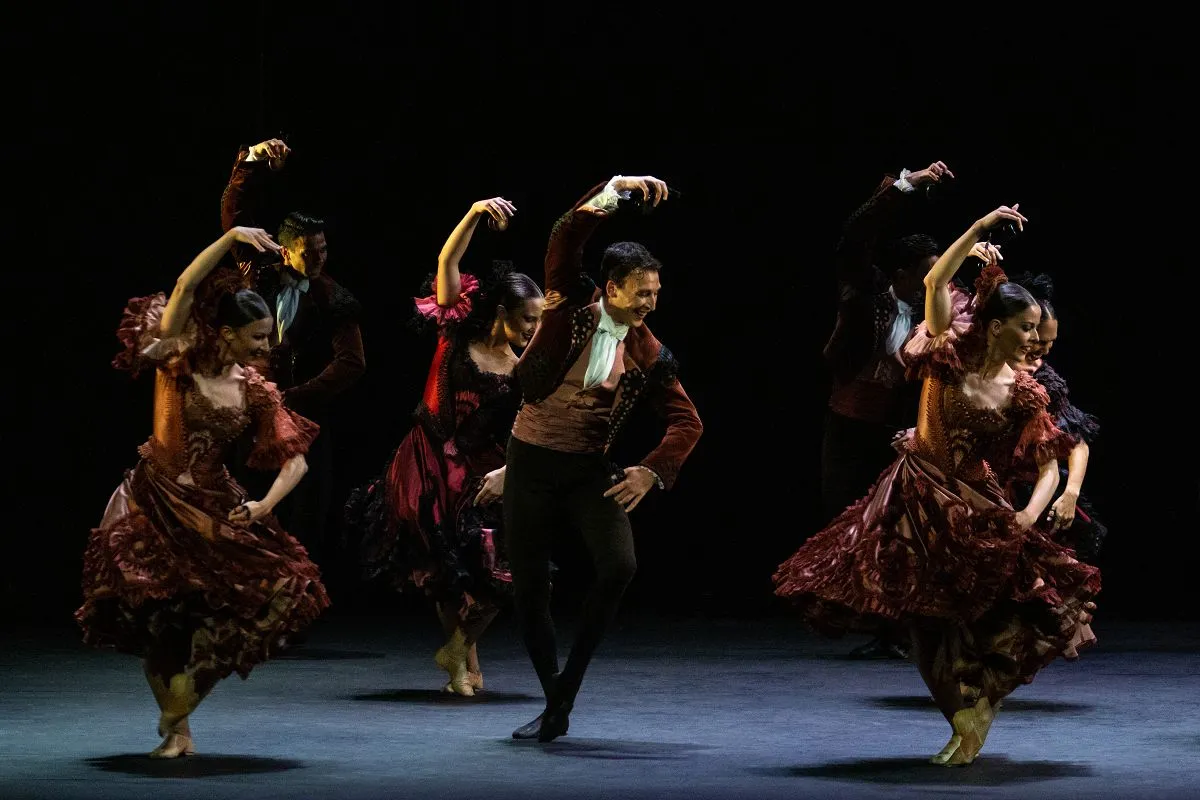
Invocacíon Bolera is an ensemble work performed in colourful traditional dress (men as matadors, women in long frilled dresses) and featuring the prolific use of castanets played in perfect synchronisation by the large cast. The jaunty and atmospheric music is a bespoke composition for the piece by Sevillian composer, Manuel Busto.
Olmo’s inspiration for Jauleña was cultural integration in a merger of Christian, Jewish and Arabic influences, also performed to Busto’s music. It is a contemporary flamenco/bolero solo that is to be performed by a different dancer on each night (regrettably not credited at this performance). It provided a kind of refreshing sorbet in the midst of an ample feast.
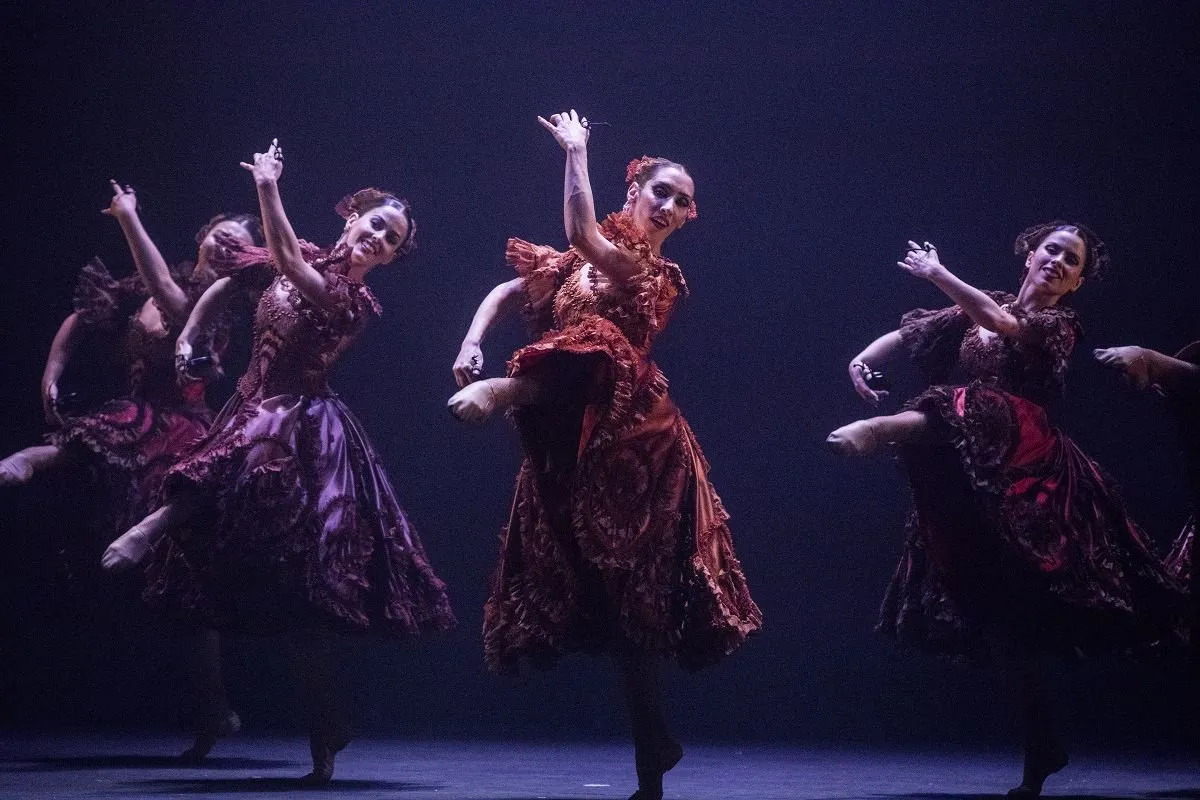
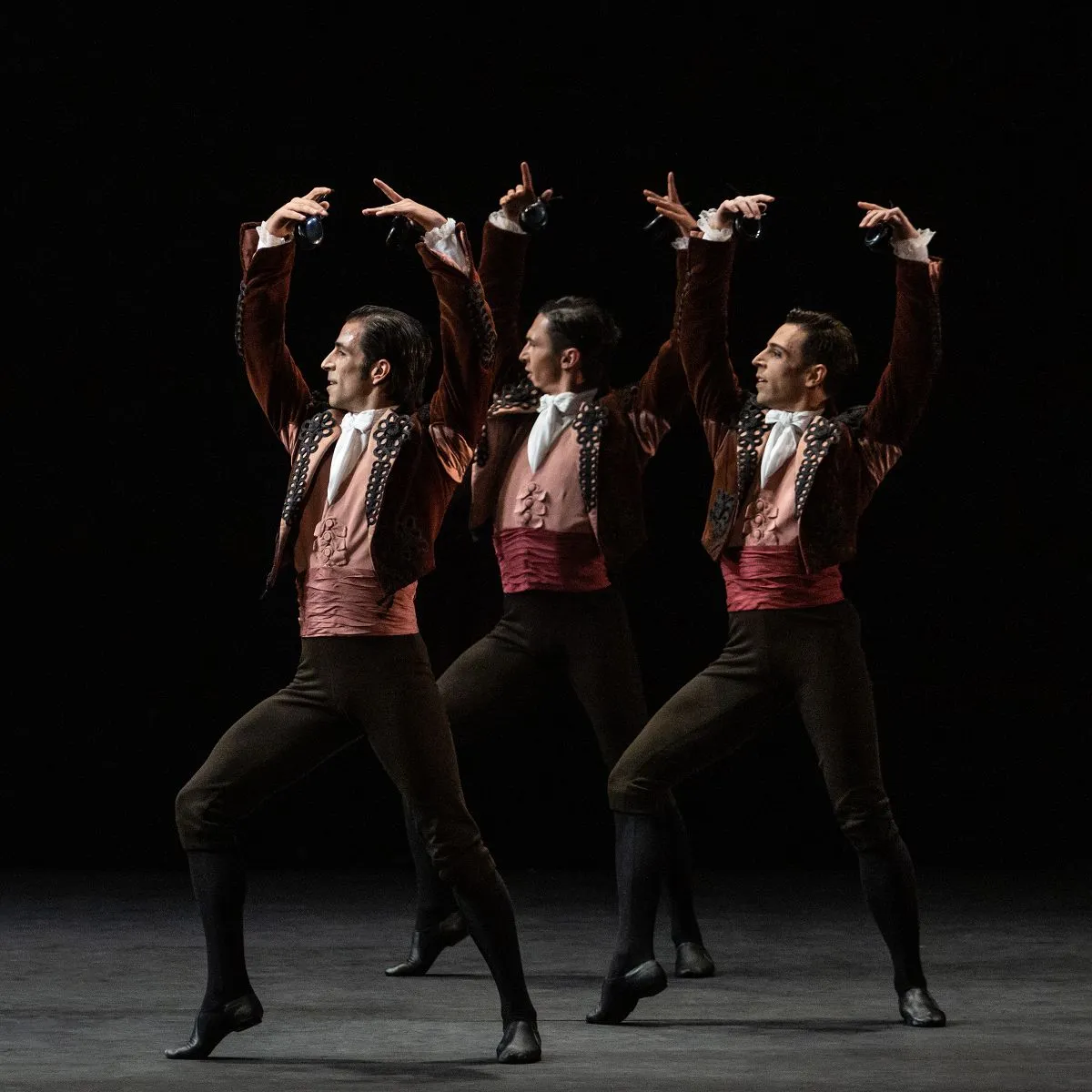
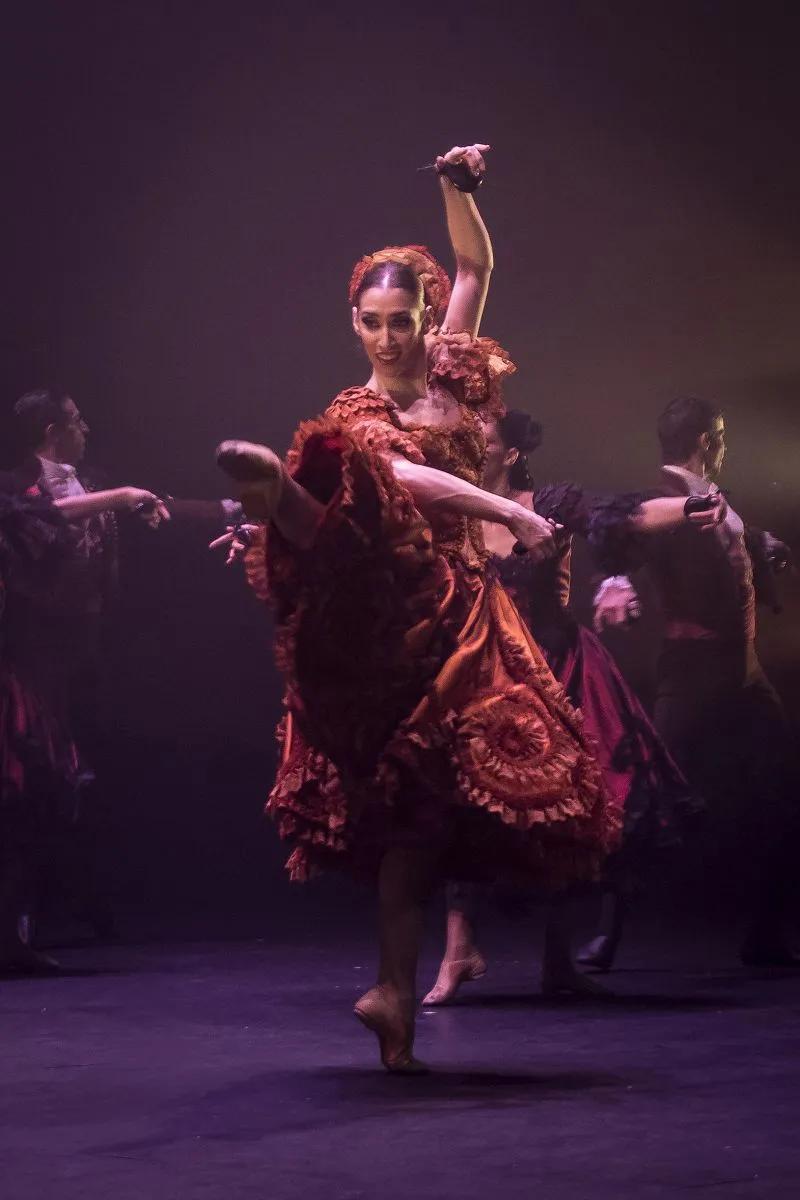
At the time of watching it, I noted that if there was a more vibrant show than Eterna Iberia then I’d eat my Cordobes hat. Najarro choreographs with a showman’s eye and all his work would suit a seaside special. He has made the dance to a recording of the Orchestra of Extremadura playing Manuel Moreno-Buendía’s melodious score, originally commissioned by another great showman, Antonio Ruiz Soler (known as El Bailarín) in 1963.
A stylish ballet in five parts, with groups of dancers utilising castanets, Spanish capes and the aforementioned Cordobes hats and wearing impressive costumes designed by Yaiza Pinillos created in three colours to represent a trio of Iberian elements –olives, wine and the sea (take me there, now!). The lighting design by Nicolás Fischtel was an excellent enhancer of all these suggestive colours.
After an interval (a rare event in flamenco) the show grew another dimension with a line of musicians (five singers, three guitarists and a percussionist) as a backdrop to nearly 40 dancers. I mentioned earlier that I would eat my Cordobes hat if there was a more vibrant show than Eterna Iberia and one appeared only a few minutes later!
De lo Flamenco is a sea of colour, with rollicking waves sweeping across the stage in the stylish movement of the ensemble. There are ten movements, mixing Maya’s own choreography with a handful of other choreographers, including Olmo himself who has augmented and extended Maya’s Almoraima with a showman’s touch to create a finale that is joyful and exuberant, building to an arresting crescendo that sent the audience home with springs in their steps.
This was quality flamenco done Las Vegas style! Now, how do you flavour a Cordobes hat!

Graham Watts is a freelance writer and dance critic. He writes for The Spectator, Tanz, Shinshokan Dance Magazine (Japan), Ballet Magazine (Romania), BachTrack and the Hong Kong International Arts Festival and has previously written for the Sunday Express, Dancing Times, Dance Europe, DanceTabs, London Dance, the Edinburgh International Festival and Pointe magazine (USA). He has also written the biography of Daria Klimentová (The Agony and the Ecstasy) and contributed chapters about the work of Akram Khan to the Oxford Handbook of Contemporary Ballet and on Shobana Jeyasingh for the third edition of Routledge’s Fifty Contemporary Choreographers.
He is Chairman of the Dance Section of The Critics’ Circle and of the UK National Dance Awards and regularly lectures on dance writing and criticism at The Royal Academy of Dance, The Place and (until the war) for Balletristic in Kyiv. He was a nominee for the Dance Writing Award in the 2018 One Dance UK Awards and was appointed OBE in 2008.