Review: Natalia Osipova at the Linbury Theatre – Graham, Strømgren, Ashton

Matthew Paluch sees Natalia Osipova in three pieces at the Royal Ballet and Opera’s Linbury Theatre with Marcelino Sambé and Christopher Akrill.
| Title | Martha Graham – Errand into the Maze Frederick Ashton – Five Brahms Waltzes in the Manner of Isadora Duncan Jo Strømgren – The Exhibition |
| Company | The Royal Ballet |
| Venue | Linbury Theatre, Royal Opera House, London |
| Date | 7 March 2025 |
| Reviewer | Matthew Paluch |
Dancers at the top of their game have a responsibility to develop themselves, and in doing so, the artform itself. Natalia Osipova, principal of the Royal Ballet, has definitely been going down this route in the last few years, and her journey continues with a triple bill at the Royal Ballet and Opera: Osipova/Linbury.
Two of the three works are by male choreographers, including the new commission, which would be sacrilegious programming for some women in the dance sector. Where’s the representation? Where’s the championing of female makers? Elsewhere people would disagree with the concept of positive discrimination… so let’s perhaps leave it there for now.
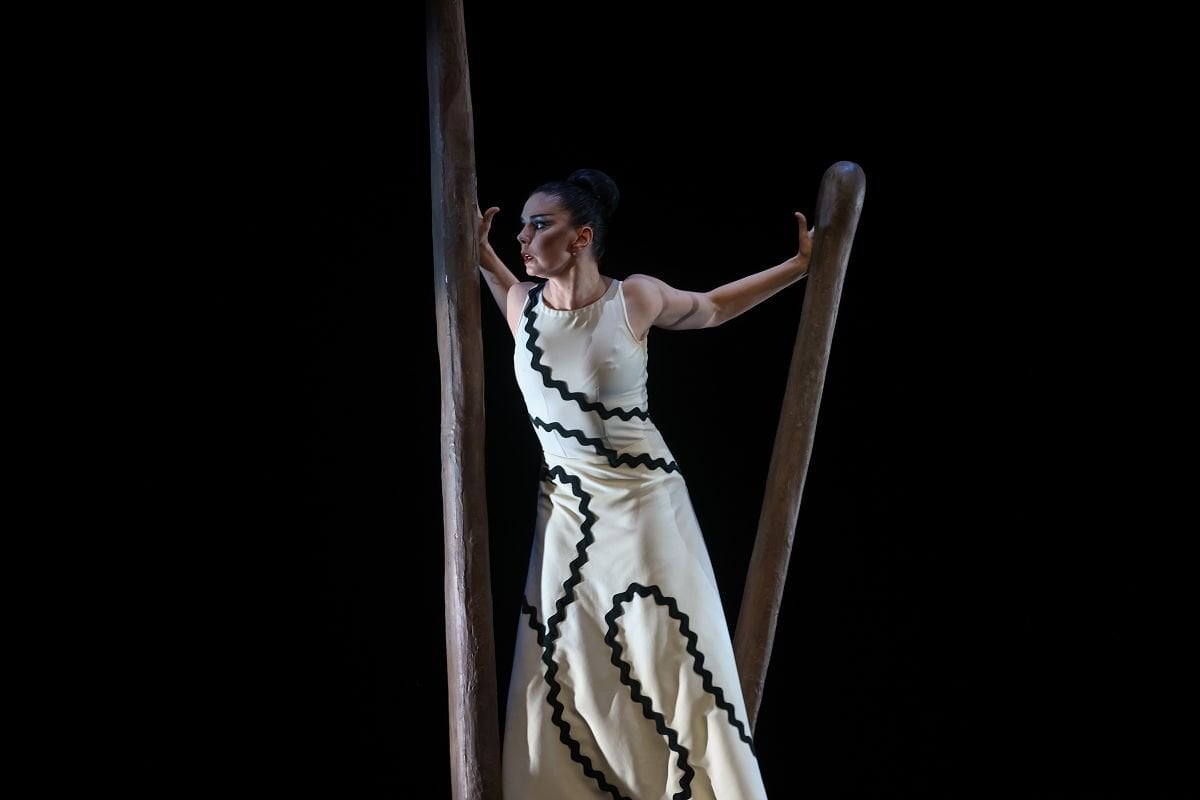
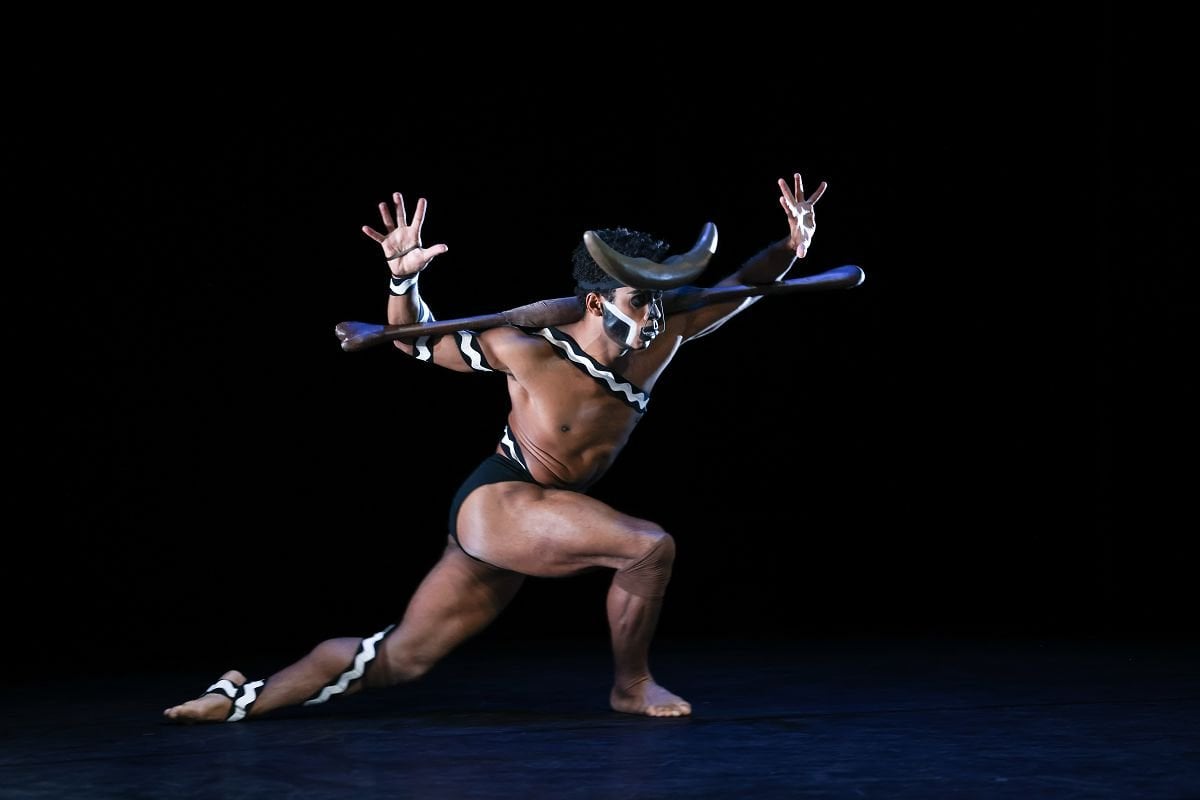
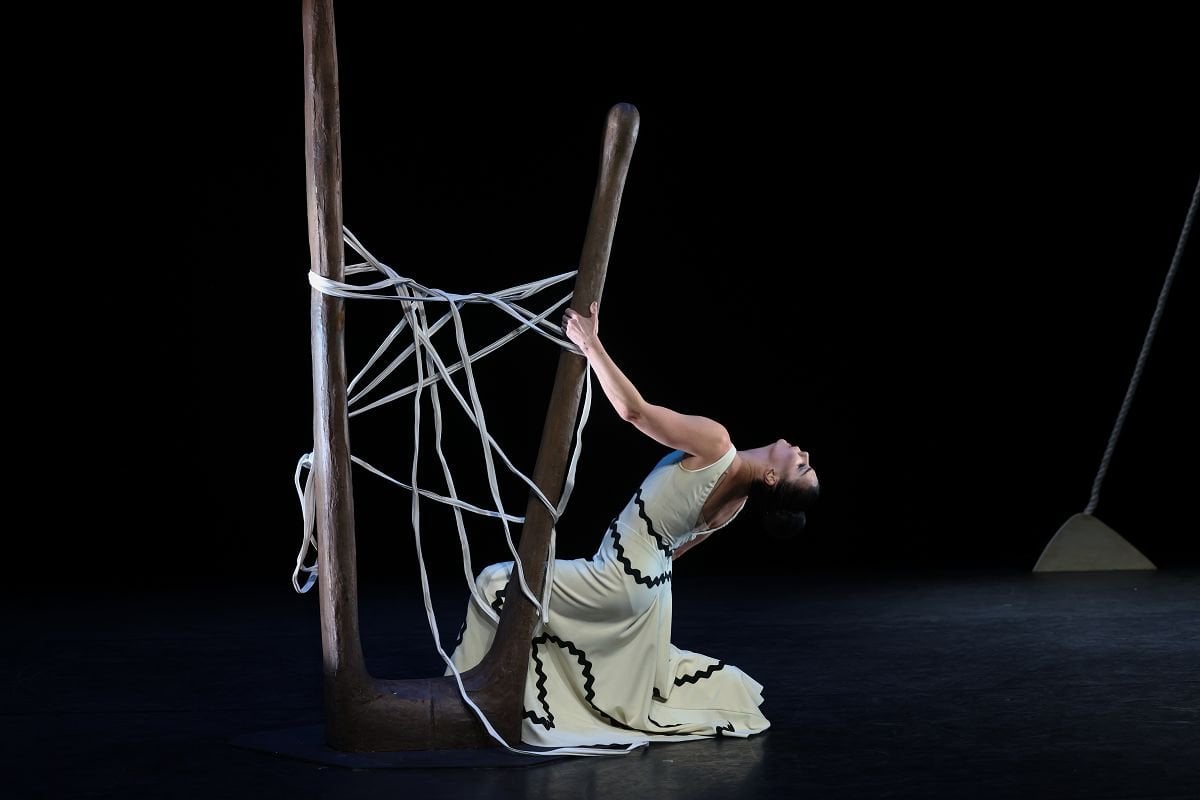
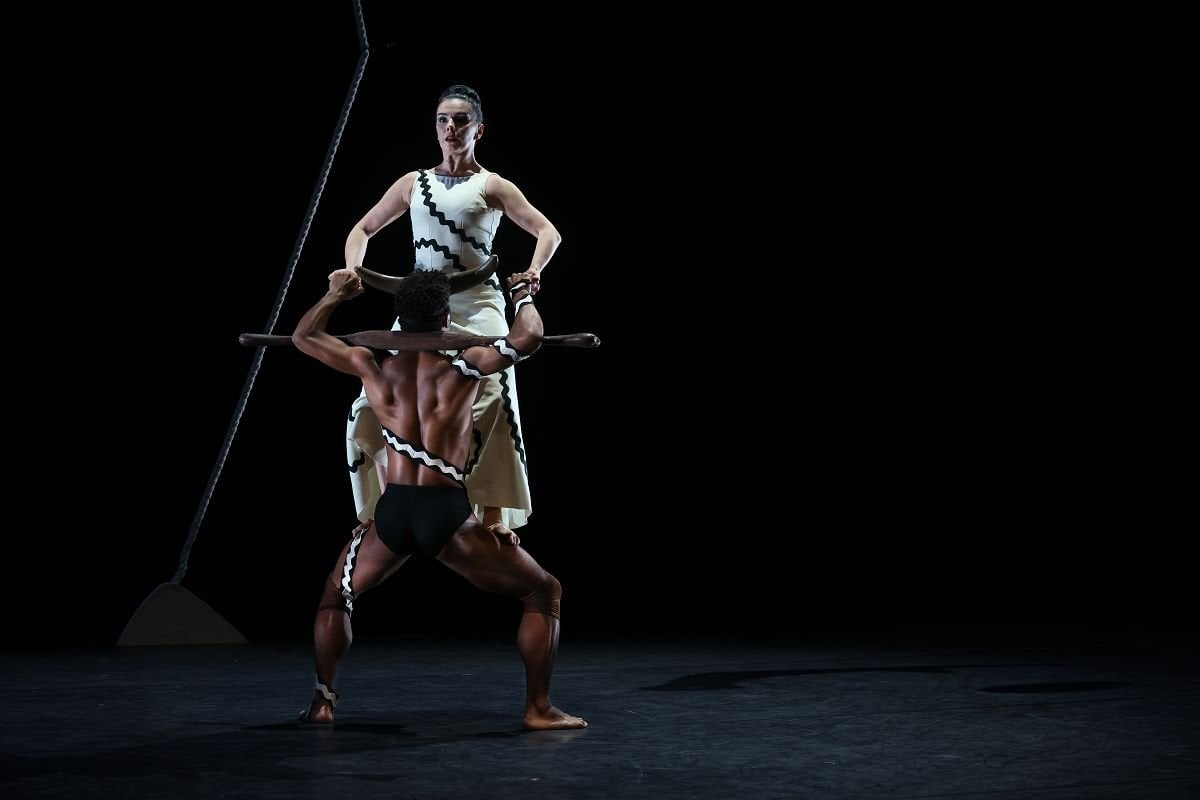
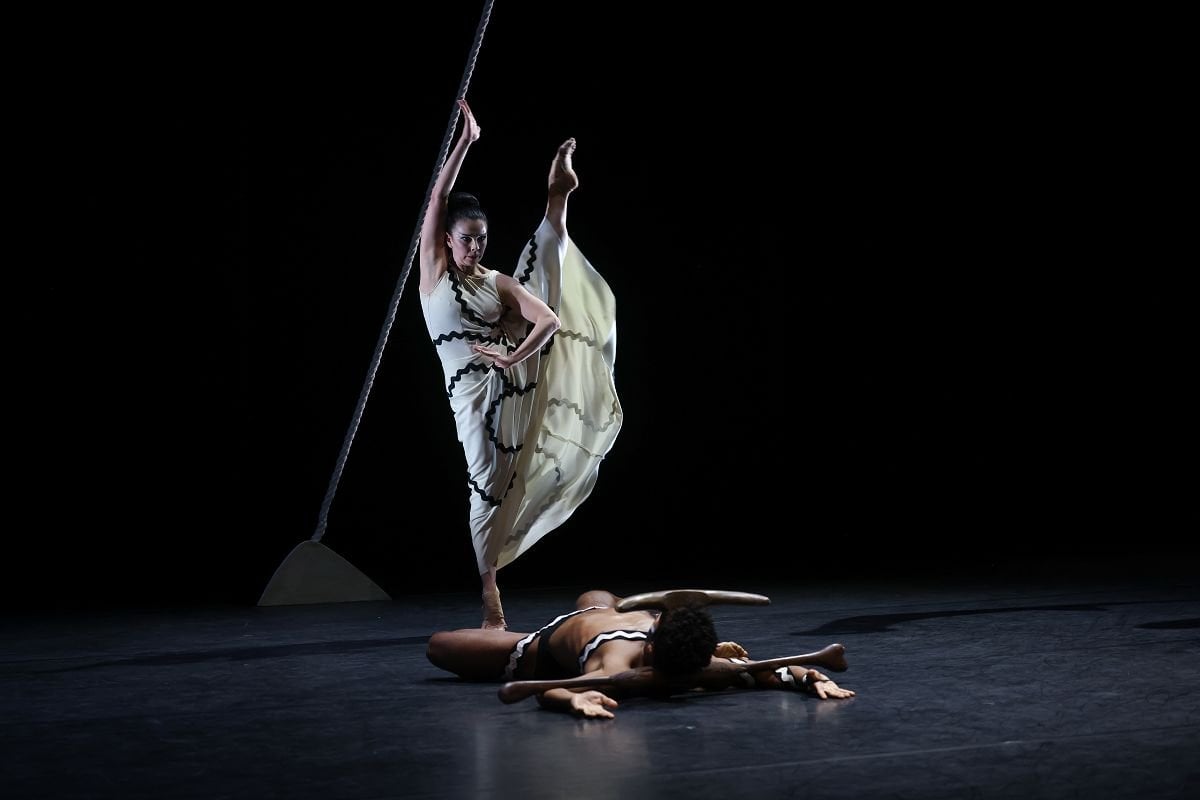
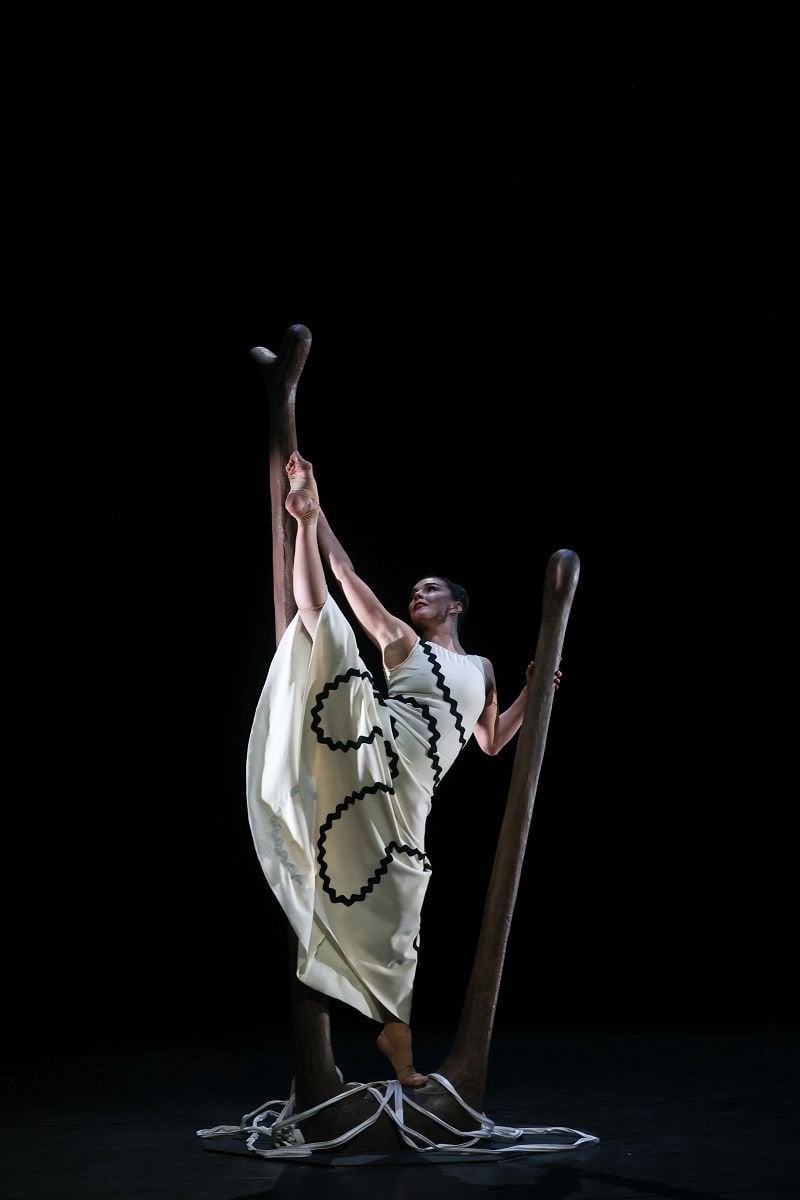
Opening the bill is Martha Graham’s 1947 piece, Errand into the Maze. Regarded as one of her most important works, it’s understandable why Osipova wanted to go there. The piece contemplates the fear of sexual intimacy through the relationship of Ariadne and the Minotaur, and Osipova is joined by Royal Ballet principal colleague Marcelino Sambé.
Both do the work proud, and in the opening, half-lit moments, one feels the presence of Graham via Osipova’s cheekbones catching the light and the panicked directness of her stare.
Sambé handles the Minotaur’s heavy material with the right balance of drama found via the movement, whereas Osipova can afford to keep looking for her intention within the choreography, as opposed to a more superficial, dramatic afterthought.
I’d suggest that she needs to do a little more study of the Graham technique, and how it relates to the associated canon. I found her performance too vertical and lacking a necessary boundness in the impact-led, dynamic passages. Most obviously in the execution of contraction. This movement is the essence of internal intention, and some would argue the foundation to all of Graham’s work and, for me, it wasn’t quite there.


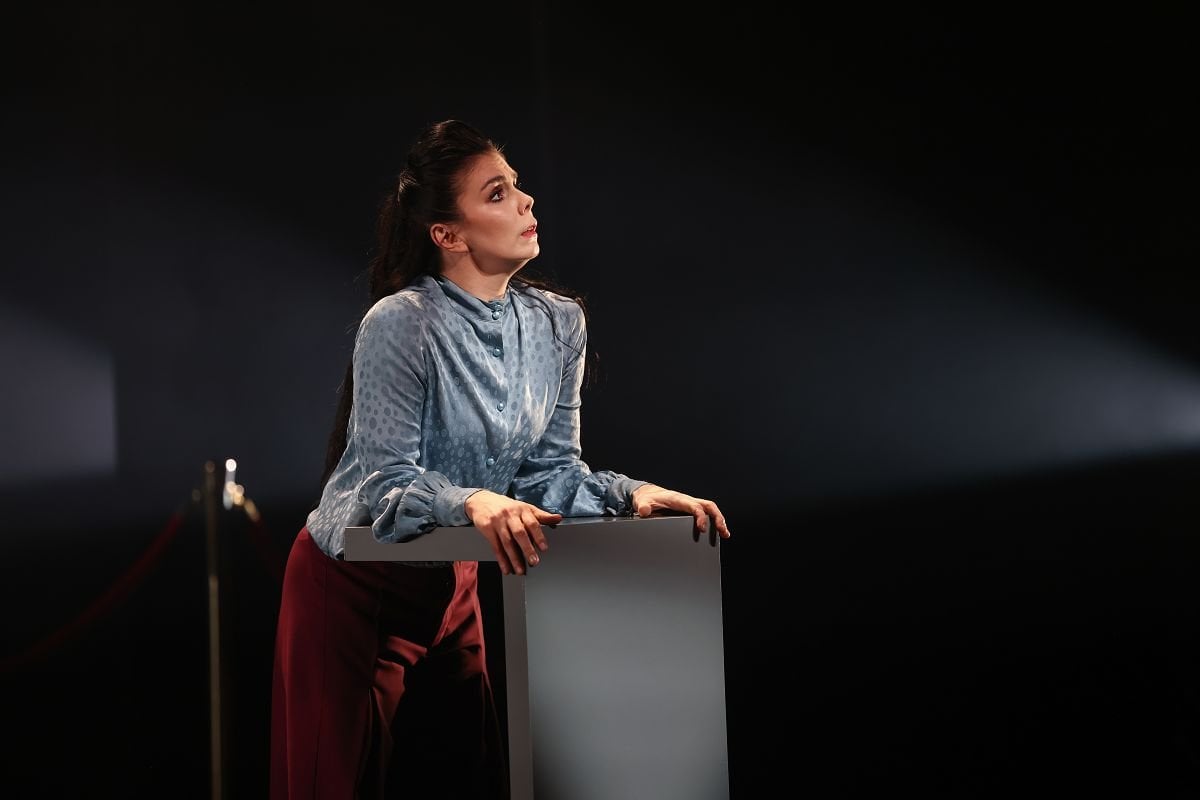

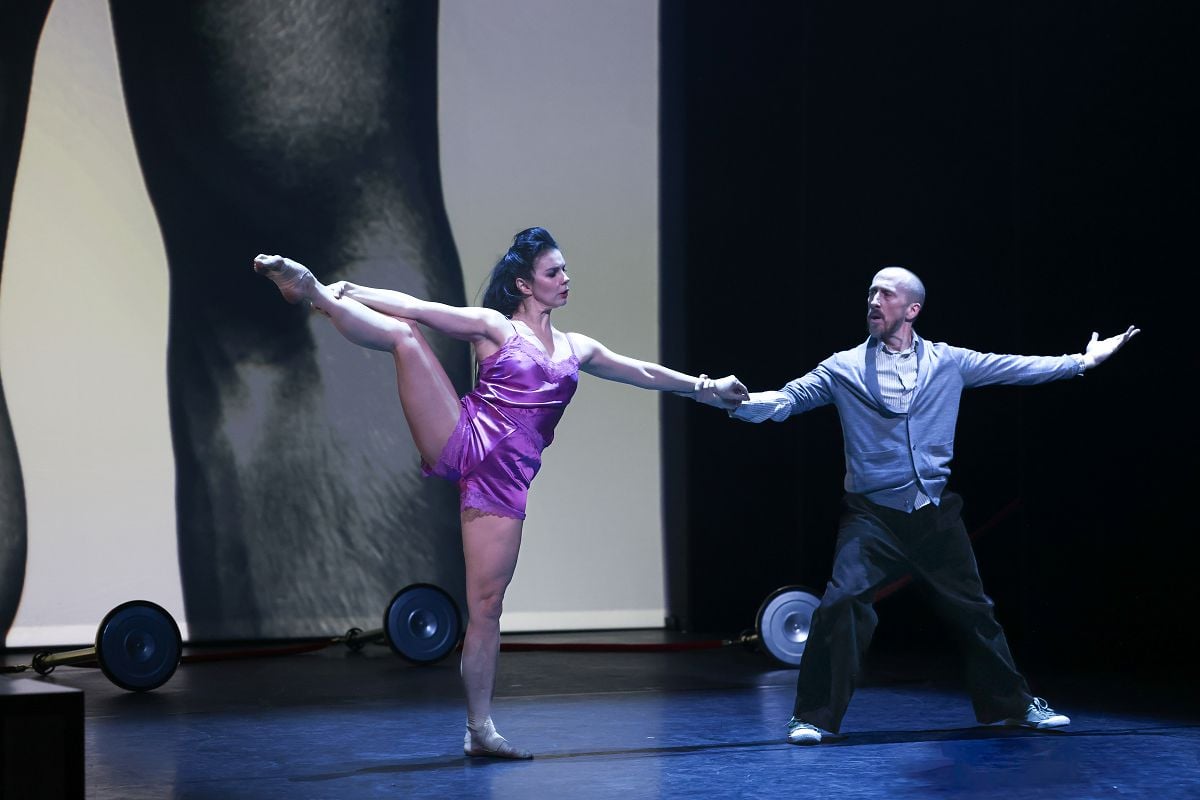
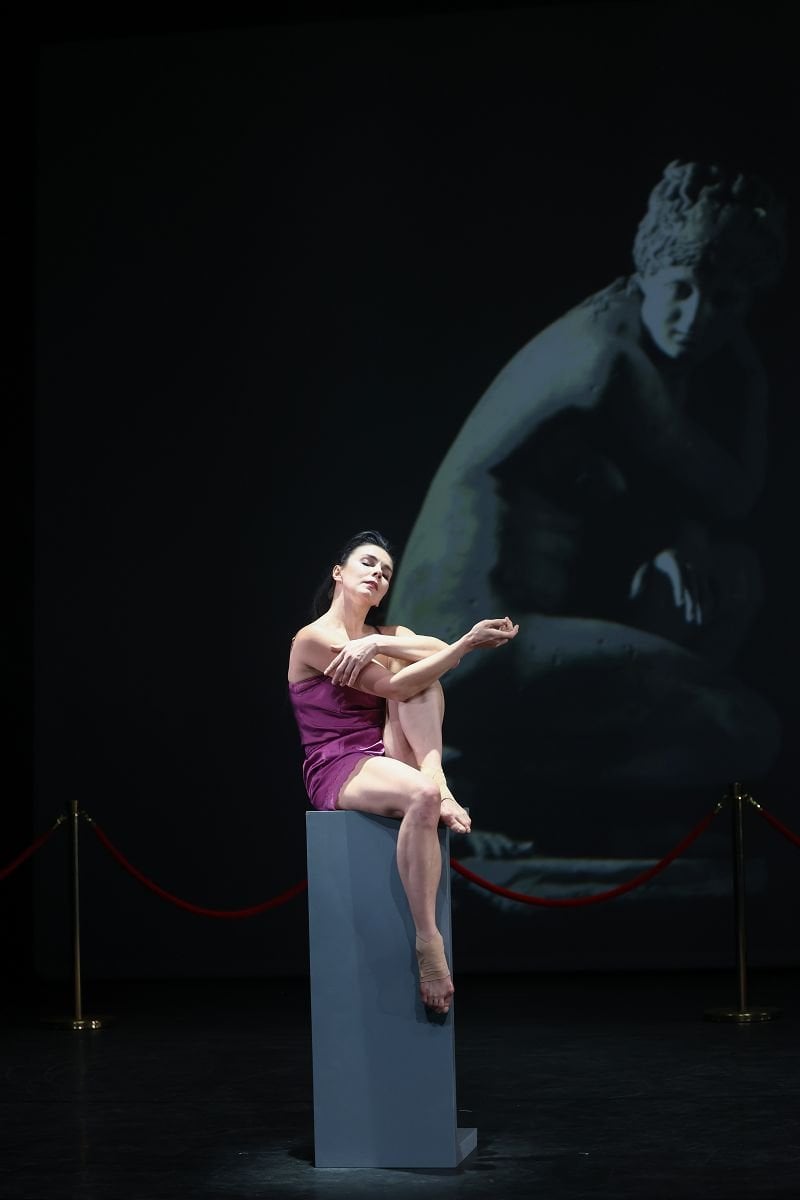
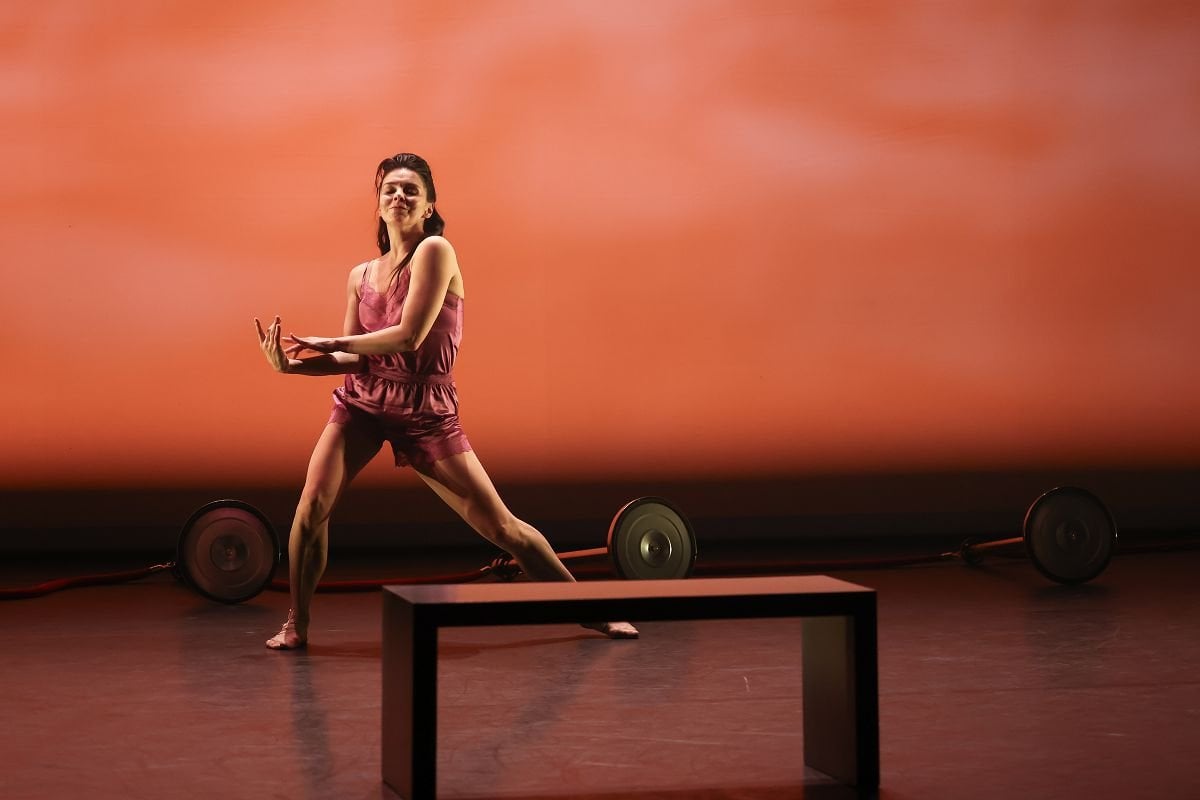
Closing the evening is the new commission, The Exhibition by Norwegian choreographer Jo Strømgren featuring Osipova and Christopher Akrill. Long story short – it’s a dance theatre piece, but neither performer has the dramatic capability to make it truly convincing, in both the comic or more serious moments. That said, there are aspects to be enjoyed – the rare moments of dance, Osipova’s foray into the use of voice and comedy, and the general experimental flavour of the work.
For the majority of the piece Osipova speaks in Russian, which perpetuates the idea of miscommunication, but makes it difficult to properly engage with what’s happening. And what’s that? A kind of random, episodic, reality shifting, comedy of errors.
The two characters meet in a gallery and then start on a journey that feels misguided from the outset. Do the duo have more than a platonic connection? It would seem so according to how their material grows with intimacy. But this is difficult to take seriously once Akrill’s character has publicly confirmed he’s a homosexual. Of course, I’m not saying that sexuality is only one thing, but the pair don’t have the evident chemistry to take the observer where the piece perhaps wants to go: an avant-garde reality void of societal norms and human behavioural patterns.
So, considering the work doesn’t allow for true depth of character, it’s not really possible to engage with the limited dance movement in any fundamental way, which is a shame. Experimentation must be applauded but also acknowledged when it hasn’t quite pulled off.

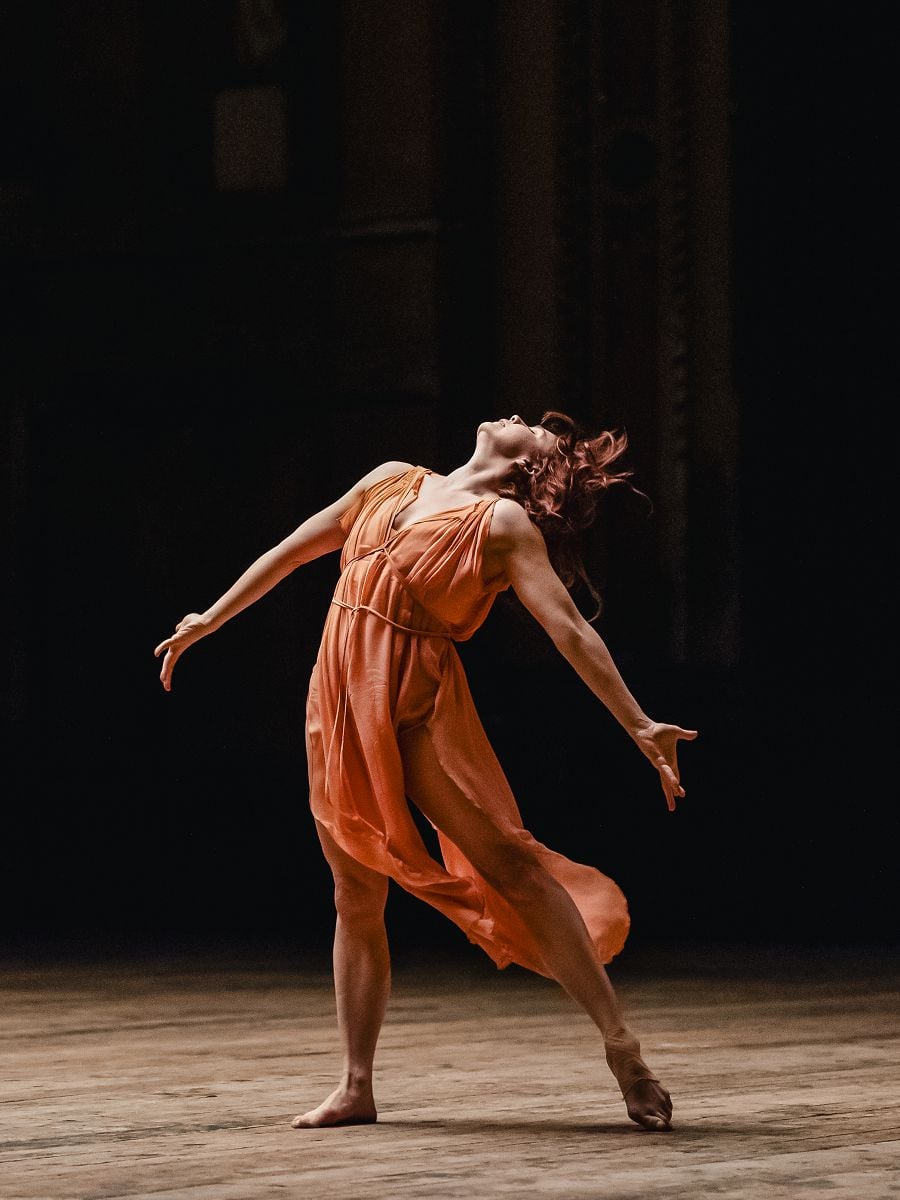
The middle work is a new dance film version of Frederick Ashton’s Five Brahms Waltzes in the Manner of Isadora Duncan (1975-76), and it’s a revelation.
Osipova first performed the work on the mainstage in 2024, and she took the piece to new levels of expressionism in modern dance. Ashton created the work for Lynn Seymour after having seen Duncan perform in 1921 and never quite getting over it.
With the right dancer, the piece is hard to beat, and what Osipova and director Grigory Dobrygin have produced, allows the observer to contemplate the work at an even deeper, personal level, and this is a true gift.
Filmed at Alexandra Palace, largely in one take, as Duncan starts to appear laying on the floor as the lights lift, one can already feel the importance of what’s to come. In the first waltz we hear Duncan’s hands scraping along the unvarnished wooden floor, and this simple artistic choice immediately takes the work into a different realm – one of realism.
The way Dobrygin has filmed Duncan/Osipova in motion makes the observer feel like the oxygen around her. Weaving in and out, like a mini drone controlled by the audience member’s own decision-making process.
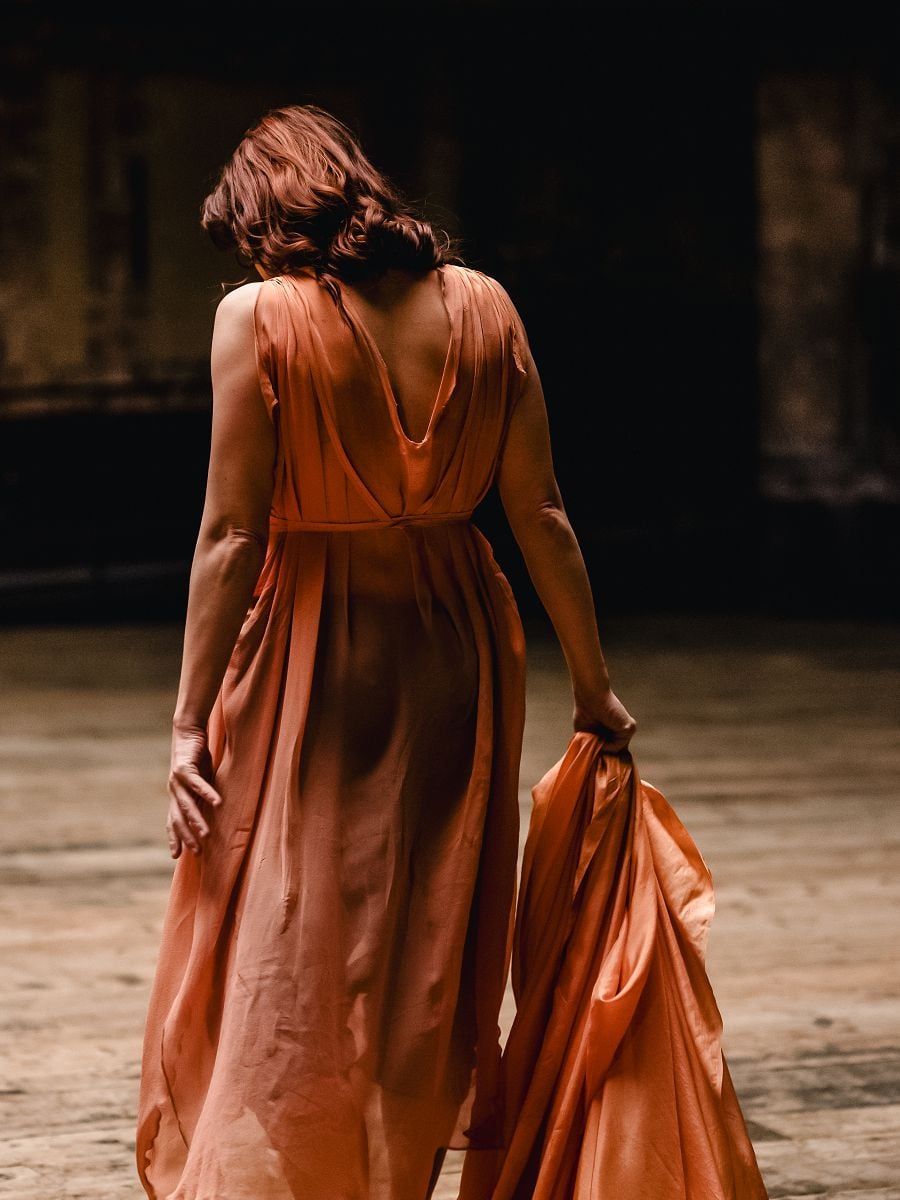
Dobrygin allows for stolen, intimate moments to be savoured between the waltzes – a resting arm with a peach chiffon backdrop, and bare feet in a natural bevel against the wooden floor, motionless yet ready to pounce the moment the Brahms starts up again. These instances are where the true essence of dance resides – in the moving stillness of anticipation and reflection. What a gift to see them realised through film.
When Duncan dances with a scarf, one feels like an extension of it, deeply immersed in the movement of rippling material being pulled through the vast space. Here Dobrygin also uses the first instance of a longshot, which allows for the totality of the scarf-enhanced movement to be savoured, and the concept of a dancer in space to be (re)considered all over again.
The final waltz sees Duncan scatter petals as she moves, and it takes on a ritualistic sense, as if she’s acknowledging and anointing the space that allows her to do what she needs in order to survive… dance.
A favourite moment of the whole piece is when Duncan playfully skips around the space. Head lowered and swinging, allowing natural opposition to inform the travelling movement, one understands what it means to be a dancer. It’s about play, physics, freedom, feeling and experimentation. And Osipova does all the aforementioned, and then some. Visionaries don’t always have the luxury of guaranteed success, but this shouldn’t stop their innate need to keep exploring, and thank god for that. Onwards.
Note: Five Brahms Waltzes in the Manner of Isadora Duncan normally sees the dancer wearing a Duncan-inspired wig. For the film Osipova was wigless, and this approach feels like a much better move. Of course, if cast dancers sport a shaved head, it’s less straightforward… but when channelling the queen of modern dance let’s aim to keep things as natural as possible, I say.