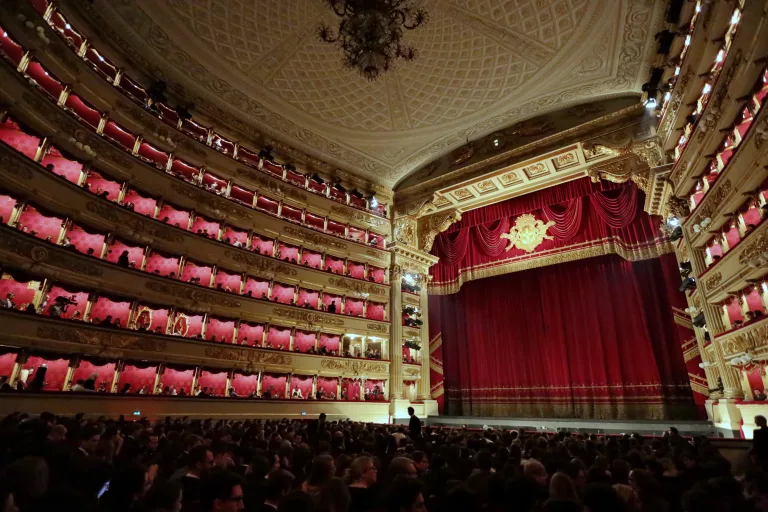
Elgar archive of 1,500 treasures finds a new home at the Hallé
American collector Arthur Reynolds spent 60 years gathering manuscripts, annotated test pressings and even Alice Elgar’s recipe book – and has now given them all to Manchester.
The Hallé has become the home of what the National Heritage Memorial Fund (NHMF) describes as the world’s largest and finest Elgar collection. The American collector Arthur Reynolds has donated around 1,500 items, gathered over more than 60 years, to the Manchester orchestra.
The archive travelled some 3,500 miles from Reynolds’s home in New Jersey. It was flown to London, driven north and delivered to the Bridgewater Hall. The move was supported by almost £105,000 from the NHMF, with further parity funding from the patron Carole Nash.
Manuscripts, recordings and a shaving bowl
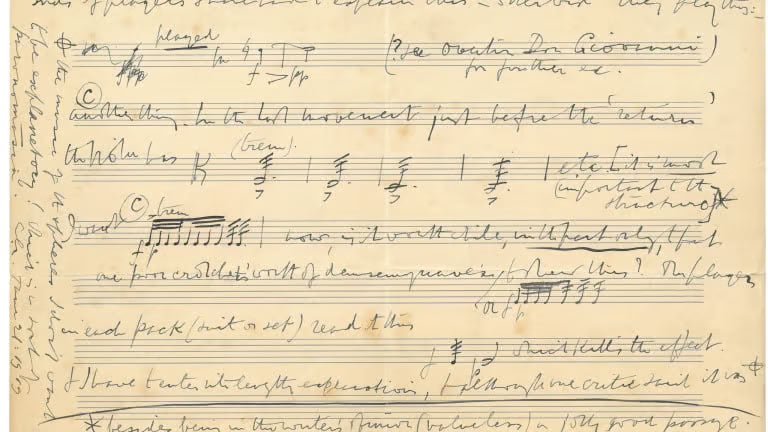
The collection includes autographed manuscript scores, first editions (among them the Enigma Variations), photographs, personal belongings and letters to and from contemporaries, among them the painter John Singer Sargent and the pianist Fanny Davis. The Hallé has released an image of the manuscript of Elgar’s Piano Quintet, dated 21 January 1919.
Among the more intimate items are Elgar’s shaving bowl and a family recipe book compiled by his wife, Alice – a major general’s daughter, nine years older than Elgar, whose faith in his genius did much to propel him, as The Times puts it. Reynolds told The Times that she would ask the cook to write down any dish she enjoyed at a dinner party. The result is mostly Victorian cakes, with haggis and rabbit for heartier appetites. Reynolds told the paper he found the book with a man in Wolverhampton, whose price was a bottle of Jack Daniel’s.
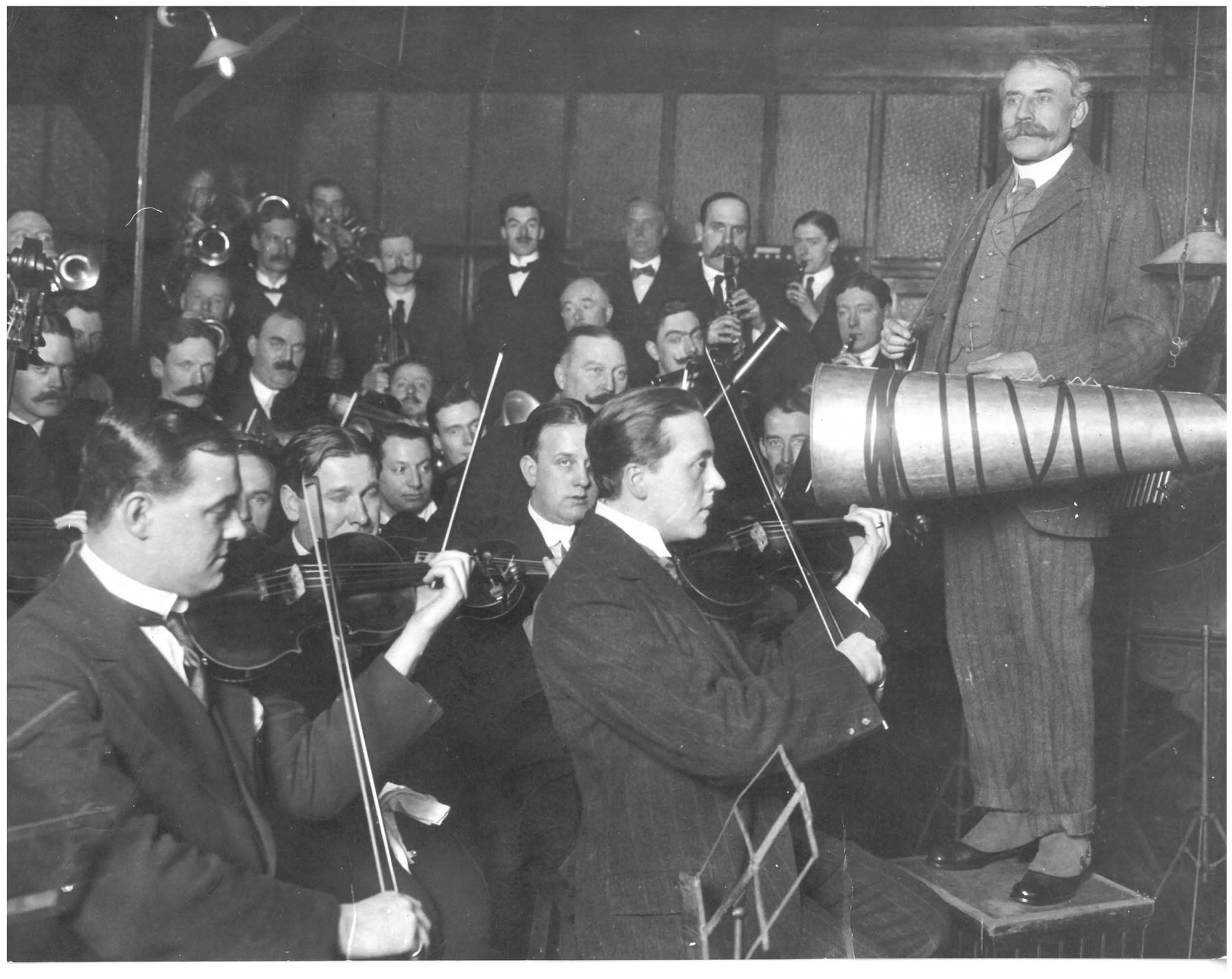
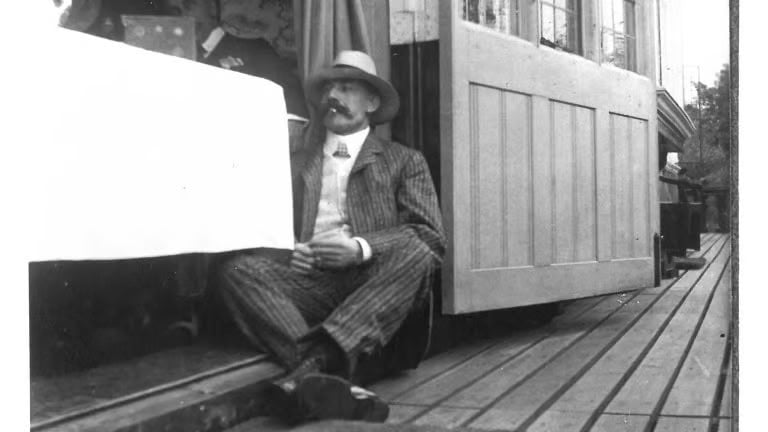
For musicians, the most revealing pieces may be the recording session materials and test pressings, many carrying Elgar’s handwritten notes. Elgar was fascinated by science and technology – Richard Morrison in The Times points to a photograph in the collection of him in the makeshift chemistry laboratory in his garden shed, where he once nearly blew himself up – and he embraced recording early, conducting his own music for the gramophone from 1914 until his death in 1934, including at the opening of EMI’s Abbey Road studios. The record company sent him a one-off pressing of each take, and he wrote his verdict and interpretative comments on the sleeve. Reynolds told The Times he has about 99 per cent of them, and that some are the only surviving recordings of those performances.
Other items show how the composer developed. One sheet has bars from Mozart’s Symphony No 40 copied out, with Elgar’s own music beneath showing how he used them as a model for a youthful G minor symphony he never finished.
A 60-year pursuit
Reynolds, now 82, is a banker and investment consultant. In the Hallé’s announcement, he says Elgar’s music gave him a sense of reverence for the United Kingdom, and that on arriving to study in the mid-1960s he was surprised to find his contemporaries did not share his admiration. Speaking to The Times from New Jersey, he said he began collecting as a Cambridge student in 1965, when Elgar’s reputation was at a low ebb: the Elgar Birthplace Museum near Worcester was a shambles, letters could be had for half a crown and manuscripts for little more. Restoring the fragile paper items, he said, was the real expense and brought him close to financial ruin more than once.
He resolved, he says, to prevent Elgar material from disappearing, and he sees the Hallé as the archive’s permanent home. In the same interview he argued that Elgar still does not receive the acknowledgement he deserves, comparing his rise from humble origins to that of Michael Faraday or Captain Cook. Elgar, he told The Times, was the archetypal outsider: a tradesman’s son, a Catholic in a Protestant society, largely self-taught and from a provincial backwater.
Why the Hallé
The orchestra has a long Elgar tradition. It gave the premiere of his Symphony No 1 in 1908 under Hans Richter, a friend of the composer, and has championed his music ever since. David Butcher, the Hallé’s chief executive, said the orchestra was honoured to welcome the collection and that Elgar’s work is “inextricably woven” through its history. Mark Elder, the Hallé’s former music director, told The Times that he got to know Reynolds well during his years at the orchestra, and that Reynolds had once told him the collection would one day be the Hallé’s.
Reynolds explained to The Times that giving away a collection like this is harder than it sounds. In his view, the Elgar Birthplace Museum, now run by the National Trust, has slimmed down its displays, keeps much of its collection in a basement and has taken in nothing new for years. The British Library, he said, was keen on the letters and test pressings but not objects like the shaving bowl and a clock, and its access procedures seemed to him bureaucratic. One of his conditions was free, unfettered access for anyone to study the material or simply browse it. American libraries would have taken the lot, he added, but he wanted to give it to Britain, where he lived in London for 27 years.
Simon Thurley, the NHMF’s chair, said the archive offers a rare insight into Elgar’s life, work and pioneering role in recording, and that the fund exists to save outstanding heritage at risk. He told The Times the grant was a small sum for an unbelievable acquisition. The heritage minister, Baroness Twycross, called it a fascinating insight into one of Britain’s most celebrated composers and said it would inspire future generations.
What happens next
The archive is housed in the Hallé’s facilities at the Bridgewater Hall on Lower Mosley Street and can be viewed by appointment from September 2026. A detailed catalogue will be added to the Connecting Manchester’s Music Archives website, select items will feature in future exhibitions, and the Hallé aims to create a permanent, fully accessible archive.

Graham Spicer, aka ‘Gramilano’, is a writer, director and photographer based in Milan. He was a regular columnist for Opera Now magazine and wrote for the BBC until transferring to Italy. His articles have appeared in various publications from Woman’s Weekly to Gay Times, and he wrote the Danza in Italia column for Dancing Times magazine. Graham was the historical advisor on Codice Carla, the 2023 documentary on Italian ballerina Carla Fracci.
Graham also works as a dance photographer, and his photos have appeared in many books, theatre programmes, and magazines, including Dancing Times, Dance Spirit and Ballet2000, as well as all the major Italian newspapers.
He is a member of the Dance Section of The Critics’ Circle.