Zeffirelli’s miniature Aida returns to Verdi’s jewel-box theatre in Busseto
Federica Vitali, Vincenzo Costanzo and Teresa Iervolino all make role debuts, with Giuseppe Mengoli conducting the opera for the first time too, from 2 October.
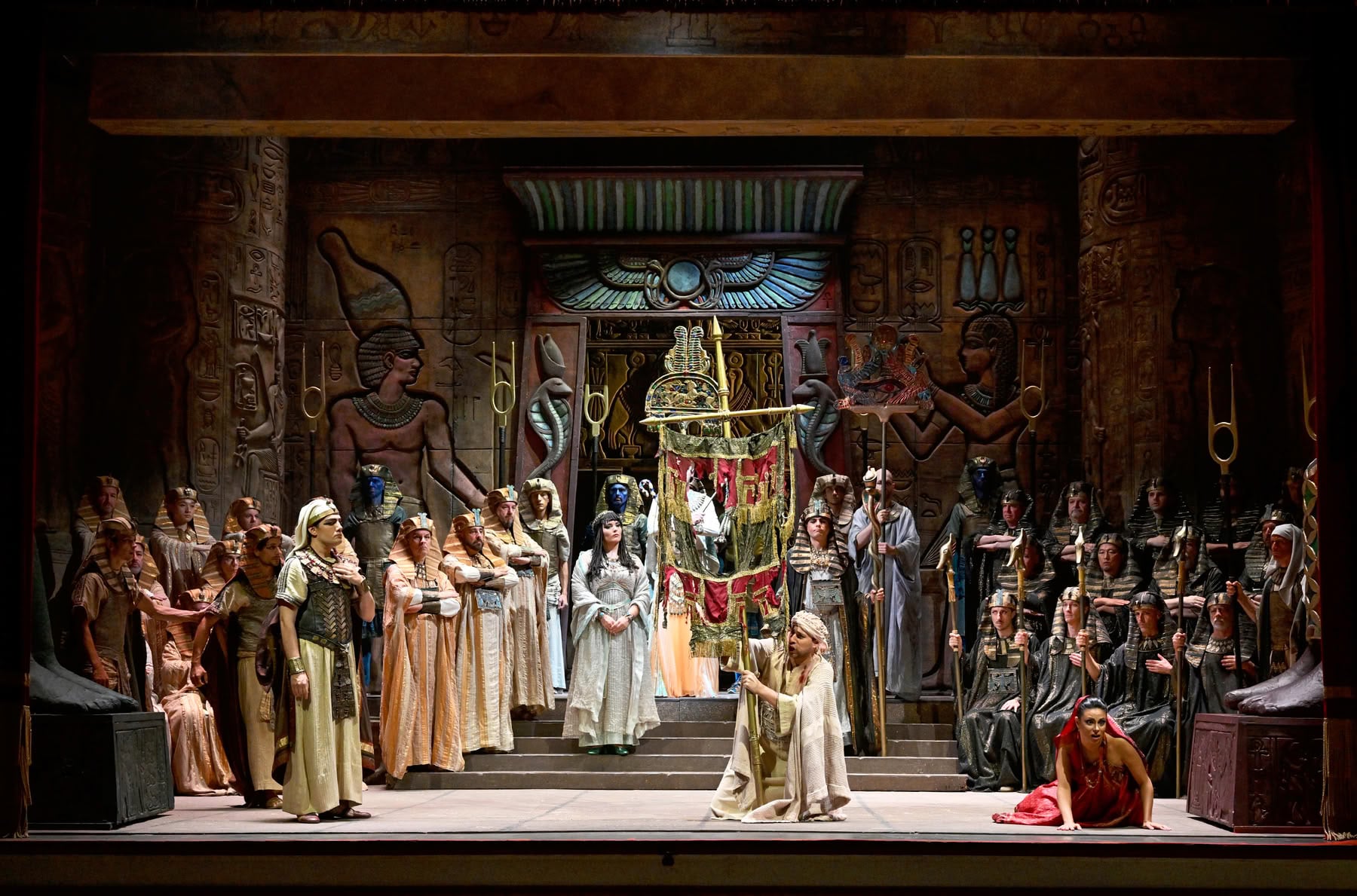
Verdi’s grandest spectacle is going back to one of the smallest opera houses in the world. As part of the XXVI Festival Verdi, whose theme this year is “Mondi lontani” (Distant worlds), the Teatro Regio di Parma is reviving the Aida that Franco Zeffirelli created for the 300-seat Teatro Giuseppe Verdi in Busseto for the Verdi centenary of 2001.
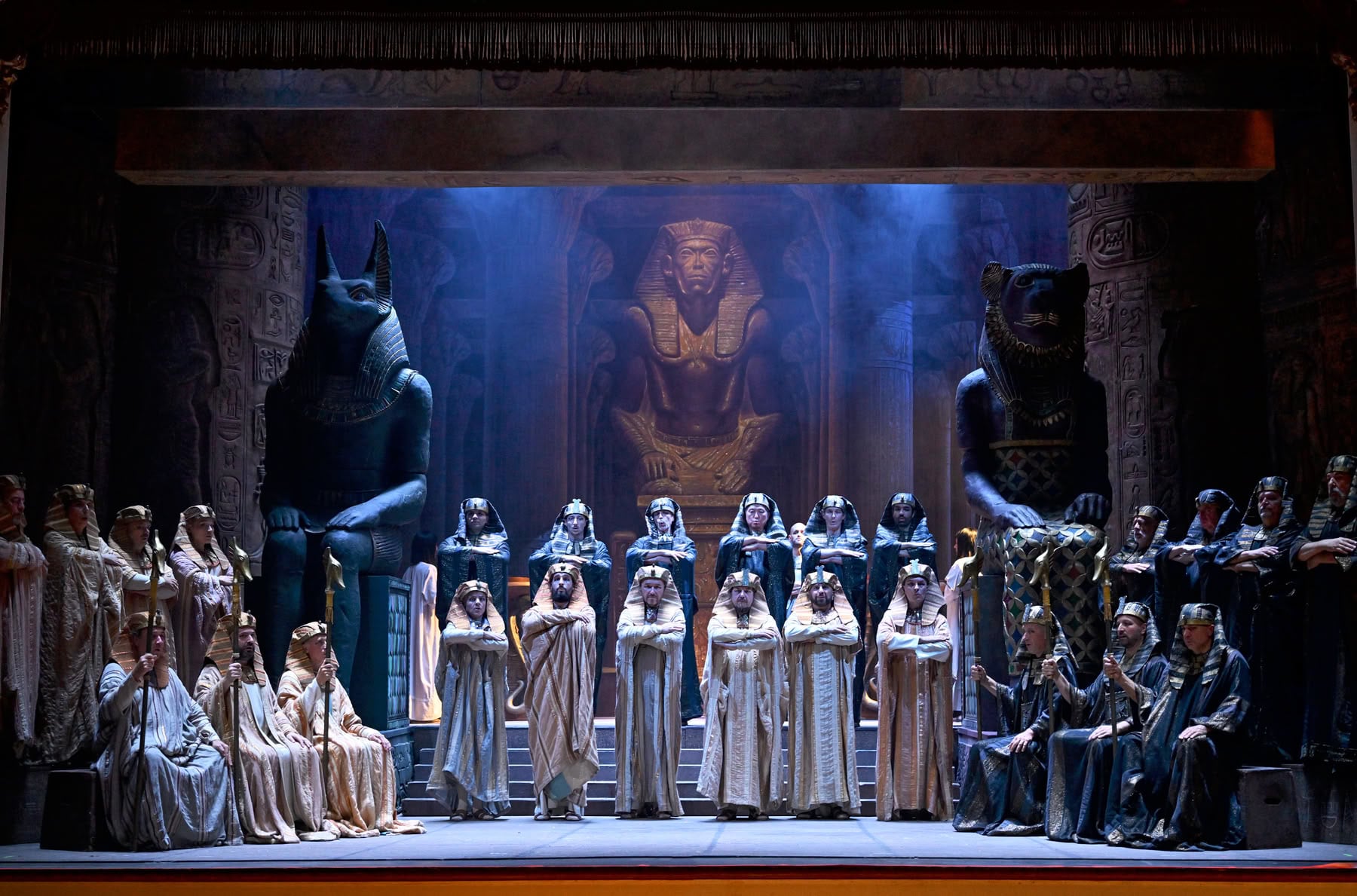
The production recreates the atmosphere of ancient Egypt while turning the opera’s reputation for monumental scale on its head, constrained by a proscenium that is only 7 metres (approx. 23 feet) wide.
From Cairo to a jewel box
Aida, in four acts to a libretto by Antonio Ghislanzoni, was commissioned from Verdi by the Khedive of Egypt, Isma’il Pasha, for the Khedivial Opera House in Cairo. It had its premiere there on 24 December 1871, and its first Italian performance at La Scala in Milan on 8 February 1872.
The story, devised by the French Egyptologist Auguste Mariette, follows the love triangle of Aida, Radamès and Amneris against the backdrop of war between Egypt and Ethiopia. It ends in the tomb where the lovers, buried alive, bid farewell to the world in the duet “O terra, addio”.
Writing in the festival’s programme, Giuseppe Martini lists the ingredients: “a great big Egyptian spectacle, lots of memorable and catchy music including ballets, hymns and marches, parades of slaves, Ethiopians, triumphant soldiers, temples seen from outside, from inside and from below”. All of it, he suggests, could have sunk Verdi’s music at a time when it was starting to be seen abroad as a provincial counterweight to Wagner.
Instead, Martini argues, Aida “represented Verdi’s victory over grand opéra”. He says it combined the best of the French stage with the best of the Italian musical tradition, in music that gives up psychology in favour of the dramatic gesture that defines each character’s passions. After Aida, Verdi stepped away from opera for years, returning to the stage 15 years later with Otello.
In his conductor’s notes, Mengoli describes how the Prelude fades away just as the Finale will, “with a line of pure longing”. Like the spirit of the lovers in “O terra, addio”, he writes, it tries to bridge the distance between tomb and sky, reaching for the major seventh – “the most tragic interval, and the closest to fulfilment” – before slipping back “light as a feather” to the floor of the tomb.
“Is he going mad in his old age?”
Zeffirelli himself described the production as a bet made against all expectations. “Aida in Busseto, directed by Zeffirelli? Is he going mad in his old age?” he wrote in his director’s notes.
He explained that he had chosen to pursue “a very private and very intimate story” within the tiny proportions of the Teatro Verdi, calling the project a drastic reduction of the “gran macchinone”, the great big machine of the opera. On the first night, on 27 January 2001, the audience stood and applauded for five minutes. Zeffirelli went on to call it the most successful and happiest opera production he had ever created.



Three role debuts
The three principals are all new to their roles. Soprano Federica Vitali sings Aida, the Ethiopian slave; tenor Vincenzo Costanzo is the general Radamès; and mezzo-soprano Teresa Iervolino is the Egyptian princess Amneris.
The cast is completed by baritone Hae Kang as Amonasro, bass Alberto Comes as Ramfis and bass Adriano Gramigni as the King. Two young singers, Francesco Congiu (a Messenger) and Nicoletta Briguglio (a Priestess), are both former students of the Teatro Regio’s Accademia Verdiana.
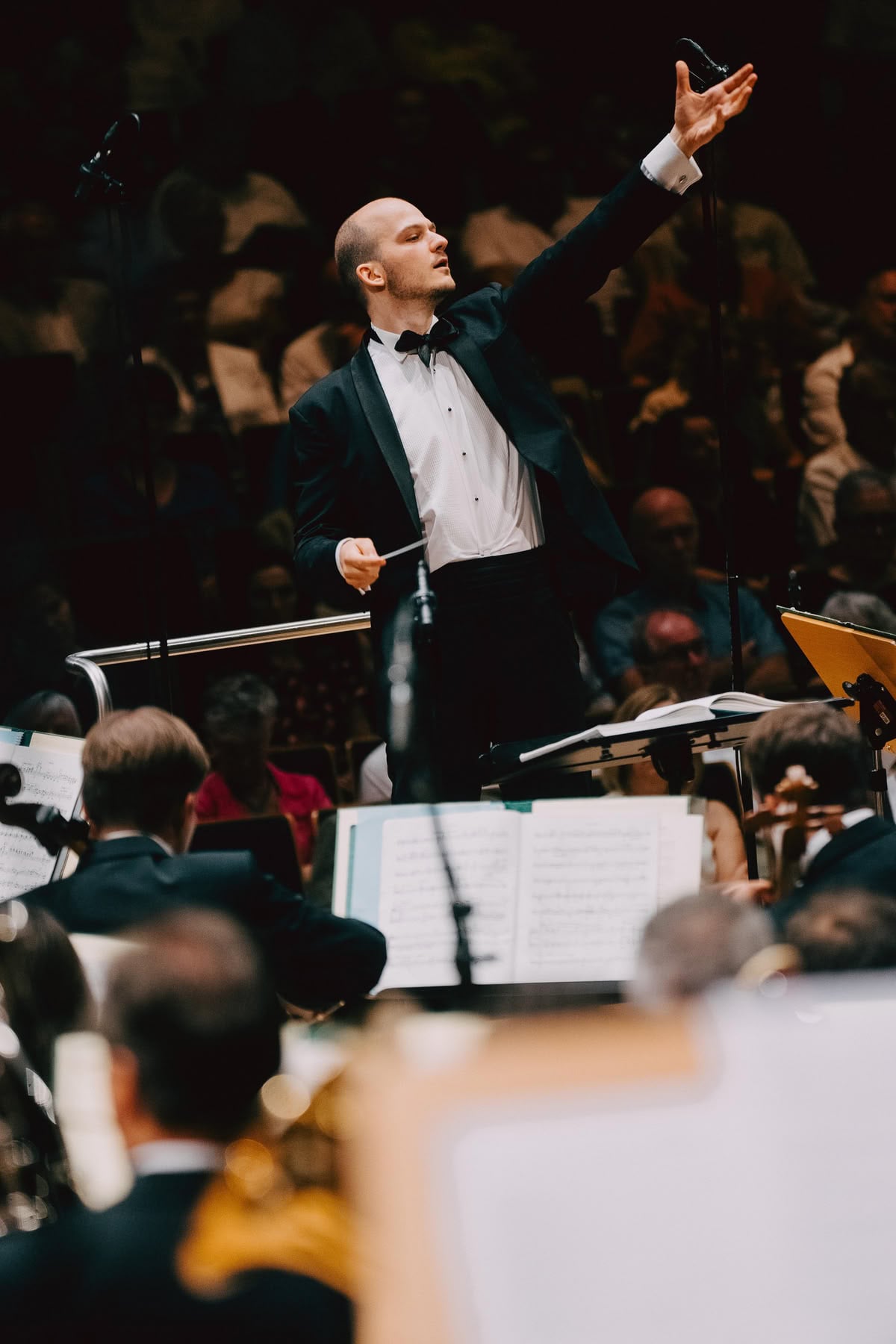
Giuseppe Mengoli conducts Aida for the first time, leading the Filarmonica Arturo Toscanini and the Chorus of the Teatro Regio di Parma. Anna Anni’s costumes are revived by Lorena Marin, the lighting is by Andrea Borelli, and Luc Bouy’s choreography is revived by Gaetano Petrosino.
Performances and booking
Aida is at the Teatro Giuseppe Verdi, Busseto, on Friday 2 October, Friday 9 October and Friday 16 October 2026 at 8pm, and on Sunday 25 October at 3.30pm. There is an open dress rehearsal on Tuesday 29 September at 8pm.
Tickets start at €10 and are on sale at the box office and online at teatroregioparma.it.
Teatro Regio di Parma box office tel +39 0521 203999; biglietteria@teatroregioparma.it.

Graham Spicer, aka ‘Gramilano’, is a writer, director and photographer based in Milan. He was a regular columnist for Opera Now magazine and wrote for the BBC until transferring to Italy. His articles have appeared in various publications from Woman’s Weekly to Gay Times, and he wrote the Danza in Italia column for Dancing Times magazine. Graham was the historical advisor on Codice Carla, the 2023 documentary on Italian ballerina Carla Fracci.
Graham also works as a dance photographer, and his photos have appeared in many books, theatre programmes, and magazines, including Dancing Times, Dance Spirit and Ballet2000, as well as all the major Italian newspapers.
He is a member of the Dance Section of The Critics’ Circle.