Review: Gala Fracci 2025 – Marianela Nuñez and Reece Clarke join La Scala Ballet to celebrate Carla Fracci
Graham Spicer sees Gala Fracci, La Scala’s annual festa to celebrate the great Italian ballerina Carla Fracci who died in 2021, now in its fourth edition.
| Title | Gala Fracci |
| Company | La Scala Ballet |
| Venue | Teatro alla Scala, Milan |
| Date | 15 May 2025 |
| Reviewer | Graham Spicer |
The Gala Fracci has reached its fourth edition. La Scala’s annual festa to celebrate the great Italian ballerina who died in 2021 was the idea of Manuel Legris, the director of the corps de ballet in Milan until earlier this year. However, the new (returning) director, Frédéric Olivieri, was responsible for devising this year’s clever programme, with every extract coming from Fracci’s repertoire.
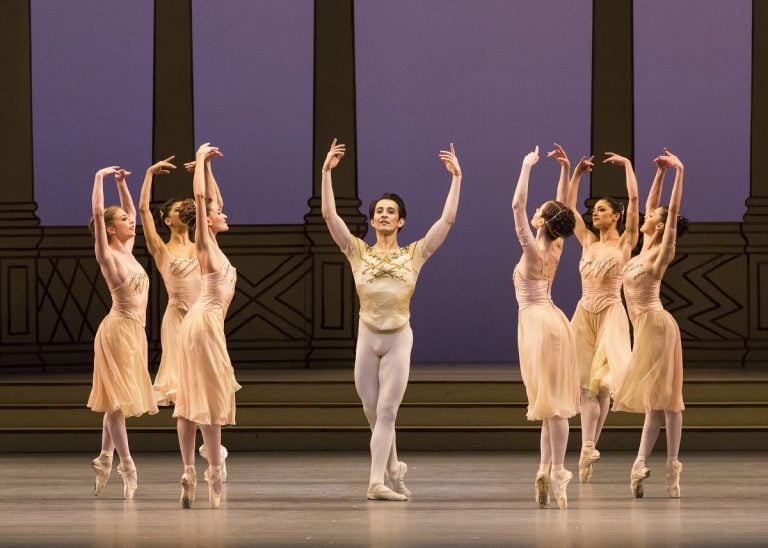
After a glittering opening défilé – right out of the Paris Opéra Ballet handbook, where Olivieri danced at the beginning of his career – came Giselle. The ballet is closely associated with ‘La Fracci’, especially because of two much-loved recordings – the first was with Erik Bruhn (American Ballet Theatre, 1969) and then with Rudolf Nureyev (Rome Opera Ballet, 1980). No pressure then for Martina Arduino. She danced the extract with her offstage partner, and fellow principal dancer, Marco Agostino. Four months before Fracci died, La Scala streamed a mini masterclass of her working on the role with Arduino, a memory she holds dear. While no Fracci, she gave a heartfelt account, matched by Agostino, in a moving performance.
However, the most moving moments of the gala came between the scenes when proscenium-wide projections showed photos of Fracci in the next role to be seen. The final image of the evening showed her in front of La Scala’s famous curtain, and the entire company turned away from the audience to applaud her.
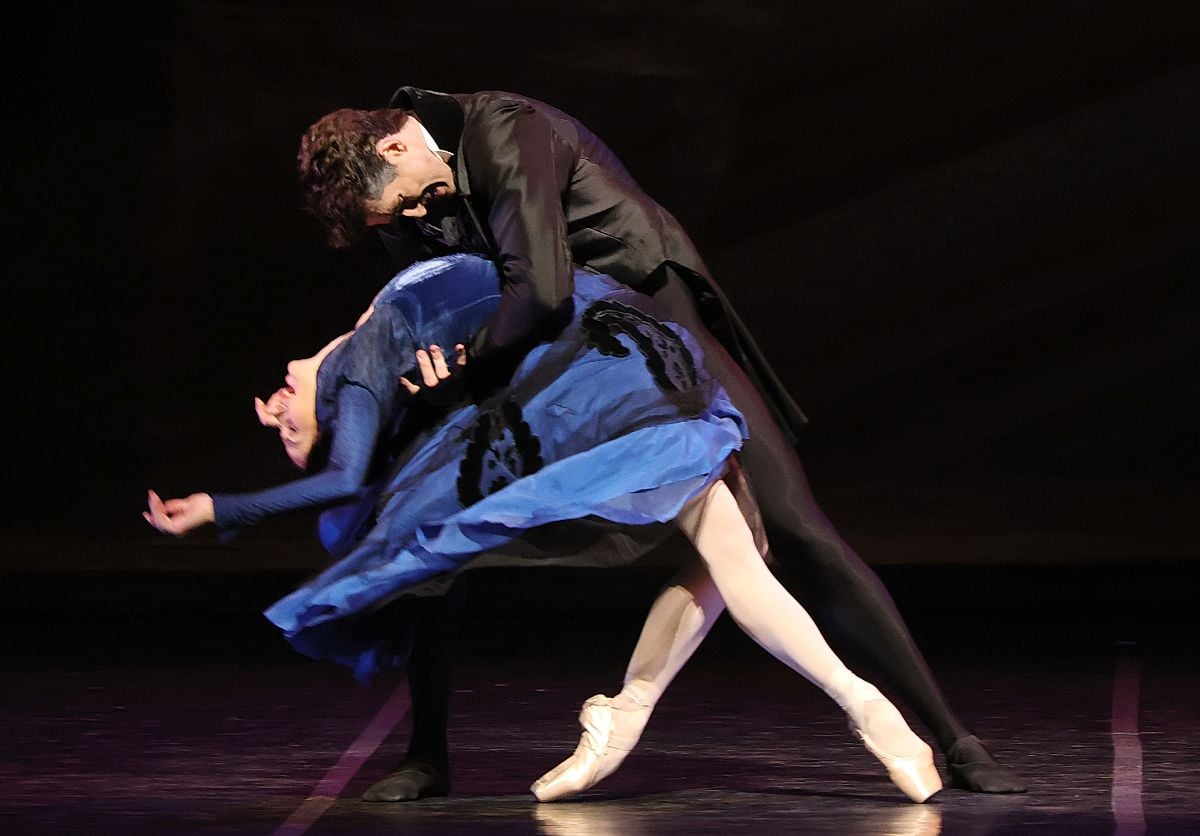
It certainly wasn’t a perfect evening technically, as though a case of the jitters had infected some of the dancers. The company has only danced contemporary works since the end of the Nutcracker season, which may explain the uncertainties, but on the horizon are runs of Paquita and Swan Lake, which should knock everyone back in shape. Nicoletta Manni, though, guarantees a solid performance and La Scala’s étoile danced the emotionally fuelled final pas de deux from Onegin with The Royal Ballet’s Reece Clarke, elegant and technically spot-on. The two hit it off when they danced Manon in Milan last year, and they make a handsome pair, physically perfect for each other and with evident feeling between them.


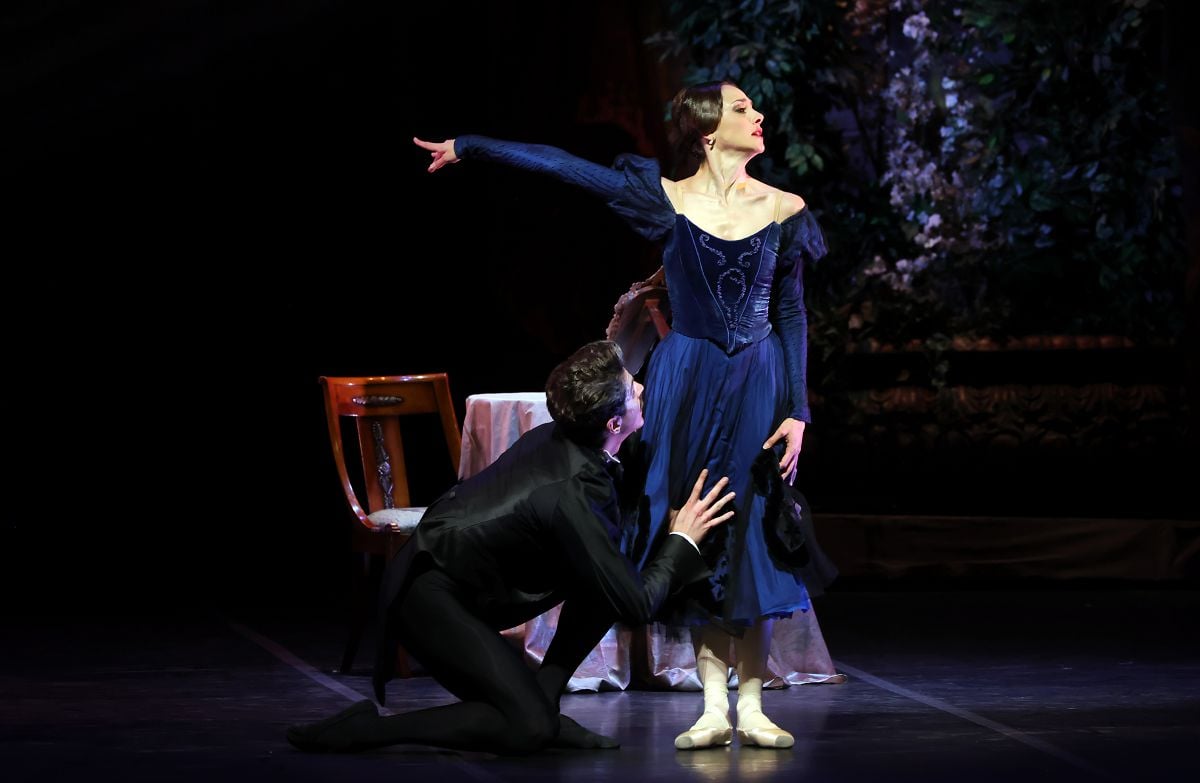

Clarke had already shown off the snazzy moustache he sported for Onegin because he’d worn it for the final scene of Ronald Hynd’s The Merry Widow earlier in the evening. Hynd, now 94, came to La Scala to work with the dancers. It was a clever choice on paper – Fracci danced the widow with Rex Harrington at La Scala in 1996 when she was 60, and Marianela Nuñez had already danced the role in Argentina in 2018. However, out of context, the scene didn’t quite hold up. The final waltz was preceded by the company in high jinks at Maxim’s Cafe with can-can dancers and their suitors, and some clever and challenging choreography of groups around the stage. Then Nuñez arrived in a coat that seemed to be made from tin foil (the ropey costumes were on loan from The Hungarian National Ballet), and though she and Clarke danced quite beautifully, it didn’t quite land.
Nuñez arrived radiantly for her second appearance as Aurora in the Rose Adage. Assured, sparkling… a star. Her serene control, balanced on one leg and removing her hand from that of each of her four princes and slowly raising her arm to join the other above her, in 5th position, remaining for a moment without any wobble and then lowering it once again, is simple in design, difficult to execute, but thrilling to experience when performed with such aplomb. Oh yes, and Nuñez slowly descending from her position on pointe is sheer poetry. A quirk I found strange was a shy little lift of the shoulder, a naturalistic reaction of an awed young girl that seemed out of place in Petipa’s choreography for an awed young princess. But how Nuñez engaged with her princes and the audience throughout – pure Royal Ballet in style, pure Nuñez in execution, pure magic.
There were other enjoyable pas de deux – from Mario Pistoni’s ballet La Strada with Antonella Albano and Christian Fagetti, and the Grand pas de deux from Don Quixote with Alice Mariani, Nicola Del Freo and company – but it was especially pleasing to see John Cranko‘s choreography of Romeo and Juliet‘s balcony scene. It was Fracci who stared in the ballet’s premiere in 1958, and here it was performed by Romina Contreras and Claudio Coviello. Contreras dances with the Czech National Ballet, and though she was charming with a soft pas de bras – together with an impetuous and boyish Coviello – it was difficult to understand what more she brought to the role than other dancers in the company.

Manni returned for the finale with Timofej Andrijashenko to dance the pas de deux from Luigi Manzotti’s ‘gran ballo’ Excelsior when “Civilisation” frees the “Slave”. This epic ballet (once with 500 people together with elephants on stage) was created for La Scala in 1881, celebrating the victory of light over obscurantism through the triumphs of science, art and industry (and, ahem, consequently delivering universal peace). It was hugely popular with hundreds of performances – it even toured to Her Majesty’s Theatre in London with Enrico Cecchetti in 1885. The ballet was recreated by Ugo Dell’Ara in 1967 with Carla Fracci and Paolo Bortoluzzi and has been popular ever since. The pompous, brassy score underlines the showy feats given to the dancers – Manni’s fouettés started and finished with a triple turn and doubles in between, and Andrijashenko had barrel rolls, soaring jetés, and some explosive leaps while holding his head to his knees. Sweaty, he managed to rapidly squeeze into ‘civilised’ white tights and a red military jacket for the finale that, for the gala, was attached to the pas de deux.
Corps women traverse the stage dressed as campy soldiers in military jackets and white tutus, holding national flags – French, German, and Stars and Stripes, and Union Jacks are held aloft by dancers wearing busbies. It sounds stranger than it is. During the last bars, 16 children rush on to sit along the front of the stage for the final pose, each with a card bearing the word ‘PAX’. The ballet was last performed during the Milan Expo in 2015, but what a forceful punch that ending delivers now in these troubled times.


Graham Spicer, aka ‘Gramilano’, is a writer, director and photographer based in Milan. He was a regular columnist for Opera Now magazine and wrote for the BBC until transferring to Italy. His articles have appeared in various publications from Woman’s Weekly to Gay Times, and he wrote the Danza in Italia column for Dancing Times magazine. Graham was the historical advisor on Codice Carla, the 2023 documentary on Italian ballerina Carla Fracci.
Graham also works as a dance photographer, and his photos have appeared in many books, theatre programmes, and magazines, including Dancing Times, Dance Spirit and Ballet2000, as well as all the major Italian newspapers.
He is a member of the Dance Section of The Critics’ Circle.