Interview: Mezzosoprano Giuseppina Bridelli – enjoying what I have

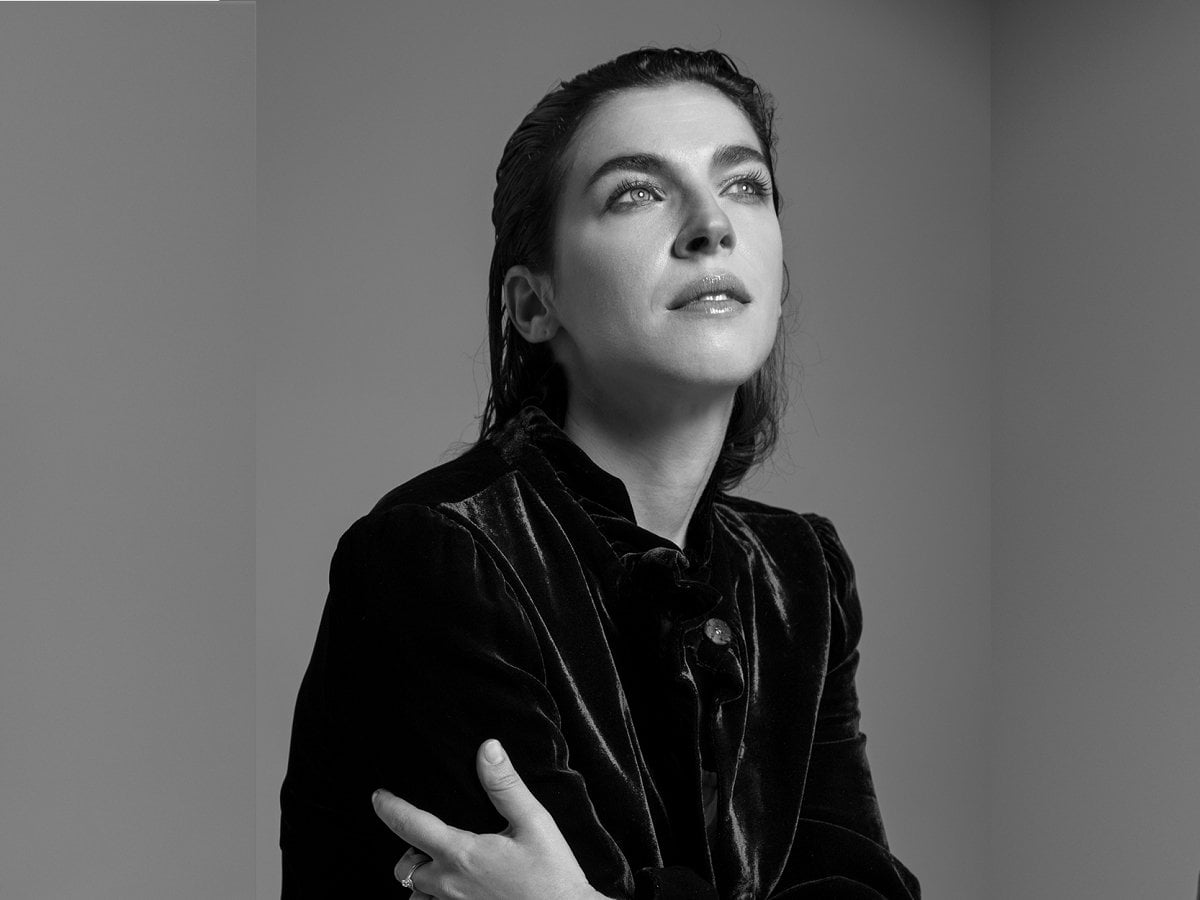
Mezzosoprano Giuseppina Bridelli, although not yet 40, has had a career lasting almost two decades. After winning the highly respected Aslico competition in 2007, she made her debut at the age of just twenty as Despina in Così fan tutte conducted by Diego Fasolis.
Although singing largely the Baroque repertoire, she has touched on composers from Mozart to Rossini too, she’s sung at Carnegie Hall and the BBC Proms, worked with directors Robert Carsen, Damiano Michieletto, and Peter Stein, and sung under the batons of Zubin Mehta, Ottavio Dantone and Fabio Luisi.
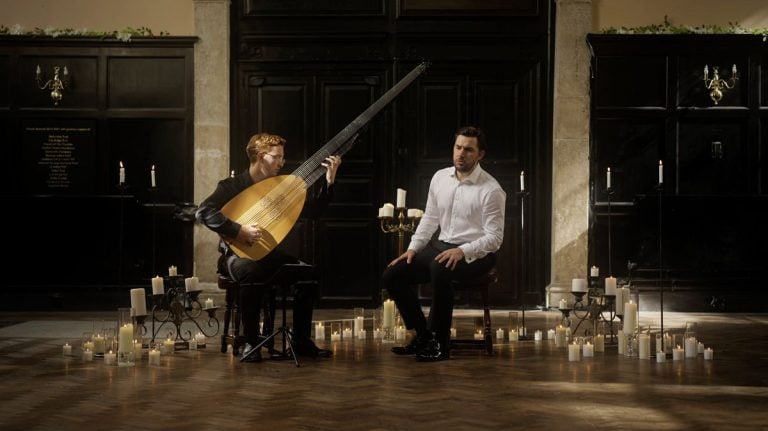
Bridelli has recorded many albums and soon will add Luci mie to her catalogue – a recording of mostly rare 17th-century Italian arias.
I talked to her as she was rehearsing Sesto Pompeo in Handel’s Giulio Cesare in Egitto at Teatro Petruzzelli in Bari, with Raffaele Pe as Cesare and Sandrine Piau as Cleopatra.
Giuseppina, you’re about to perform in Bari in the south of Italy, 800km from home. You’re a mum… how do you balance career and family?
That’s exactly the keyword – balance. Being a mother is a marvellous job, but for many years before becoming a mother, I was just Giuseppina, the singer. This part of myself is still very important to me. It’s fundamental. My identity.
From the outset, I’ve tried to combine it as much and as best I can with being a mother too. I’m lucky because I have the help and support of my family and, of course, every so often I make some small sacrifices. It’s worth it!
It was your family who encouraged your early interest in classical music… can you say something about your famous tenor relation?
My paternal grandmother had a significant surname – Poggi.
Piacenza, my native city, has a glorious tradition of opera and great voices. Gianni Poggi and Flaviano Labò were two great tenors in the 1950s, two stars of whom the city is extremely proud, continuing to keep their memories alive.
My grandmother was Poggi’s cousin, so it goes without saying that recollections of this legend were, and still are, fully alive in my family. As soon as I started showing interest and inclination, my way forward had already been paved. What’s more, both my parents have always loved opera, so I was truly lucky.
Did your siblings feed off the family’s musical heritage too?
My older brother was a bit sceptical for a long time. He knows nothing about my world and has shown no interest in it, but he’s always spoken proudly of his “sister Giuseppina, the singer”. l also have a sister who is eleven years younger than I am, who has definitely felt the influence – Giulia is a musician and plays both the modern and the baroque viola.


You were born in the Emilia-Romagna region of Italy, which has produced voices such as Bergonzi, Simionato, Tebaldi, Pavarotti, Freni, Nucci… well the list goes on, and includes your relative, Gianni Poggi. Its most famous son, though, is Giuseppe Verdi. What is the importance of Verdi in your life?
It isn’t very easy to explain because, like everything truly profound, there is no explanation. Verdi is the composer of my home territory, and this is something that I’ve always felt inside. I see him in the colours, the landscape, I feel him in the air, even in our beloved mists.
As a result, I love listening to Verdi because I feel as if I’m reconnecting with myself, even though I’m aware that I can only sing his music in secondary roles. It’s one of those things that is both wonderful and terrible about singing – our voice decides for us, and we can but go along with it.
What was your journey to becoming a professional singer?
My studies began at the conservatoire. I enrolled as soon as I was old enough, sixteen, and there I found “my teacher”, Laura Groppi, who is still my mentor for singing… and life. She’s the person to whom I owe everything. Then, thanks also to her encouragement, I soon flew the nest, attending opera school at the Teatro Comunale in Bologna, and it was there that my professional career really began.
Your debut was in Mozart. Listening to your recordings, you have an easy top to your voice, and an enviable coloratura – what other Mozart roles would you like to sing?
I would very much like to sing some of Mozart’s “rarer” work. There are some wonderful roles – rather difficult ones, I must say – that match my characteristics of agility and reaching high notes with ease, like Cecilio in Lucio Silla or Ramiro in La finta giardiniera.
Then, a long-cherished dream of mine, perhaps later on, would be to sing Donna Elvira. Who knows…
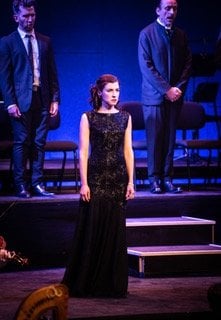


Obviously, your voice has decided your repertoire to a certain extent, but I imagine you love Baroque music.
For many years, as a child, I sang in a children’s choir where Italian polyphony from the 1400s and 1500s was our daily bread, and I certainly internalised a lot at that time. I think that my great fortune is the fact that the Classical and Baroque repertoires, which are the ones most suited to my voice, belong to a world which has always meant a lot to me and filled me with enthusiasm. At the end of the day, it’s the music we like the most that we sing best!
Baroque singers often approach contemporary music too. What are your feelings about new music?
I think this special connection exists between Baroque and contemporary repertoires because of their lack of tradition. For different reasons, they are both free from the weight of the past and of references to previous great interpreters. They are new in a way and offer a lot of room for creativity. I’m very interested in contemporary music. I’ve already sung some pieces, but I hope to do more!
The ‘playlist’ of your new album Luci mie is fascinating. How did you choose the pieces to include? There are some interesting niche works there!
This project really means a lot to me. It grew out of my longstanding work relationship and friendship with Michele Pasotti.
We started off with several pieces that we’ve been performing for many years and which we’re particularly fond of, especially Luigi Rossi, a composer who is close to my heart. From there, we created a thread, taking a glimpse at some of the treasures of seventeenth-century Italy from both of our chosen repertoires.

Why do you think that Early music and Baroque music have enjoyed such a boom over the last couple of decades?
It’s music that doesn’t have a true tradition, despite being very old. There’s a style and awareness, but no clichés and plenty of room for freedom of interpretation. I also think that it’s an extremely stimulating repertoire from a theatrical perspective, and this awakens the audience’s curiosity.
Who are the mezzosopranos in this repertoire that you admire?
Without doubt, first and foremost, Cecilia Bartoli. We owe part of the large-scale renaissance of the Baroque repertoire to her, to her research and rediscovery, and her immense talent as an interpreter and virtuoso singer.
Then there are many others… Anne Sophie von Otter is a singer I could never stop listening to, who has approached different repertoires with unrivalled class and elegance.
You have several new roles coming up. How do you prepare?
With the music, first of all – studying it, understanding it, until it gets under my skin and into my voice. Then, of course, the libretto and, if there are any, I track down the historical, cultural and literary references. I like to create my own impression of the character before discussing it with the stage director.
What are the new roles?
A lot of Handel this autumn – Sesto and Alcina, two marvellous roles that I can’t wait to explore. At the beginning of 2026, I’m going back to Lully, the French-Italian composer with whom I feel great affinity. After that, I’ll be preparing a Belcanto debut as Elisa in Donizetti’s Enrico di Borgogna at La Fenice. There’s something for everyone.

What role has given you the most satisfaction to date?
I’m lucky because I’ve taken on so many wonderful roles and so many challenges.
If I had to choose one, perhaps I’d say Sesto in La clemenza di Tito. It’s an extremely complex role, full of fragility, yet powerful too. It’s challenging from a vocal perspective, calling for great virtuosity in the famous aria “Parto, parto”, with other moments of extreme lyricism. I have to admit it’s one of the roles I enjoyed the most.
And what production have you felt happiest in?
About ten years ago, I took part in a production of Orfeo by Luigi Rossi, a key composer in Rome in the 1600s, who has certainly experienced a renaissance in the last few years. I must say that it was a revelation. His music is truly amazing! What’s more, on this occasion, the team was equally remarkable, young and well-matched. The production toured France extensively, receiving broad acclaim. Definitely a special time and memory.
Who are some of the fundamental figures who have helped shape your voice or musical approach?
My point of reference, my guiding light, is still my first teacher, Laura Groppi. As I’ve already said, I owe her almost everything I know about my voice, technique and music.
Then there have been other significant encounters. Years ago, I took several lessons with Sonia Prina, striking for her approach to “Recitar cantando”* and the practice of freedom in that repertoire.
It’s a pleasure to think back to the Accademia di Pesaro and meeting maestro Alberto Zedda. I received so much precious advice from him, but also anecdotes and memories connected to his profound knowledge of Rossini, all stored in my mind.
What music do you listen to when you relax?
I actually like symphonic and instrumental music. I like Wagner, for example, and I love Brahms’ sonatas for piano and violin. I enjoy listening to Horowitz a lot… but also non-classical music, just to disconnect a bit.
If you could sing any role, what would it be?
If I had to choose a role in my vocal register but light years away from me, perhaps I’d choose Eboli from Don Carlos. If I’m allowed a flight of fancy, then I’d like to have been born a tenor and to sing as Manrico in Il Trovatore – as you can see, in my “intimo del cor” there is Verdi.


How do you keep grounded when living the surreal life of a singer?
Having a family has certainly helped me a lot. A singer’s feet are never quite on the ground – often travelling, off around the world, caught up in “musical thoughts”. Travelling with my family and my daughter (which I’ve often done up to now) helps me to switch off; when I arrive home, I leave the theatre behind and vice versa. At least, I try to.
You have a family and a successful career… what would you like to make your life ‘perfect’?
As I said at the start of our long chat, my keyword is “balance”. Sometimes that’s just how I feel, like a tight-rope walker trying to keep everything in line – work, relationships, family, home. It isn’t always easy. Things often lean in one direction, but it’s always possible to regain one’s balance. I don’t think I need anything else in particular, just to enjoy what I already have.
* “Recitar cantando” is a late Renaissance musical style, originating in Italy’s Camerata Fiorentina, that aimed to make text understandable through a musical delivery that was a natural, expressive blend of speaking and singing, moving away from the complex polyphony of the time. This style, also called “parlar cantando,” featured a single, accompanied voice and is considered the direct precursor to modern opera and the operatic recitative.

Graham Spicer, aka ‘Gramilano’, is a writer, director and photographer based in Milan. He was a regular columnist for Opera Now magazine and wrote for the BBC until transferring to Italy. His articles have appeared in various publications from Woman’s Weekly to Gay Times, and he wrote the Danza in Italia column for Dancing Times magazine. Graham was the historical advisor on Codice Carla, the 2023 documentary on Italian ballerina Carla Fracci.
Graham also works as a dance photographer, and his photos have appeared in many books, theatre programmes, and magazines, including Dancing Times, Dance Spirit and Ballet2000, as well as all the major Italian newspapers.
He is a member of the Dance Section of The Critics’ Circle.