Review: Marking Time – triple bill of choreography unified through the music of Nico Muhly
Graham Watts sees Marking Time with three works set to the music of Nico Muhly by choreographers Jules Cunningham, Maud Le Pladec and Michael Keegan-Dolan.
| Title | Marking Time – Nico Muhly |
| Company | Jules Cunningham | Maud Le Pladec | Michael Keegan-Dolan |
| Venue | Sadler’s Wells, London |
| Date | 20 November 2025 |
| Reviewer | Graham Watts |
This triple bill of choreography by three separate creators was unified through the back catalogue of music by Nico Muhly, the third in an occasional series of programmes curated by Sadler’s Wells to align contemporary choreography and music in celebration of a particular composer: this Muhly evening follows similar programmes inspired by the music of Thomas Adès and Marc-Anthony Turnage.
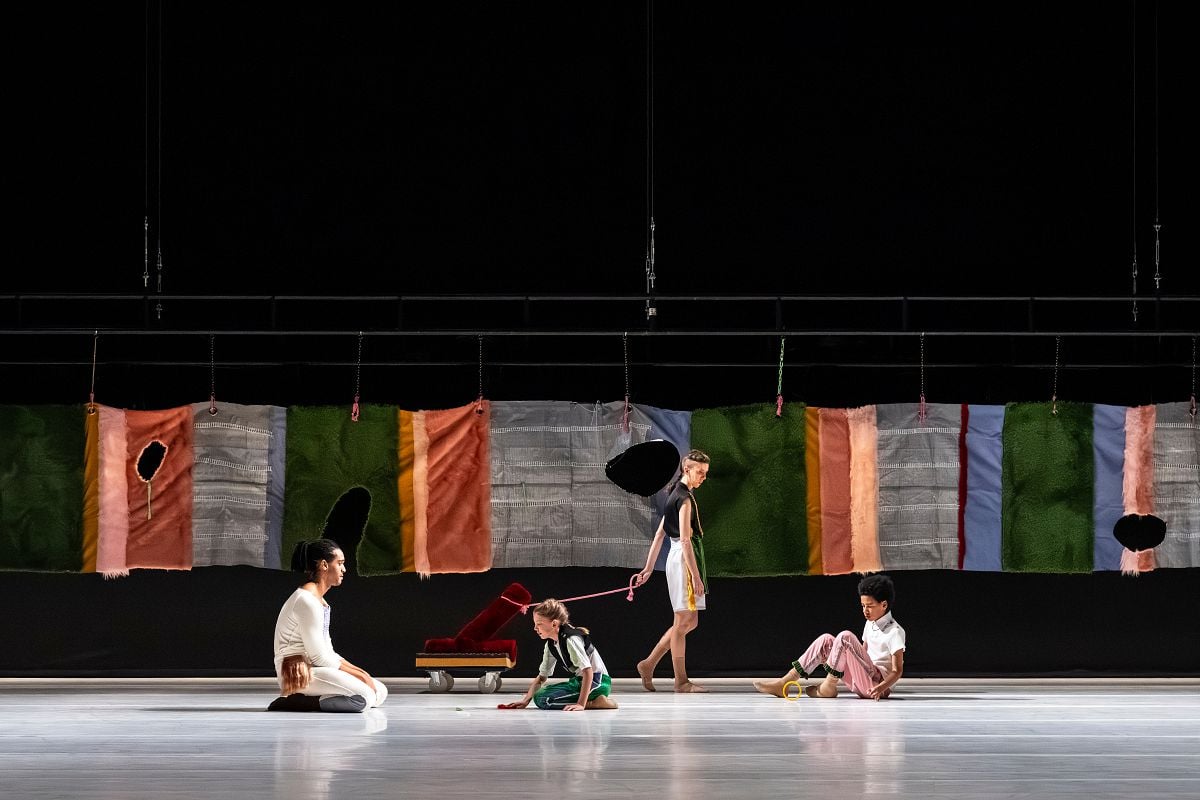

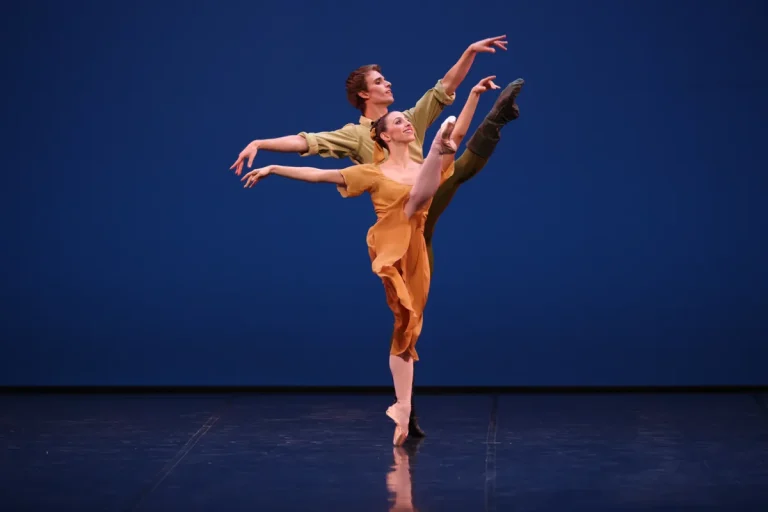
The first of the choreographers to take Muhly on was Jules Cunningham with Slant using excerpts from Drones, a musical series for Viola Da Gamba (although I believe arranged for Cello here), Violin and Viola themed around one note – B flat – that Muhly discerned from an aeroplane’s engine while taxiing around the tarmac for 90 minutes, waiting for permission to take-off.
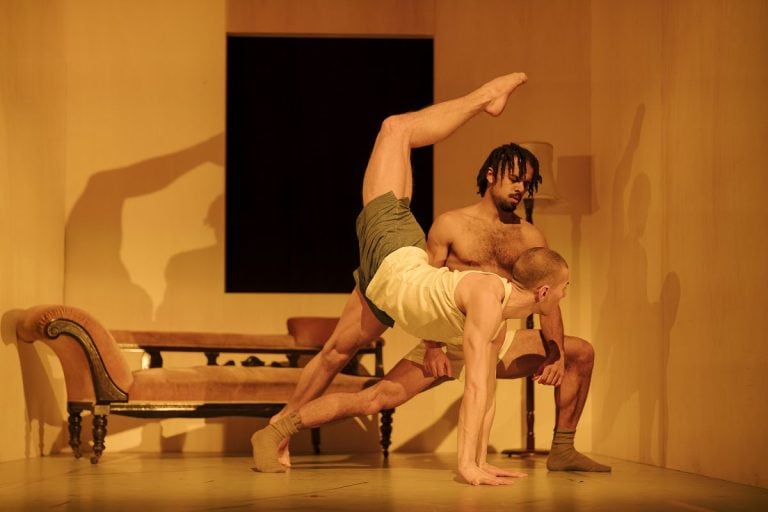
If it sounds esoteric then believe me, it was. And Cunningham seemed to get the drone perfectly in their highly specialised choreography that involved children, ropes, distressed material in the backdrop, green capes and a motif that reminded me of dead flies. Throughout the work, Harry Alexander was an imposing physical presence.
Cunningham’s choreography seems inevitably to be inspired by the ideas of their namesake (and, perhaps, mentor), Merce, with whose company they danced during its latter years. There is an overall meditative feeling to the group movement in which simple actions (eg floor-based resting positions, walking) are paramount. Muhly accurately describes Cunningham’s choreography as having an ‘elusive quality’ and I feel certain that there is a cerebral message in their movement language, which clearly speaks to many people, but not – with any clarity – to me.

Things moved into a different gear with Veins of Water by Maud Le Pladec, the recently appointed director of Ballet de Lorraine. She has taken a more thematic approach to Muhly’s music, in this case the score Drown that sprang from a commission by a museum in Salem and was inspired by a stick carved over five months by a sailor marooned on the island of Tristan da Cunha, in 1804. The first manifestation of this music interpreted in movement was only the second time that the composer had heard it performed live.
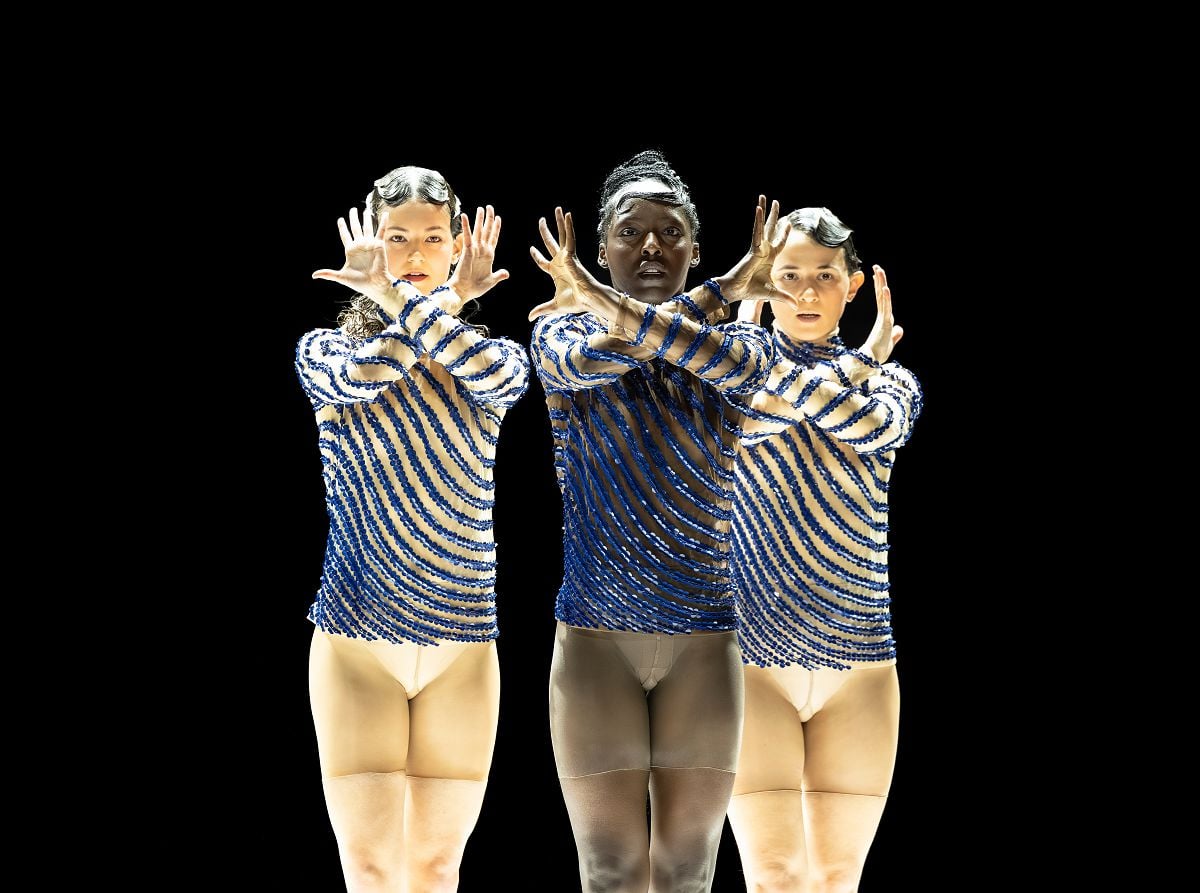
Le Pladec imagined this music as a trio for three women, dressed in extraordinary nude costumes decorated with wavy, blue lines on the torso and something like flesh-coloured tights cut-off halfway down the thighs. Designed by Jeanne Friot, these costumes enhanced the feeling of wateriness and floating. The three dancers -Siaska Chareyre, Alexandra Fribault and Loeka Willems, all new to me – appeared like ethereal sirens dancing through and above the waves. The overall aura of the work was hypnotic and if the object of the choreographic exercise was musicality, then Le Pladec and her excellent dancers certainly nailed it.
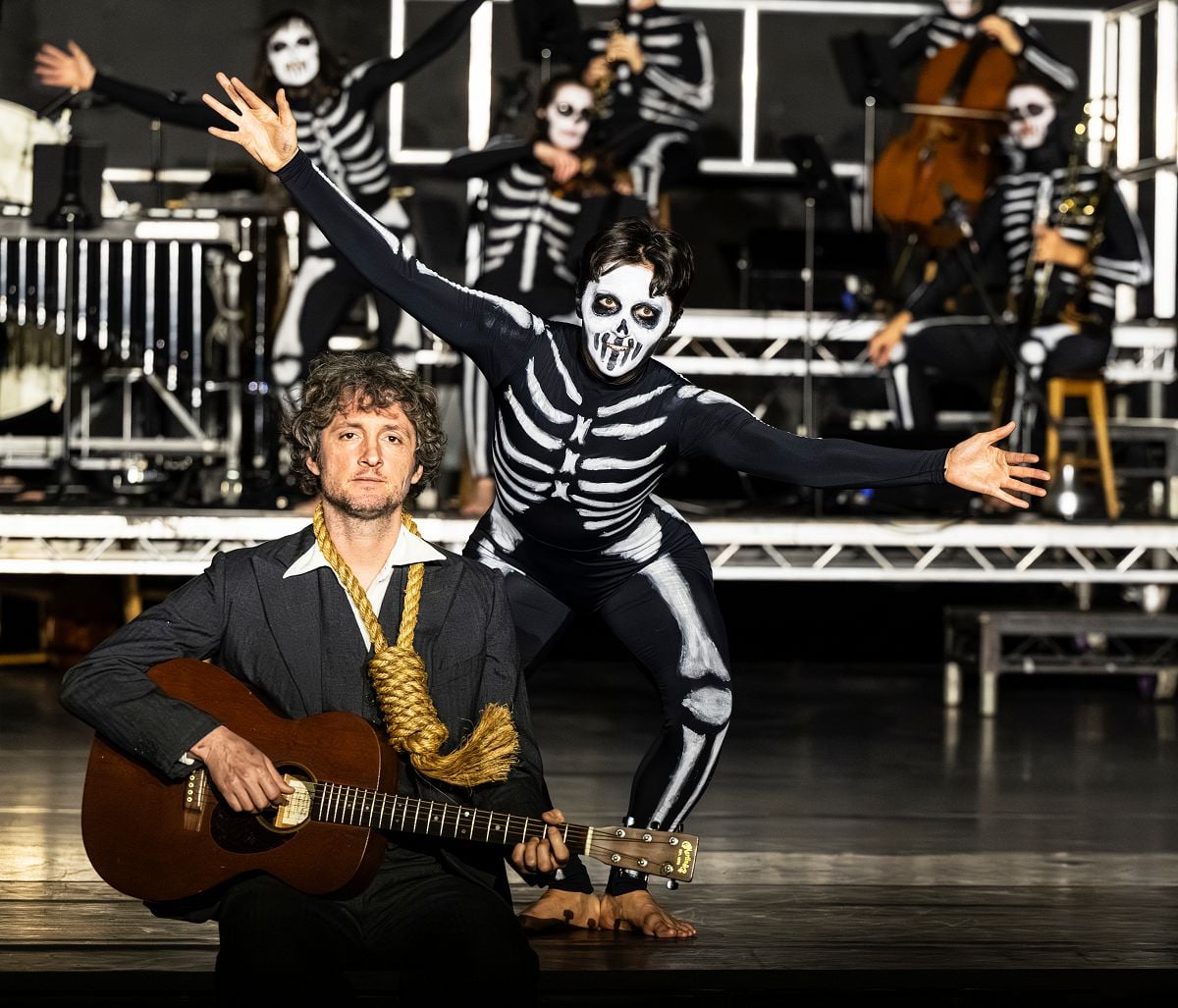
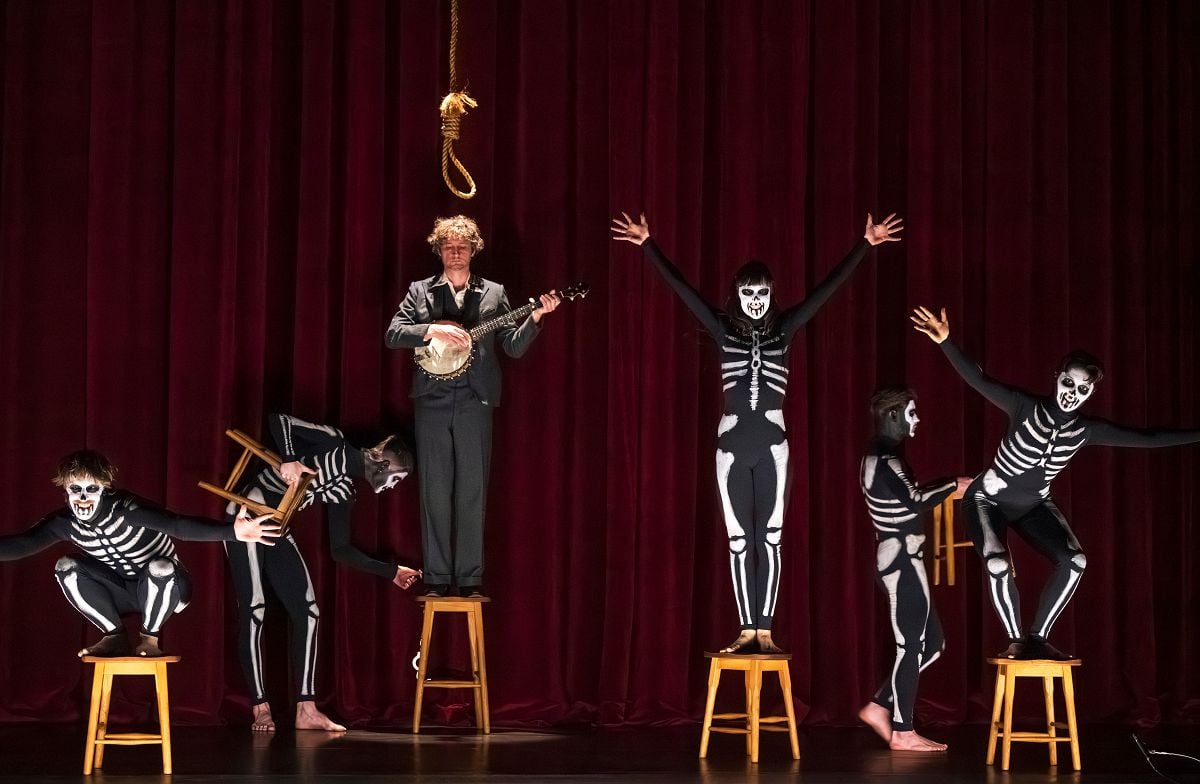
The longest piece followed the interval and brought Michael Keegan-Dolan’s trademark quirkiness to the party, beginning with folk singer, Sam Amidon standing alone on the stage in front of a noose dangling from the flies. The Only Tune was made in 2006 cooperatively by Muhly and Amidon and since the latter was nominated for a 2024 National Dance Award for his musical contribution to Keegan-Dolan’s Nobodaddy, the choice of choreographer for The Only Tune seemed a no-brainer.
The music was inspired by a murder ballad that told the story – inimitably in Amidon’s unique vocal style – of a sororicide where the older sister murders her sibling by pushing her into a river, so that she can marry her lover. So, from Cunningham’s non-narrative, non-binary essay in simple movement we ran the full mile through three water maidens to a narrative-based folk tale of one sister murdering another!
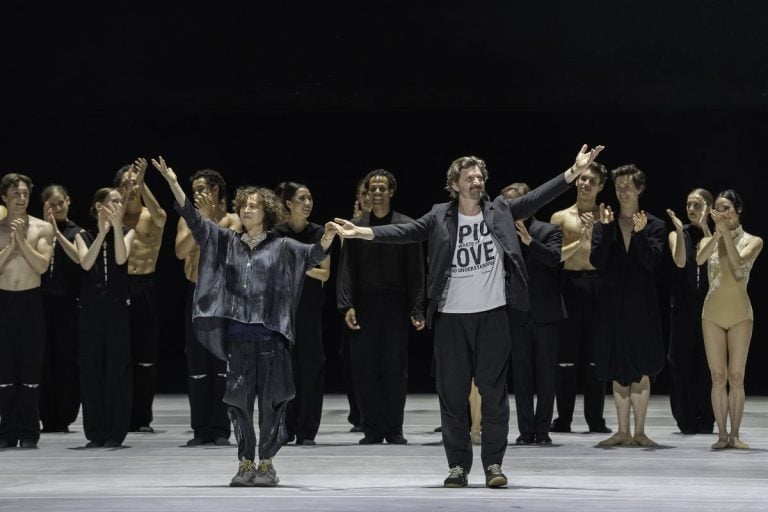
This gruesome subject matter, emphasised by the presence of the noose, was relieved by the comedic presence of the eight dancers dressed in Día de los Muertos costumes of neck-to-toe black with skeletal imprints, white faces, black eyes and stitched mouths (effectively contrived by set and costume designer, Hyemi Shin). It was, by some way, the most impactful of the three works, not least because of Amidon’s enigmatic presence but – as often the case with Keegan-Dolan’s work – it was one where style, music and design trumped dance, which seemed the least memorable of the creative elements.
The idea of theming a whole evening programme on the work of one composer is worth celebrating and the Britten Sinfonia (with which Muhly has collaborated often) performed his music superbly. It’s fair to say that this programme was postponed from 2020 due to covid but if you are waiting for the next in the series, don’t hold your breath because the three so far have taken fourteen years to produce!

Graham Watts is a freelance writer and dance critic. He writes for The Spectator, Tanz, Shinshokan Dance Magazine (Japan), Ballet Magazine (Romania), BachTrack and the Hong Kong International Arts Festival and has previously written for the Sunday Express, Dancing Times, Dance Europe, DanceTabs, London Dance, the Edinburgh International Festival and Pointe magazine (USA). He has also written the biography of Daria Klimentová (The Agony and the Ecstasy) and contributed chapters about the work of Akram Khan to the Oxford Handbook of Contemporary Ballet and on Shobana Jeyasingh for the third edition of Routledge’s Fifty Contemporary Choreographers.
He is Chairman of the Dance Section of The Critics’ Circle and of the UK National Dance Awards and regularly lectures on dance writing and criticism at The Royal Academy of Dance, The Place and (until the war) for Balletristic in Kyiv. He was a nominee for the Dance Writing Award in the 2018 One Dance UK Awards and was appointed OBE in 2008.