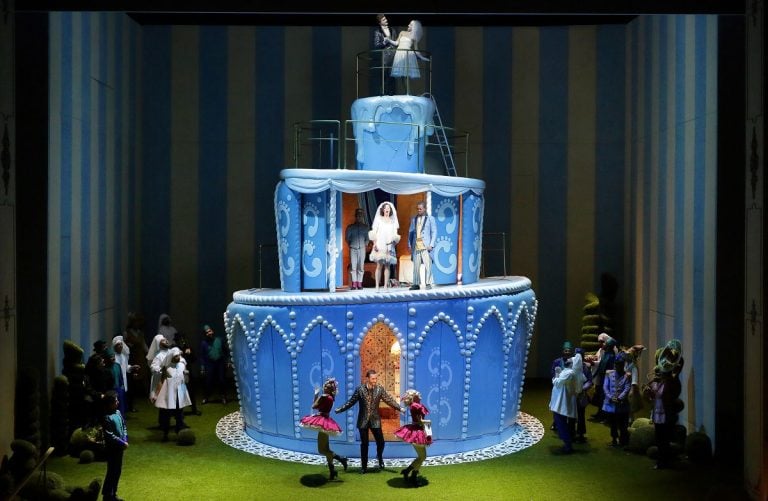
Teatro La Fenice in Venice and Beatrice Venezi – set to become the theatre’s first music director – cut ties

Beatrice Venezi is no longer the appointed music director at Teatro La Fenice in Venice.
The theatre and the conductor have terminated their relationship. The theatre’s Foundation announced that future collaborations have been cancelled following recent tensions after Venezi’s statements in an interview with the Argentine newspaper La Nación.
The theatre officially communicated this decision in a statement: “The Teatro La Fenice Foundation and its Director Nicola Colabianchi, announce the cancellation of all upcoming projects with maestro Beatrice Venezi.”
On 22 September 2025, Venezi was appointed music director of La Fenice, which immediately triggered protests from the orchestra. In a public letter, the musicians criticised the lack of transparency in the appointment process and questioned the conductor’s artistic background. They claimed she did not have enough experience for the high-profile position and was picked only because of her close connections with Italy’s far-right government, headed by Giorgia Meloni.
During the interview with La Nación, Venezi expressed her admiration for Meloni – “an extremely competent and powerful woman” – saying that they had known each other before Meloni had become prime minister and that the support she received was “from woman to woman, from friend to friend” rather than being strictly political.

The protests grew in the weeks following her appointment, including a call for Colabianchi’s resignation. On 17 October 2025, a strike caused the cancellation of the opening night of Wozzeck. A procession took place on 10 November, involving employees from other Italian theatres, as well as additional protests, such as leaflet-throwing in the theatre.
Venezi’s appointment also drew critical responses from the music community, including conductors Fabio Luisi, Silvia Massarelli, and Vittorio Parisi, along with violinist Uto Ughi and ex-Fenice director Cristiano Chiarot.
Support for the initial decision was also strong, however. Besides Colabianchi, Giampiero Beltotto, director of the Teatro Stabile del Veneto, and Minister Alessandro Giuli voiced support for the appointment.
Venezi, who was set to become the theatre’s first female music director, told La Nación that La Fenice’s management was apprehensive because she was young, female, and eager to instigate change. “I don’t come from a family of musicians, and this is an orchestra where positions are practically passed down from father to son.”
She added that the orchestra members “never leave the island” of Venice, and said they tended to shy away from change and renewal. In the past, she had said that management was too influenced by unions and that season ticket holders were all “over 80”.
The Unions described her statements as “false, serious, and offensive”, emphasising that access to the orchestra is strictly through international public competitions, based on merit and professional rigour, thus dismissing any idea of hereditary transmission of roles.
Culture Minister Alessandro Giuli addressed the issue, acknowledging the decision and reaffirming his full confidence in Colabianchi. “Hopefully, this decision can help resolve misunderstandings, tensions, and the instrumentalisation of any kind, all in the interest of the theatre and the city of Venice.”

Graham Spicer, aka ‘Gramilano’, is a writer, director and photographer based in Milan. He was a regular columnist for Opera Now magazine and wrote for the BBC until transferring to Italy. His articles have appeared in various publications from Woman’s Weekly to Gay Times, and he wrote the Danza in Italia column for Dancing Times magazine. Graham was the historical advisor on Codice Carla, the 2023 documentary on Italian ballerina Carla Fracci.
Graham also works as a dance photographer, and his photos have appeared in many books, theatre programmes, and magazines, including Dancing Times, Dance Spirit and Ballet2000, as well as all the major Italian newspapers.
He is a member of the Dance Section of The Critics’ Circle.