
Review: Matthew Bourne’s The Car Man – as good as it gets
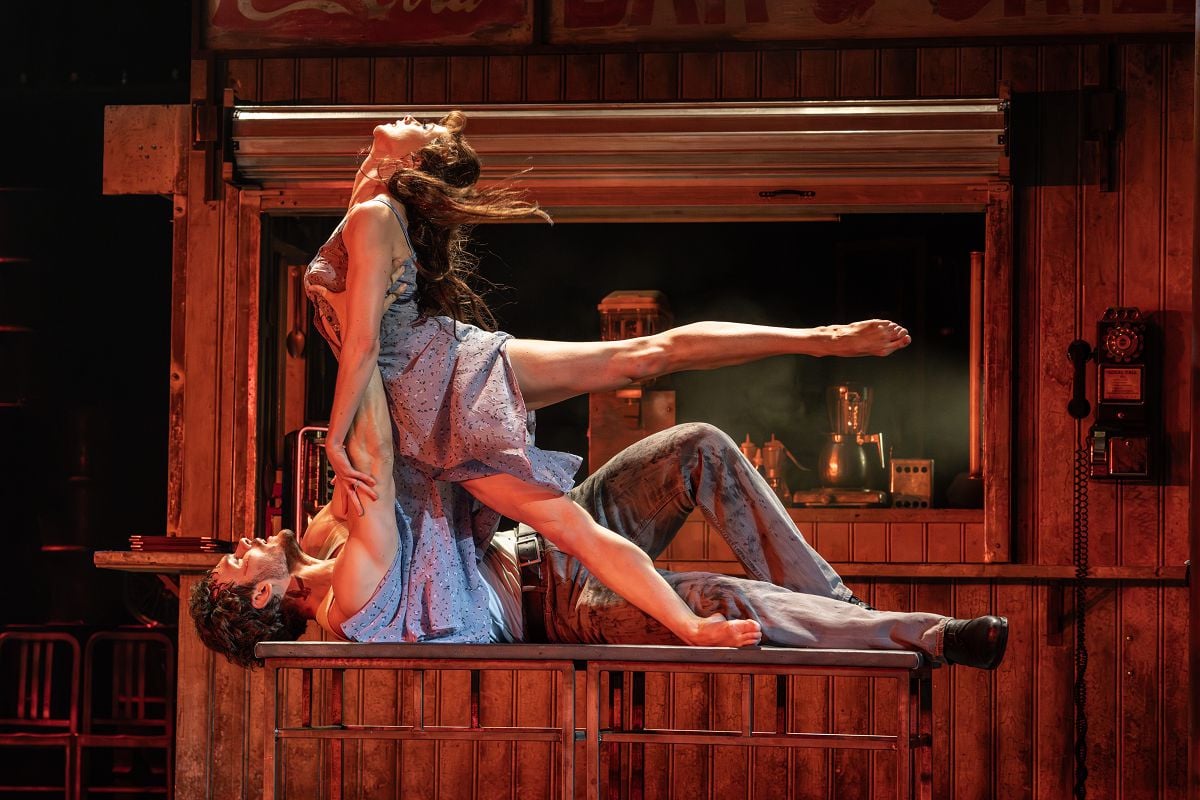
Graham Watts sees the return of The Car Man to London – great ensemble choreography; tremendous individual performances; fantastic sets, and never a dull moment!
| Title | The Car Man |
| Company | New Adventures |
| Venue | Sadler’s Wells, London |
| Date | 30/31 July 2026 |
| Reviewer | Graham Watts |
Matthew Bourne’s The Car Man is about as good as it gets. An excellent and very clear story, which, by the way, has little in common with the Carmen narrative and more with The Postman Always Rings Twice, which was an inspiration to Bourne – memorable and popular music; great ensemble choreography; tremendous individual performances; fantastic sets by Lez Brotherston that interchange so smoothly; and, most importantly of all, never a dull moment!
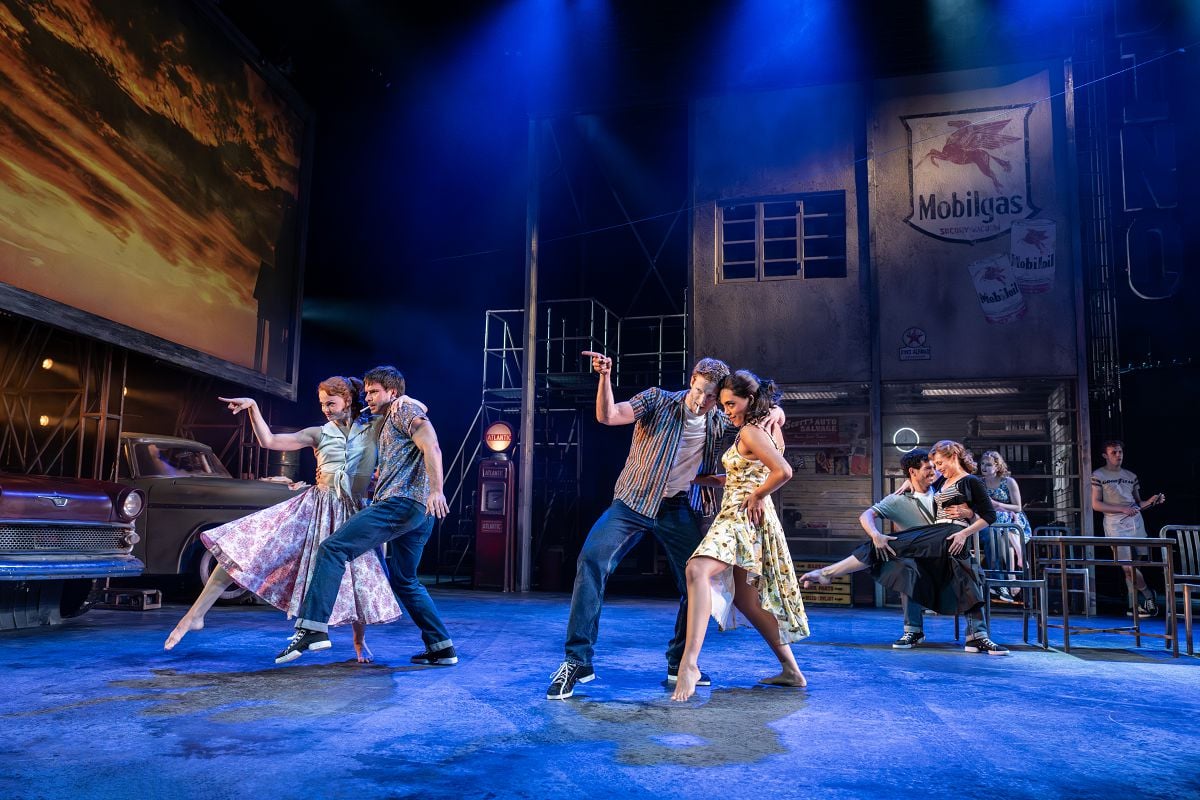


Only those who have spent a lifetime on a desert island will be unfamiliar with the memorable tunes from Georges Bizet’s opera. Rodion Shchedrin, who died a year ago, condensed Bizet’s music into a 40-minute orchestral composition for a one-act ballet, entitled Carmen Suite, commissioned and danced by his wife, Maya Plisetskaya. The tunes are still those of Bizet, but Shchedrin added fresh instrumental variation, including the use of percussion, and it is the Shchedrin suite that forms the bedrock for The Car Man‘s music, with Bourne’s go-to composer, Terry Davies, filling in the gaps and extending the music to fit this full-length dance drama.

The front ends of two Chevrolets are a key part of Brotherston’s set in Dino’s garage, and it struck me that the music is a sophisticated ‘cut and shut’ welding together that Dino probably engineered illegally in his fateful garage. The composition, performed by the New Adventures orchestra conducted by Benjamin Pope, is a major part of the work’s success.
Dino is a bullying, larger-than-life character with a penchant for beer, cigars and slapping his wife. The nastiness is successfully dumbed down somewhat in a caricature, and sometimes comical performance by Danny Reubens, who nonetheless left no room for sympathy for his unpleasant and pathetic character. Dino’s empire, if such could be said to exist in the town of Harmony – population 375 – was a combination of garage and diner, the latter managed by his wife, Lana (named by Bourne in tribute to Lana Turner, star of the 1946 version of The Postman Always Rings Twice).


Lana’s personality is that explosive cocktail of bored and lustful, and Ashley Shaw exuded these twin peaks of disgust for her avaricious husband and sexy raunchiness whenever let off his leash, with an expressive ebullience that dominated the stage. In the earlier cast, Cordelia Braithwaite came very close to capturing a similar charisma.
Dino’s garage and diner are thrown into disarray by the emergence of a drifter, Luca, who applies for the “Man Wanted” vacancy and quickly captures the lustful attention of both Lana and the younger garage worker, Angelo, the target of group bullying by the other workers. In a hilarious juxtaposition of two conjoined scenes, both sets of lust are requited with some stamina by the energetic Luca. Opposite Shaw, Will Bozier brought an imposing physical presence to the role of this anti-hero. In that cast, Harrison Dowzell was the main man support, Rocco, whereas he was Luca to Braithwaite’s Lana in the earlier cast: less imposing but nonetheless with an impressive physique. Harry Ondrak-Wright and Leonardo McCorkindale both performed expressively as the hapless Angelo. The whole cast was tremendous over both nights, and the ensemble dancing was terrific; each group dance had a pacy momentum and great harmony in the unified movement.
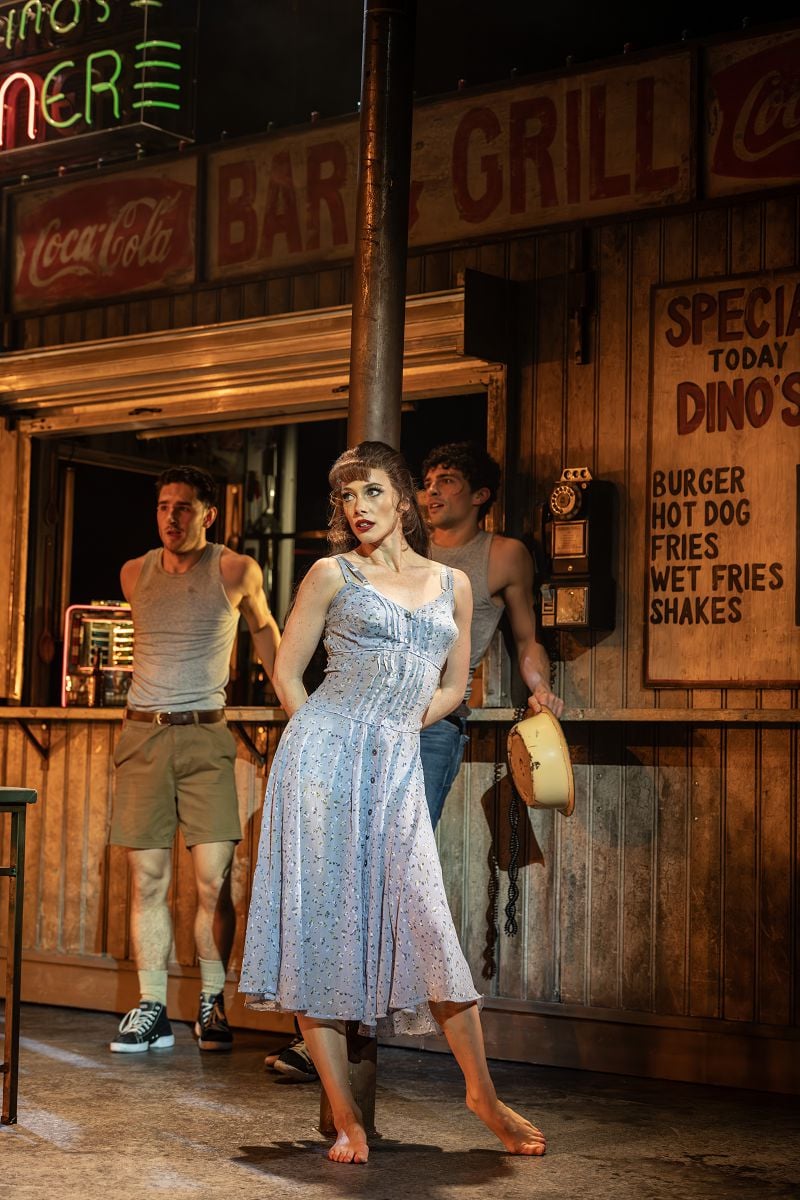

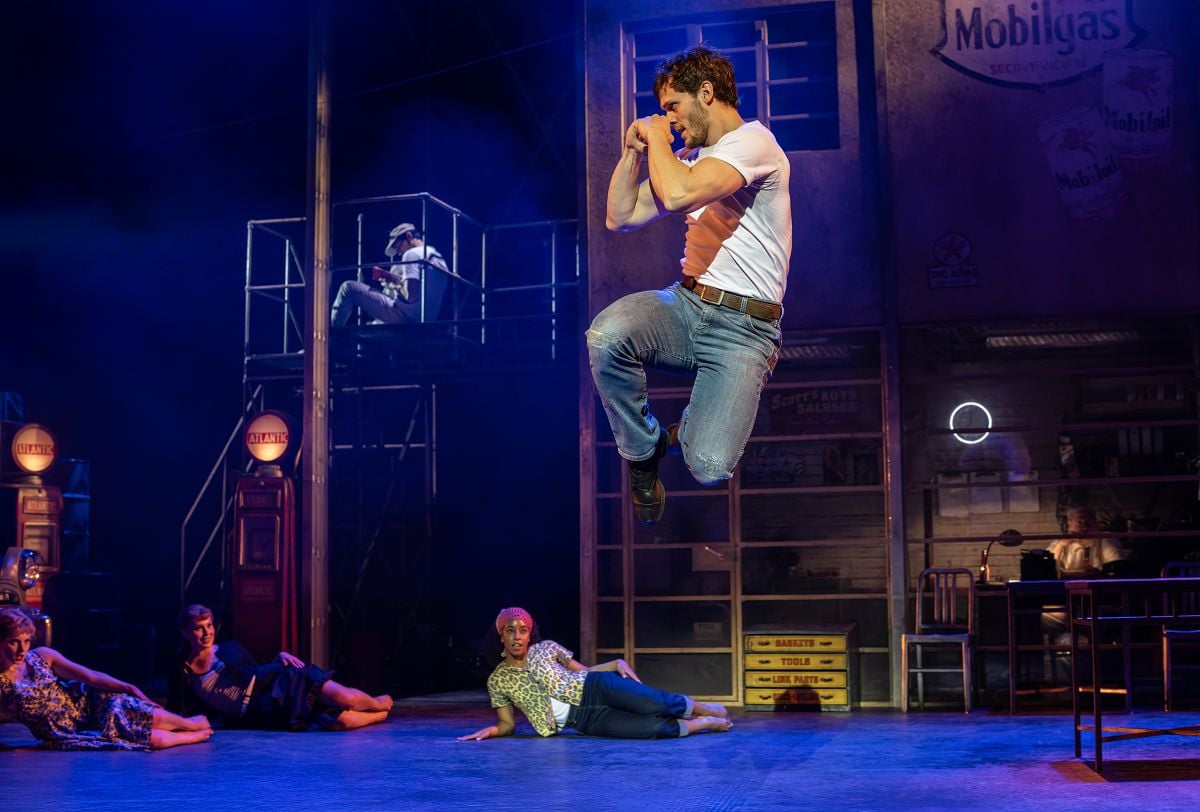
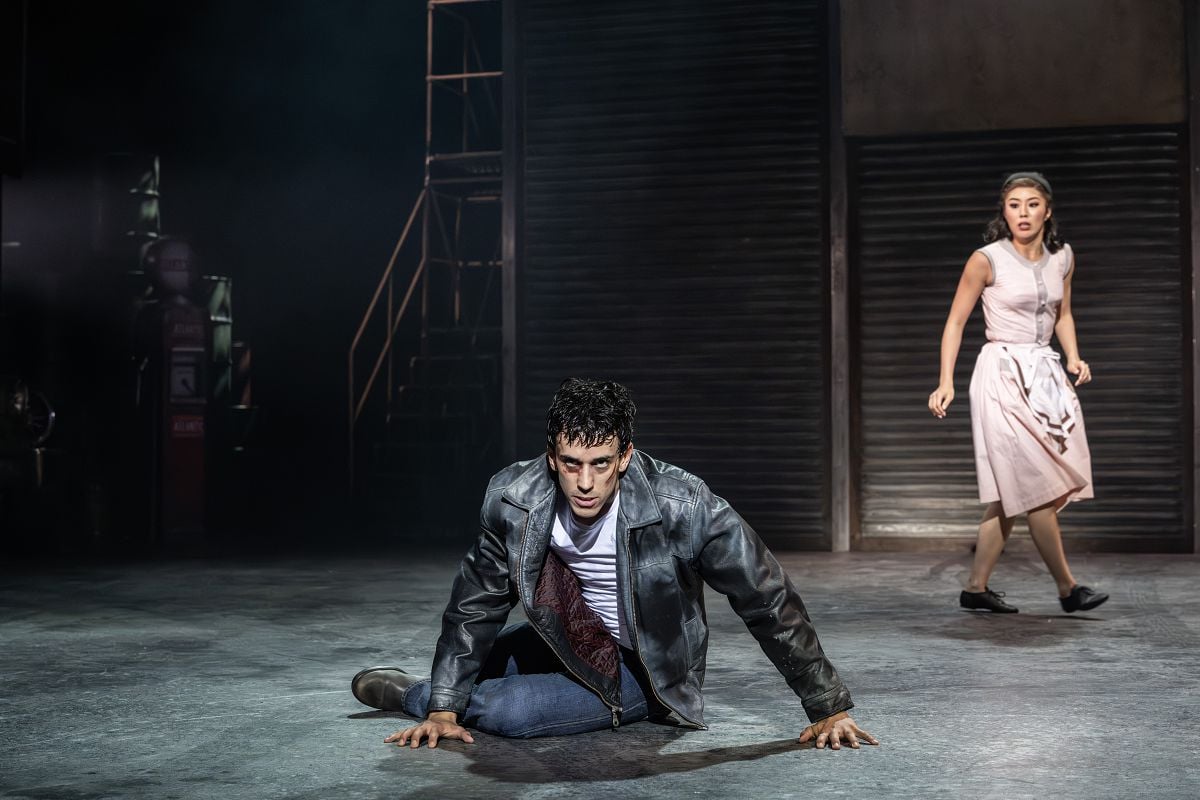
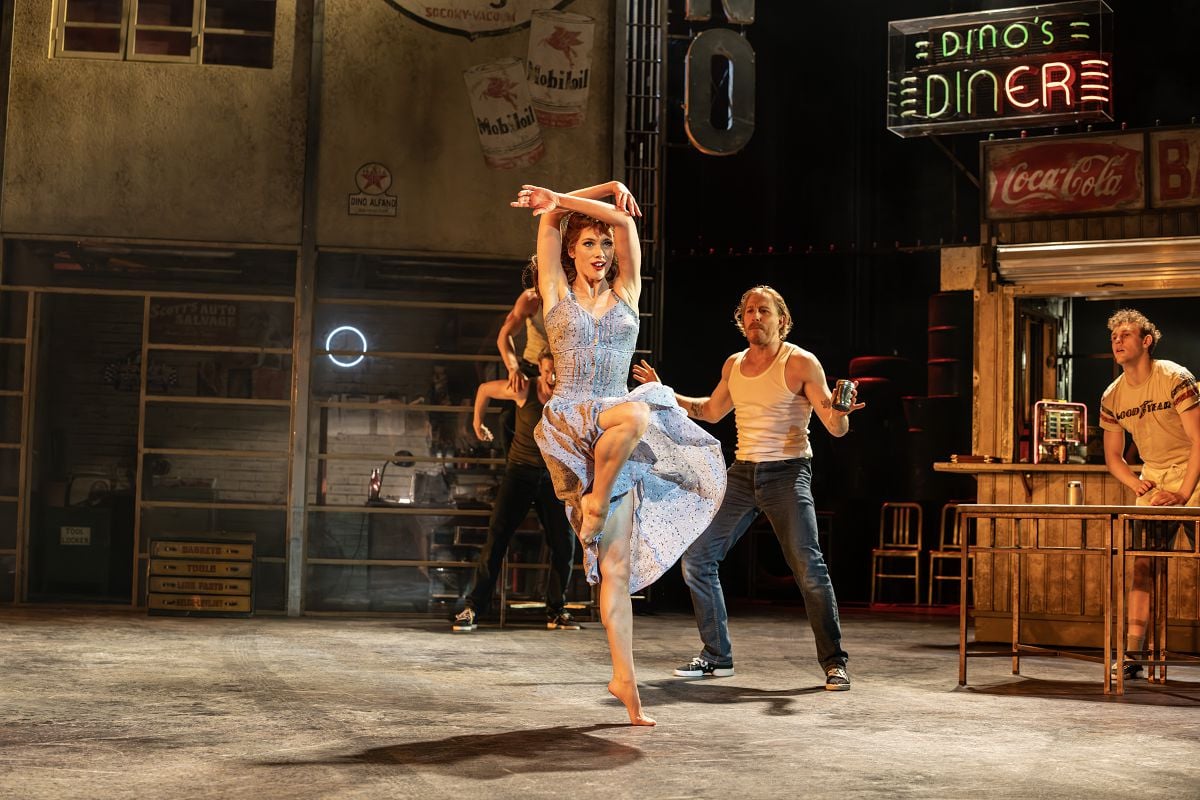
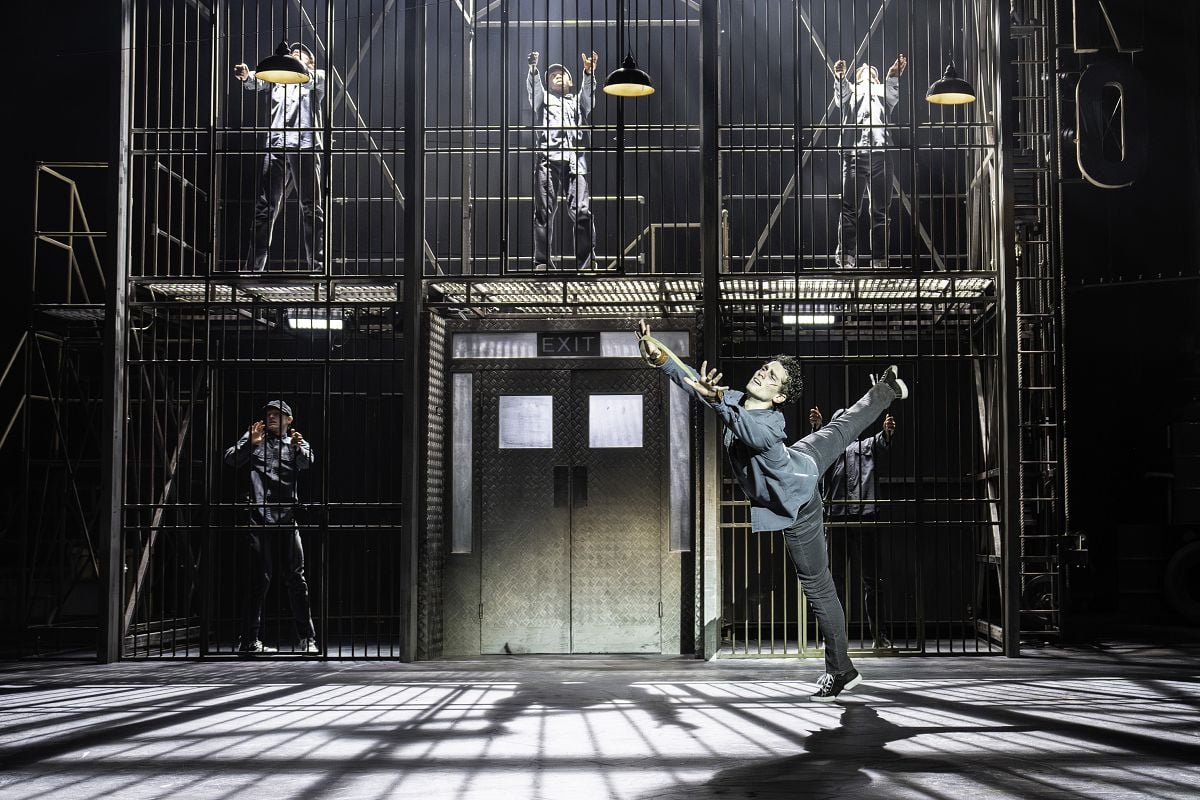
The action in this inappropriately named town in America’s Midwest, where harmony is very far from reality, takes place over nine months and Brotherston’s outstanding set moves the action from garage and diner to a nightclub (Le-Beat-Route), the County Jailhouse, and back to Dino’s without any delay to spoil the momentum. The 1950s feel is authentically achieved in both his set and costumes.
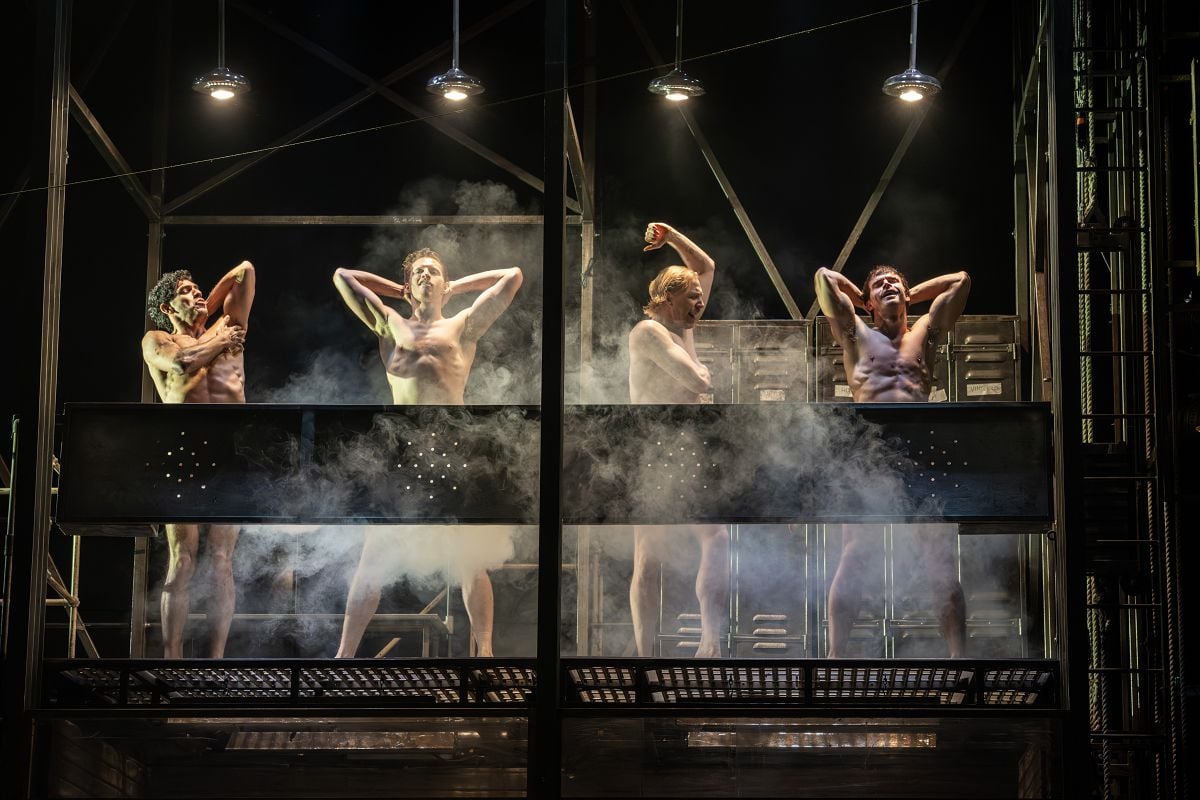
As with all of Bourne’s work, humour is embedded throughout the drama, not least in the early shower scene with its surprising full-frontal flash (blink, and you would have missed it), and there is often a throwback to nostalgia, such as the Wilson and Keppel parody in The Red Shoes. Here it is a comedic interpretation of a French/Basque cabaret act, complete with black berets and costumes, at Le-Beat-Route, which put me in mind of a similar pastiche in the Fred Astaire film Funny Face or perhaps the work of Marcel Marceau. The uber-charismatic woman in this memorable vignette was Tanisha Addicott, who also played Gina in the Dino Diner gang. Her facial expressions alone were outstanding!
This revived work has the action already taking place in the forecourt of Dino’s garage as the audience assembled and I liked the device of the cast forming tableaux at both the formal beginning (house lights down) and the ending when Dino’s garage and diner are now for sale but we know that life will go on in the town of Harmony even though the population has decreased by one.
Finally, I can’t write this review without referencing Jonathan Ollivier, who was a superb interpreter of the loner, Luca, and who died in August 2015 when his motorcycle collided with a car on the way to Sadler’s Wells at the time of the revival of The Car Man. He may have left Harmony far too soon, but he’ll never be forgotten.
Cast 30 July
Cordelia Braithwaite (Lana), Harrison Dowzell (Luca), Kurumi Kamayachi (Rita), Leonardo McCorkindale (Angelo), Danny Reubens (Dino).
Cast 31 July
Ashley Shaw (Lana), Will Bozier (Luca), Anna Maria de Freitas (Rita), Harry Ondrak-Wright (Angelo), Danny Reubens (Dino).
Photographer Dasa Wharton goes beyond the stage


Graham Watts is a freelance writer and dance critic. He writes for The Spectator, Tanz, Shinshokan Dance Magazine (Japan), Ballet Magazine (Romania), BachTrack and the Hong Kong International Arts Festival and has previously written for the Sunday Express, Dancing Times, Dance Europe, DanceTabs, London Dance, the Edinburgh International Festival and Pointe magazine (USA). He has also written the biography of Daria Klimentová (The Agony and the Ecstasy) and contributed chapters about the work of Akram Khan to the Oxford Handbook of Contemporary Ballet and on Shobana Jeyasingh for the third edition of Routledge’s Fifty Contemporary Choreographers.
He is Chairman of the Dance Section of The Critics’ Circle and of the UK National Dance Awards and regularly lectures on dance writing and criticism at The Royal Academy of Dance, The Place and (until the war) for Balletristic in Kyiv. He was a nominee for the Dance Writing Award in the 2018 One Dance UK Awards and was appointed OBE in 2008.


