Interview: Elena Moșuc – performing with sincerity, maturity and deep respect
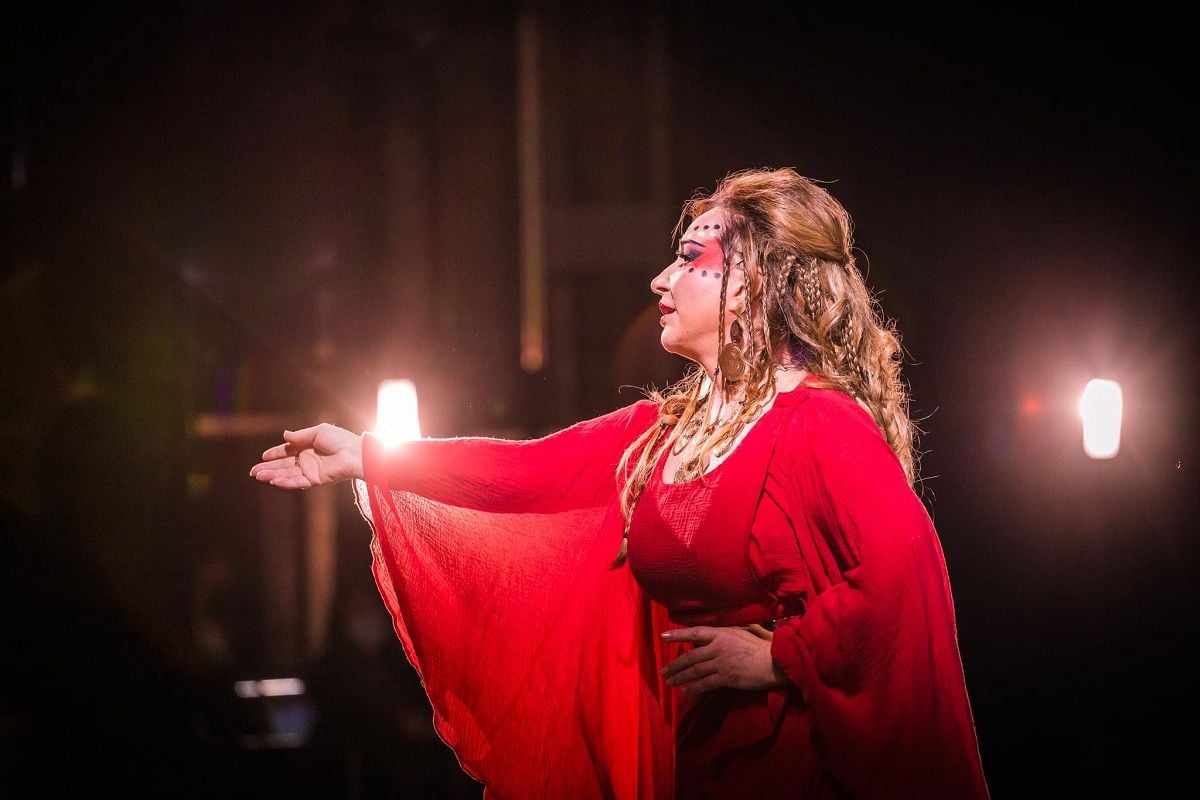
| Graham Spicer talks with Elena Moșuc after her latest debut in the notoriously difficult role of Abigaille in Verdi’s Nabucco. |
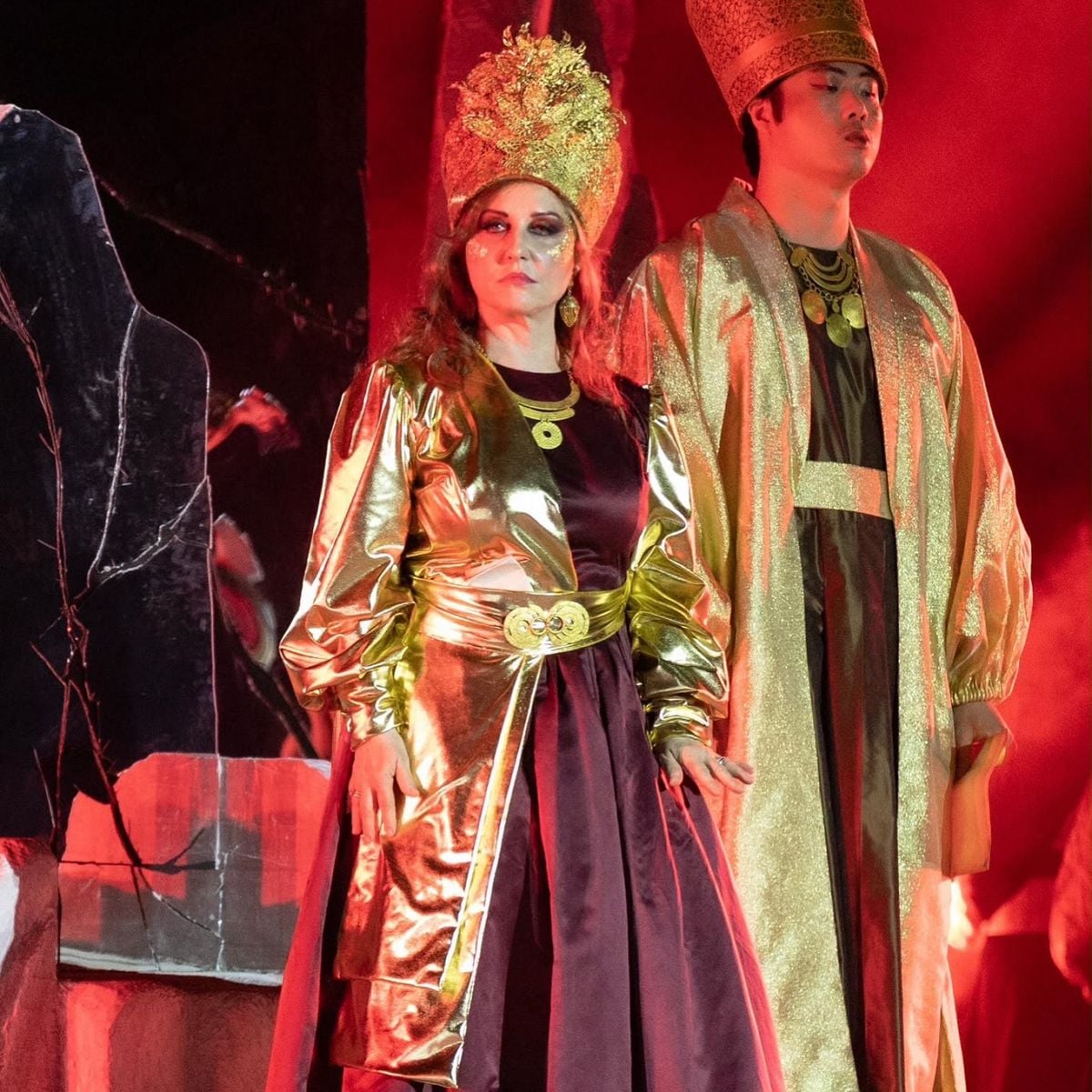
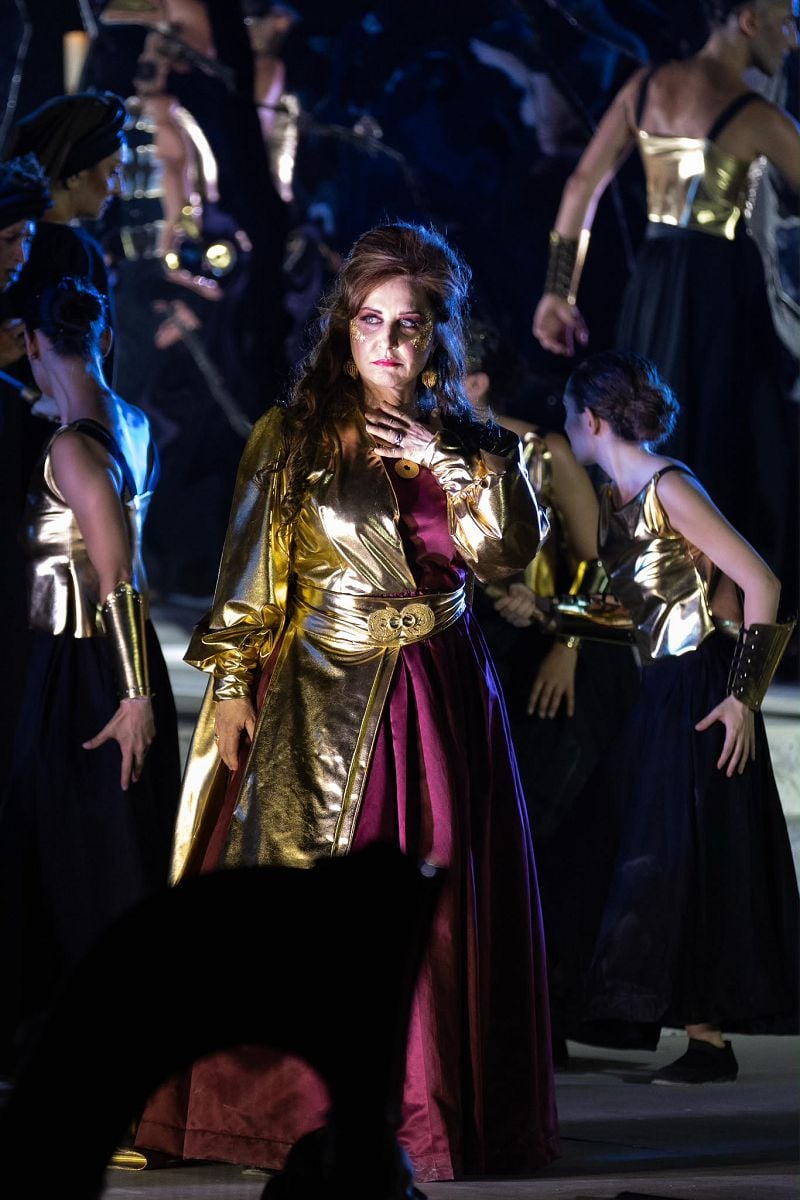
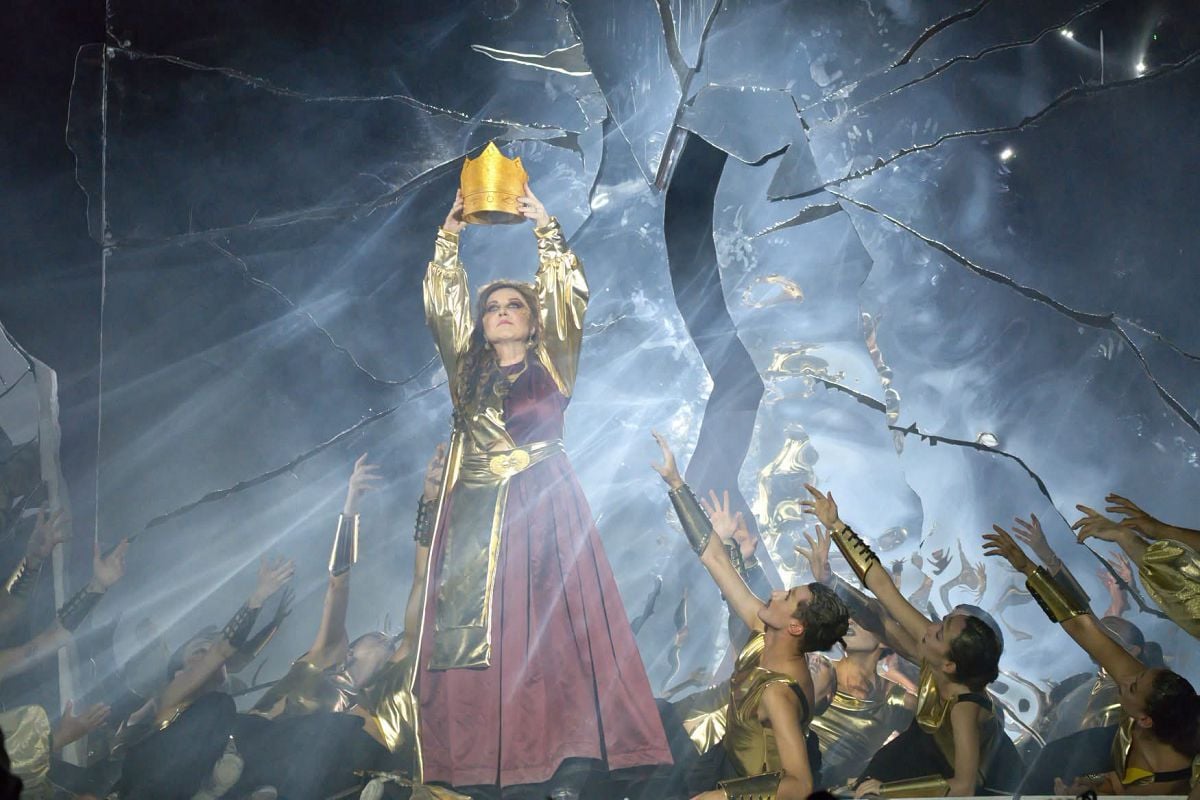
Last month, soprano Elena Moșuc made her debut in Nabucco at the Teatro Greco in Syracuse – a massive ancient Greek theatre carved into the rock in the 5th century BC – marking the first of three venues where the opera can be seen during the Festival Lirico dei Teatri di Pietra. Moșuc will be singing the role of Abigaille (a character Seattle Opera called a “kickass warrior woman”) in other stunning settings: the Teatro Greco di Tindari on 4 August, and the Teatro Antico di Taormina on 7 August.
It was as the Queen of the Night that she found operatic stardom, and she has sung in the world’s major opera houses from the Met in New York to La Scala in Milan over the last three decades.


After her latest debut, I chatted with Moșuc about singing such a notoriously difficult role.
Abigaille… a big sing!
Abigaille is one of the most challenging roles for a soprano. It is like the ‘Everest’ of the Verdi repertoire. She is often described as a ‘voice killer’, but I think that perception is somewhat misleading.
Why do you think that is?
The role has often been entrusted to excessively dramatic sopranos, who have distorted the vocal image of this character. I must admit that I never thought Abigaille could be a role for me, but a few people who know my voice and my vocal abilities very well suggested that I study the role and give it a try. I was really surprised, but I decided to explore it, and I discovered that it is actually a role of pure dramatic bel canto.
Verdi wrote the role for his wife, Giuseppina Strepponi.
Strepponi was a bel canto soprano who even sang Amina in her prime. So I think it is natural for a soprano like me to take on this role at this stage of my career, when my bel canto experience and my dramatic instincts have reached their highest level. It represents a natural progression in my artistic journey, which began with the Queen of the Night in The Magic Flute, Gilda, Lucia and Violetta in La Traviata, and continued with Elvira (I Puritani), Linda, the Tudor queens, Norma, Giselda, Luisa Miller and Imogene. It is, in many ways, a path similar to Cristina Deutekom’s.
So when Maestro Alberto Munafò and Maestro Francesco Costa invited me to make my debut as Abigaille at the Festival Lirico dei Teatri di Pietra, I felt it was exactly the right moment. I am deeply grateful to them because they believed in me and had the courage to give me such a rare opportunity nowadays.
How did you prepare?
I began by studying the score, analysing its most challenging passages and letting go of my preconceived ideas about the role.
Abigaille requires an exceptionally wide vocal range, from solid low notes to brilliant, powerful high notes. Verdi wrote the role by combining coloratura with singing of great dramatic depth. It requires volume and projection, but above all it demands exceptional vocal and physical stamina.
What is the role’s biggest vocal challenge?
When I started studying Abigaille, I realised that the most challenging moment is her entrance. I think it is a crucial point that quickly reveals whether you have the necessary technique to take on the role. I was pleasantly surprised by the results. I began incorporating it into my daily technical practice, and gradually it became much easier.
In fact, it is not so different from the other bel canto and Verdi roles I have sung. It is simply another way of expressing the same musical language. I feel that all my previous experiences have prepared me for this role.
For example?
In the Verdi repertoire, I think Gilda gave me technical discipline and elegance of phrasing; Violetta taught me how to combine virtuosity with dramatic intensity; and Giselda, Medora, Luisa Miller and Leonora (Il Trovatore) helped me develop my lyricism, expressiveness and dramatic power. Alice Ford brought me a different kind of stage freedom and a different energy.
However, you must have surprised some friends and colleagues when you announced you would be singing the role.
I know that, for many people, my decision to sing Abigaille may seem surprising. However, I have grown accustomed to certain preconceptions. Throughout my career, many people could not imagine me as Giselda in I Lombardi, or in other roles outside the bel canto repertoire, such as Norma or Adriana Lecouvreur. One conductor even told me not to sing Abigaille because I might lose my voice. Yet after three months of studying and performing the role, I feel wonderful, and my voice is still there!
I am an artist, and artists must constantly seek new challenges.
You made your debut at the beautiful Teatro Greco in Syracuse on 19 July.
I was truly happy with my debut – we gave a wonderful performance under the baton of Maestro Salvador Vázquez, in this beautiful new production by Salvo Dolce. It was a night I will always carry in my heart, and I am sure that the upcoming performances in Tindari and at the Teatro Antico di Taormina will be equally unforgettable.
What emotions does Abigaille give you?
It is such an exciting role! At first glance, Abigaille seems strong, ruthless and driven by a thirst for power. But deep inside, everything she does comes from a profound wound: rejection, a sense of not belonging and a desperate need to be loved and accepted. It is precisely this inner conflict that makes her so human. To me, Abigaille is not a villain, but a woman who makes tragic choices because of her suffering and vulnerability.

The antique Roman amphitheatres where you are singing are stunningly beautiful, but do these settings create particular challenges?
Singing outdoors is always a challenge, but I have performed many times in open-air theatres, including the Arena di Verona. You have to work on your vocal projection so that your voice carries over the orchestra without losing clarity or expressiveness.
When I made my debut at the Arena di Verona in 2001, I worked extensively with my teacher, Mildela D’Amico, on achieving maximum projection while maintaining complete vocal control.
The Teatri di Pietra opera festival is certainly unique.
I sang Liù at this festival in Turandot in 2023, so when they invited me back to make my debut as Abigaille, I was delighted.
Performing in these ancient theatres is always deeply moving. They are extraordinary places set in breathtaking landscapes, and the atmosphere is truly unique.
The Coro Lirico Siciliano, which created the festival, feels like a family. Everyone works together towards the success of the production. It is not only the artistic and professional standards that are exceptionally high, but also the people. I met extraordinary colleagues – soloists, choristers and orchestra musicians – warm, generous and dedicated artists who create an environment where you feel inspired to give your very best.
You have projects in Bucharest coming up – what is your relationship with the theatre?
I will give a recital at the Romanian Athenaeum in Bucharest this November. It will be an all-Verdi programme… but no more spoilers for now!
Does it feel like ‘coming home’?
Bucharest is the capital of my country, so yes, I do feel at home there. I am also Professor of Voice at the National University of Music, so I spend a great deal of time there.
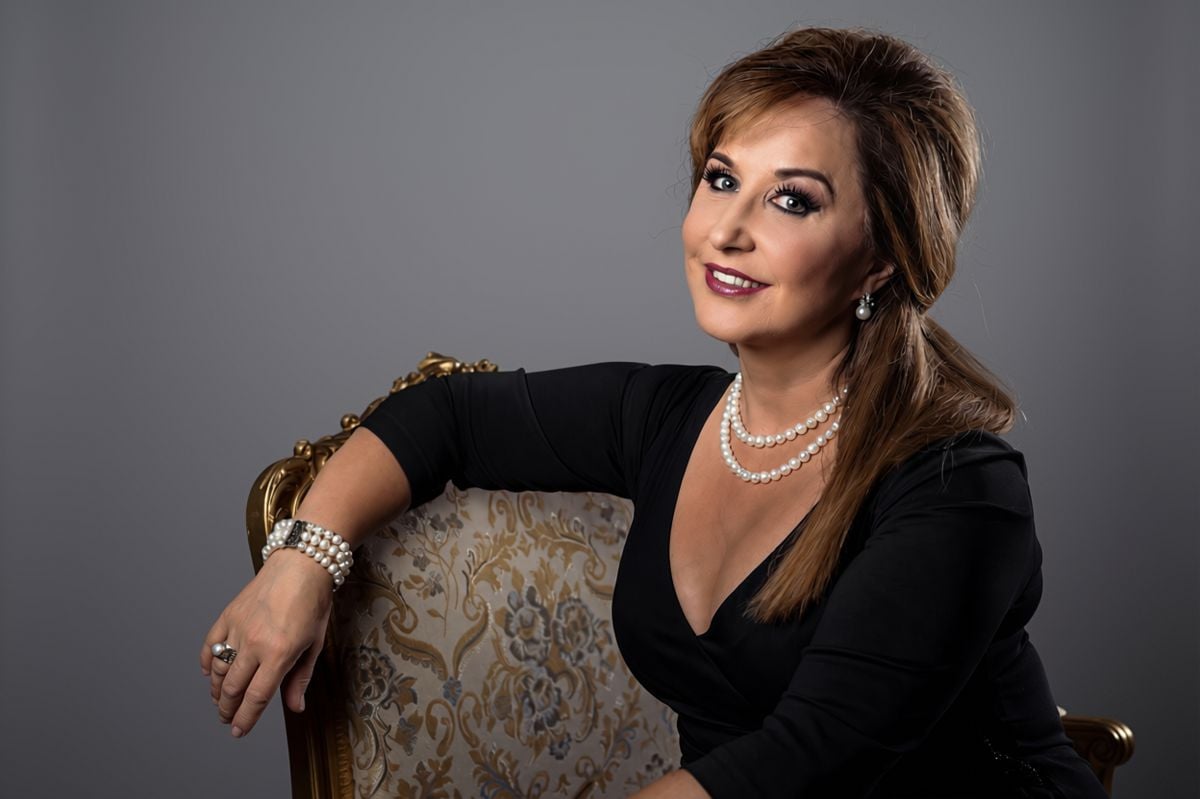
Zurich, however, is my true home, because that is where I built my family. I have lived there for 34 years, since I met my husband, Christoph. I love the city, and the Opernhaus Zürich has been my true conservatoire. Since my debut there in 1991, I have returned every season, making many important role debuts that have shaped my repertoire. Though for us artists, home is wherever there is a theatre and a stage waiting for us
When you look back, does it seem impossible that you’ve had a professional career for more than 35 years?
It has been a very long career, I know, but I do not think about it very often because I still feel the same passion for performing on stage. I am always looking ahead.
The moments that make me reflect on everything I have achieved are the awards.
This leads me to the Premio Cigno del Garda you received on 1 August from the Fondo Niccolò Piccinni at the Garda Festival in Verona.
I would like to thank the Artistic Director, Maximilien Seren-Piccinni, for this honour, which celebrates the 25th anniversary of my Italian debut at the Teatro dell’Opera di Roma, under the direction of Pier Luigi Pizzi, this year’s recipient of the Premio Piccinni, as well as the anniversary of my debut at the Arena di Verona as Gilda and Violetta.
What keeps performing fresh?
What keeps me inspired is my natural inclination to evolve. I have never wanted to be confined to a single category. I have never forced things, nor have I chosen a role simply because I wanted to sing it. Instead, I have always wanted to broaden my artistic horizons.
And what is on your horizon?
My next challenges include adding new and fascinating roles such as Lady Macbeth, Aida, Amelia in Simon Boccanegra and Elisabetta in Don Carlo. But beyond the list of roles, I want every new step in my career to feel completely natural.
For me, the most important thing is the quality of each performance. I would rather sing fewer roles and perform them with sincerity, maturity and deep respect for the music, the composer and the audience.

Graham Spicer, aka ‘Gramilano’, is a writer, director and photographer based in Milan. He was a regular columnist for Opera Now magazine and wrote for the BBC until transferring to Italy. His articles have appeared in various publications from Woman’s Weekly to Gay Times, and he wrote the Danza in Italia column for Dancing Times magazine. Graham was the historical advisor on Codice Carla, the 2023 documentary on Italian ballerina Carla Fracci.
Graham also works as a dance photographer, and his photos have appeared in many books, theatre programmes, and magazines, including Dancing Times, Dance Spirit and Ballet2000, as well as all the major Italian newspapers.
He is a member of the Dance Section of The Critics’ Circle.