Review: Hofesh Shechter’s In The Brain – if there’s no point, it’s pointless
Lydia Wharf sees In the Brain – after creating euphoric peaks of climactic energy, Shechter faces the dilemma of where to go.
| Title | In the Brain |
| Company | Hofesh Shechter II |
| Venue | Queen Elizabeth Hall, London |
| Date | 23 July 2026 |
| Reviewer | Lydia Wharf |
It’s a long, hot summer in London, and a cluster of fountains outside the Southbank Centre is doing a great job of keeping kids cool – the sound of squealing and laughing animates the theatre entrance.
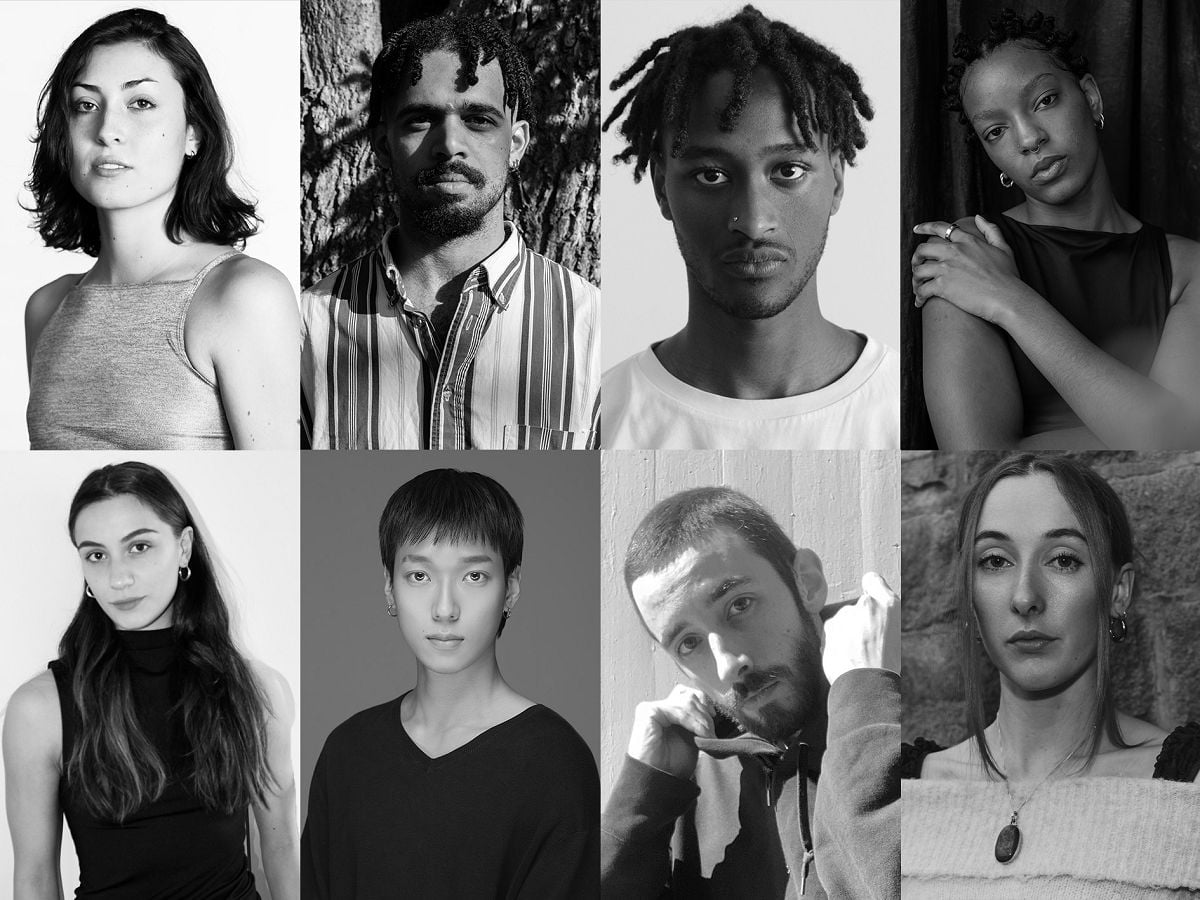
Inside, I’m grateful to leave the heatwave behind and descend into the darkened auditorium to watch Hofesh Shechter’s new work for a different group of ‘kids’ – the exceptional 18-25 year olds of his development project, Hofesh Shechter II. For this group of 8 emerging performers, selected from around the world, Shechter has created In The Brain, billed as “…an invitation to let go – to move, to surrender to the music, and to be swept away in rhythm.” It’s a bold, enticing premise and, as the latest premiere from this Big Name Choreographer, one of the most prolific of our generation, expectations crackle around the packed audience. I intentionally attend with a +1 who is entirely new to contemporary dance and whose framing of the experience I hope will offer a different perspective, one unfettered by the huge weight of expectation I bring.
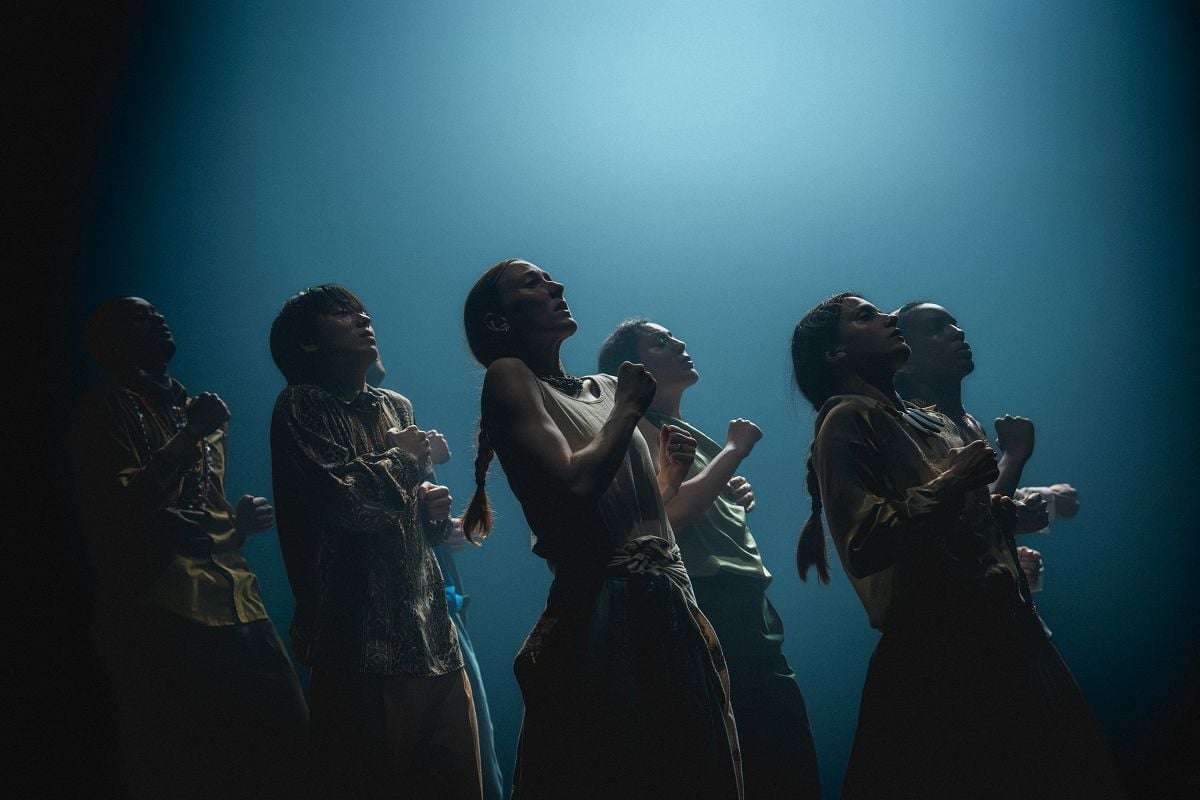
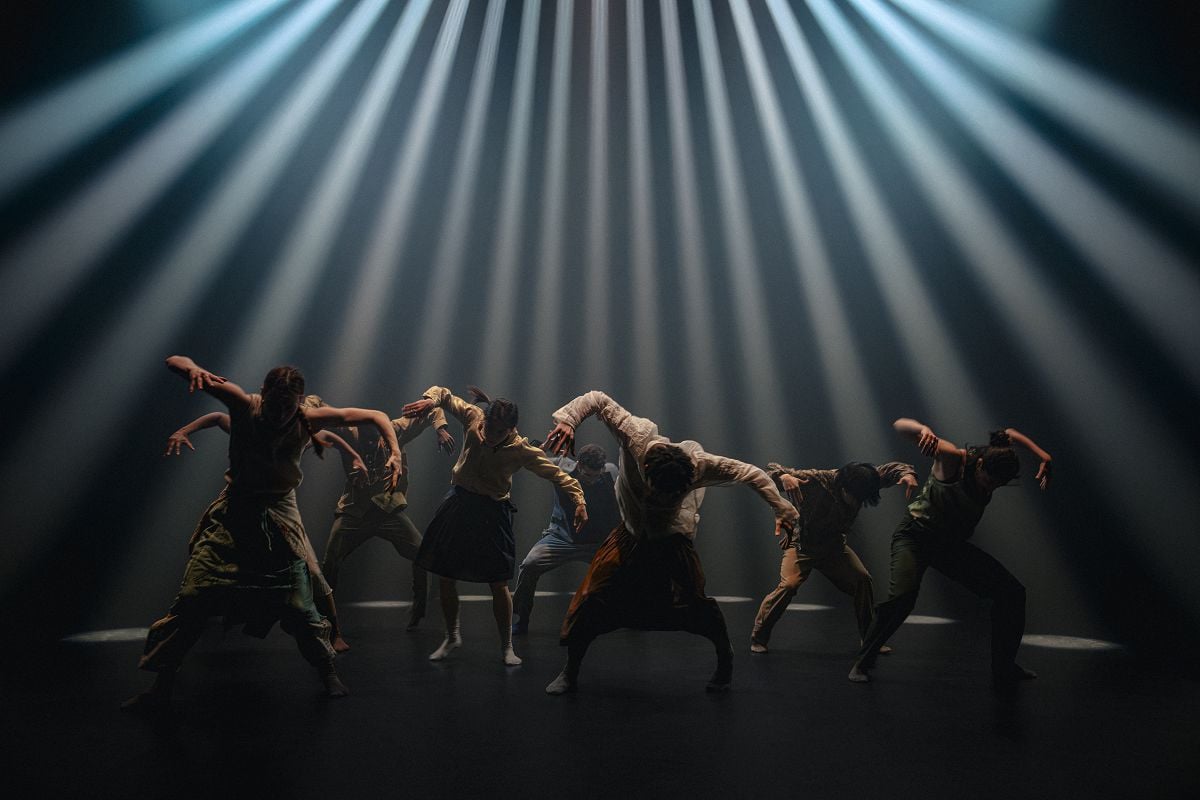
All 8 dancers loom out of the shadows and immediately begin to generate a pacey, muted pulse. They move lightly and tightly together, a flow rippling through them like a shared heartbeat. As the glow of Tom Visser’s lighting lifts and the murk clears, we can begin to pick out the details of costume, shape and physicality, setting them apart so that, whilst moving as one synchronised body, they are also recognisable as individual elements, a community perhaps. Shechter’s self-composed sound world, the beating heart itself, intensifies in volume and the dancers are very much on a low simmer; the physical power amongst them thrums and bubbles against this rising rhythm. The low-key, hunched shuffle, a Shechter calling card, is performed in unison; deliciously ambiguous, it could equally suggest oppression or communion – the prison-yard lurch or the bowed heads of a church congregation.
His great skill is to captivate us with what exists under the surface; to whisper, hint, and keep us guessing. Onstage, he generates a palpably strong sense of containment, the dancers often facing the back or the floor of the stage with a sort of seething power that grows in intensity, a danger in the distance, gradually coming into focus. It’s a gripping dynamic that heightens the sense that a storm is approaching.

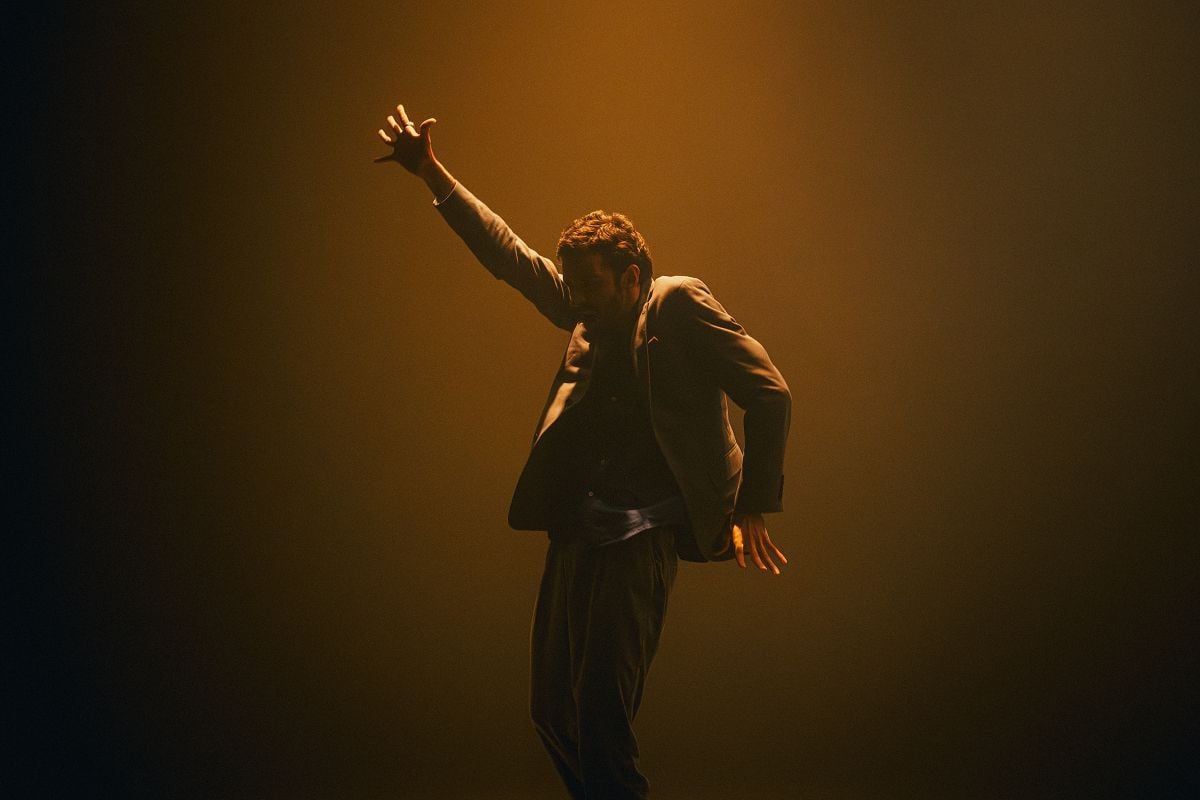
Out of the tension, bursts of exuberant virtuosity begin to spill; fizzles of extreme power explode into existence like lightning as dancers suddenly leap toward the light or cut across the space. There’s something extraordinary and thrilling in these individual, simmering glimpses of laser light cutting through the dusky darkness – portents of the storm that will rage when enough momentum is built by the group… and boy, will that storm rage.
Shechter artfully contrasts the weight of suffocating, earthbound mortality against moments of pure, elemental abandon, using the dancers’ hyper-real physicality to portray extremes of corporeal agony and ecstasy. The work is described as ‘part rave and part ritual’ and, around midway through, this experience is drawn with explosive moments of power, encapsulating the rich fervour and vehemence of these primal experiences, both individually and collectively – they look like possession, bringing to mind the dynamics of a cult, with members swept into the overwhelming thrust and power of devotion. I think also of my beehive and the blind, absolute commitment to the survival of the whole that determines the actions of each bee. Individual actions (solos) are impressive, but it’s the collective body that holds the power. It’s an absolutely compelling and extraordinary watch.

But then… What? Shechter is somehow the architect of his own demise; having created these euphoric peaks of climactic energy, he faces the dilemma of where to go when the intensity subsides. Inevitable troughs, the comedown, create a void where I find myself asking what it’s all for? What is this spectacle telling me, beyond what I see? The ebb and flow of energy over time starts to feel a bit like motion sickness – the episodic structure makes for a bumpy ride, rather than a smooth transition towards a satisfying finale: it feels longer than 55 minutes and false endings don’t help. Whilst light and shade should add depth, they somehow strip away tension, creating a sense of disorientation rather than captivation.
Key to this ‘lost’ feeling is an urge to really feel something – enlightened or different, or challenged perhaps. I’m grasping for a thread of meaning that makes sense of the evocative, explosive imagery on stage because without it I’m flailing – how could work so rich with suggestion have no secrets to reveal? I wonder about the intention – what it was and where it went. Over the past few years a glut of rave-inspired work has been presented on London stages and spaces, but surely Shechter has something new to say? Certainly, I started watching In the Brain with a feeling that he was whispering urgently to me. But as the company took their final bow, I’d concluded that he was speaking in tongues – all there was for me to understand was what I saw.
So, whilst my friend and I agreed that there were aspects of this show that we enjoyed enormously, we disagreed about one central question: whether or not contemporary dance needs to ‘say’ anything anyway? Whether it’s incumbent on any choreographer, Big Name or not, to take on the lofty ambition of challenging perceptions or making change in a highly polarised world. He says that dance doesn’t need to get a point across; it exists for our enjoyment. But I say that if there’s no point, it’s pointless.
Lydia wharf is an independent producer working in contemporary dance theatre, tending to specialise in practices of care, access and inclusion.
She works directly with a range of artists and companies, most recently BirdGang Ltd, Dance Umbrella, Julie Cunningham & Company and Stuart Waters. Lydia has a long, twisty relationship with dance, as performer, writer, advocate and producer.