Interview: Steven McRae and Vasko Vassilev talk about their Royal Ballet project at the Linbury Theatre
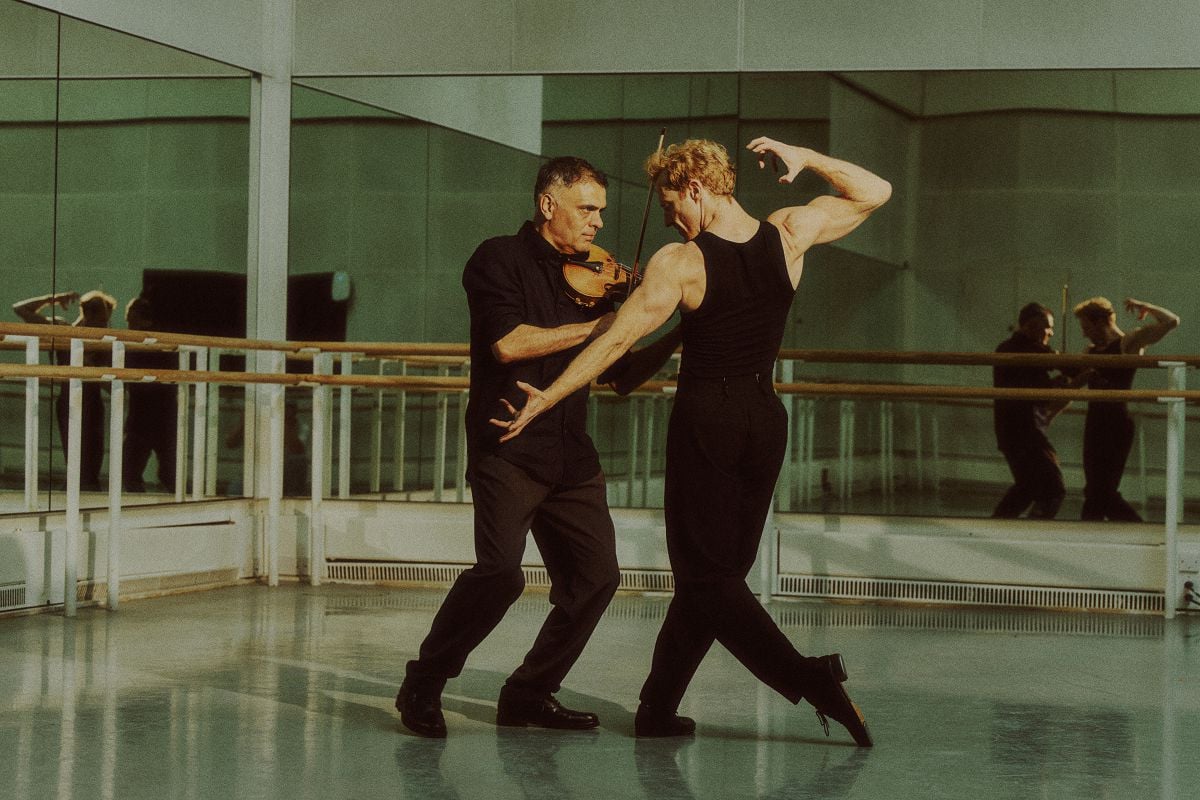
The Royal Ballet opens the 2026/27 Season at the Linbury Theatre on 11 September with The McRae / Vassilev Project, bringing Royal Ballet Principal Dancer Steven McRae and Principal Guest Concert Master Vasko Vassilev together for an evening of music and dance.
Conceived as both a personal journey and a meeting of virtuoso disciplines, the programme places two long-time collaborators centre stage. Its first half looks at the very different paths that brought McRae and Vassilev to the Royal Opera House, while the second presents the world premiere of a new ballet inspired by Niccolò Paganini – the violinist whose legend was built on brilliance, spectacle, and risk.
Ahead of the premiere, I spoke with McRae, Vassilev, and Royal Ballet director Kevin O’Hare about the Linbury Theatre, the pull of Paganini, and what happens when two artists used to pushing boundaries decide to create a show of their own.
The Linbury Theatre, with its three-tier, horseshoe-shaped auditorium, accommodates around 400 people and is located beneath the main foyer of The Royal Opera House. It offers the Royal Ballet and Opera companies a venue for more intimate and experimental performances compared to the main stage.
Natalia Osipova‘s OSIPOVA/LINBURY project has been presented over the past two seasons at the Linbury, and in February 2027, Once More to this Star, a collaboration between choreographer Pam Tanowitz and Royal Ballet Principal William Bracewell, will be premiered.
I asked Kevin O’Hare about the Linbury Theatre:
It has been really exciting in recent years to have had the ability to use the Linbury Theatre within the wider Royal Ballet programme to give Principal dancers of the company the opportunity to curate work and projects that they are passionate about, and which helps continue their development as artists.
It has also been both fascinating and rewarding for our audiences to see these creative ideas and performers in this beautiful, intimate space.
Steven McRae and Vasko Vassiliev talked with me about their project and working in the Linbury Theatre.
So, Steven, up close and personal in the Linbury.
I love performing anywhere! The Linbury provides us with an opportunity to invite the audience in much closer, physically, but also emotionally. The production has two halves, with moments of vibrant virtuosity and calmer, intimate moments. It will be wonderful to be up close to the audience again.
This piece marks a departure from your usual Royal Ballet rep – does it feel like a risk?
When artists stop taking risks, they are not creating. I have always loved pushing the boundaries, and this project does exactly that.
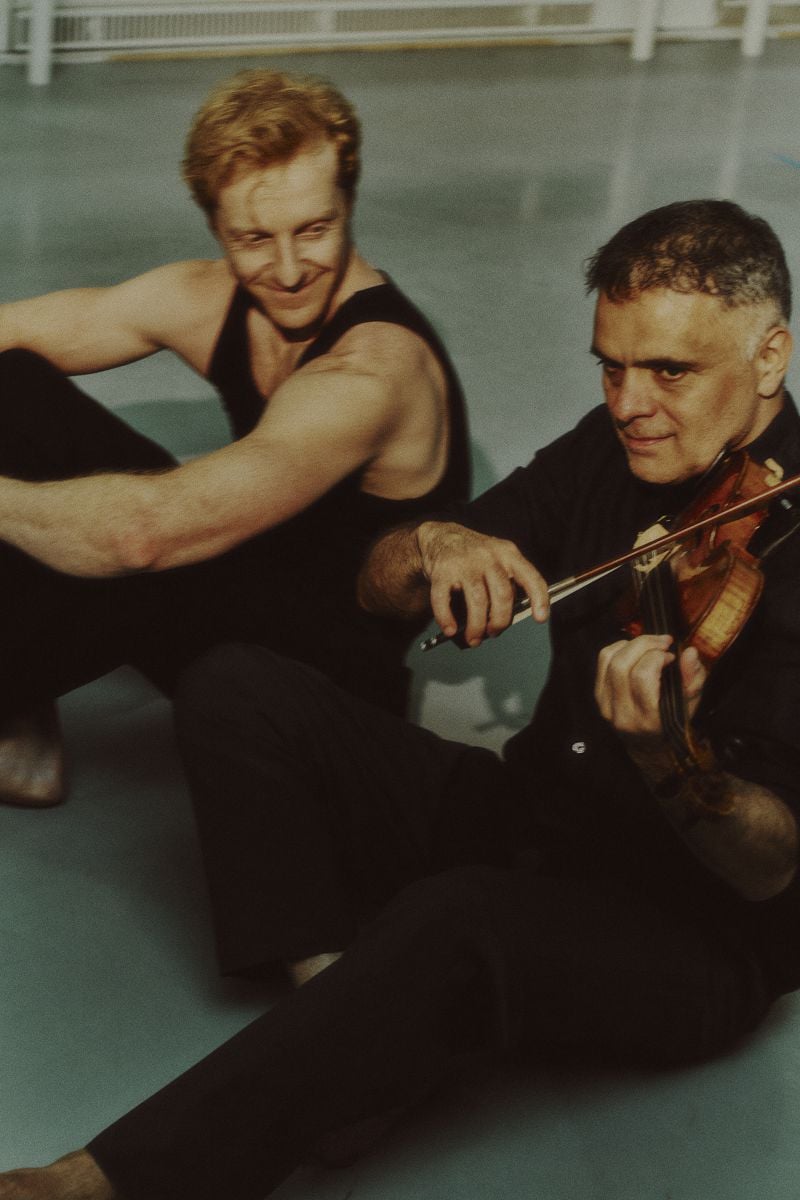
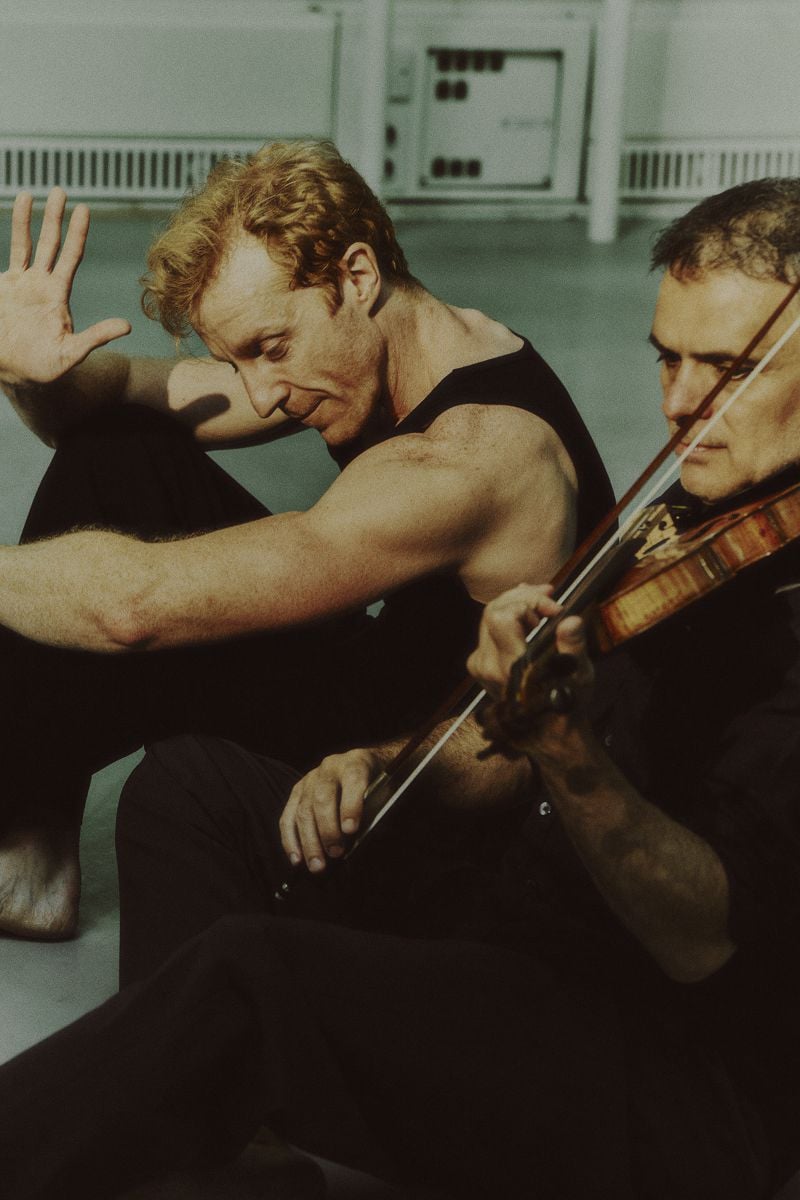
A press release says: “The first act offers a personal insight into McRae and Vassilev’s individual artistic journeys…” How autobiographical is it?
VASKO: We were hugely helped by the objectivity of the director and choreographer, who, between them, did the ‘picking and choosing’ of our backstories. As newcomers into our lives, their fresh eyes and honest appraisal were fundamental to telling our story to other newcomers, who will be our audience.
STEVEN: This project is totally unique to Vasko and me, and part of the reason for doing this is to highlight to audiences, especially young people watching it, that there are no set paths into the artistic worlds.
Vasko and I come from very different cultures, yet we are both creating art in one of the world’s greatest theatres. We felt it was important to share some of that journey. I want young people to know that if they have a passion for something, they should explore that passion!
Your journey with Vasko has been a long one.
I have been so fortunate to work with Vasko since I joined the Royal Ballet in 2004 – seeing him and hearing him in the pit. But over the years, we have developed such an ease and understanding with each other’s way of performing and responding to music that we wanted to create something to capture that.
Vasko, you said this idea had been “brewing for quite some time” – how long ago did that conversation with Steven actually start?
Our paths first crossed at the Royal Opera House, where, as concertmaster of the orchestra, I play the ballet solos, and with that, there is a particular connection with the performers on stage.
Outside the Royal Opera House, I have a very varied career not only as a performer but also as a creative producer and artistic director. The latter roles allow me to express ideas not only for myself in performance but also with collaborating performers. Over the years, I have invited Steven to participate in my projects, where he has created and performed original material outside the House repertory.
Whether for a stadium show or for a theatrical run, his contribution as a valued guest was always both brilliant and sensitive. So it was a natural progression for us to think about creating a whole new show just for us. We went through so many ideas, but then we would spend months without our paths crossing when we would lose interest and impetus because of other competing commitments.
Kevin O’Hare was the catalyst and locked us down on dates, which made us settle on one idea – one to which we are now bonded, as we are to each other.
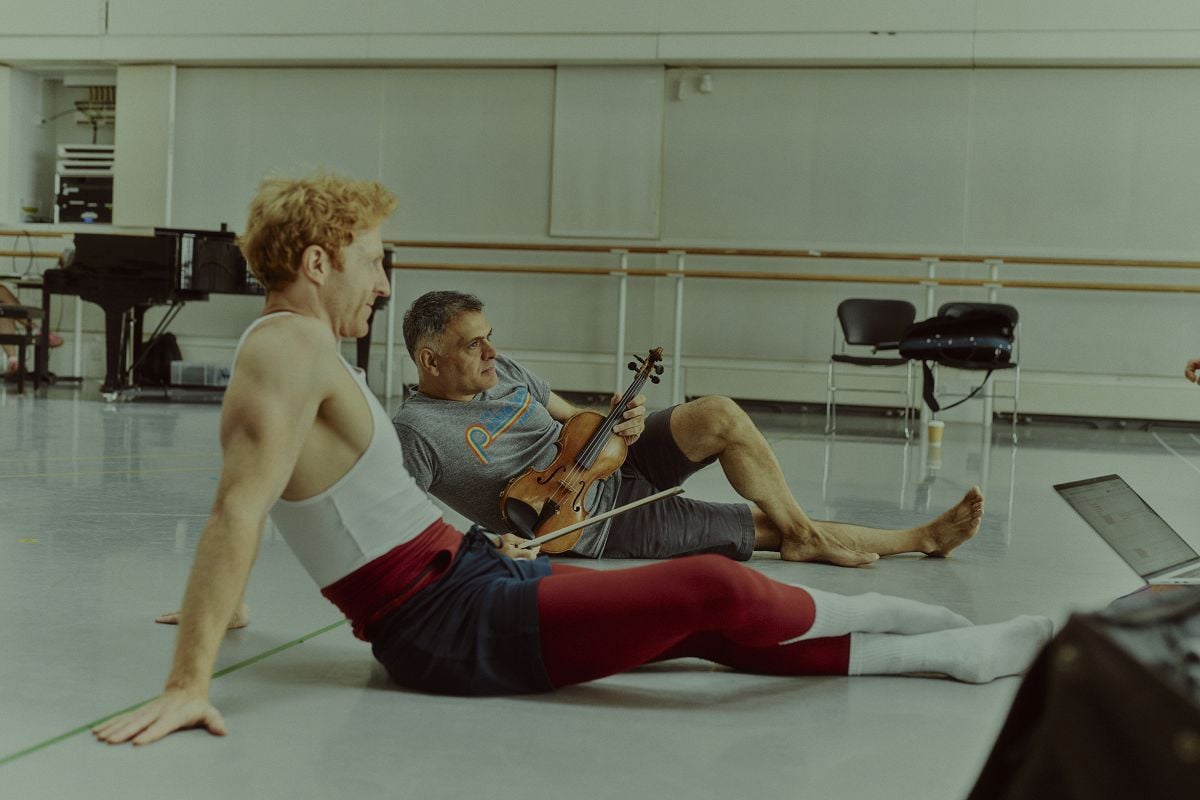
“My dancing and his music became one.” Can you point to the moment, Steven, when that fusion really happened?
To be honest, the second Vasko plays one note, I feel connected to it. The first time he played for me in a more intimate setting was for the White Swan pas de deux that I performed at Buckingham Palace with Roberta Marquez. Vasko played the violin and Antonio Pappano played the piano. It was my debut performing that pas de deux too, so it was quite an extraordinary moment. But at that moment, it was incredibly clear to me just how connected Vasko is with those around him.
The second part of the programme features a new ballet based on the figure of Paganini. Why Paganini?
VASKO: I mentioned many ideas – and we may well return to some of those again in the future. But for our first complete show, Paganini is particularly appropriate.
He stretched boundaries. He did not just perform, but he created. He was not content to perform better than anyone else the music already written by Vivaldi, Bach or any other composers before or of his time – he composed his own. And, moreover, he created new techniques to bring instrumental virtuosity to greater levels, unimaginable before he displayed them. So he is an inspiration to all musicians, and we thought – why not to dancers too?
Some of the greatest violin solos were composed for the ballet and designed for choreography to showcase dance skills. Paganini wrote music to showcase the virtuosity of the violinist. We are reversing the relationship and asking what happens when that virtuosity becomes physical as well as musical.
We thought it would be an artistically and intellectually stimulating challenge, and it has proven to be one.
You’ve been billed as a “Super-Paganini” over the years – also on the Royal Ballet and Opera site. Does that comparison feel apt to you, or is there a distinction you’d want to draw?
It’s very flattering, but no one can be ‘super’ over and above the original. I just want to believe that being compared to him is enough to give me license to be courageous and experimental, creative like him.
Exploring “the instrumental world of Paganini beyond the innovations already contained within his original music” – what does that mean practically, Vasko?
This is one composer who would have leapt acrobatically and balletically, without fear of conservative criticism, into another discipline, given the skills and opportunity to do so. So we are stretching our imagination as he stretched possibilities on the violin: if he could dance, if he could play the piano… what if? I think that he would have done them all and most likely better than us. But it is worth our trying, and hence our project.
His legend was built on spectacle and technical daring – is there a self-aware nod to that in how you’re approaching your own virtuosity in this piece?
Undoubtedly so, neither Steven nor I are shrinking violets when it comes to showing off virtuosity. Paganini’s own legend justifies our approach to this project.
Steven, how does it feel performing to Vasko’s playing?
There is nothing better than performing with live music. The thrill of performing is that we are all human, so the natural differences in how we feel, react, and express ourselves allow every performance to be unique in some way. It is always crucial to be present and to perform in the moment, never trying to recreate something that has been before.
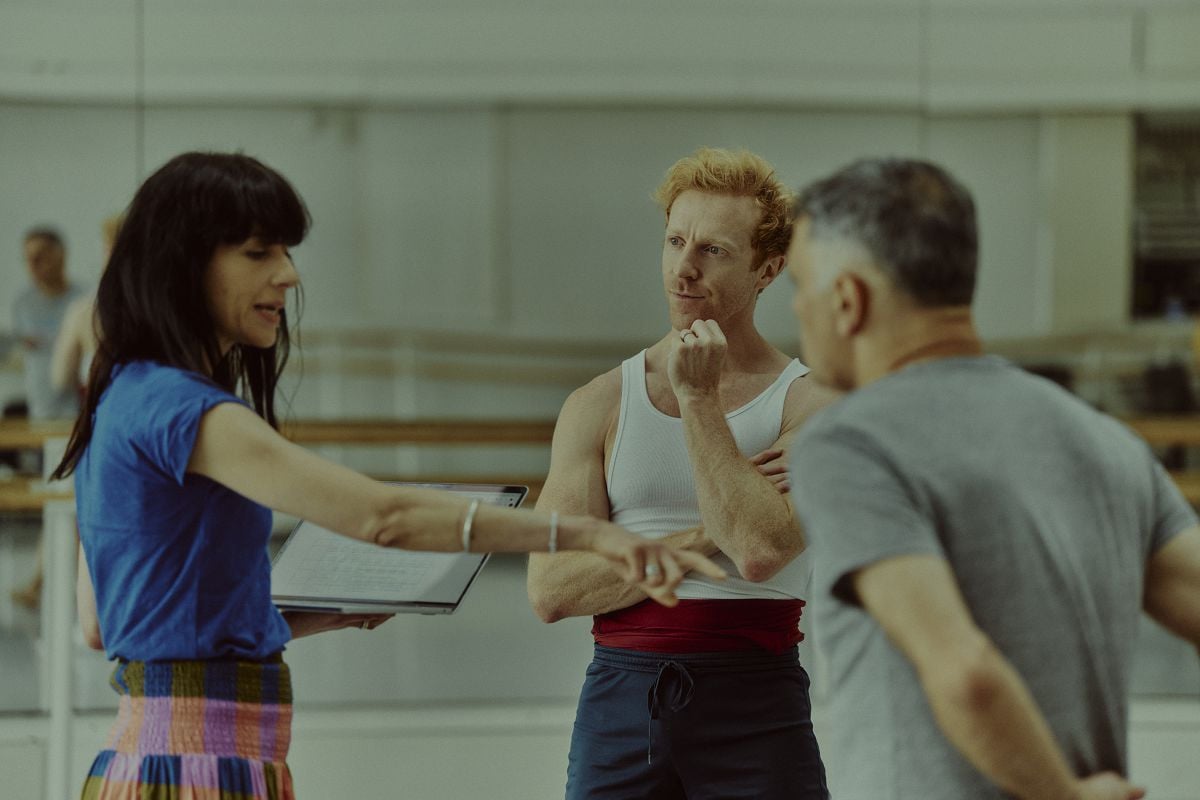
For the Paganini piece, you are collaborating with the director Natalie Abrahami and the choreographer Loughlan Prior – has their outside perspective changed anything about your dancing that you assumed was fixed?
One of the greatest joys of my career is that I’ve been fortunate to collaborate with many choreographers, designers, composers, and other artists. I believe dancers need to remain open to new ideas and concepts, whilst respecting their own unique identity. This project, working with Natalie and Loughlan, is exactly that, and they have challenged me in the most supportive and creative ways possible.
Abrahami comes from theatre and opera directing rather than dance – what did she bring to the room that a ballet-trained director might not have?
I have always wanted to work on a new Dance production with a director as well as a choreographer, so when the moment arose to create the artistic team, I mentioned that I would love to explore this dynamic, which is when Natalie was recommended. I was already aware of her extraordinary work, and Vasko and I immediately felt an energy that intrigued us as well as scared us! Natalie has been the absolute captain steering this giant ship!
Vasko, what’s it like having your playing choreographed around, rather than the more traditional relationship of music supporting dance, or performing without dance completely?
I have been involved in several new ballets over the years at The Royal Ballet, where new dance works were choreographed to violin concertos. In fact, among others, the Britten Concerto alone has two different ballets choreographed around it. So in that sense, I have already experienced my playing being choreographed around, but what makes this project special is that the music itself is being re-created to morph into something more multi-dimensional in virtuosity. Working only with soloists permits me to do that. So I am effectively given an opportunity to re-choreograph Paganini’s music itself. That is very exciting.
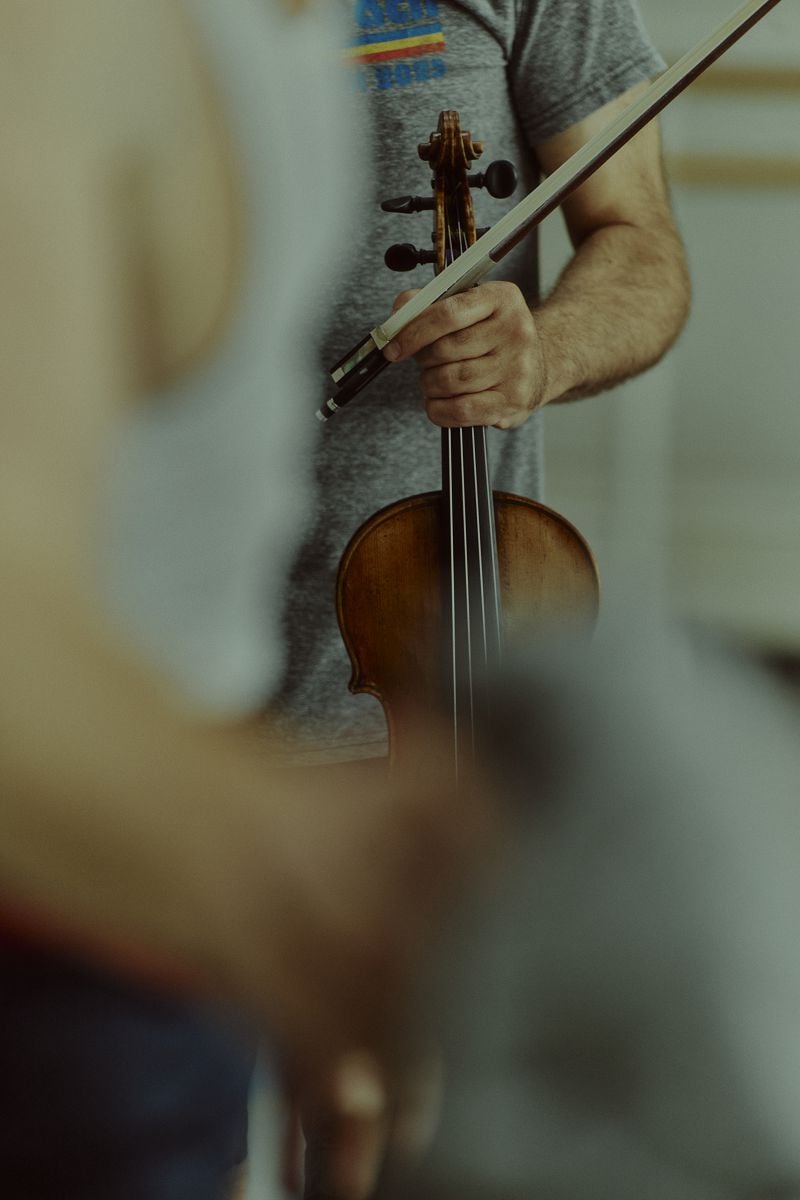

As Principal Guest Concert Master, you’re normally in the pit – what’s it like stepping fully into the light for this?
More of my work is performing as a soloist on stage than as a concertmaster, but I do very much enjoy the teamwork element that leading as a concertmaster provides. It is a healthy contrast and a different challenge to my solo career, and, of course, the opera and ballet repertoire in its original form, performed to the standard of the Royal Opera House, is always a source of inspiration, over and over again.
As a soloist, I think 99% for myself – as a concertmaster, it is like driving a juggernaut, and you need to watch out for obstacles in a different way when you navigate a big machine.
Two other performers for the project are principal dancer Sarah Lamb and pianist Pamela Tan Nicholson. How does this alter the “two-hander” nature of the project you’ve been discussing?
STEVEN: Both Vasko and I have been so lucky to work together, but we have both spent our careers building partnerships with some very special people. Sarah Lamb has been one of the ballerinas I have worked with the most and created the most new creations with. We have also been through incredible highs and lows together. That kind of relationship is built over a career.
Vasko has spent his entire career working with Pamela too; they have collaborated and shared a beautiful journey, so I think it is fair to say that Sarah and Pamela were always going to be part of this project.
VASKO: Yes, they are both special and essential to our life stories. In performance, they do what they do best – Pamela plays the piano and Sarah dances – but they do much more than that. When the show is described as a “two-hander”, that is technically inaccurate: Steven and I have two hands each, not one each! Pamela is my right hand, and Sarah is one of Steven’s. So although the story begins with the two of us, they are integral to both the story and the performance.
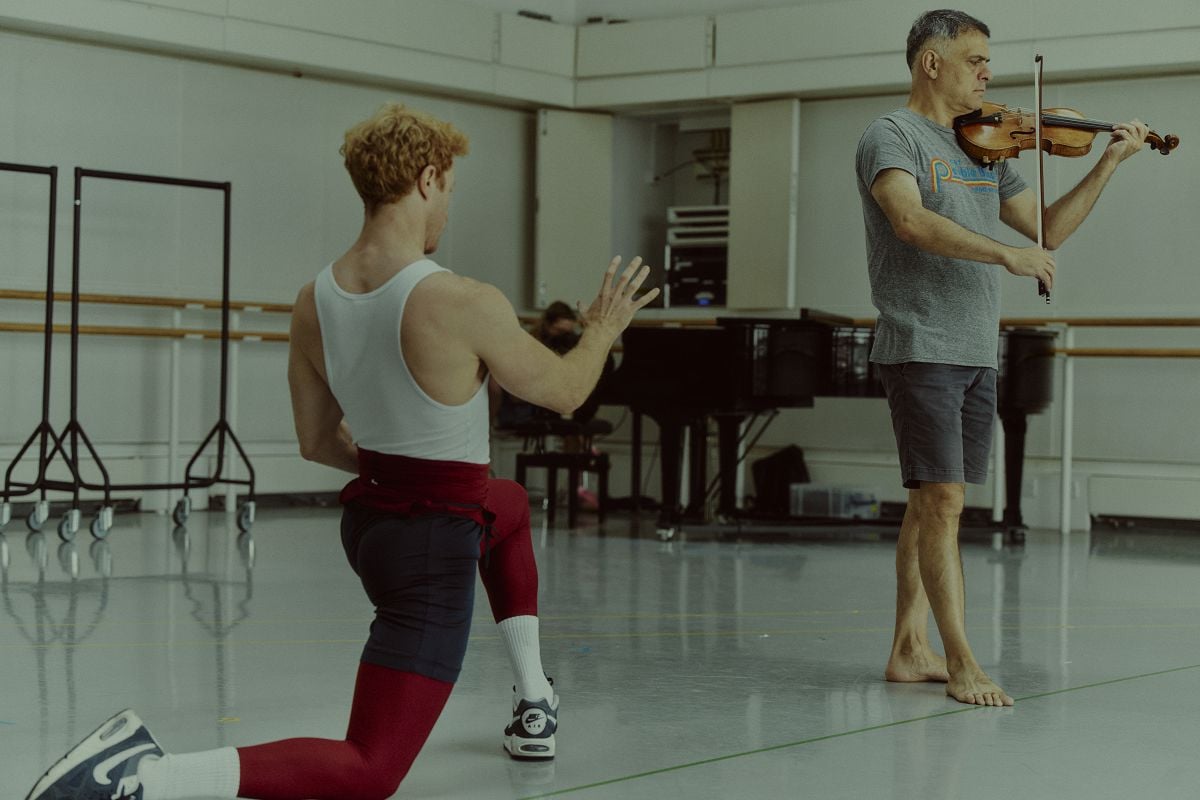
Has there been any tension between what serves the music and what serves the choreography?
STEVEN: The joy of working with people like Vasko, Sarah, Pamela, Natalie, Loughlan and everyone in the creative team is that everyone adopts the approach of ‘let’s find a way’ to make it happen. All of us are very happy to throw an idea into the arena, but also very happy to accept when we need to let go of that idea in favour of someone else’s solution. That is the exciting and joyous nature of this project…
VASKO: …and it’s quite easy when you respect and understand each other’s expertise. We never feel we are compromising because the other is not good enough at this own art to realise the vision. So there is never tension or disappointment because of that.
Have you had to compromise something you’d normally consider non-negotiable – a phrasing choice, a tempo, a step – for the sake of the other?
VASKO: There are physical considerations but never artistic ones. So maybe an extra ‘rest’ – or ‘breath’ – in agreed points for physical accommodation, but never at the expense of the artistic flow.
STEVEN: Honestly, I don’t see any of this work as a compromise – we have all continually contributed, collaborated and shared throughout the process.
What do you want the audience to take away from The McRae / Vassilev Project?
STEVEN: I hope that anyone watching the performance comes away feeling that they were able to connect or relate to aspects of our journeys, but also feel inspired or empowered to either go out and pursue their passion, or to go and give someone the support they need to fulfil their potential, no matter where they come from.
It really is quite extraordinary when you think that these artists are all coming together onstage to create a unique evening from such diverse backgrounds. Anything is possible!