[Review] McNicol Ballet Collective in Devotions: “an engaging and committed group of dancers”

Paul Arrowsmith sees McNicol Ballet Collective in Devotions, part of the Next Generation Festival at The Royal Opera House
| Title | Devotions |
| Company | McNicol Ballet Collective |
| Venue | Linbury Theatre, Royal Opera House, London |
| Date | 10 June 2023 |
| Reviewer | Paul Arrowsmith |
By a cruel quirk of programming at the Royal Opera House in London, upstairs while most eyes were focused on The Royal Ballet‘s big boys – namely a revival of Christopher Wheeldon’s 2018 Corybantic Games and Wayne McGregor’s new Untitled, 2023 in tandem with Laura Morera’s au revoir as Kenneth MacMillan’s wannabe Anastasia – downstairs, to little hullabaloo, in the Linbury theatre, Andrew McNicol proved yet again, what a versatile and musically sensitive choreographer he is.
Long, long ago (I’m thinking of David Bintley 30 years distant, when McNicol was born) The Royal Ballet cut the umbilical link with any sense of its native choreographic heritage and sense of individuality. Whatever their titles, today’s Royal Ballet choreographers in residence are freelance artists, internationally sought after and licenced. And why not? We all need a living.
Meanwhile McNicol, increasingly recognised internationally, most recently with his first three-acter, a Cinderella for Tulsa Ballet, and with continued work with Joffrey Ballet and National Ballet Portugal, has determinedly sought his own path in the UK, establishing his eponymous Ballet Collective to create opportunities to express his work.
You would not expect anything less from McNicol, who as a student in 2011, created Chocolat for National Youth Ballet of Great Britain, inspired by the Lasse Hallström film with Juliette Binoche and Alfred Molina. Some declaration of intent. Another early work, Kreutzer Sonata for New English Ballet in 2013, revealed McNicol’s dramatic nuance.
Of Silence


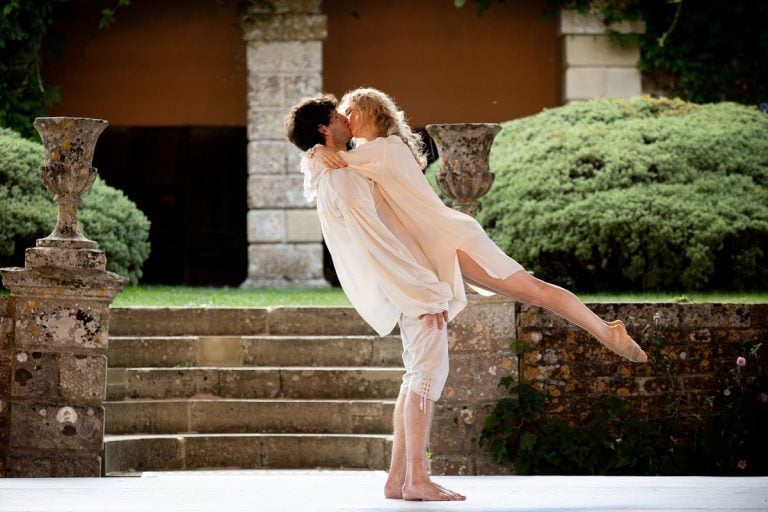
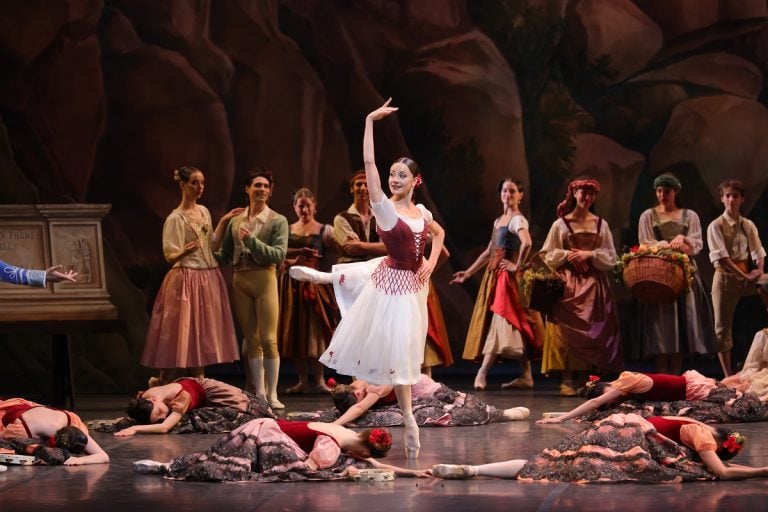
Which said, I am not convinced that McNicol’s latest programme, presented at the Linbury before further performances at Leeds and Hull in the UK, presents himself to best advantage. All three works are (notionally, you are free to decide any narrative) abstract, a reprise of Of Silence from McNicol’s last London show in 2021, alongside a reworking of his Bates Beats of similar vintage.
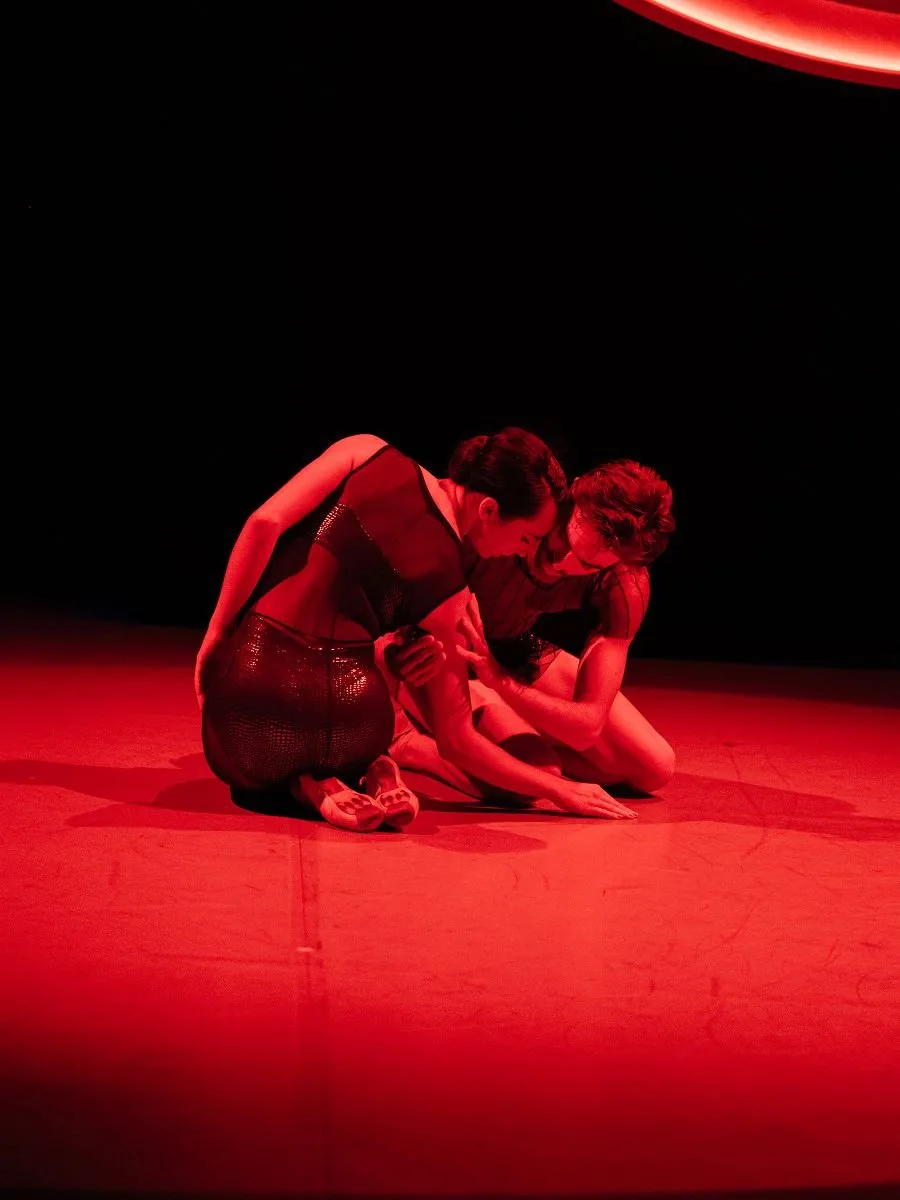
New is Moonbend, set to a score by Perfume Genius with costumes by Louise Flanagan. All three works are energetic, ensemble-based, with McNicol’s characteristic fluidity in combining movements and choreographic shapes. As an ensemble showcase, if anything, Moonbend suffers from being similar in vein to its companion pieces.
McNicol is a natural in linking combinations of steps, never anticipated. Yet the driven nature of all the scores in this programme means there is little space for viewers to savour the images McNicol creates. With this iteration of his Collective he has assembled an engaging and committed group of dancers who work together as a true ensemble.
But one name? Greig Matthews – previously with the Joffrey Ballet as Vronsky in Yuri Possohkov’s Anna Karenina and Rochester in Cathy Marston‘s Jane Eyre – bedazzled. But more to the point, Andrew McNicol more than deserves elevation from the Linbury to the Royal Opera House main stage to flex and expand his choreographic vision.
Bates Beats


Moonbend




Paul Arrowsmith has been watching dance for 45 years after Peter Wright’s Sadler’s Wells Royal Ballet was his baptism in dance in the UK. He wrote for Dancing Times between 2010-22, reporting from China, Greece, Italy, France, Switzerland, Germany and Denmark, along the way interviewing Alessandra Ferri, Akram Khan and Miyako Yoshida among many. He has a particular interest in design for dance and has profiled the work of Natalia Goncharova, Jürgen Rose, John Macfarlane and Anthony McDonald. Paul collaborated with Sir Peter Wright on his memoires Wrights & Wrongs and in 2016 was programme consultant for the BBC documentary, The Ballet Master: Sir Peter Wright at 90.