[Review] English National Ballet’s Giselle – Mary Skeaping’s version serves the company well

Jann Parry sees English National Ballet in Mary Skeaping’s 1971 version of Giselle
| Title | Giselle |
| Company | English National Ballet |
| Venue | London Coliseum |
| Date | 11 January 2024 |
| Reviewer | Jann Parry |
English National Ballet‘s new director, Aaron S. Watkin, has dedicated the company’s treasured production of Giselle to the memory of Dame Beryl Grey, who died in December 2022. She commissioned it from Mary Skeaping in 1971 for the 21st anniversary of the company then known as London Festival Ballet. Skeaping’s version, longer than most productions of Giselle, aims to return the ballet closer to the 1841French original. She restored Adolphe Adam’s score almost in its entirety (with later accretions by other composers) and gave the story by Théophile Gautier a fuller context than usual.
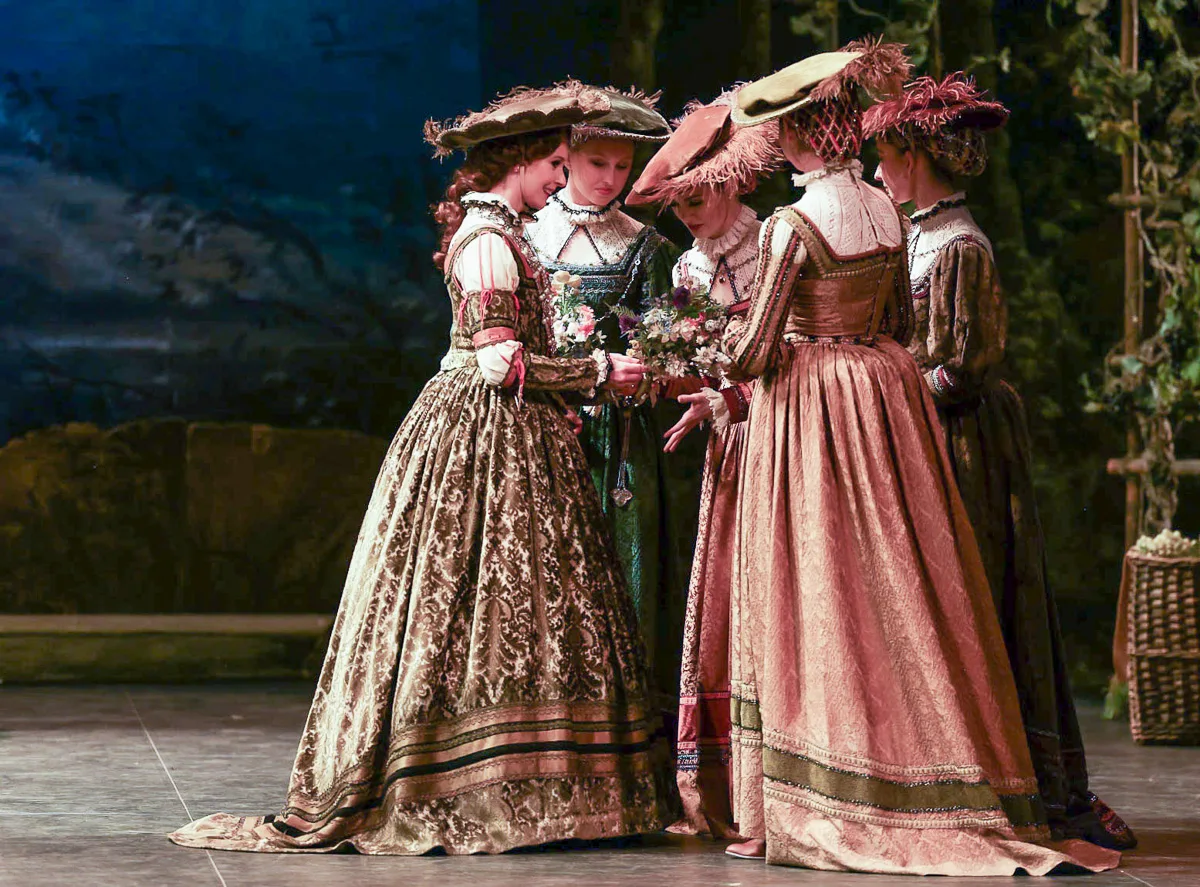
The Rhineland village in which Giselle lives with her mother, Berthe, is celebrating the end of the wine festival. The villagers hang a wine jug over the door of Berthe’s cottage to indicate that the new vintage is to be tasted there. The aristocrats from the local castle (seen on the backdrop by designer David Walker) therefore have a reason for visiting the cottage for a drink, rather than coming across it for a comfort stop during a hunting trip. Bathilde, the Prince of Courland’s daughter, chats amiably to Giselle in mime, discovering that they are both engaged – as it turns out tragically, to the same man.


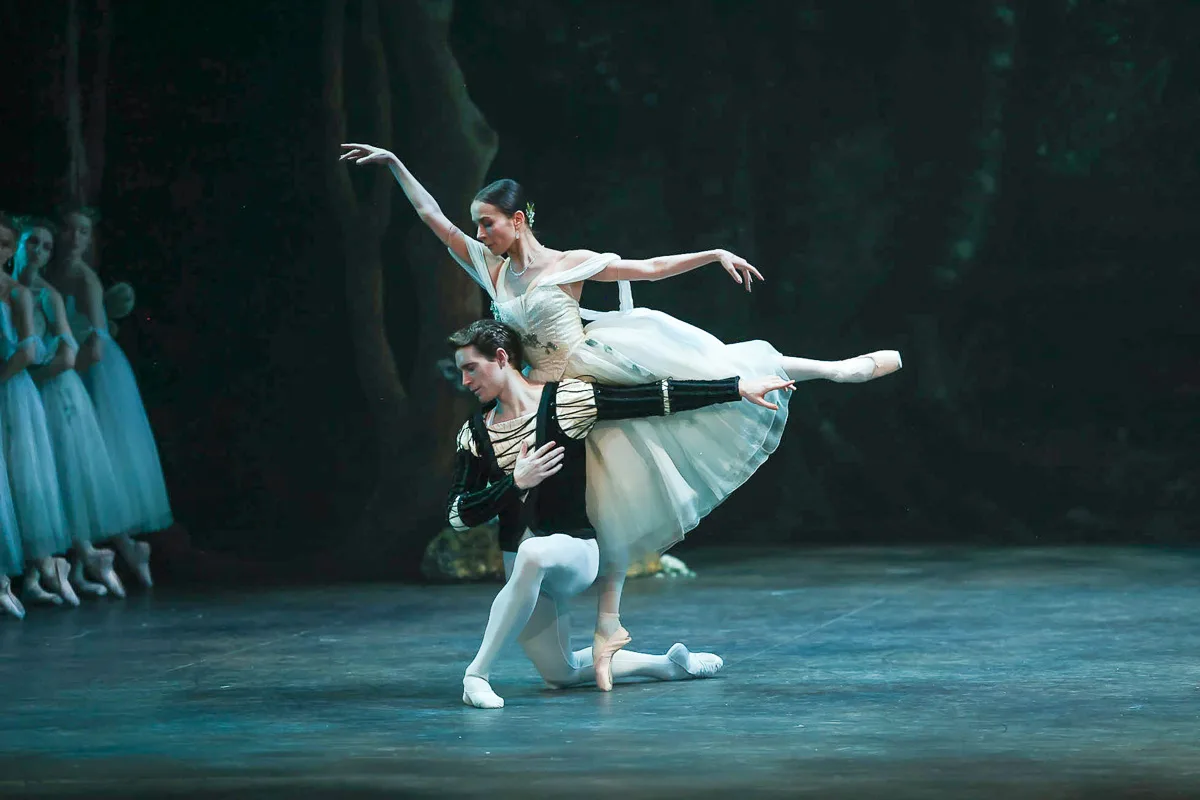
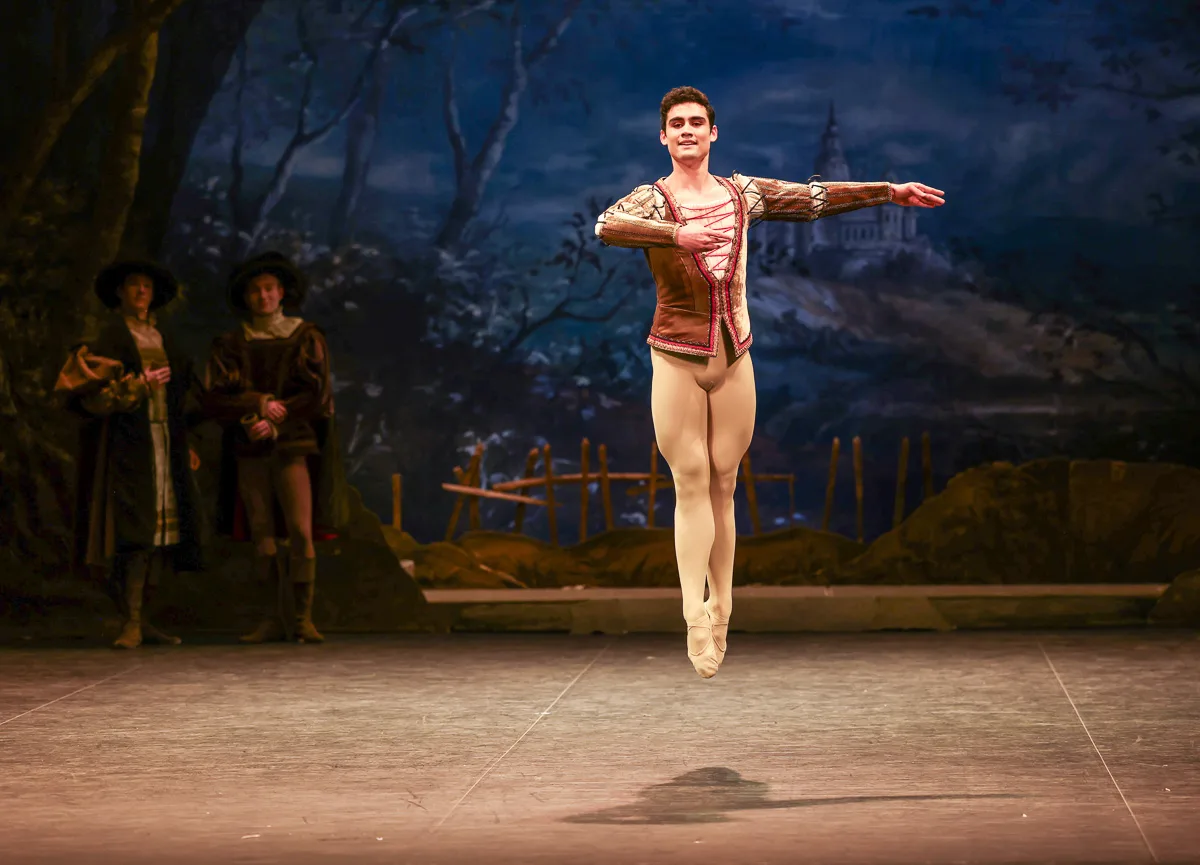
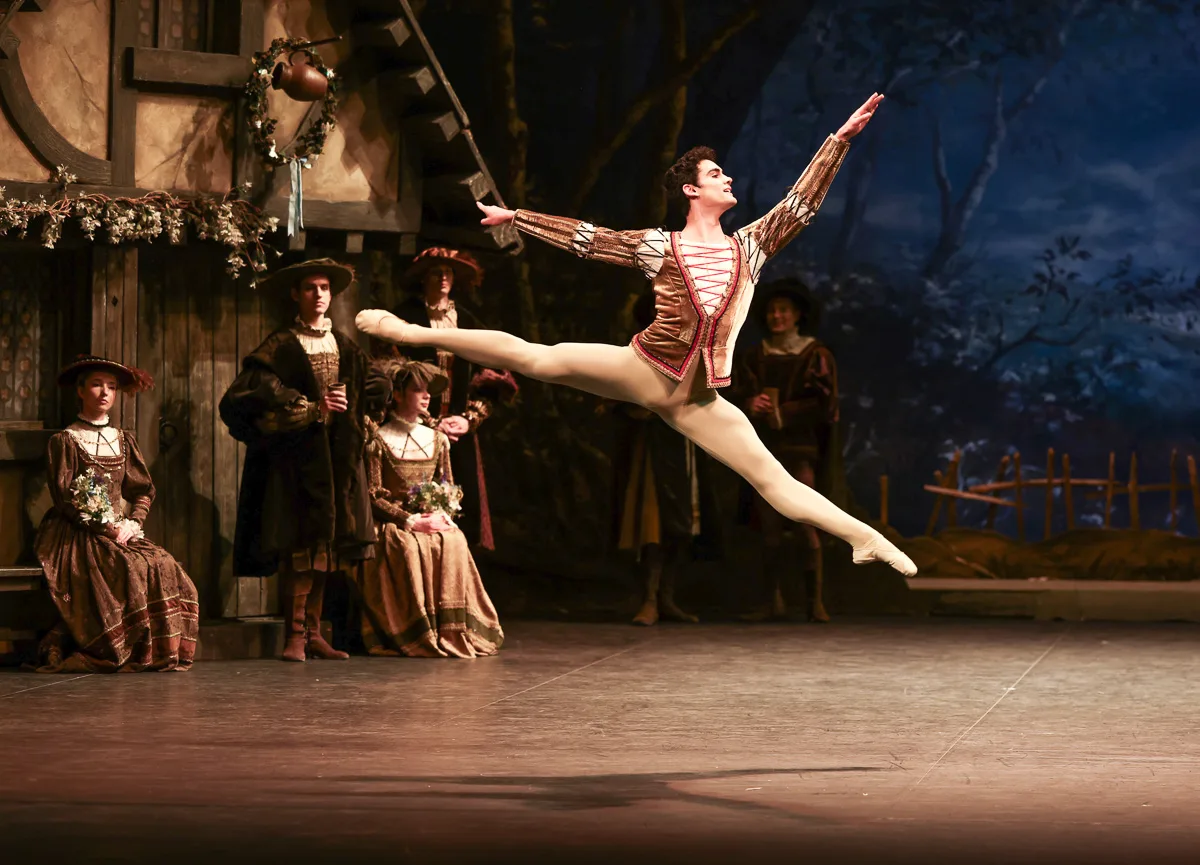
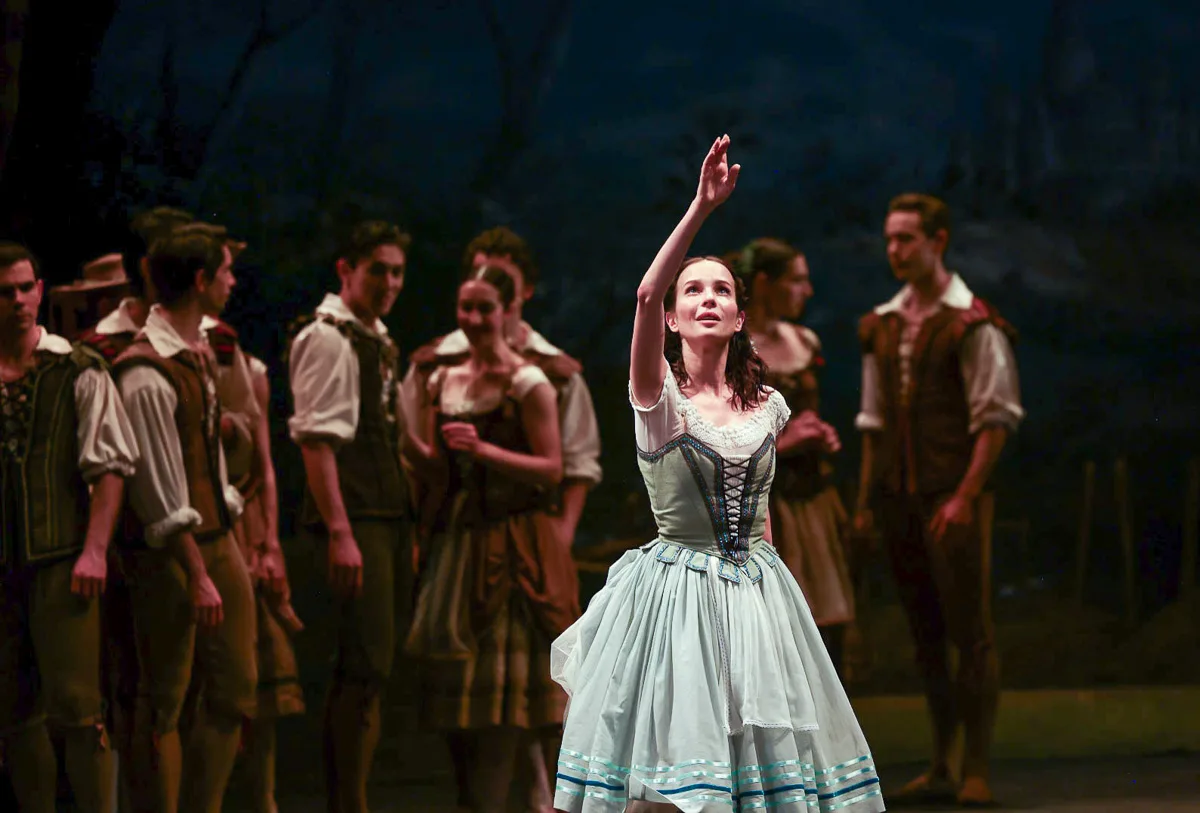
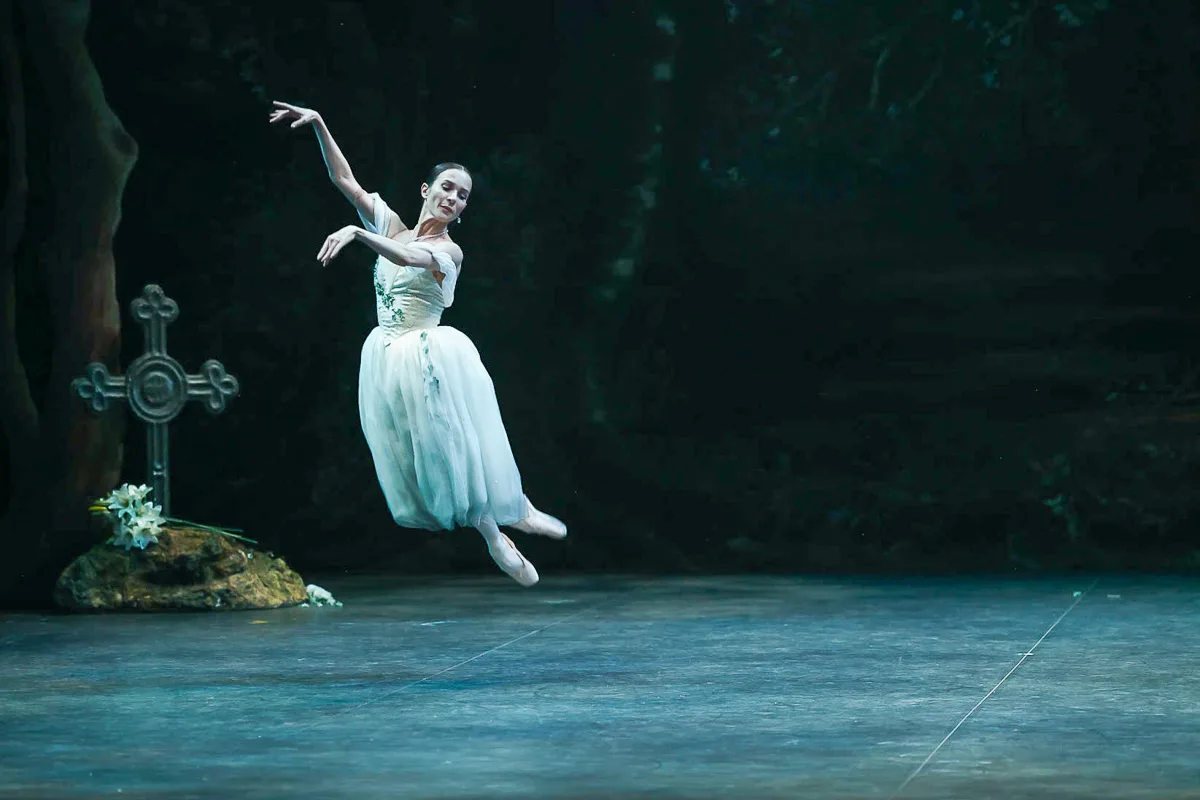
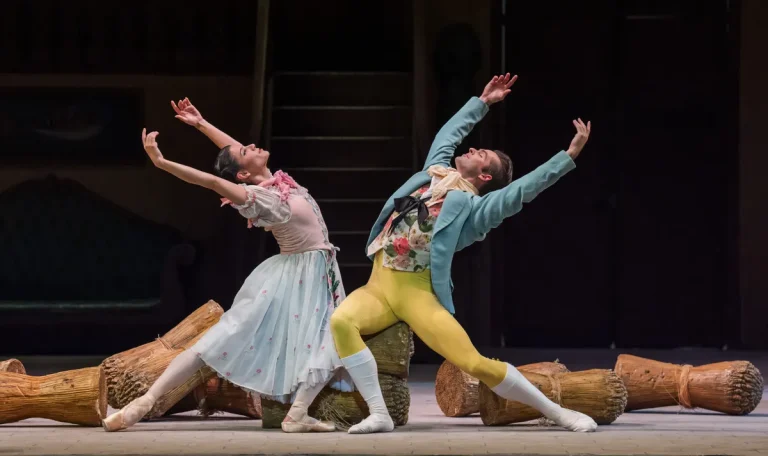
When Bathilde gives Giselle her necklace as a present, the ensuing ‘Peasant pas de deux’ is performed by the villagers’ two best dancers as a thank you, as is Giselle’s own solo. The talented pair, Ivana Bueno and Daniel McCormick, are charming and modest, performing to delight the noble visitors rather than showing off for the Coliseum audience. Katja Khaniukova as Giselle overcomes her shyness to display her pleasure in dancing, even though her mother warns that the girl has a weak heart. (This solo and a later one, added by Skeaping, reveal that Khaniukova has weak feet, alas, ill-suited to speedy pointework.)
She portrays Giselle as an innocent, trustingly in love with her handsome suitor, Albrecht (Aitor Arrieta), Duke of Silesia in disguise. He’s not an out-and-out cad – he’s just enjoying her artlessness. Then, at the culmination of the festival celebrations, an additional pas de deux for them definitely implies a betrothal, acknowledged by the surrounding villagers. Albrecht’s commitment to Giselle is disrupted by the disclosure that he is an imposter. The royal visitors are summoned by indignant Hilarion (Fabian Reimair); Bathilde greets her faithless fiancé and Giselle’s heart and mind are broken.

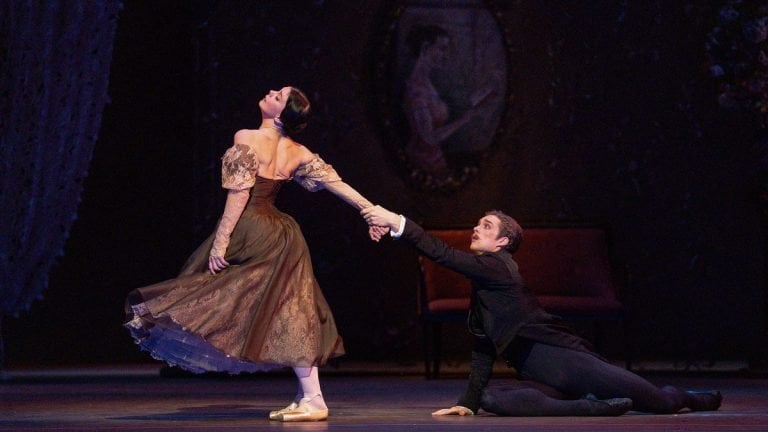
Khaniukova’s mad scene is restrained, relying on the pathos of remembered steps from the betrothal pas de deux to reveal her betrayal, rather than tearing her hair. She is too far gone to stab herself with Albrecht’s sword. She literally passes away, leaving Bathilde (Stina Quagebeur) appalled and Albrecht distraught.
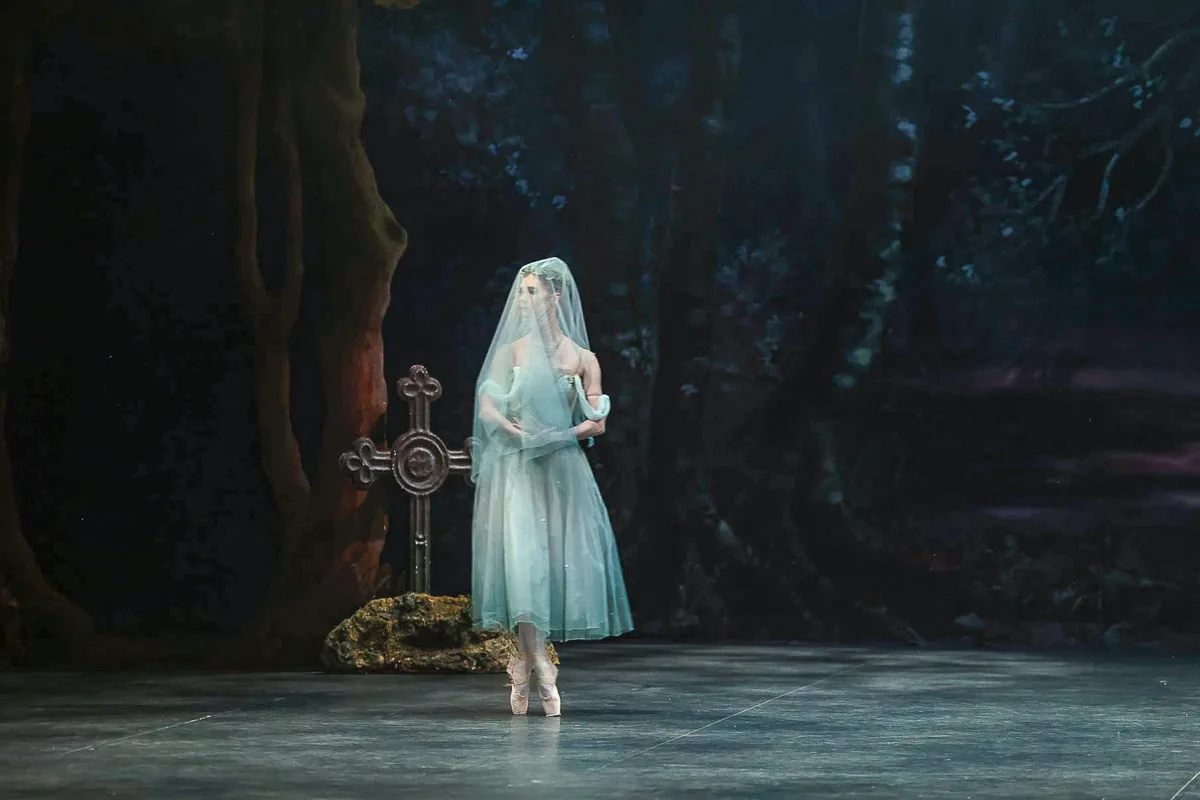
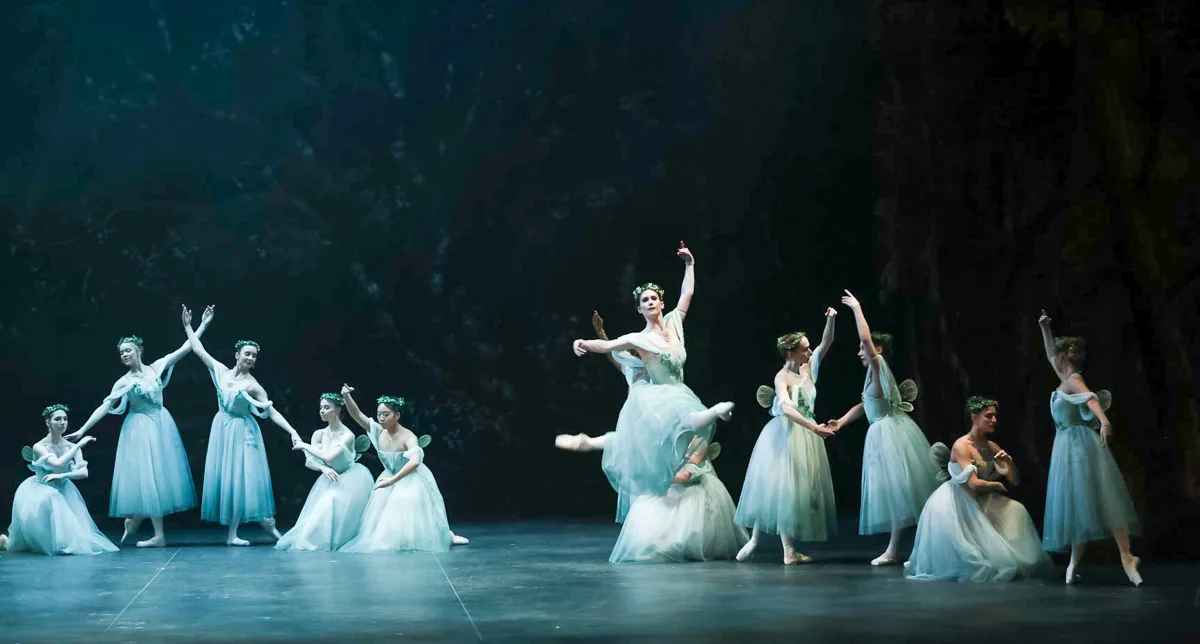
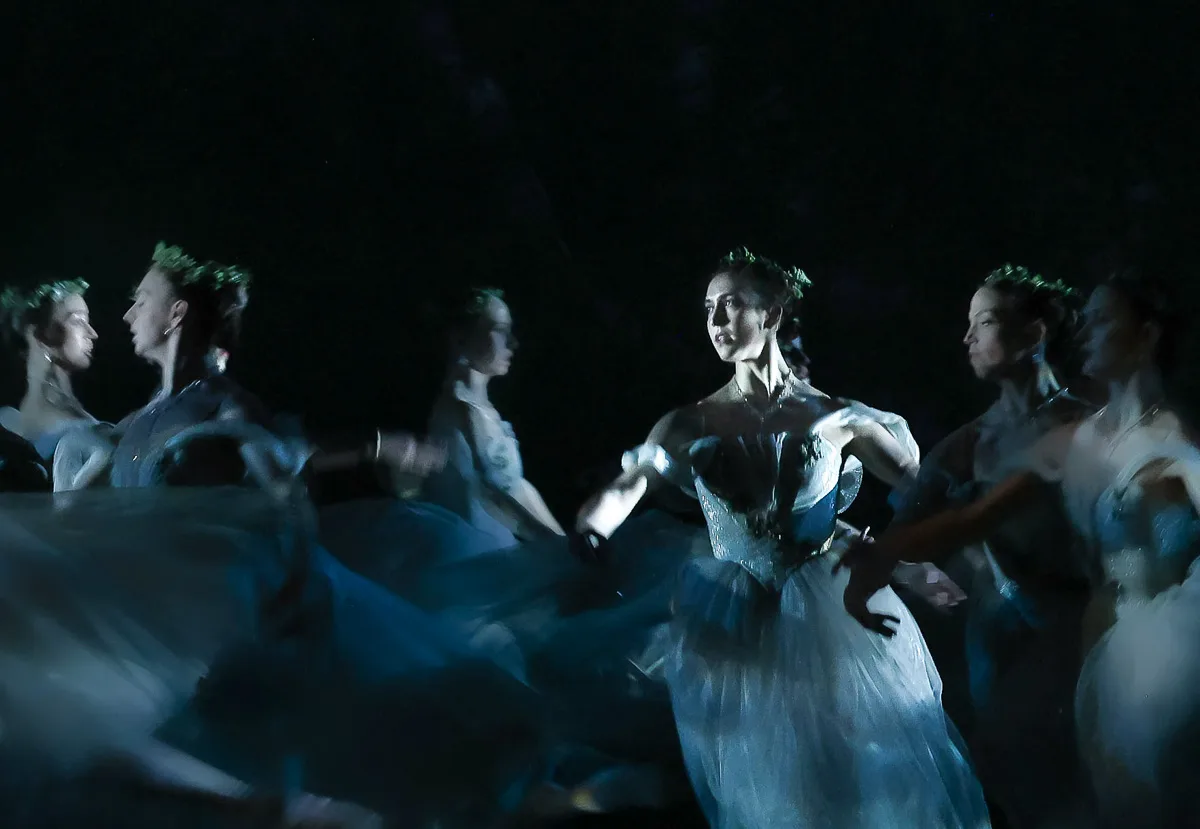
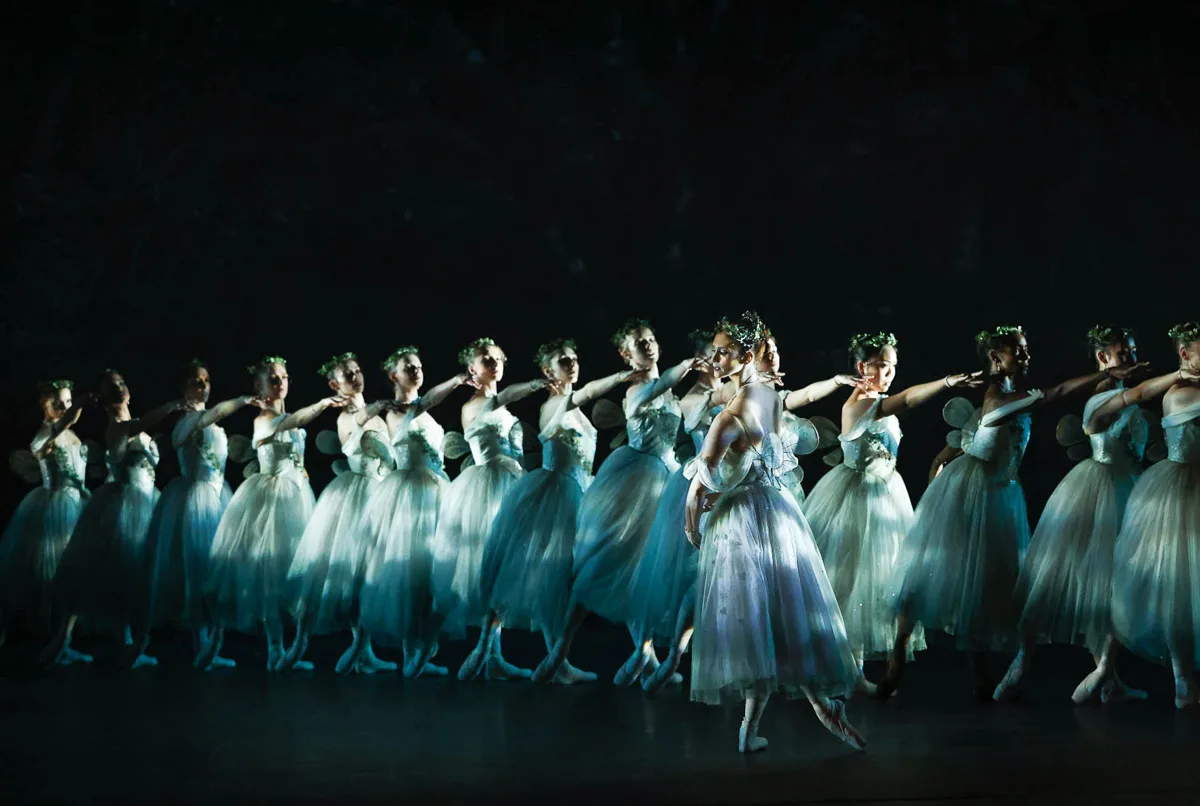
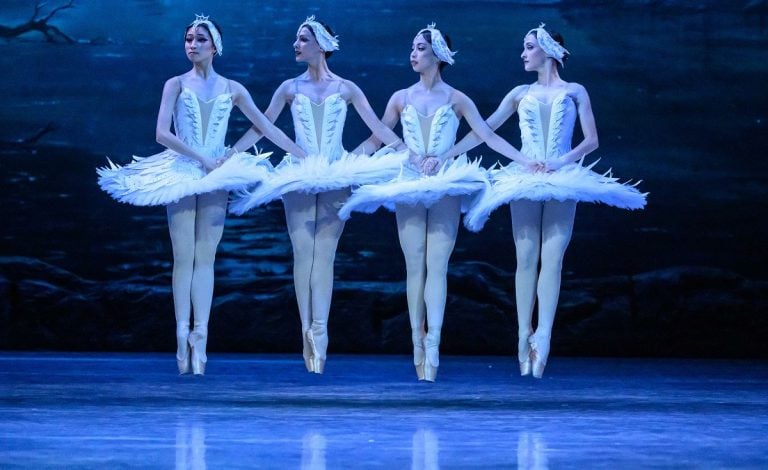
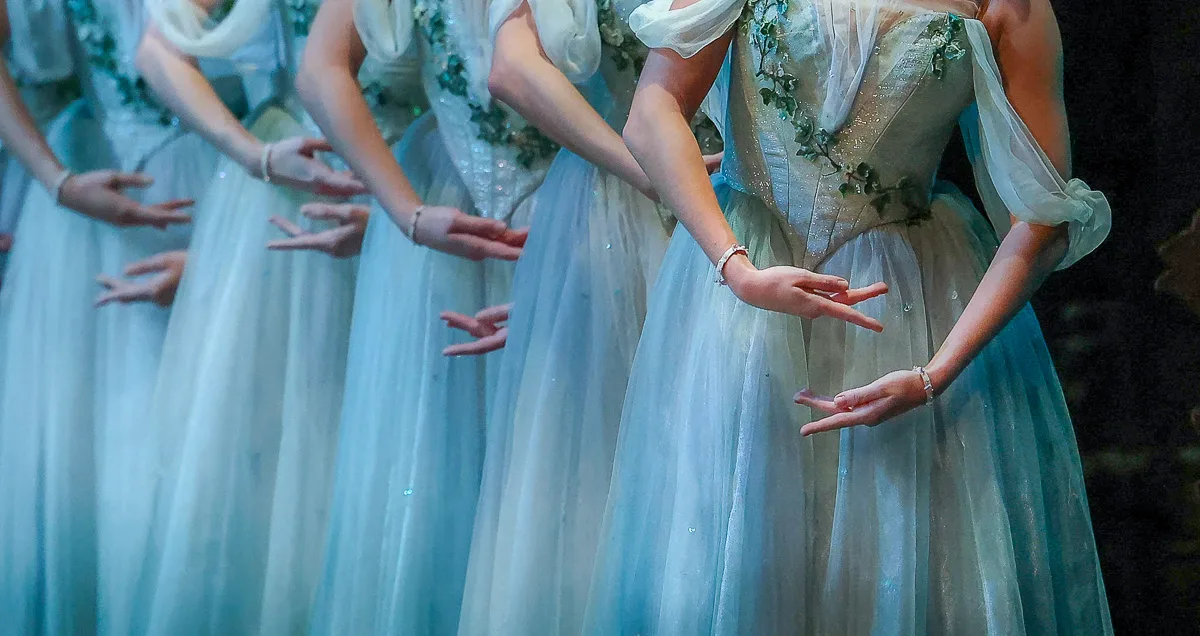
Arrieta expresses genuine remorse in Act II, once he has recovered from self-conscious posing at Giselle’s graveside. She has to fight against her fate as a Willi, a sisterhood of apparitions who haunt men intruding at night into their forest territory. Not yet fully qualified, newbie Giselle is dressed more simply than the established Wilis. They have vine wreaths on their heads, garlands on their bodices, bracelets, necklaces, and earrings; according to legend, these are wedding outfits they never got to wear. They look more like benign sylphs than spectres, dancing demurely with their arms uniformly held in rounded positions.
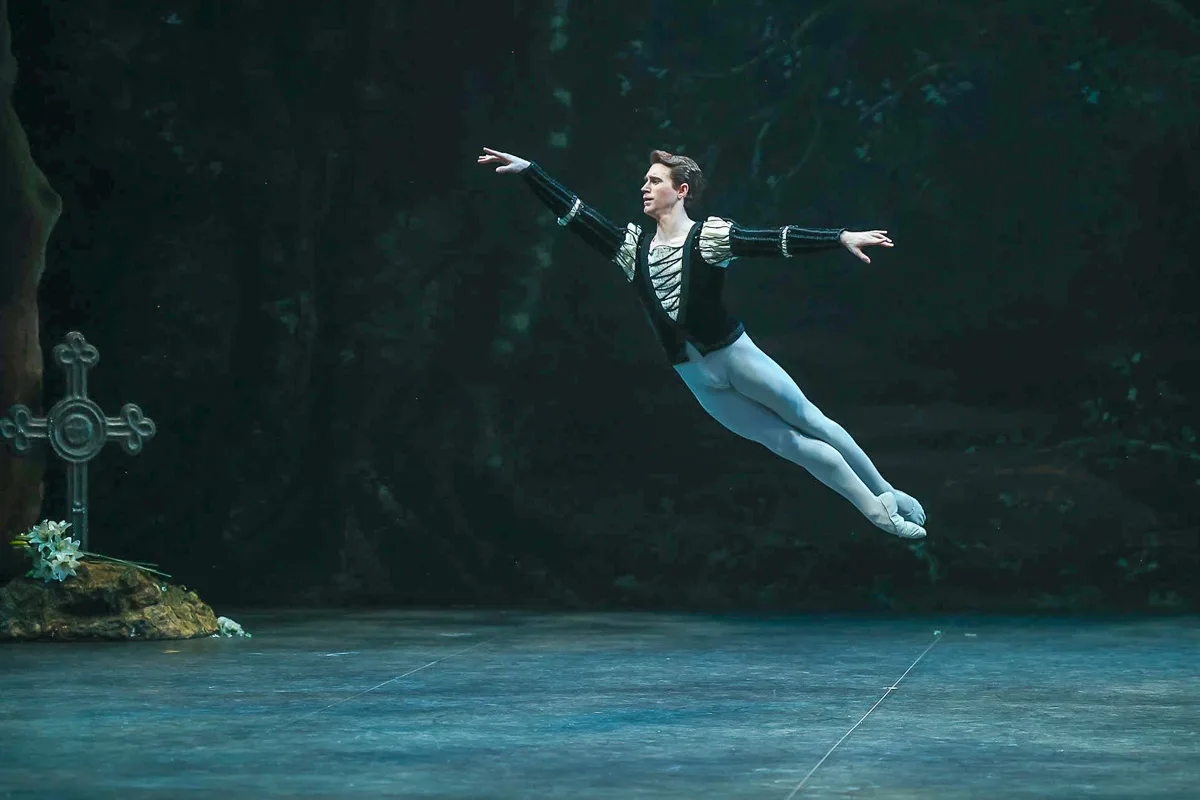
Nonetheless, their leader – Alison McWhinney as Myrtha, Queen of the Willis – has a vengeful agenda. She marshals them into legions harassing Hilarion (and other gamekeepers) to their deaths. Though implacable, McWhinney could be even fiercer, until her pagan power is undermined by the Christian cross on Giselle’s tombstone. Myrtha succeeds in drawing Giselle and Albrecht away from its protection, forcing them to dance until he is exhausted.
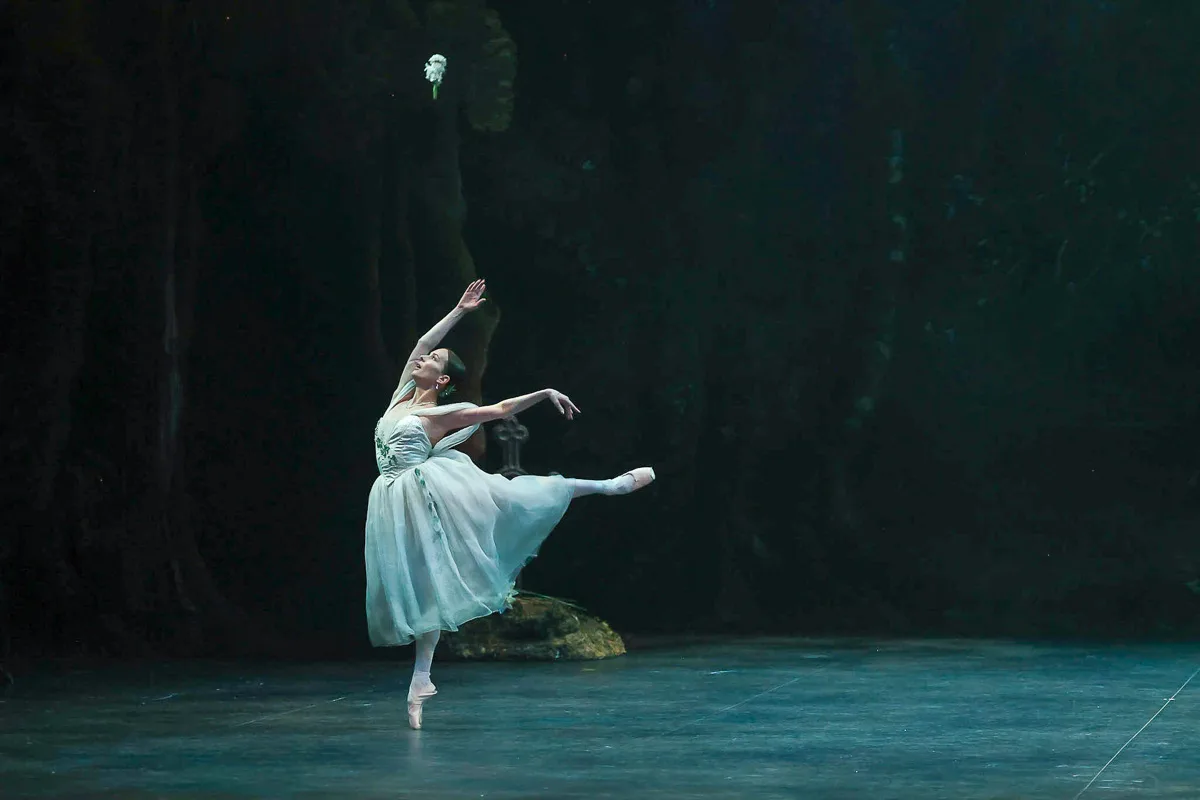
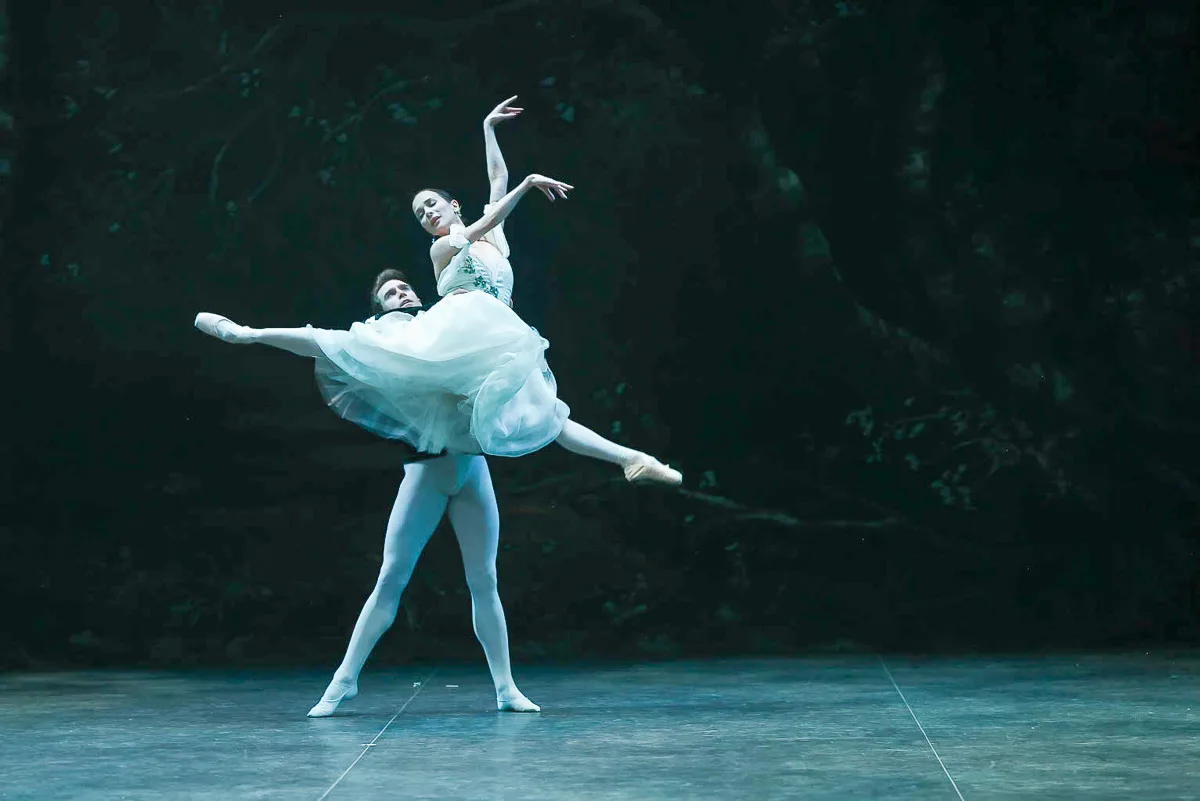
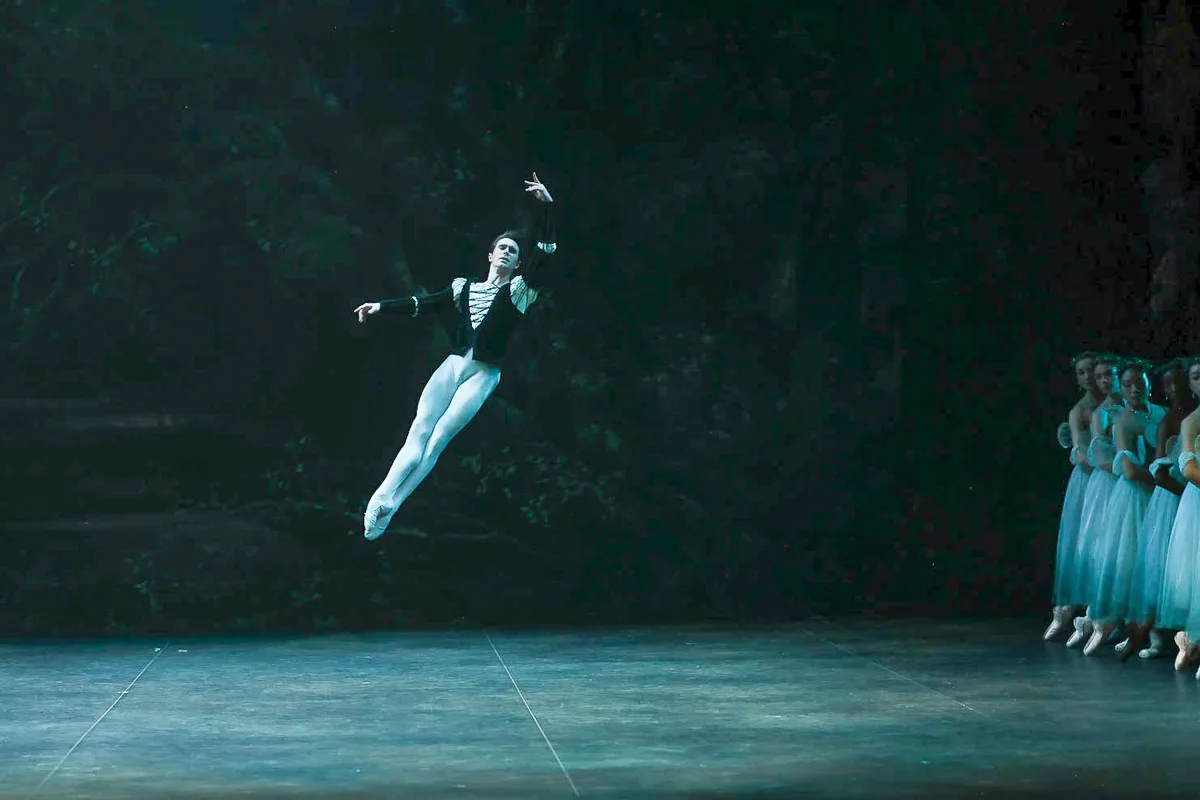
Arrieta partners Khanuikova nobly, supporting her as if she were flying. He doesn’t do the now-customary sequence of entrechats (introduced by Nureyev and disliked by Skeaping), so he’s not convincingly driven to the point of collapse. Khaniukova appears more human than supernatural in her dancing, without the eerie strength to raise her developpés and arabesques penchées seemingly without effort.
Skeaping’s account of the ballet’s ending transforms Giselle back into a woman who can embrace her lover’s body, telling him in mime that he has been saved by sunrise and that she must return to her grave. She doesn’t, however, bid him to return to Bathilde, as in the original ending (retained by Alexei Ratmansky in his staging of Giselle for the United Ukrainian Ballet, seen at the Coliseum in 2022).
ENB’s production still serves the company well as a conventionally Romantic Ballet counterpart to Akram Khan‘s contemporary Giselle. Walker’s designs and costumes are lovely, though David Mohr’s lighting, recreated from the 1971 original by Charles Bristowe, is now too dark in Act II. I like the frozen moments in both acts when the performers keep absolutely still: Hilarion’s exposure of Albrecht’s true identity in Act I and the Wilis’ confrontation of sunrise near the end. Inevitably, casts to come in the run have been subject to changes – festive season Nutcrackers take their toll in the dead of winter.