
[Review] Sarasota Ballet’s triple bill tribute to Frederick Ashton in London

Jonathan Gray sees the Sarasota Ballet at the Royal Opera House’s Linbury Theatre – Valses nobles et sentimentales, Dante Sonata, and Sinfonietta
| Title | Valses nobles et sentimentales, Dante Sonata, Sinfonietta |
| Company | Sarasota Ballet |
| Venue | Linbury Theatre, Royal Opera House, London |
| Date | 5 June 2024 |
| Reviewer | Jonathan Gray |
Who could have predicted, when he died in 1988, that it would be a ballet company based in Florida, in years to come, that would best honour the memory of Frederick Ashton? Perhaps Britain’s greatest choreographer, Ashton commenced his dance making with Ballet Rambert during the 1920s, but he is best known for the many works – classic after classic – he created on The Royal Ballet from the 1930s until the 1980s. In doing so, Ashton helped form what we now recognise as the “British” style of ballet, a ravishing combination of alert musicality, technical dexterity, theatricality, quicksilver footwork, fluid arms and a rich, lavish use of épaulement (the movements of the head, neck, shoulders and back). It would have been safe to assume at the time of his death that it would be The Royal Ballet that maintained the sacred flame, but as the years have passed that flame has dwindled almost to a flicker in their care, and we are lucky, now, if we see more than a handful of Ashton’s works performed in London in a year.
Not so at Sarasota Ballet, directed since 2007 by former Royal Ballet dancer Iain Webb, assisted by his wife, former Royal Ballet ballerina Margaret Barbieri, who have consistently presented Ashton’s works, overseen major revivals and staged an unforgettable Ashton Festival in 2014. Now, to launch The Royal Ballet’s Ashton celebrated season and the Ashton Foundation’s Ashton Worldwide 2024–2028 festival, Sarasota Ballet has finally made its London debut with a series of eclectic programmes at the Linbury Theatre that include some works which – quite literally – have not been seen in Britain in decades. Unsurprisingly, too, the season is completely sold out.
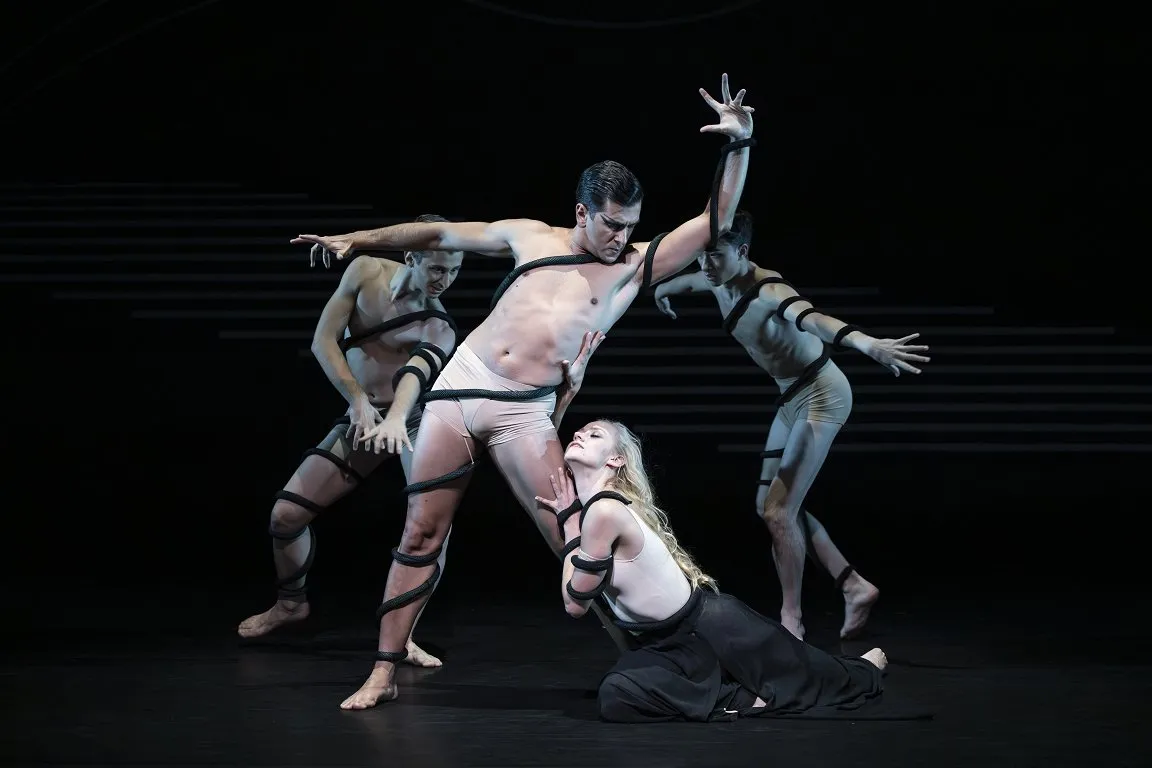
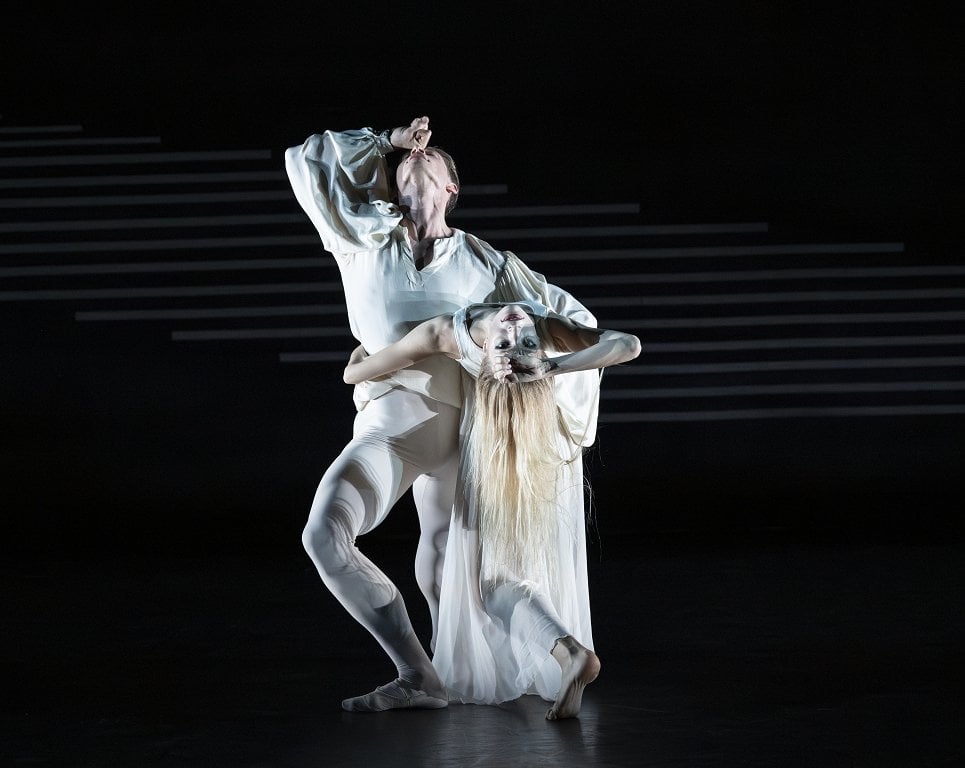
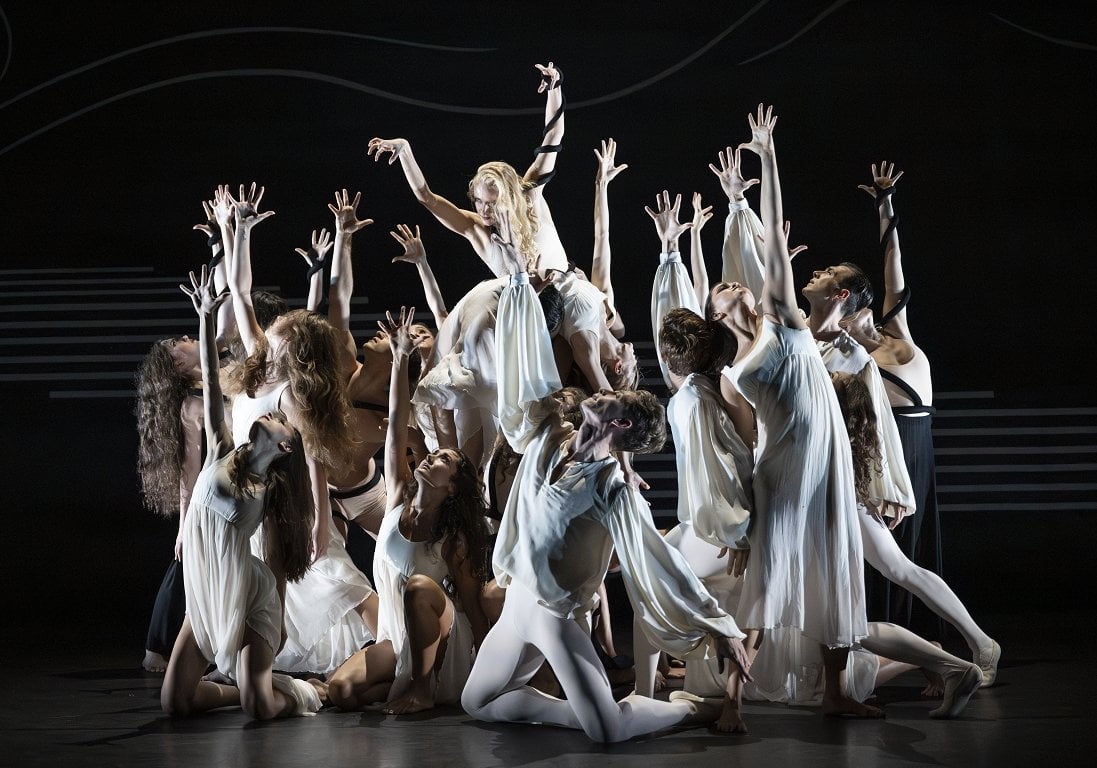
The company’s opening programme included two ballet’s dating from the 1940s performed in set and costume designs by Ashton’s close collaborator, Sophie Fedorovitch – Valses nobles et sentimentales and Dante Sonata – and one – the plotless Sinfonietta – created in 1967; all three are completely different in look and style. Made just a year into the Second World War, Dante Sonata is a highly theatrical depiction of a conflict between the Children of Light and the Children of Darkness, and is probably the closest Ashton ever came to experimenting with expressionist choreography. The dramatic gestures and snarled hands of the Children of Darkness contrast strongly with the pure classical lines of the Children of Light, and there are also strong suggestions in the ballet of the crucifixion and resurrection of Christ. Danced to music by Franz Liszt, in Dante Sonata one can see the then modern influences on Ashton of Kurt Jooss, and even Martha Graham, as well as the inspiration of the extraordinary groupings used in ballets by Bronislava Nijinska; the humanity and musicality, however, is purely Ashtonian. The dancers of today are sometimes embarrassed to perform overtly theatrical works like this, but the artists of Sarasota Ballet seemed to relish their roles in Dante Sonata, with Ricardo Graziano and Lauren Ostrander taking saturnine delight as the leading Children of Darkness, and Jennifer Hackbarth, Marijana Dominis and Daniel Pratt nobly suffering as the leading Children of Light. Does Dante Sonata look a little dated now? Yes, it does, but it is fascinating nonetheless.

Created in 1947, Ashton used Maurice Ravel’s gorgeous Valses nobles et sentimentales to evoke a stage depiction of young people at a ball in days gone by. Amidst a series of see-through screens, the choreographer gives his dancers playful allusions to romance through looks and glances, and in differing combinations they waltz, the men gently lifting the women into the air, or supporting them in deep arabesques. A little later, Ashton hints at an ambiguous relationship between a woman (Jessica Assef) and two men (Ricardo Rhodes and Daniel Pratt) through a pas de trois of changing directions. Everything is light, delicate and nostalgic, like the lingering scent of a subtle perfume, and yet Ashton also suggests a hope for the future through these young lives. It’s fascinating to see, too, how he further developed exquisite sequences of movements in Valses nobles, such as a series of floating lifts from side to side, in works like Scènes de ballet and Illuminations. Precision is key to the dancing in Ashton’s ballets, something which the Sarasota company had in spades at this performance, but a sense of relaxation and spontaneity is also required and I felt the dancers needed a little more of that impulsiveness, especially when they have such wonderful music to accompany them.

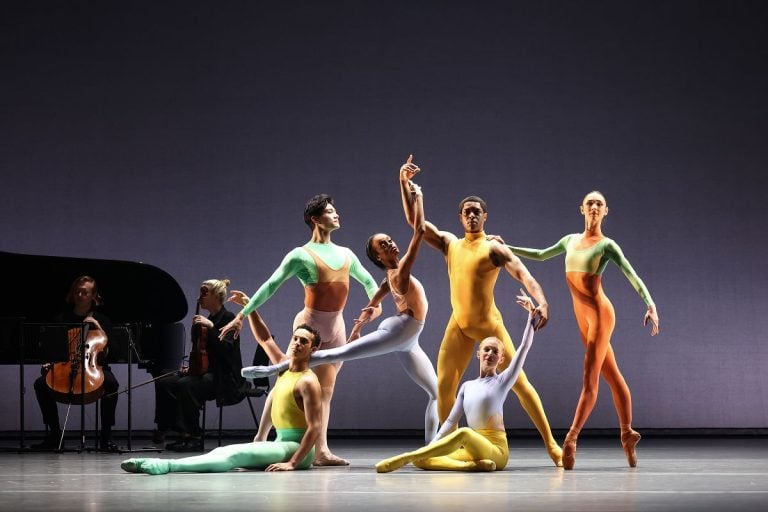
Last on the programme was Sinfonietta, danced to an oddly compelling score by Malcolm Williamson. Dressed in chic 1960s striped tunics designed by Peter Rice, the first movement – performed by Sierra Abelardo, Marijana Dominis, Evan Gorbell and Samuel Gest – is dizzyingly quick, their spiky moves and swift changes of direction a reminder of just how fiendishly difficult Ashton’s choreography can be. In contrast, the smooth, lunar quality in the second movement is extraordinary, with the ballerina – a ravishing Jennifer Hackbarth – barely touching the floor at first as she is lifted, twirled and held upside down by her five partners. With its pure lines and astonishing sequence of movements, this moonbeam section of Sinfonietta is like a continuation of Ashton’s earlier, equally beautiful, Monotones. In the speedy final movement, Ricardo Rhodes gambolled through sequences of virtuoso jumps, whilst the other dancers accelerated so quickly they left the audience breathless.

It’s over five years since I last saw Sarasota Ballet perform, and during that time the company has acquired a lot of new faces, but all of them have a firm understanding, thanks to the leadership of Iain Webb, of how Ashton’s choreography should be performed. The company looked marvellous, and should be proud of their achievements. It’s no wonder that Webb was honoured earlier this week with the De Valois Award for Outstanding Achievement at the National Dance Awards – I can’t think of a person who deserves it more.

Jonathan Gray was editor of Dancing Times from 2008 to 2022.
He studied at The Royal Ballet School, Leicester Polytechnic, and Wimbledon School of Art where he graduated with a BA Hons in Theatre Design. He was on the Curatorial Staff of the Theatre Museum, London, from 1989 to 2005, assisting on a number of dance-related exhibitions, and helping with the recreation of original designs for a number of The Royal Ballet’s productions including Danses concertantes, Daphnis and Chloë, and The Sleeping Beauty.
Jonathan Gray has also contributed to the Financial Times and The Guardian, written programme articles for The Royal Ballet and Birmingham Royal Ballet, and is co-author of the book Unleashing Britain: Theatre gets real 1955-64, published in 2005. He is a member of the Dance Section of The Critics’ Circle.



Spot on, Jonathan!
It makes me so happy to see Sarasota’s enthusiastic reception in London. They are one of my favorite American companies and I try to see them whenever they are in NYC. Sadly, American Ballet Theatre, which has many of the same Ashton works in its repertoire, rarely does them these days. Its subscribers seem to prefer endless schmaltzy productions of Swan Lake and Romeo & Juliet.