
Books: Amici della Scala celebrates Italy’s theatre designers – Luciano Damiani, Anna Anni, Gabriella Pescucci, Franca Squarciapino, Luisa Spinatelli
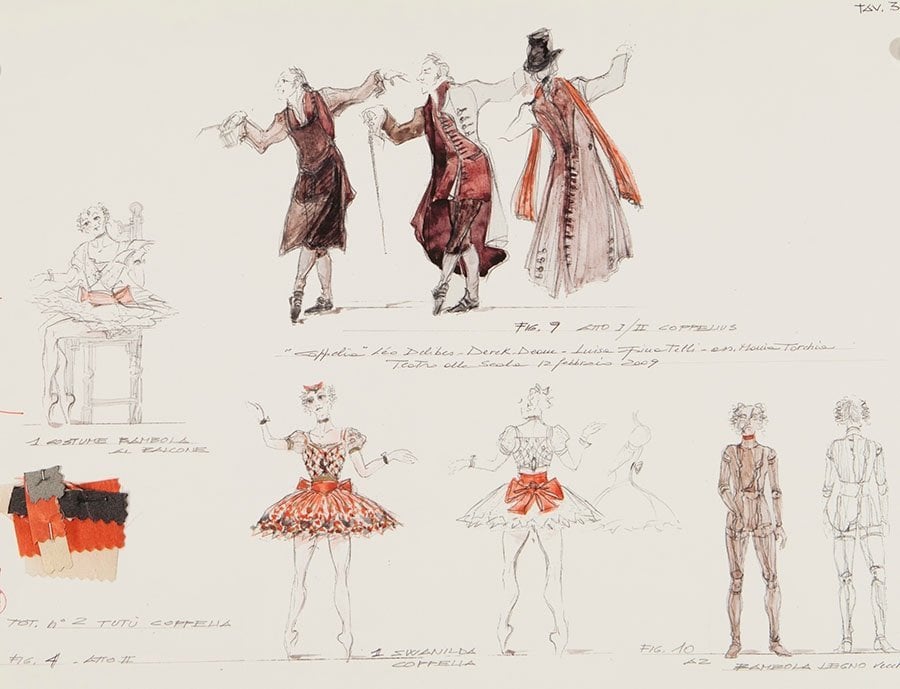
For over twenty years, the association Amici della Scala (Friends of La Scala) has produced books dedicated to the set and costume designers who have worked in Milan’s opera house. Since 2002 there have been four mini-volumes published each year, and from 2006 they have been joined by a large format coffee-table book. The only hiccup in the lineup was a missed year (2022) due to Covid-related problems.
The last collection saw the mini-volumes – all lovingly curated by Vittoria Crespi Morbio – dedicated to the designers Anna Anni, Gabriella Pescucci, Franca Squarciapino and Luisa Spinatelli. I say ‘mini’, but the small 12cm by 17cm hardback volumes are on average 250 pages long and contain 150 images. The latest, glorious larger volume – traditionally published on 7 December, Milan’s Saint’s Day and the day La Scala opens it’s season – is dedicated to Luciano Damiani, “Il teatro di un innovatore | Theatre by an Innovator”, a double title because the book is in both Italian and English.
In the second half of the 20th century, Italian, and indeed European theatre was greatly influenced by set designer, costume designer and director Luciano Damiani (Bologna, 1923 – Rome, 2007).

Damiani designed many of the legendary productions directed by Giorgio Strehler and Luca Ronconi. He brought a revolutionary aesthetic to the stage, often stripping scenery down to the essentials, giving some of his sets (the Goldoni plays at Milan’s Piccolo Teatro, for example) the look of a chic Armani-designed hotel. Damiani created worlds that seemed to engulf the auditorium, reaching way beyond the proscenium.
His collaborations with Strehler in particular saw a maniacal attention by both men to light, creating striking stage pictures by boldly delineating and shading spaces, but also using lighting to communicate psychological aspects of the characters and the story. The Strehler-Damiani production of Die Entführung aus dem Serail for the Salzburg Festival in 1965 (and still seen at La Scala) often has the singers as silhouettes, like paper profile cutouts, against a bright background, stepping forwards or backwards to be subtly or dramatically illuminated, underlining the force of Mozart’s music but also taking away from natural lighting, and underlining the spoken, recitative and aria structure of the work. So, this exquisite, theatrical effect also works as an alienation effect, and in fact the two men also collaborated on works by Bertolt Brecht.
Damiani didn’t have one look that he stuck to. His designs for Verdi’s Macbeth at La Scala in 1975 were for another collaboration with Strehler (currently, the opera is available on YouTube). The famous production with Claudio Abbado conducting a cast including Piero Cappuccilli and Shirley Verrett, conjured a very different world with opulent giant copper sheets hung as a backcloth and the two protagonists wearing cloaks so long that they tangled and teased like snakes.
In 1977, his production of Verdi’s Don Carlo with Ronconi at La Scala seemed unpretentious on paper, but when his large, sculpted structures and Ronconi’s vast team of actors were assembled for the auto da fé, the street that runs along the side of the theatre had to be closed as the space in the wings wasn’t sufficient, and the overflow went out in the open air. It is an impressive scene.


His work with ballet was limited, but he designed Mario Pistoni’s 1966 ballet La strada based on Federico Fellini‘s film. Carla Fracci took the leading role, and the production was such a success that it was later remounted in a television studio and recorded. The false perspective and essential, almost colourless quality to the basic design – typical during this period in his career – contrasted with the theatrical and colourful circus scenes. The winning production is still in La Scala’s repertoire.
The book amply illustrates his hundreds of productions with designs and photos; provides a detailed chronology of his output; indexes to text, photos and designs; as well as the book’s author, Crespi Morbio’s detailed biography.
Crespi Morbio, in a postscript, asks:
But who was Luciano Damiani, truly? What was there behind his art, which was so refined, so bright, so elusive, without predecessors and without heirs? What kind of man was he? I have wondered this many times, having had the opportunity to meet him and know him, and I remain without an answer.
In winter 1989-1990 1 spent a great deal of time with him… His modus vivendi, as I saw it on that occasion, was monastic. His life was the theatre, “his” theatre built on his self-image (or perhaps the process was the reverse): flexible, original, essential, neat. He stayed in a little room like a soldier holed up in the trenches, he slept on a cot, the few metres of space were covered with photographs, swatches, folders, sketches, paints.


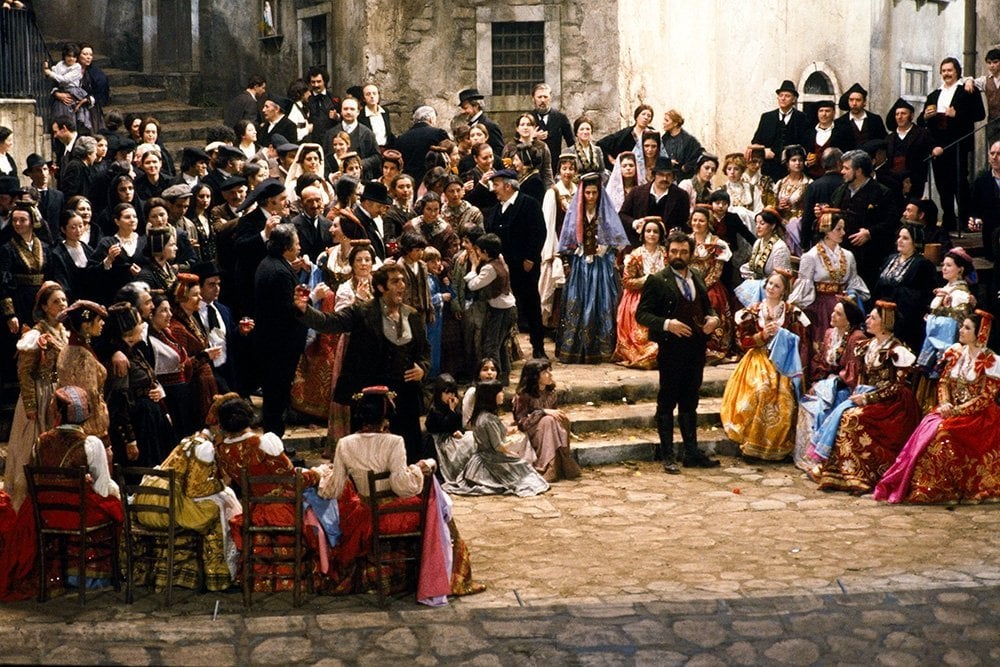
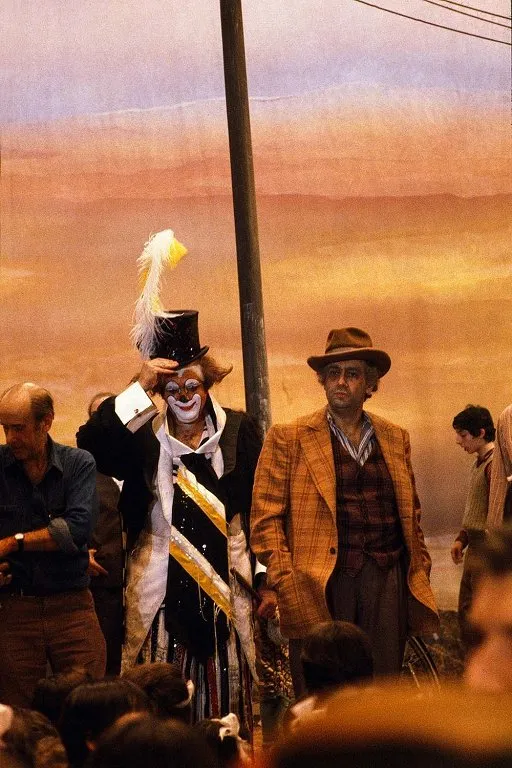
ANNA ANNI alla Scala
Fame came late to Anna Anni (1926-2011) but her name would become legendary in the history of Italian theatre costume.
At La Scala her work went hand in hand with that of Franco Zeffirelli, who entrusted her with her first work as an assistant in the fifties and later he “launched” her career when he asked her to design costumes for Cavalleria rusticana (1981) a work of spectacular beauty and poetry, for which the costume designer went down to Sicily to learn the secrets of fabric cutting and shapes.
Historical realism and the meticulous study of the source material were the starting points for her invention and the imaginative, coloured richness of her designs, as seen in Leoncavallo’s Pagliacci (1981), in the famous staging of Puccini’s Turandot (1983), and in the less successful production (though not because of her glorious costumes) of Verdi’s Don Carlo (1992). Today Anna Anni’s costumes are admired as masterpieces of taste and style, and mark an unrepeatable period of Italian opera theatre.


GABRIELLA PESCUCCI alla Scala
Beginning under the tutelage of Piero Tosi, famous for his historical costume design for cinema and theatre in the second half of the 20th century, Gabriella Pescucci (1941) is one of the most brilliant exponents of Italian costume design.
She started working in the 1960s, in the Rome of Pasolini and Visconti, and gradually embarked on a career that led her to diverse fields, often for Hollywood productions. With Martin Scorsese’s The Age of Innocence, she won an Oscar in 1994.
Able to combine scrupulousness study of historical documentation with an inexhaustible imagination and meticulous attention to the smallest detail, Pescucci also made her mark at La Scala in a series of operas from 1972 to 2001, the best-known of which is Liliana Cavani’s production of Verdi’s La Traviata, with sets by Dante Ferretti, that premiered in 1990 and has since returned to the stage countless times.


FRANCA SQUARCIAPINO alla Scala
Having grown up artistically alongside her lifelong companion, set designer Ezio Frigerio, Franca Squarciapino (1940) made her mark on the Italian costume scene for her industrious tenacity and brilliance of imagination.
There is a rigour of historical research for her productions that preserves the illusion of realism, yet they show an experimental and creative vein that has guided her towards daring solutions in the use and treatment of materials and colours.
The result is a catalogue of performances that have formed the history of international theatres over the last half-century, and in particular that of La Scala, where Squarciapino has poured her talent into works by Mozart, Beethoven, Verdi, Tchaikovsky, Massenet, Puccini and Prokofiev, in both opera and ballet. Her work in film, of equal importance, led her to win an Oscar in 1991 for Jean-Paul Rappeneau’s Cyrano de Bergerac.


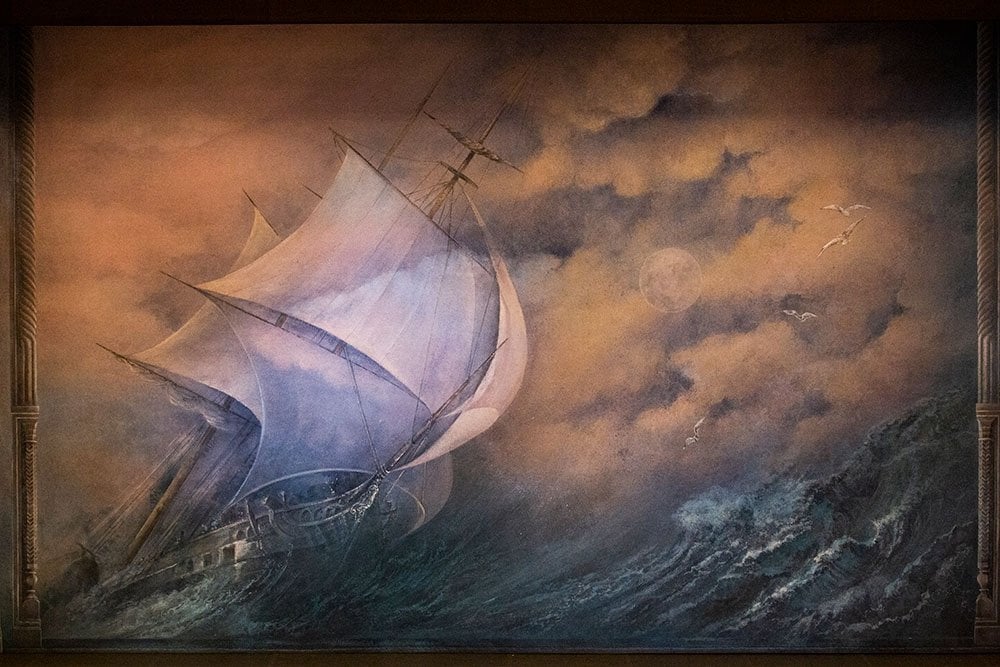


LUISA SPINATELLI alla Scala
From her debut at La Scala in 1965 with Tchaikovsky’s Francesca da Rimini, the world of dance was central to the career of Luisa Spinatelli (1941). A set and costume designer of great versatility, she has worked with the greatest étoiles, from Carla Fracci to Luciana Savignano, from Rudolf Nureyev to Roberto Bolle, establishing a long and continuous relationship with the Milanese theatre – almost sixty years of uninterrupted collaboration for both operas and ballets.
Her talent was nurtured by designer and architect Tito Varisco, La Scala’s director of stage design, and she acquired a thorough knowledge of the practicalities of stage design, and practical solutions to aid the movement of singers and dancers during this time. Her career has been an ongoing research into chromatic relationships and stage space, in a refined synthesis of rigour and figurative abandon.
The volumes, past and present, can be acquired via Amazon or the publisher’s site: grafiche STEP

Graham Spicer, aka ‘Gramilano’, is a writer, director and photographer based in Milan. He was a regular columnist for Opera Now magazine and wrote for the BBC until transferring to Italy. His articles have appeared in various publications from Woman’s Weekly to Gay Times, and he wrote the Danza in Italia column for Dancing Times magazine. Graham was the historical advisor on Codice Carla, the 2023 documentary on Italian ballerina Carla Fracci.
Graham also works as a dance photographer, and his photos have appeared in many books, theatre programmes, and magazines, including Dancing Times, Dance Spirit and Ballet2000, as well as all the major Italian newspapers.
He is a member of the Dance Section of The Critics’ Circle.



I do wish these gorgeous books were more available in the U. S. Perhaps, in paperback so that they do not “break the bank” of impoverished opera aficionados.