
Review: Uwe Scholz’s Le rouge et le noir with Rome Opera Ballet – discovering love and passion

Marta Mele sees Rome Opera Ballet in Le rouge et le noir by Uwe Scholz – “The enormous challenges of narrative ballet coupled with the symphonic music of Hector Berlioz”
| Title | Le rouge et le noir |
| Company | Rome Opera Ballet |
| Venue | Teatro dell’Opera di Roma |
| Date | 30 October 2024 |
| Reviewer | Marta Mele |
Rome Opera Ballet has offered an unmissable opportunity in the past days to the public of the Italian capital, who were introduced for the first time to a rare title of the narrative genre, Le rouge et le noir by the choreographer Uwe Scholz, created in 1988 for Zurich Opera and inspired by the homonymous masterpiece by Stendhal. The German choreographer had studied in Stuttgart with John Cranko before completing his training at the School of American Ballet in New York, and the ballet – in a revival by Giovanni di Palma – was born as a tribute to the deceased maestro on the 60th anniversary of his birth.
Scholz uses the symphonic, operatic and sacred music of the brilliant French composer Hector Berlioz to confront the enormous challenges of creating a narrative ballet. Moreover, the literary work it is taken from is not univocally interpretable. Inspired by a resounding news story whose echo had spread thanks to the “Gazette des Tribunaux”, it was written by Stendhal to give voice to the climate in France at the time of the Restoration. The protagonist is the son of a modest carpenter who, following the defeat of Napoleonic ideals, feels he cannot fully attain his aspirations. Once he could have become a national hero by joining the army, while now his path to self-affirmation is via the seminary. It is difficult to understand who Julien Sorel really is – whether he is an opportunist dedicated to social climbing through manipulative romantic relationships, or whether he remains faithful to his ideals until the end.
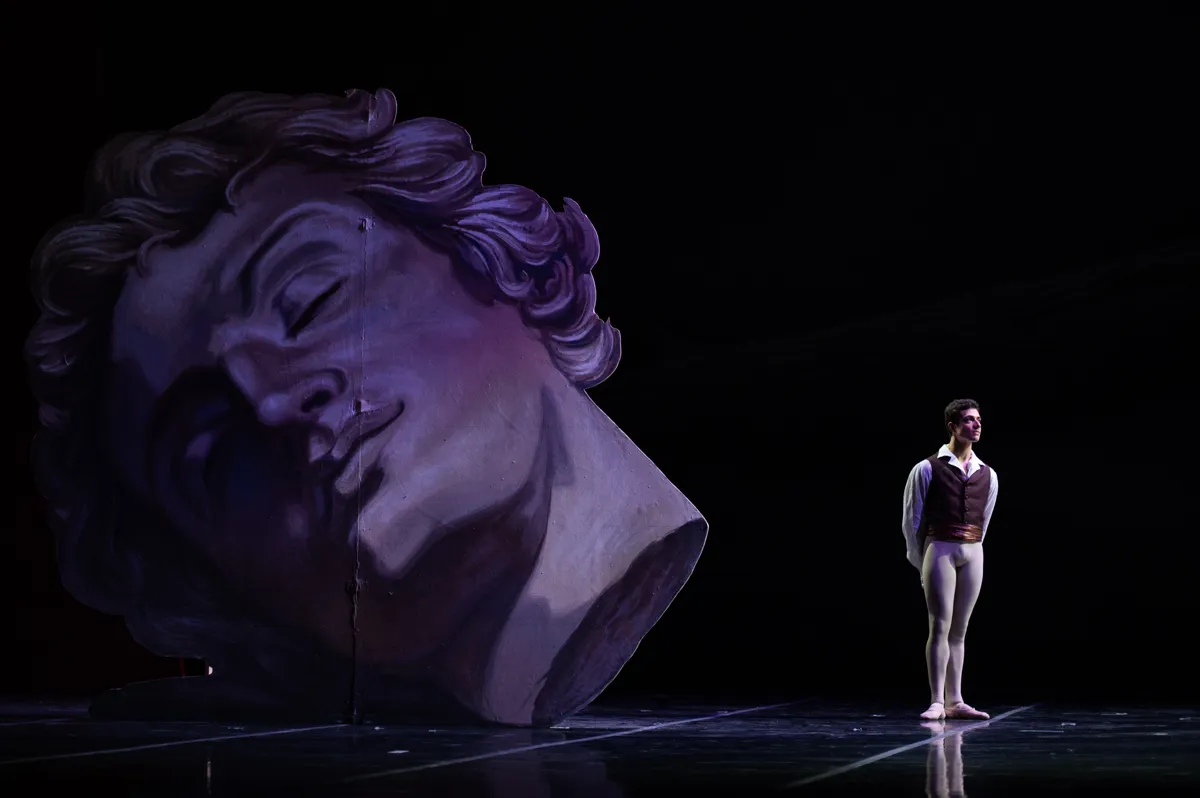
An even more difficult task for Scholz who, not having words at his disposal, is to transfer the protagonist’s internal monologues into dance, surrounding them with pas de deux with his lovers. No less challenging is the task of translating the symbolism of red and black, without falling into simplistic banalisations. In finding his own way, Scholz starts from tradition. Sorel, danced by principal dancer Michele Satriano, appears with a book in his hands, and the peasant context and his almost unruly energy bring to mind Giselle. The large marble heads depicted on stage by the set designer Ignasi Monreal – a young Spanish creative who has recently collaborated with famous fashion brands – recall the era of the French neoclassical painter Jacques-Louis David. The countryside becomes a little more refined and stylised at the home of Monsieur de Rȇnal, danced touchingly by Antonello Mastrangelo.
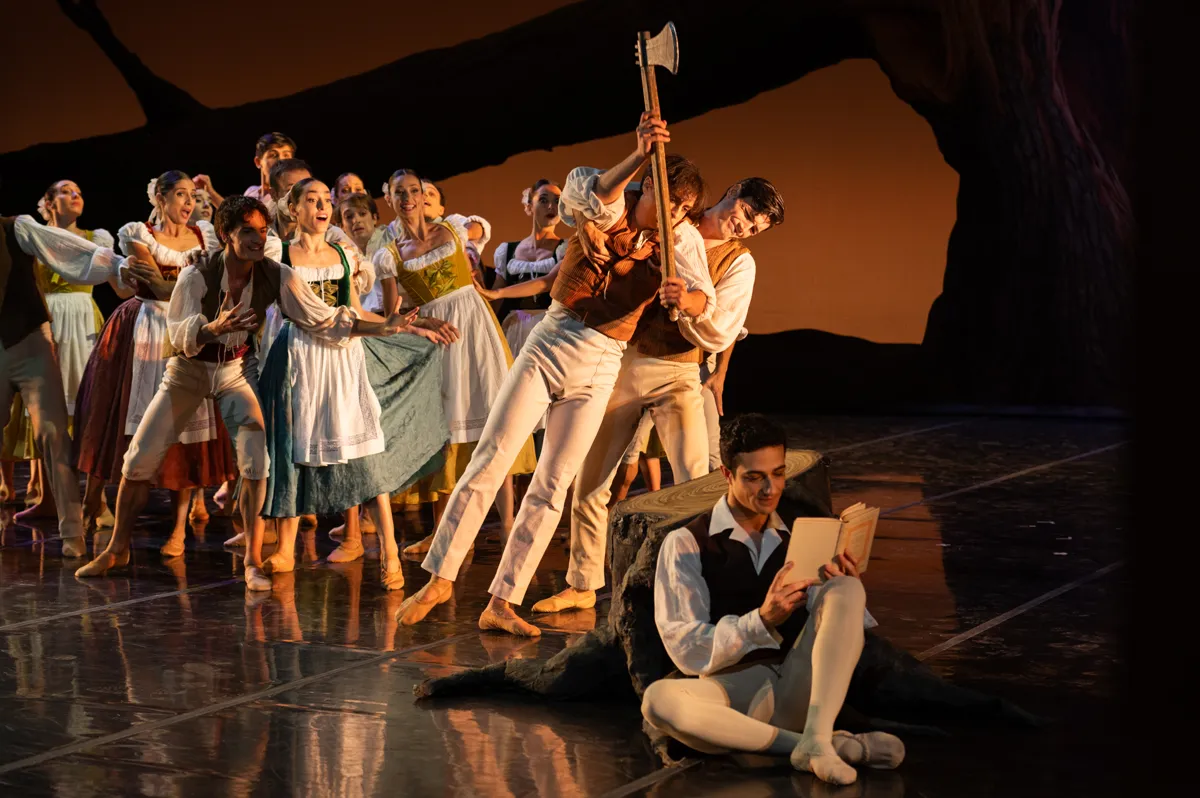


The reluctance of his wife, Madame de Rȇnal, is immediately noticeable, with her back turned and intent on caring for her children. Her husband’s constant focus on his papers restricts any attempt at even a lukewarm romantic impulse. Different is the tension expressed with a simple look and an extension of the arm, rising en pointe as she notices the appearance of Sorel. Very little compared to the seductive movements of the maid who sees Sorel as her equal, yet he immediately returns Madame de Rȇnal’s attentions, and then expresses his strong-willed energy in the first solo, skilfully interpreted by Michele Satriano, through bold grand jetés, attitudes and pirouettes.
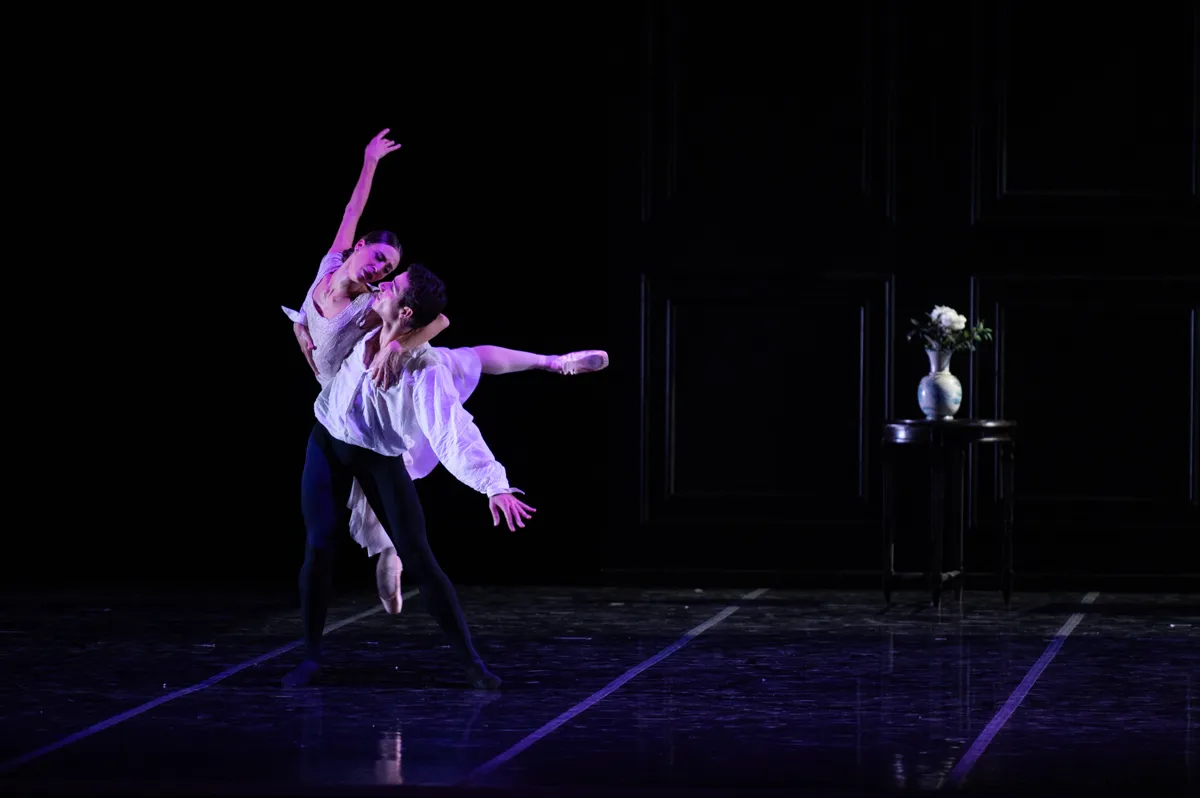
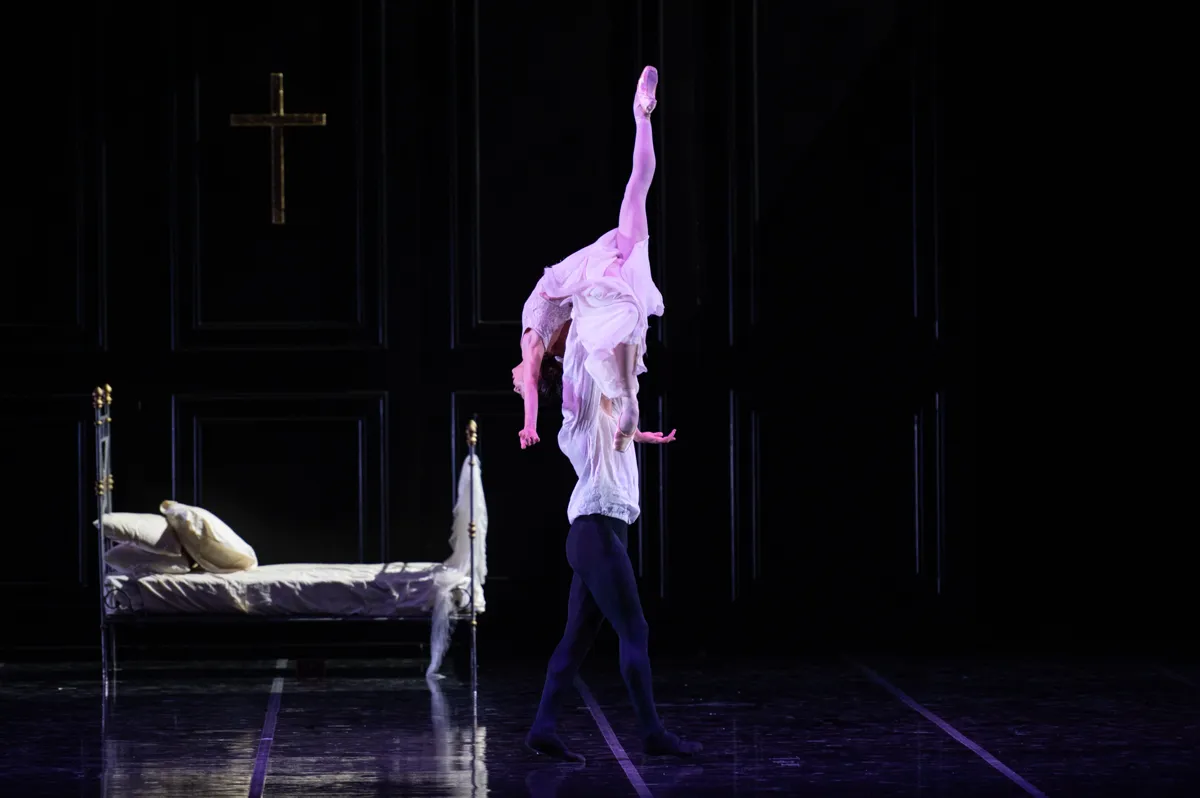
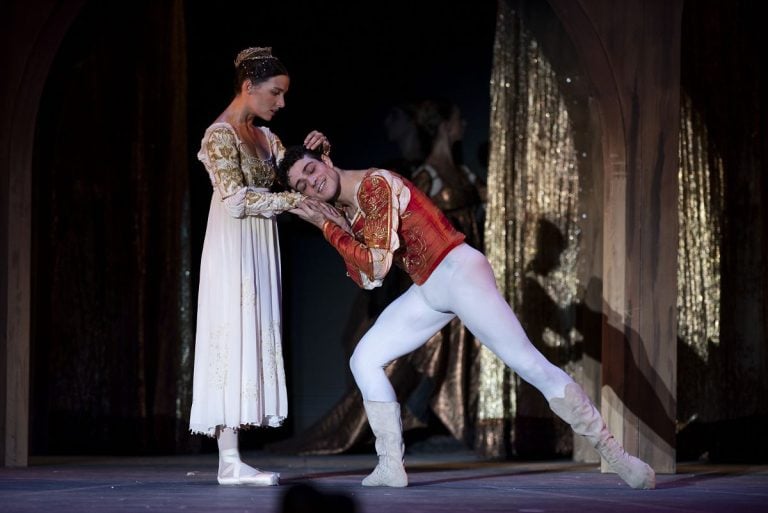
The dream materialises in the bedroom, where étoile Rebecca Bianchi, after infinite reticence, finally gives in to passion, abandoning herself to lyrical outbursts in the arms of her beloved to the music of Nuit sereine et scène d’amour from Roméo et Juliette by Berlioz. She brings to mind Alessandra Ferri in Cranko’s Romeo and Juliet, but the great musical impetus also recalls Prokofiev and the Russian tradition of the drambalet. In her continuous attempt to wriggle free – in abandonment that seems to presage tragedy – she turns back almost in a gesture of prayer after each outburst of passion, reminding us also of Galina Ulanova in Leonid Lavrovsky’s ballet.
Once discovered, the two lovers are forced to separate, and the darkness of the seminary, suggestively lit by candles, awaits Sorel. The symbol of the cross triumphs here. Then, in contrast, red dominates in the second half of the performance, accompanied by showy passion.


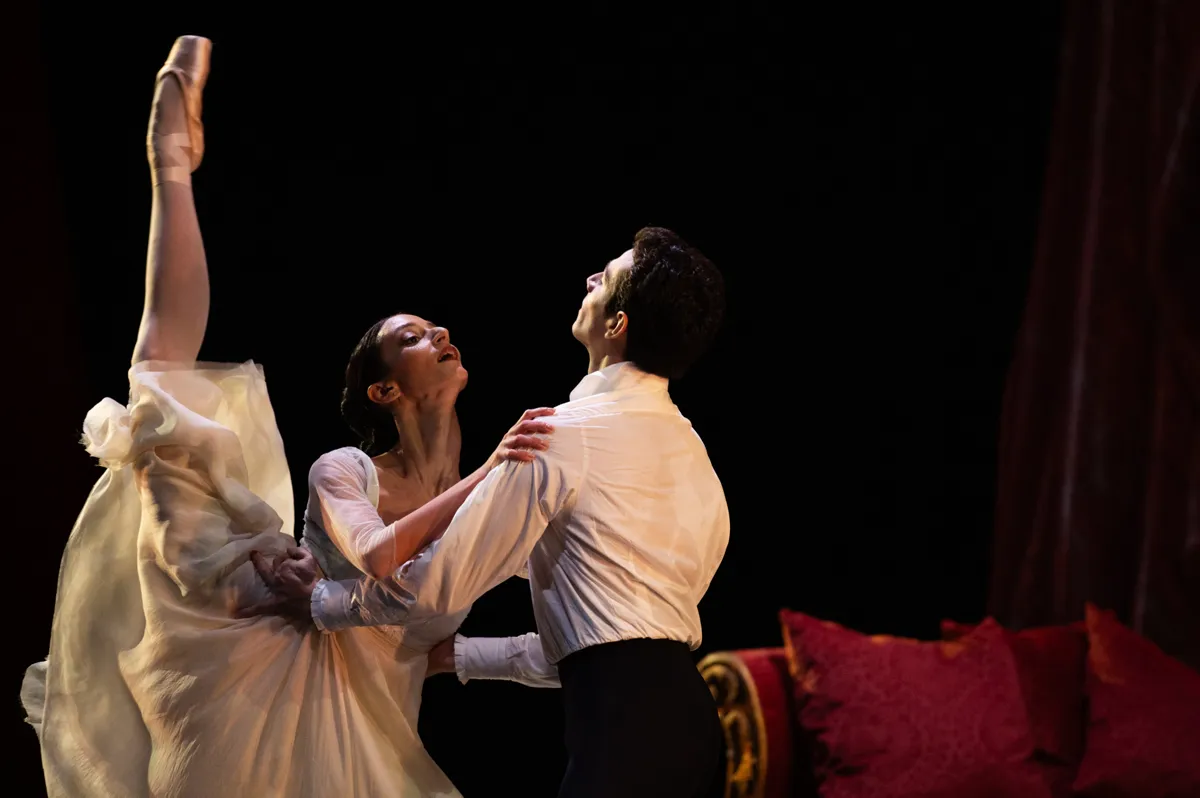

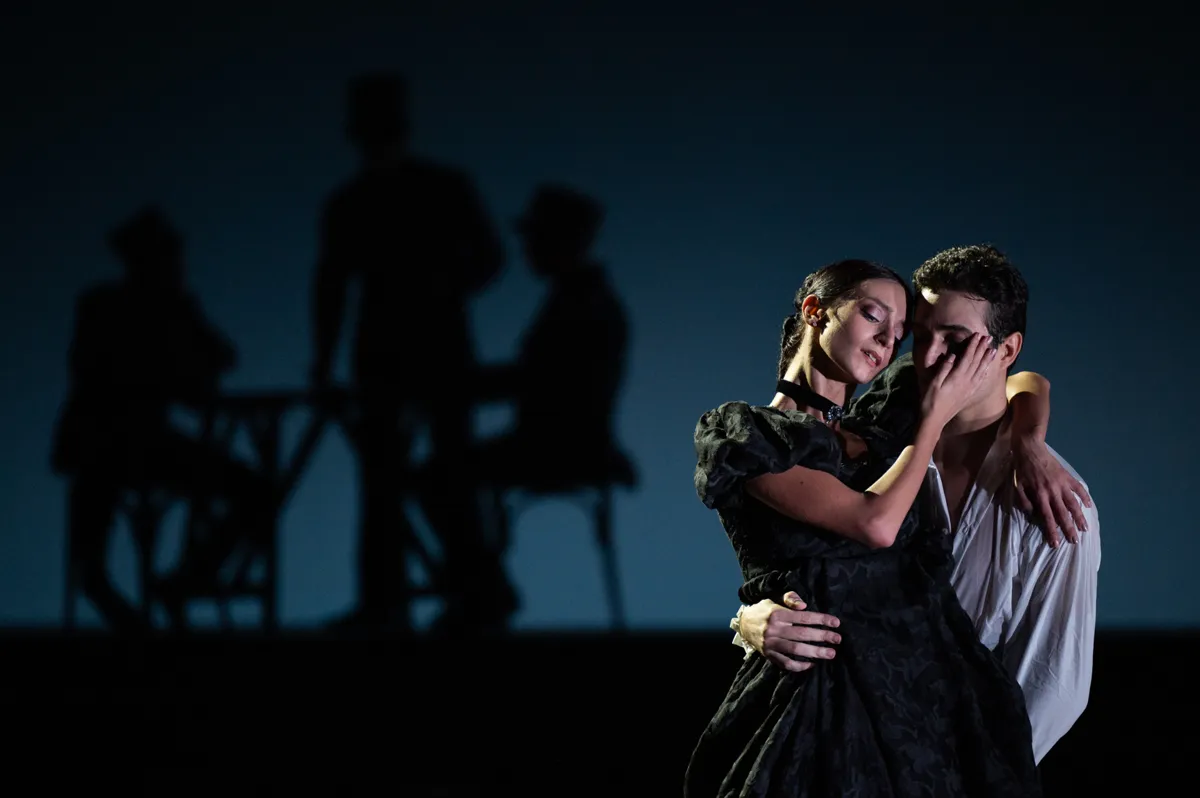
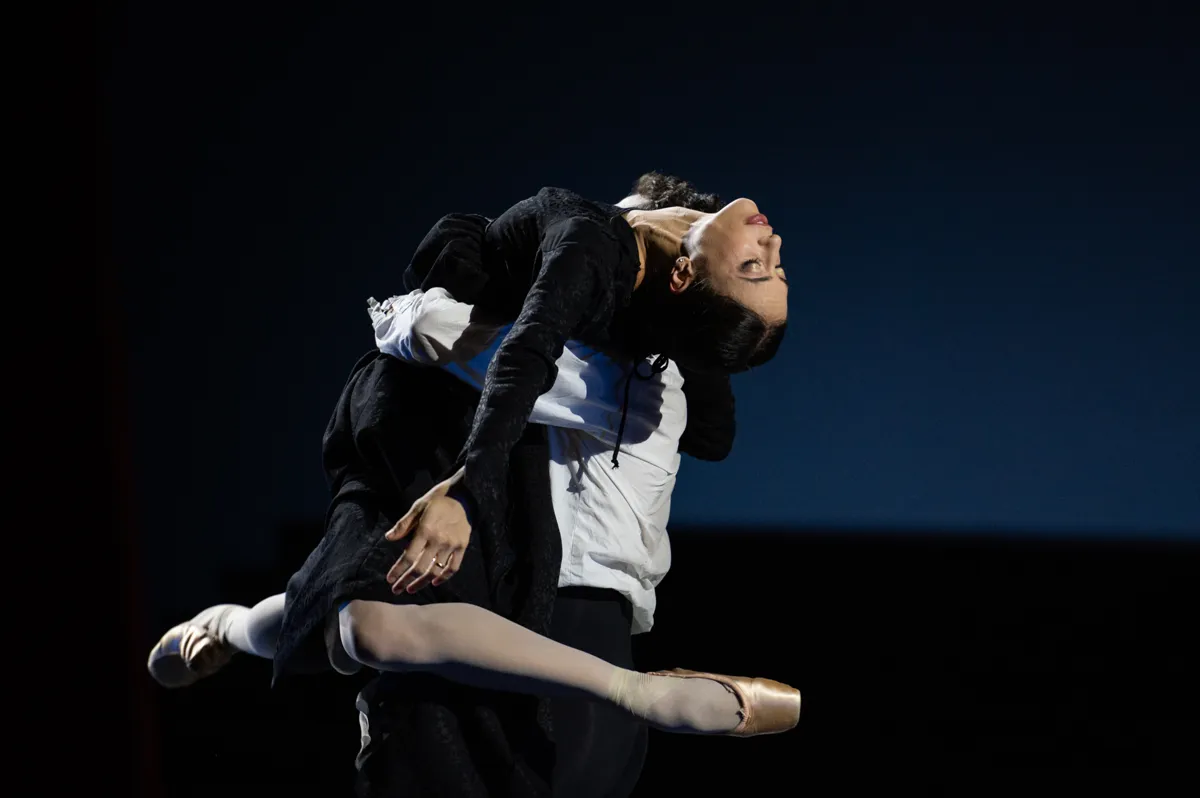
Between large candelabras inspired by the world of the French court, Satriano as Sorel shows himself decidedly dreamy in languid arabesques. His partner now becomes the capricious Mathilde de la Mole – danced by the new prima ballerina at the theatre, Marianna Suriano – who does not hesitate to combine pride and sensuality. The new love duet now becomes a challenge, a symbolic duel that takes up motifs from the madness of Giselle, combining them with a particularly eccentric choreographic language. Necessarily the accents of the female poses are turned outward and there does not seem to be any real amorous harmony here, only the juxtaposition of two imperious individuals.
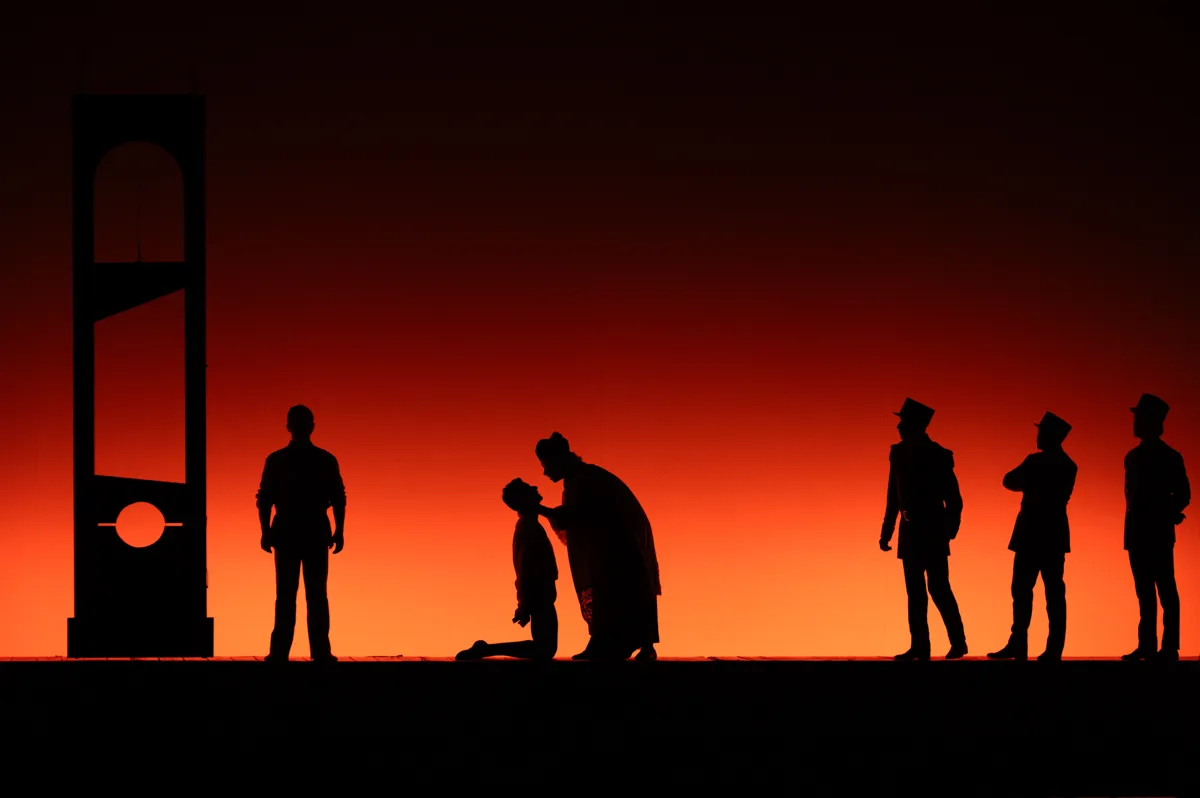
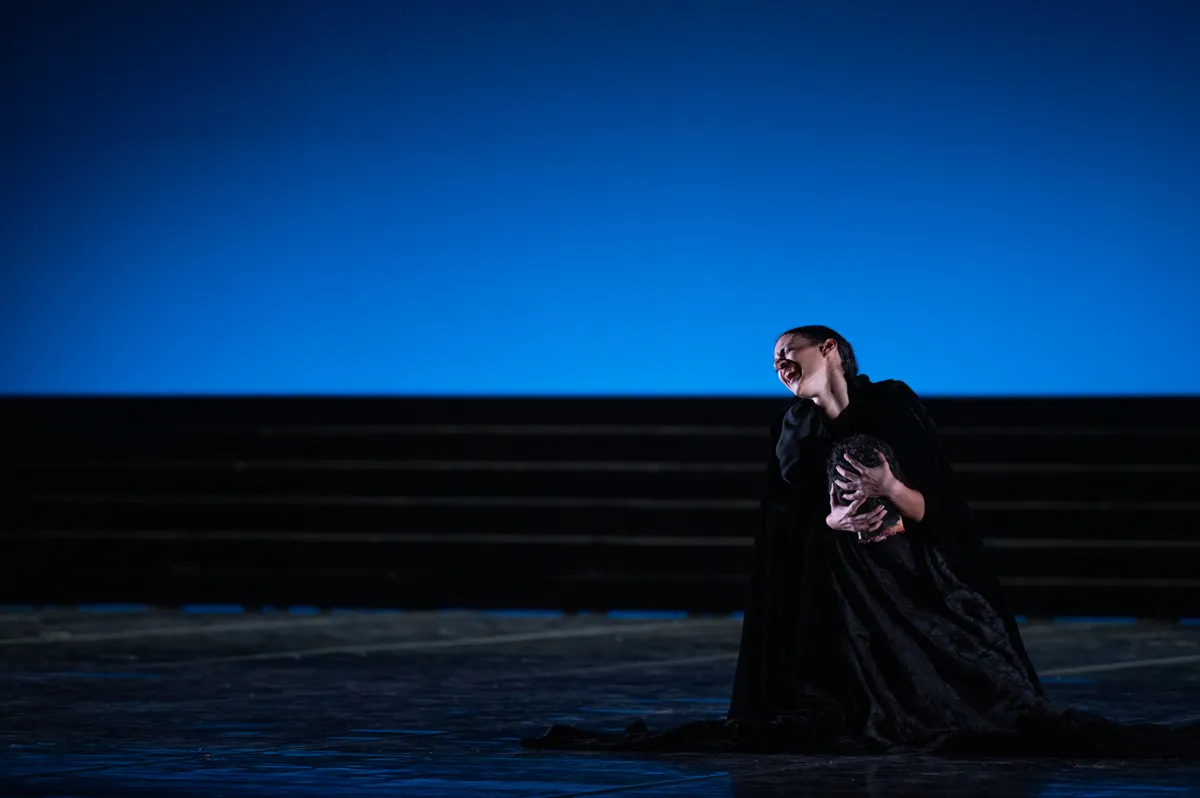
The scene rapidly shifts to the dynamic intrigues of the army and the attempted murder. Sorel’s crime is followed by punishment, condemnation, and execution, but feelings do not die and finally Scholz reveals who Sorel is for him. When the lovers go to say their last goodbye to him, the relationship with Madame de Rȇnal prevails. Thanks to her, Julien Sorel truly discovers what love and passion are, hence the melancholic memory and then impetuous anger that leaves room for the sweetness of an embrace of reconciliation.
Death is welcomed with heroism – the background is significantly illuminated in red here – but the scene is represented in an understated way. Romanticism finally takes on Gothic tones, when Mathilde de la Mole reveals her mad visionariness by lying down next to the guillotined head of her beloved.
The production is indeed a precious pearl at Rome’s Opera House to close its 2023/2024 season.

Graduating with honours in “Literary and Linguistic Studies” at La Sapienza University of Rome with a thesis on ballets inspired by Alexander Pushkin’s works, Marta Mele subsequently specialised in “History and Theory of Choreographic Art” at the Vaganova Academy in St Petersburg.
She translated from Russian the autobiography of the dancer Natalia Makarova for Gremese publishing house, and edited the Italian edition of the book Swans of the Kremlin by the scholar Christina Ezrahi.
After participating in two conferences dedicated to the bicentenary of the birth of Marius Petipa, she won the La Sapienza University’s PhD competition in Music and Performing Arts, and in 2022 received her doctorate with ‘eccellente’, her thesis entitled Ballet in Leningrad between avant-garde and ideology.
Marta participates in national and international conferences in performing arts research and writes for scientific reviews such as Danza e Ricerca, Biblioteca Teatrale and SigMa. As a dance journalist, she began by collaborating with the Russian dance magazine PROTanec, and she also writes for GBOpera.



Ciao gramilano, happy to read new collaborator Marta. It is a good ballet (I enjoyed it) and I’m happy to see ballet from Rome be reviewed. Grazie.