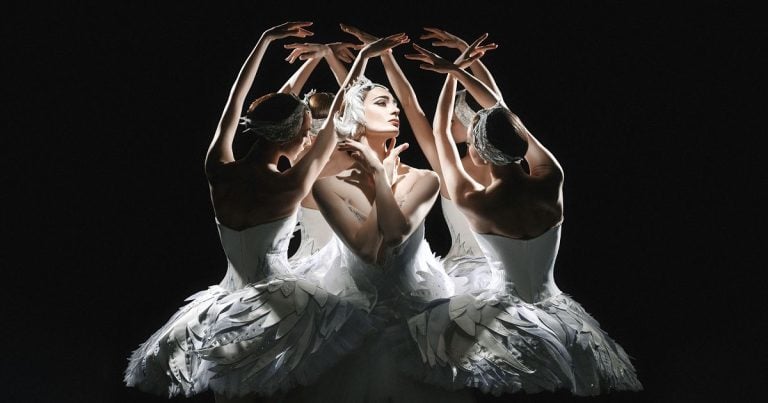
Review: Royal Ballet in Crystal Pite’s Light of Passage – Serenity, poignancy, and a little bit of idealism

Lucía Piquero sees Royal Ballet in Crystal Pite’s Light of Passage (Flight Pattern, Covenant, Passage) – a masterpiece from the master of movement.
| Title | Light of Passage – Flight Pattern – Covenant – Passage |
| Company | The Royal Ballet |
| Venue | The Royal Opera House, London |
| Date | 20 February 2025 |
| Reviewer | Lucía Piquero Álvarez |
As soon as the lights go down, a storm of feeling hits us. This is the power of Pite, and her creative team. Bodies, undefined in time and space, sway to a dark and soft music. They move in unison, and sometimes we see a glimpse of one person breaking out: it could be any one of them, of us. The Royal Ballet is not at their strongest in their unison, but in this case the moments of slight difference serve to give the work even more of a sense of humanity. As is always the case with Crystal Pite, the choreography is at its best in the flowing, risk-taking duets, and in the big groups. She really is the ‘crowd management’ queen of contemporary theatre dance.
The dancers reach, extend beyond them and somehow also beyond our shared space, pulling the movement and the atmosphere to string our hearts along with them. In three specific moments in Flight Pattern this reaches the point of almost hurting, of what would have once been called the sublime. The moment Kristen McNally walks with the heaviness of everyone’s coats, babies, baggage – after being the mother at loss, the baby rocked by Marcelino Sambé, the woman in flight; and collapses to a crescendo in Górecki’s beautiful music and the other dancers running towards her. The moment of stillness after a whirlwind of movement in group, when suddenly snow-like drops fall from the sky. The final, breathtaking gesture of Sambé’s hand on McNally’s shoulder which makes her stop rocking, even when they both know they will not reach their desired destination. Pite is a master of movement, true to her lineage in partner work, flow, and creativity, but she gets us even more with these little, extremely emotional, moments.


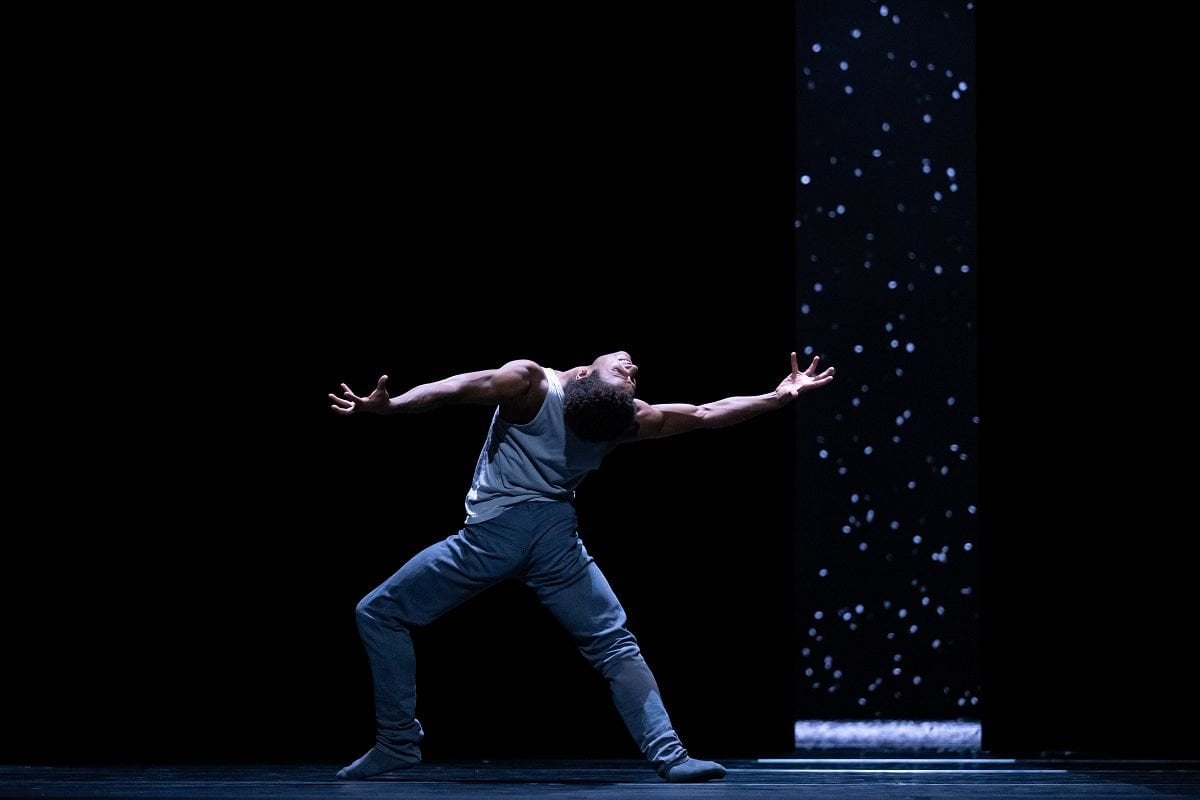

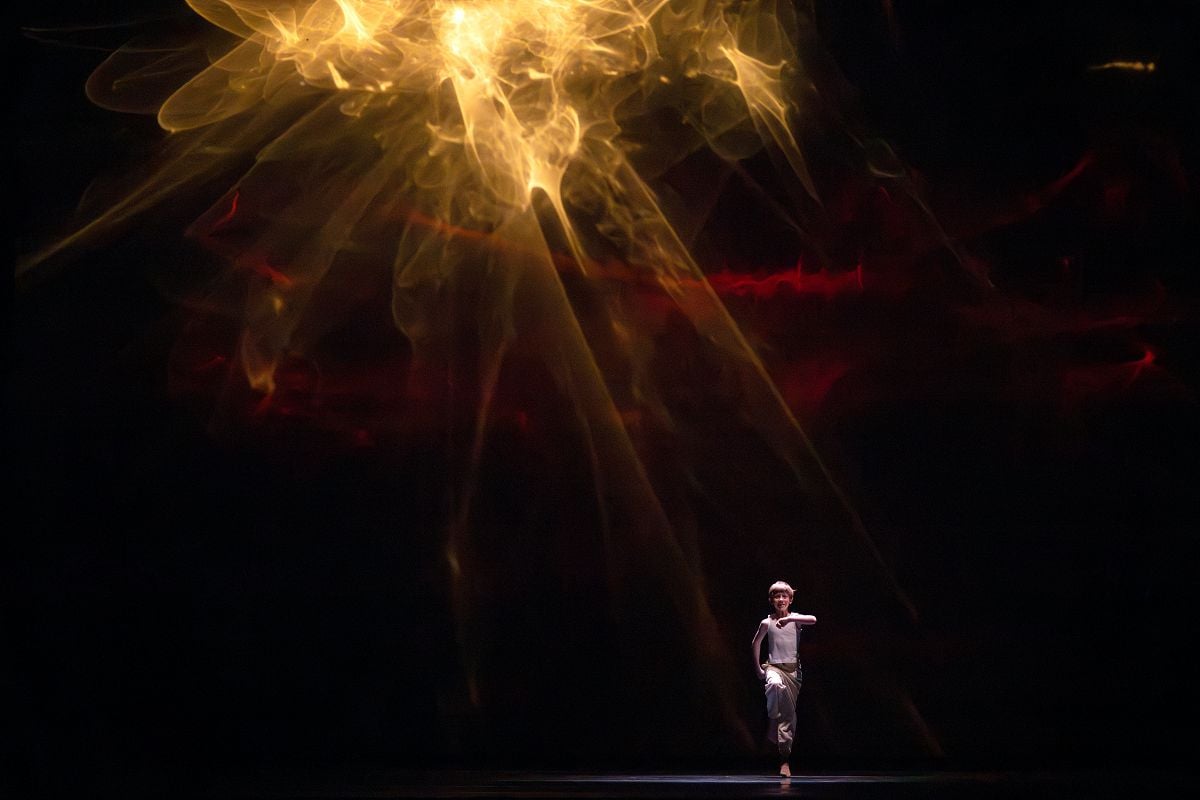
The following half, made up of Covenant and Passage, also flies by (excuse the pun). Covenant is short and sweet, and with the young dancers being playful, passed along and lifted to fly, the work oscillates between the hopeful and the foreboding. Watching right now, seeing the news that we read every day, feels especially poignant. Passage also hits quite hard, with the elder dancers representing a sense of loss and nostalgia that is bittersweet. In this piece is also some of the best dancing in the evening. The group seems to have found its rhythm and the fullness of its embodiment here – reaching, opposing in tension, lilting and turning, filling the music and the space. And this elevates the atmosphere, making us take some deep breaths and some hope, strongly aided (like the whole evening is) by the exquisiteness of Tom Visser’s lighting, Jay Gower Taylor’s designs and Nancy Bryant’s costumes. The duets here, perhaps especially the male-male ones, are flowing and powerful. They speak of friendships that exist perhaps beyond loss, of love that endures, of a form of serenity.
Flight Pattern, especially, continues to be what it always was, a masterpiece. A carefully crafted example of embodied emotion. We cannot stop asking ourselves the most important question, though. What is it for? It can start conversation, yes, but poeticising when we perhaps need to be politicising is not quite enough. As artists, we also have a responsibility towards the world we live and make in. These are big questions that a lot of dance still has to ask itself. But in the meantime, Pite’s work in Light of Passage gives us hope, and loss, and tragedy, and creates a perfect storm with all the elements, and we cannot but let it flow through us, and come out with a sense of poignancy and idealism.


Lucía Piquero Álvarez was born in Asturias, Spain, where she trained in Classical Ballet and read for a BSc in Psychology. She moved to London where she trained in contemporary dance (LCDS), also getting an MA in Choreography (Middlesex University). Lucía has been an independent dancer and choreographer since 2007, her choreographies have been presented internationally and she has been commissioned by choreographic centres, national companies and festivals.
She was lecturer and head of the Dance Studies Department at the University of Malta, and Senior Lecturer at Dance City (Newcastle), and is currently lecturing at Trinity Laban and English National Ballet School. She completed her PhD at the University of Roehampton. Her main research interest is on embodied emotion and cognition in dance, she has presented in conferences and directed workshops and practice research projects internationally, and published articles and chapters in diverse platforms as well as her own monograph.