Review: La Scala triple bill – a five-star performance from Gioacchino Starace in Béjart’s Boléro
Graham Spicer sees Harald Lander’s Études, Jiří Kylián’s Petite Mort, and Maurice Béjart’s Boléro at La Scala.
| Title | Trittico Lander / Kylián / Béjart |
| Company | La Scala Ballet |
| Venue | Teatro alla Scala, Milan |
| Date | 26 October 2025 |
| Reviewer | Graham Spicer |
Let’s begin at the end, and the highlight of a satisfying evening of dance at La Scala.
Groan… it’s Boléro. Again. Overfamiliarity has worn down its appeal, much like that of the other Spanish-themed work by a French composer, Carmen. Both Maurice Ravel and Georges Bizet had their biggest hits with these pieces, and Boléro and the Carmen Suite are often coupled together in concerts. Of course, when listening to them, they work their charm, and any grouchy reluctance to be seduced by them evaporates.
They have both had many dance versions created on them, but unlike Bizet’s opera, Ravel’s piece was created specifically for dance, though it was already being performed as a stand-alone orchestral work when Arturo Toscanini conducted its American concert premiere a year after its first danced performance.
Ida Rubinstein commissioned Ravel to compose a Spanish-flavoured score for her and her company to perform, which led to a 1928 premiere at the Paris Opéra with choreography by Bronislava Nijinska.
In 1954, Nijinska restaged her ballet for the Grand Ballet du Marquis de Cuevas, and once again it was performed in Paris – it is possible that 27-year-old Maurice Béjart saw this production, with its central image of a woman dancing on a tavern table. Béjart’s own Boléro was created in 1961 with a single dancer (La Mélodie) on a large table, surrounded by male dancers.
Luciana Savignano, a Béjart favourite, was the first to dance the role at La Scala in 1980 and was almost the only dancer to be on his red round table during many revivals, until her last performance in 1996, when she was 52.



For the current outing, La Scala offered two female and two male interpreters. The two men were Roberto Bolle, who appears first in the theatre programme, being an étoile, and Gioacchino Starace, who, with a surname that is at the bottom of the alphabetical list of corps de ballet dancers, appears last.
Well, Starace’s was a first-class performance, and it is astonishing that at 31, he is still in the corps. Maybe he is not a dancer for many of the classical roles, but then neither was the étoile Luciana Savignano, who carved out a career based on her extraordinary particular strengths. Starace is a dancer who stands out with his megawatt smile and handsome presence, and though he is notable as the gaoler in Kenneth MacMillan’s Manon and Gaston Rieux in John Neumeier’s La Dame aux camélias, it is in the more contemporary repertoire that he has shone dancing main roles in works by Hans van Manen, Wayne McGregor, William Forsythe, and Heinz Spoerli.
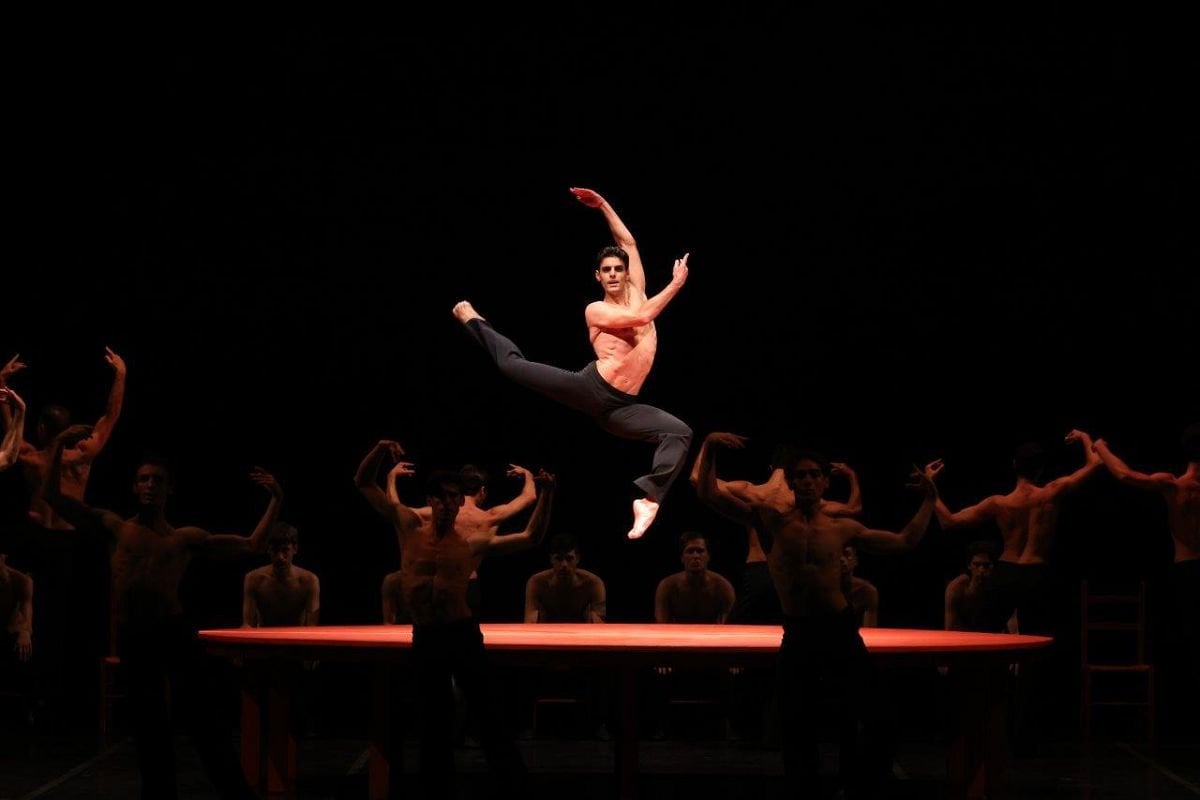
In Boléro he was magnificent. The strength in his body contrasted with the supple expressiveness of his movements, especially the seductive undulating of his arms, moving his large, communicative hands through the darkness around him as Ravel’s music began its journey. The choreography Mickey Mouses the music, slowly adding more expansive moves, arriving at leaps and mid-air splits on the table.
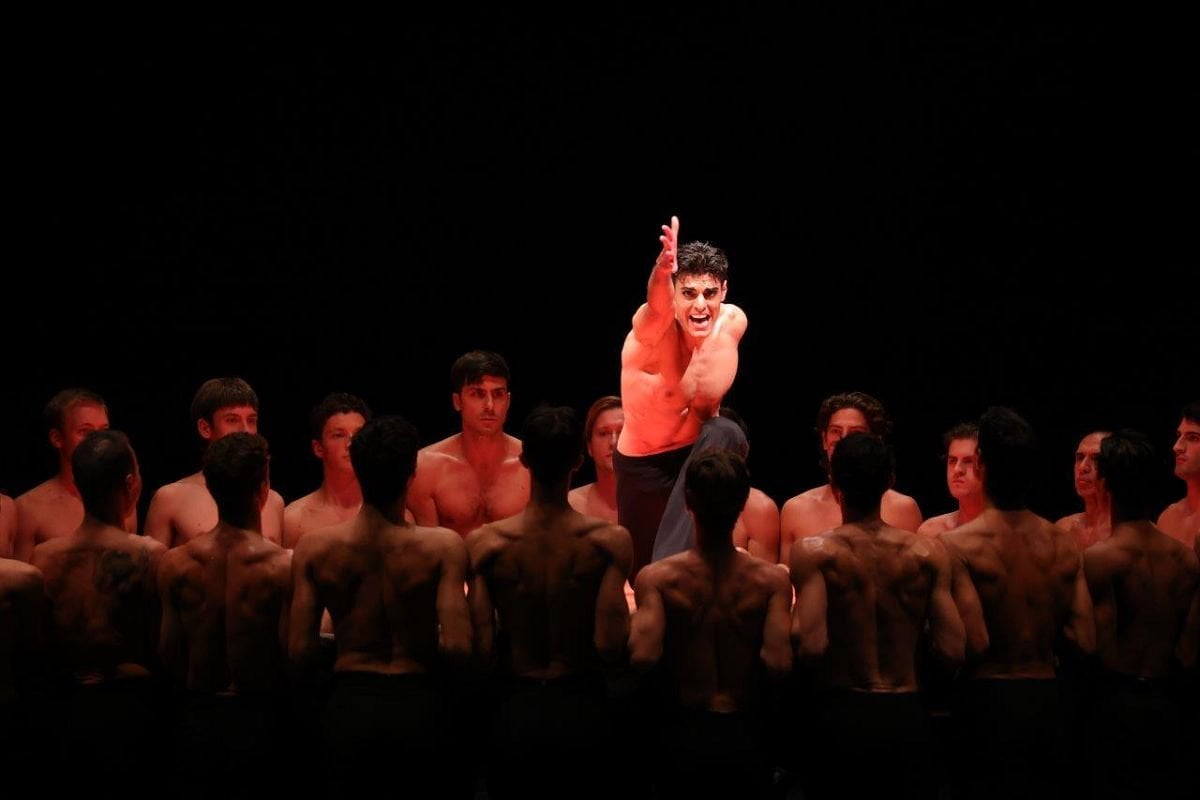
Starace’s predatory weight change from foot to foot, and provocative hip and torso pulsations, drew the dancers towards him until he was surrounded.
Béjart made small changes when remounting the work for different companies, and at La Scala there are 40 men surrounding the table – sometimes there are just 18 – and in some versions they wear tee-shirts, whereas here they are bare-chested. Unlike unwelcome tans when Swan Lake is staged after the summer break, here the tans were appropriate.
The men form a tight circle around the table, rising from a crouch to full height, with open fingers reaching up, and some dancers even invading the table, before their movements implode and the main dancer drops to the floor. There was darkness and then a deafening ovation.

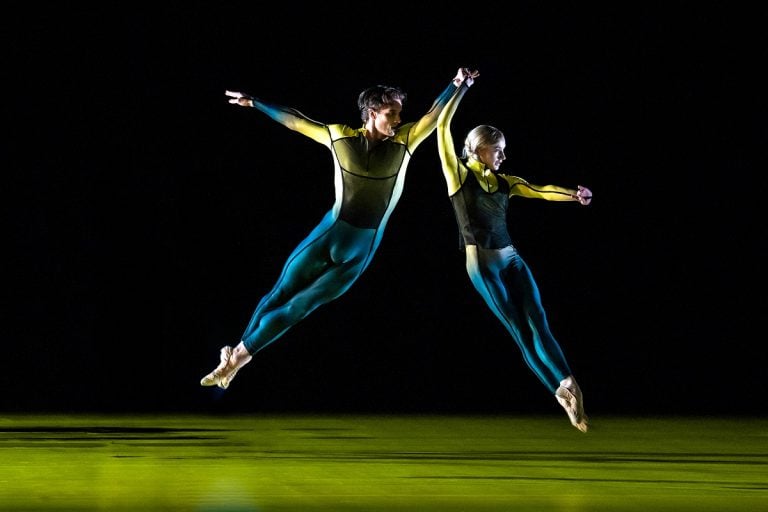
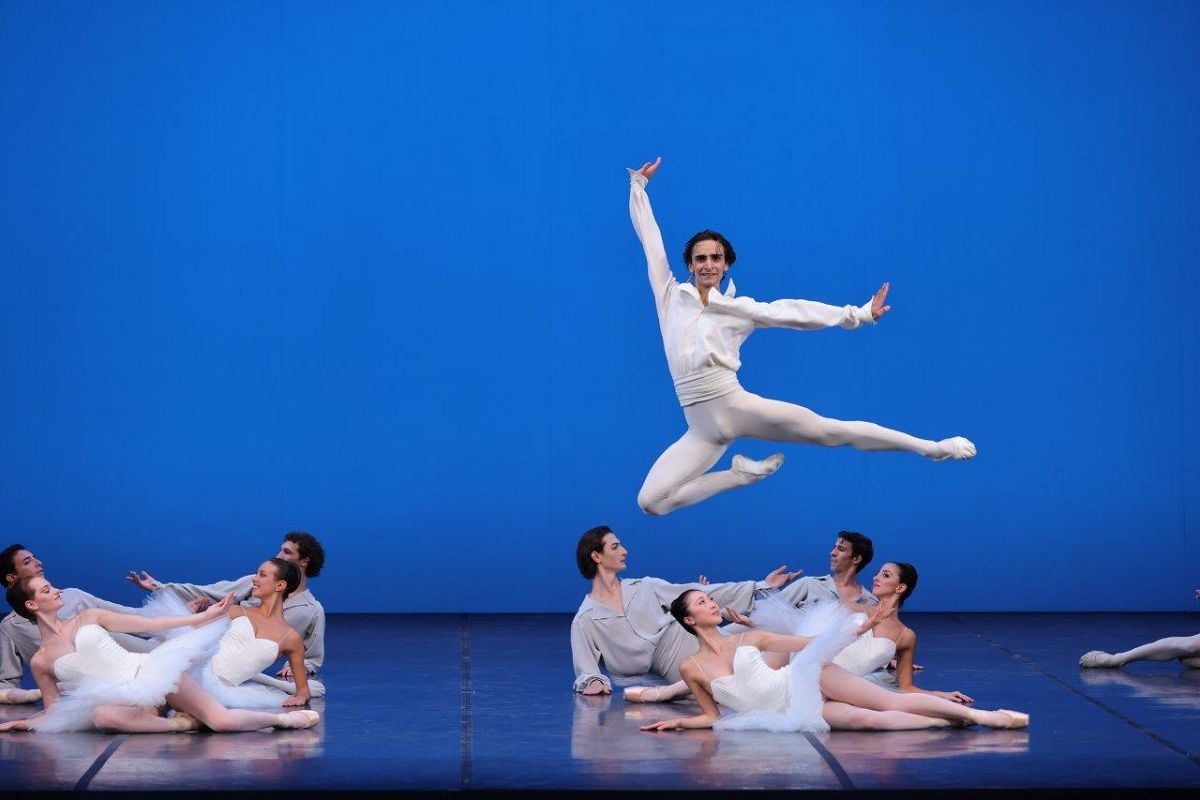
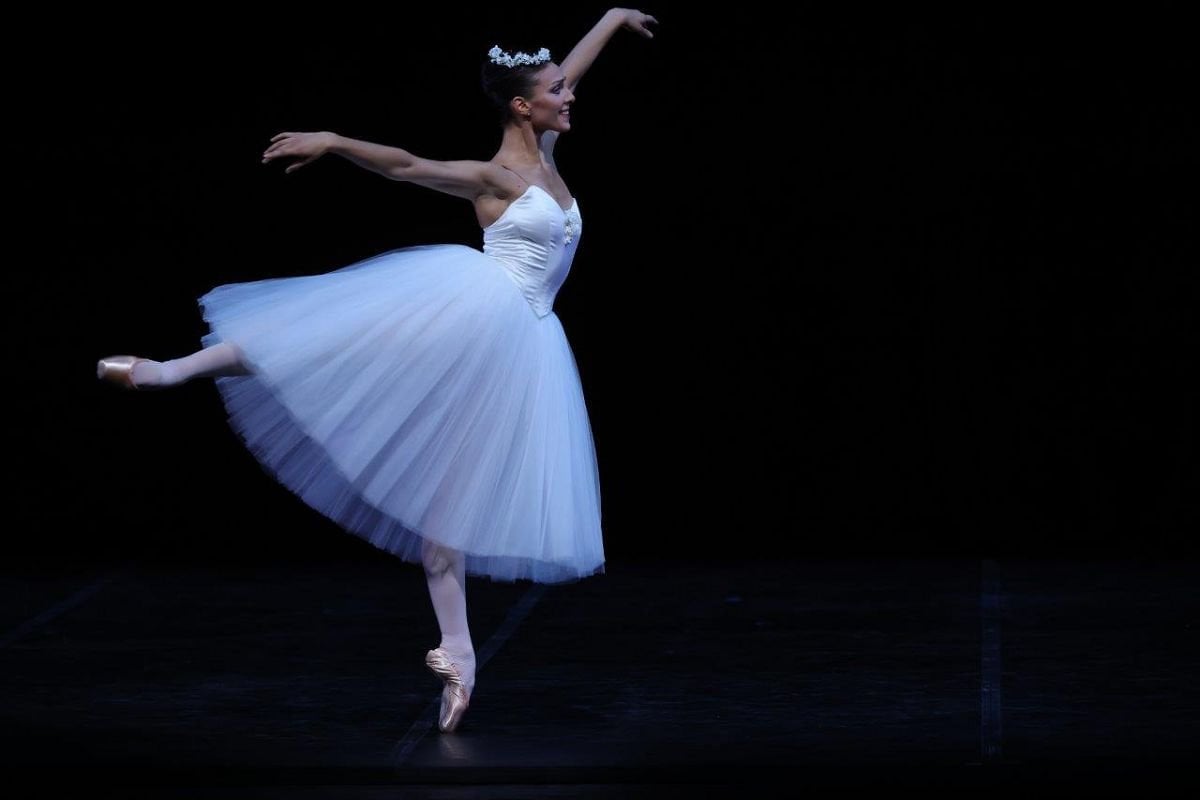
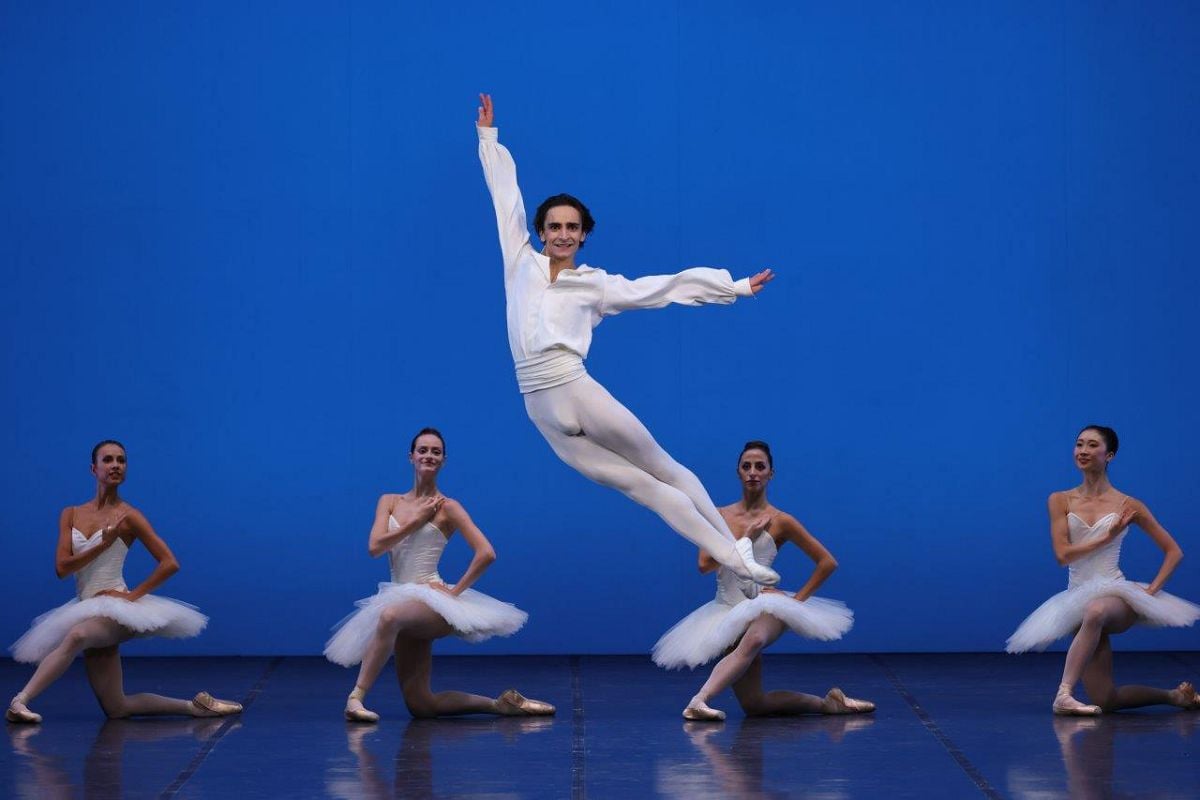
Harald Lander’s Études opened the triple bill. It is cruel programming to stage such an exacting work immediately after the holidays, and although the level was high, the company has been more in sync on previous occasions. Being ‘in sync’ is key to Lander’s 1958 ballet, created for The Royal Danish Ballet. It shows off the company as a group, as well as its individual dancers, but the ensemble scenes were occasionally raggedy, though the breakneck jeté diagonals (four to cross the stage for the men, five for the women), chaîné and à la seconde turns, and all the ballet bling that Lander crammed in, were impressive.
Talking about Études, Lander said, “Dancing is not just delivering some steps to the audience. The purpose of ballet is, increasingly so, to combine spirit, dance, and music!” Which is an odd thing to say about a work that appears to be an extended, flashy dance class. When a small group enters in romantic tutus, there is obviously more scope for interpretation, but still, it is an interesting phrase for performers to keep in mind whatever step they are executing.
Two dancers stood out. Martina Arduino was sure and sunny in the main role, and her chaîné turns sped up like a figure skater’s spins to dazzling effect. Darius Gramada is an exciting dancer who, as one of the two main men, revelled in the difficulty of his part and thoroughly enjoyed showing off.



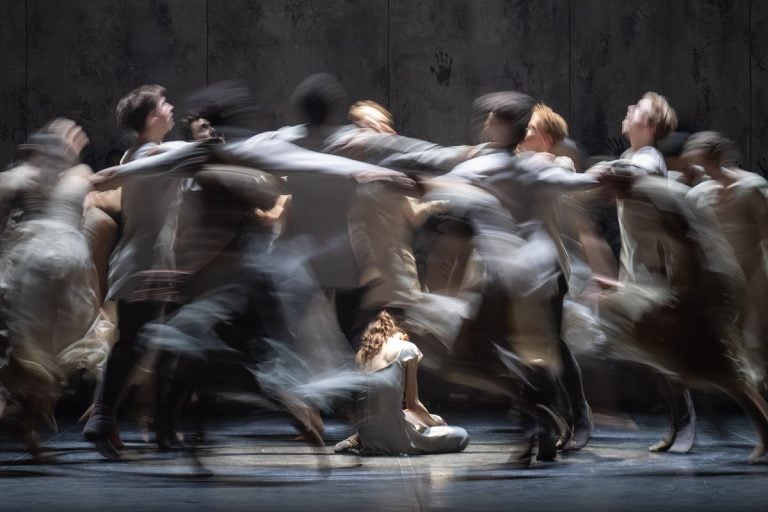
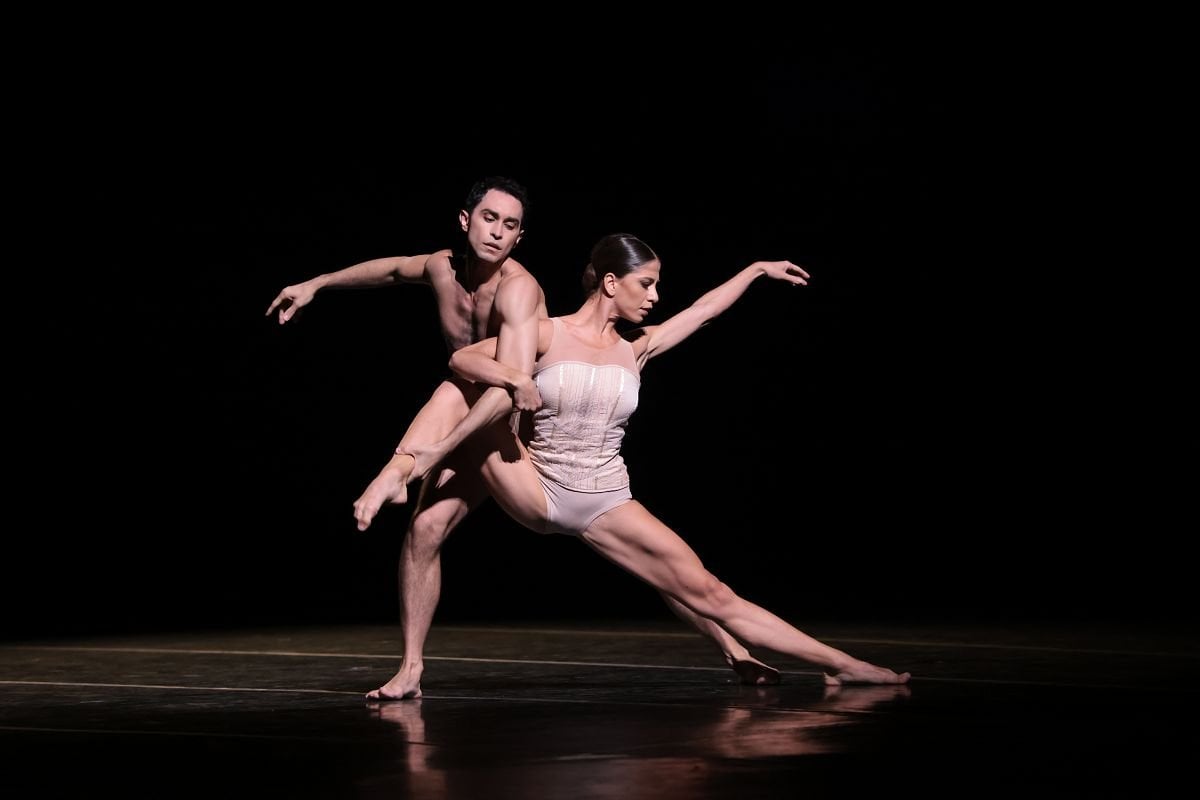
The filling in the triple bill sandwich was Jiří Kylián‘s Petite Mort, and Takahiro Yoshikawa was the capable pianist for the extracts from Mozart’s piano concertos 21 and 23. Most of La Scala’s principal dancers were in the small cast of 12. It is a piece the dancers know intimately, and their casual familiarity with the props – especially the opening sequence when the six men roll their fencing swords around their feet and the blades finish the 360-degree turn perfectly together – and the ease of the partnering in the pas de deux, all bathed in golden candle-like lighting, evokes an intimate and dreamlike atmosphere. An atmosphere ideal for a ‘petite mort’.
It was pleasing to hear surprised reactions from the many tourists in the theatre when the five dancers who appear behind rigid, cut-out mantua dresses, move to one side, leaving the costumes standing up by themselves on their hidden castors – the regulars have rather got used to the effect.
This was a 5-star evening of ballet in Milan, unfortunately losing a star for some slightly sloppy Études moments… a work that demands precision.


Graham Spicer, aka ‘Gramilano’, is a writer, director and photographer based in Milan. He was a regular columnist for Opera Now magazine and wrote for the BBC until transferring to Italy. His articles have appeared in various publications from Woman’s Weekly to Gay Times, and he wrote the Danza in Italia column for Dancing Times magazine. Graham was the historical advisor on Codice Carla, the 2023 documentary on Italian ballerina Carla Fracci.
Graham also works as a dance photographer, and his photos have appeared in many books, theatre programmes, and magazines, including Dancing Times, Dance Spirit and Ballet2000, as well as all the major Italian newspapers.
He is a member of the Dance Section of The Critics’ Circle.