Review: Peer Gynt at La Scala – an outstanding, spellbinding performance

Graham Spicer sees La Scala Ballet in Edward Clug’s Peer Gynt that demonstrates the breadth of the company’s talent, with an impressive Navrin Turnbull in the title role.
| Title | Peer Gynt |
| Company | La Scala Ballet |
| Venue | Teatro alla Scala, Milan |
| Date | 18 Aprile 2025 |
| Reviewer | Graham Spicer |
Who would have thought that a work that is essentially dance theatre could show off La Scala Ballet so well. This company was not known for its interpretive skills until recently. There were many irritating distractions by the corps de ballet in the 90s – whispering, almost chatting, when they were ‘invisible’ at the back of the stage; breaking character before they were offstage; ignoring the main action… As a Royal Ballet regular commented to me after a first act of Giselle in Milan at that time: “This is embarrassing.” All that can be entirely forgotten now, and Edward Clug’s Peer Gynt demonstrates the breadth of the company’s talent. It was an outstanding performance, spellbinding from beginning to end.
Clug created Peer Gynt for the Slovenian National Ballet in Maribor in 2015. He is the artistic director of the company, and it is where he was given his first opportunities to choreograph and also where he was a principal dancer. The work is based on Norwegian dramatist Henrik Ibsen’s 1867 verse drama of the same name, which was inspired by a Norwegian fairy tale. The play also has Italian roots as Ibsen began writing it in Rome, then on Ischia, and finished it in Sorrento. Ibsen asked his fellow countryman Edvard Grieg to compose incidental music for the play, which is that used, together with other music by the composer, by Clug for his Peer Gynt. Greig’s glorious score was excitingly driven along by conductor Victorien Vanoosten with full orchestra, chorus and a pianist filling the auditorium thrillingly.
In an alternately realistic and surreal series of scenes, Clug succeeds in recounting the story clearly. He also manages to do so in a tight 100 minutes, which feels more comfortable than Ibsen’s long, five-act ramble.
Peer is a charming but lazy and cocky peasant boy, who abandons his home and love interest, Solveig, in pursuit of fame and fortune. He pursues what he believes to be a fulfilling life, leading him to pleasurable but ultimately negative experiences in foreign lands. As a ruined, old man, he returns to Norway, ultimately finding solace with Solveig, and maybe having learned some valuable life lessons along the way.
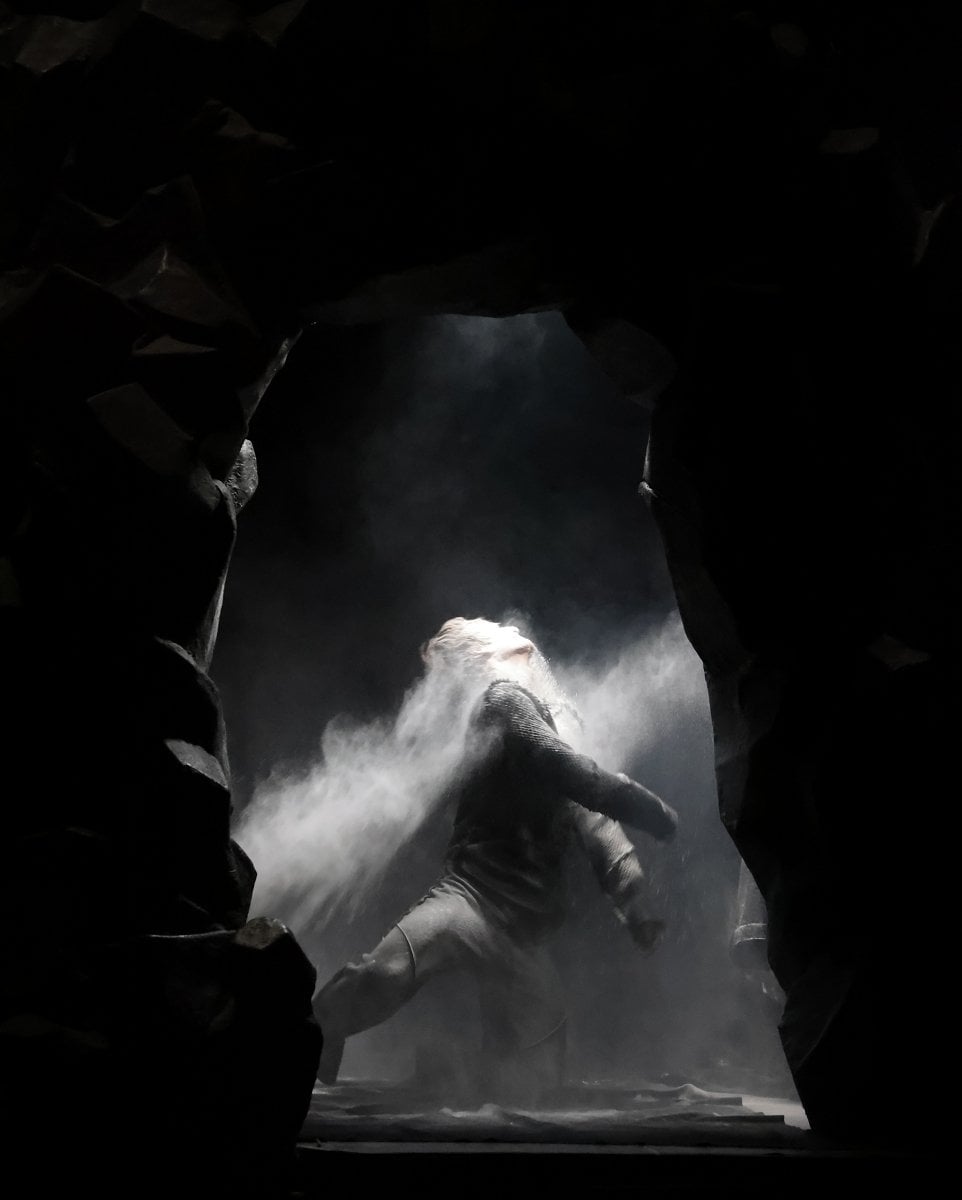
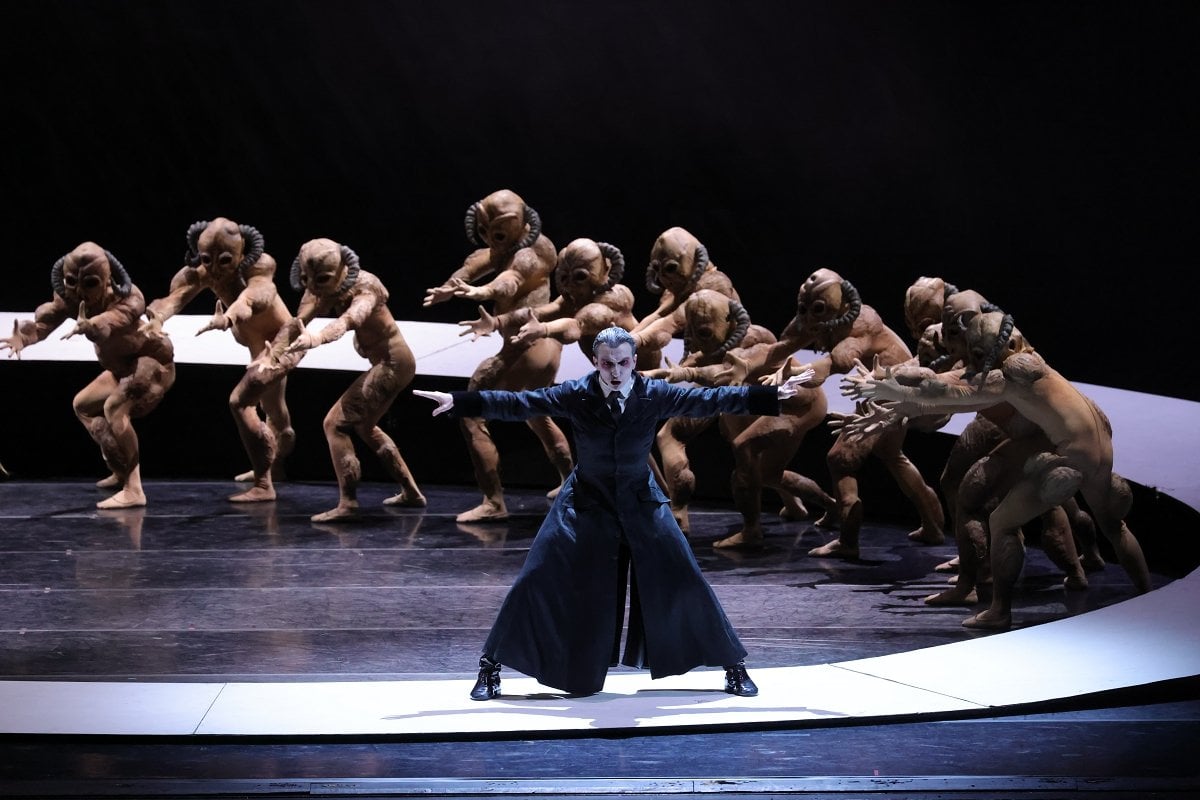
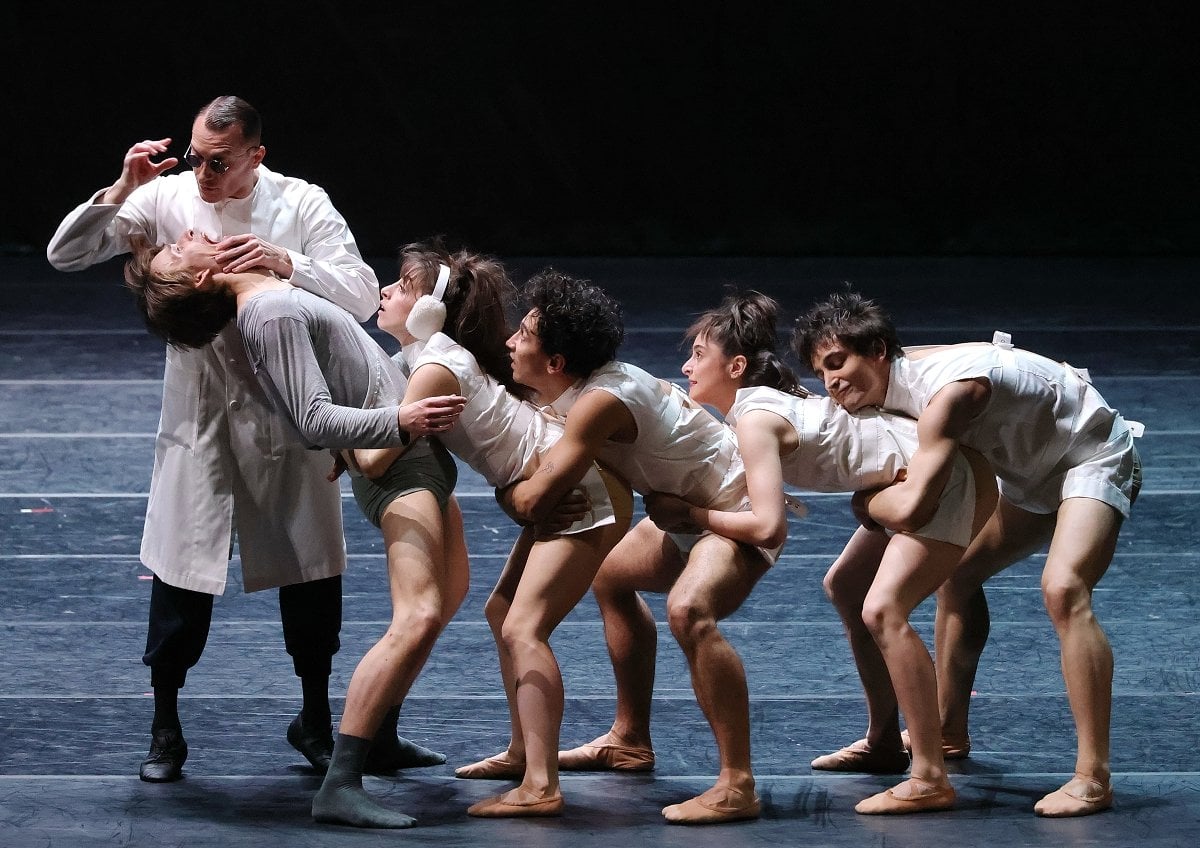
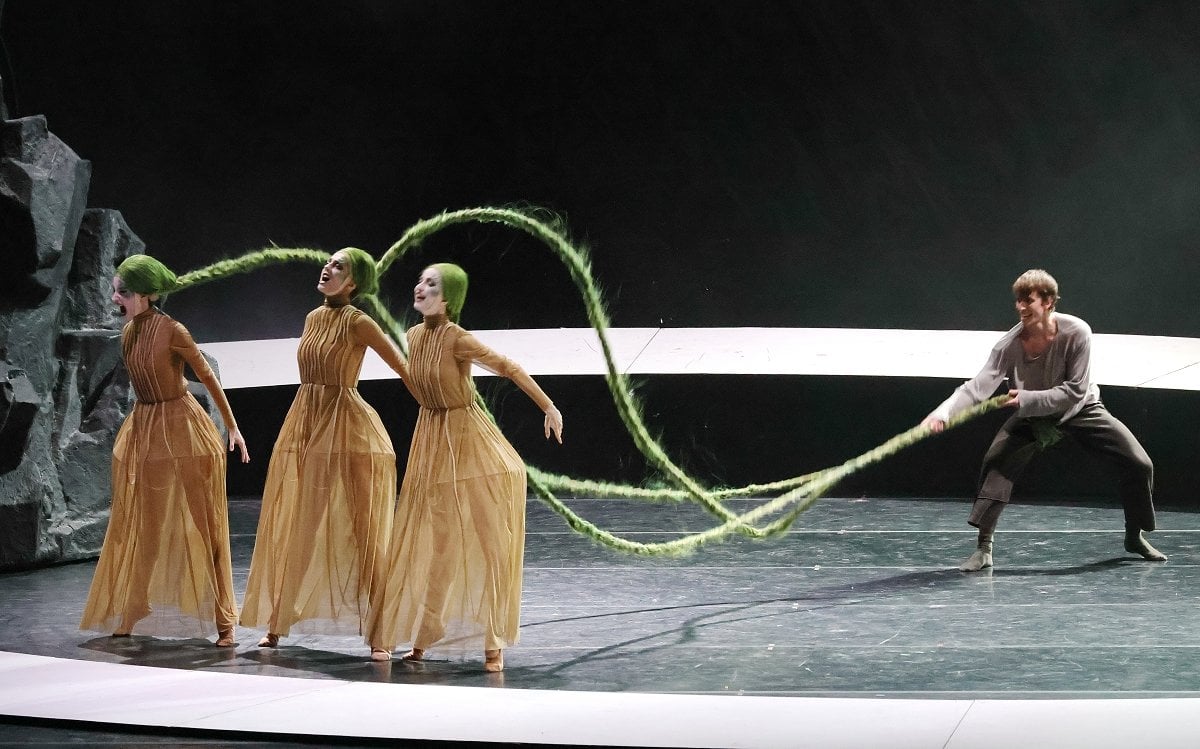
Sounds simple? Now add that the story includes three lustful dairymaids, a group of trolls, a green-haired woman, a deer, and four lunatics. This was a gift to Clug’s regular collaborator, the costume designer Leo Kulaš. He gives simple skirts and jackets to the country folk, but gnarled body suits and grotesque horned heads to the trolls, four-metre-long green plaits to the dairy maids, a face on the back of the woman-in-green’s head making her movements improbably strange, and covers Peer Gynt in a white powder as he reaches the depths of misery and old age, which his costume seemed to cling on to and release during the closing scene and well into the curtains calls. When Peer sees joy all around him on returning from his travels, there is even the chief troll (an impossibly tall Edoardo Caporaletti) in a green tunic who has found happiness with the woman in green (Maria Celeste Losa who sexily slinks through her scenes) who pushes their baby in a pram and is followed by their six children with troll heads but human clothes. The Shrek-like procession is both funny and poignant.
Marko Japelj, also regularly part of Clug’s creative team, provides effective and elegant sets, while Tomaž Premzl’s lighting is dramatic without screaming ‘look at me’.
Clug packs in many theatrical effects which mesh with the story and movement, so the result is never gimmicky – Persian rugs are pulled slowly with the dancer remaining on her feet, gliding across the stage; a door mysteriously opens up from the darkness; the deer’s front legs are like elbow crutches allowing the dancer to move swiftly through the air in long bounds; there’s a magician’s person-in-a-box-style trick as Peer enters a coffin and then reappears outside it; a kiddie-ride aeroplane sends Peer off to foreign lands, rocking sweetly back and forth when he puts a coin in the slot… witty, fun, and magical.
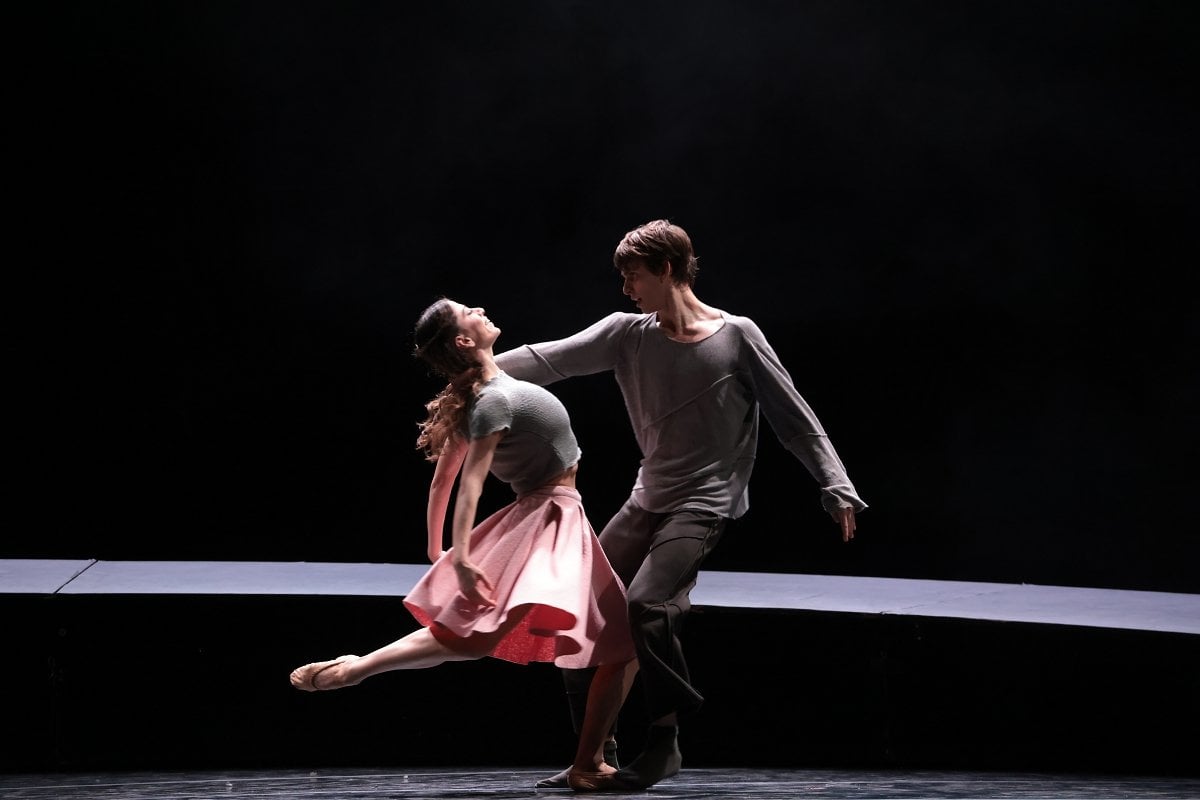
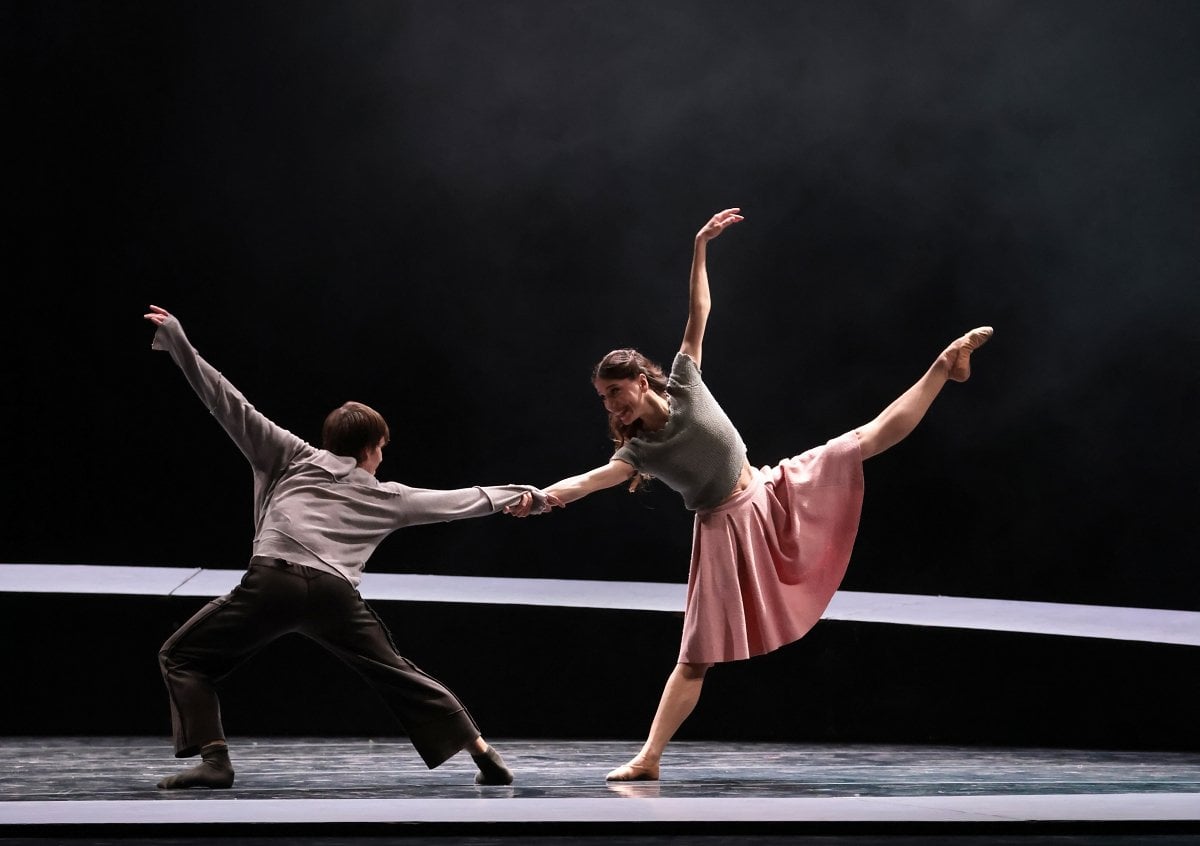
There are few ballet movements in the choreography – the feet are often parallel – and the moves Clug chooses are for telling a story. Some of the villager’s ensembles resemble line dancing (and certainly Michael Kidd’s choreography for Seven Brides for Seven Brothers), and they literally jump for joy; the trolls’ dance (In the Hall of the Mountain King) has Thriller vibes; and the duets with Solveig and Ingrid (the bride) are filled with sweeping, twirling lifts, executed with natural abandon.
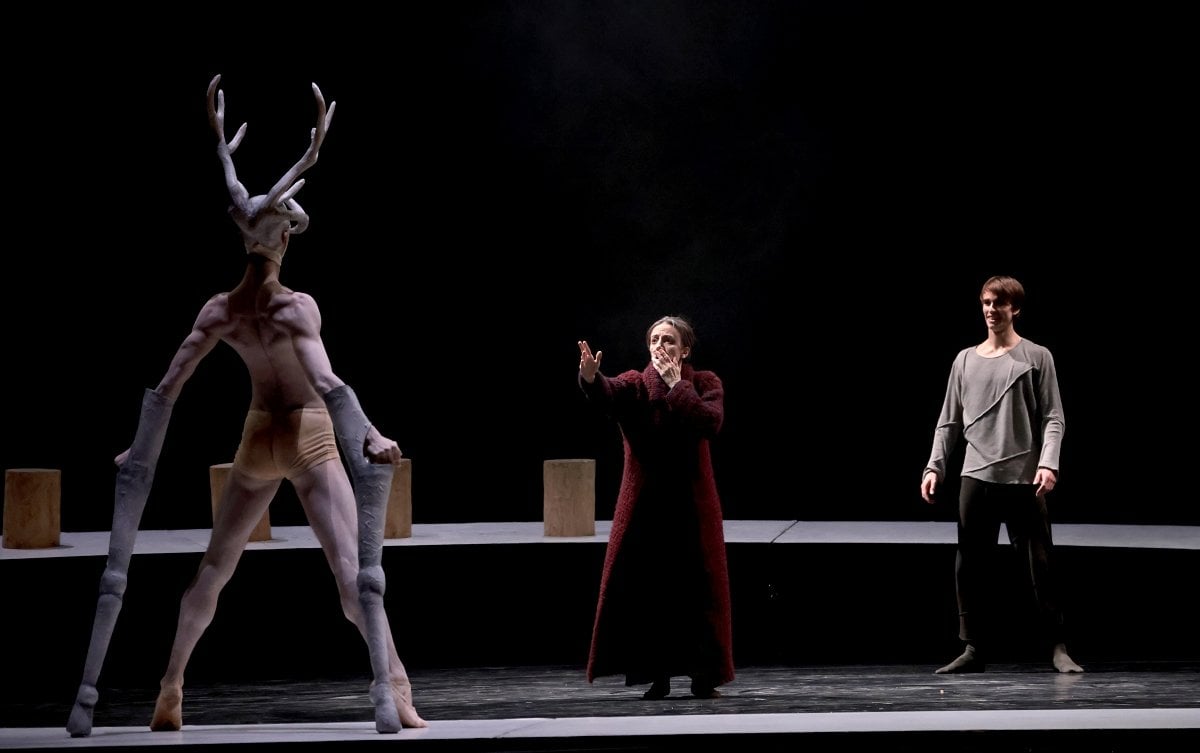
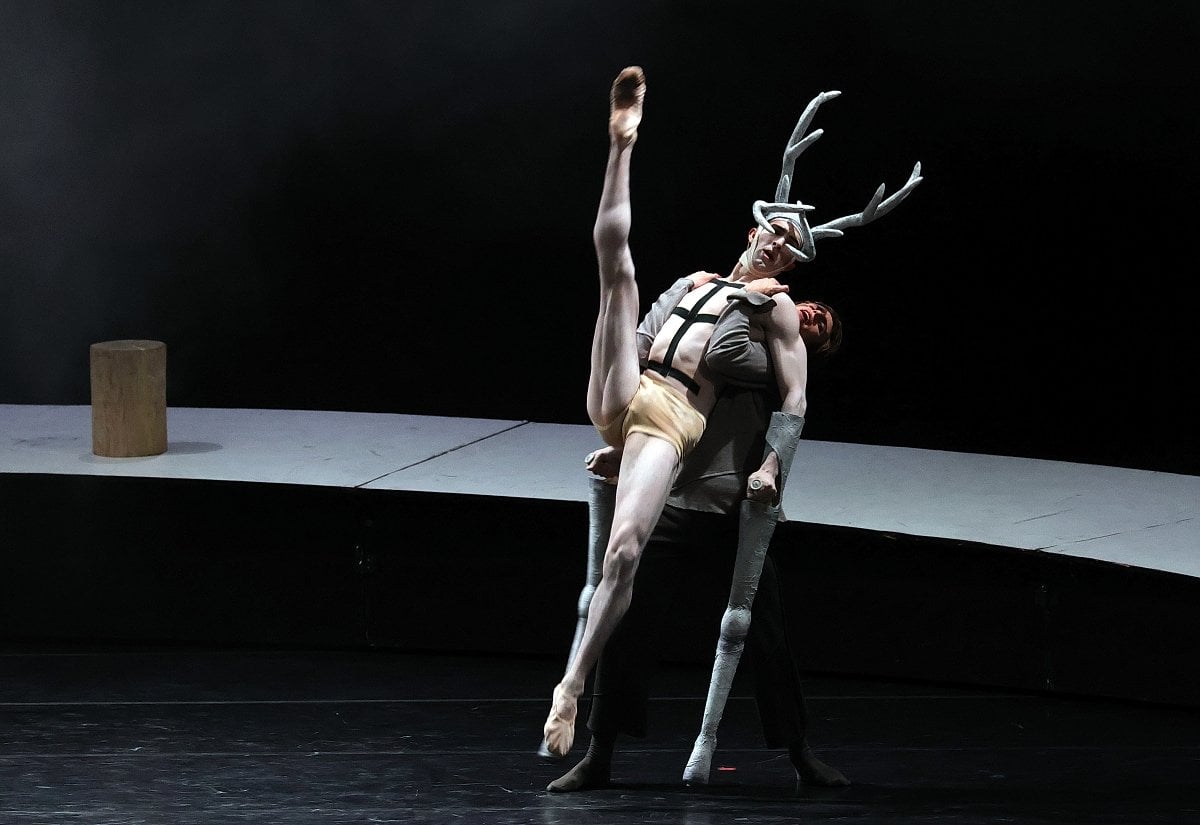
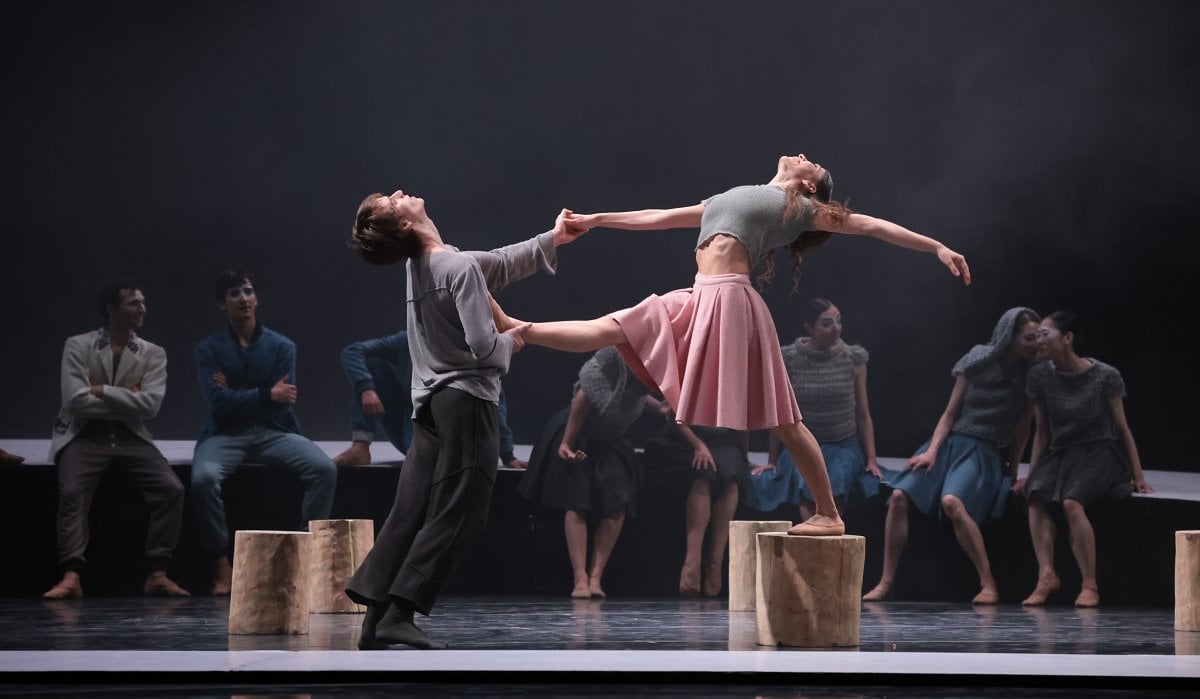
The first night Peer Gynt was entrusted to Navrin Turnbull, a soloist with the company. What astute casting! The blond-haired Australian looks the part, gives his character subtle shading, and, being that he is almost constantly onstage, showed remarkable stamina. Clug doesn’t hold back in the physical challenges he gives him – Turnbull is hauled around the stage, shaken upside down, nimbly avoids a swinging axe in a carefully choregraphed section, leaps on and off tree stumps in a pas de deux with Solveig (played by the always-winning Alice Mariani), and dances a powerfully gestured duet of conflicted emotions with his mother (a convincing Antonella Albano), but his physical elegance and prowess is matched by his acting. He was tender when he returns home, at the end of act one, and finds his mother on her deathbed – of his own volition, he lies in a prone position and lowers his trousers so that she can spank him, like a little boy. He was full of arrogance and swagger with his fellow villagers, flirty with the village bride, deranged in the asylum, and wistfully pensive during a touching final duet with Solveig. An impressive performance.
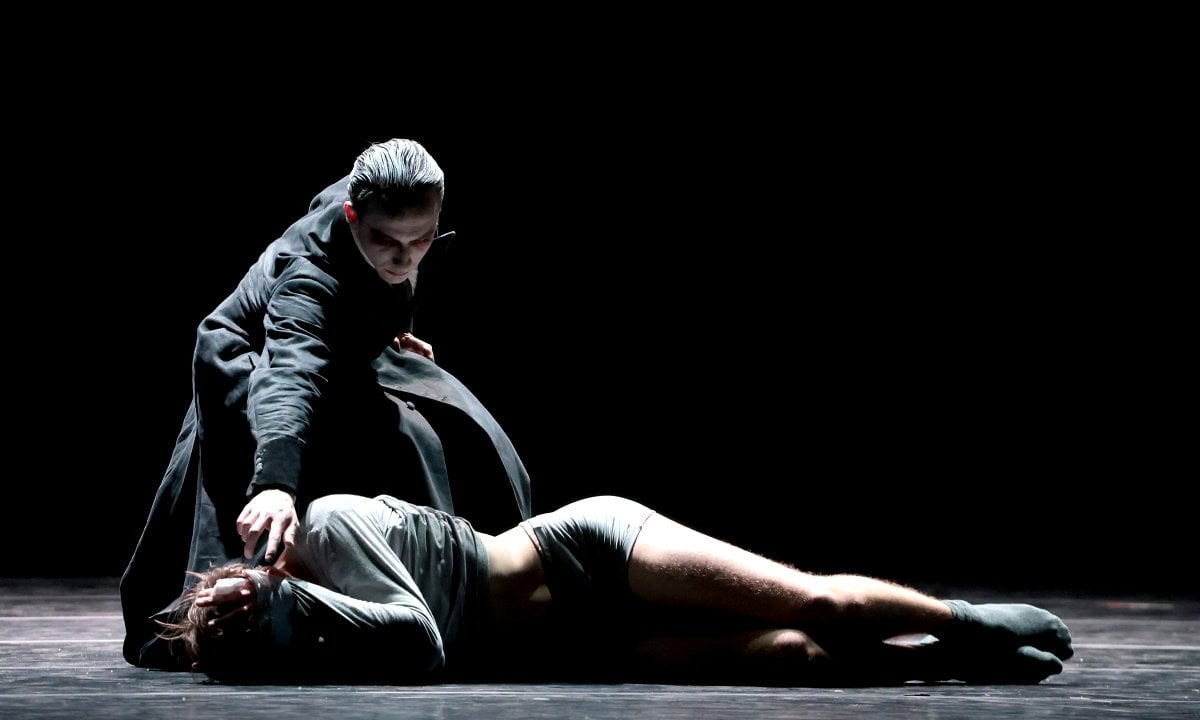
As Death, Andrea Crescenzi was commanding both physically and vocally as he calls out phrases over the offstage chorus. Emanuele Cazzato was the sensual, lithe white deer, or stag, of Peer’s dreams. There is a beautiful final moment, following Peer’s death, when he removes his antlers and hoofs, and curls into a ball, leaving Peer’s mind forever.