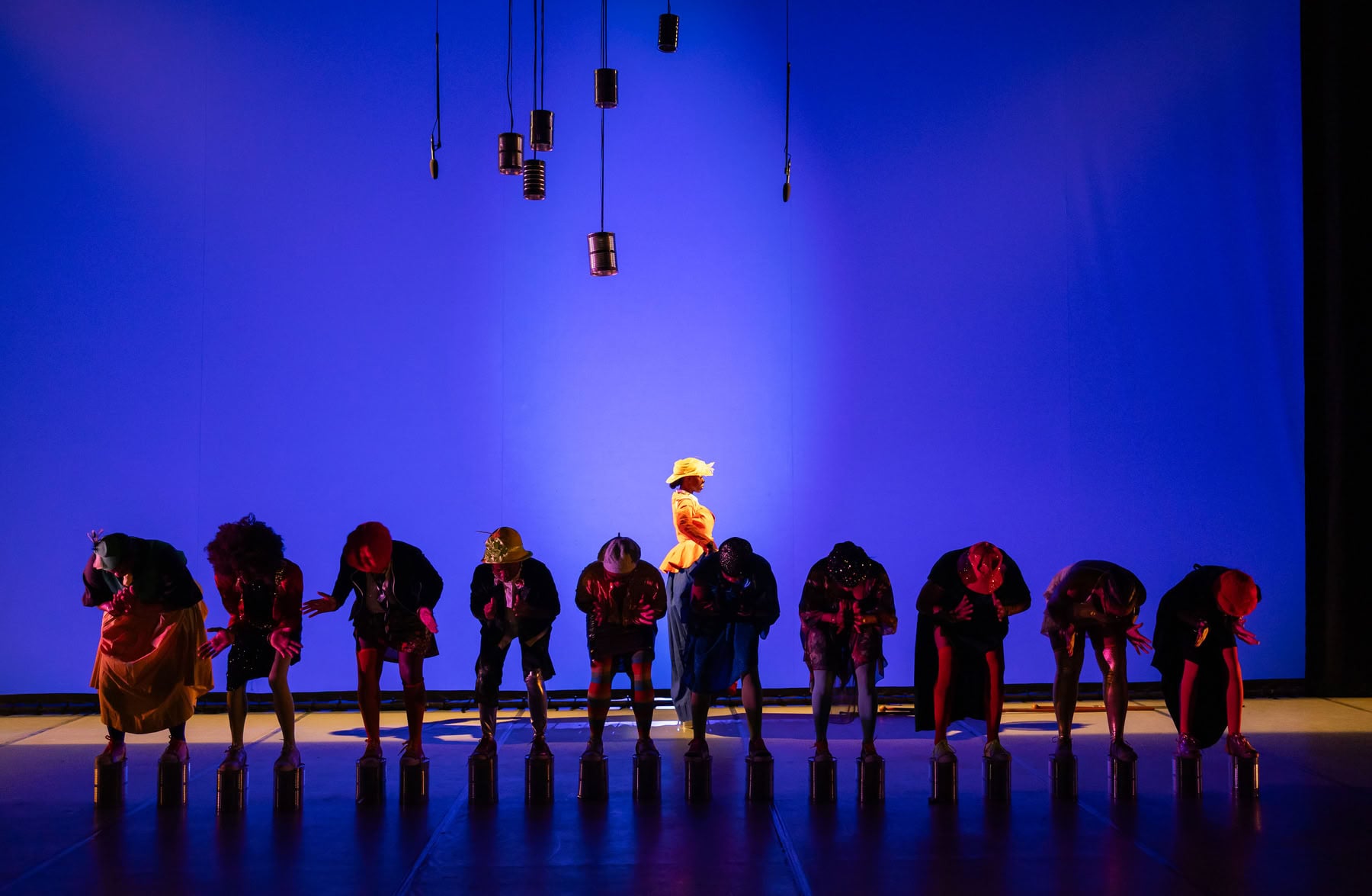
Review: Mamela Nyamza’s The Herd/Less – a noisy, vivid portrait of South Africa today
Dancers stomp on tin cans, a barefoot man balances a sword and a lone figure in apartheid-era colours drifts away in Nyamza’s symbol-laden vision of South Africa today.
| Title | The Herd/Less |
| Company | Dance Umbrella UK, Venice Biennale 2026 |
| Venue | Sadler’s Wells East, London |
| Date | 8 October 2026 |
| Reviewer | Lydia Wharf |
Riotous noise, bold colour, dynamic characters: Herd/Less is a feast for the senses through a series of potent metaphors. Opening this year’s Dance Umbrella festival by highlighting the current socio-political tension in her homeland, South African choreographer Mamela Nyamza uses vivid symbolism to make succinct and vital commentary.
For Nyamza, whose previous work, Hatched Ensemble, opened Dance Umbrella in 2024 (going on to win the 2026 Venice Biennale Silver Lion) expectations couldn’t be higher.
She takes as her starting point the double meaning of a herd: a community moving together and finding strength in numbers versus a community whose members have surrendered their individuality, following a leader without question. Applying this concept to post-apartheid, contemporary South Africa, there’s a delicious sense that each bold choice onstage is loaded with meaning. Thabo Pule’s lighting design helps the audience untangle and decipher, evoking a brooding sense of danger in the shadows, then exposing brutal truths in vivid, unflinching brightness.
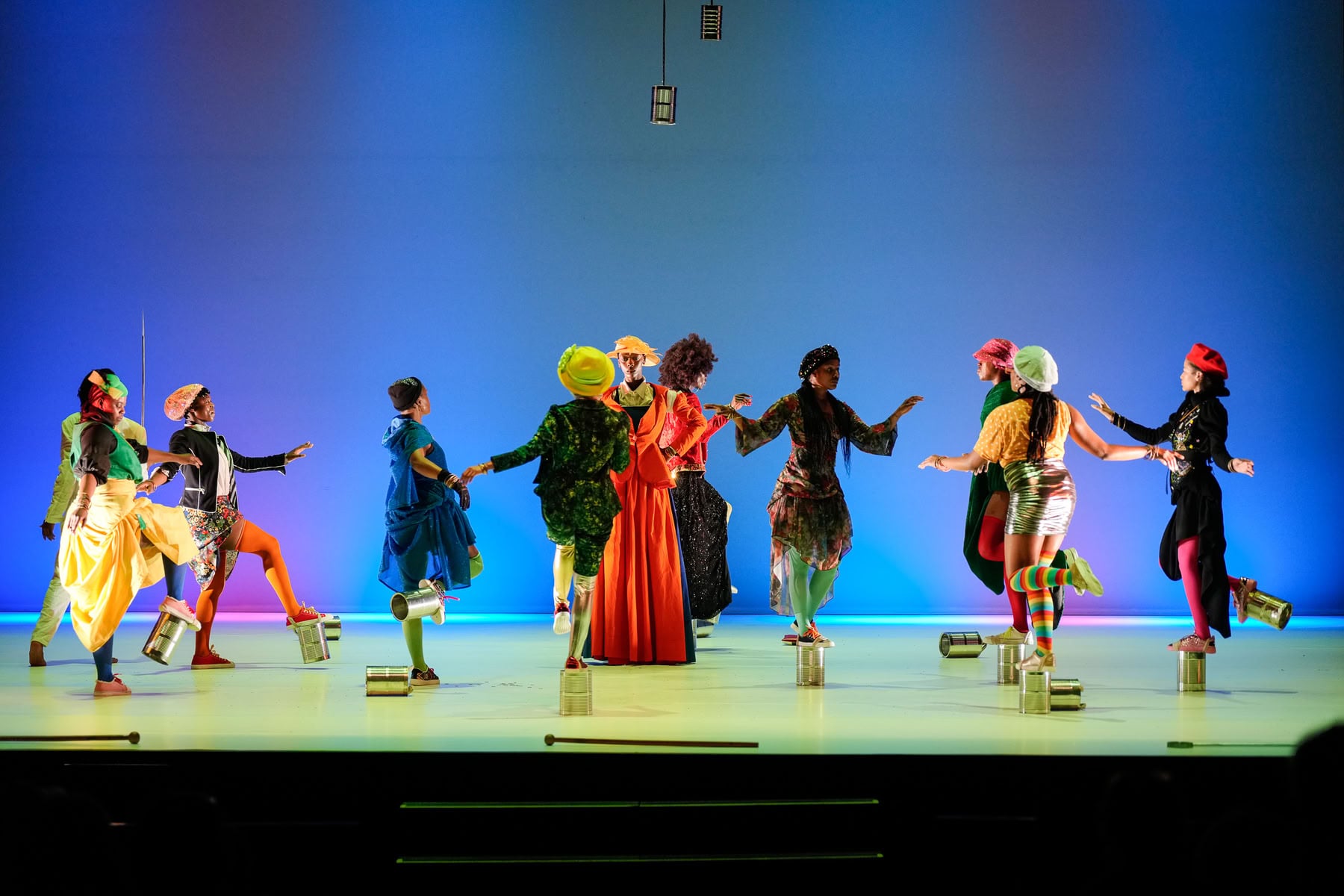
As the show opens and the house lights dim, performers can be heard in the distance approaching the stage, marching in sync. Their emergence as a flock of nine brightly dressed performers with tin cans tied to the soles of their shoes is a strange and striking spectacle, its significance unclear: are these dancers bound by the tins or bound together by them? While in one sense there’s a clear physical precarity, an oppression of sorts, there’s also a suggestion of unity and power in the collective challenge – chins upturned, the dancers don’t trudge; they stomp. The herd gradually circumnavigates the stage together, moving as one tight pack through bright corridors of light, building strength through rhythm and energy. At first they are huddled, but the emergence of small upper-body movements – a sway, a tilt, a swing – allows the group to take up ever more space and, eventually, to claim it fully, their jewellery and sequins creating a layer of percussive sound while a shrill whistle marks time. The herd has revealed itself as a cacophony of bold individuals.
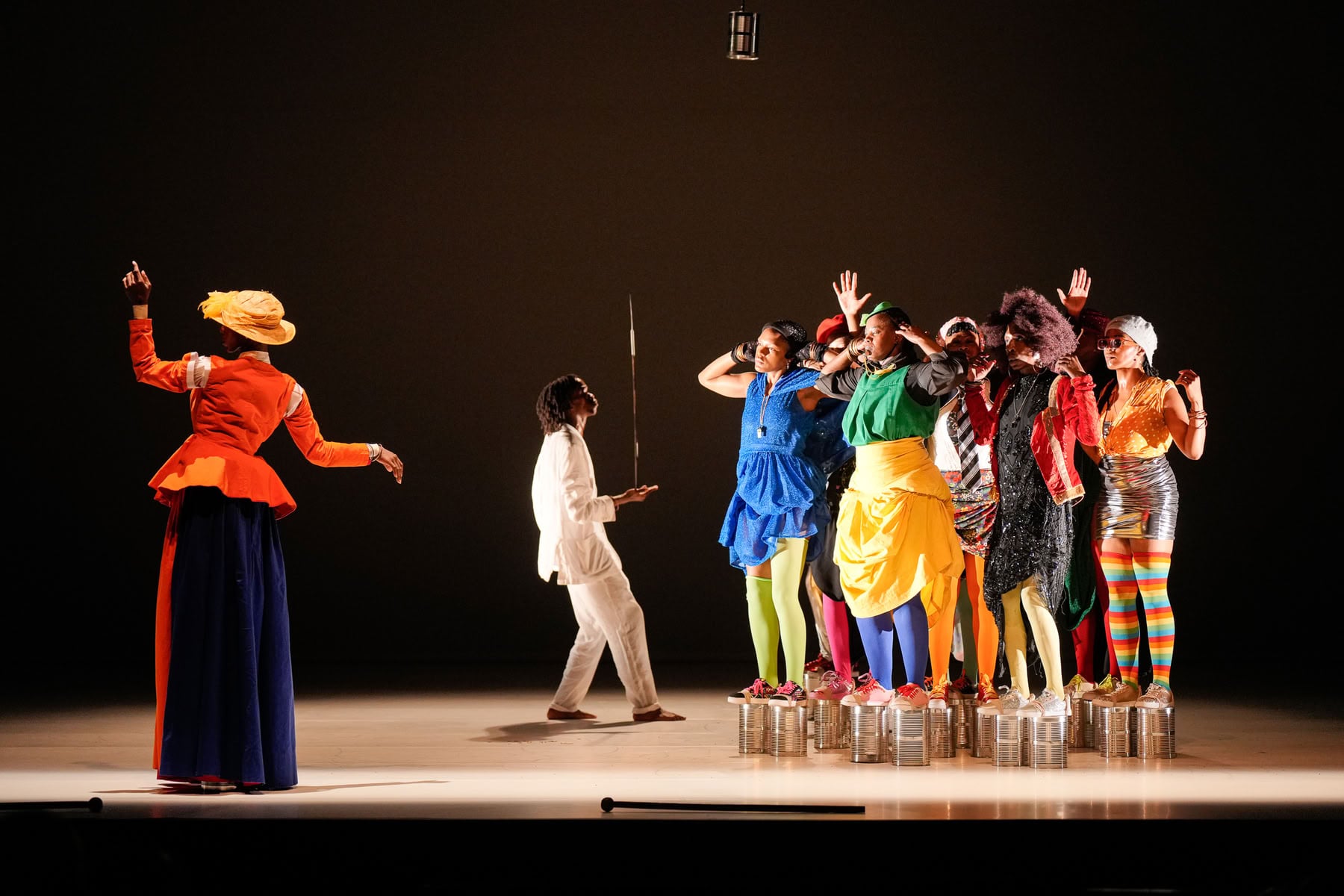
Splintering away from the cluster, a male dancer dressed in a loose white suit balances a sword in the palm of his hand. This performer is barefoot, the only one unfettered by tin-can stilts. His movements are low, deep and sweeping, yet he is bound differently: by the requirement to keep his sword erect. There is a nervy caution in his movements as a result, a literal balancing act. When he dares to wield the sword, clattering it around in the tin-can chandelier suspended overhead, the stomping of the ‘herd’ becomes furiously unbridled. Like the angry buzzing of bees, it’s a reaction powerful enough to keep the sword at bay but never quite enough to see it off completely – femicide rates in South Africa currently average about six women murdered per day.
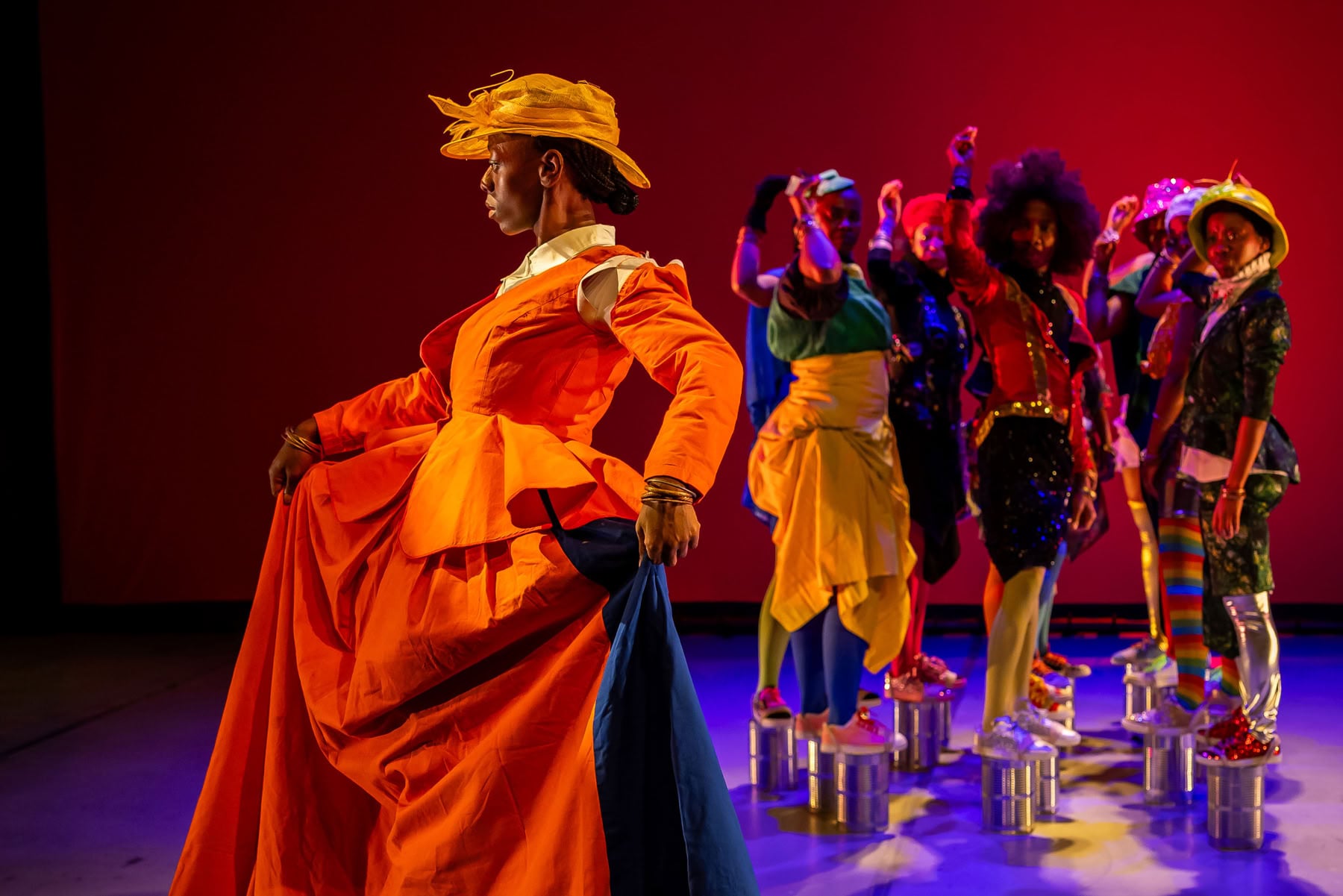
Another notably disparate figure is dressed in the colours of the ‘Oranje-Blanje-Blou’ apartheid-era flag. Her costume is old-fashioned in design and, as the herd grows bolder, she seems to slow, becoming increasingly distinct and separate until, eventually, she is entirely removed from the herd, gliding slowly across the stage – an untouchable, distant figure in hieratic poses. The others, in stark contrast, have become lurid and rebellious, blowing whistles, shouting, tin cans clattering. It’s not until the lights suddenly snap to a rosy pink and the song ‘Paradise Road’ booms joyously into the space that I realise the work has otherwise been performed without any musical accompaniment. When the choreographer mentions this in her post-show talk, she explains that South Africans are a noisy community – there’s no need for music because they tend to drown it out.
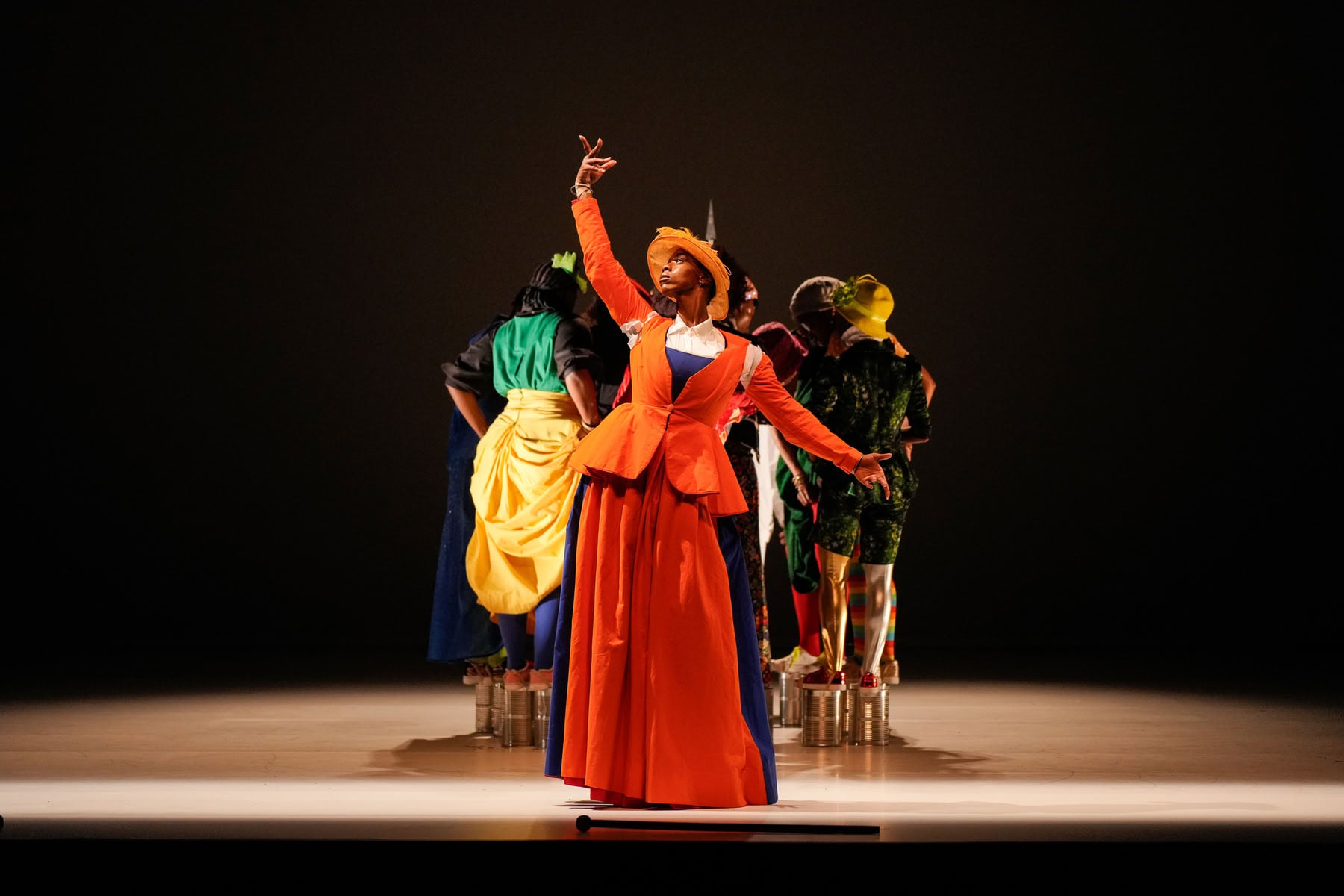
The dancers remain attached to their tin cans throughout. Though one can is eventually removed and used to create a variety of noises, the tight discipline with which performers remain on top of them has particular significance for me – enduring it with such rigour and elegance brings to mind similarly oppressive phenomena: foot-binding, stiletto heels, and, definitely, pointe shoes. It’s laden with meaning, and yet I question whether I know enough about contemporary South Africa to interpret it fully or correctly.
Not generally a fan of post-show talks, but keen to hear Nyamza talk about her work, I am delighted to find the experience truly insightful. A thoughtful and generous interviewee, she encourages audiences to interpret the symbols in the work as they wish, unravelling some of the symbolism that has generated curiosity, and makes clear her intention: to represent the frictions, frustrations and fractures in South Africa today through her art. For me, permission to sometimes misinterpret or misunderstand is important for audiences watching dance in an international context; it allows them to embrace fully the ‘outsider’ perspective as an opportunity to learn and understand. The Herd/Less is a finely crafted example of how impactful and exciting that experience can be.